1892 was the four hundredth anniversary of Christopher Columbus’ historic voyage to the Americas and there was going to be a celebration. In a fierce competition of world-class cities including New York, St Louis, Chicago and Washington DC to host the event, President Harrison announced on 25 April 1890 that Chicago will the chosen site.
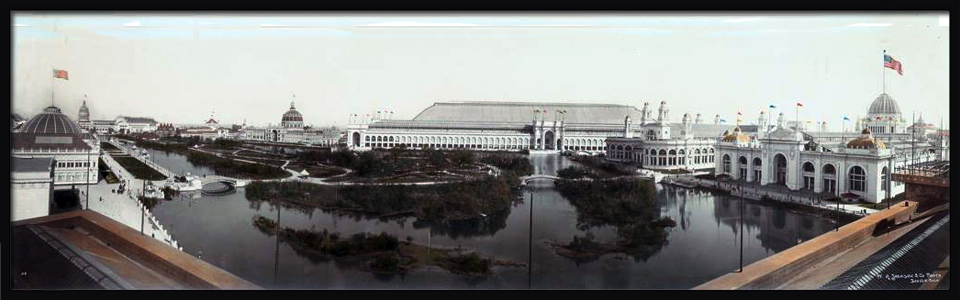
Hand colored panorama by William Henry Jackson.
Extending from Cottage Grove Avenue to Lake Michigan, and from 56th Street to 67th Street, the grounds for the World’s Columbian Exposition was the site of a massive building effort. If Chicago owes its physical supremacy directly to the Great Fire, which swept away the cheap wooden and flimsy structures and left a clear field for a city of stone, steel, glass and cement, it owes its cultural supremacy and its international fame to the World’s Columbian Exposition.
It was decided early in the planning that in order for the Fair to succeed it would have to be held during the summer months. Due to New York’s Grand Parade on Columbus Day, 1892, Christopher Columbus’ birthday, the Chicago ceremonies started on 21 October 1892 with a Dedication Day Parade. The date coincided with the actual date of Columbus’ landing in the Americas. The formal opening was held on 1 May 1893, but all the buildings were still not completed and some scaffolding still in place, nevertheless the celebrations continued.
Present at the opening day ceremonies were President Grover Cleveland and the Duke of Veragua who was a linear descendant of Christopher Columbus.
Due to the temporary building material used, only two of the 200 buildings of the Fair survived – the Columbus Memorial Building, which is now La Rabida, a hospital for cardiac children, and the Fine Arts Building, which eventually became the Museum of Science and Industry. In addition, the current Osaka Gardens, originally the Ho-o-den exhibit from the Wooded Island, continues to this day in Jackson Park. Between the time of the Fair and the 1933-1934 Century of Progress Exposition, the Fine Arts Building was the original Field Museum of Natural History. After the exposition, the museum moved to it’s current Grant Park location. A 24-foot replica of the original 65-foot Statue of the Republic stands at the foot of 65th Street. Another building, the German Building, served as a museum till a fire destroyed it on 31 March 1925.
Many prominent civic, professional, and commercial leaders from around the United States participated in the financing, coordination, and management of the Fair, including Chicago shoe tycoon Charles Schwab, Chicago railroad and manufacturing magnate John Whitfield Bunn, and Connecticut banking, insurance, and iron products magnate Milo Barnum Richardson, among many others.
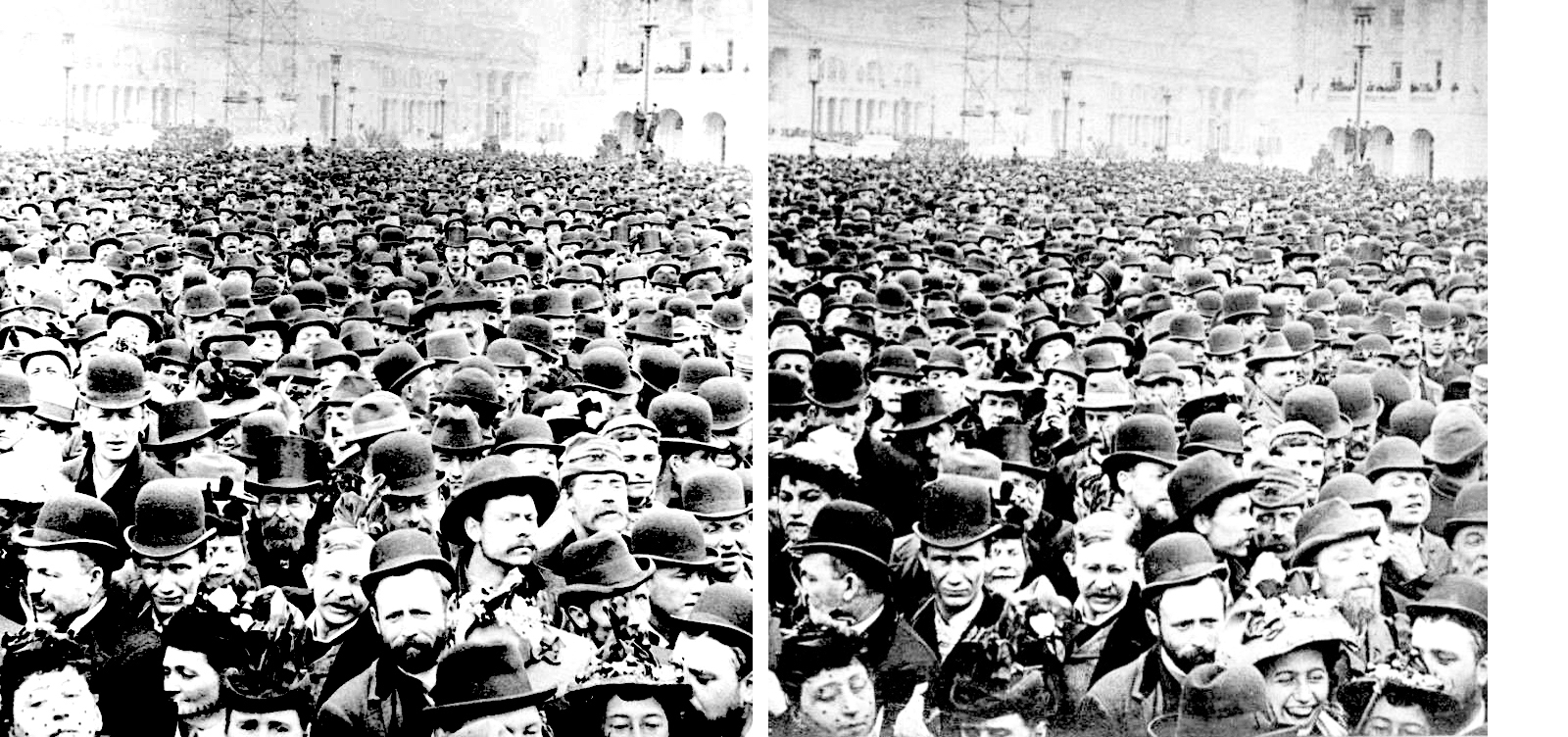
During the six months that the Fair was open, 27,539,000 visited the Fair. The Fair’s last day was 30 October 1893. The biggest single day of the Fair was Chicago Day, which commemorated the anniversary of the Great Fire of 1871. 716,881 people attended that day. The exposition was such a major event in Chicago that one of the stars on the municipal flag honors it
The Fair, however, did not close on a very positive note. Just three days prior to its closing, Chicago’s mayor, Carter H. Harrison, Sr., was shot five times by a visitor in his home. This visitor was Patrick Eugene Joseph Prendergast, a follower of the single tax enthusuast, Henry George. The motive of Mr. Prendergast was to get even with the mayor for not appointing him as corporation counsel. Mr. Pendergast turned himself in and the jury took only an hour to find him guilty of first degree murder. This was Clarence Darrow’s first murder case, unsuccessfully arguing that his client should be declared mentally unfit to stand trial. It was a very somber closing of the Fair.
On 3 January 1894, Teresa Dean, a columnist for the Chicago Daily Inter Ocean wrote its obituary in these words:
For though the buildings remain, and the “people” at the last have their own, the White City is gone. It can never come again. Out of the ashes something may come more beautiful than we knew before, but never again will come what ’93 has given to us. The White City is lifeless. Only the shell remains. It is heaven untenanted
.
Chicago Wins!
Administration Building
Agatite Street Mystery
Agricultural Building
American Bell Telephone Company & Western Electric Exhibits
American Wire Exhibit
Bicycle Exhibit
Brewery Pavilion
Brunswick Exhibit
Buffalo Bill’s Wild West Show (Off Site)
Caravels at the Fair
Casino
Chicago Day
S. S. Christopher Columbus
Cold Storage Building
Colored American Day
Columbian Commemorative Coins
Columbian Intramural Railway
Columbian Liberty Bell
Concentric Circles from Chicago Map
Court of Honor and Statue of the Republic
R. T. Davis Exhibit
Dedication Parade and Ceremonies
Designing Room, Bureau of Construction
Edison’s Phonograph
Egyptian Temple
Electric Fountains
Electric Scenic Theatre
Electricity Building
Fair Firsts
Farmer’s Bridge
Ferris Wheel
Fish & Fisheries Building
Forestry Building
German Building
Grand Basin
Hawaiian Exhibit
Harlow N. Higinbotham
Horticultural Building
Irish Village
John Bull Locomotive
July 4, 1893
Krupp Gun Exhibit
Last Day of The Fair
Libbey Glass Company Exhibit
Life Saving Station and Lighthouse
Lyon & Healy Pavilion
Machinery Hall
Manhattan Day
Manufactures & Liberal Arts Building
McCormick Exhibit
Mecca Hotel
Memorial Art Palace
Midway Plaisance
Mines & Mining Building
Movable Sidewalk
Music and Choral Halls
Official Postcards
Origin of the I Will Woman
Origin of the Y Symbol
Otis Elevators Exhibit
Outside the White City
Palace of Fine Arts
Palace of Mechanic Arts
Peristyle and Quadriga
Plan of the Fair
Previous World Expositions
Puck Building
Pullman Exhibit
Self-Winding Clocks Exhibit
Singer Mfg Co “Costumes of All Nations”
Southern Colonnade
Souvenir Maps and Posters
Spectatorium
Stamps of the Columbian Exposition
Statue of the Republic
Stony Island Elevated Station
Terminal Station
Tickets to the Fair
To the Exposition by Coach
Tower of Oranges
Transportation Building
U.S. Battleship Illinois
U.S. Government Building
The Viking
Waltham Watch Exhibit
Water Girl Fountain
White Star Pavilion
Windmills Exhibit
World Premieres
Woman’s Building
Wooded Island
World’s Fair Stock Certificate
Yerkes Telescope
Chicago Tribune Art Supplements: Paintings by Charles S. Graham
Art & Architecture—The Edition of the Republic
Harper’s Weekly
Inter Ocean Illustrated Supplements
Paintings—Various Artists
State Buildings
1894 Fair Fires
Beacon of Progress
Jenison Tent Plan
The Book of the Fair Editions
Pages To Be Reassigned.
None.
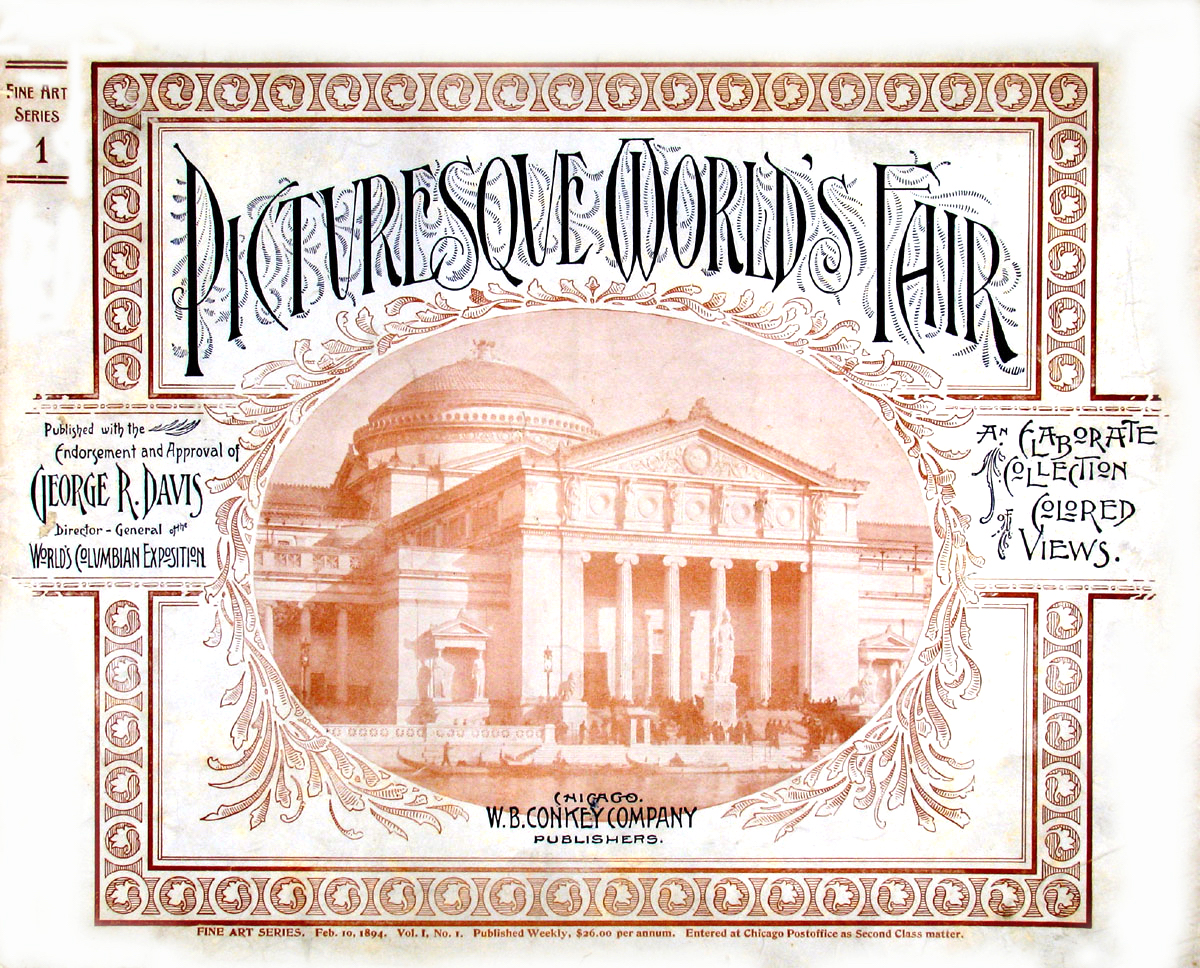
Gallery above includes several images from this collection.
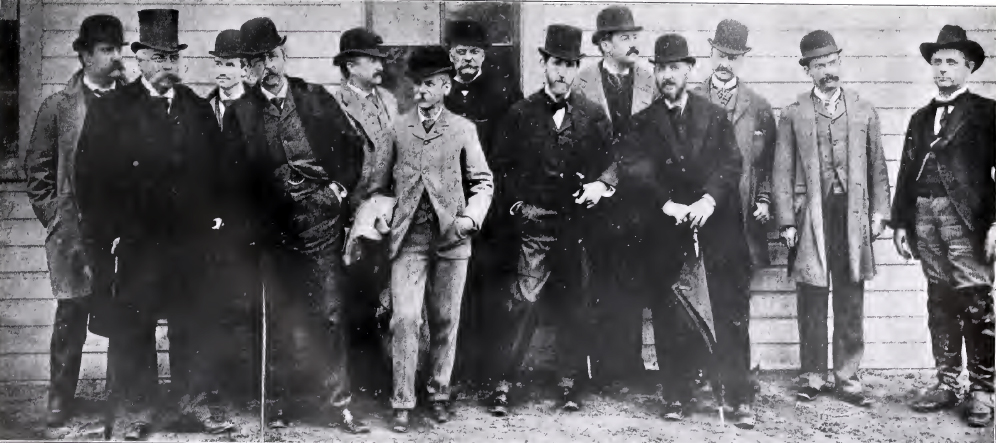
Architects and officials of the World Columbian Exposition taken in the winter of 1892.
Included in the photograph (in order from left to right): Daniel H. Burnham, Director of Works; George B Post, Architect; Montgomery B. Pickett, Secretary of Works; Henry Van Brunt, Architect; Frank D. Millet, Director of Decoration; Maitland Armstrong, Artist; Col. Edmund Rice, Commander of the Columbian Guard; Augustus Saint-Gaudens, Sculptor; Henry Sargent Codman, Landscape Architect; George Willoughby Maynard, Artist; Charles F. McKim, Architect; Ernest R. Graham, Assistant Director of Works; Dion Geraldine, General Superintendent.
Mr. Millet went down with the Titanic.
Leave a Reply