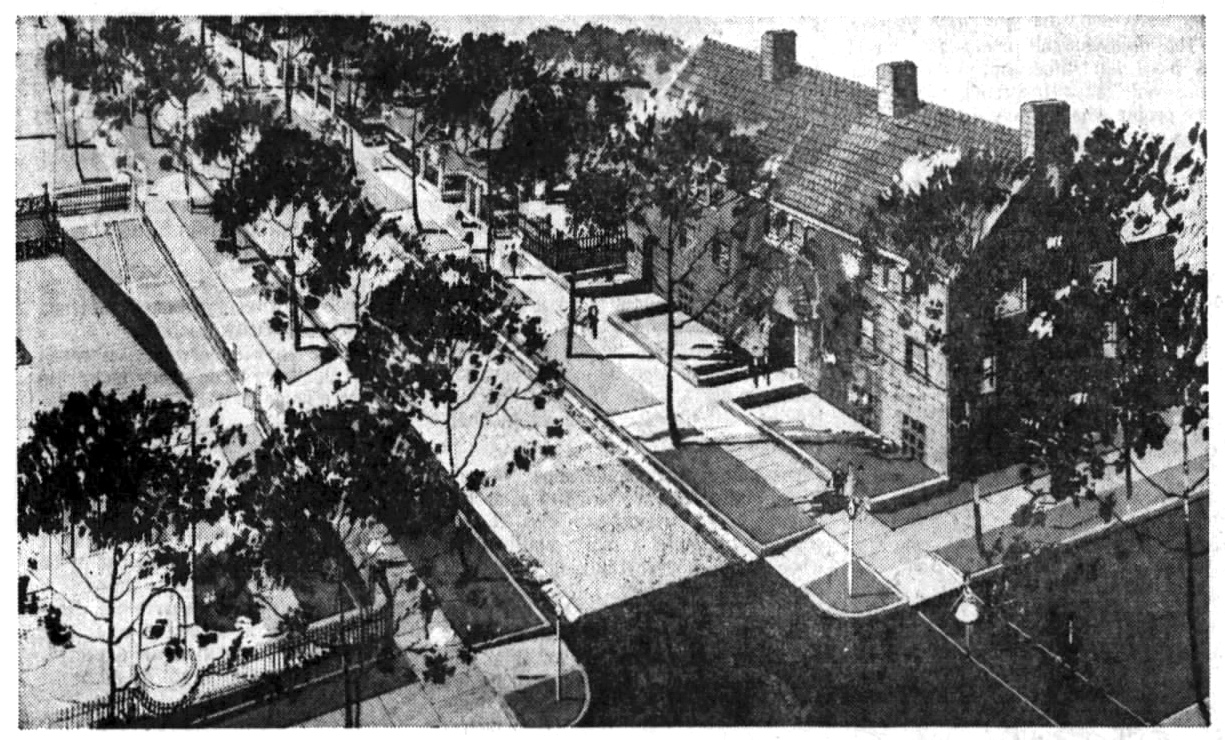
Beaurivage French Flats, Victoria Hotel
Life Span: 1876-1908
Location: NW corner Michigan av.and Van Buren
Architect: Clinton J. Warren
- Lakeside Annual Directory of the City of Chicago, 1875
Beaurivage Bldg., Michigan av. n.w. cor. Vanburen
Lakeside Annual Directory of the City of Chicago, 1880
Beaurivage Building, 194 Michigan av.
Lakeside Annual Directory of the City of Chicago, 1884
Beaurivage Building, 194 Michigan av.
Lakeside Annual Directory of the City of Chicago, 1904
Hotel Victoria hotel co props 194 Michigan av
Chicago Tribune, December 19, 1875
FRENCH FLATS.
A Genuine Apartment House.
There are a great many buildings in the city designated as French flats which do not possess the least right to the title, and are in fact nothing more or less than tenement-houses. In speaking of them as tenement houses we do not mean that they are the rickety old rookeries generally occupied by fruit peddlers and organ-grinders, but we mean tenements of the better class, occupied, perhaps, by some of our most respectable citizens, and in many cases to be found situated on the best streets in the city. In all large cities there are houses occupied by two or three families, and sometimes dozen families. These are chiefly occupied by small business men and clerks who put up with living in a house with a dozen other families for the sake of being near their business, and it not unfrequently happens that these buildings resemble a business block full of offices much more than a French flat, though they may glory in the name. London and all other large cities have this kind of houses in abundance, and Paris has the same.
The name French flats conveys the idea of a building with a court in the centre and a carriage-way entering from the street, where each tenement or flat is a complete residence in itself and not a few rooms without any conveniences as is the case in many of our so-called flats.
A building which is a good specimen of the genuine flat is situated on the corner of Michigan avenue and Van Buren street. It is five stories high above the basement, and has a frontage of 101 feet on Michigan avenue with 110 on Van Buren street. It has an interior court of over 40 feet square, access to which is had through a carriage-way in the centre of the Michigan avenue front, and also by a wagon-way in the rear. The court will be paved with asphalt, and will have a fountain in the centre. The building is of pressed brick with sandstone trimmings and terra cotta cornices and ornaments. Each story contains three complete residences fronting on the corner and on Michigan avenue and Van Buren street respectively. There is a bay window on the corner and also on each street front, which gives each residence a bay window for all the parlors. Each dwelling is complete in itself, and will contain parlor, sitting room, dining room, bed rooms, bath room, kitchen, drying closet. ash and garbage flues, etc. The kitchens and bath rooms will be supplied with hot water from the boiler in the basement, and all the halls and stairways will be warmed with steam. The building will have three elevators, one passenger and two freight, also two principal and two servants’ stairways. The principal stairways will be entirely inclosed with brick walls. The dwellings in the first story will have direct entrances from the streets as well as from stairways, while those on the second story and stories above will each have a commodious balcony on the street fronts in addition to their main and rear entrances.
Every precaution is taken against fire. building is constructed in the strongest manner, all joists being carried by brick walls and not stud partitions, as is too often the case.
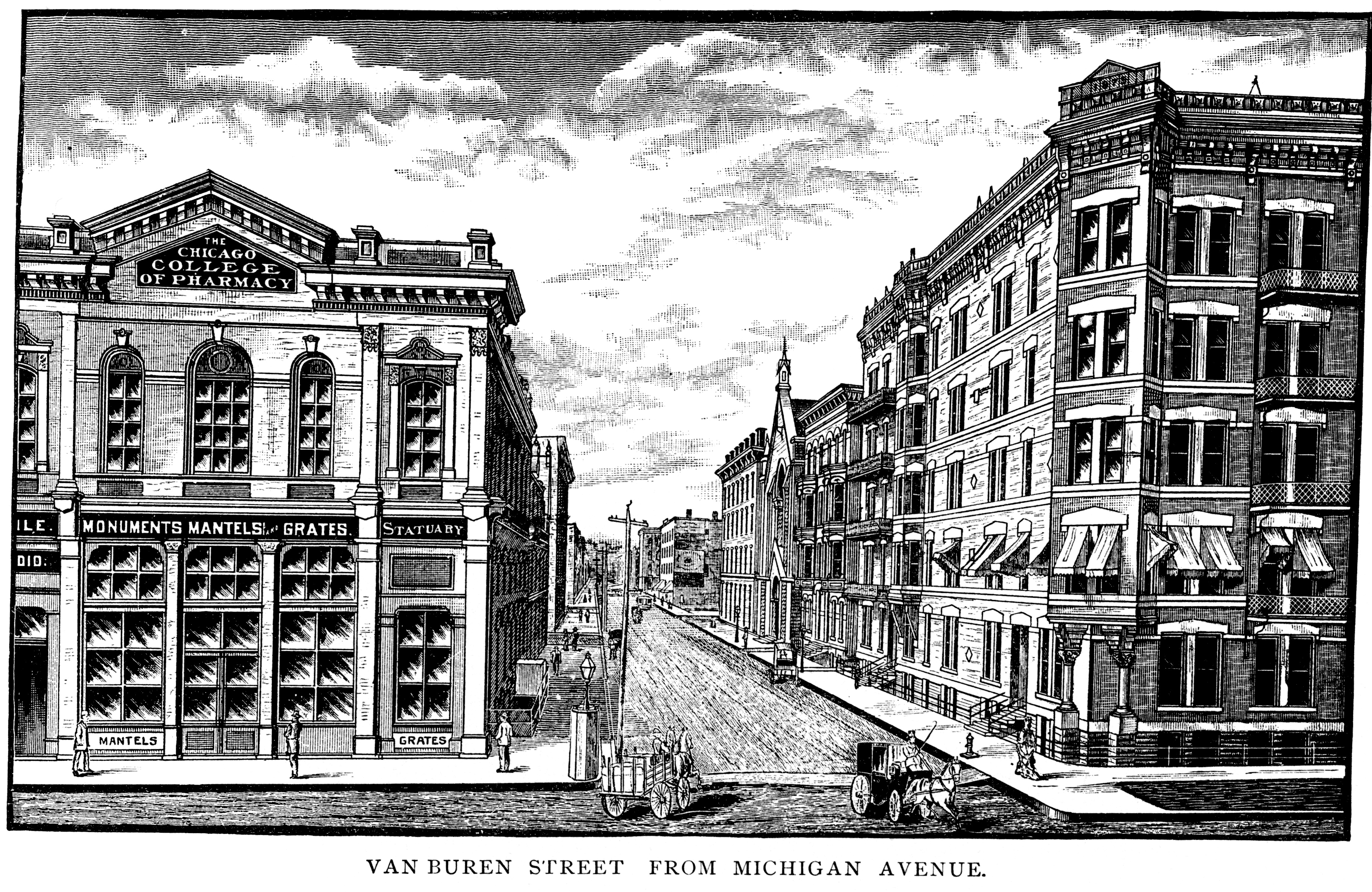
- Beaurivage Bachelor Apartments (right)
Burlington Mnfg. Co. Monuments (left)
1880
Chicago Tribune, January 6, 1884
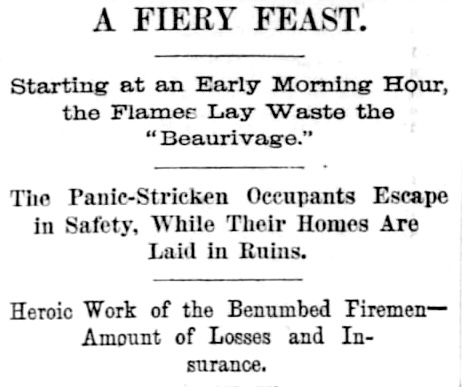 The Beaurivage, one of the largest and handsomest apartment buildings in Chicago, located at the northwest corner of Michigan avenue and Van Buren street, was invaded by a disastrous fire yesterday morning at an hour when the inmates were in their deepest slumber, and when the cold was most bitter. The scenes of distress and excitement which followed the outburst of the flames and the surge of smoke through the corridors and halls may well be imagined, and so, too, may the daring and torturesome struggles of the firemen, who had not only their natural enemy to contend with, but the icy atmosphere as well.
The Beaurivage is a six-story brick building fronting on Michigan avenue, prettily trimmed and ornamented with bay windows and outside balconies. It is divided into two wings, separated by a court, and provided with fifteen suites of living apartments, or French flats. There is an archway leading from the avenue to the court, and at the right of this archway near the court is the office.
The Start.
The fire started in the basement under the office, but how no one seems to know. There are several different theories as to the origin, and the most plausible one is, that some of the beating apparatus became too hot. The fire had burst through the office floor and gained considerable headway when discovered. An alarm was received by the insurance patrol at 3:53 from the American District Telegraph Company, and at 3:54 the Fire Department received an alarm from Box 55, which was promptly responded to. In spite of the cold a lead of hose was soon in the office. and the fire there was quickly extinguished. But it had eaten its way along the basement and around the line of the court to the elevator-shaft at the northwest corner of the building, up which it climbed to the roof with startling rapidity.
A Panic Among the Occupants.
The halls were now filled with smoke, and the cry of “Fire!” was heard echoing on all sides through the building, creating, of course, a panic among men, women, and children, rushed wildly from downy beds in luxuriantly-furnished apartments only to be driven back by the smoke which rolled in opaque. masses through every door opened in its way. People living on the lower flats had no difficulty in making a safe exit, and might have safely stopped long enough to exchange night-robes for toilets more suitable to the freezing atmosphere on the outside. The majority, however, ran madly from the place with costumes better adapted for a midsummer night’s dream than a 27°-below-zero reality. The women screamed, the children cried, and the men yelled themselves hoarse, almost drowning the crackling of the flames gathering about them. A large number of the young ladies appeared on the street protected each only by her night-robe, a sealskin sack, and a red plush album on a silver card-receiver. Those occupying apartments on the upper floors in the vicinage of the flames were in the greatest danger, but even they might by exercising greater coolness have dressed warmly and reached the street and some of the more cool-headed men hastened to the relief of the women and children up above, and not a few were carried half-fainting from the danger. One or two invalids were removed in this way. and one child was carried from the fifth floor by a man on the tire-escape. Chief Swenie had his men make a tour of the building early in the progress of the fire in search of the panic-stricken, and all accidents were prevented. Not a single one occurred.
A Harbor of Refuge.
Fortunately the Leland Hotel just north of the Beaurivage afforded a comfortable and convenient shelter for the terrorized and frozen people. Mr. Leland and his employés rendered all the aid in their power, not only to the unfortunate occupants of the burning structure, but also to the hard-worked firemen. The former were met with blankets and wraps and safely housed, and gallons of hot coffee were served to the firemen.
A Second and Third Alarm.
All this time the fire was gaining dangerous headway, and at 4:19 Chief Swenie ordered a second alarm. Even with the increased force the fire was too severe a one, hampered as the firemen were by the merciless cold. They were coated with ice, and so were the hose and other apparatus, the handling of which stiffened the fingers and chilled the blood until the struggle became a most discouraging one. Although fearing that another big fire might make the engines necessary elsewhere, Chief Swenie ordered a third alarm turned in twenty-eight minutes after the second was given. The fire by this time had carried its destruction to the roof and the total extermination of the entire building was threatened. However, with the reinforcements a stop was finally made, but not before the north wing had been well gutted in the neighborhood of the elevator-shaft, and fire. smoke, and water had laid waste thousands of dollars’ worth of elegant and costly furniture.
Loss and Insurance on the Building.
The loss on the building, which is owned by Mr. J. K. Fisher, is estimated at about $35,000, although Mr. G. W. Flersheim, the agent and manager, figured it much higher. It is insured for $114,000, divided among different companies as follows:
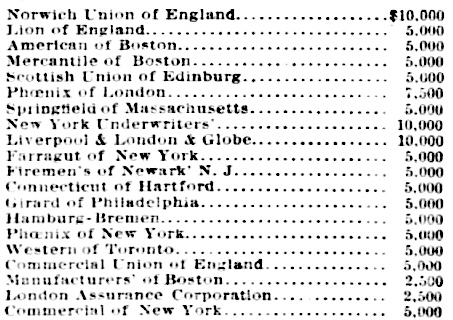
The Phoenix of New York had $1,500 on the boiler and engine in the basement.
Sufferers in the Flats.
The occupants of the building numbered about 125, there being in all fifteen flats, some of which were sub-let. The flats were occupied as follows:
- No. 1—The basement, occupied by the janitor.
No. 2—Thomas Murdoch.
No. 3—Mr. G. Simpkins, the engineer.
No. 4—Edward Brainard.
No. 5—F. E. Canda.
No. 6—S. F. Pratt.
No. 7—H. F. Griswold.
No. 8—Gov. Willtam H. Bross.
No. 9—The Misses Forsythe.
No. 10—G. W. Fiersheim.
No. 11—Dr. C. Morgan.
No. 12—W. H. A. Brown.
No. 13—L. J. Cadwell.
No. 14—M. Baldwin.
No. 15–C. C. Turner.
The loss on furniture will reach $20,000, which loss, leaving insurance aside, falls on
both those who rented the flats and their roomers or sub-tenants. Among the lucky tenants were Gov. Bross, Thomas Murdoch, H. F. Humphreys, and Dr. Morgan. Their apartments were not rendered untenentable.
There was some damage done to the top of the Masury Building. adjoining the Beaurivage on the north, but this is well covered by insurance. None of the Masury suffered any loss.
Beautiful Ruins.
The Beaurivage presented a beautiful external appearance yesterday, despite the ravages made on the interior by the fire. The walls were coated with snow-white ice, while the iron balconies were fringed with a heavy and fantastic lacework of the same cold, glittering formation. Ice was glittering everywhere in and about the court, and its picturesque figures called forth expressions of admiration from the hundreds who braved the cold to gaze upon the
ruin. Early in the forenoon the expelled tenants returned for a survey of their once comfortable and costly apartments. Some found only total wrecks of what had been theirs, while others found their property somewhat damaged, but covered by the tarpaulins of the patrol.
The repairing of the building will be commenced as soon as possible. Mr. Fisher, the owner, is at present in Europe.
Chicago Tribune, May 7, 1891
Not Sure What Will Be Done.
The projected plan to tear down the Beaurivage, at Michigan avenue and Van Buren streets, and to erect in its place a 400-room hotel to be known as the Victoria, has not yet been definitely decided on by the owners of the property. R. Hall McCormick, in whom the title of the Beaurivage is vested, said last night that the expiring leases on the old building brought about some discussion on its future disposition. It might be torn down and a business block erected on the site, but the fate of the old building had not been settled. The Beaurivage was built in 1876, and was one of the earliest apartment houses erected in Chicago.
Chicago Tribune, August 23, 1891
THINKS THE WALLS ARE TOO WEAK.
Mr. O’Neil Revokes Permit to Add Two Stories to the Beaurivage.
Building Commissioner O’Neil yesterday revoked a permit granted by his predecessor, John M. Dunphy, to Leander McCormick for the addition of two stories to the Beaurivage flats, Michigan avenue and Van Buren street. Mr. O’Neil gave the order that the two stories should not be added because he did not believe the walls strong enough to stand the extra weight.
“The permit ought never to have been issued,” he said. “The Beaurivage was originally a five-story building. It was partially burned six or seven years ago, the walls of course being weakened by the fire, and when it was rebuilt two stories were added. Now it is proposed to add two more, and I do not think the walls and foundations are strong enough.
“The architect, Mr. Warren, gave up the idea when I explained my position, and no effort will be made by the owner to avail himself of the permit. I should certainly fight it in the courts. Nothing will be done except to put a small one story addition, 20 by 25 feet, between the court and Masury building, covering only a sixth of the building.”
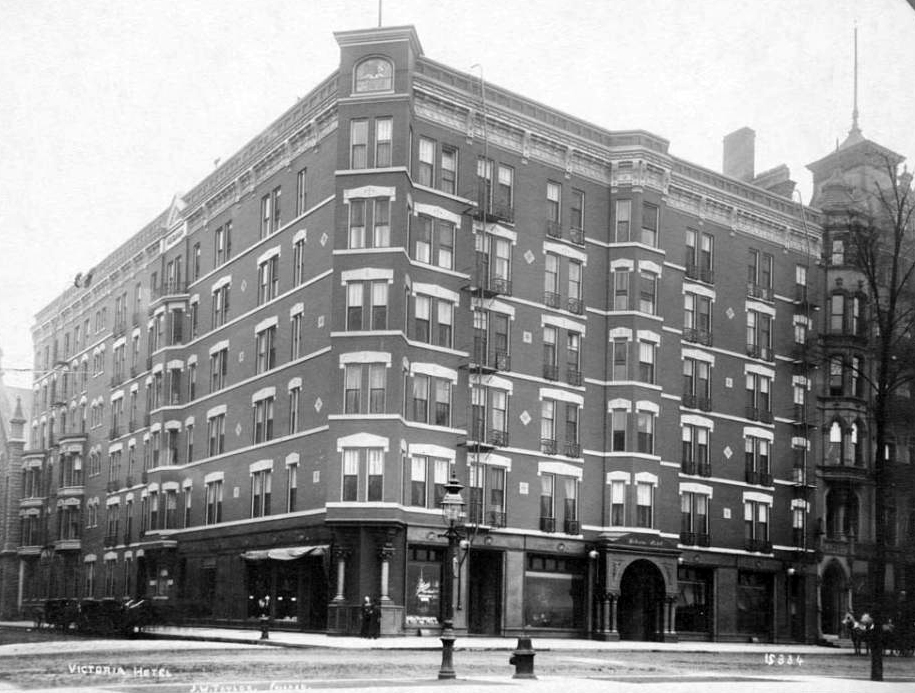
- Victoria Hotel
1892
Chicago Tribune, April 11, 1892
NEW HOTEL OPENS THIS MORNING.
The Victoria the Latest Addition to the Line of Michigan Boulevard Caravansaries.
The “Victoria,” the latest addition to the increasing line of palatial hotels on Michigan boulevard, will be thrown open to the public this morning. Yesterday it was shown privately for the first time in its completed condition.
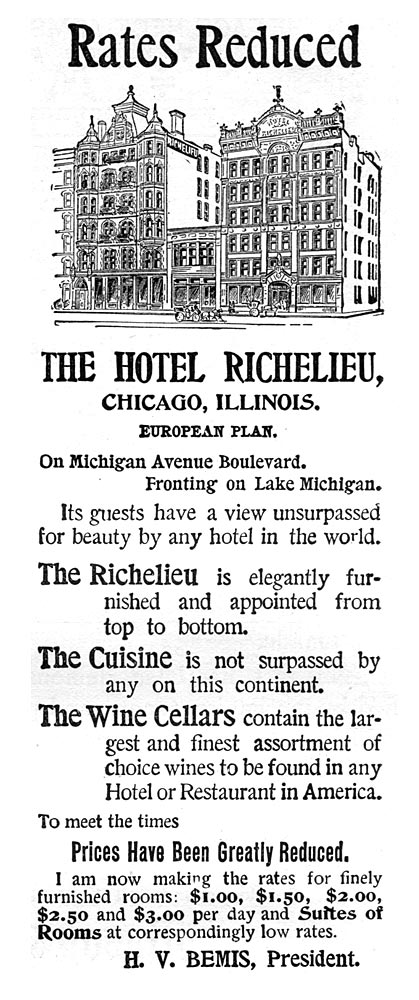
The new hotel is on the site formerly occupied by the Beaurivage, immediately adjoining the Richelieu. There was at one time some prospect that the Leland, Richelieu, and Victoria, which now fill the entire Lake-Front block from Jackson to Van Buren, would be merged into one hotel. The project was never carried out.
Leander J. McCormick purchased the Beaurivage, and before tearing it down he leased the projected hotel to J. M. Lee. The latter recently sold his Indian River Hotel in Florida for $100,000, but still has a partnership in the Fountain Spring House at Waukesha.
The lower floor of the new hotel is decorated in the colonial style. Various colors of French, Georgia, and African marble in walls, stair-ways, and pillars contrast well with the decor-ations. The dining-room is on this floor. It is made unique by walls and ceiling of pure white and sage green. No two of the rooms on the six upper floors are decorated or furnished alike. The hotel is lighted by its own electric plant. The building was erected under Mr. Lee’s personal supervision.
E. A. Whipple, widely known from his long connection with the Grand Pacifie and Audi-torium, will be associated with Mr. Lee in the management. The office force is expected to be popular. Among the members of the staff will be Will S. Shafer, J. W. Wheaton, Walter Barnes, and John Kelly, all of whom come from similar positions at the Auditorium.
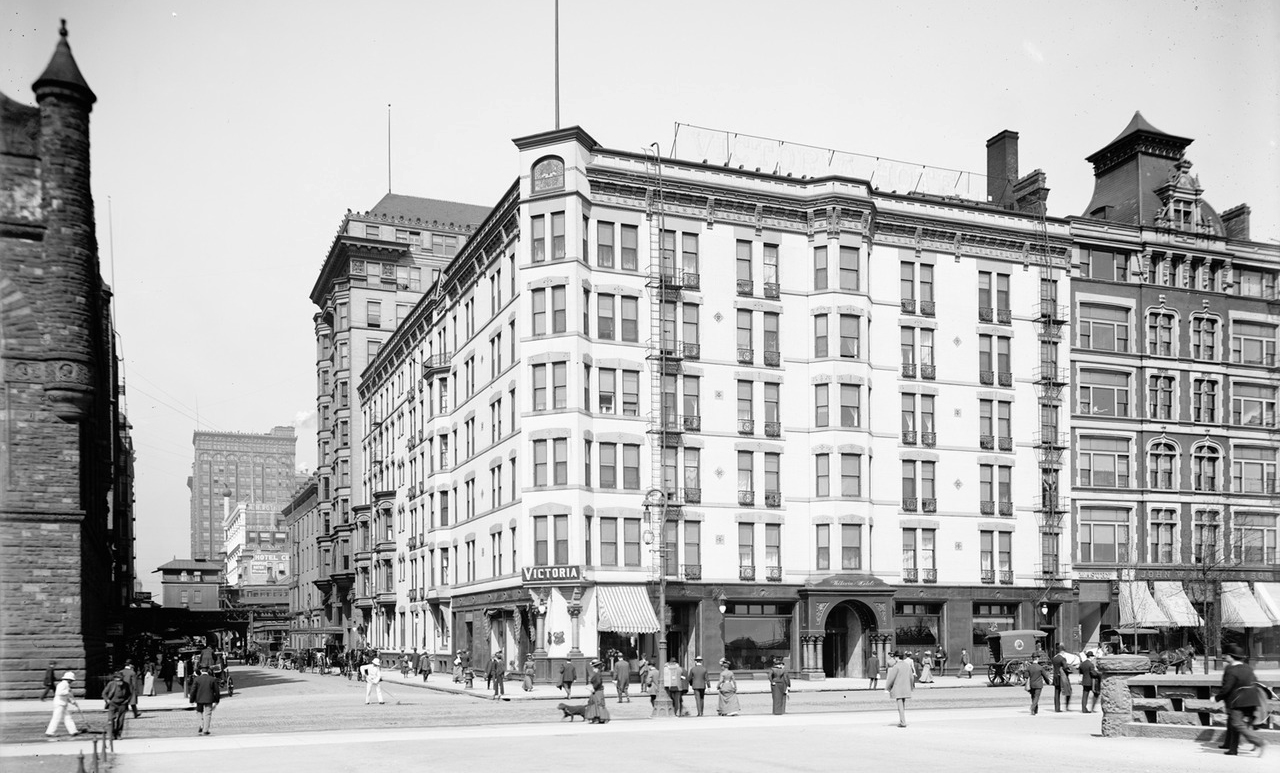
Beaurivage Bachelor Apartments as the Victoria Hotel, 1900
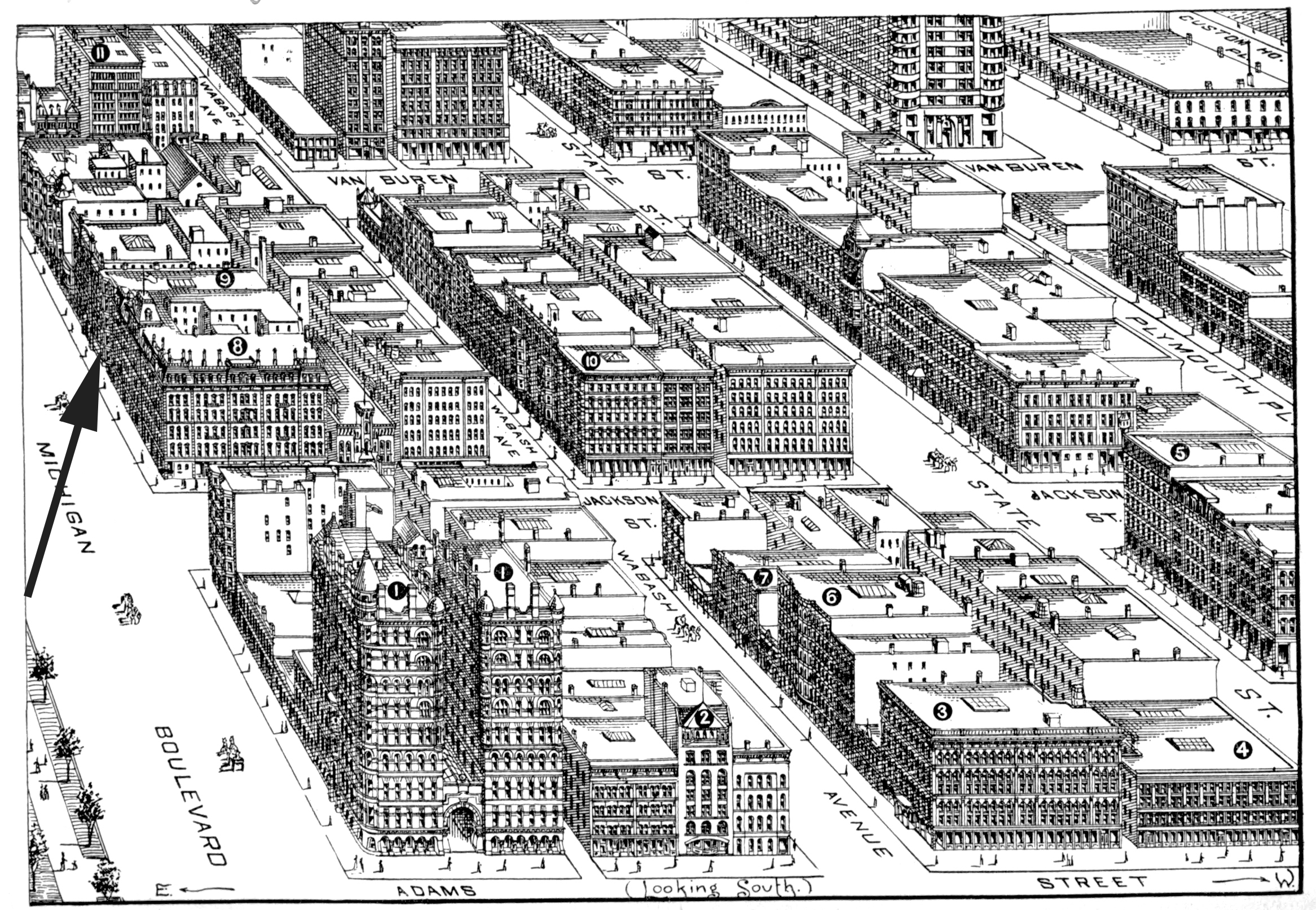
Rand, McNally’s Bird’s-Eye Views to Chicago, 1893
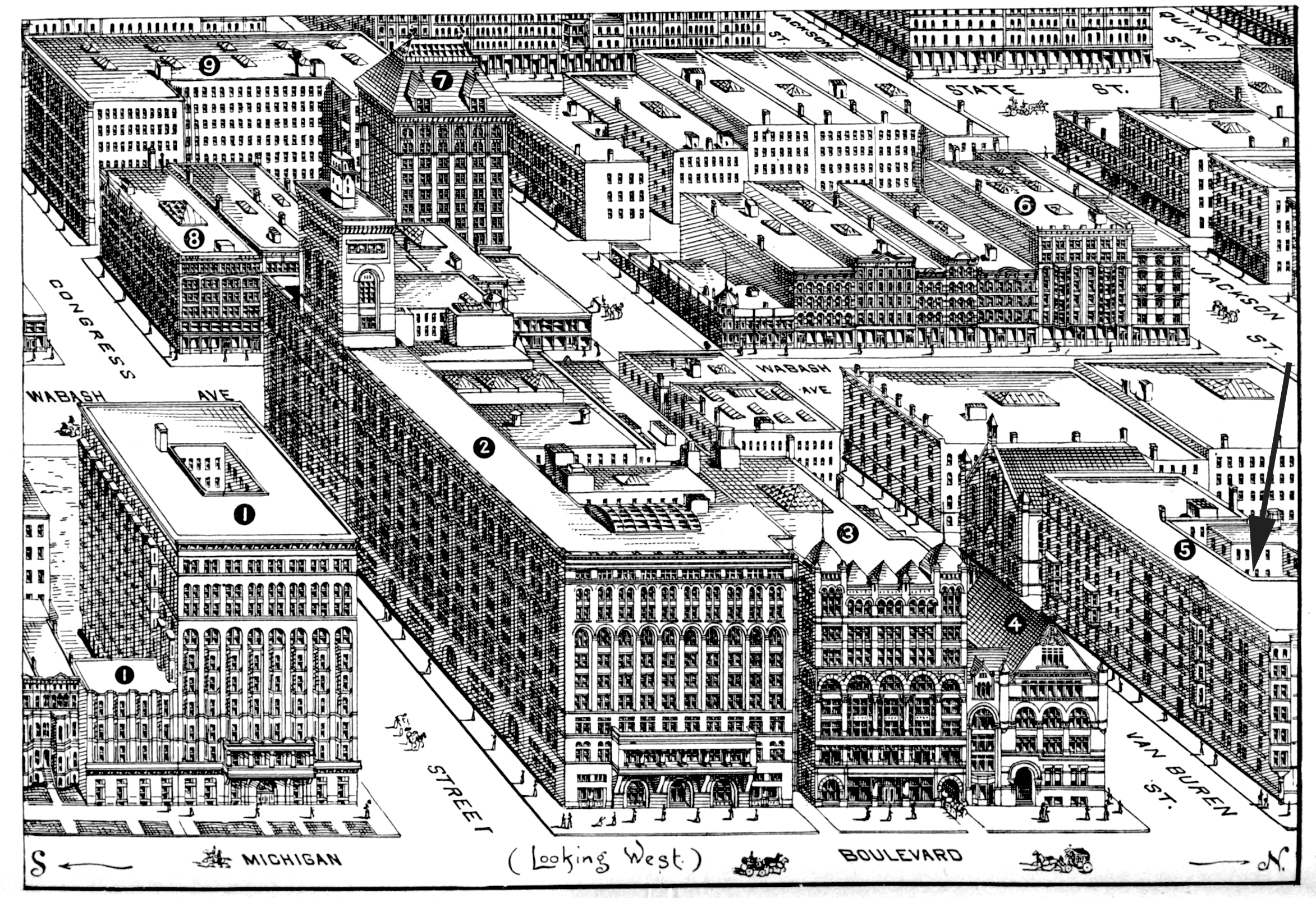
⑤ The Victoria Hotel Building
Fronts 102 feet on Michigan Boulevard and 172 feet on Van Buren Street, at the northwest corner, and was once the Beaurivage, “Chicago’s first French flats,” or fashionable apartment building. The structure is 80 feet high, in 6 stories and basement, with 2 passenger elevators. It was erected about 1878, and burned in 1882. It was rebuilt and stood until 1892, when it was remodeled for the Victoria Hotel, with 278 rooms. Cost, $600,000. (See “Hotels.”)
The Victoria. This is one of the Lake Front hotels, and has its fame yet to make. It caters to English tastes, and is favorably situated to lay out a campaign to please the public. It is on the Lake Front at the corner of Michigan Avenue and Van Buren Street, and has a first-class café.
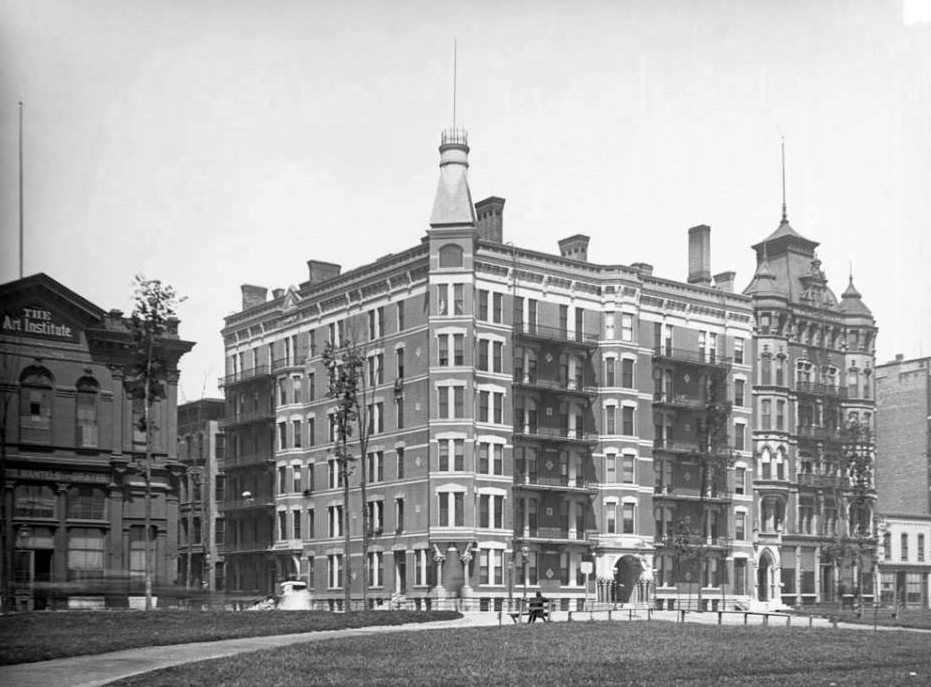
- Victoria Hotel
1892
Chicago Tribune, February 20, 1909>
New McCormick Building Planned.
The McCormick building is to be the name of the new twenty-two story building which R. Hall McCormick is to build on the site of the Victoria hotel at the northwest corner of Michigan avenue and Van Buren street. Mr. McCormick announced yesterday that all the arrangements in connection with the construction of the building have been completed and that it was planned to have it completed by May 1, 1910.
It will be an office building. with stores on the ground floor, will be twenty stories above ground and two below. and will cost $1,500,000. The contract has been let to the George A. Fuller company and the plans were prepared by Holabird & Roche. It will have a granite base extending up three stories, with long grayish colored bricks above, with interior finish of marble and mahogany.
The entrance, twenty feet wide, will be at the north end of the building, while the Spaulding Jewelry company will occupy the store at the corner of Van Buren street, 60x 171 feet, under a lease running fifteen years. There will be a twenty foot store to the north of this.
The work of wrecking the Victoria will begin May 1. Originally this was an apartment building and one of the most exclusive in Chicago. During world’s fair time it was converted into a hotel. The McCormicke paid $400,000 for the property, and it is said Mr. McCormick has refused an offer of $75,000 annual ground rent for a lease of ninety-nine years. This is 4 per cent on $1,875,000.
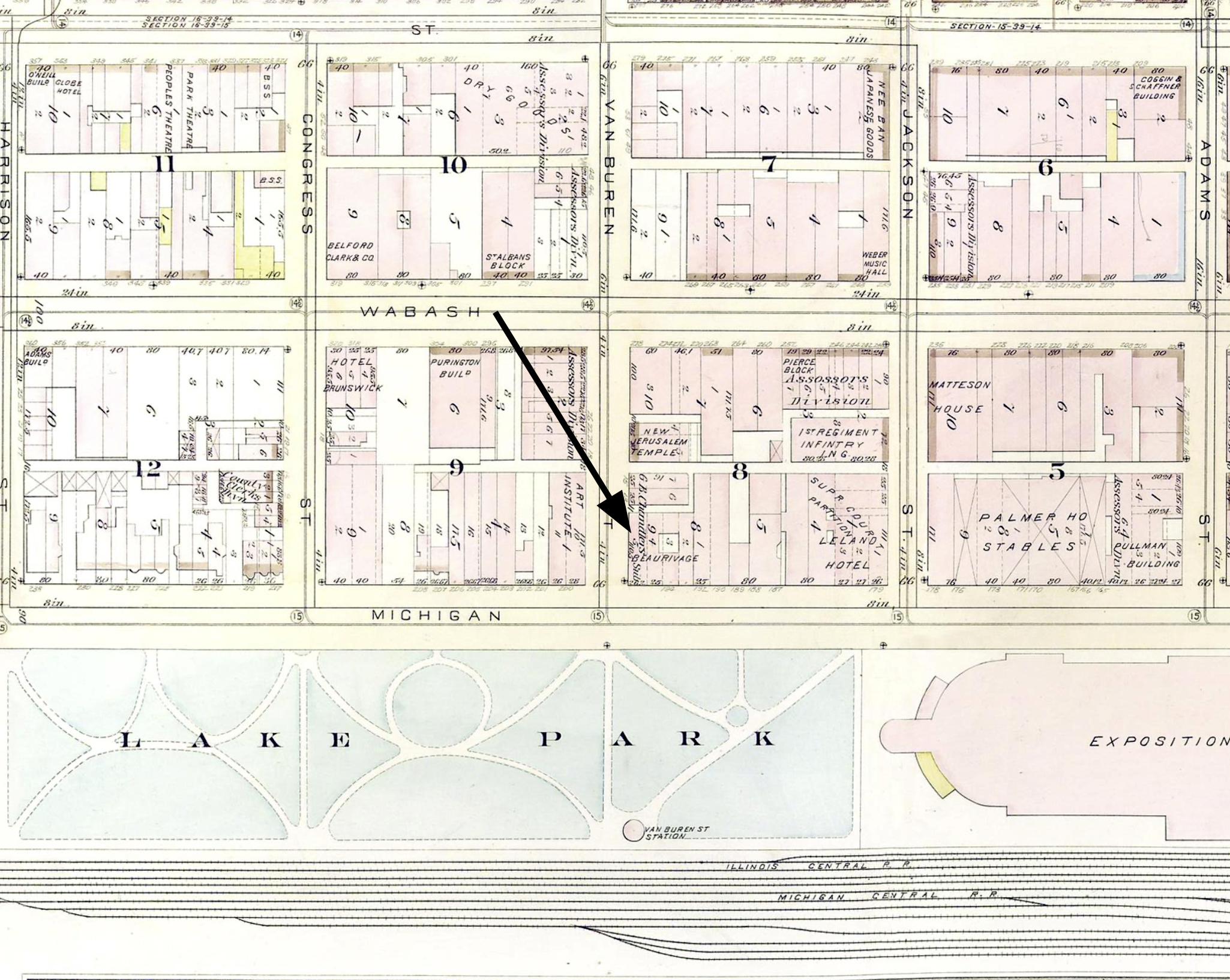
- Beaurivage Bachelor Apartments
NW Corner of Michigan and Adams Streets
Robinson Fire Map
1886
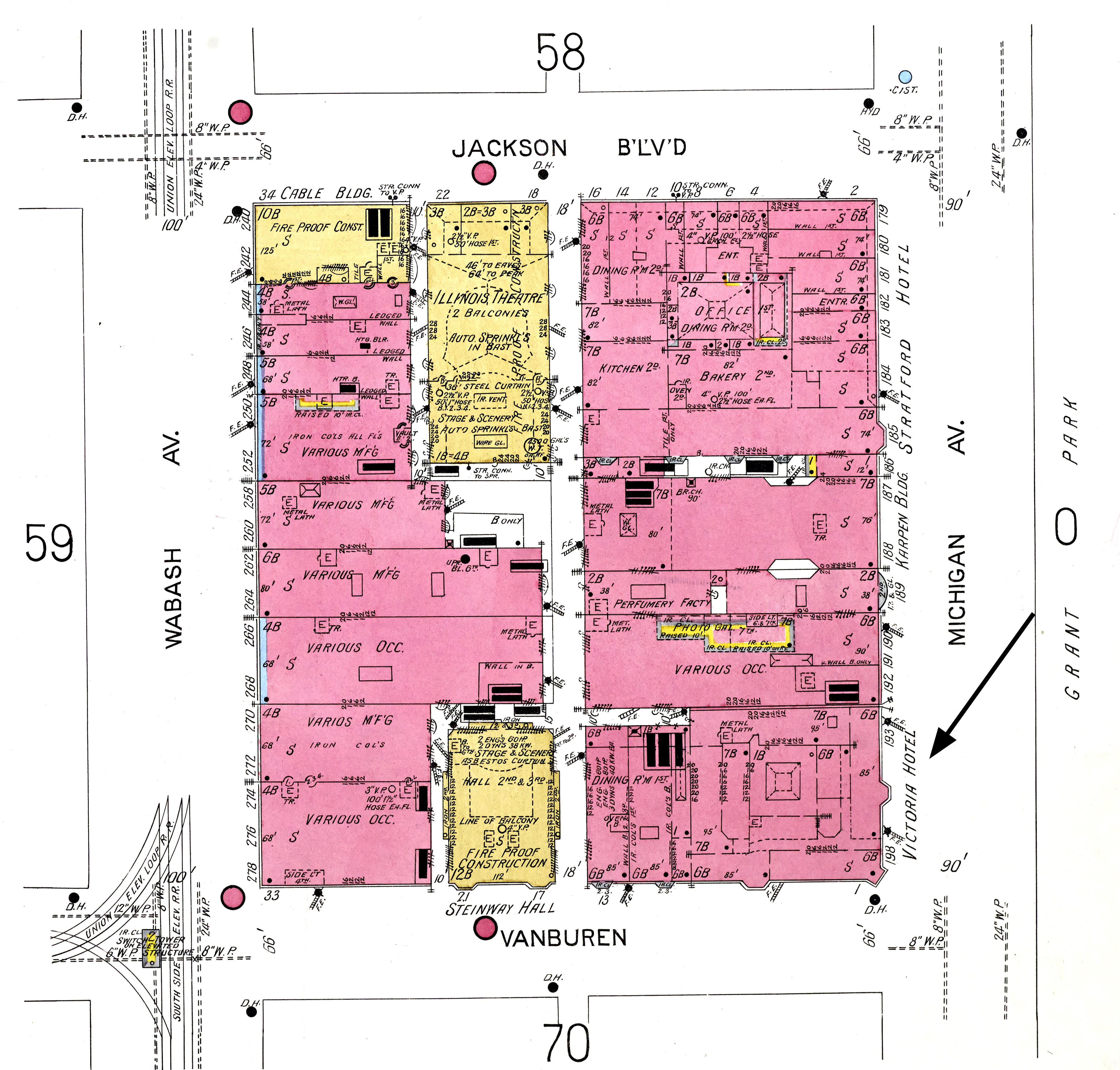
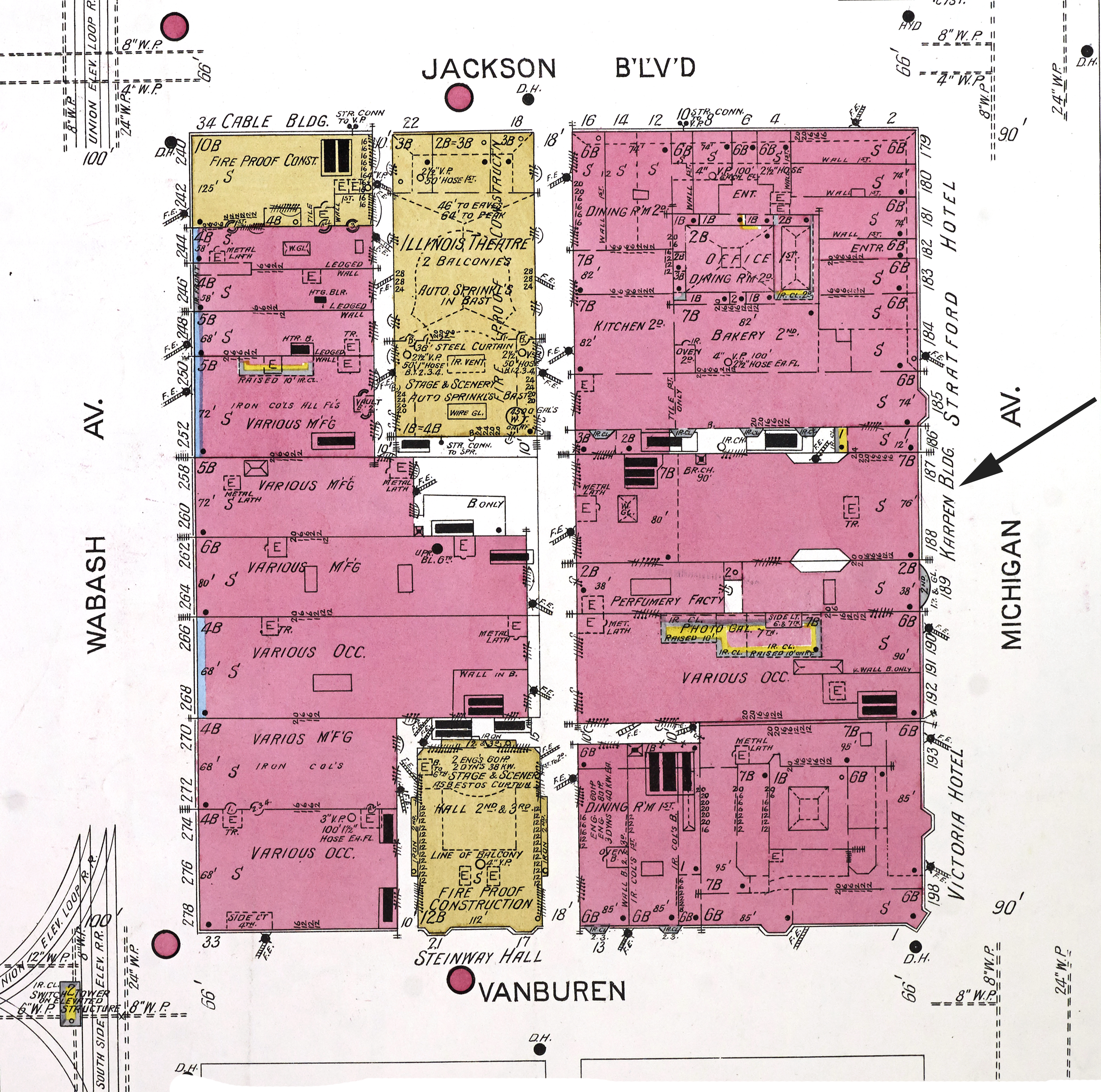
- Victoria Hotel
NW Corner of Michigan and Adams Streets
Sanborn Fire Insurance Map
19006
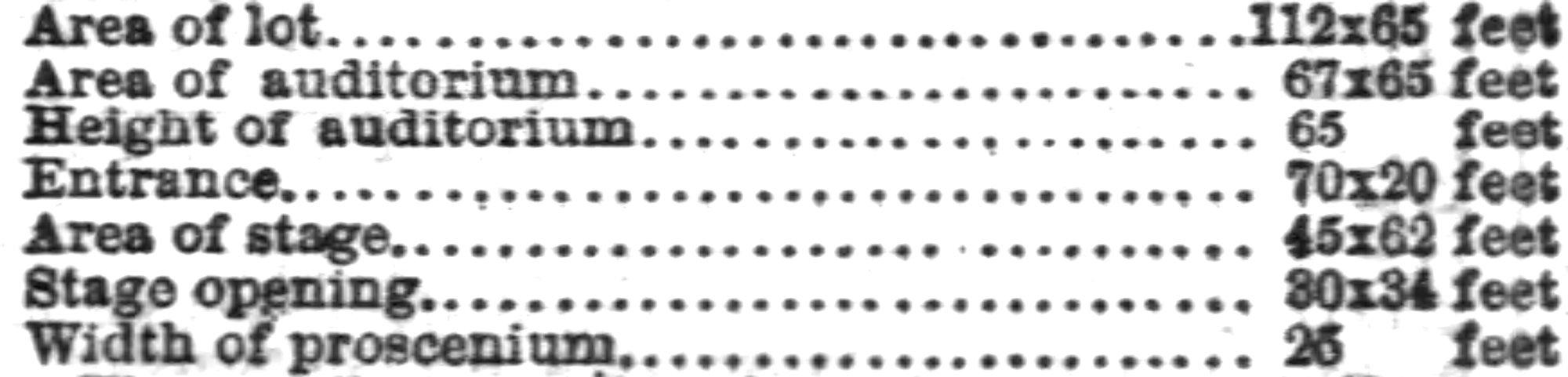
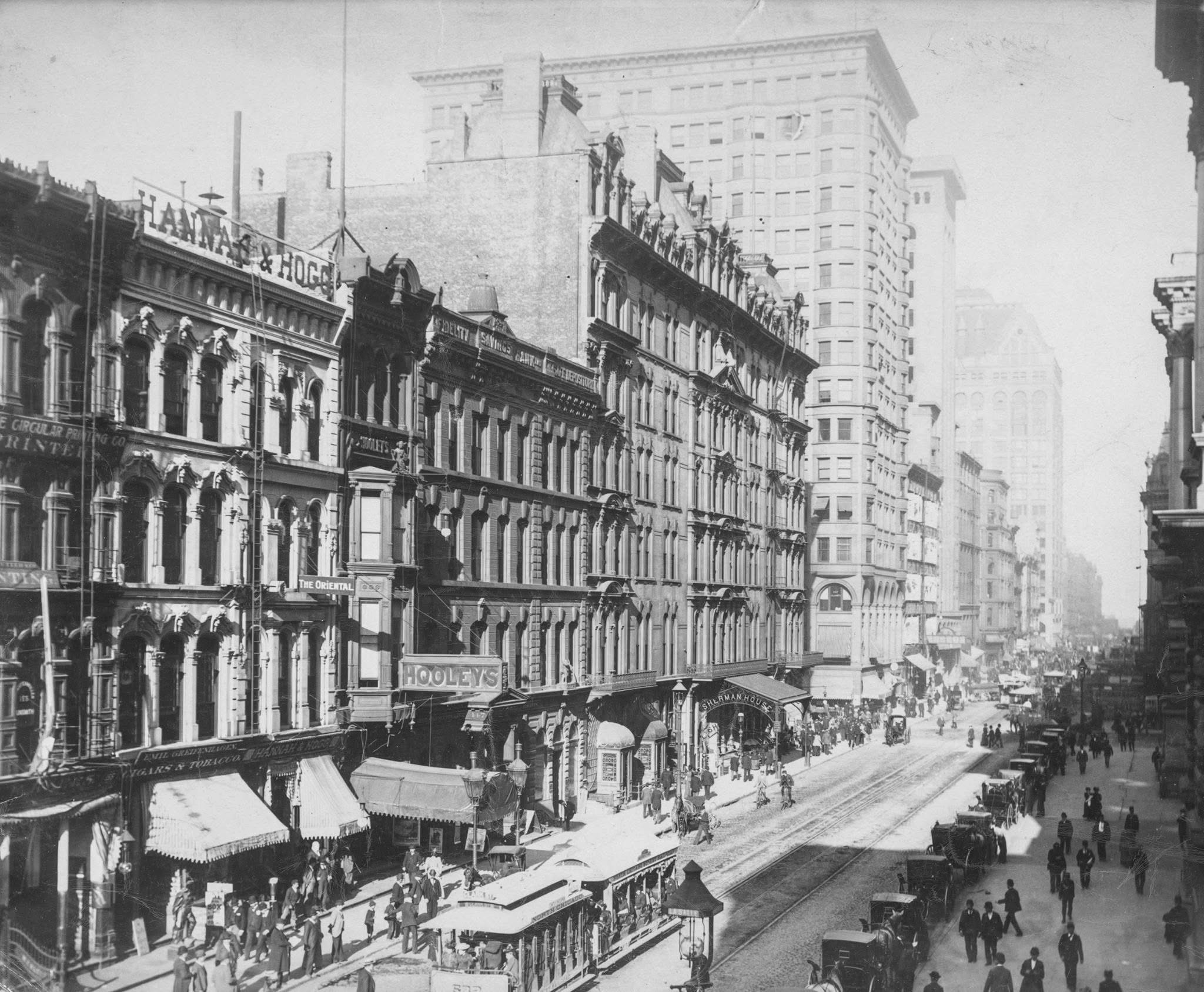
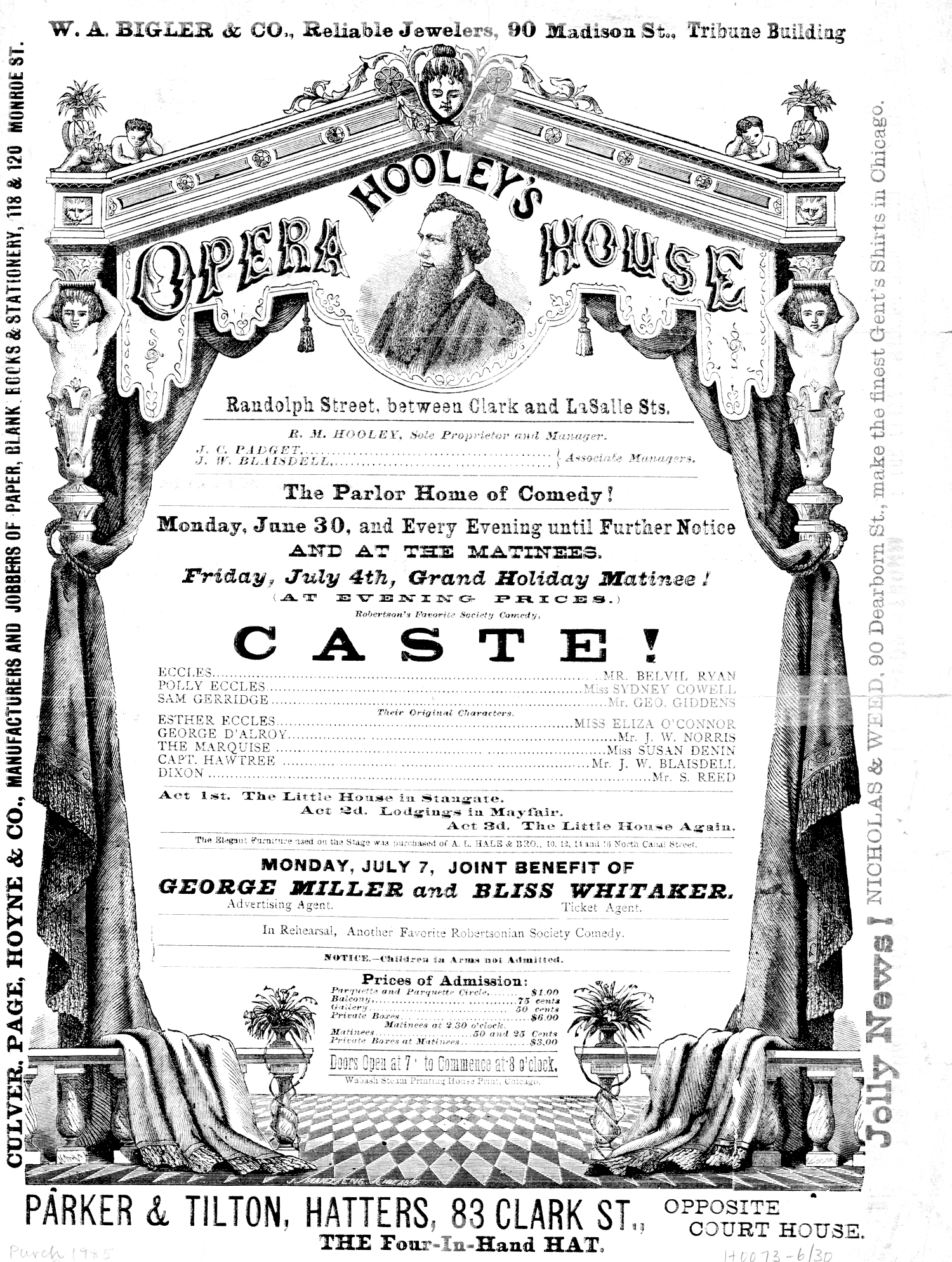
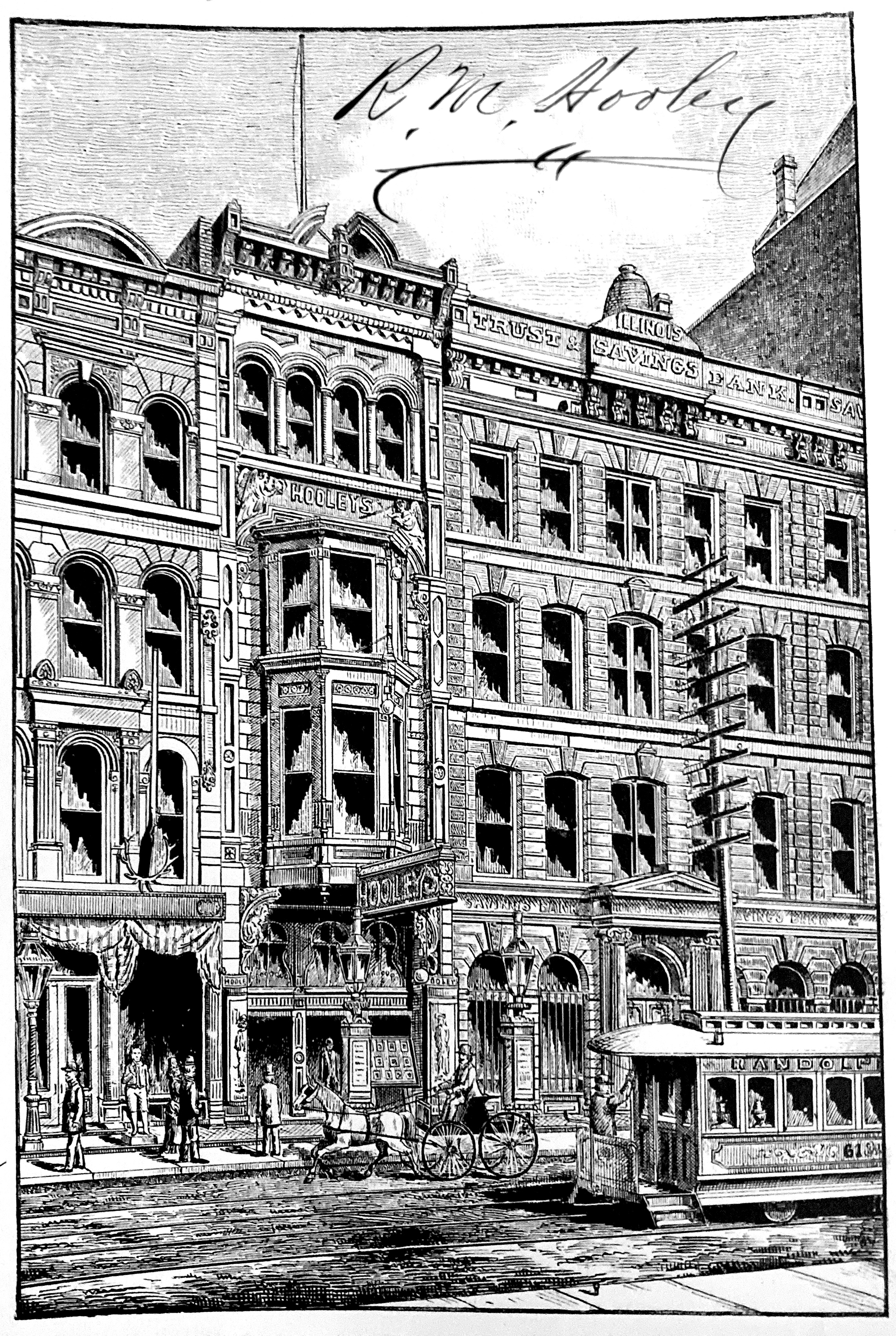
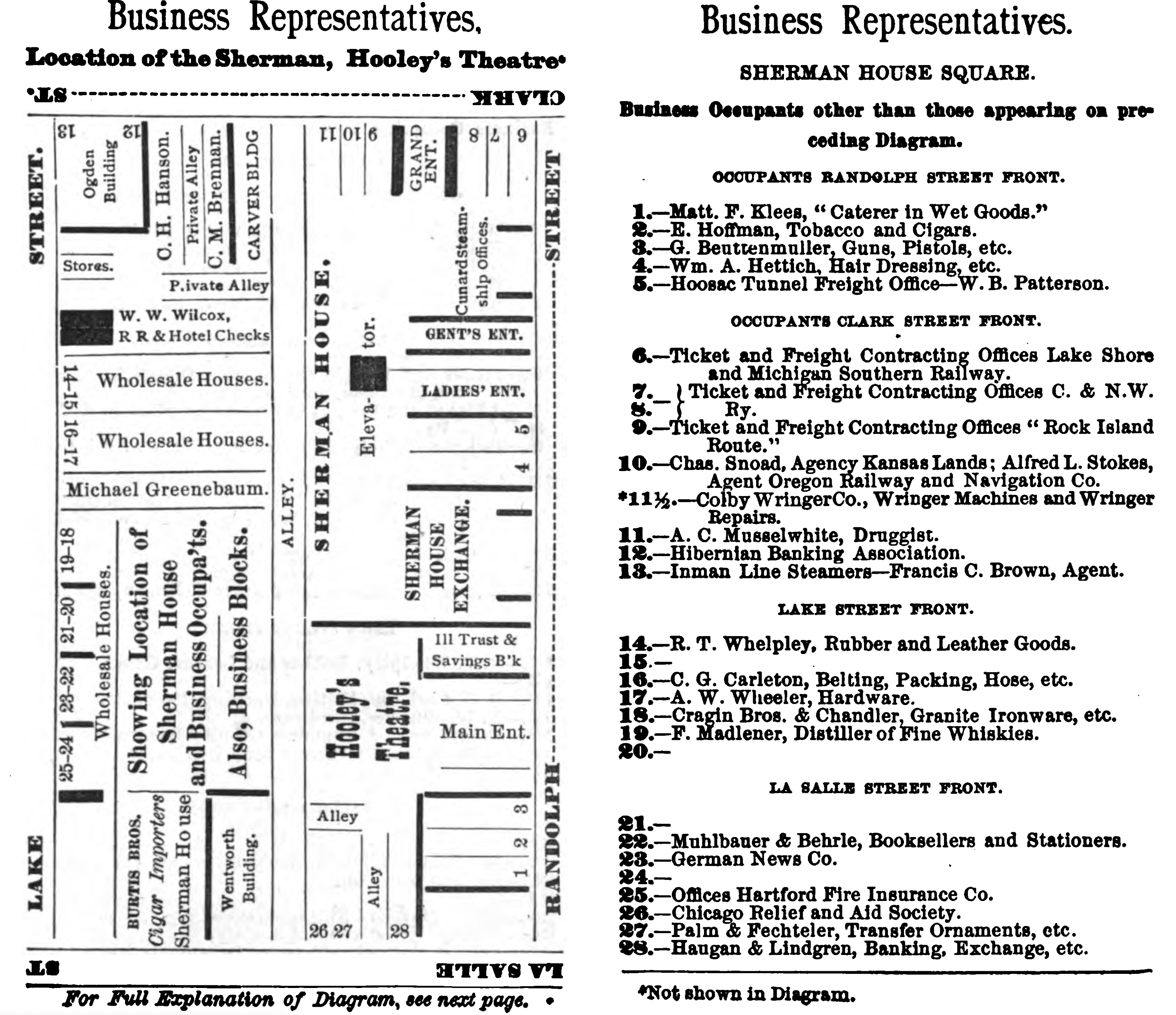
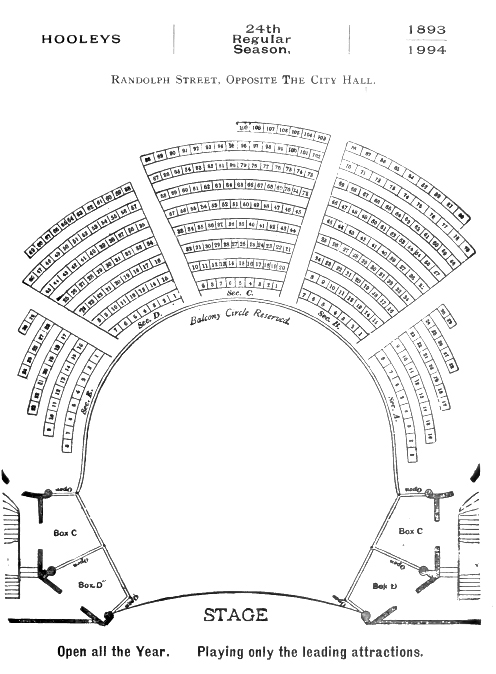
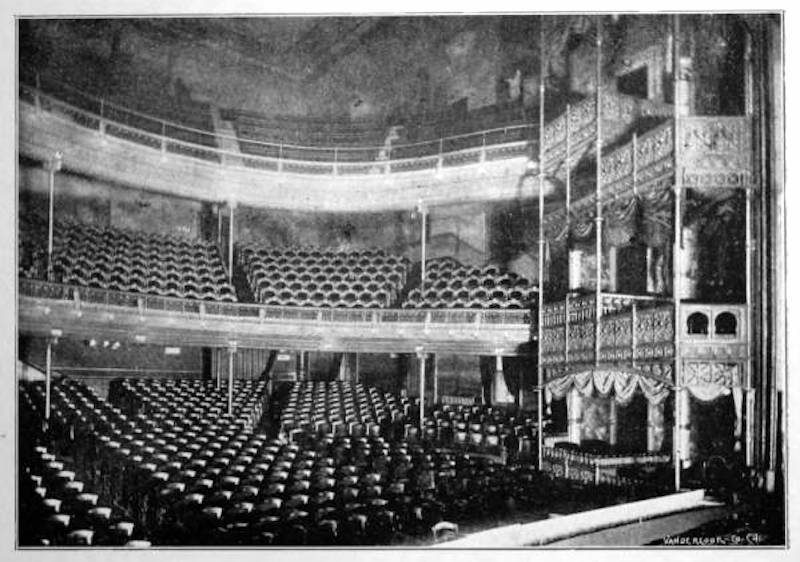
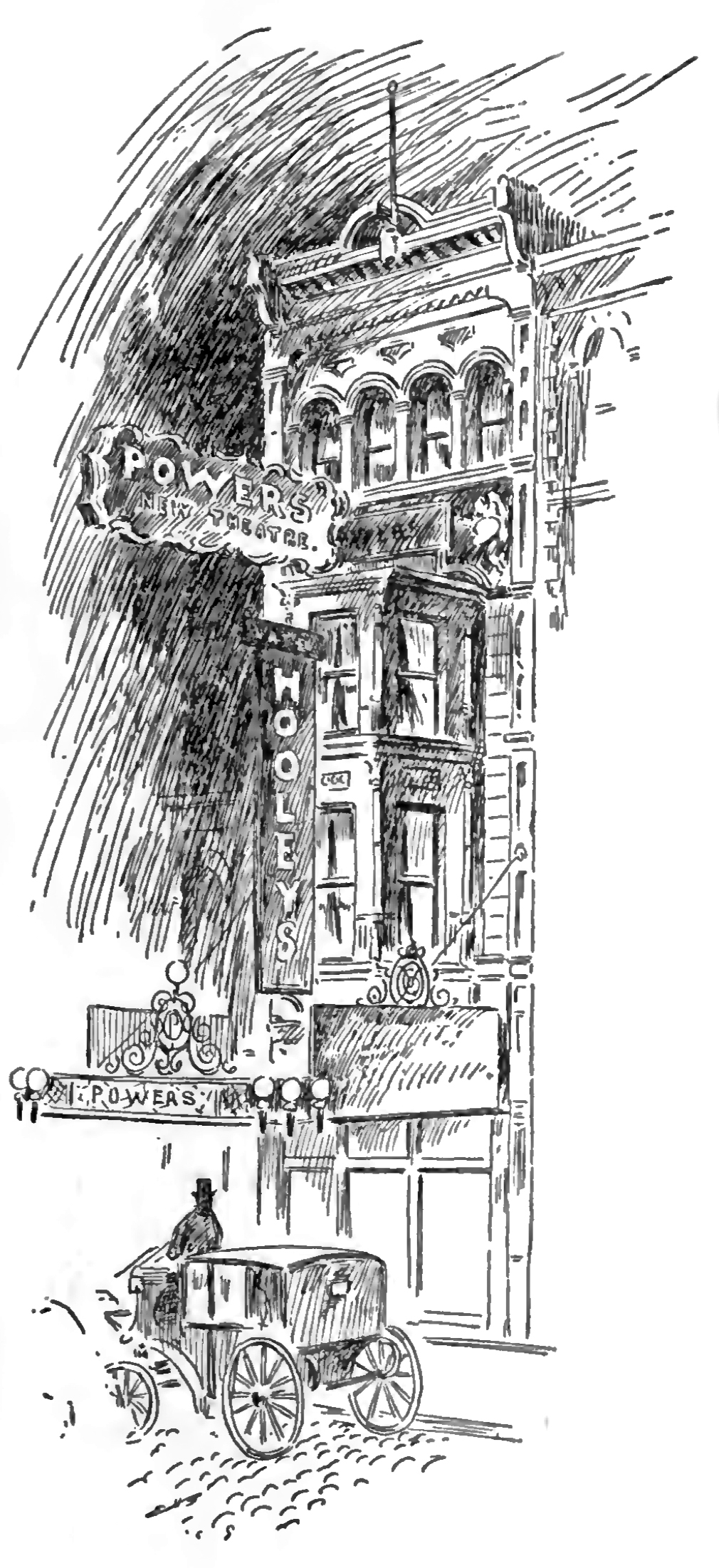
 Hooley’s Opera House is rapidly approaching completion. Its location insures it a prosperous business when the city is entirely rebuilt. Situated near the junction of the Clark and Randolph street railroads, in the immediate vicinity of several of the best hotels, and adjacent to the city buildings, it will be in the very centre of trade, and conveniently placed as regards population. The front elevation, which will be entirely finished before the next week closes, is 20 feet wide by 72 feet in height. The material used in its construction is gray Cincinnati stone, chaste and elegant in color, and susceptible, as our readers are aware, of fine and elegant finish. The architectural design of the front is handsome. The first story will be entirely occupied by the entrance, which will be 18 feet in length, by 20 in width, and width 70 feet deep to the doors of the auditorium. On each side of the entrance, at the upper corner, are two figures carved in relief in solid blocks of stone, representing Comedy and Tragedy, They are eight feet in length, and placed partially leaning over the entrance in such a manner to form an archway. The story next above will be of iron and plate glass. The third story will be also of stone and plate glass, heavily encircled with columns and pilasters, and adorned on the upper part with two winged figures, also carved in stone, representing the geniuses of Music and Art. The upper story will have similar windiws, fluted columns, pilasters, and arches, and be surmounted by a neat cornice of galvanized iron, with a broken pediment adorned with a gilded globe. The interior of the upper stories of the part of the structure devoted to the entrance will be divided into offices, to be used for purposes of miscellaneous business. One of the finest offices will be appropriated by Mr. Hooley to his own private use.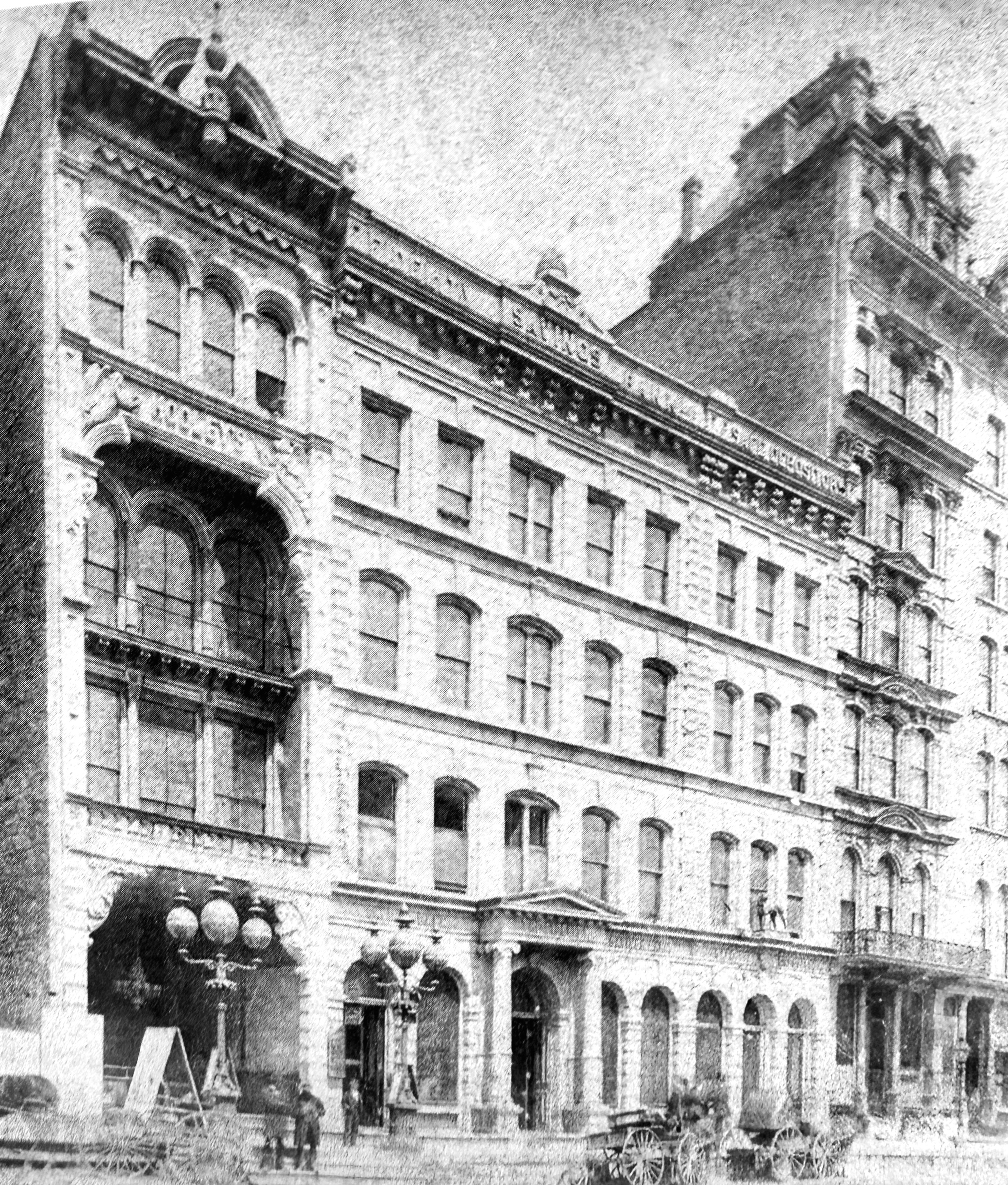

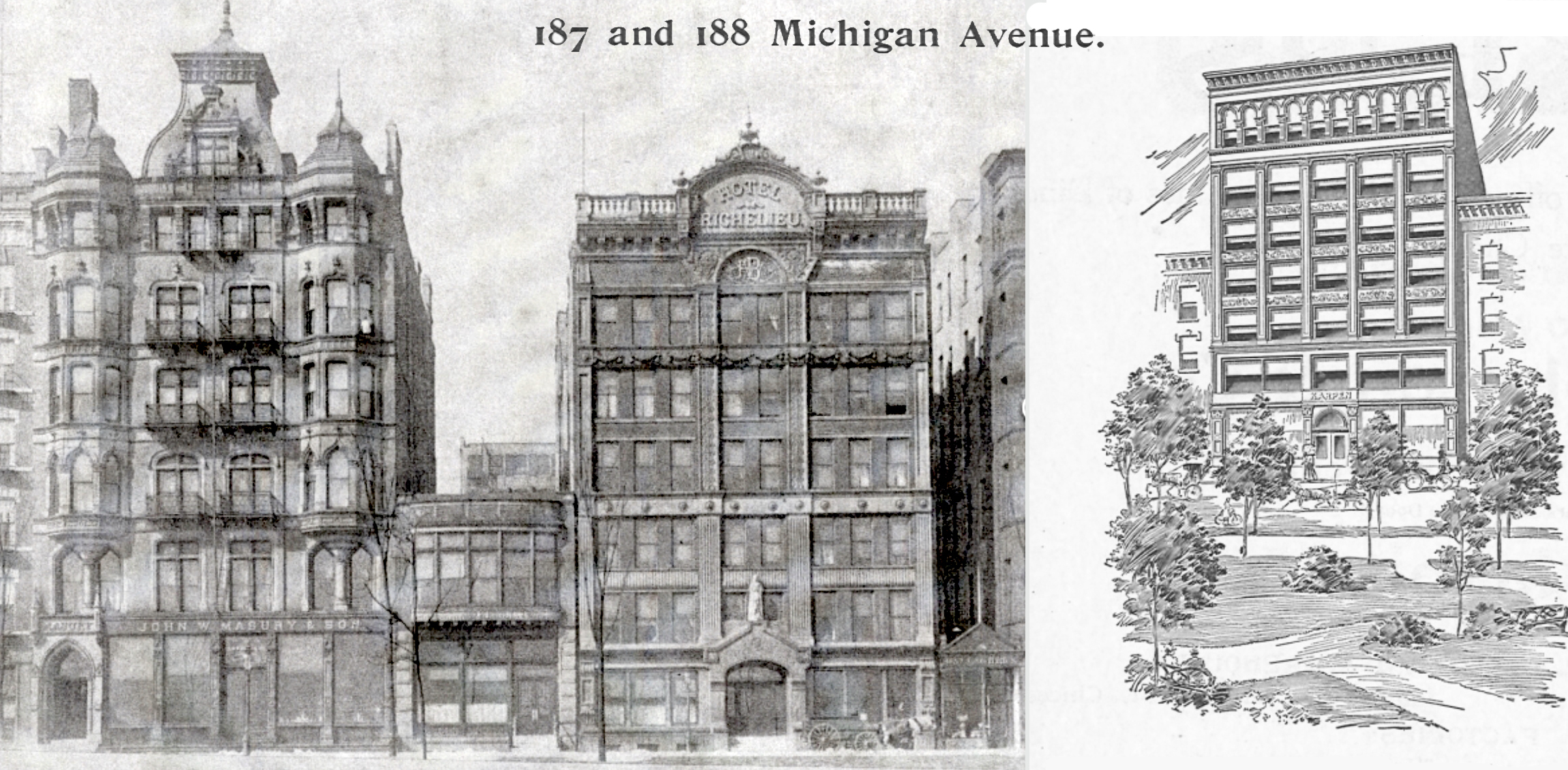
 Taking a walk on Michigan boulevard last Sunday afternoon, and being overtaken by the the writer took refuge in the portico of Nos. 187 and 188. He had been there but a few minutes when the door opened and kindly extended an invitation offered to escort him through his latest acquisition, which from this time on will known as The Hotel Richelieu, The Cafe Richelieu, and The Richelieu Art Gallery, a trinity of such marvelous beauty that a brief review was seen will undoubtedly to The Tribune readers.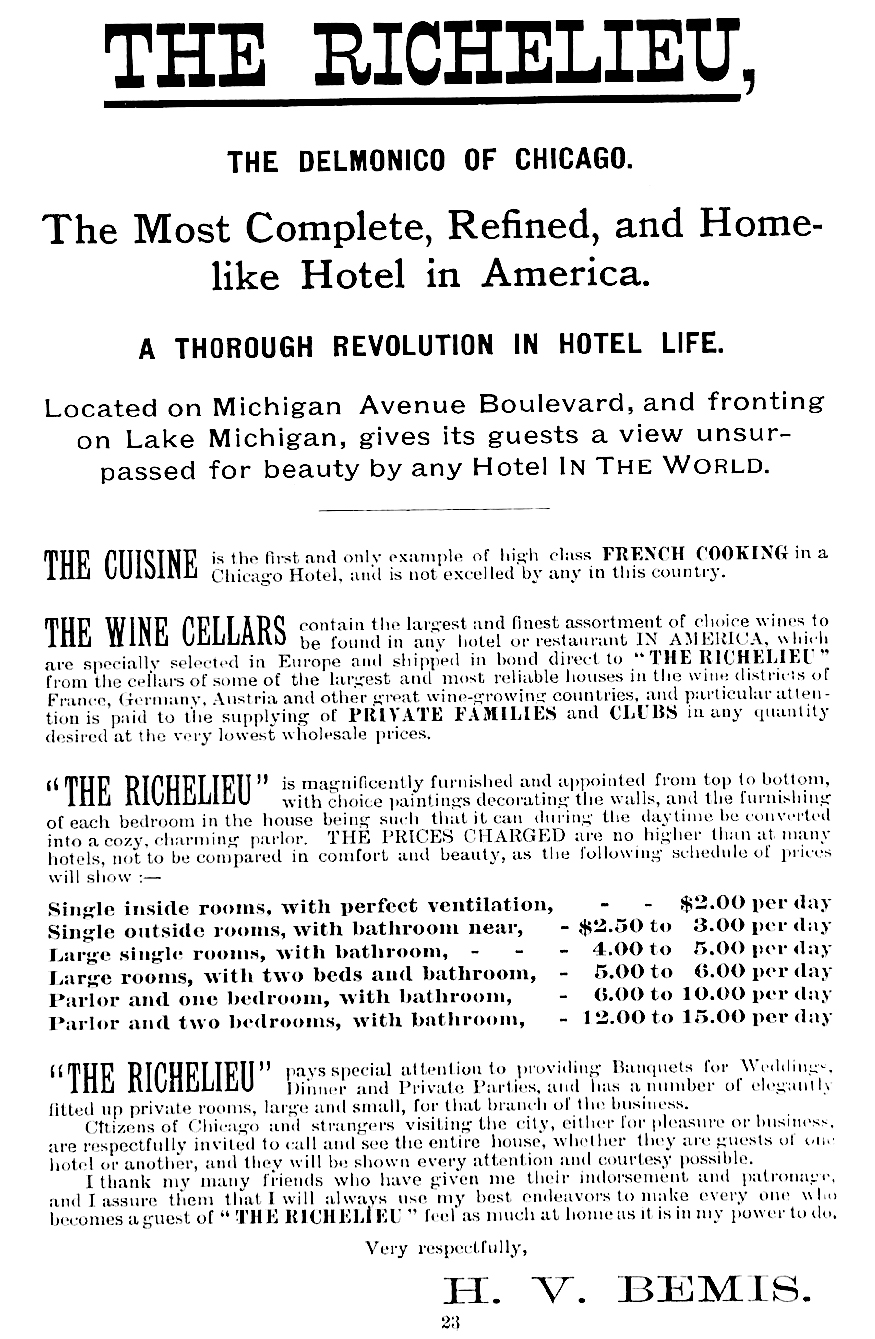

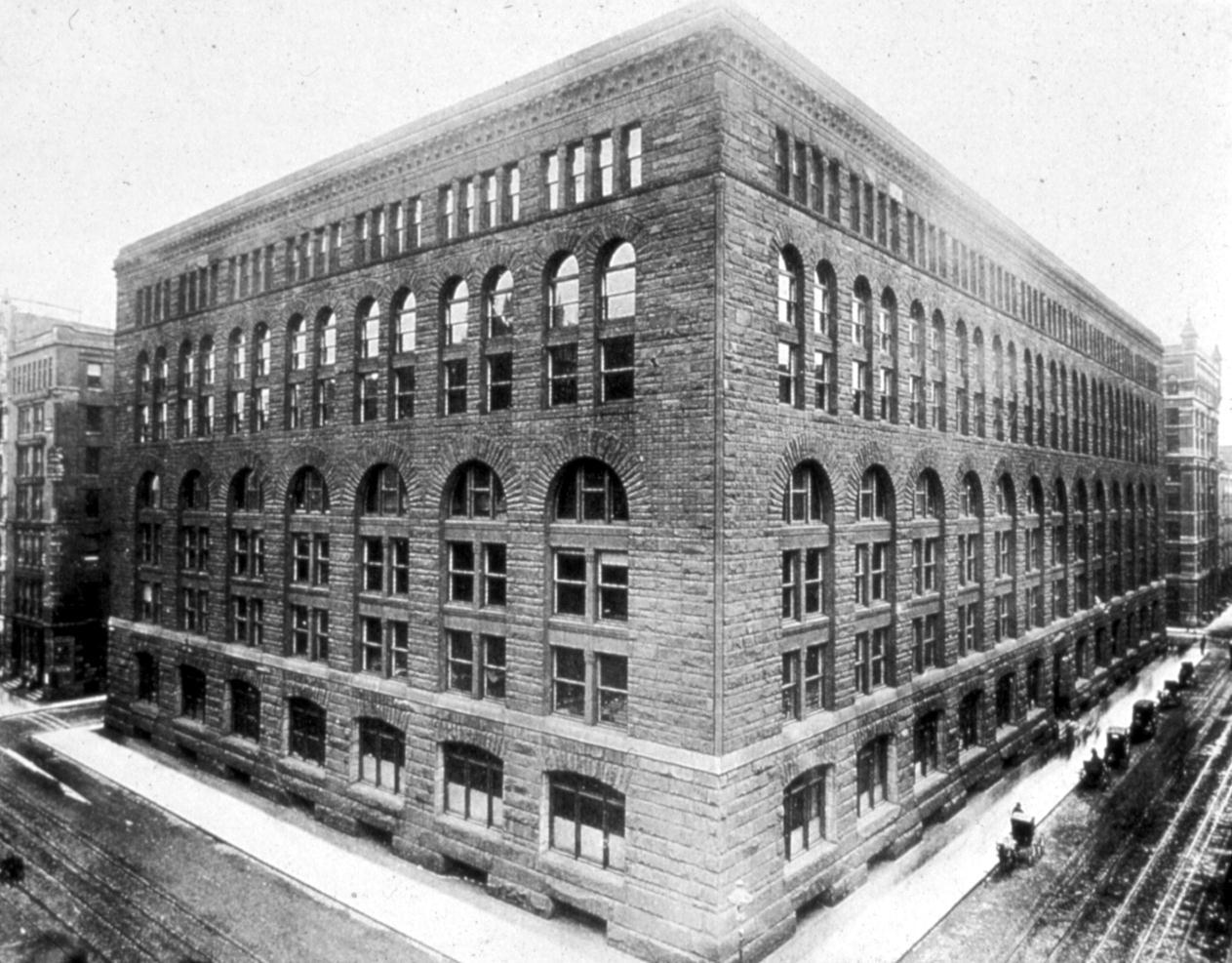
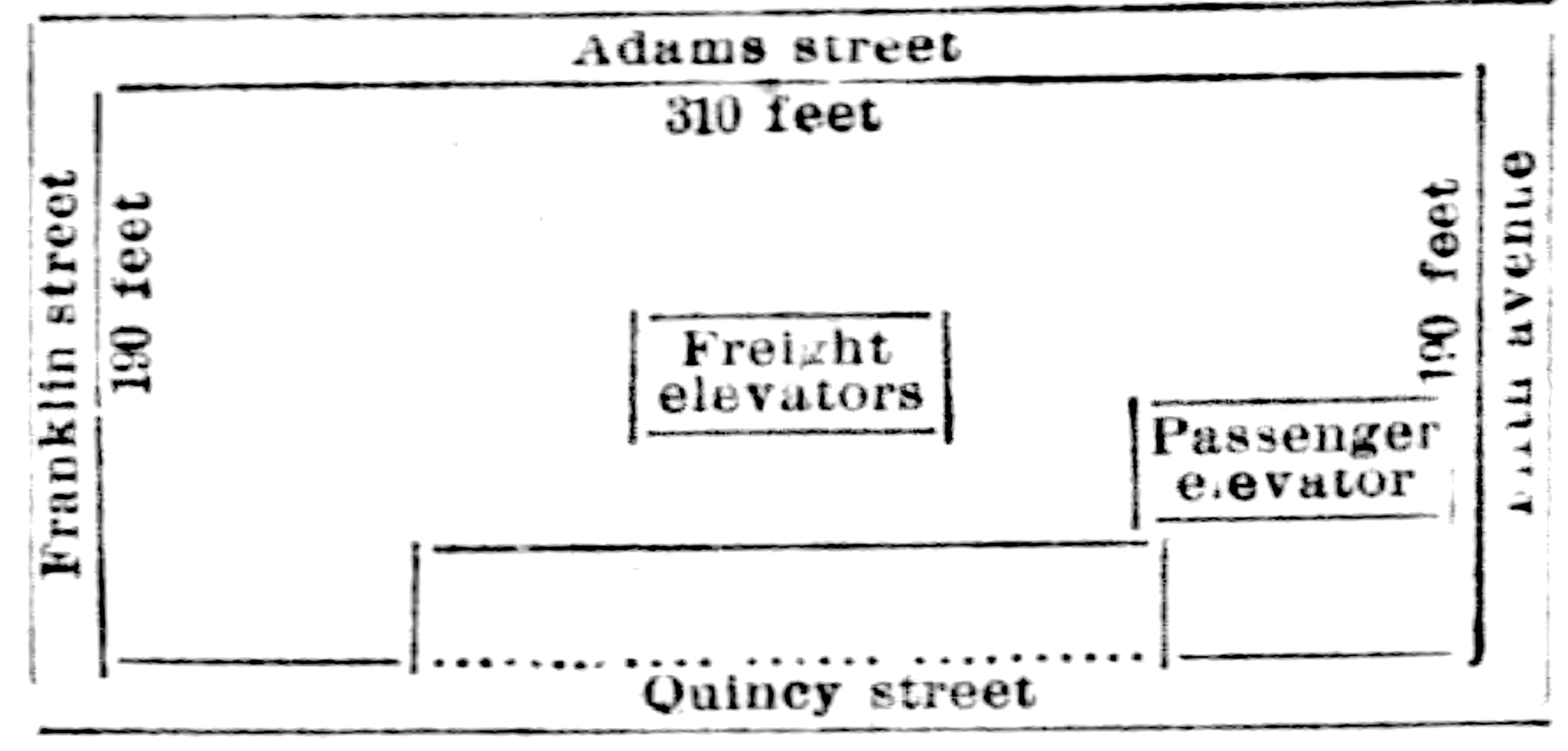
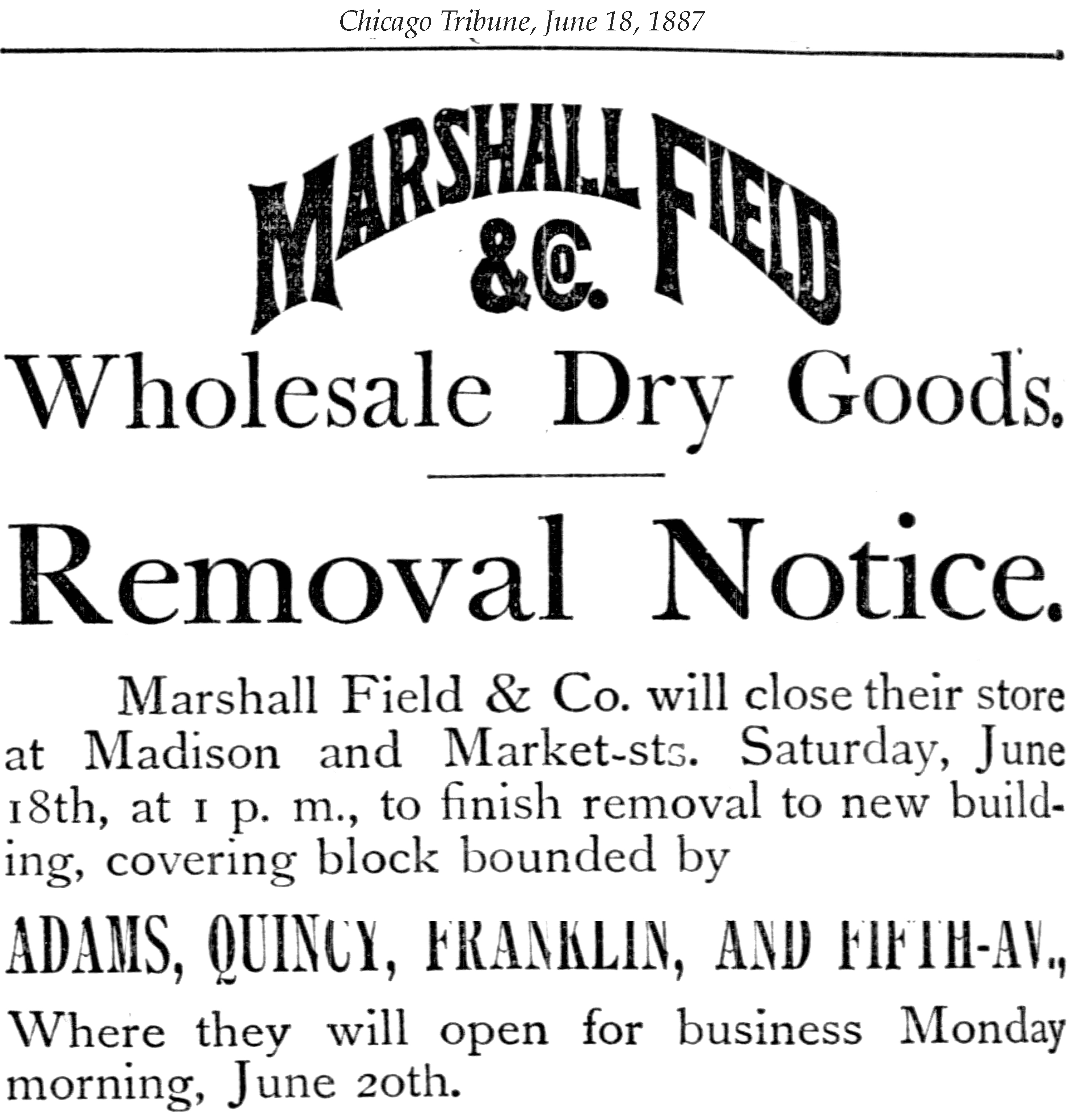
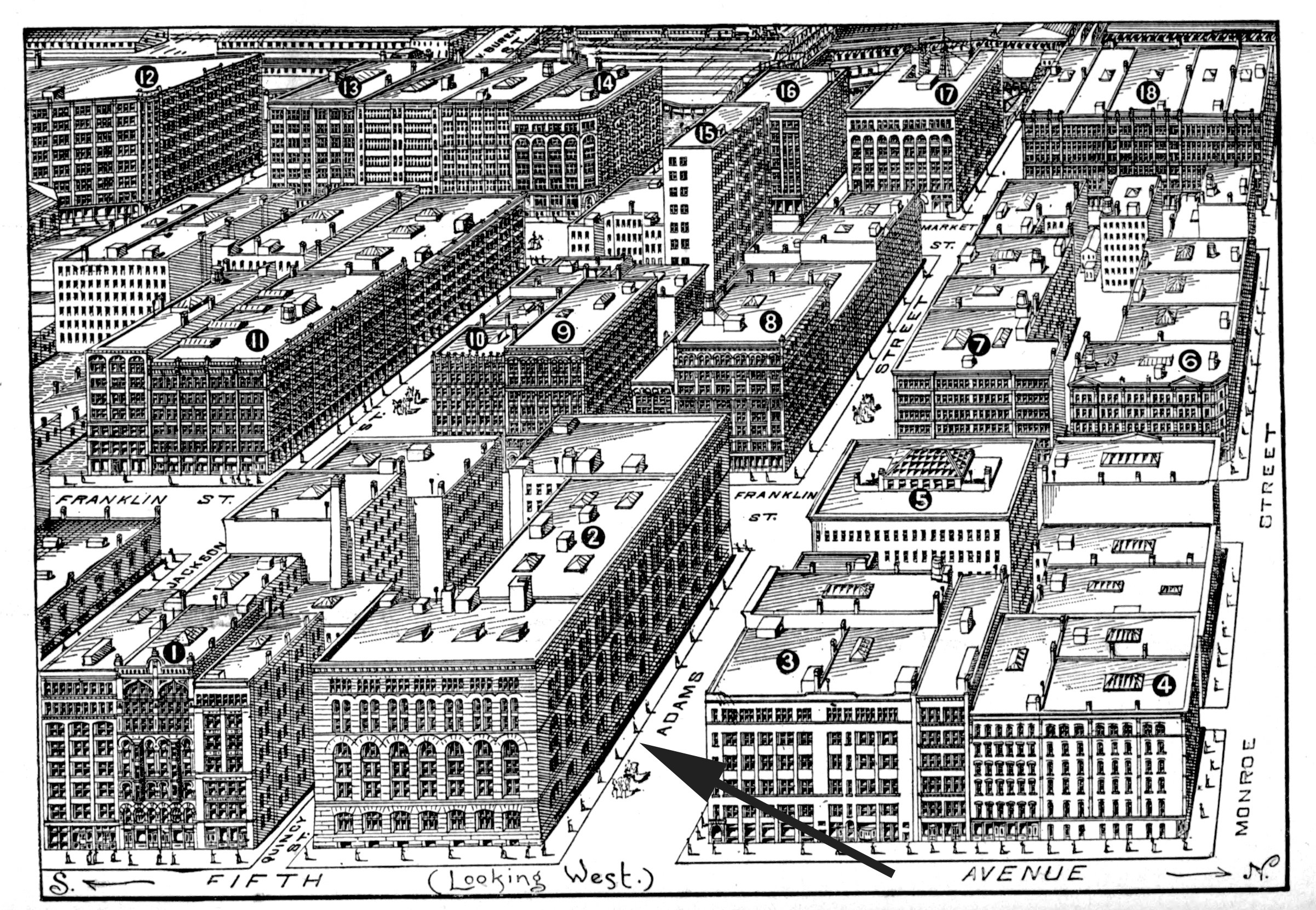
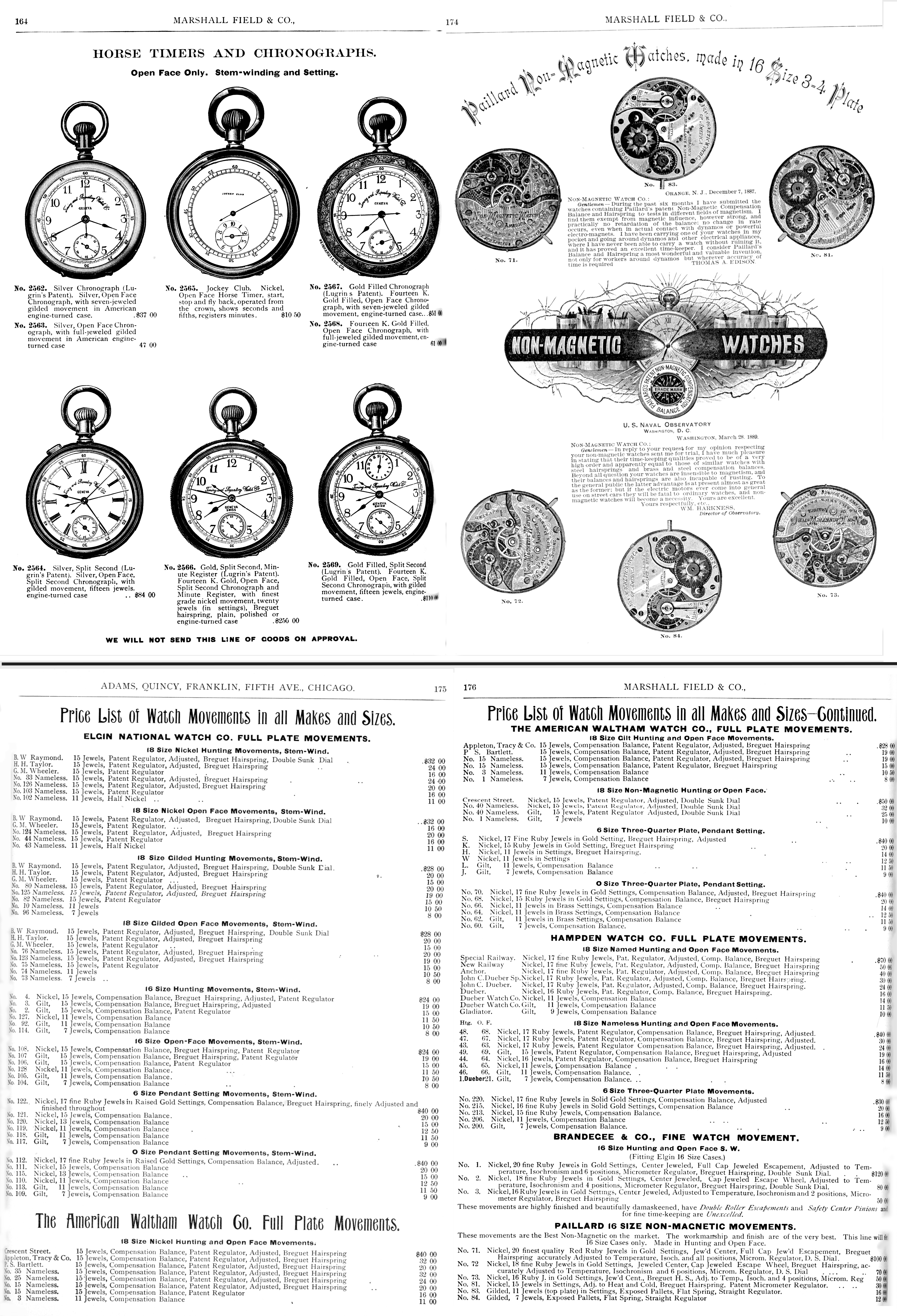
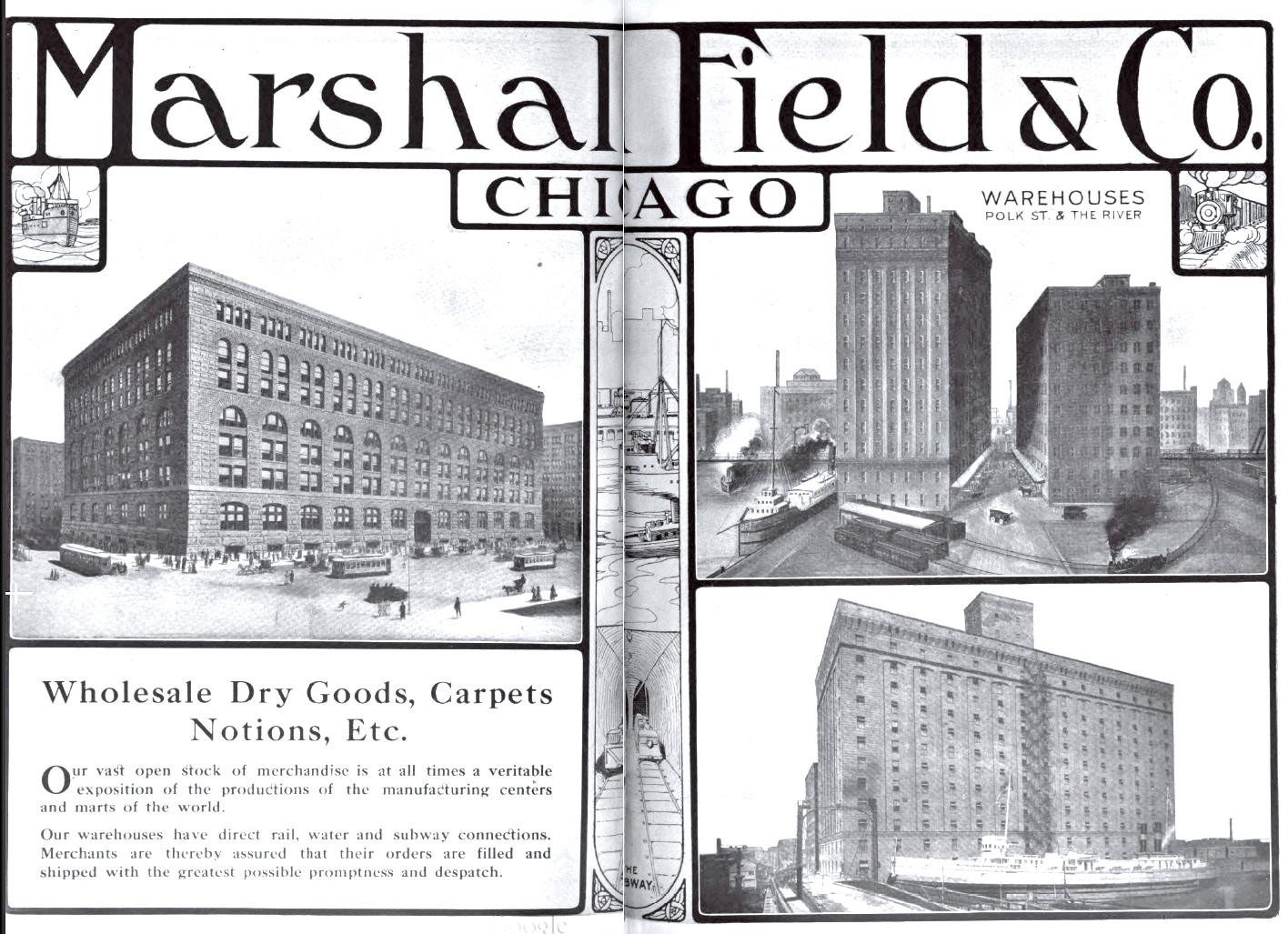
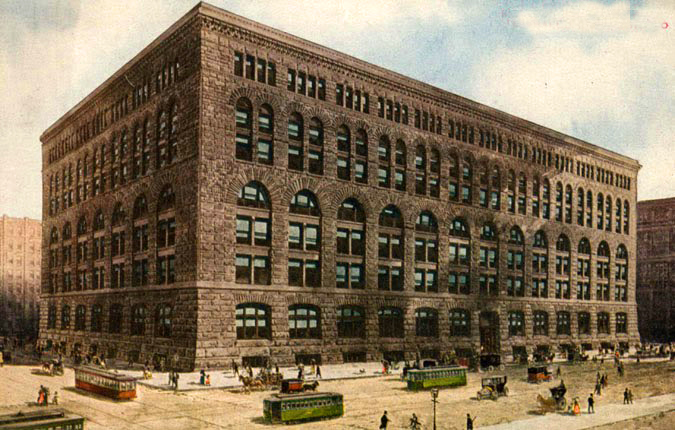
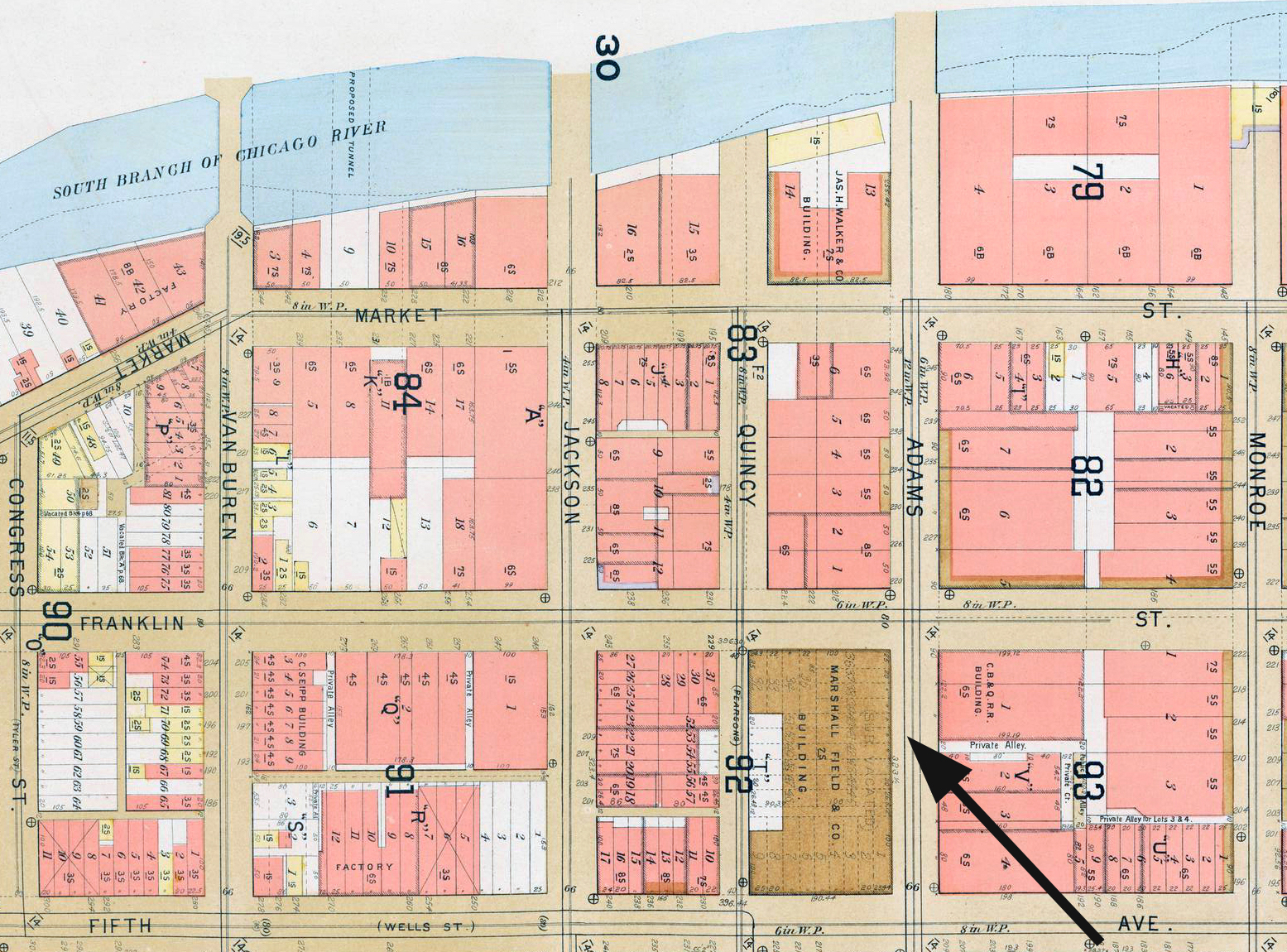
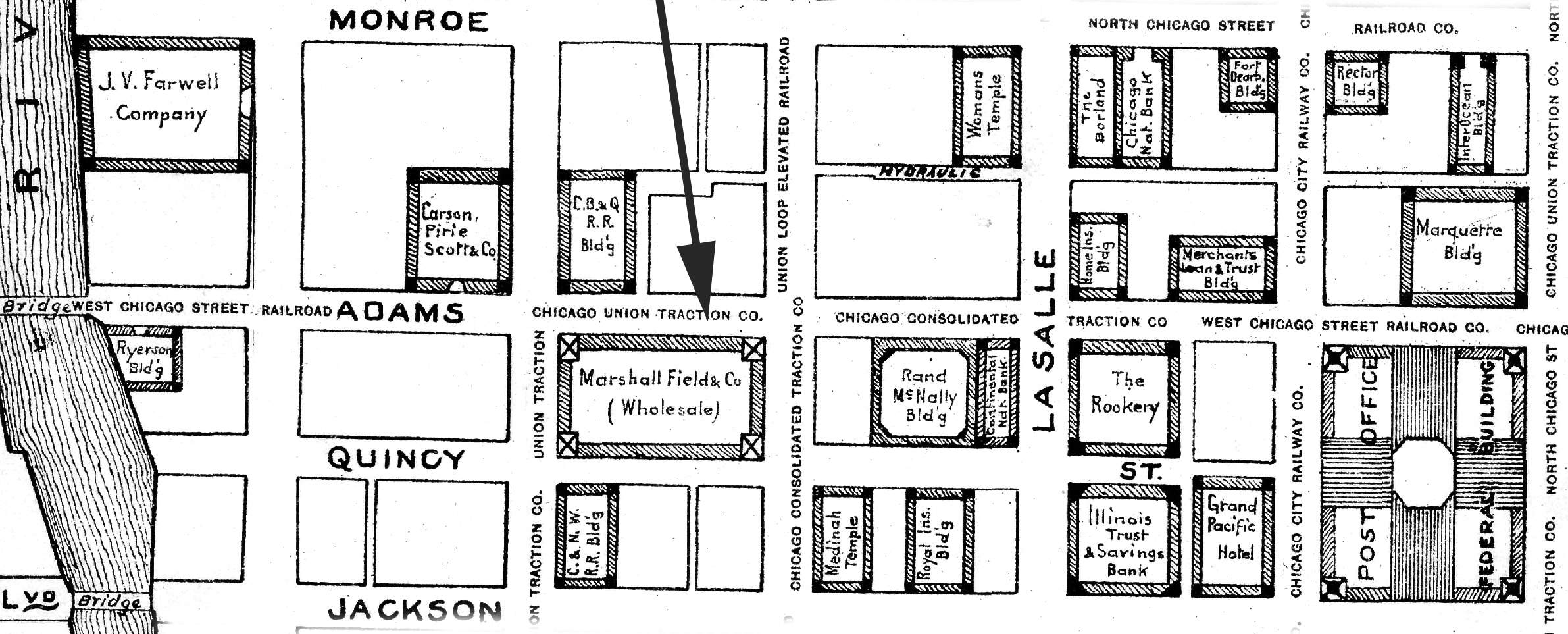
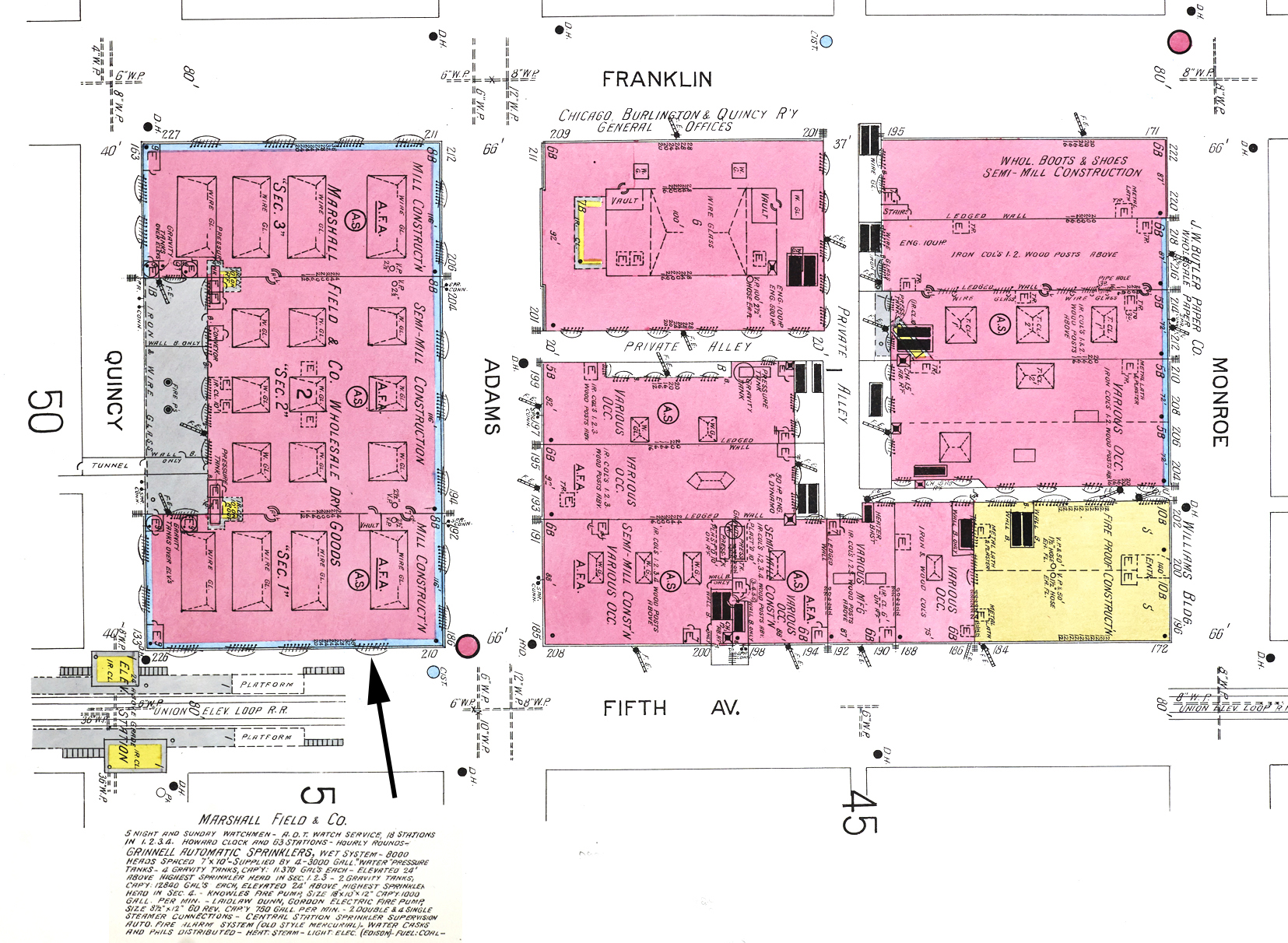
 It was learned yesterday from a contractor who is in a position to know that in about two weeks from date work will begin on one of the largest and finest buildings of the kind that have ever been planned in this city or in any other in the country. It is the intention of Marshall Field to put up a ten-story fire-proof warehouse which shall cover the whole of the block owned by him bounded by Adams, Quincy, Fifth avenue, and Franklin. This is a small block as compared with most of those of the South Side, but it is so large that the building which shall cover the whole of it will be an enormous one. None other, indeed, would do for a wholesale trade of such dimensions as that of Field’s. It is understood that the reason why the present one is to be abandoned is not only because there is not room enough there, but also because the ground does not belong to Mr. Field. It is made up of many lots which were leased by Field & Leiter when they built there after the fire, and the lease will expire in about three and a half years. Part of the ground—the larger part—is owned by L. C. P. Freer, some belongs to the estate of Dr. Foster, and part of it to the Peacock estate. It may not be easy to get a new lease on satisfactory terms, and then, too, there is not ground enough. Besides which; the corner of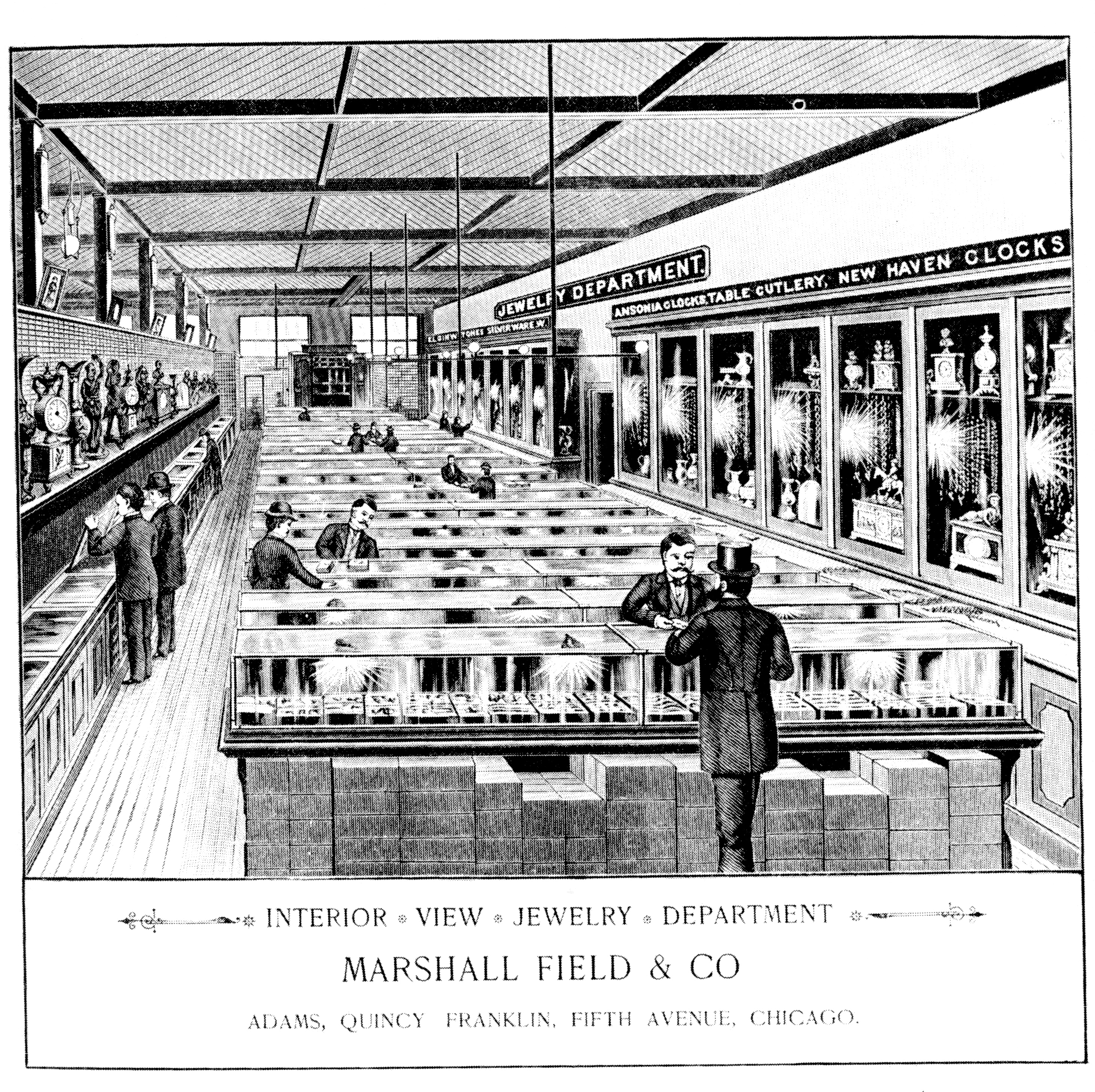


 A notable deal on the West Side was disclosed yesterday by its being recorded in the sale of the warehouse property at the

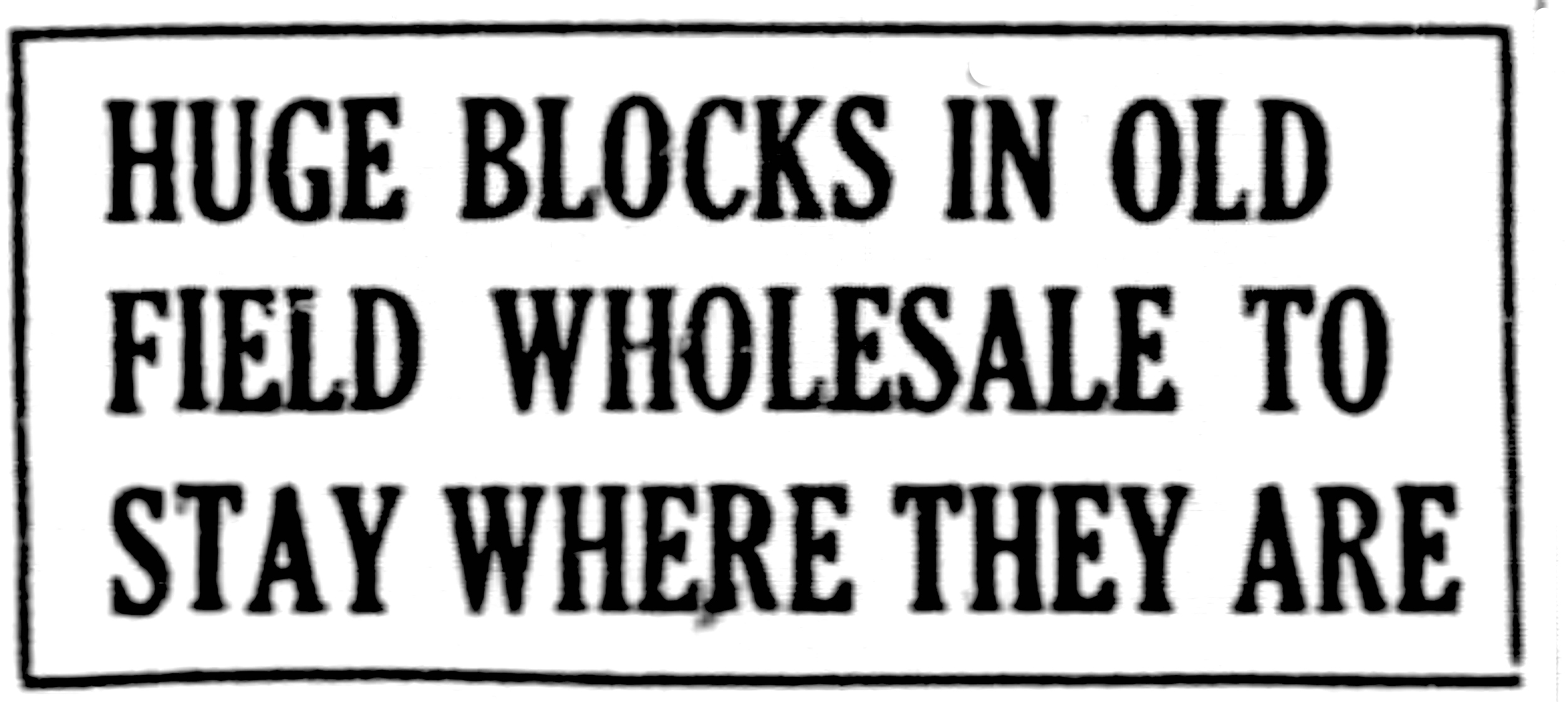 We are satisfying herewith the curiosity of the many Chicagoans who have been wondering what is to become of the huge blocks of granite forming the walls of the old Marshall Field & Co. wholesale store when that landmark is torn down. The blocks of granite will not move from their location—at least for the time being—as they will be used to fill the hole left when the old structure is torn down.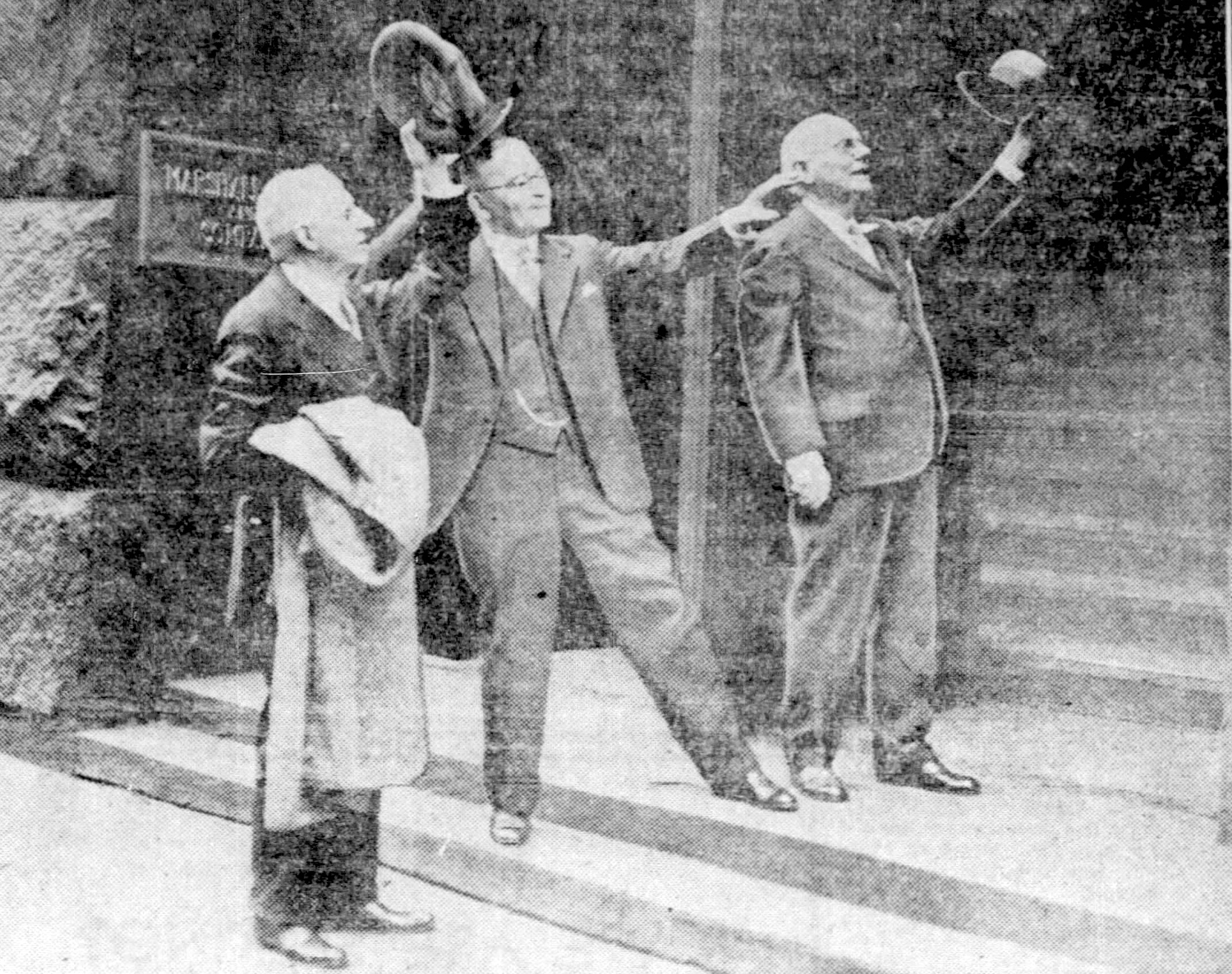

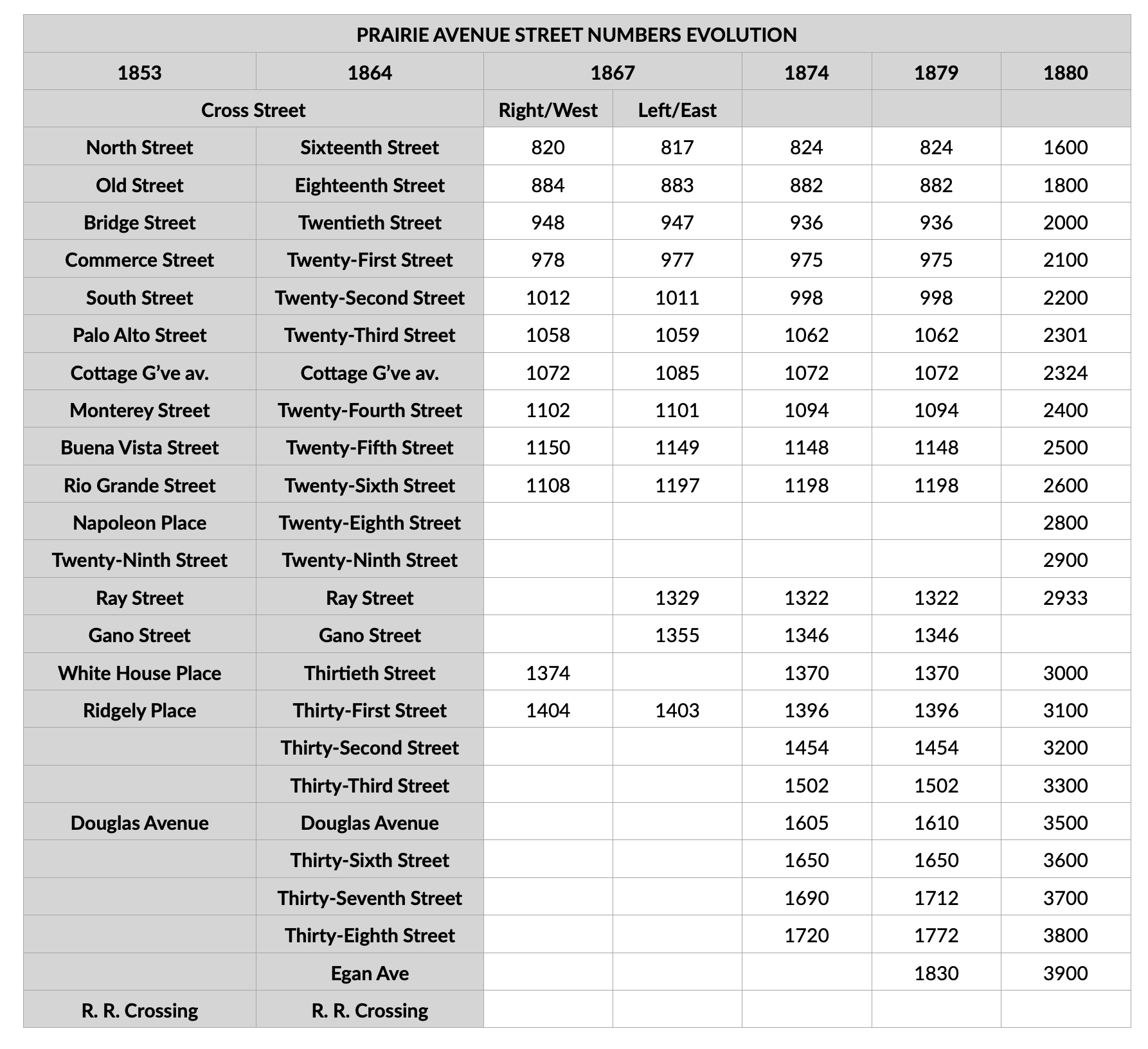

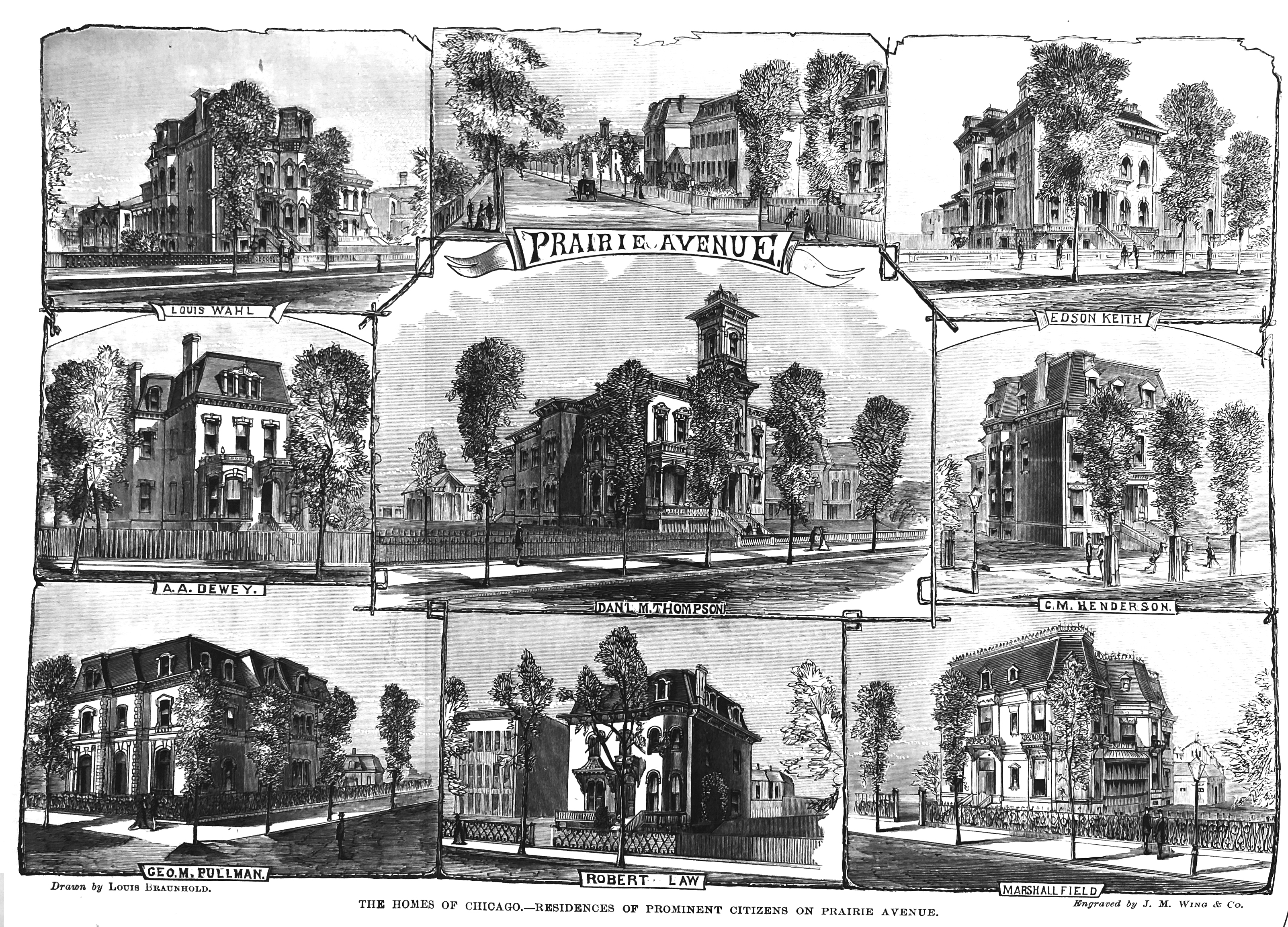


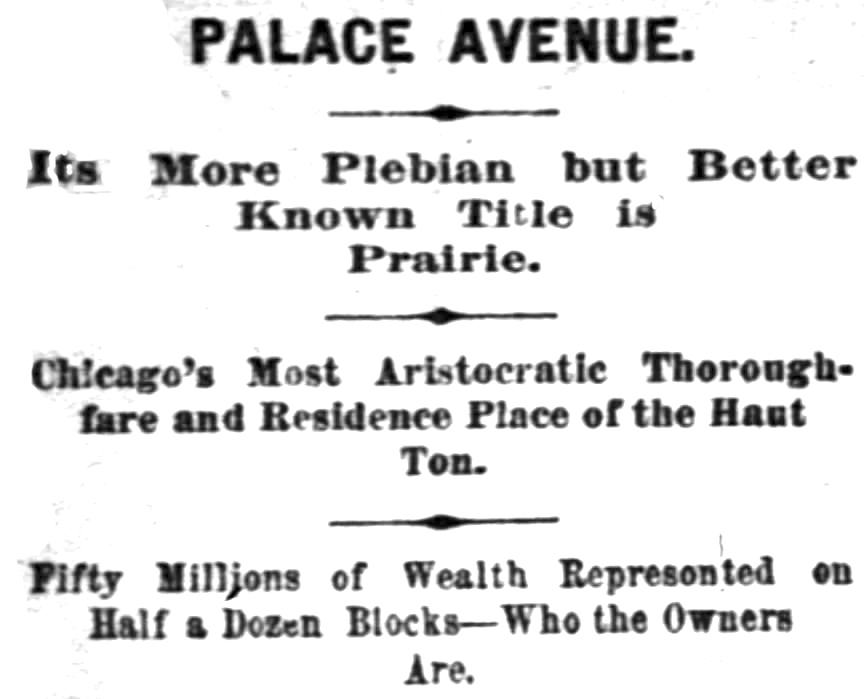 Chicago has every reason to be proud of her beautiful homes. The stranger from the distant East, the far West, or the sunny South, after a brief sojourn in the Garden City, looked upon the shores of a great lake, carries back with him pleasant memories of the avenues, boulevards, and palatial homes that adorn them, as well as recollections of the city’s wonderful activity and progress. Upon the South Side, for a distance of six blocks, Prairie avenue is pronounced the residence street par excellence. A pleasing feature is the marked individuality displayed by the owners in erecting mansions, substantial and beautiful, but different from each other in the style of architecture. The aggregate wealth of the residents of these blocks is placed at $50,000,000, at a low estimate. Presidents of banks and large corporations; senior members of the most prominent firms, transacting a larger business than any in their particular line in the West; owners of bonds, stocks, and real estate; the leaders of society, the patrons of the opera, and the subscribers to every charitable object are among the number whose homes are within these few blocks, and whose residence property has reached the highest market price. The stroller notices among the number the following, first on the west and then on the east side of this avenue to Twenty-second street.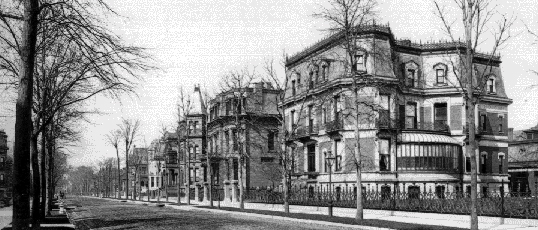
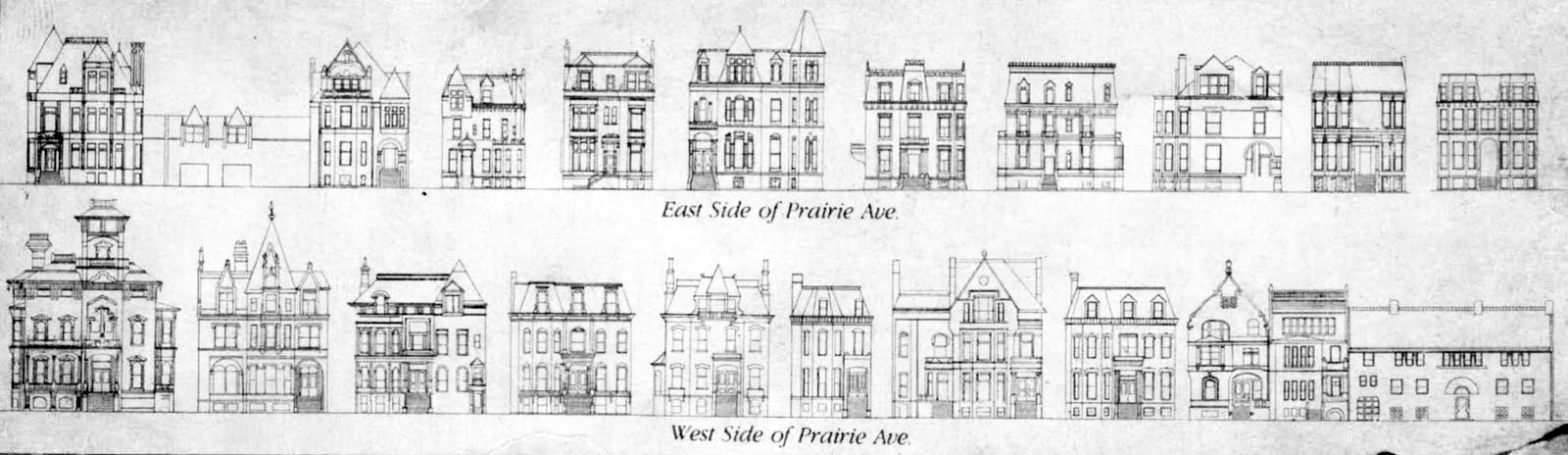
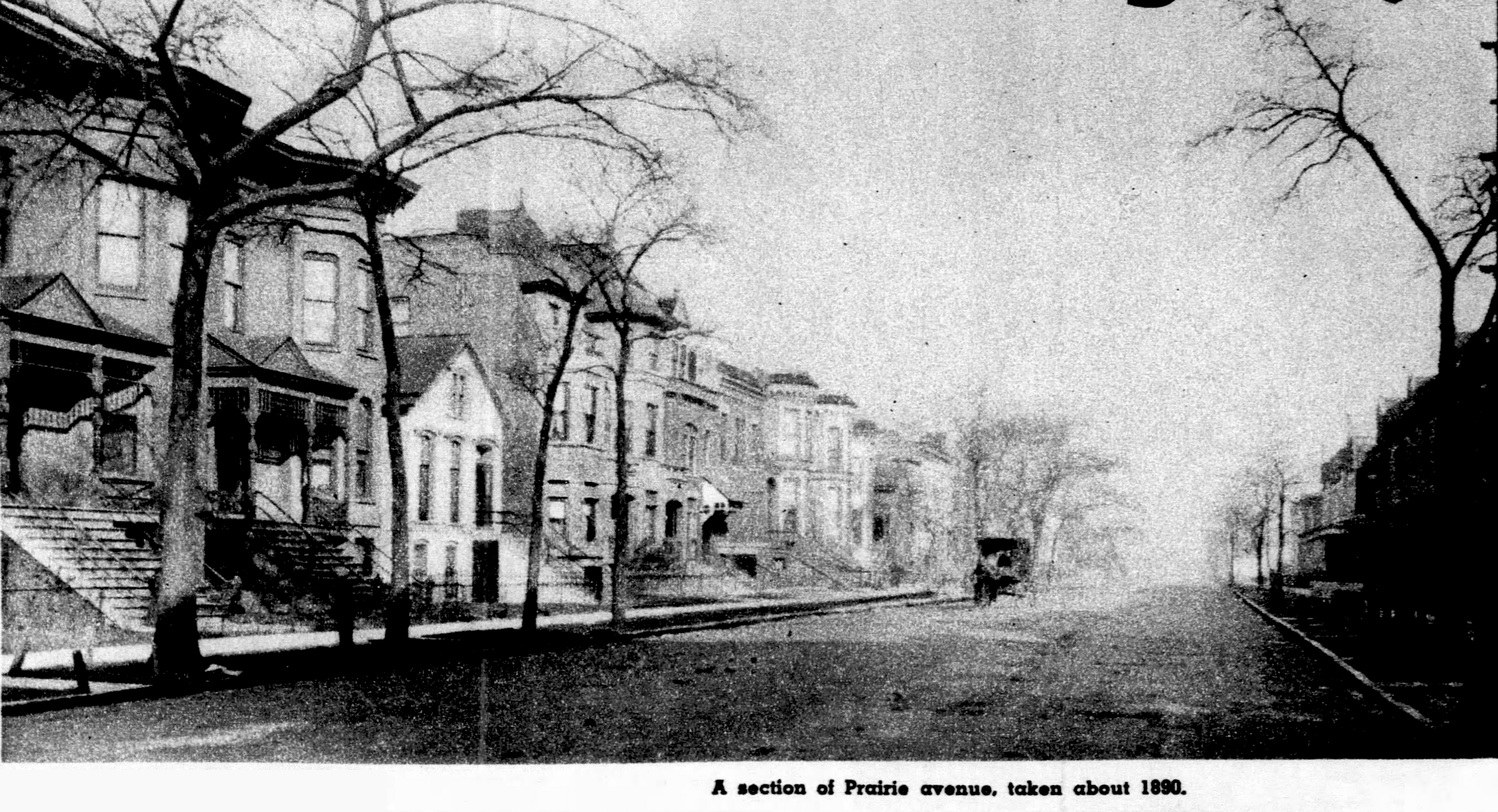
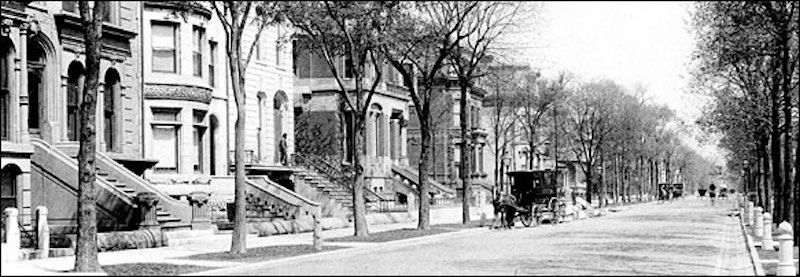


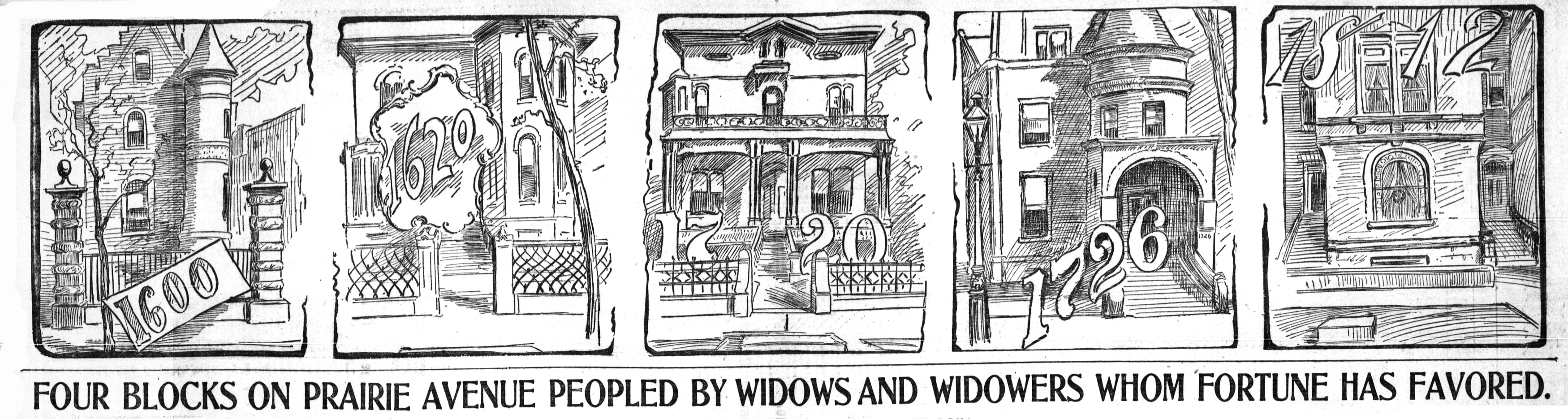 People have been living in Prairie avenue for thirty years and more, the span of a generation, and in the passing of this third of a century have hung crepe on their doors and admitted mourning into their hearts many a time. Indeed, so great a number of the residents have been taken away by death that the avenue in its old limitations, between Sixteenth and Twenty-second streets, might almost be called an avenue of widows and widowers. Time has dealt gently with many of the denizens of this quiet old street and some are hale and hearty, though far beyond the allotted three score and ten. The houses along the way are staid and prim and the sunlight makes them very bright and cheerful. Yet there are vacant chairs in nearly every one.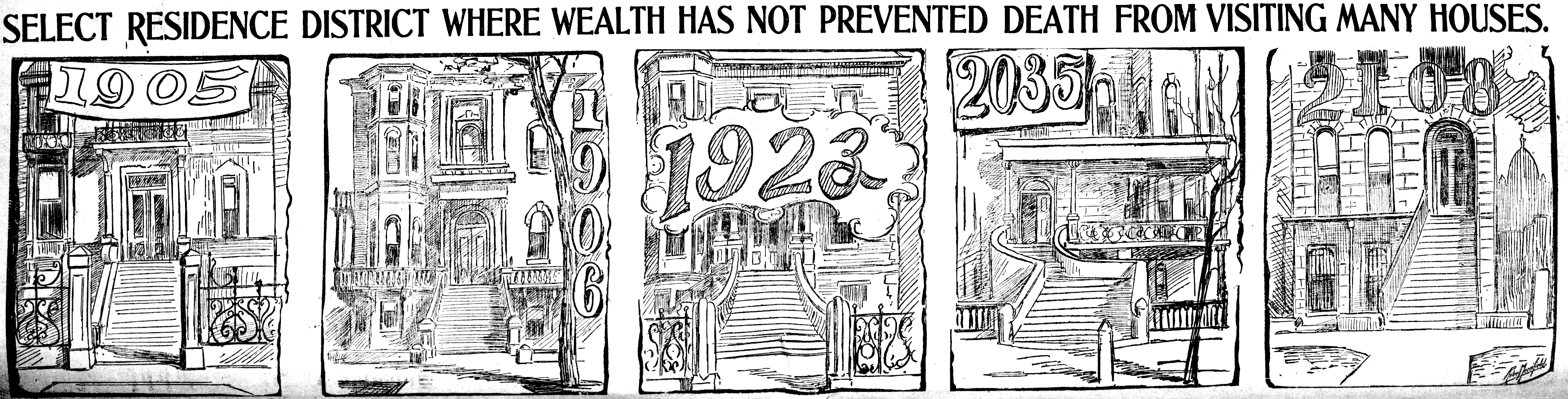
 By Betty Browning.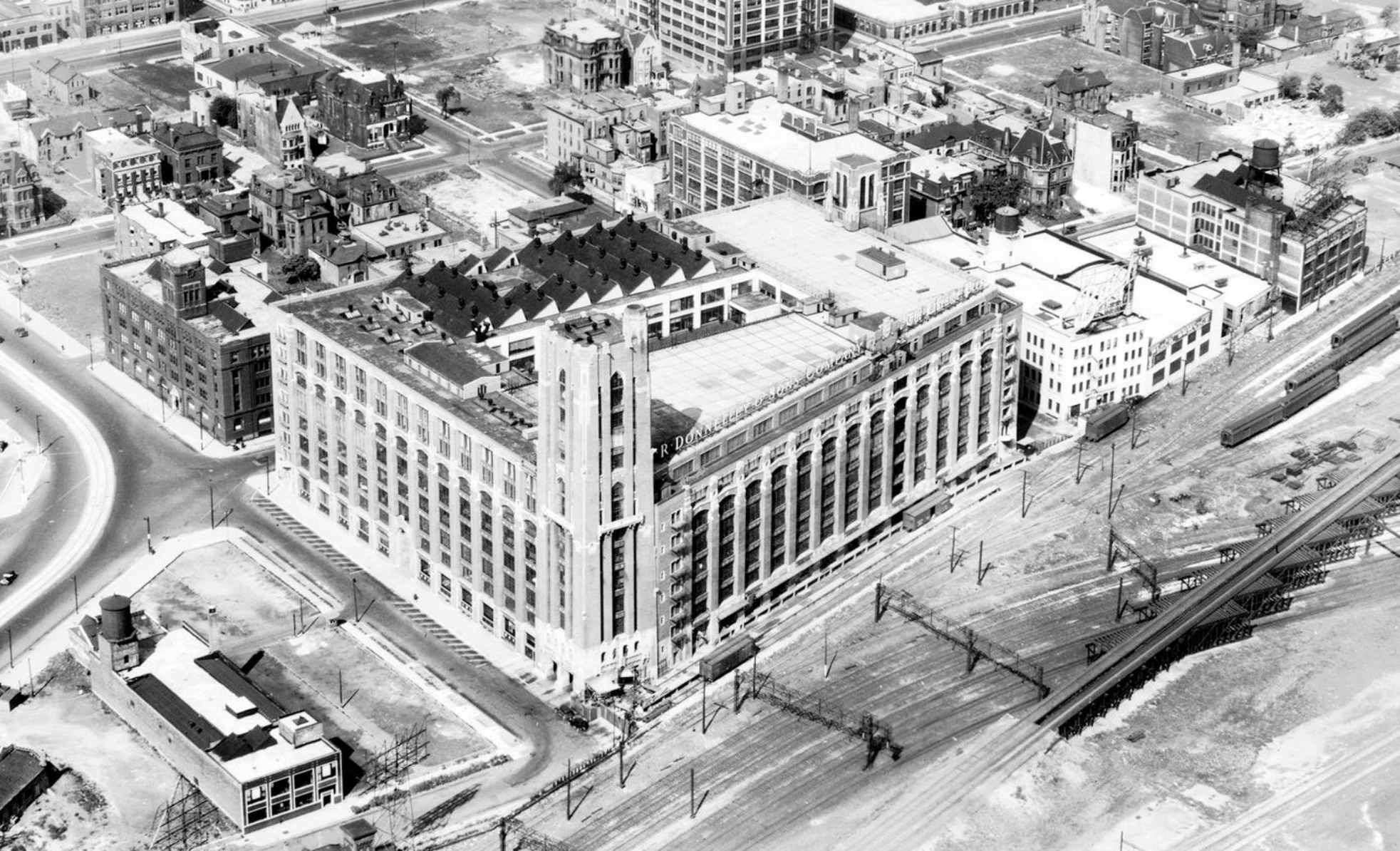
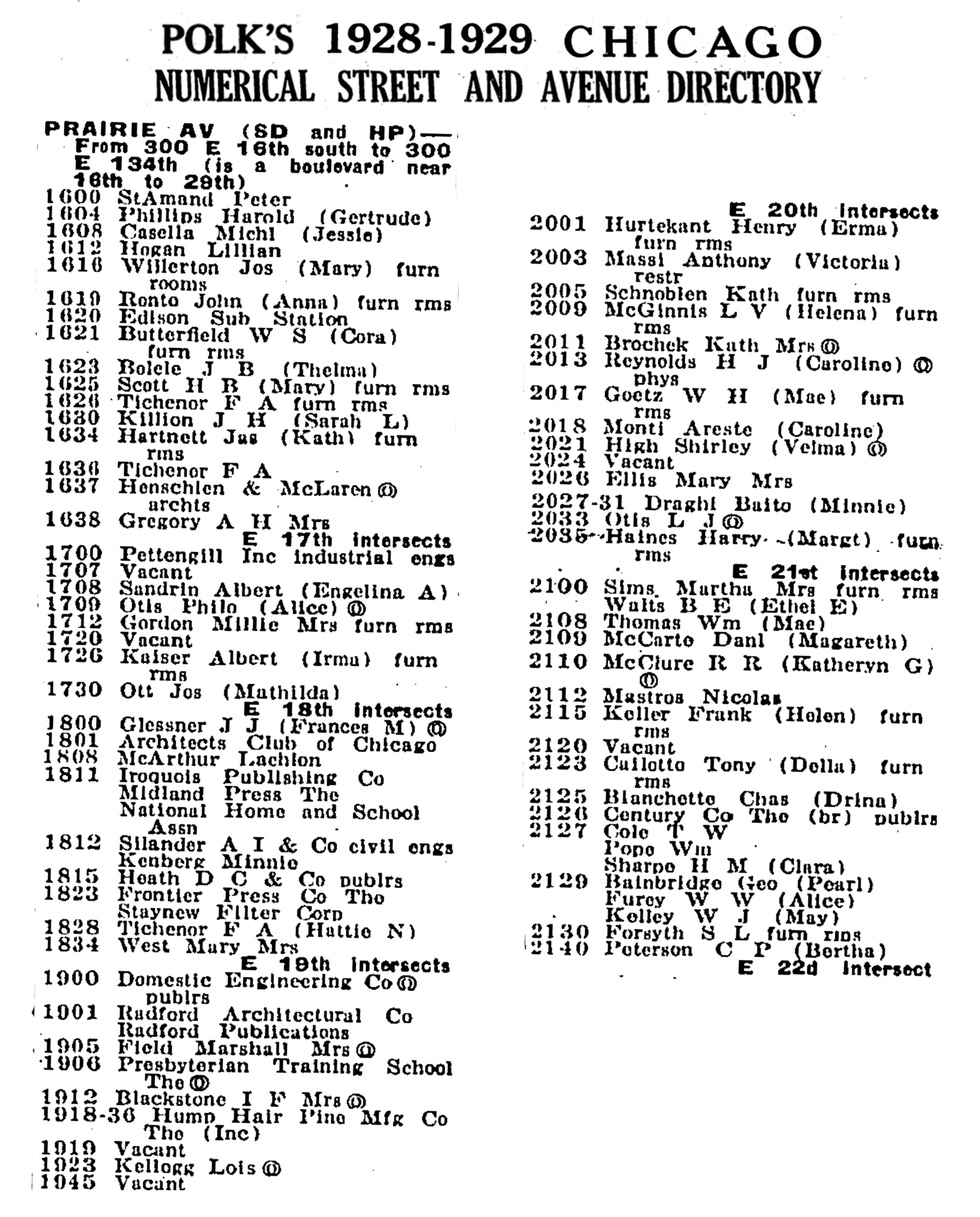
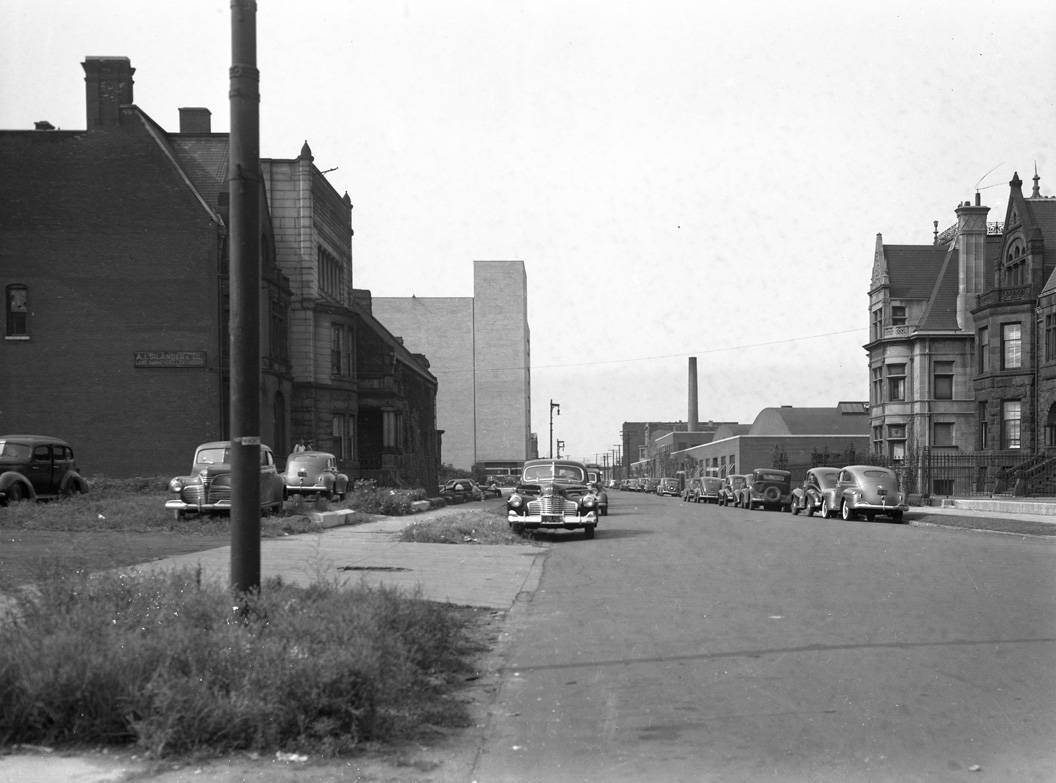
 PRAIRIE AVENUE! Fifty years ago this was the street where millionaires lived in their brownstone palaces. Their doors were opened by haughty butlers. In front waited smart Kimball broughams drawn by dock – tailed horses loaded with silver-plated harness and driven by correct British coachmen in cockaded top hats and neat livery of brown, maroon, or blue broadcloth.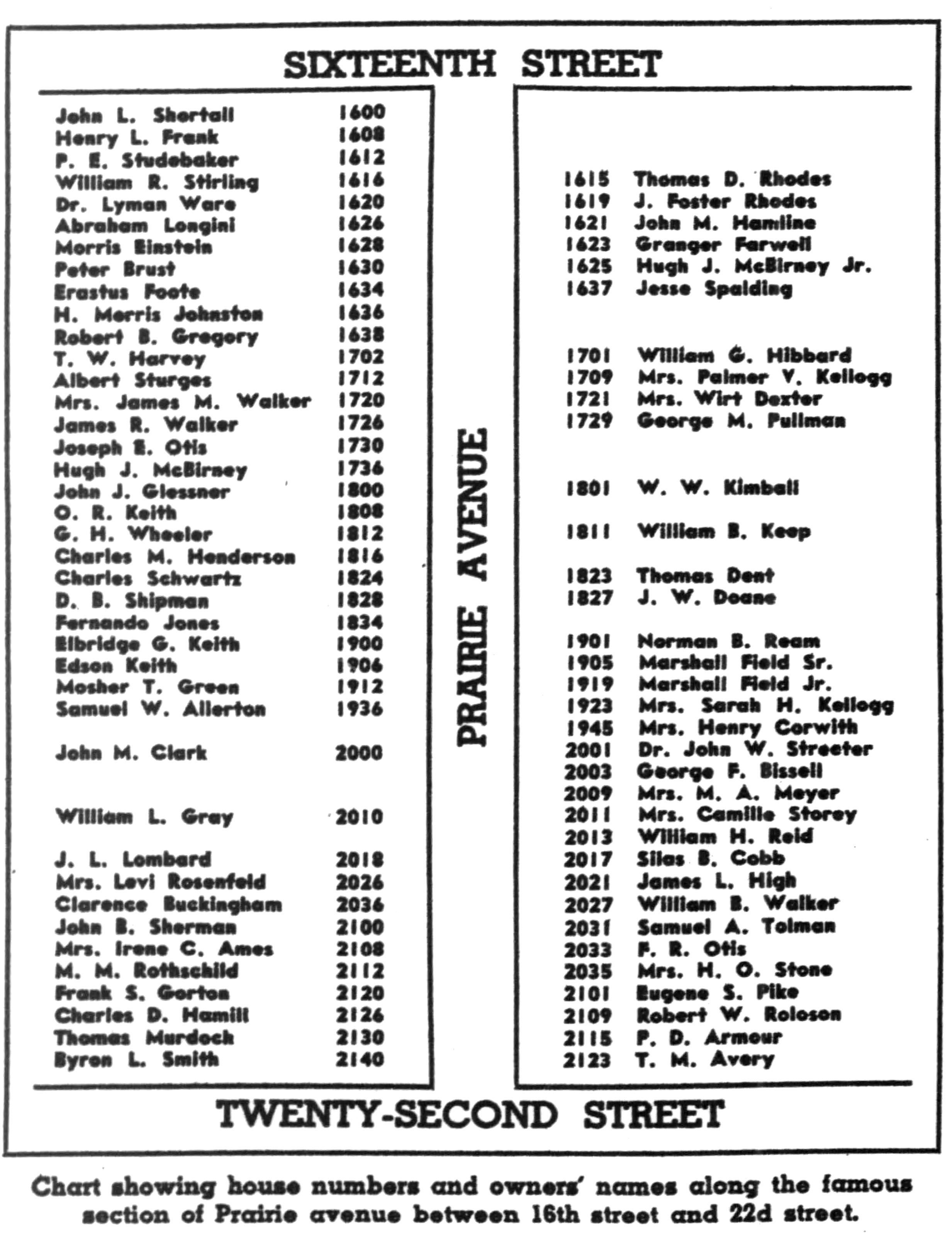

 Prairie av. is the real ghost street of Chicago despite the fact that many people live along it, more perhaps than ever before. The wraiths are its remainng great mansions, hollow shells emptied of the gay luxurious life they once sheltered—grotesque, disquieting memorials amid the tenements, small workshops, and bare fields of today.