Illinois Women’s Athletic Club, Lewis Towers
Life Span: 1926-Present
Location: Pearson and Rush Streets
Architect: Schmidt, Garden & Martin
Chicago Tribune, March 31, 1921
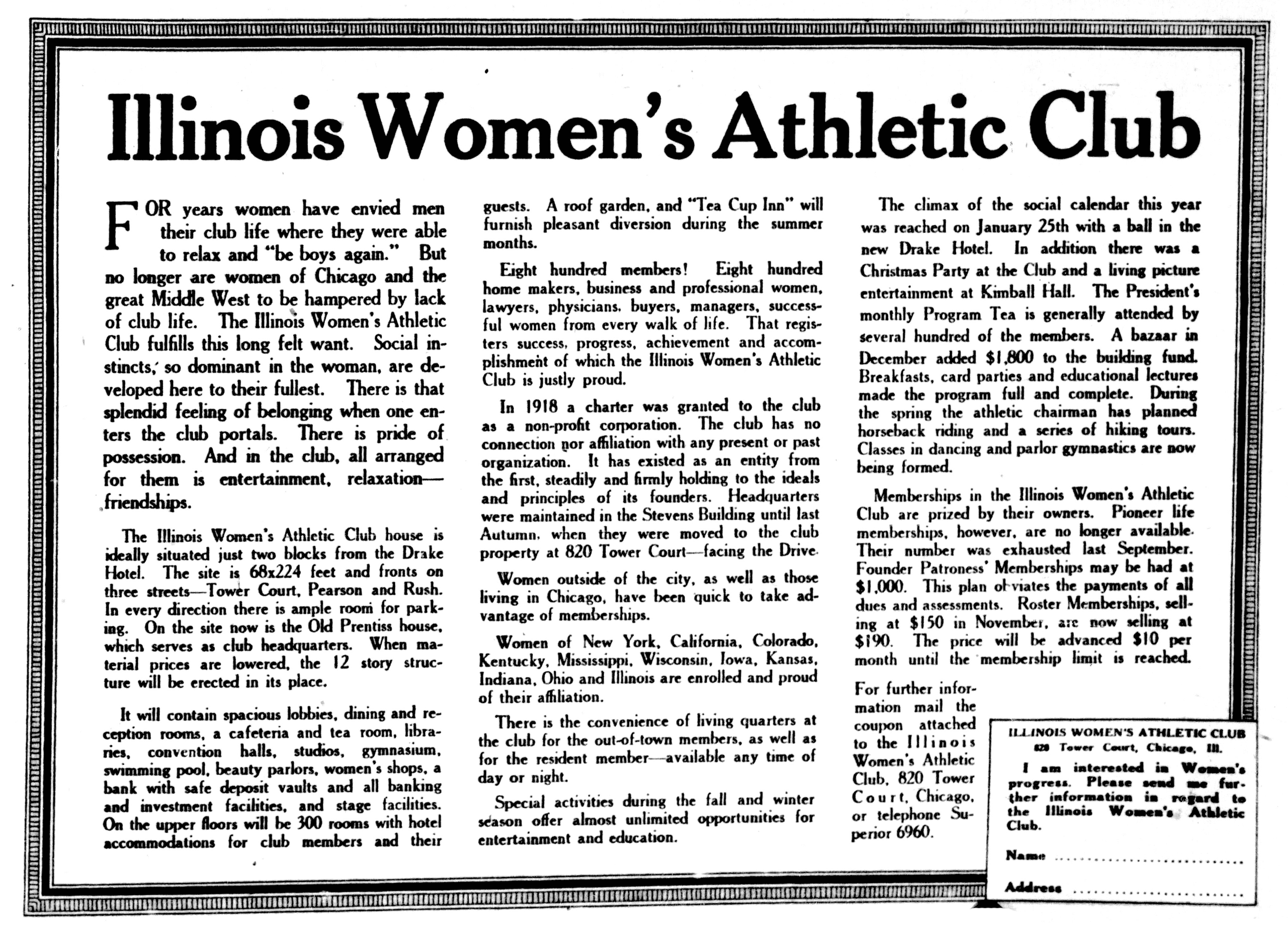
- Announcement for the future construction of a new building.
Chicago Tribune, June 11, 1922
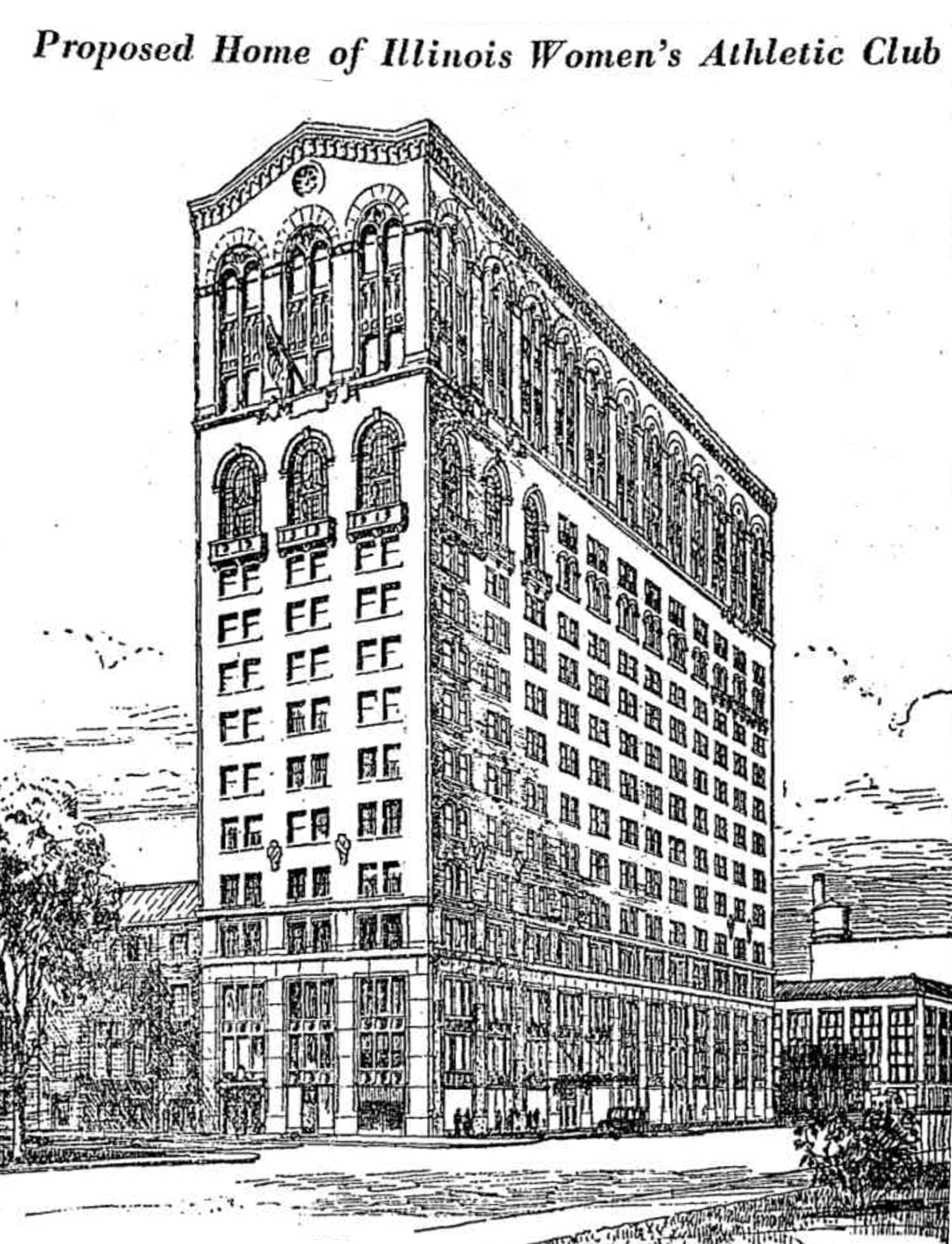
- The new home of the Illinois Women’s Athletic club at Tower court and Pearson and Rush streets, designed by Architects Schmidt, Garden & Martin in the Italian renaissance, will be of rough faced brick trimmed with Indiana limestone. It will cost approximately $1,250,000. The same materials will be used on all four exterior walls. The attractive office building of Architects Parkins, Fellows & Hamilton, architectural pioneers in the north side district, is seen on the left of the new clubhouse, to the south.
Chicago Tribune, February 28, 1923

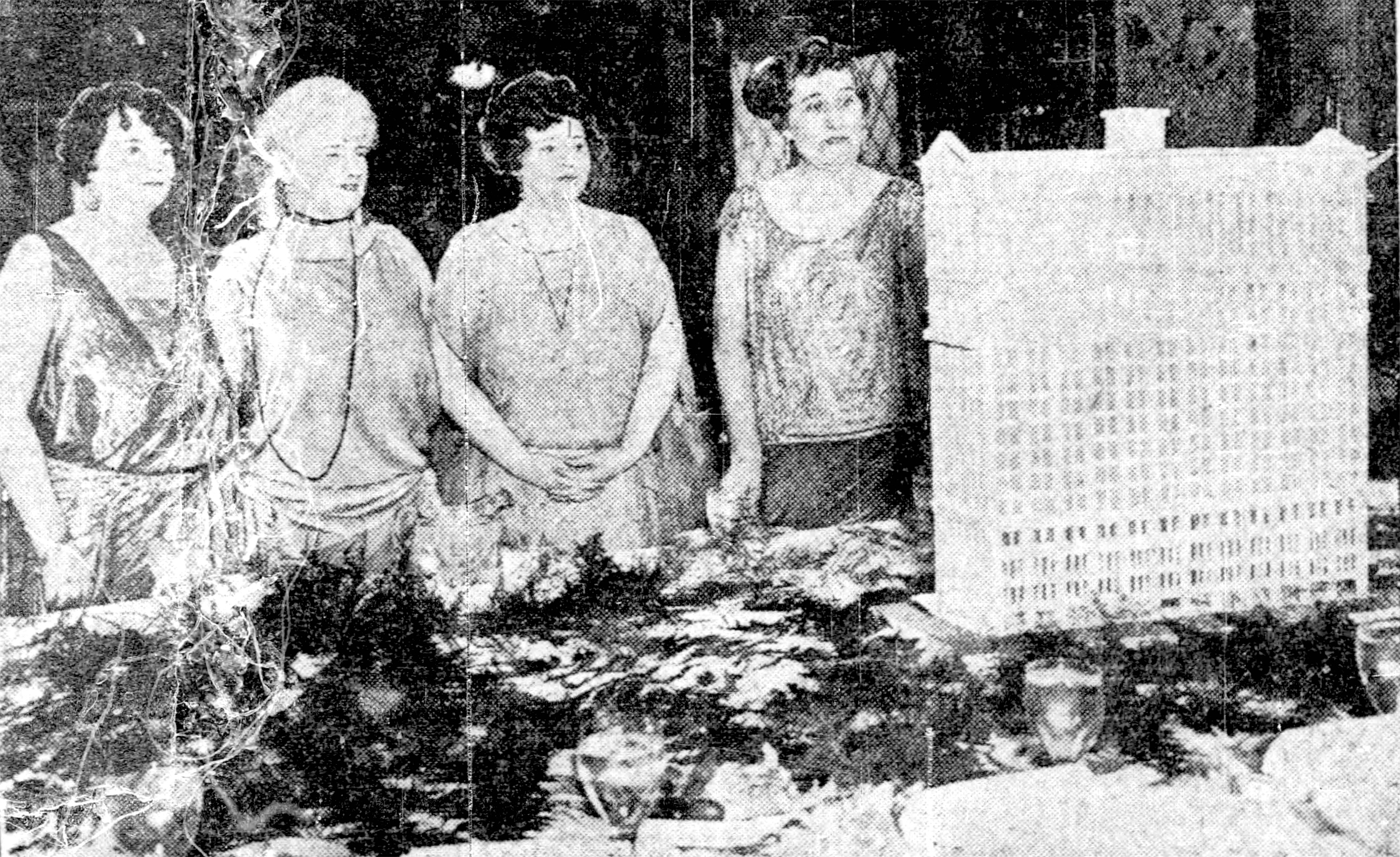
Plans for fifteen story clubhouse, to be erected in Tower court, were outlined at a banquet of the Illinois Women’s Athletic club held last night in the Gold room of the Congress hotel. More than 150 prominent society professional and business women who are members of this unique club attended the affair.
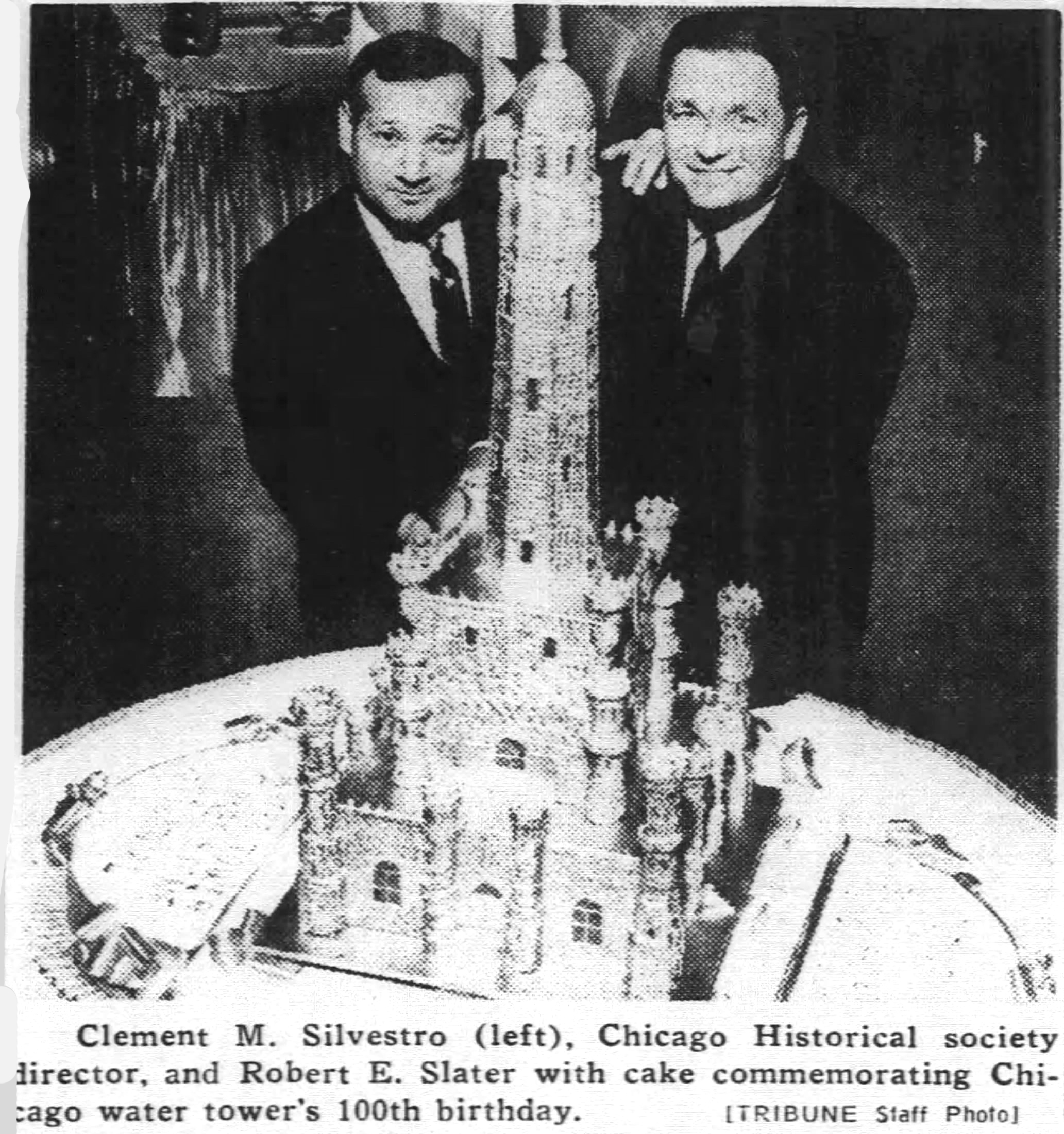
At the speaker’s table, at which were the officers of the club a miniature of the proposed clubhouse, made of sugar and paste, was the center piece. The miniature was made and copied from the original design of the clubhouse by Joseph Weisskopf, pastry chef of the Congress hotel.
- Illinois Women’s Athletic Club
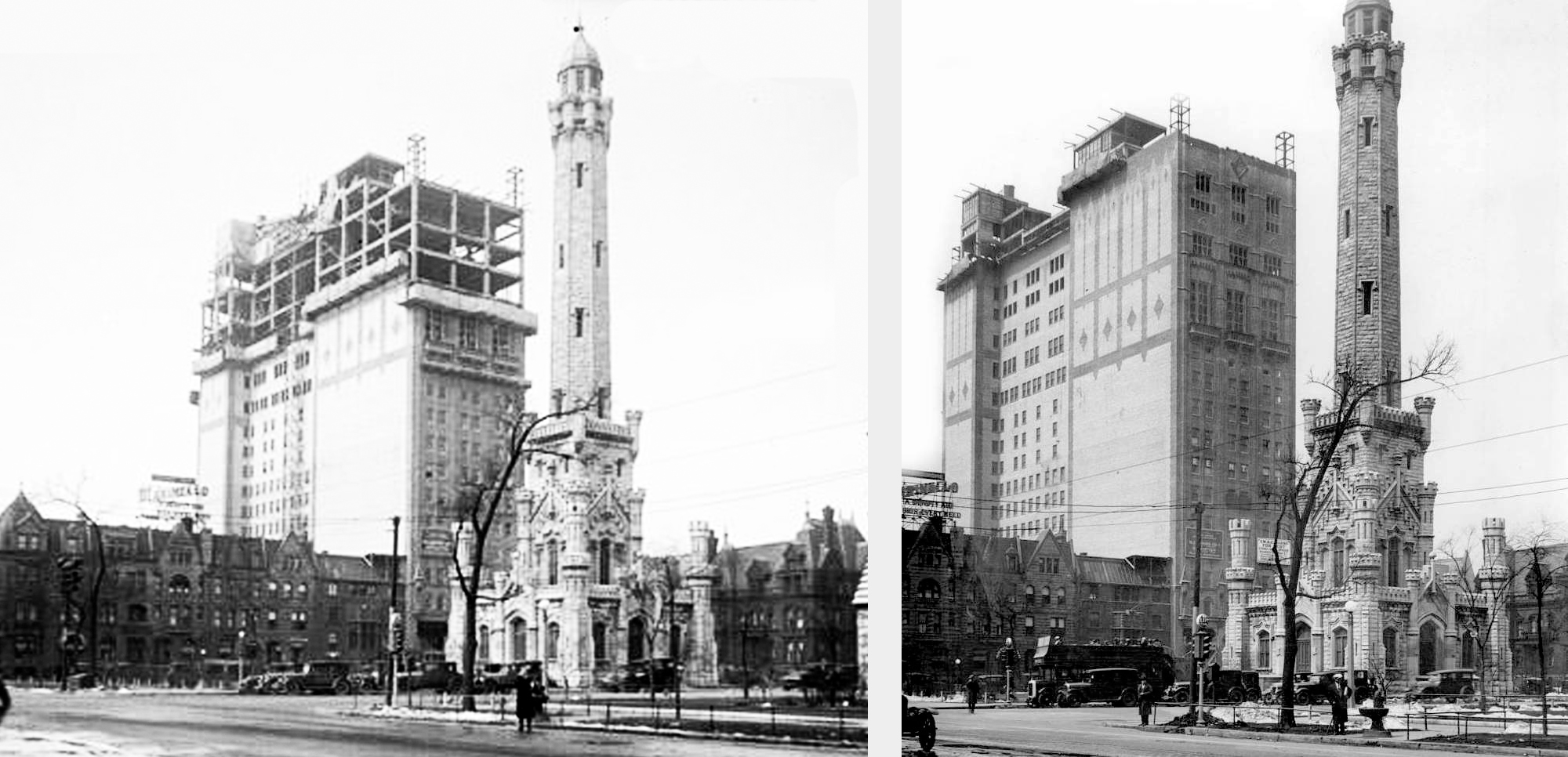
Under Construction
1926
Chicago Tribune, June 6, 1926

The Daily Herald, October 19, 1926
No greater illustration of the demand for and popularity of high class clubs in Chicago and surrounding towns could be given than the opening week, commencing October 20, in Chicago of the building of the Illinois Women’s Athletic club, located at Tower Court and E. Pierson street, facing toward Michigan Boulevard.
The building occupies a location eminent in the history of Chicago, the water tower standing directly in front of the club, and the neighborhood being one which was the center of the North side wealth and society in the earlier days of our city, the district has changed within a few years from a dreary series of rows of old residences, once in their social prime, but later devoted to boarding house and rooming purposes to one of the fastest developing and most attractive of the new business district north of the Chicago river; the Drake Hotel, America Fore, Pierson Hotel, Chicago Tribune, Wrigley, Allerton Hotel, and other large and fine buildings are within easy walking distance. The property which was bought by the founder members of the club less than ten years ago for under a hundred thousand dollars, has risen in value to nearly one million dollars, which the added value of the new building, brings the value of the club property close to $2,500,000.00 at a conservative estimate.
The organization of the Illinois Women’s Athletic club has been carried on from the first by women; many women active in social, political business and commercial life of our city and surrounding territory have been active in the work of building up the club. Mrs. Wm. Severin of Rogers Park was the originator of the idea of a cooperative women’s athletic club, to own its own building in Chicago. Memberships which sold in the early days of the club for three hundred dollars are now rated as worth $2,500.00 and selling at that price; while memberships of the class selling for from fifty to a hundred dollars in the beginning are now bringing a price well into the hundreds, owing ti real estate value increase and conservative management.
The lower floors of the building are being rapidly rented out for commercial purposes, and shops and offices are located higher up, while the club quarters occupy the highest portion of the building. Complete athletic equipment of the finest type is provided, including excellency, gymnasium and large swimming tank. Lobbies, parlors, large and small assembly and committee rooms, business offices also living quarters provided for resident members at a reasonable cost are all delightfully and luxuriously furnished.
The opening week offers a series of banquets and receptions some for members only and others for members and friends, closing with a large banquet and meeting on Tuesday evening Oct. 26, for all active workers in the organization officers of the club an invite guests prominent in city, state and national affairs.
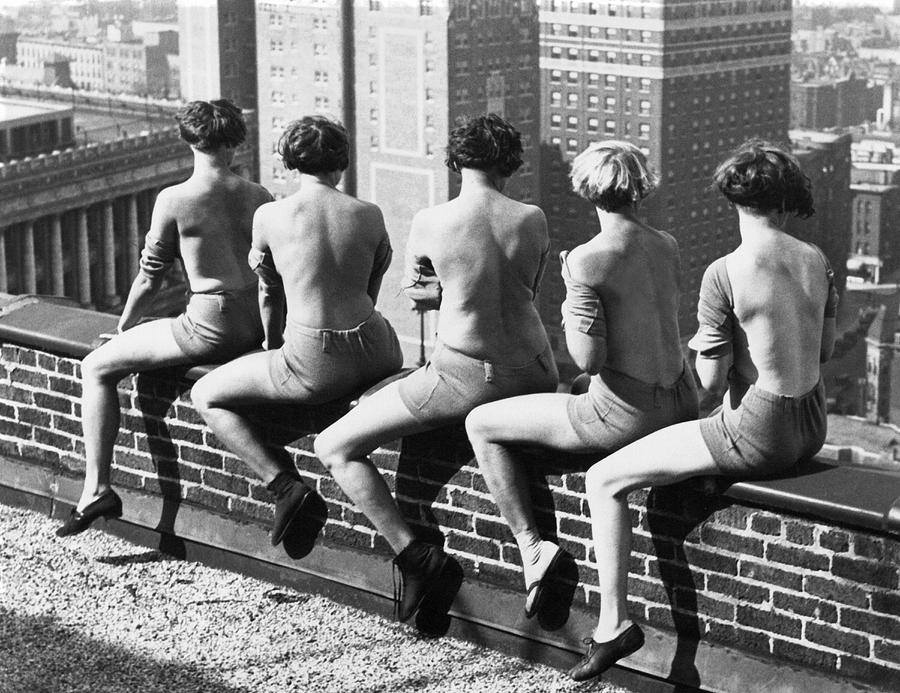
- Illinois Women’s Athletic Club members sunbathing on rooftop.
1926
Chicago Tribune, April 18, 1926
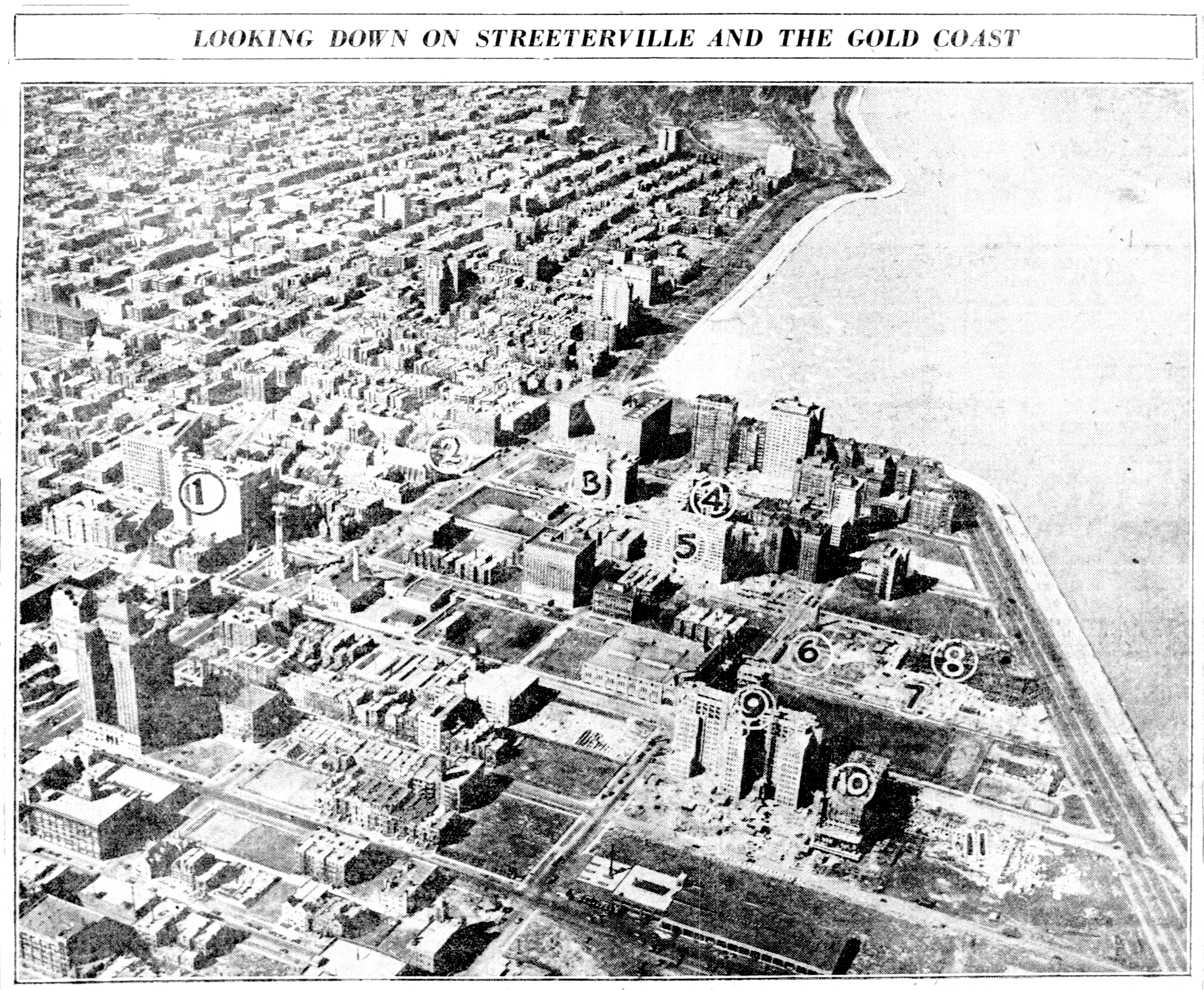
- Number ① shown above is the Illinois Women’s Athletic Club, nearing completion; Number ② is the Jarvis Hunt cooperative project, just getting well under way across from the Fourth Presbyterian, Number ③ is B. Leo Steif’s “180 East Delaware Place” apartments; Number ④ at the southeast corner of Delaware and Seneca, the Charles F. Henry apartments; Number ⑤ at the northeast corner of Chestnut and Seneca, the Seneca apartment hotel; Number ⑥ northeast corner of Pearson and DeWitt, eighteen story apartments; Number ⑦ Jarvis Hunt $7,000,000 cooperative apartment project; Number ⑧ Lake Shore Drive Athletic club; Number ⑨ Montgomery Ward memorial, housing the school of commerce of Northwestern, and Number ⑩ where work is just starting on the Levy Mayer hall and the Elbert H. Gray library of law, a structure of two units.
The Woman Athlete, 1927
The Herculean courage shown by the women pioneers in this movement who conceived the idea, moulded the plan and put into execution the building of a beautiful 17-story clubhouse merits comments. A few years ago it would have been impossible for women to raise the money necessary for such a huge project. In making their dream a reality, these leaders have shown such a dynamic force that it is certain they will never suffer for their community to stand still.
Chicago Tribune, July 28, 1946
 By Ruth Logan
With Sept. 30 set as a tentative opening date for the fall semester, Loyola university is speeding reconversion of the first nine floors of Tower Court building, 820 N. Michigan av., which will house downtown divisions and most of the offices of the university.
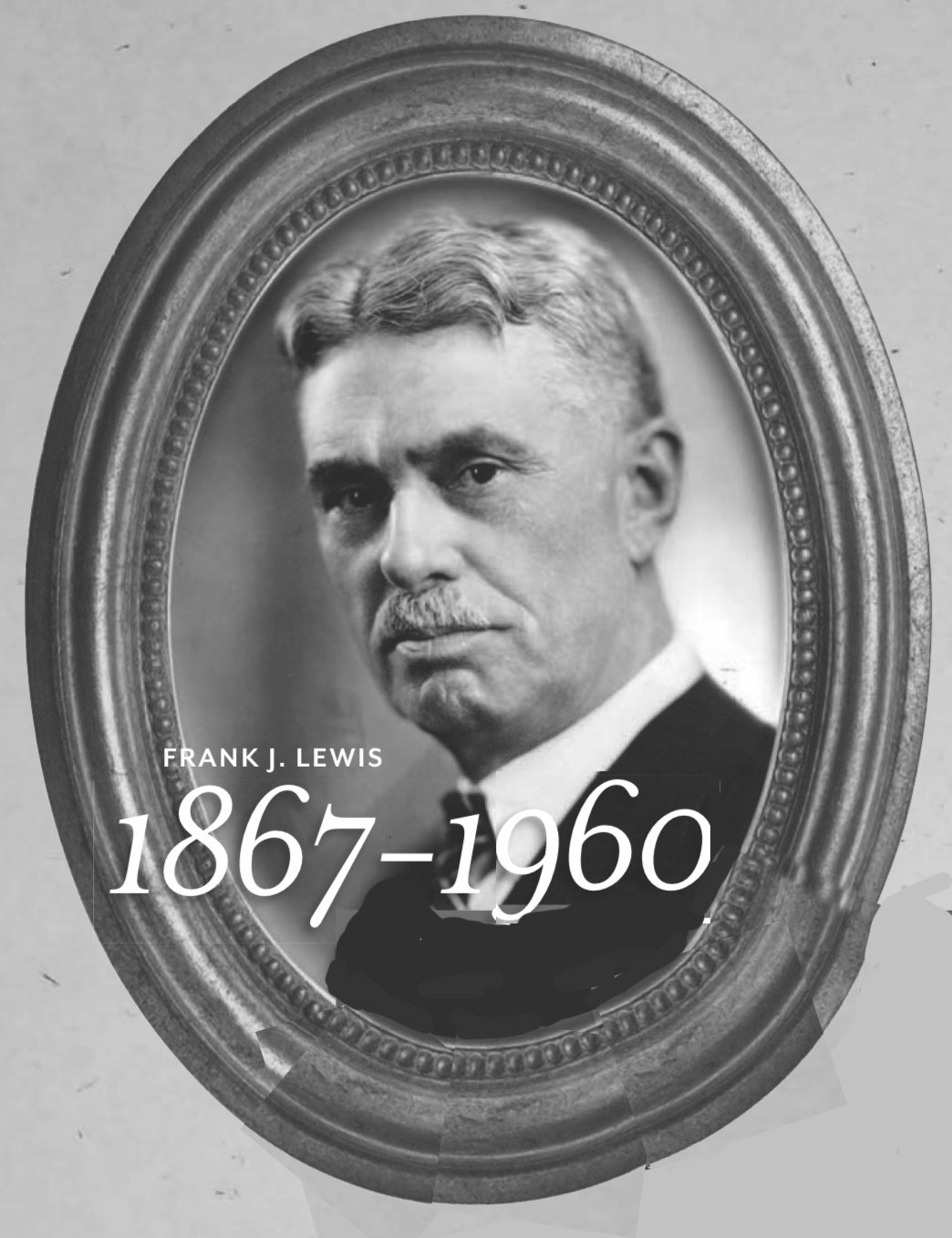
Turned back to civilian use by the navy June 30, the building had been bought for $500,000 by Frank J. Lewis, manufacturer, and presented to Loyola and the Illinois Club for Catholic Women. The latter group will occupy the upper eight floors of the 17 story building.
Will Leave Franklin St.
With its space of 110,484 square feet converted into some 40 classrooms, three libraries, several laboratories, chapel, and administrative offices, the university expects to accommodate its enrollment increase of 40 per cent over the pre-war figure. All departments will be moved from the present downtown school at 28 N. Franklin st. to the new building. Fall enrollment on the Lake Shore and downtown campuses is expected to be more than 7,000.
Major task facing Malcolm J. Boyle Construction company, contractor, is remodeling cafeterias, dormitory rooms, and classrooms used by the navy for its midshipmen’s school into college classrooms and laboratories. It was also used as the navy’s shore patrol headquarters for this area with a complement said to be 2,000 men. The job also includes removing of bars from windows of the third floor brig, where the commerce library will be set up.
Among divisions quartered in the new building, to be called Lewis tower, will be the law school which will open with the fall term after a two year war time lapse. Dean John C. Fitzgerald, who is beginning his 18th year with Loyola, will head a faculty including five full time and four part time instructors. Class rooms and library will be on the ninth floor.
President on 7th Floor.
Tentative plans indicate offices of the dean, assistant dean, bursar, registrar, and the university college and school of social work will be on the fifth floor. Office of the Very Rev. James T. Hussey, S. J., president, and a general library will be on the seventh floor.
On the eighth floor a chapel will overlook Michigan av. A child guidance clinic and psychology laboratory will be established on the same floor. The commerce school will be on the third floor, the graduate school on the fourth, and a biology laboratory and publicity offices on the sixth. Other offices will include those of alumni, veterans administrator, dean of men, dean of women, and student counselor. Classrooms will occupy most of remaining space.
The property was sold last December by Prudence Bonds corporation, New York, which purchased it in 1943. Erected in 1927 by the Illinois Women’s Athletic Club at a cost of 3 million dollars, the building later was the home of the Illinois Club for Catholic Women for several years.
Chicago Tribune, January 29, 1948
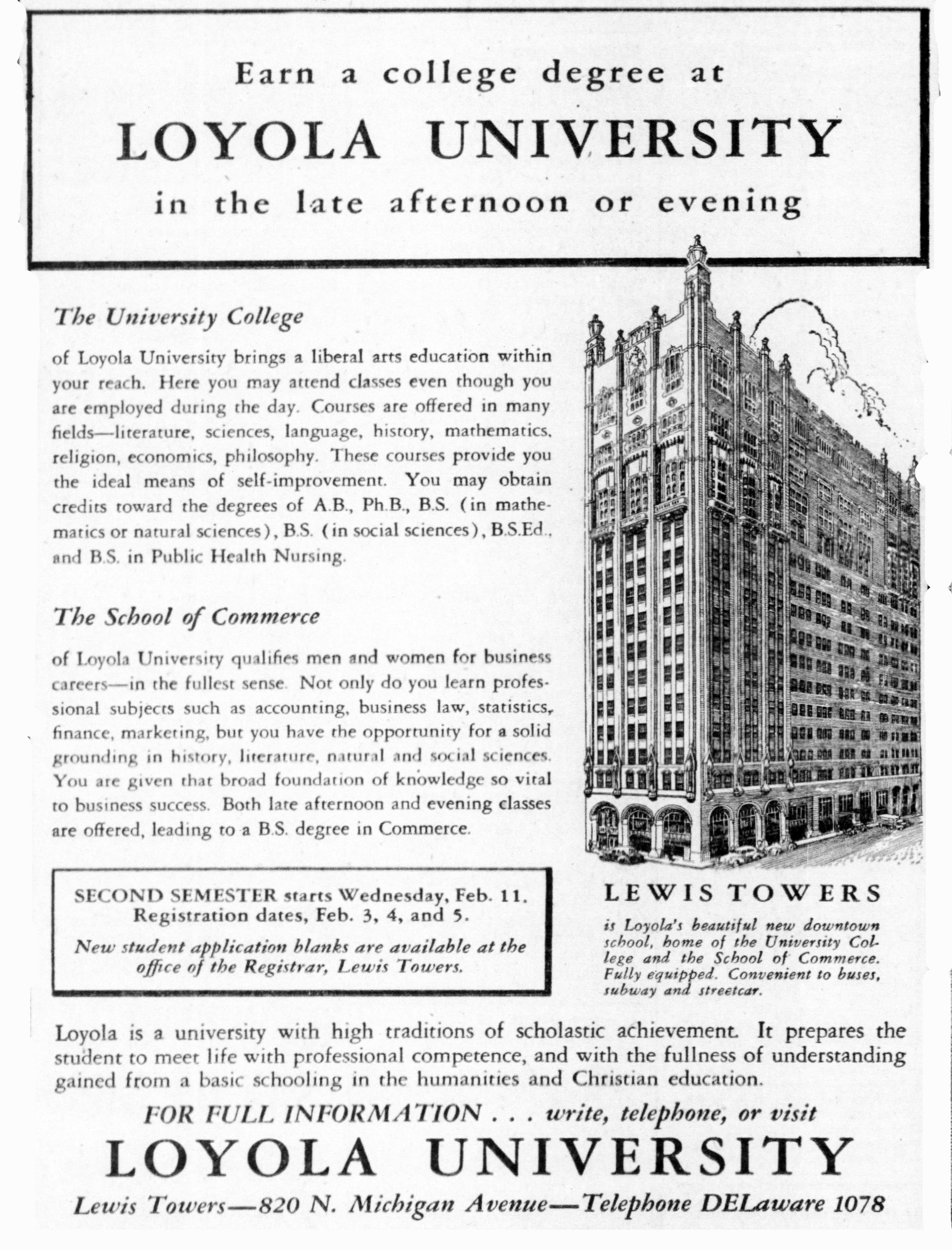
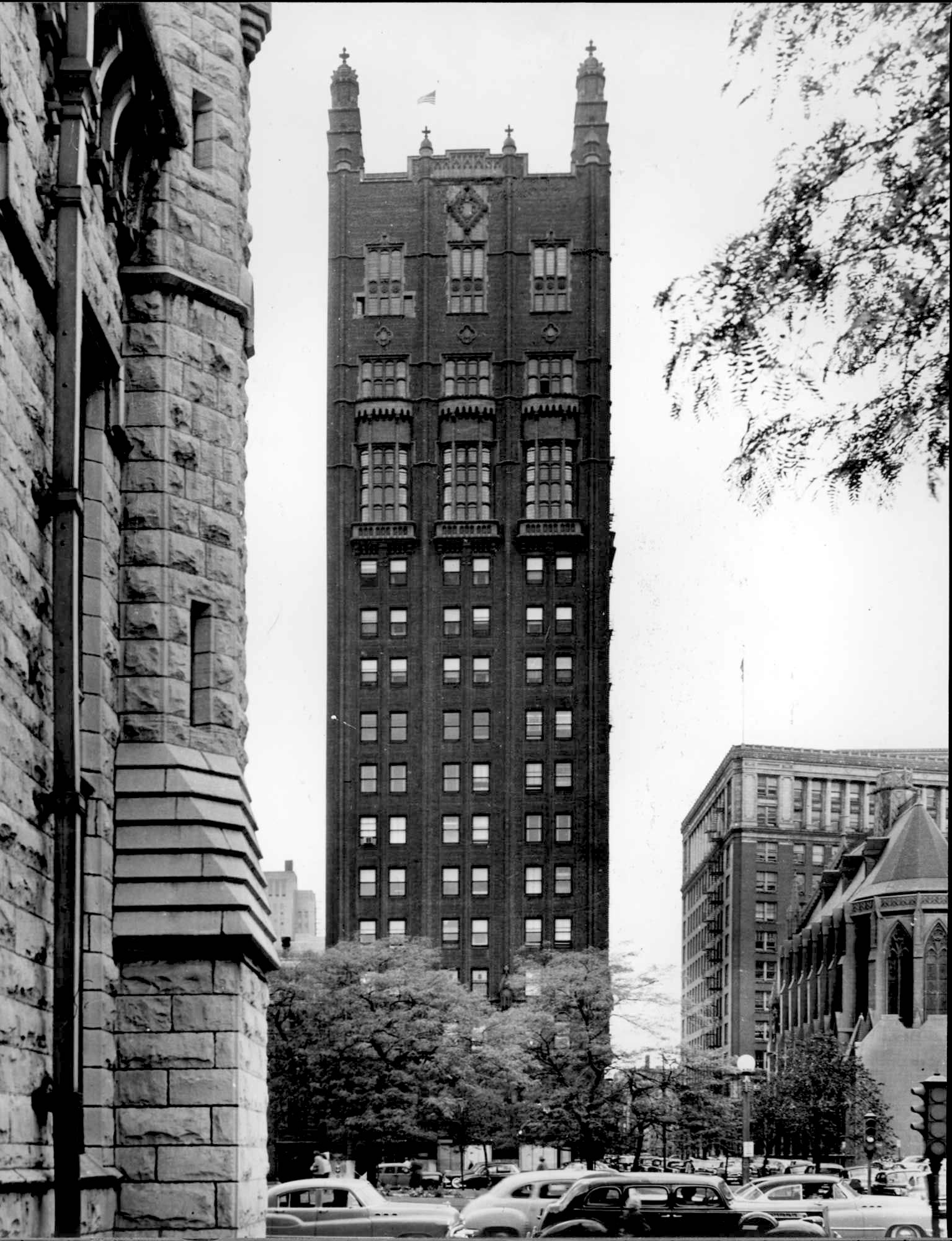
- Lewis Towers
About 1950
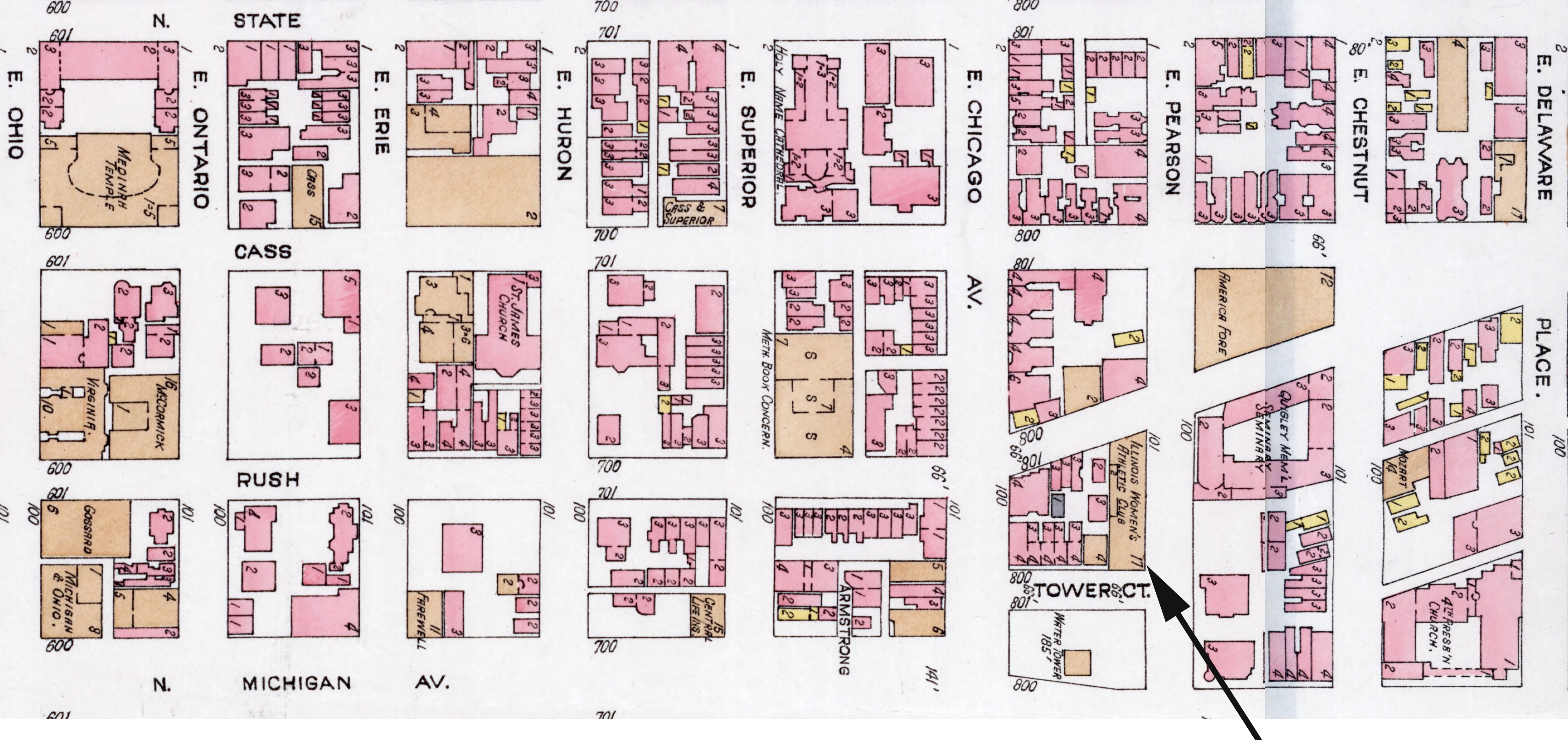
- Illinois Woman’s Athletic Club
Sanborn Fire Insurance Map
1927
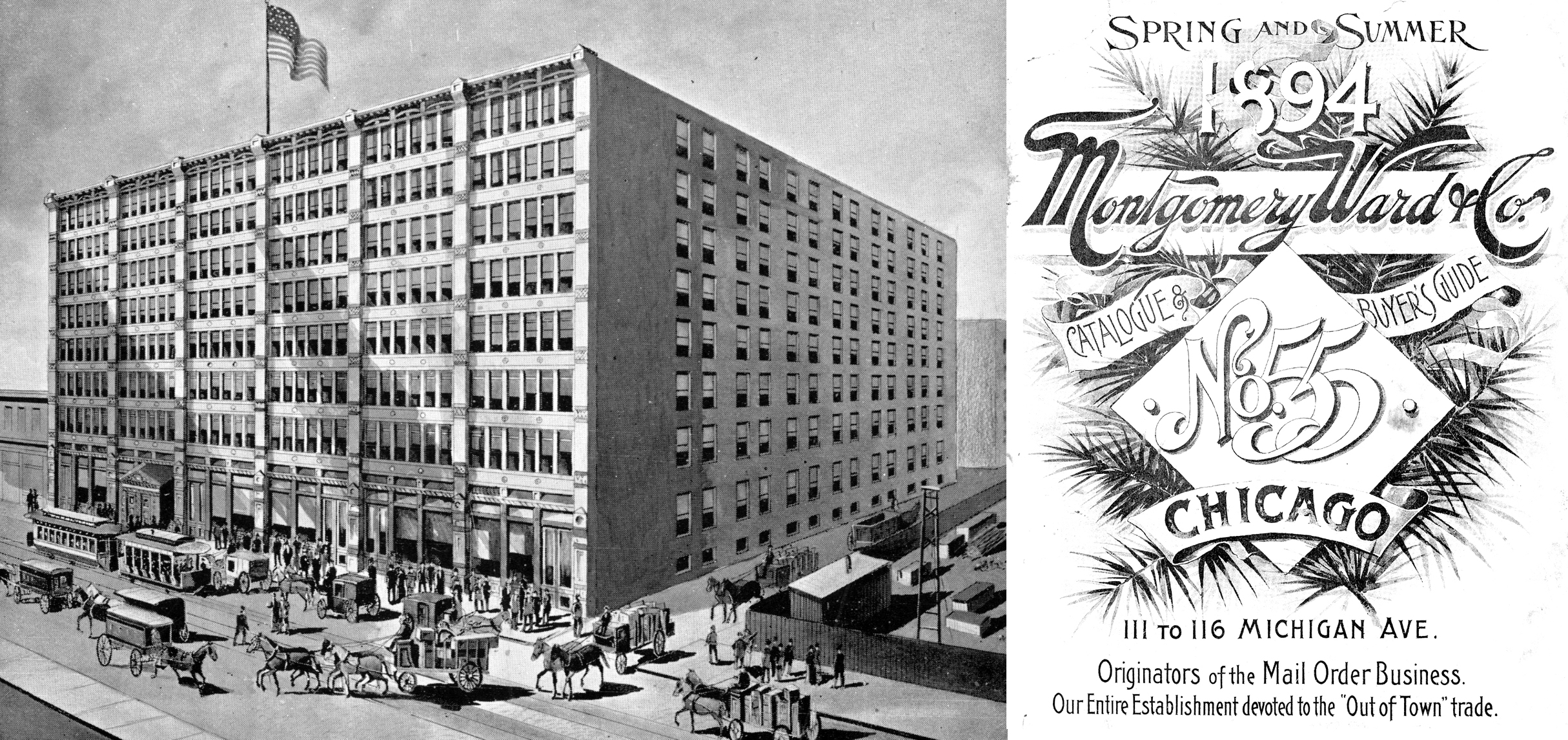
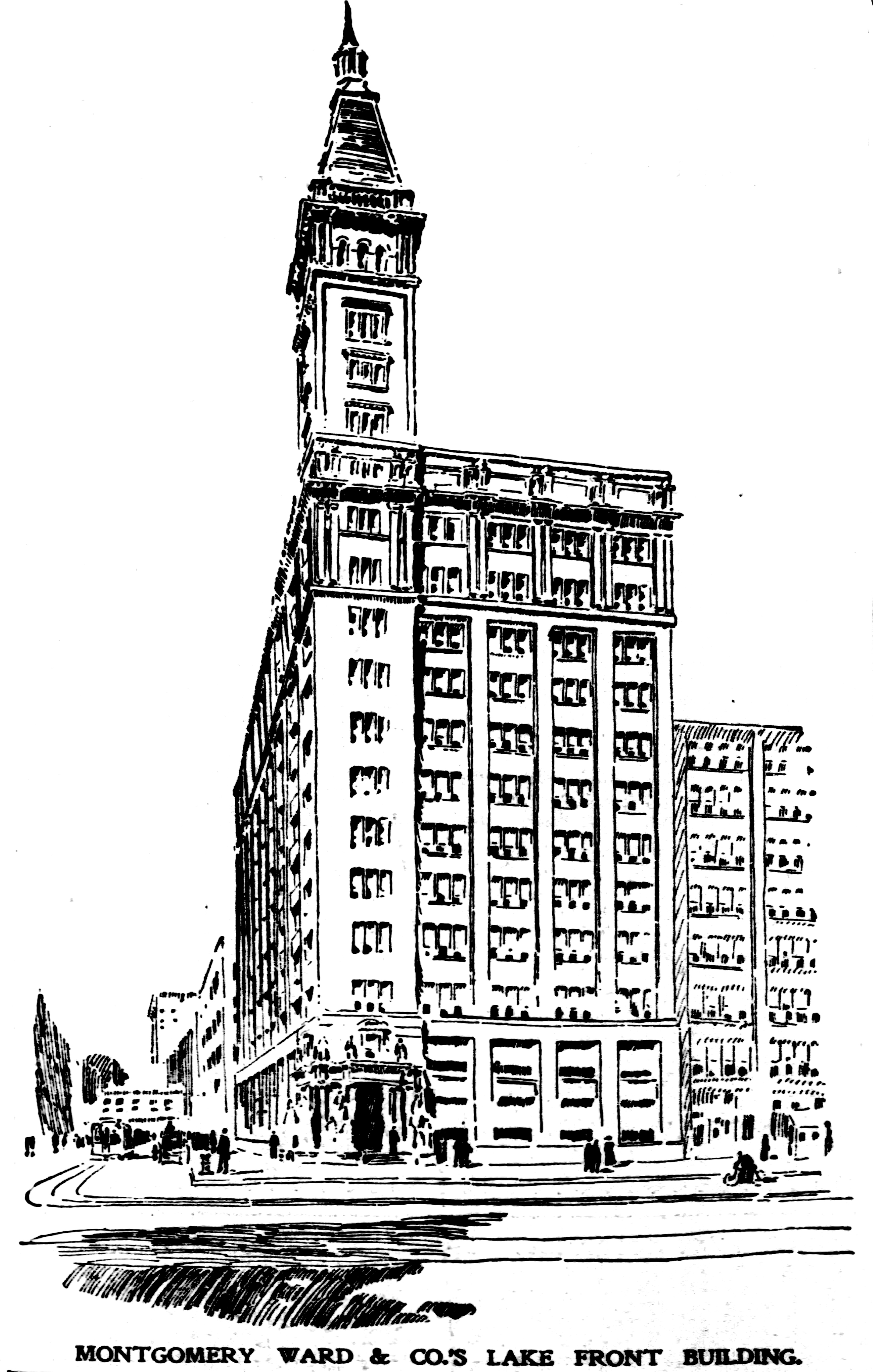
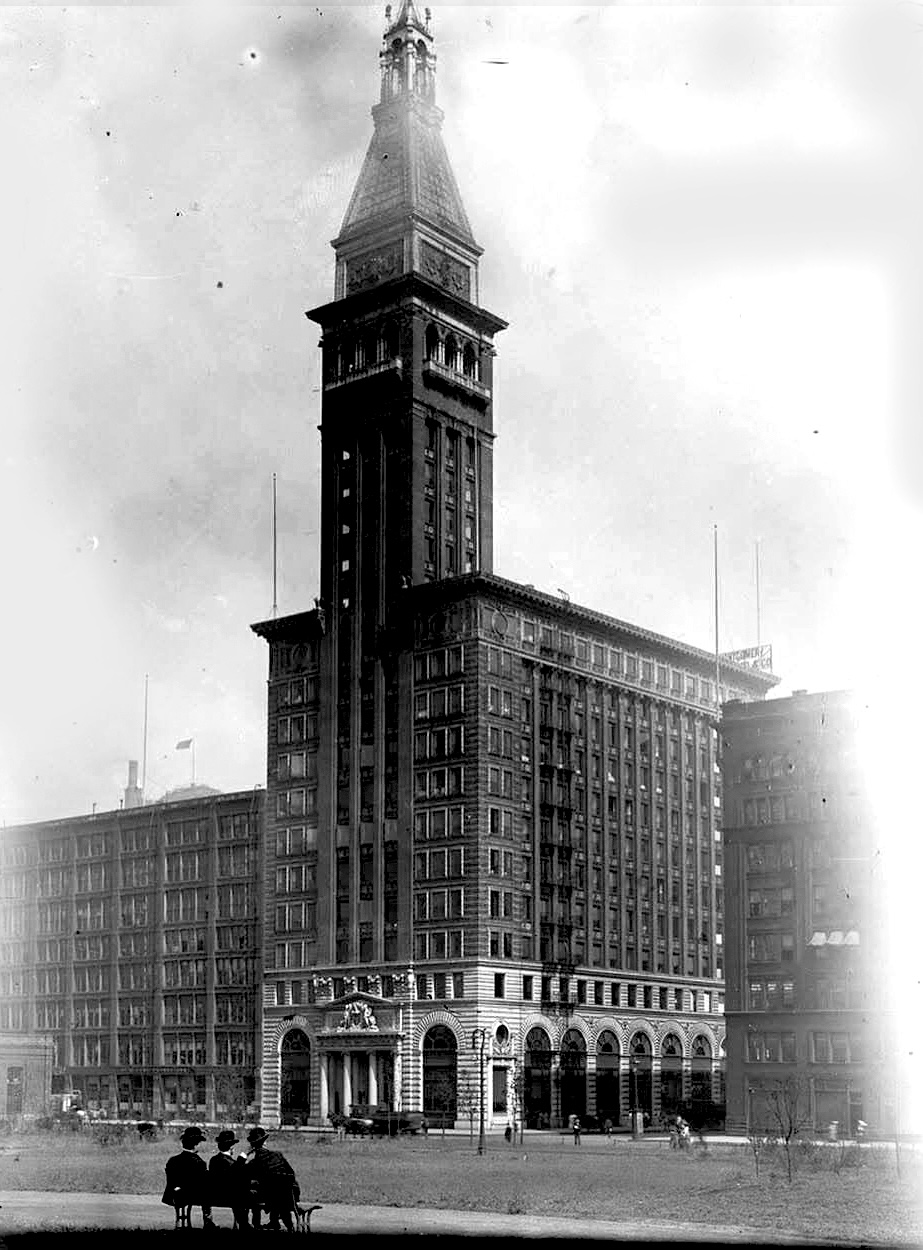
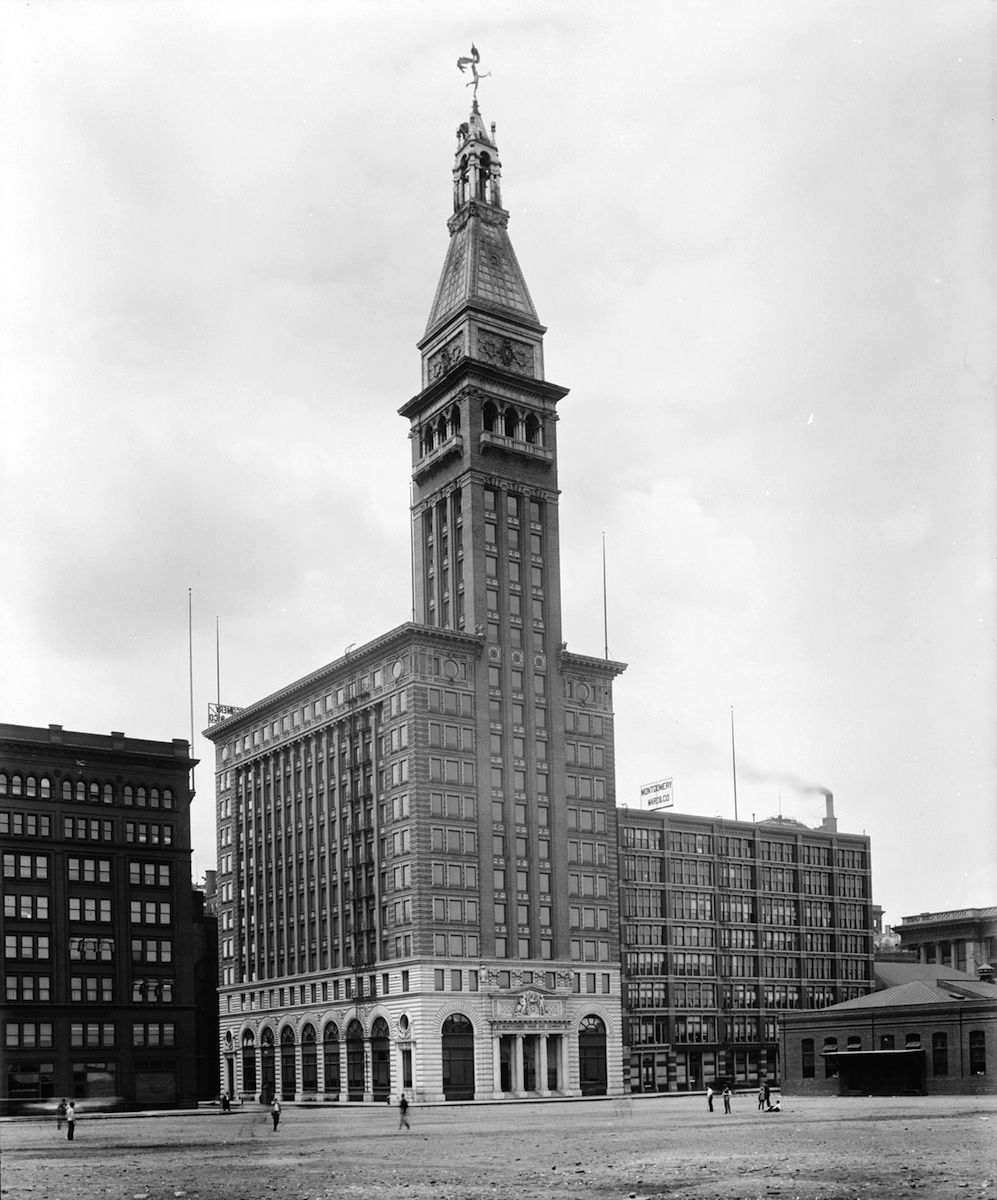

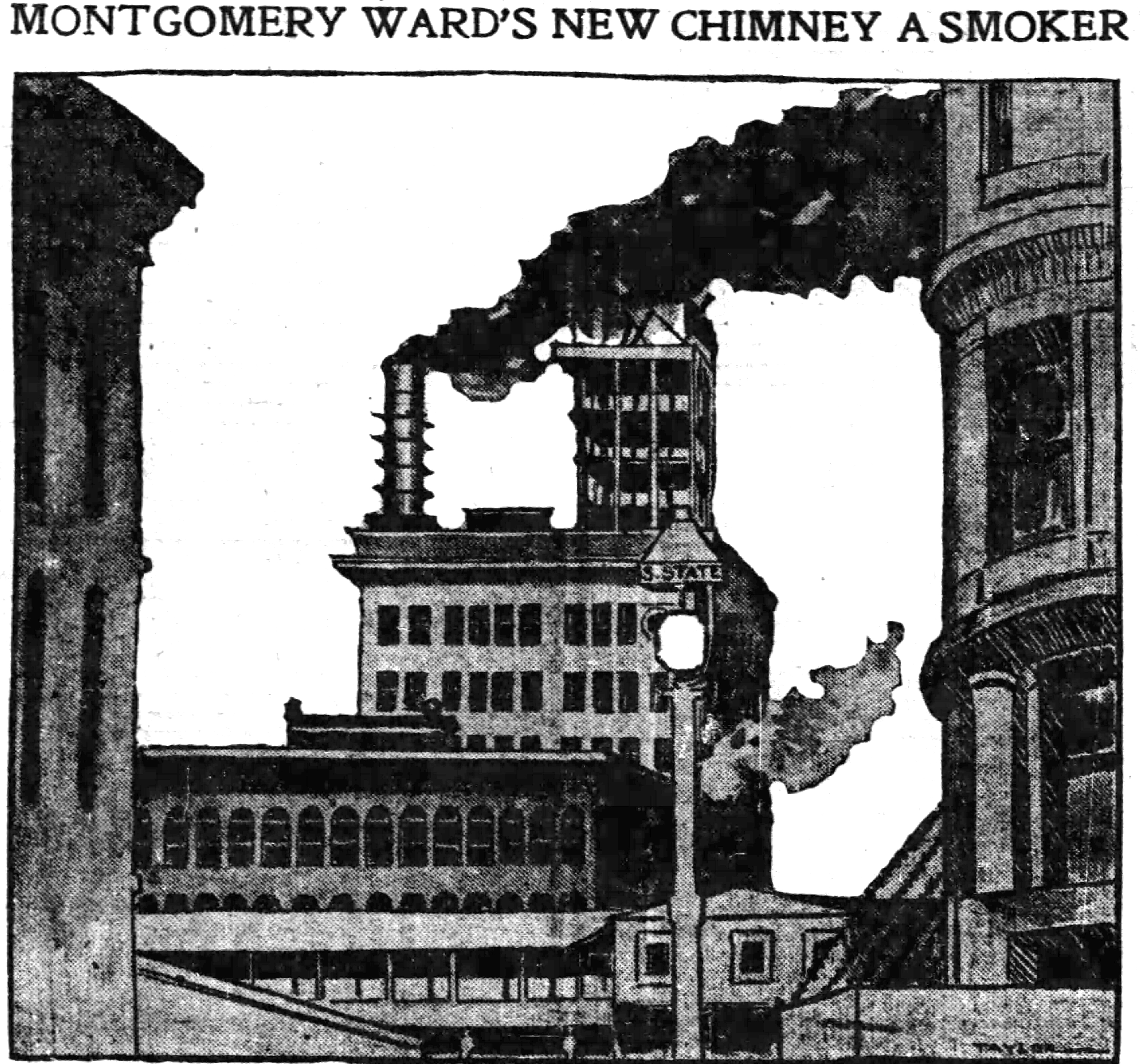
 In the summer of 1872 Mr. A. Montgomery Ward, President of the great Mail Order House of Montgomery Ward & Co., conceived the idea of selling goods direct to consumers at wholesale prices through the medium of catalogues. At the beginning, two men and a boy were sufficient to conduct the business. By dealing honestly with the people, giving them the best of value for their money, guaranteeing goods as represented or refunding the purchaser’s money, and by, in every way, putting themselves in the place of buyers instead of the seller, they have built up a business which is the wonder of the mercantile world. They now employ 2,000 clerks, who are constantly engaged in filling out-of-town orders, and transact business not only throughout the United States, but in every country. They occupy 25 acres of floor space to conduct their business and own and occupy the buildings shown on this page. Such a mammoth business could only be built up by treating people right, by giving them good goods and by refunding their money if not satisfied. Montgomery Ward & Co. guarantee satisfaction in all their sales, that is, if you should send them an order and upon receipt of the goods they were not what you expected or not what they represented them to be, or in. other words, if you were not entirely satisfied with them, you could return the goods at their expense and they would refund the transportation charges both ways and also return your money tp you.
 By Paul Gapp, Architecture critic

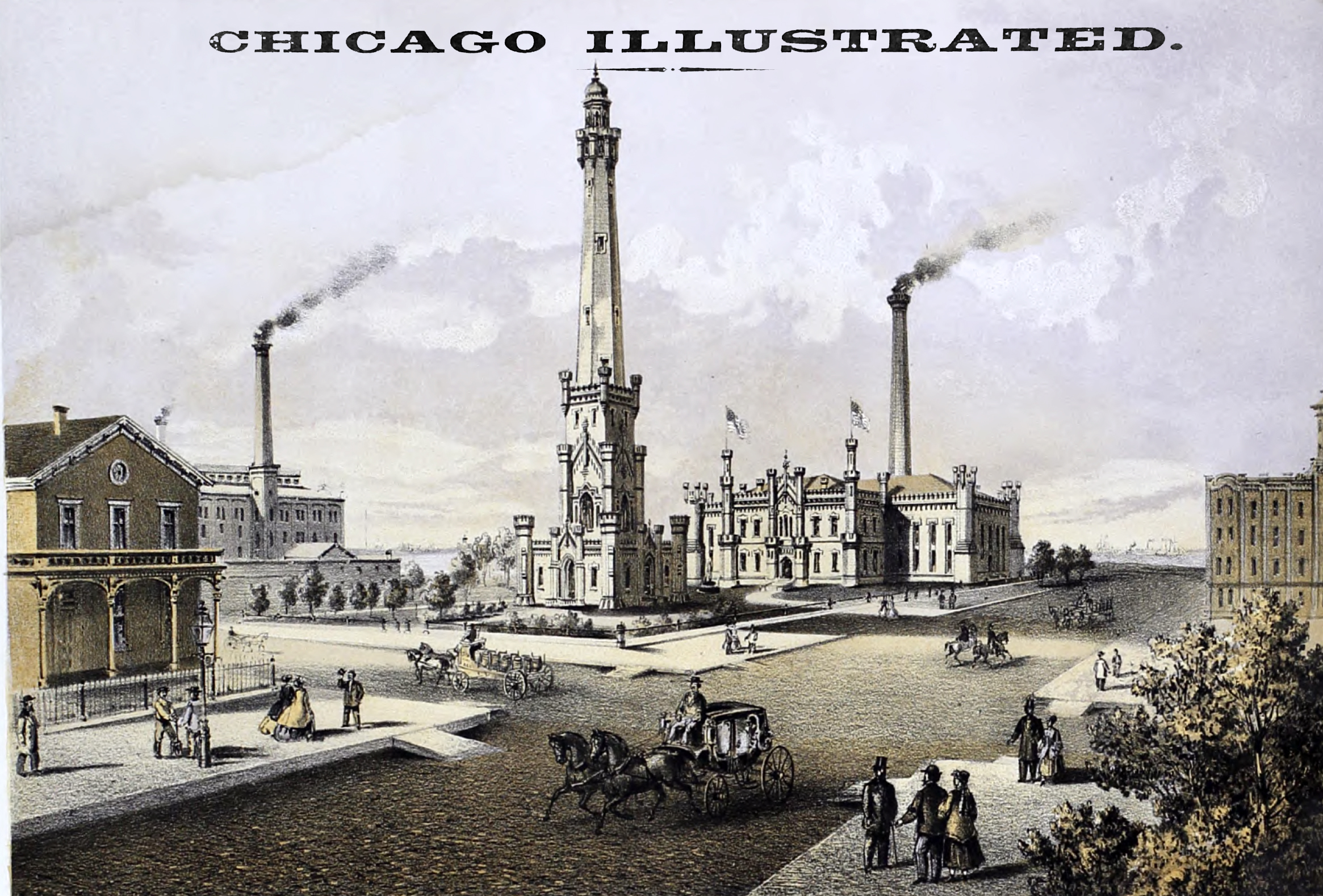
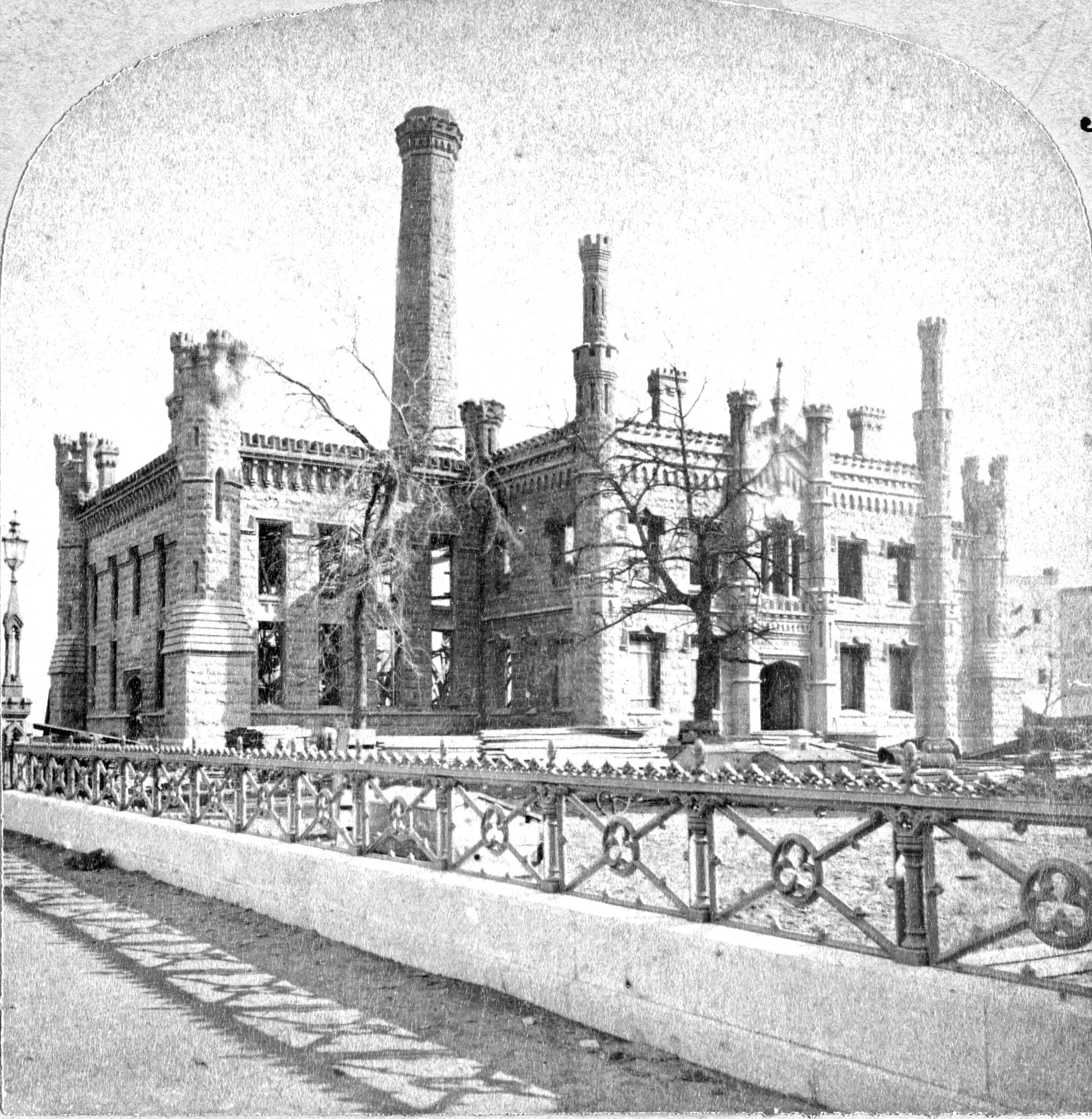


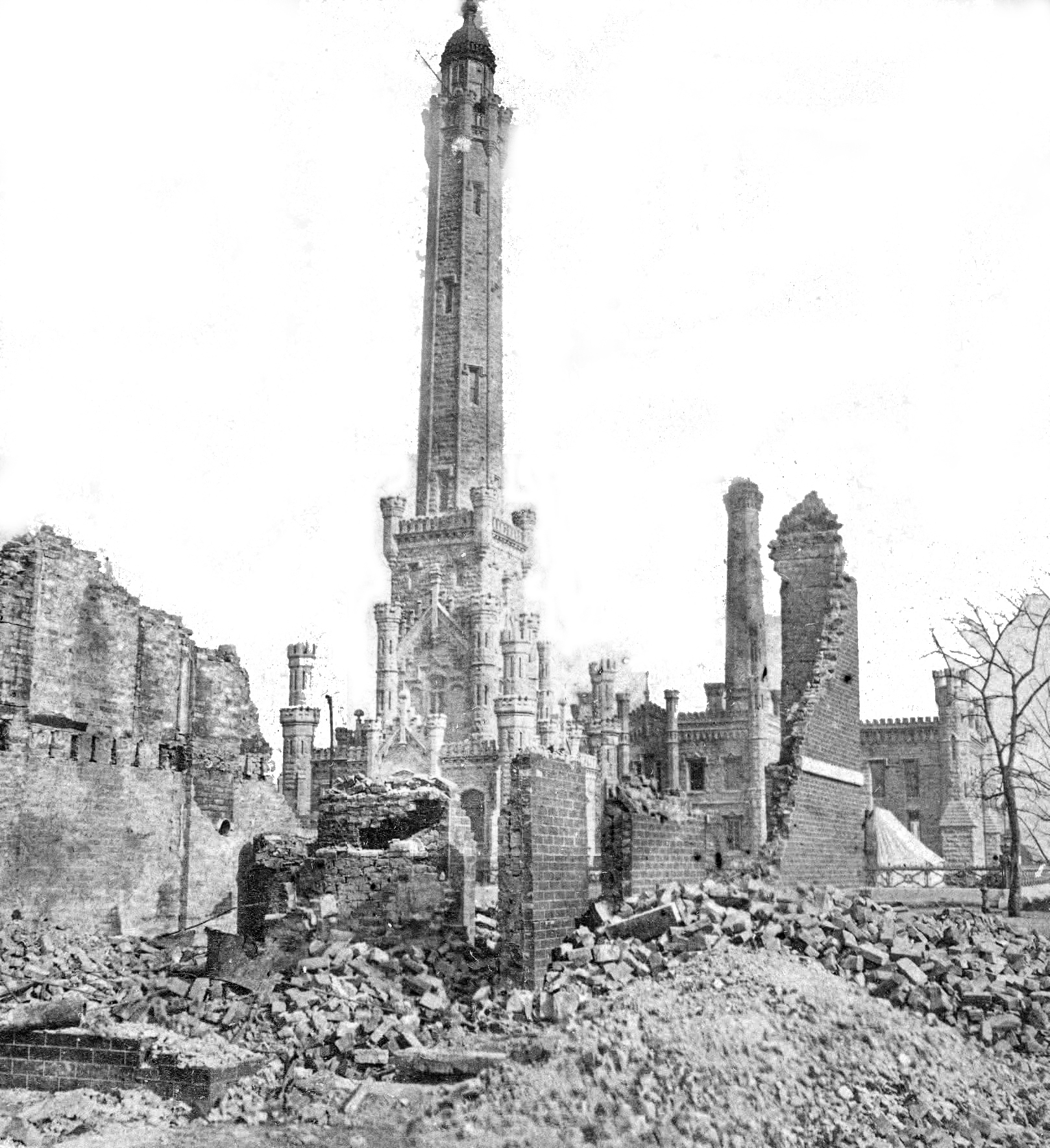
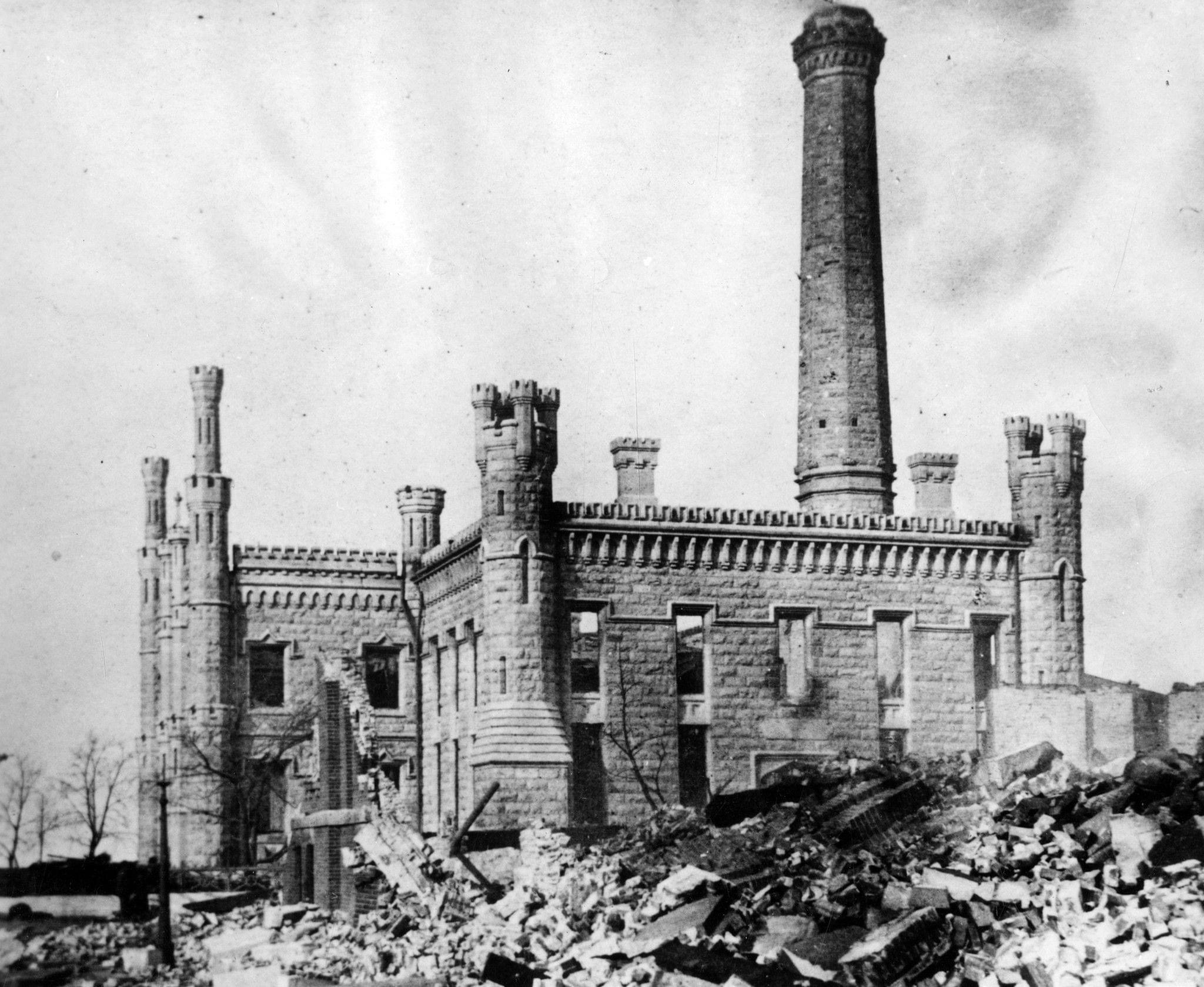
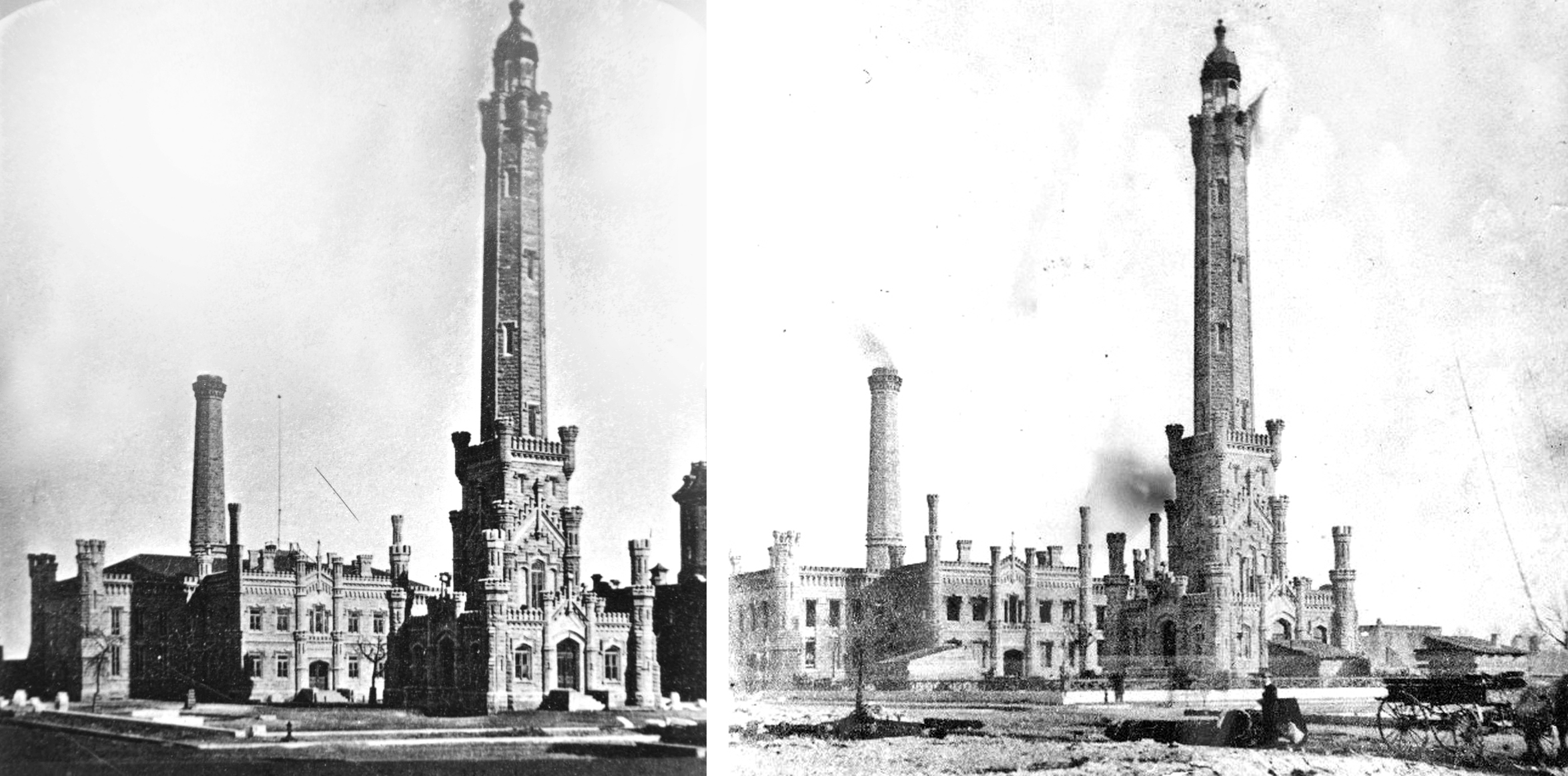
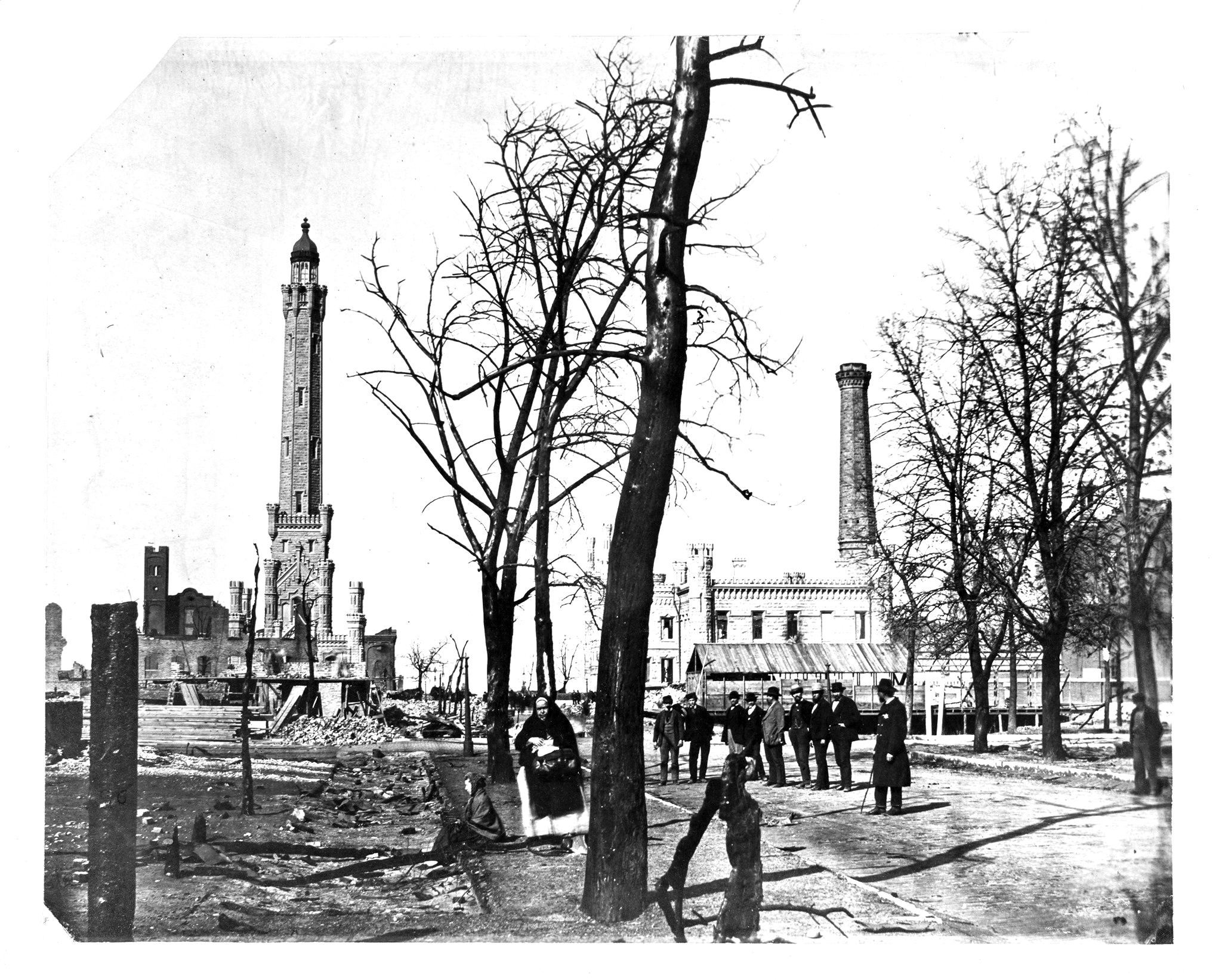
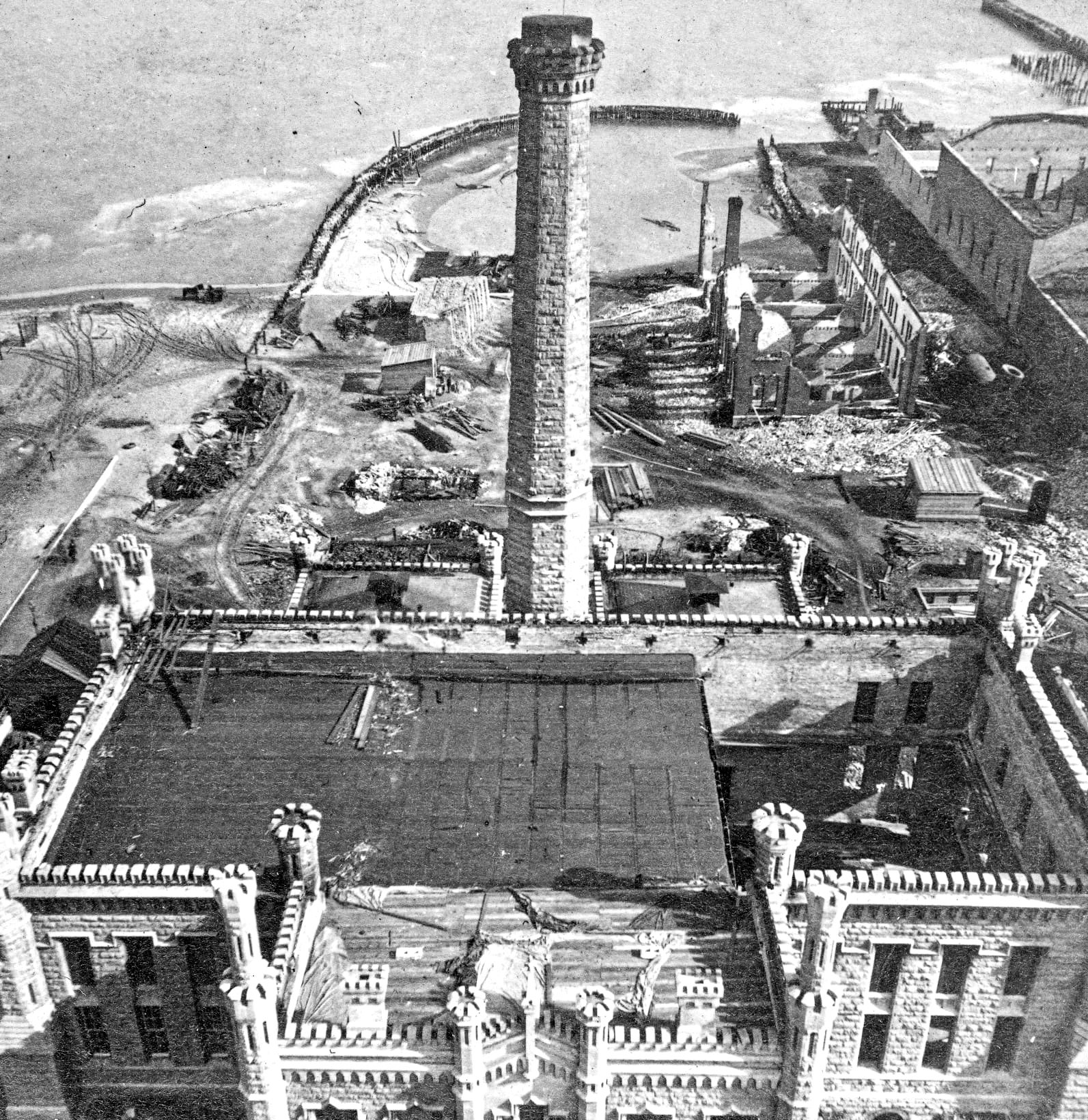
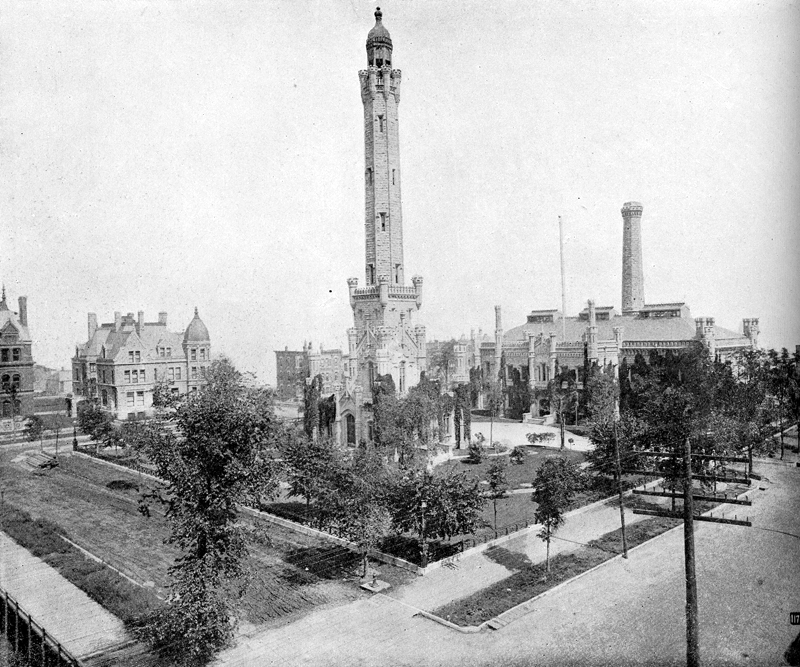
 The south wing of the main Water Works building is now fully completed. This wing was designed for the reception of another plumbing engine, which the increasing needs of the city would require. Its external appearance corresponds precisely with that if the northern wing, so that the proportions of the structure are rendered complete, and its symmetry preserved. Several weeks ago the Board of Public Works submitted to the Common Council the property of taking steps towards the purchase of another pumping engine similar to the new one now in operation at the Water Works.It was then shown that the average daily consumption of water was, during the winter months, eighteen millions would be consumed. The capacity of the new engine is eighteen million gallons, and that of the two smaller engines jointly about twenty-one millions, or nearly forty millions in all. At present the accidental breakage of the little engine would necessitate the running of the remaining one or two ones to their fullest capacity, but, within two or three years, when the consumption of water should be largely increased, the present pumping power would be entirely insufficient to properly provide for the safety and health of the city against all contingencies. The special committee of the Common Council, to whom the sthe subject was referred, has not yet reported upon the matter, nor upon the project extending the tunnel and the construction of additional water works on some point in the vicinity of Twenty-second street and the river. In case the latter project should be adopted, it is probable that the new engine, or, perhaps, two small engines, will be placed in the new works. The fact that the Water Works are now fully completed and ready for the reception of another engine, will doubtless have the effect of settling the question of additional water supply.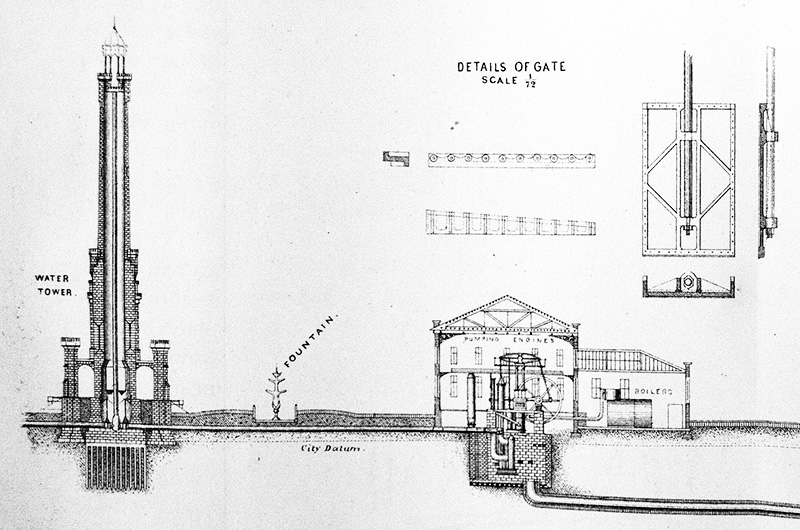

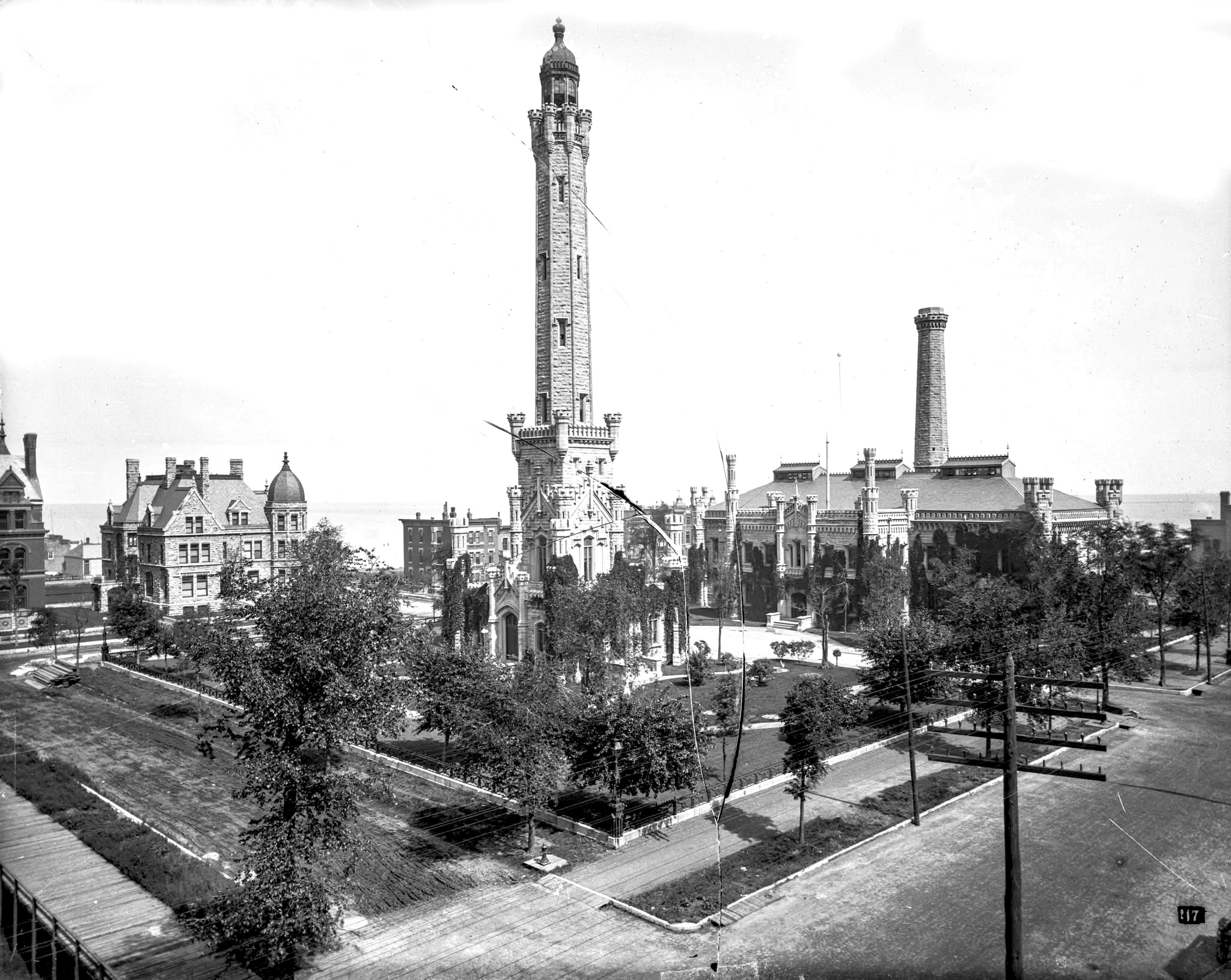
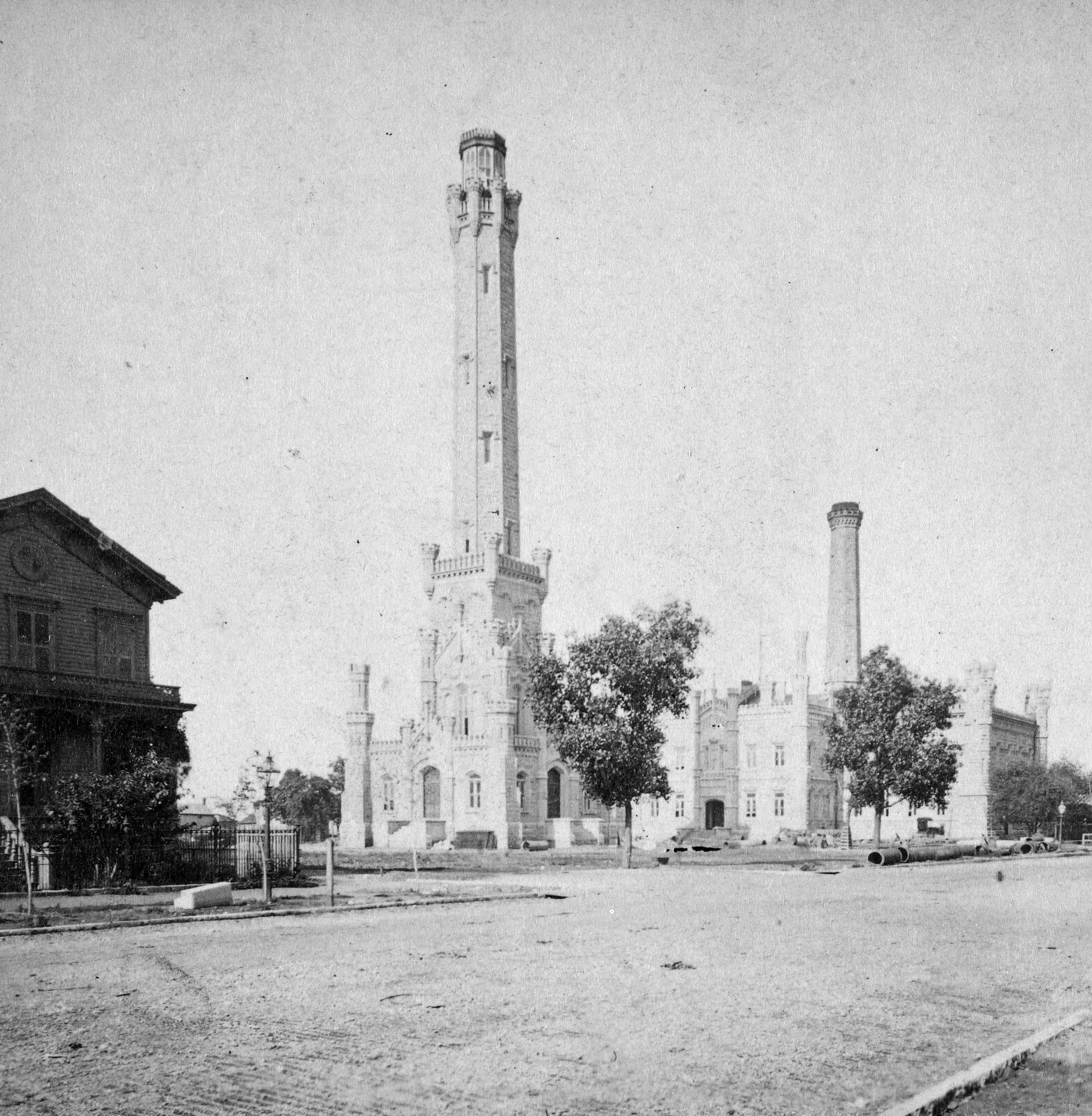

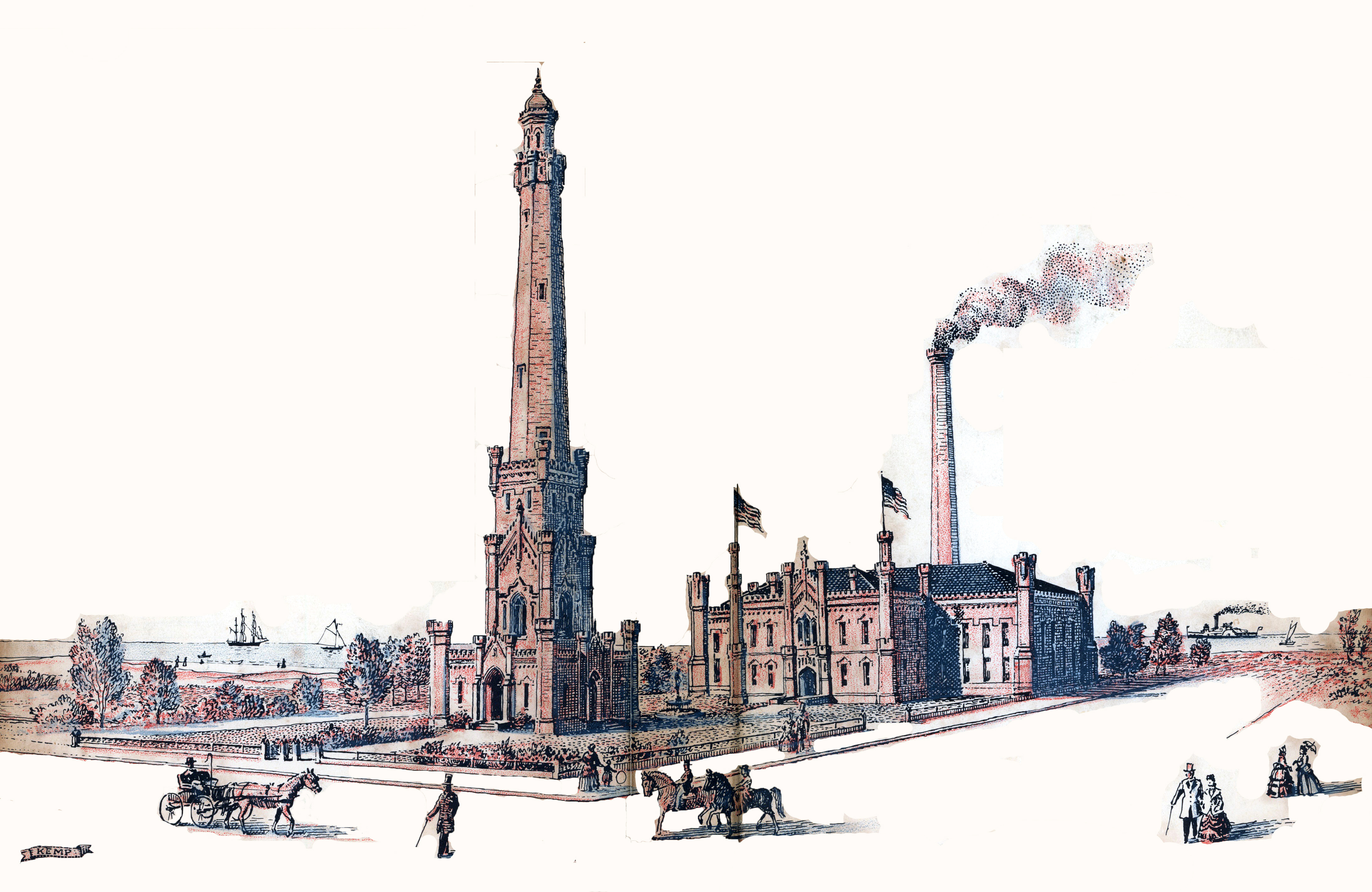
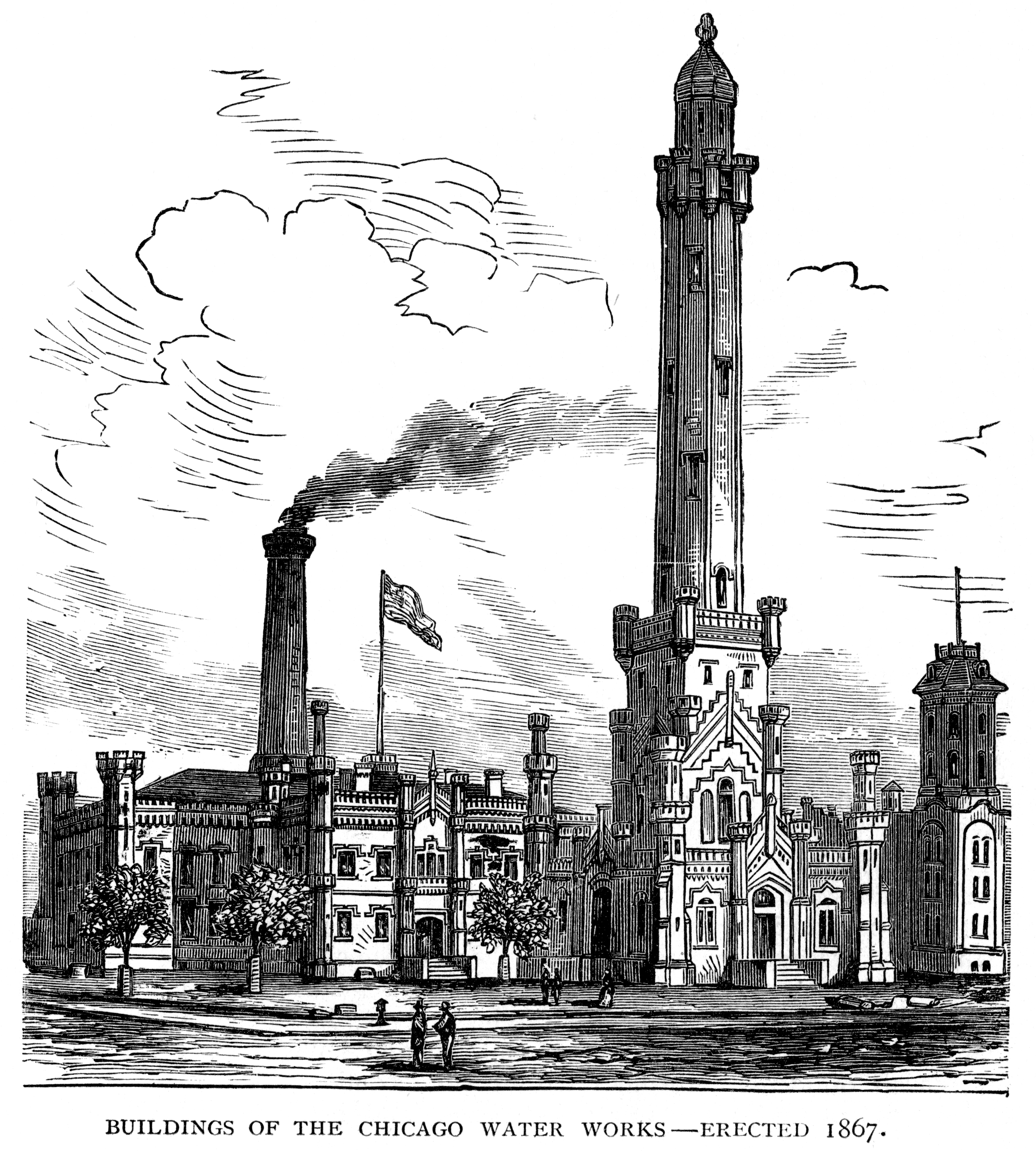
 At least one John Smith was born in Chicago in 1832 and in 1842 his remembrance of boy life in his neighborhood, 500 feet north of the present Clark street bridge, was that he was a charter member of the Chicago Waterworks system, not incorporated.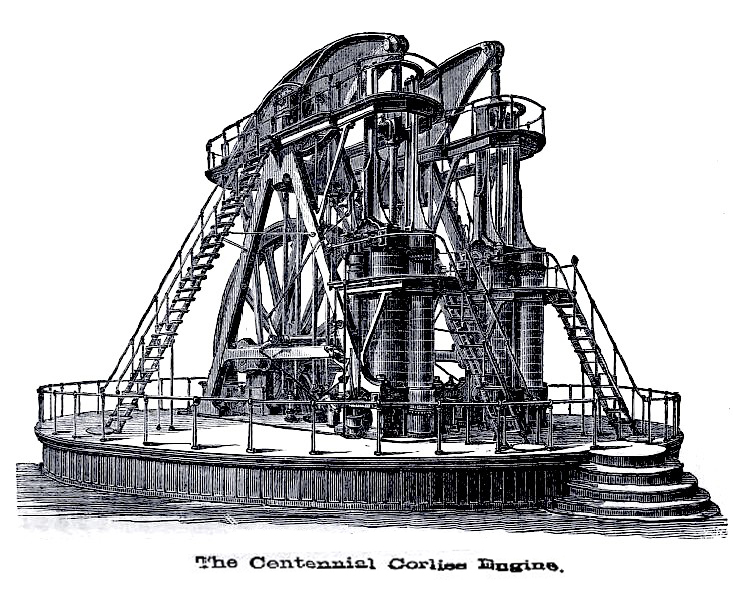




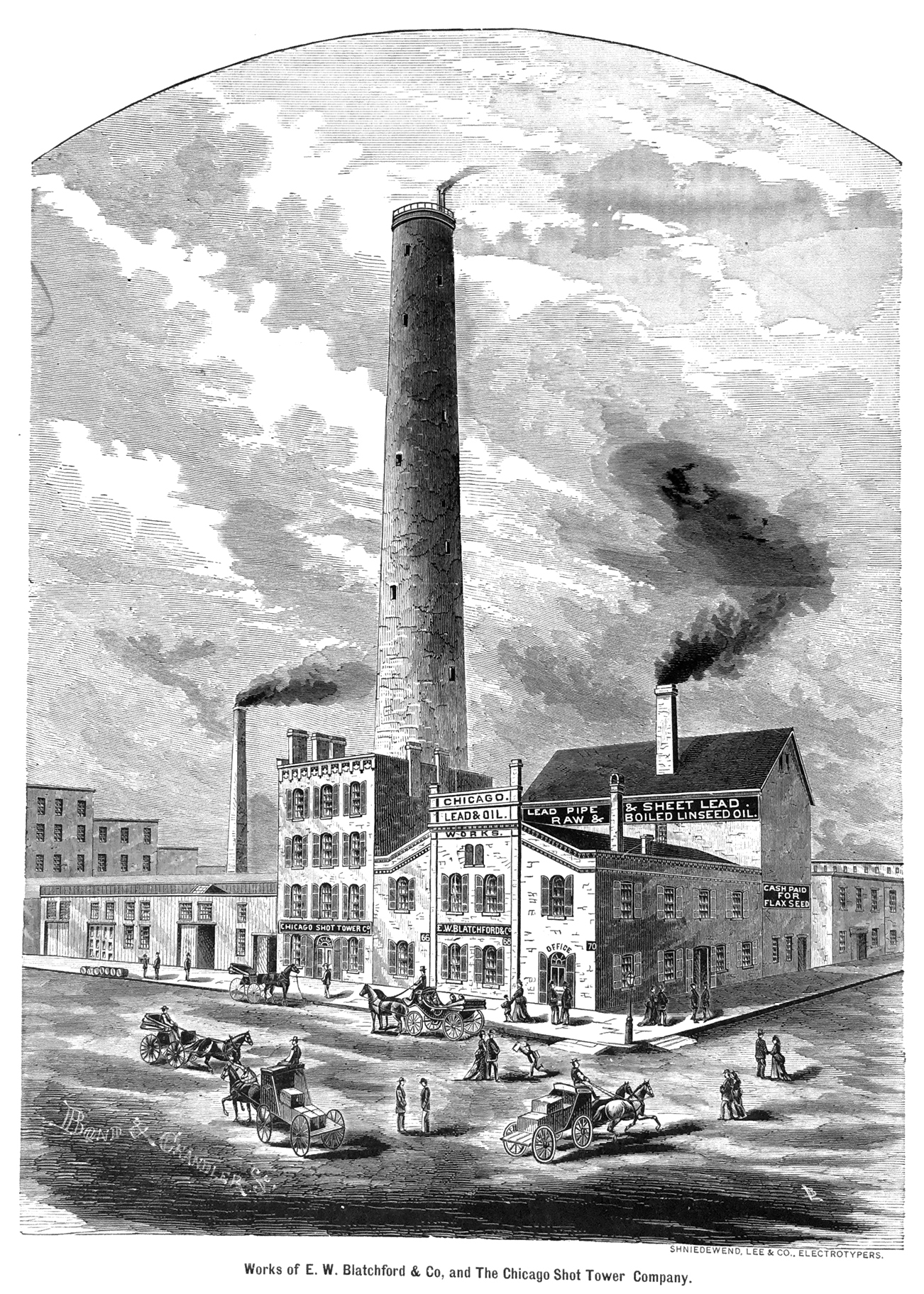
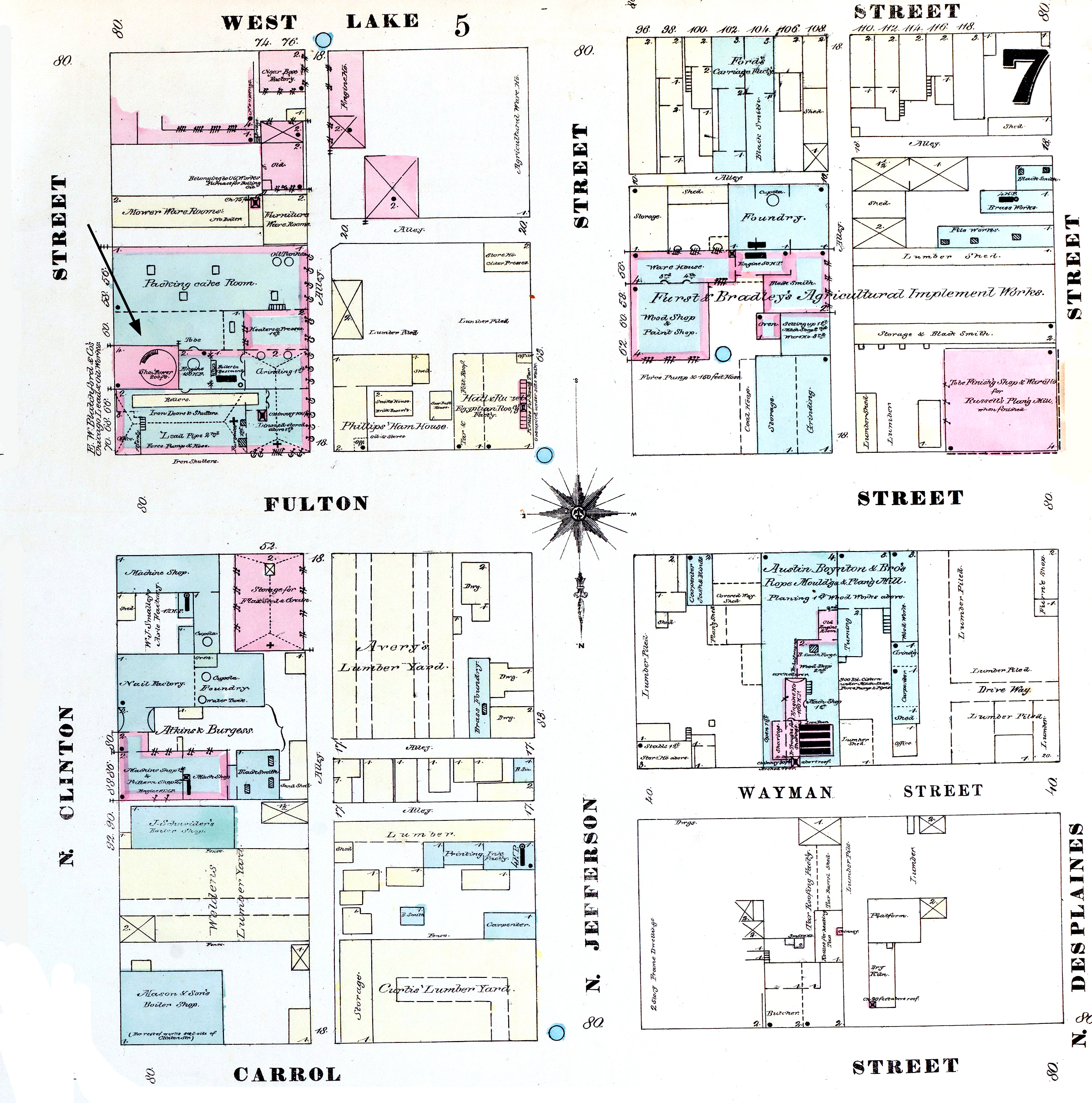
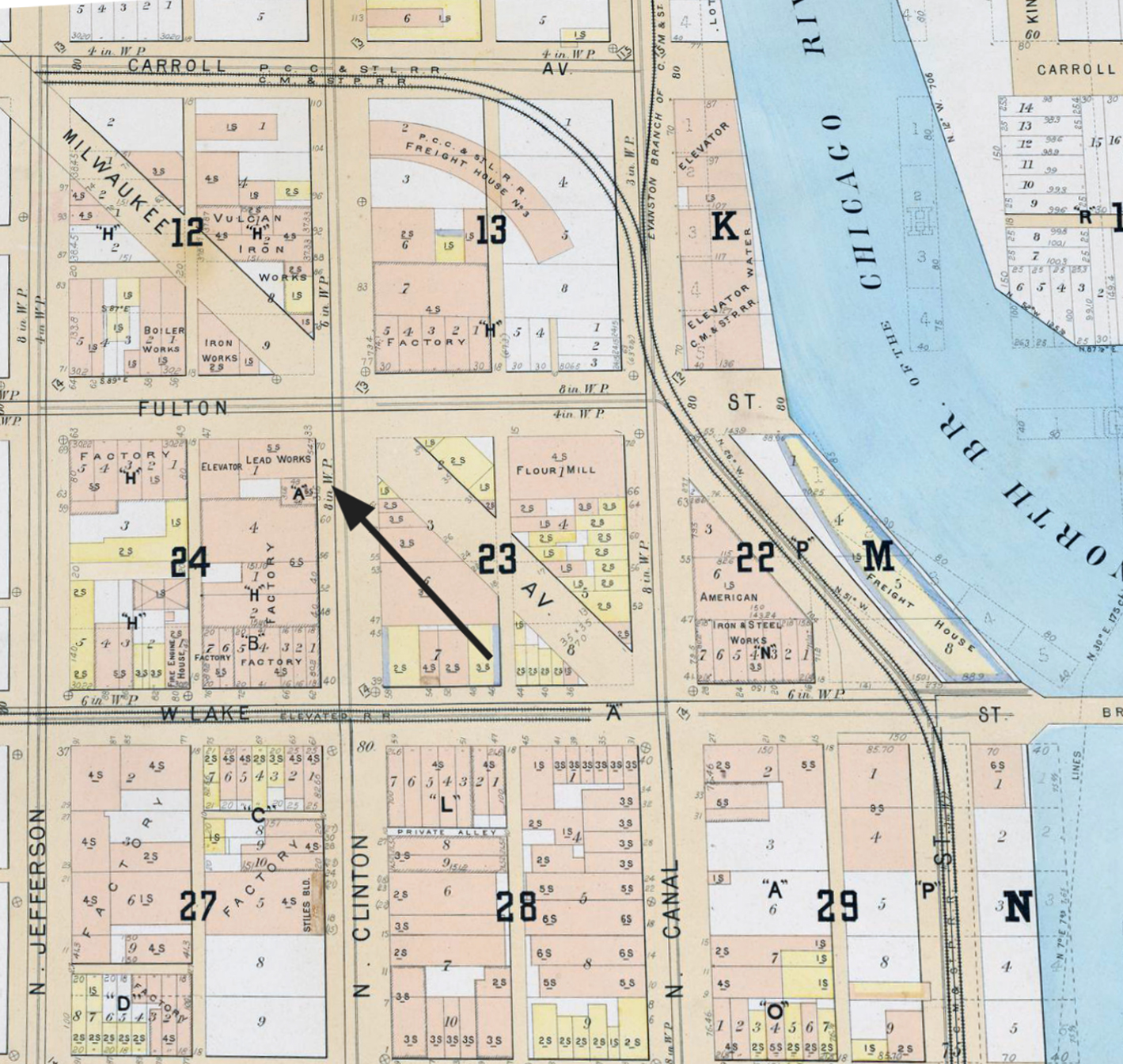
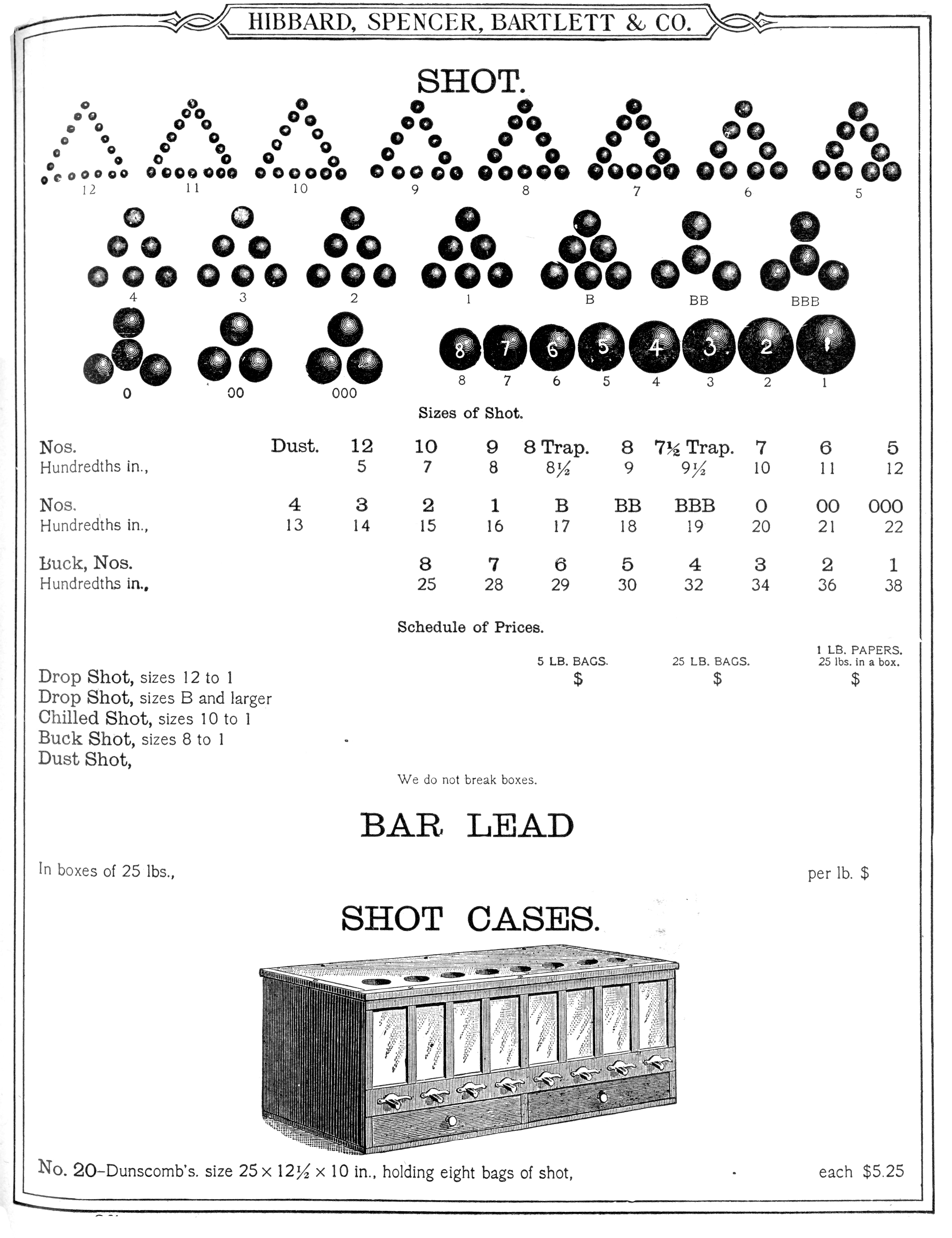
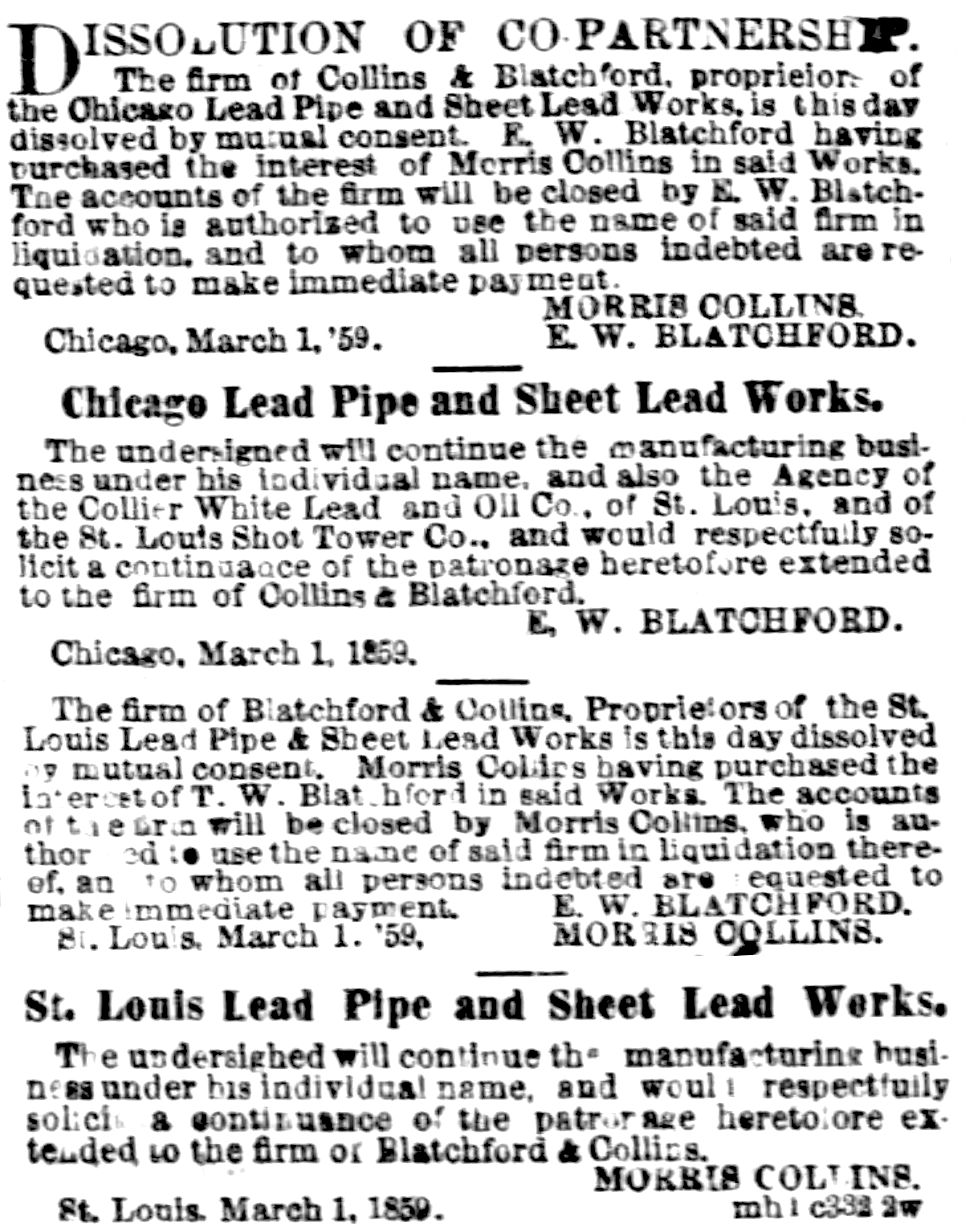
 For some time past Messrs. E. W. Blatchford & Co. have been contemplating the erection of a shot-tower in connection with their establishment, the Chicago Lead and Oil works, at the corner of Fulton and Clinton streets, on the West Side, and a short time ago the contracts were made for the mason work and the undertaking was commenced. Excavations for the foundation wall were made to a depth of fourteen feet from the surface and large flat-bedded stones were laid as the basis of the immense tower. The dimensions of of the foundation, which is square, are 32×35 feet, with a large inverted arch in the centre which reaches down from the top of the cap-stones a distance of ten or twelve feet, so that the bottom of the arch is on a level with the basement floor. Into this arch or reservoir the shot will drop from the top of the tower. As a means of communication, a door is cut through from the basement, and a track will be laid for cars to run upon to carry the bars of lead in and bring out the shot. Within the tower will be an elevator, worked by steam, which will take the lead to the top. The brick work will commence immediately on the top of the capstones, and the tower will be twenty-five feet in diameter at the base, running up to the great height of 196 feet, in the form of a cone, the diameter at the top being twelve feet. The wall will be three feet and a half in thickness, and it is estimated that it will require 700,000 brick in its construction.

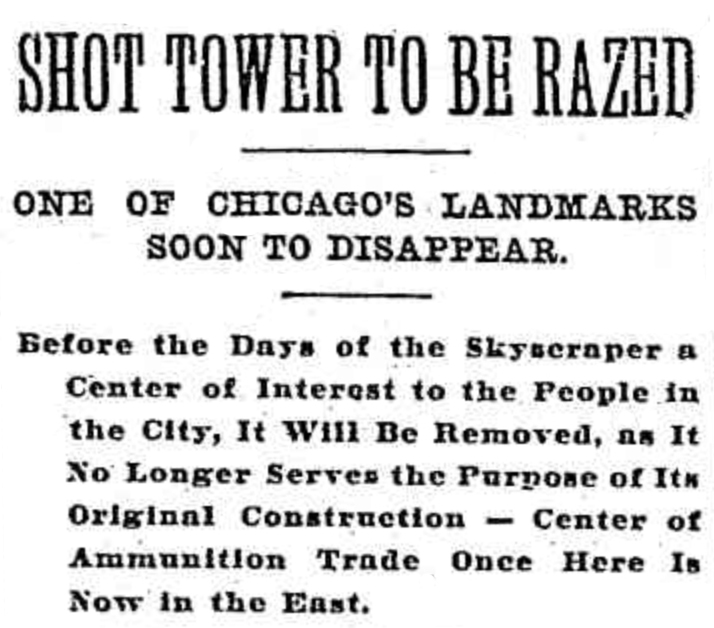 After remaining for thirty-four years one of the landmarks and sights of Chicago, the old shot tower at the southwest corner of Clinton and Fulton streets is to be torn down and the ground under it devoted to other uses.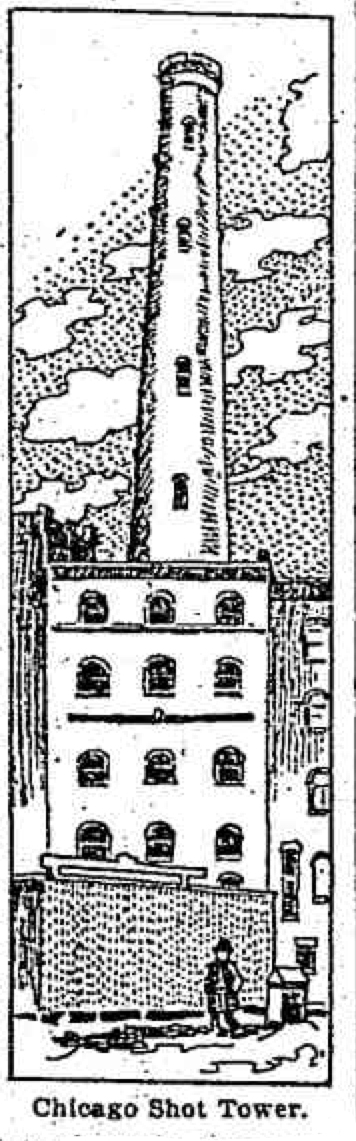
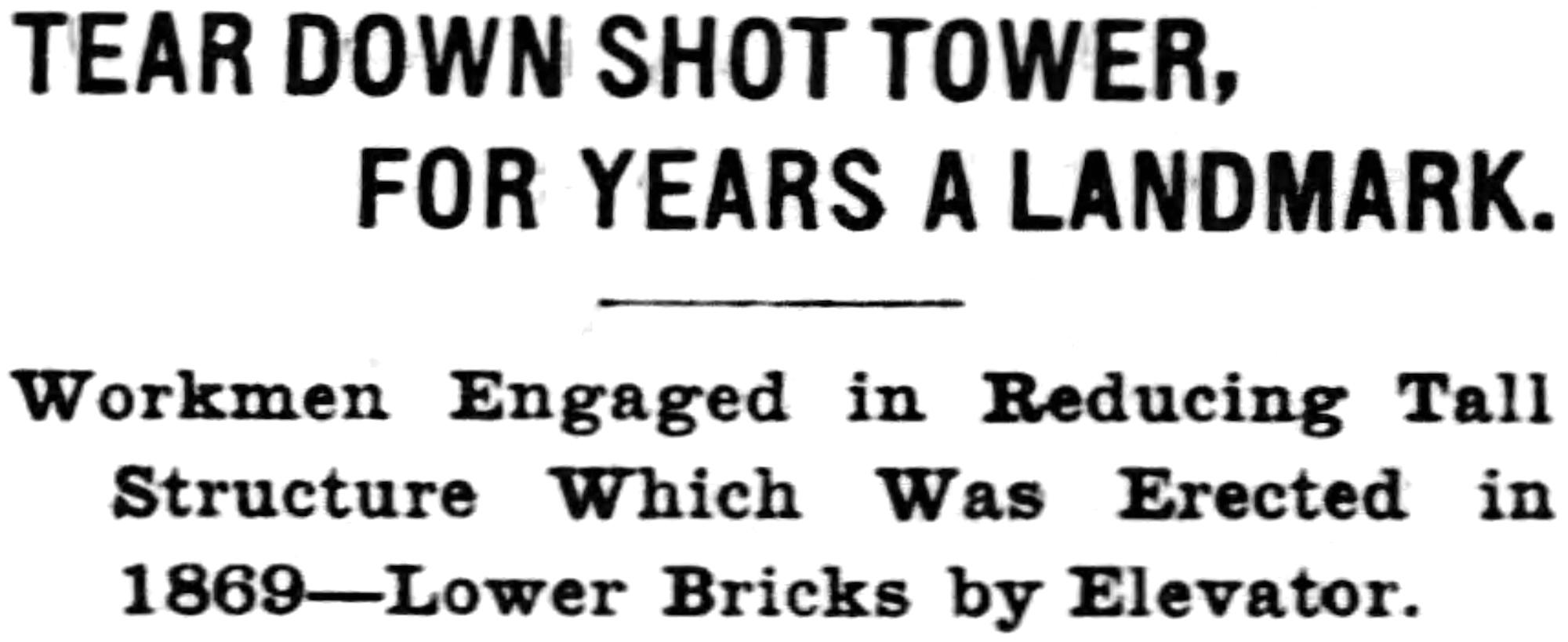 Active work has begun in tearing down the old shot tower which has stood for thirty-two years at the corner of North Clinton and Fulton streets. The old shaft which was once used to lift up the lead to the melting kettles at the top has been fitted up with a chain elevator with twenty-four buckets. This is fastened on supports which can be lowered as the structure is torn down. The elevator is worked by the weight of the bricks in the buckets. When the load reaches the bottom it is thrown out with such force that the sound of the bricks being hurled against a temporary fence can be heard for a block.
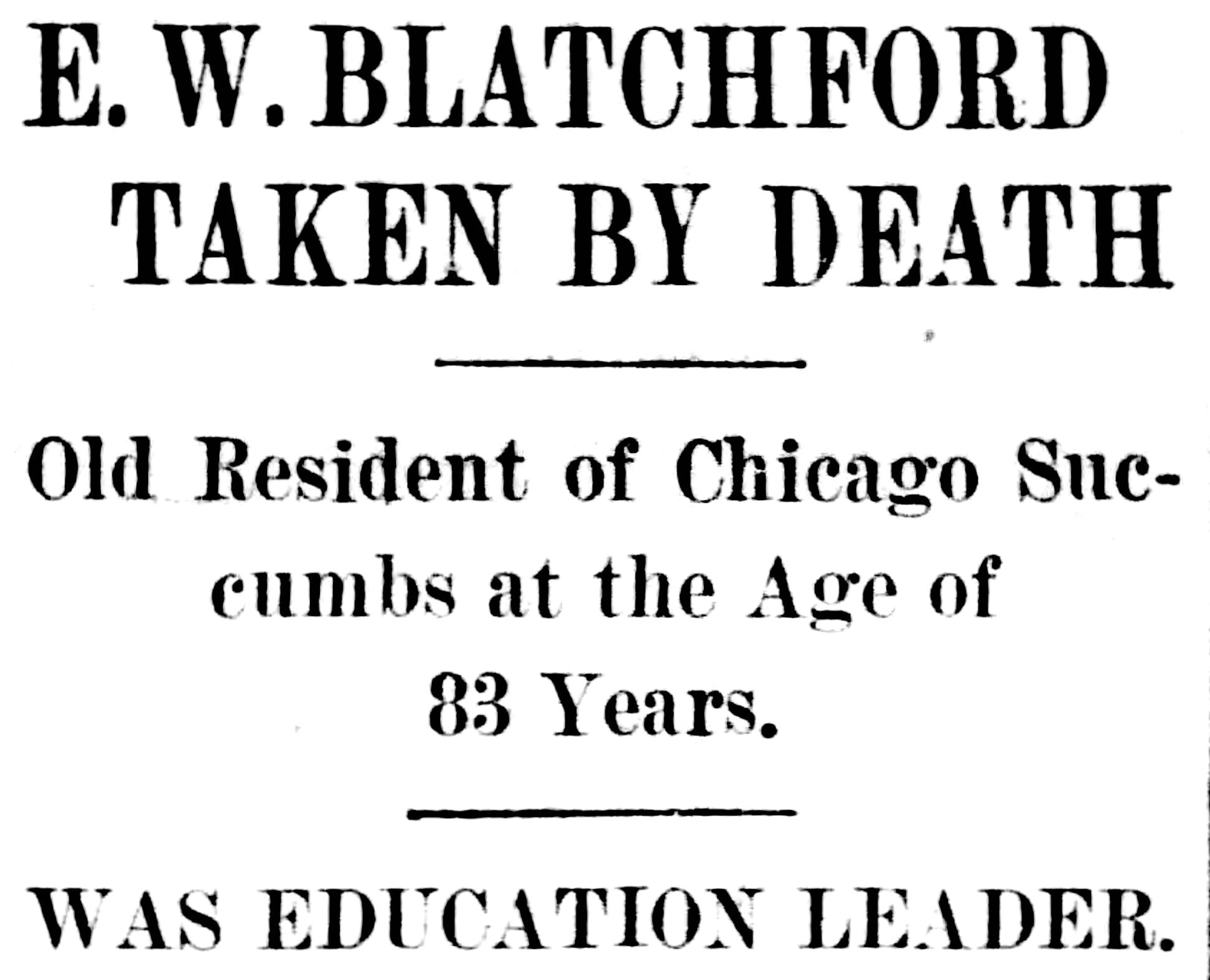 Eliphalet Wickes Blatchford. one of the old residents of Chicago and conspicuous in the social, industrial. and educational life of the city, died last night at the family residence, 1111 North La Salle street. He was 83 vears old.