Second Presbyterian Church
Life Span: 1852-1871
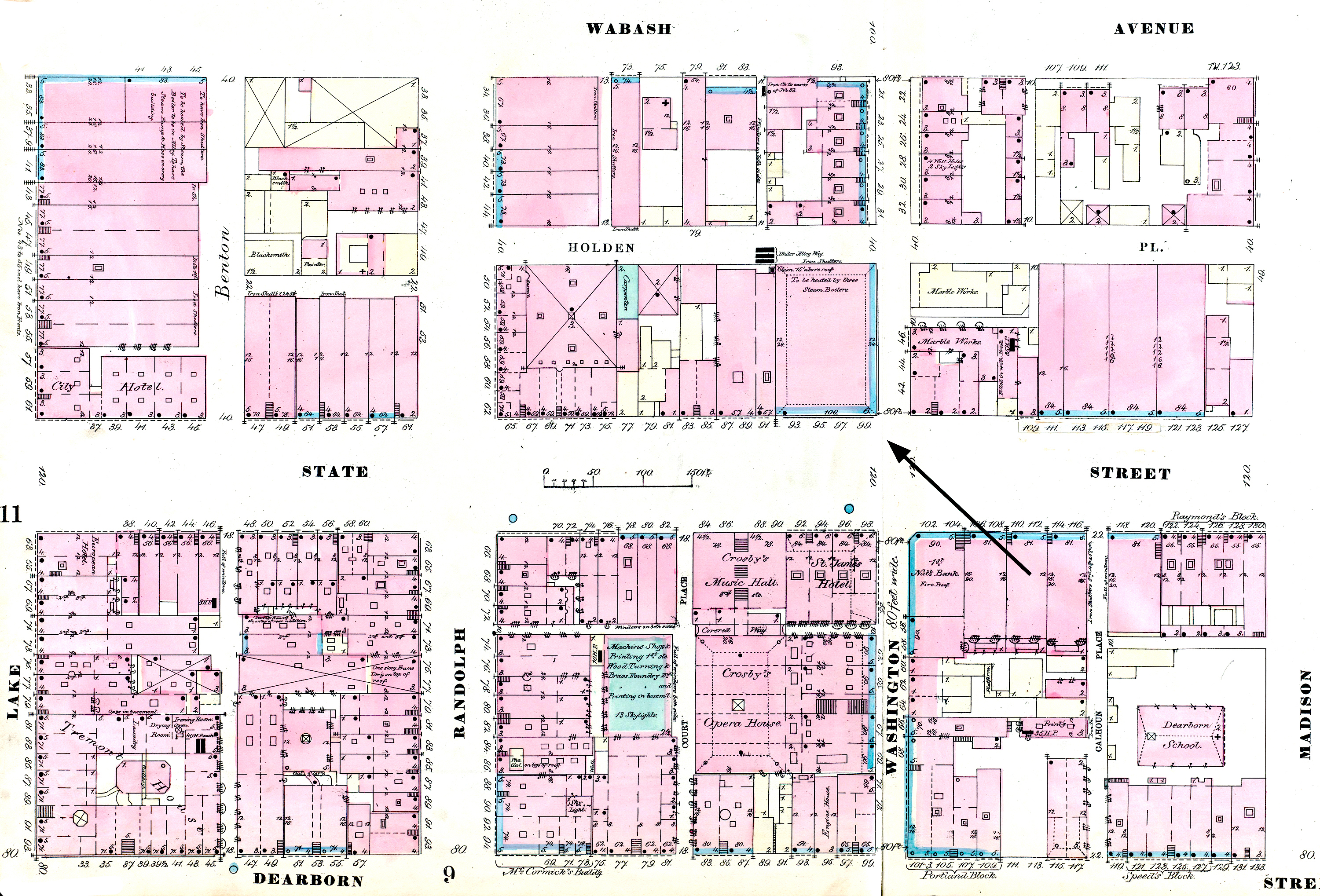
Location: NE Corner of Washington Street and Wabash Avenue
Architect: James Renwick
- D. B. Cooke & Co.’s City Directory for the Year 1859-60
Presbyterian—New School. Second Church—Situated on Wabash av., corner of Washington st. Society organized 1842. House erected 1850. Pastor, R. W. Patterson, D.D. Sexton, S. P. Warner.
Halpin & Bailey’s City Directory for the Year 1863-64
Presbyterian—New School. Second Church—Wabash avenue, corner of Washington street. Society organized in 1842; House erected in 1850. Pastor, Rev. R. W. Patterson, D.D.; S.P. Warner.
Edwards’ Annual Directory in the City of Chicago, for 1870-71
Second Presbyterian Church—Wabash avenue, northeast corner of Washington street. Rev. R. W. Patterson, D.D., pastor, residence 5 Van Buren street. Divine service at 10:30 a.m. and 7:30 p.m. Sabbath school, 12 m. Kirk Howes, superintendent.
Chicago Illustrated, January 1866
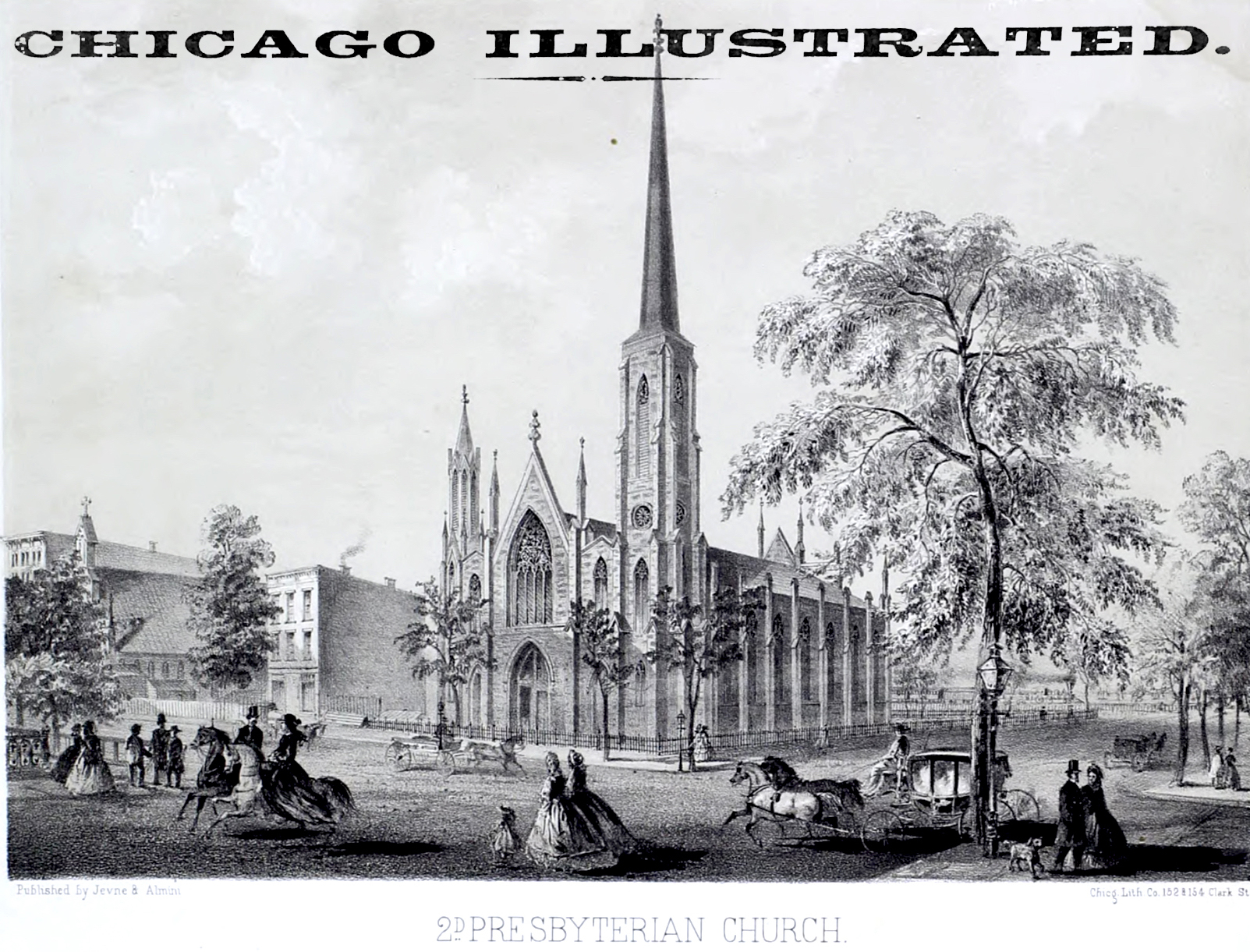
The Second Presbyterian Church is located at the north-east corner of Wabash avenue and Washington street, The building presents a unique appearance, and never fails to attract the attention of the stranger. A description of the mixed style of architecture is rendered unnecessary, because of the faithful portrait of the church made by the artist. A peculiarity of its structure, however, is not so sufficiently shown that a person who never saw the building would discern it, and this peculiarity is in the material of which it is built. The stone was quarried just outside of the present city limits, in the vicinity of the celebrated artesian well, and presents a remarkable appearance. The stone is popularly known as “tar rock”, for which name it is indebted to the bituminous substance which it exudes. This coloration is not uniform: on some blocks: at times, the discoloration is very dark, while other blocks will be only slightly so, and again others only present the natural gray of the limestone. So uniquely is the discoloration distributed over the building, that it has the general appearance of having been produced artificially. The general effect is very attractive, and is so remarkable that it rarely fails to live in the memory of those even who see it but once.
The design was by Mr. Renwick, of New York, though the building was erected under the superintendence of Mr. Asa Carter, an architect of this city. Its dimensions are—front, on Wabash avenue, eighty feet; depth on the line of Washington street, one hundred and thirty feet, extending to Dearborn place, beyond which is Dearborn Park. The main or south tower is one hundred and sixty-one feet high, the north ore is sixty-four feet. The body of the church is sixty-four and a half by eighty-two and a half feet. It will accommodate eighteen hundred persons, and is lighted by stained glass windows. There is a lecture-room adjoining the church, which is used as a Sunday school, and for business meetings of the congregation. The church is provided with a very fine organ, which, as it now stands, cost over five thousand dollars. The building was projected and commenced in 1848, and completed in 1852. At that time labor and building materials were to be had at comparatively insignificant prices, and the edifice was erected and completed with bell and organ, for the moderate cost of forty-five thousand dollars.
Chicago at that time was young in its march of prosperous and magnificent growth. At that time there were but few streets that were improved, even to the extent of planking. Now the Second Presbyterian Church is but one of a large number of church edifices, whose towers and spires mark Wabash avenue for miles beyond what was considered a remote part of the city.
Previous to the completion of this building, the congregation, then a very small one, worshipped in a frame tenement on Randolph street, in the neighborhood of the Court House. The congregation was organized in 1842, and the Rev. Robert W. Patterson, D. D. accepted the call, and has continued as its pastor to the present time. The congregation has increased from that time, until it now numbers about eight hundred members. The church is always full; that is, its membership is always equal to the capacity of the church accommodations. Five distinct swarms have taken their departure, each settling in some other part of the city, and in time erecting another large and handsome building, to be in time also filled to send forth its swarms to locate upon new sites.
The pastor, Dr. Patterson, is of what is known as the New School Presbyterians, and enjoys a reputation in Chicago and in the country for learning, ability, and personal qualities not surpassed by any other clergyman of his church. The trustees at the present time are, P. L. Yoe, Esq., W. N. Gould, Esq., John McGinnis, Esq., R. V. Page, Esq., and William Blair, Esq. The elders are the Hon. W. H. Brown, Hon. R. W. Raymond, Hon. H. F. Mather, J. C. Williams, Esq., T. B. Carter, Esq., and I. Grover, Esq.
The congregation is not only large, but of the most respectable character, including many of the wealthy families of the city. In the list of those who have occupied public position, who belong to the congregation, are the names of Senator Trumbull, Judges Higgins and Skinner, Lieutenant-Governor Bross, Ho. John Wentworth, and J. H. Dunham, Esq. The late ex-Mayor Dyer was a member of this church.
The congregation maintain a number of flourishing mission school is in other parts of the city, and are now erecting a large building for that purpose in the southern part of Chicago.
James W. Sheehan, Esq.,
January 1866
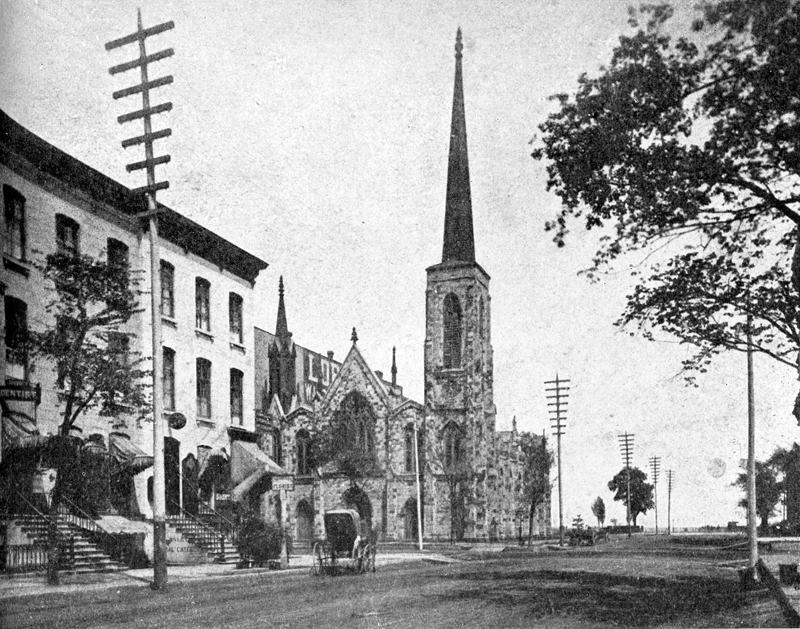
The Second Presbyterian Church was built of grey oil stone in 1852. Its architect was James Renwick, the designer of St. Patrick’s Cathedral in New York and of “The Castle,” the original building of the Smithsonian Institution in Washington.
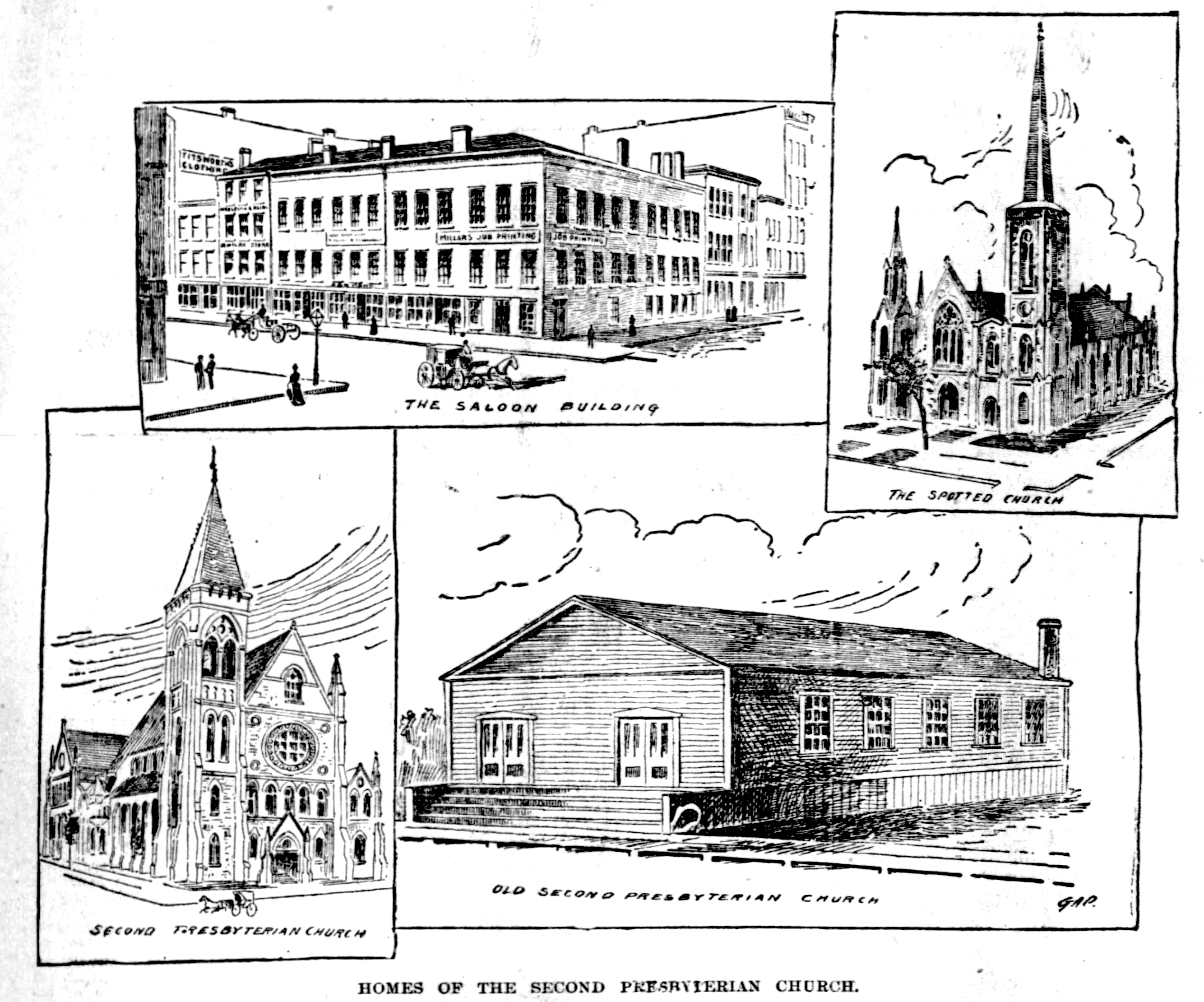
The growth of the membership of this Church in 1858 was especially memorable, there having been added to the church-roll nearly one hundred persons, making a total of five hundred and eighty-seven since the organization of the Church. The church-building, on the corner of Wabash Avenue and Washington Street, was regarded at that time as one of the finest in the West. It was constructed of bituminous limestone, and was known as the “spotted church,” on account of the exudations from the stone of the dark-colored, crude petroleum. By the profane, it was known as the “Church of the Holy Zebra.”
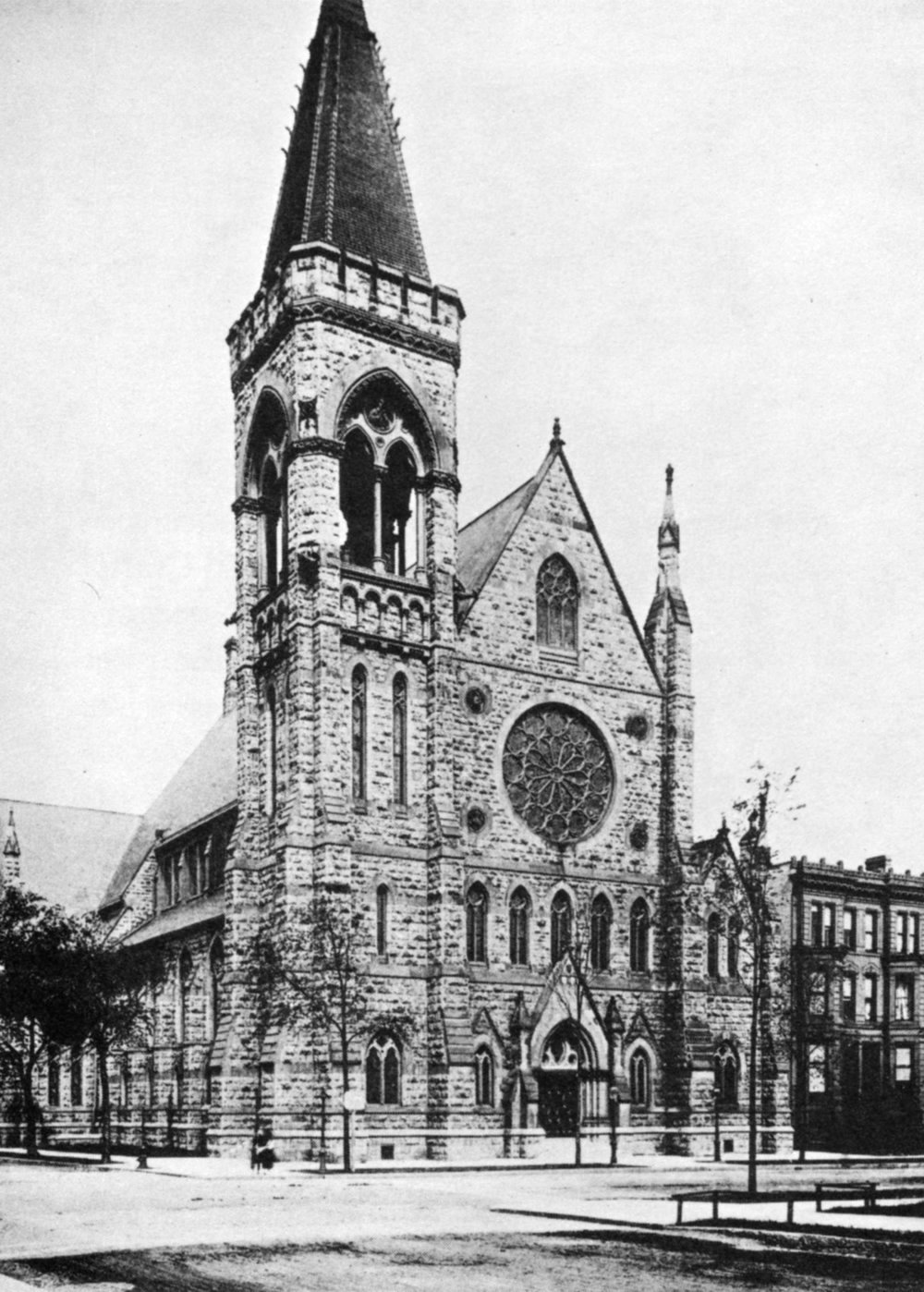
Like Crosby’s Opera House, it was lost in the fire. Unlike Crosby’s, it was rebuilt, though not in the same place. It moved to its current site at 1936 South Michigan, close to the Prairie Avenue neighborhood where several of its wealthy parishioners lived.
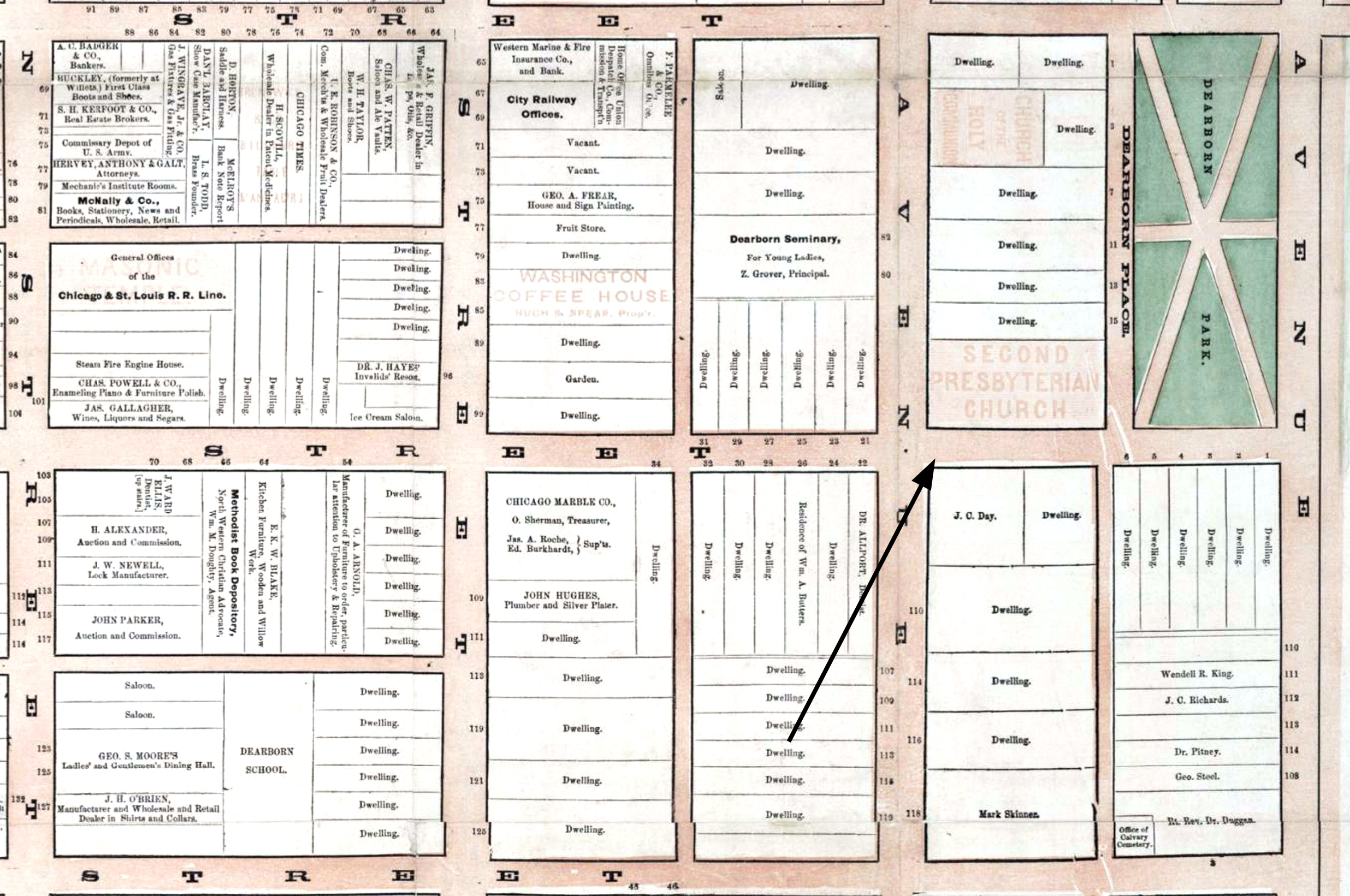
- Second Presbyterian Church
1862
Chicago Tribune, September 26, 1871
The Second Presbyterian Church having formally united with the Olivet Presbyterian Church, and the action ratifled by the Presbytery of Chicago, notice was given on Sunday that a memorial service would be beld in the Second Church on Sunday night, at which all the old members of the church are invited to be present. On Tuesday evening, October 3, a reunion of the old and new members of the church will be held at the church, after which the church will be closed and the building sold, or the material used as far as possible in the construction of the new church.
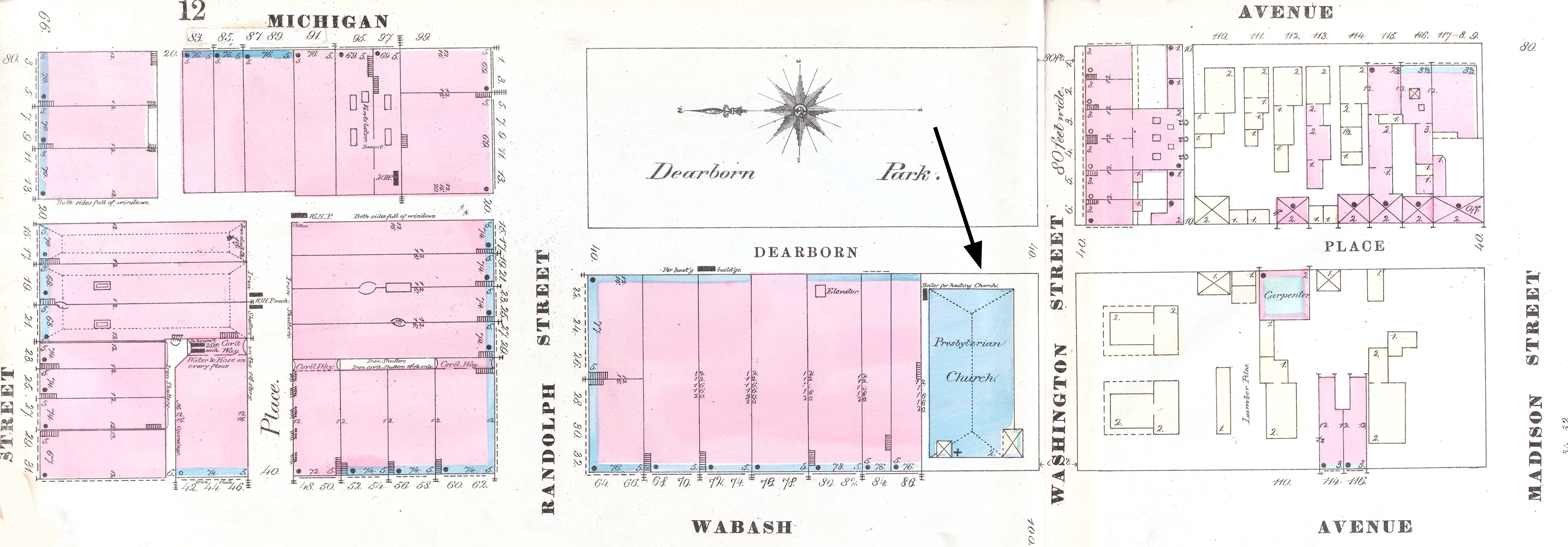
- Second Presbyterian Church
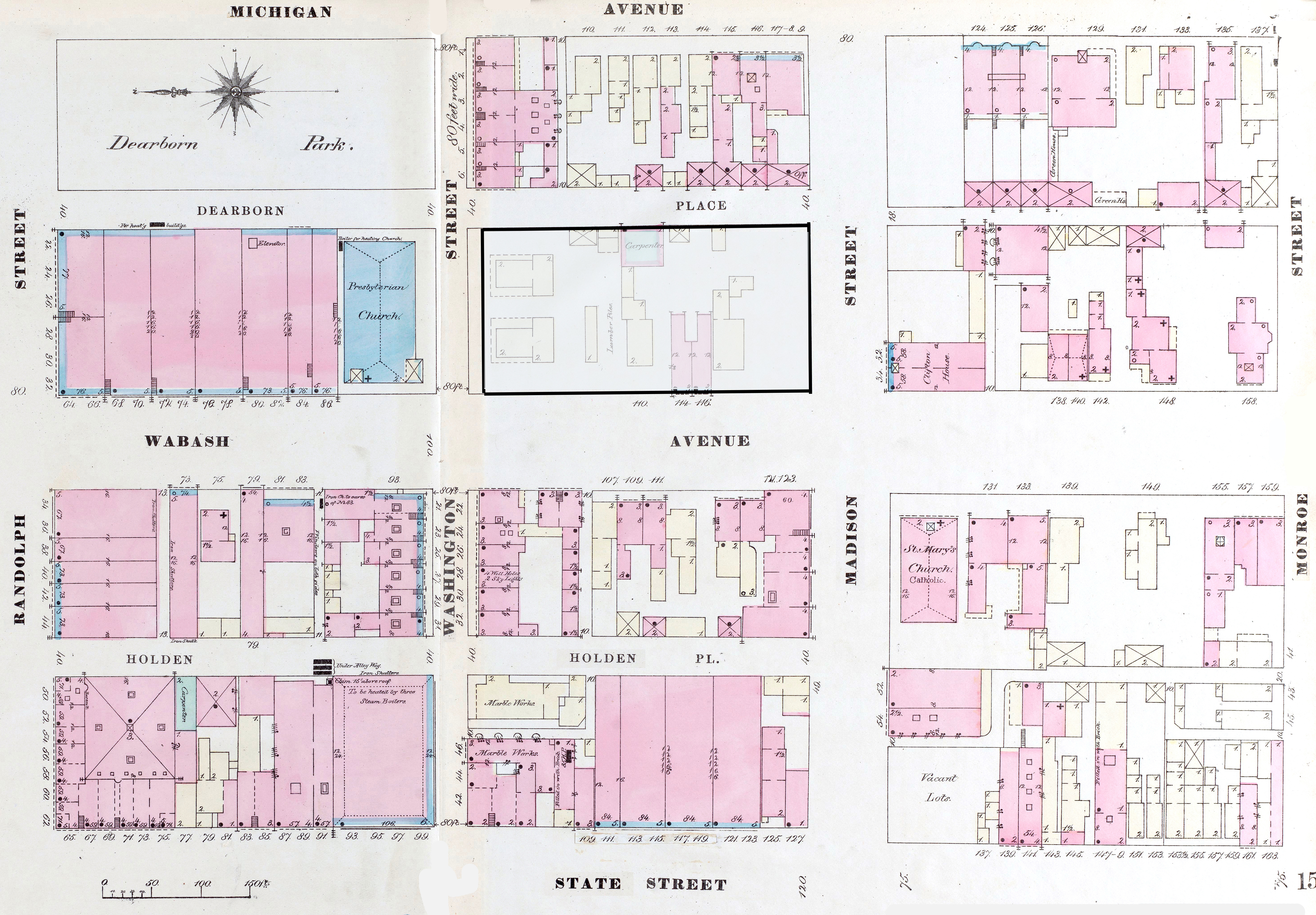
Sanborn Fire Insurance Map
1869
Chicago Tribune, March 4, 1894
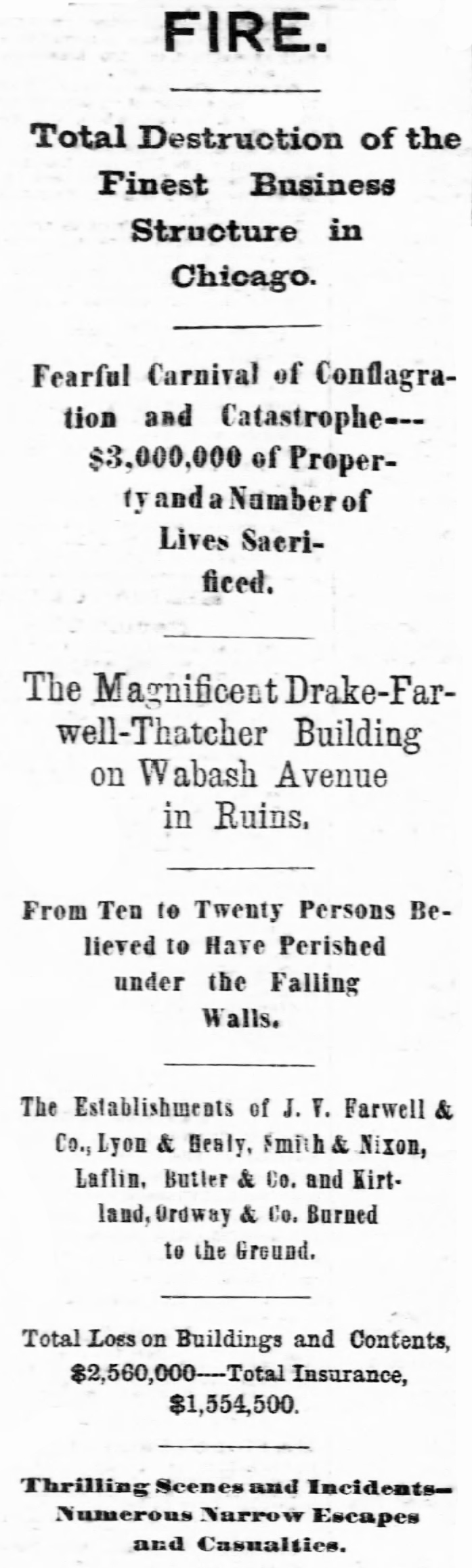 THE FIRE.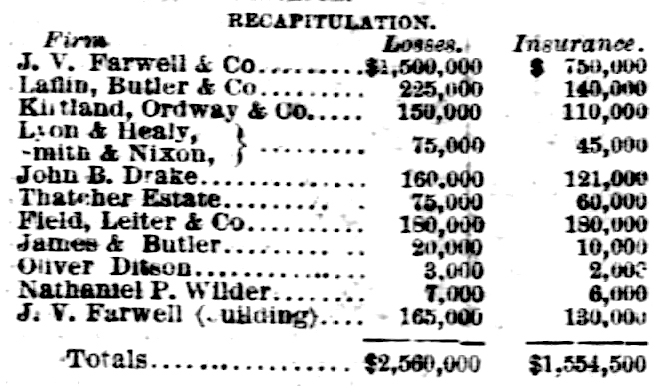
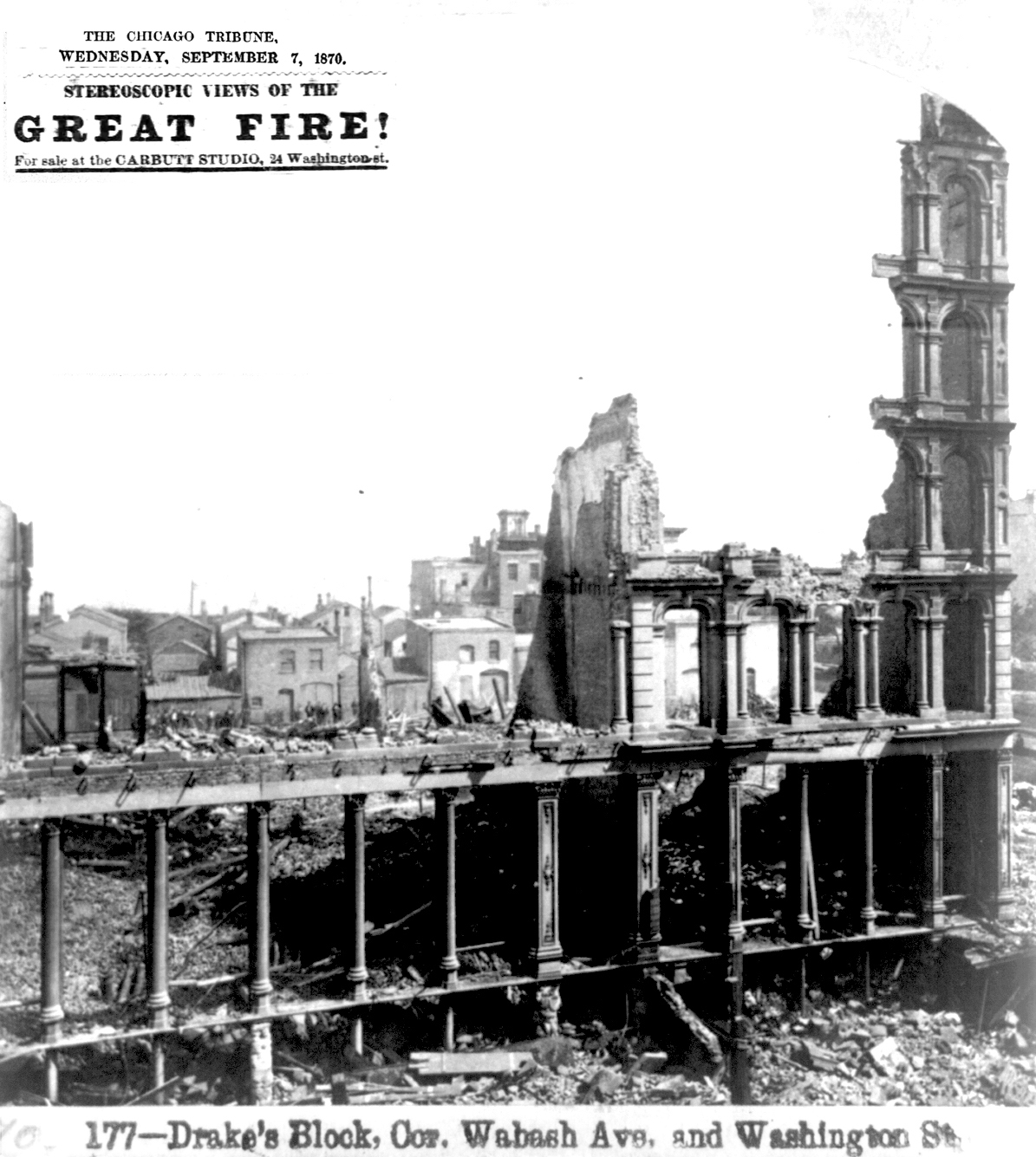
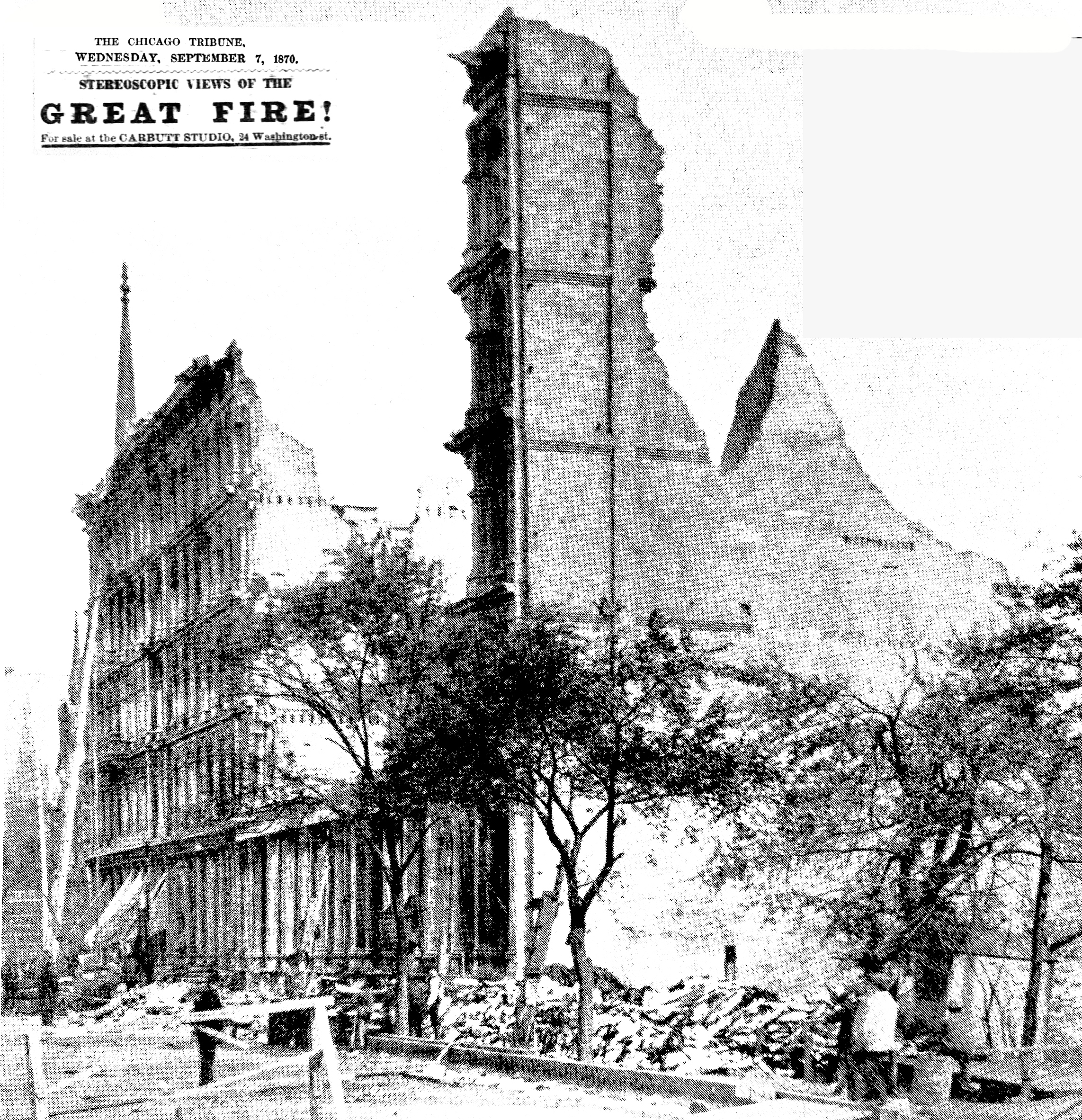
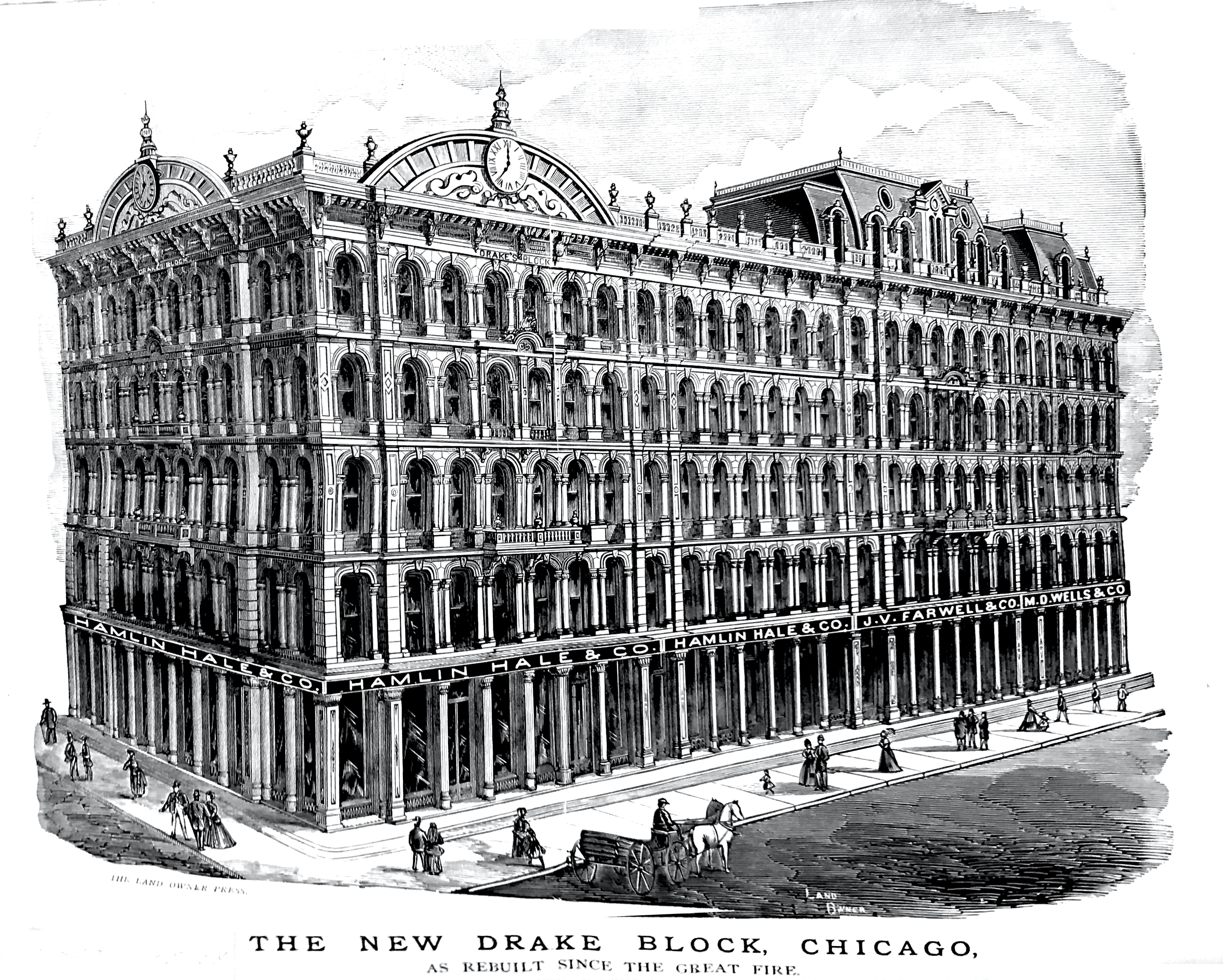
 If anything were necessary to convince the environs of the greatness of our city it would be merely the exhibition of a great mercantile house, equal to anything that the East has successfully accomplished. There are in our city many large establishments, splendid in themselves and gorgeous with goods. The last addition to the mercantile splendor of our city is the new dry goods store of Messrs. Hamlin, Hale & Co., corner of Wabash avenue and Washington street, which was opened on Monday morning, and through which now many thousand of persons have passed it would be difficult to calculate. That all who chose might view, to advantage, the gorgeous array of goods, the firm determined upon having an exhibition on Monday and Tuesday nights, and have, by special request, agreed to continue it this evening for the last time.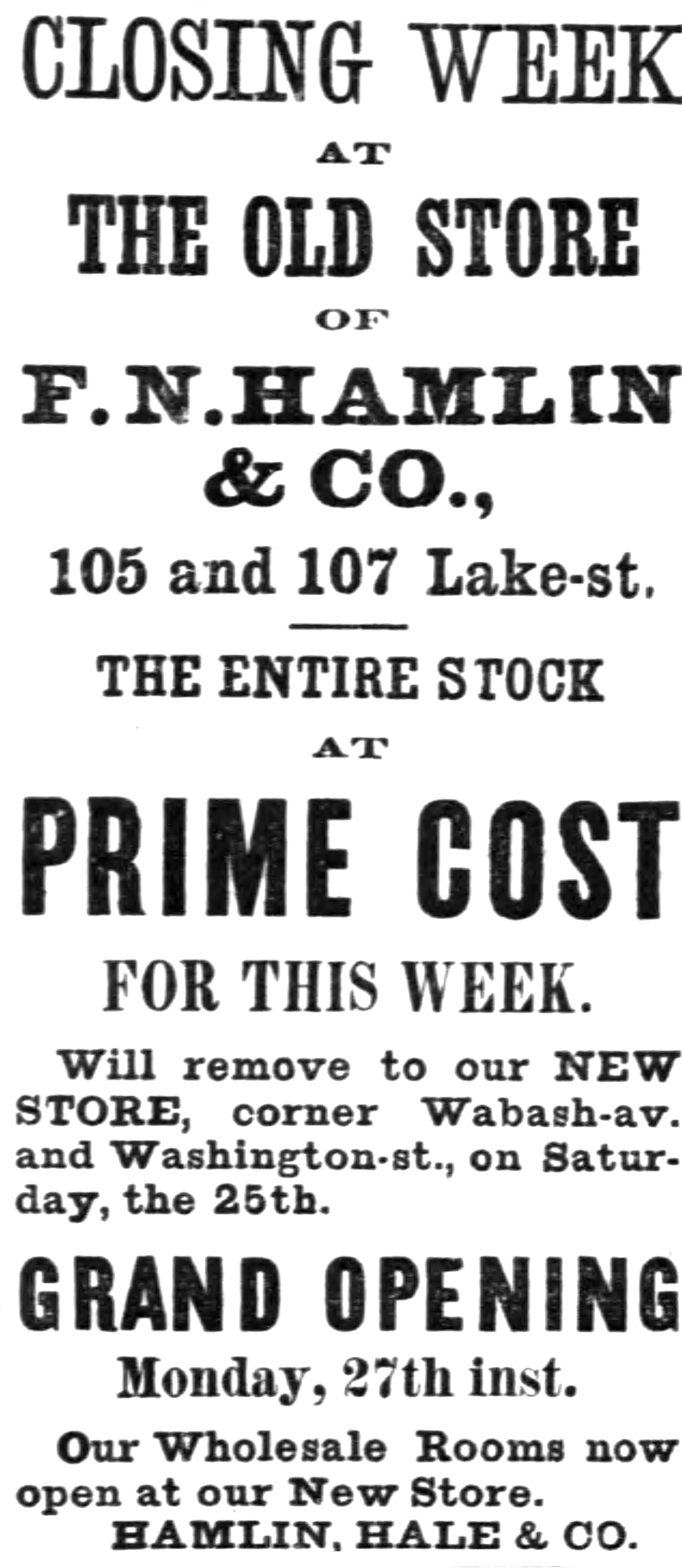
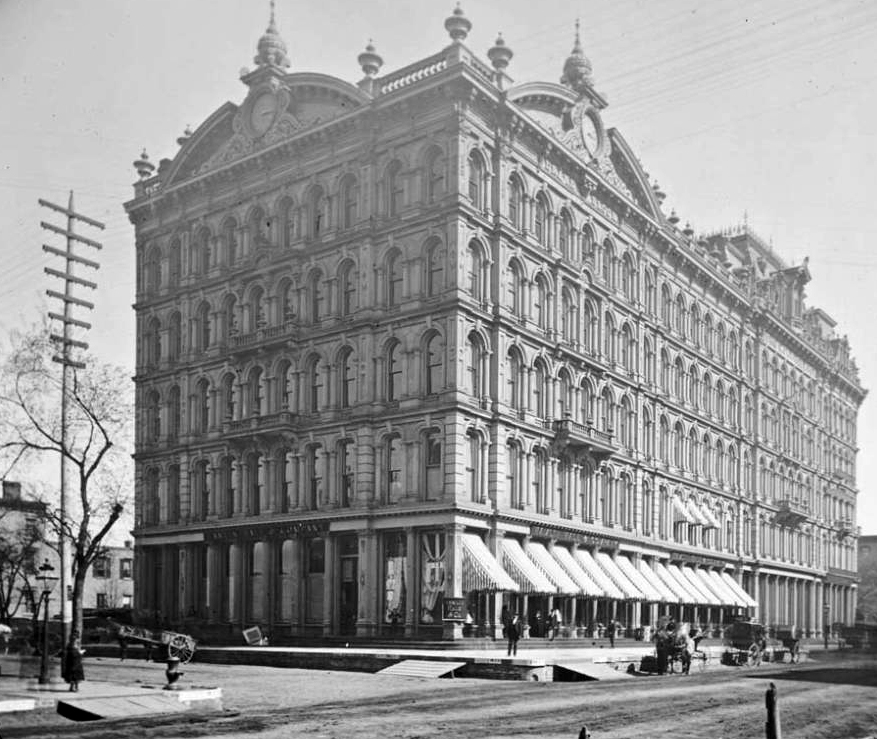
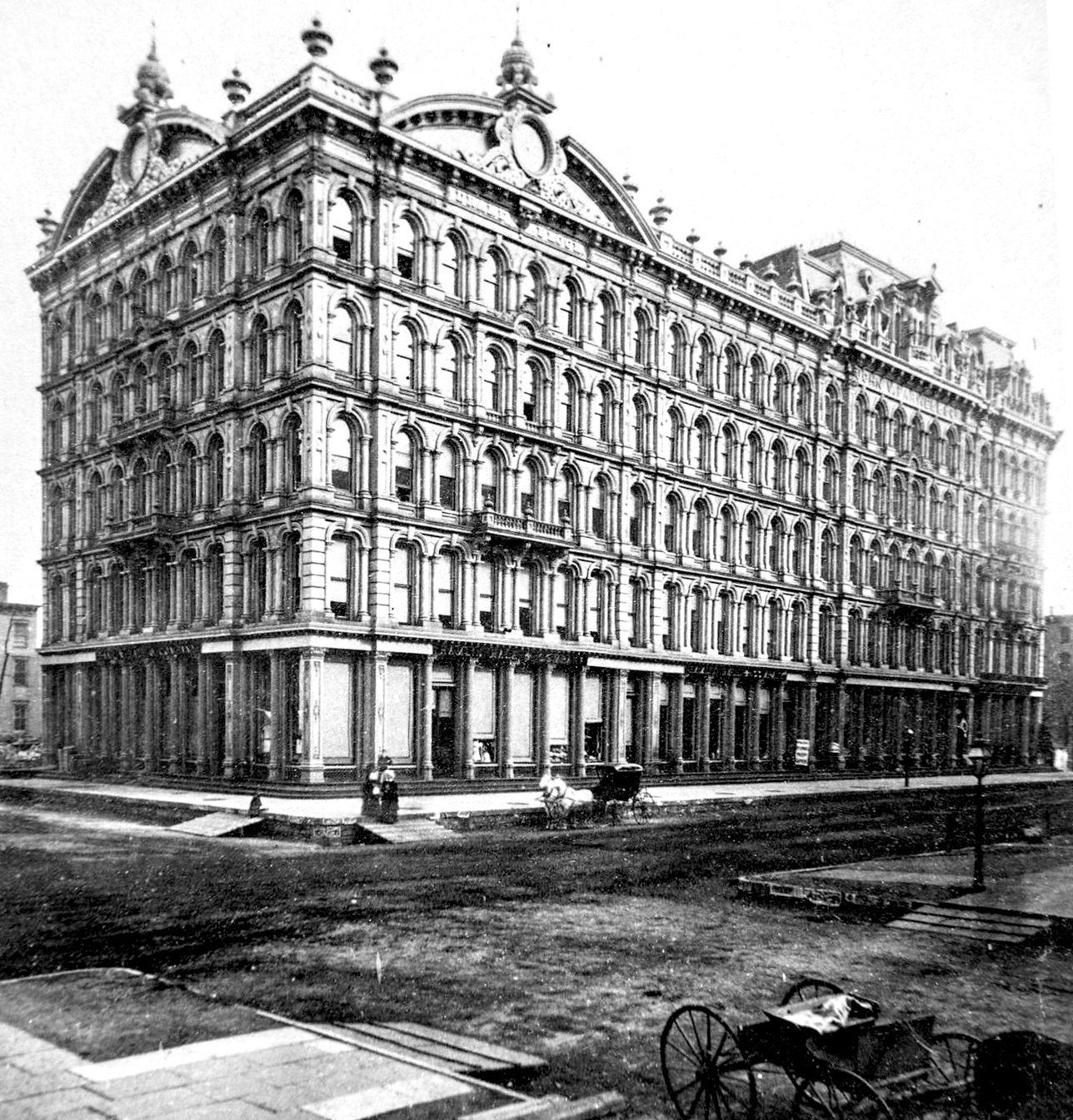
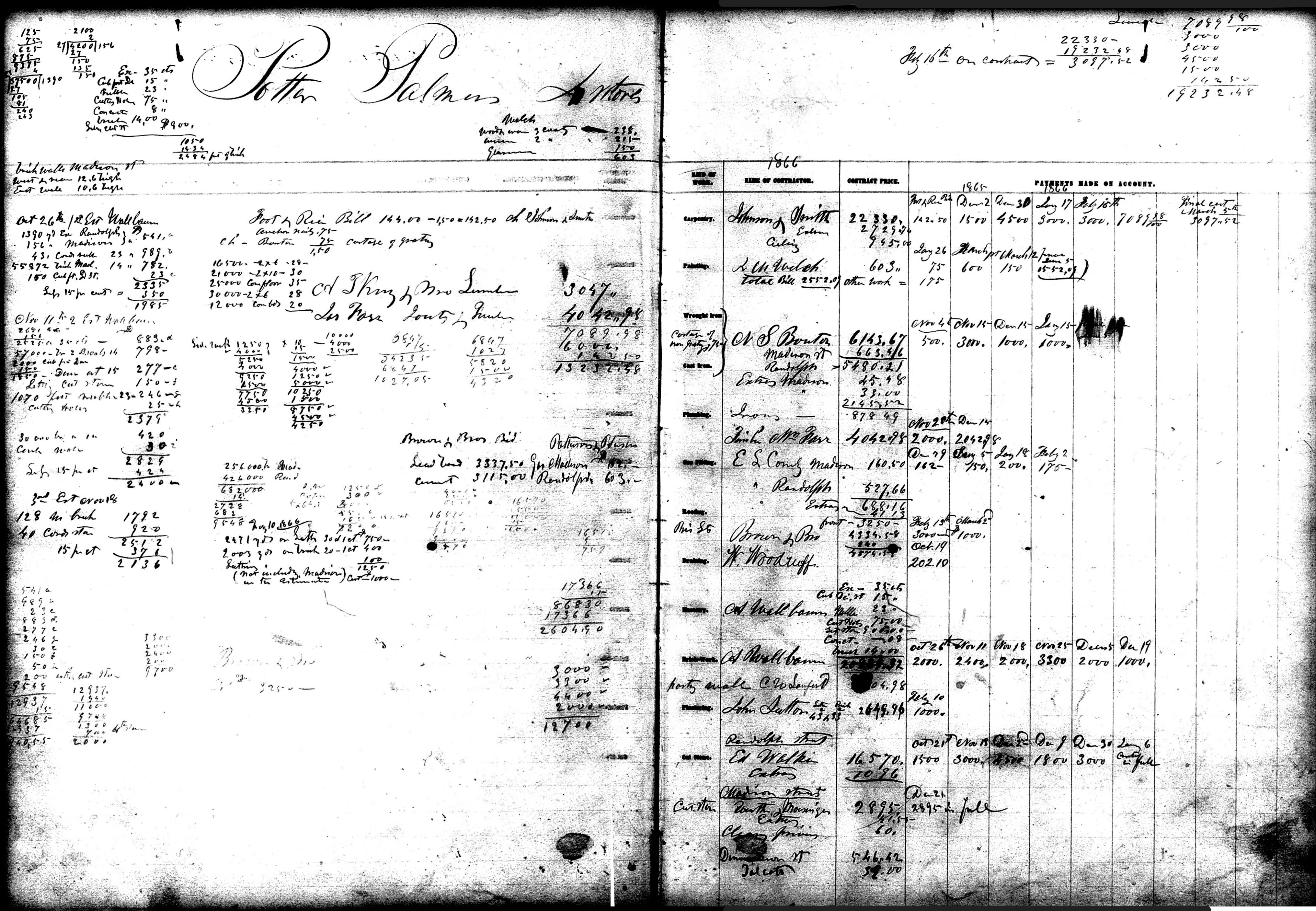
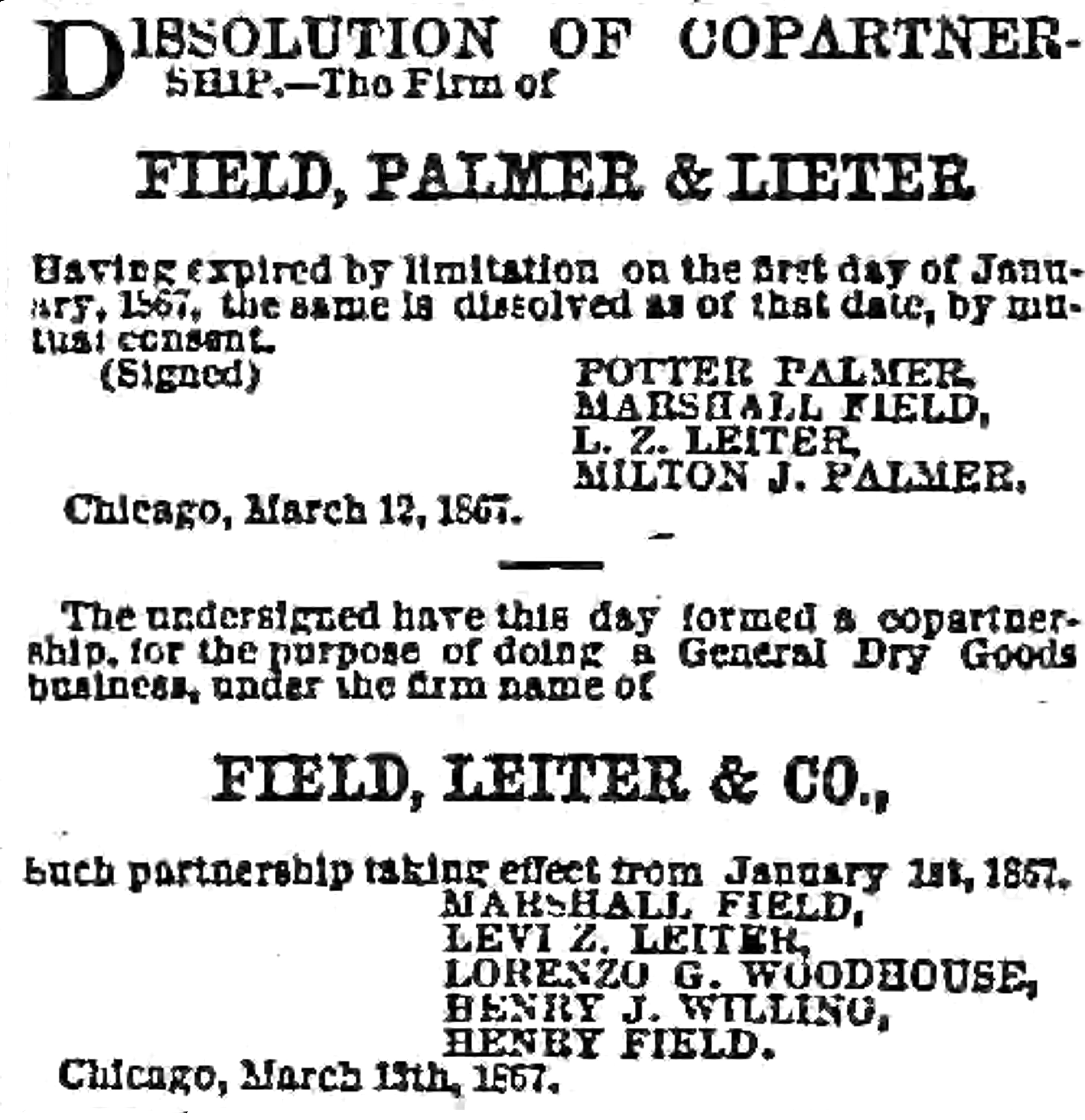
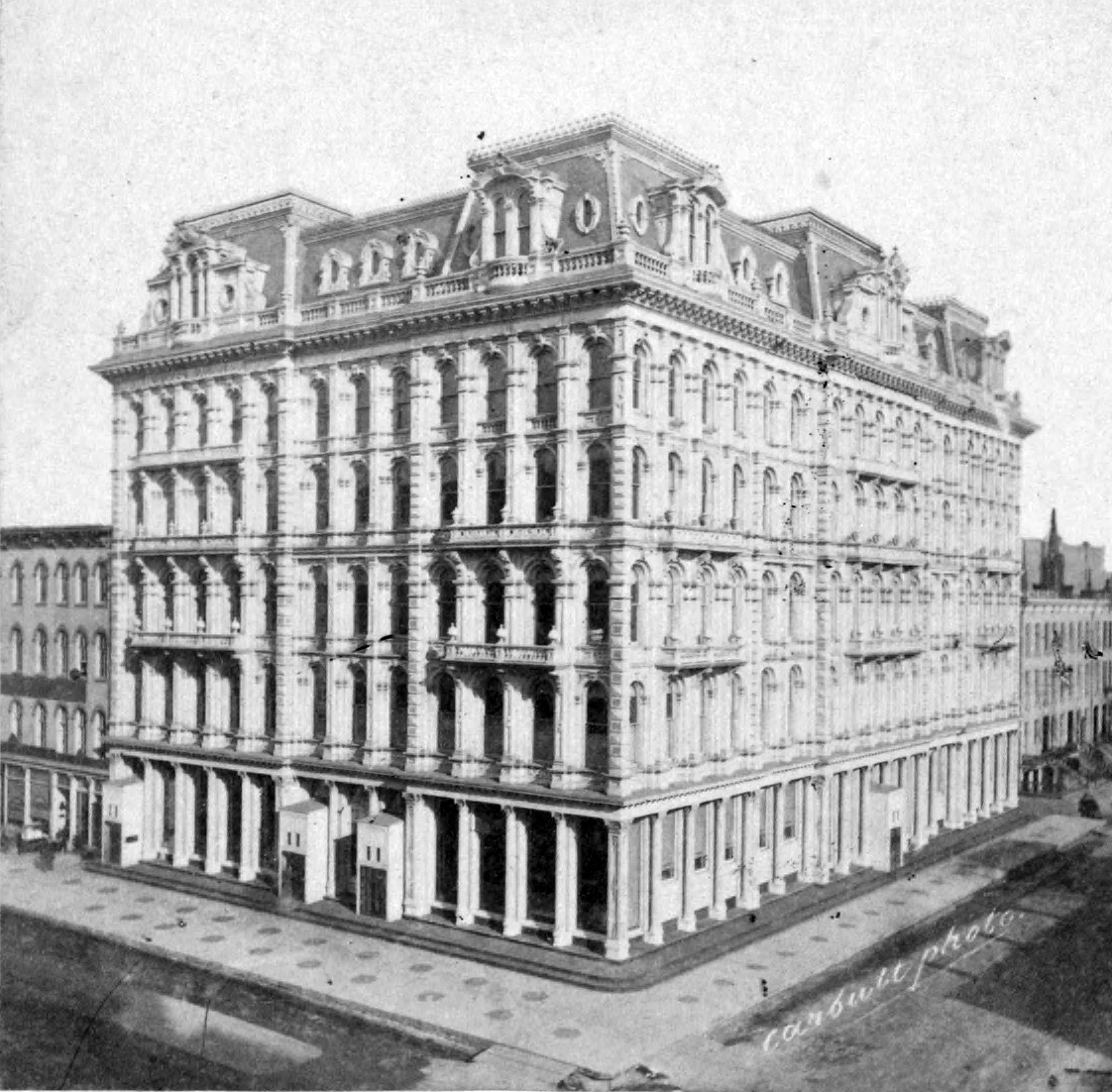
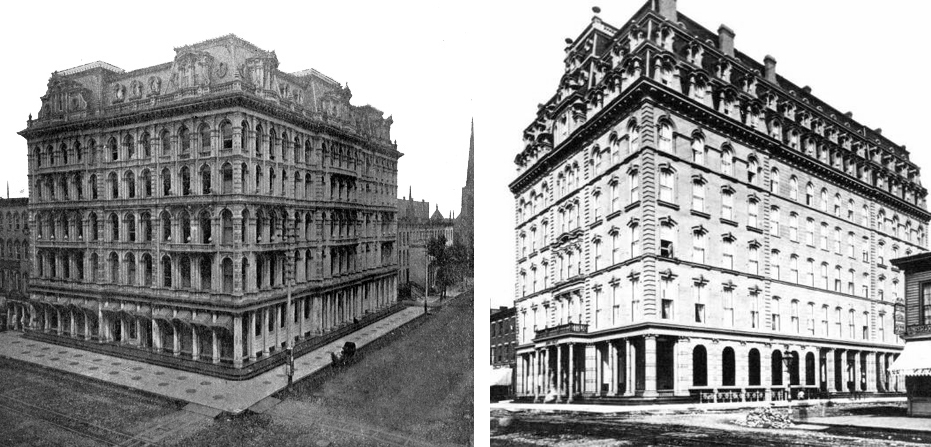
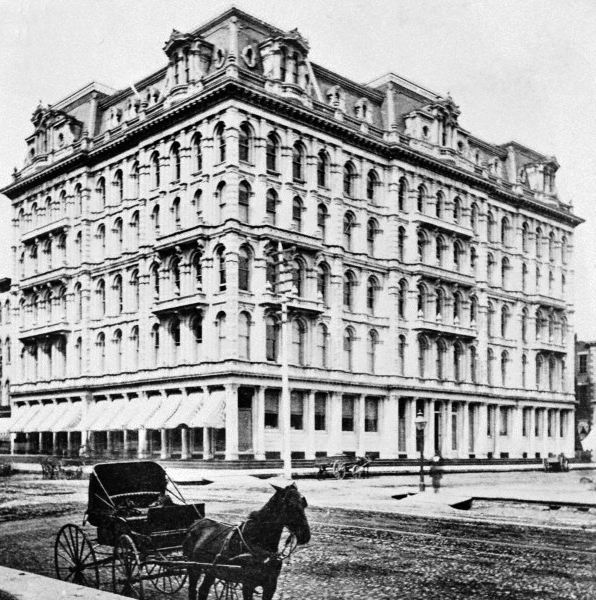
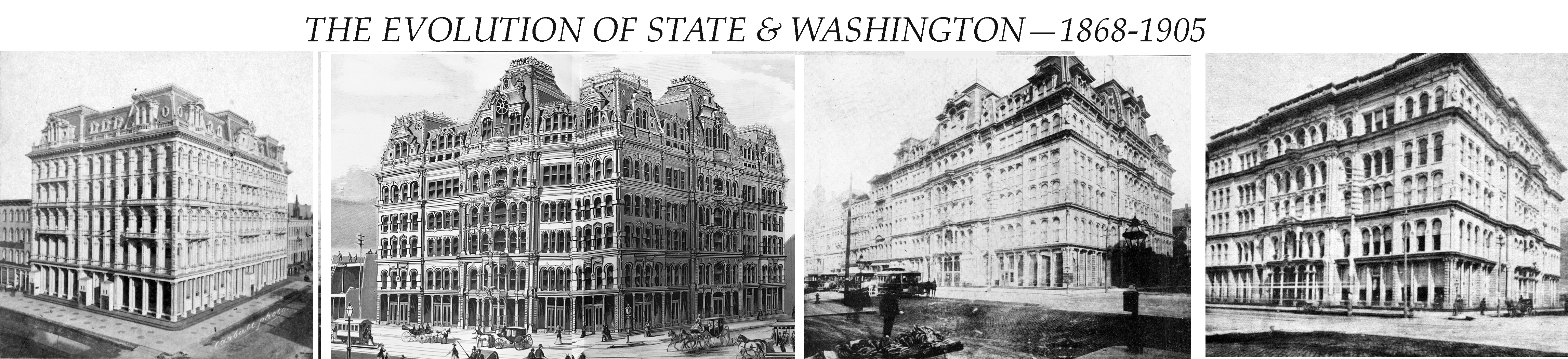
 The elegant block of white marble-front buildings, now nearly completed, on the northeast corner of State and Washington streets, for Mr. Potter Palmer, under the supervision of Mr. John M. Van Ordel, in on all hands acknowledged to be the finest building in the city, and in the Northwest, and will compare in beauty, strength, durability and size with any edifice in New York.
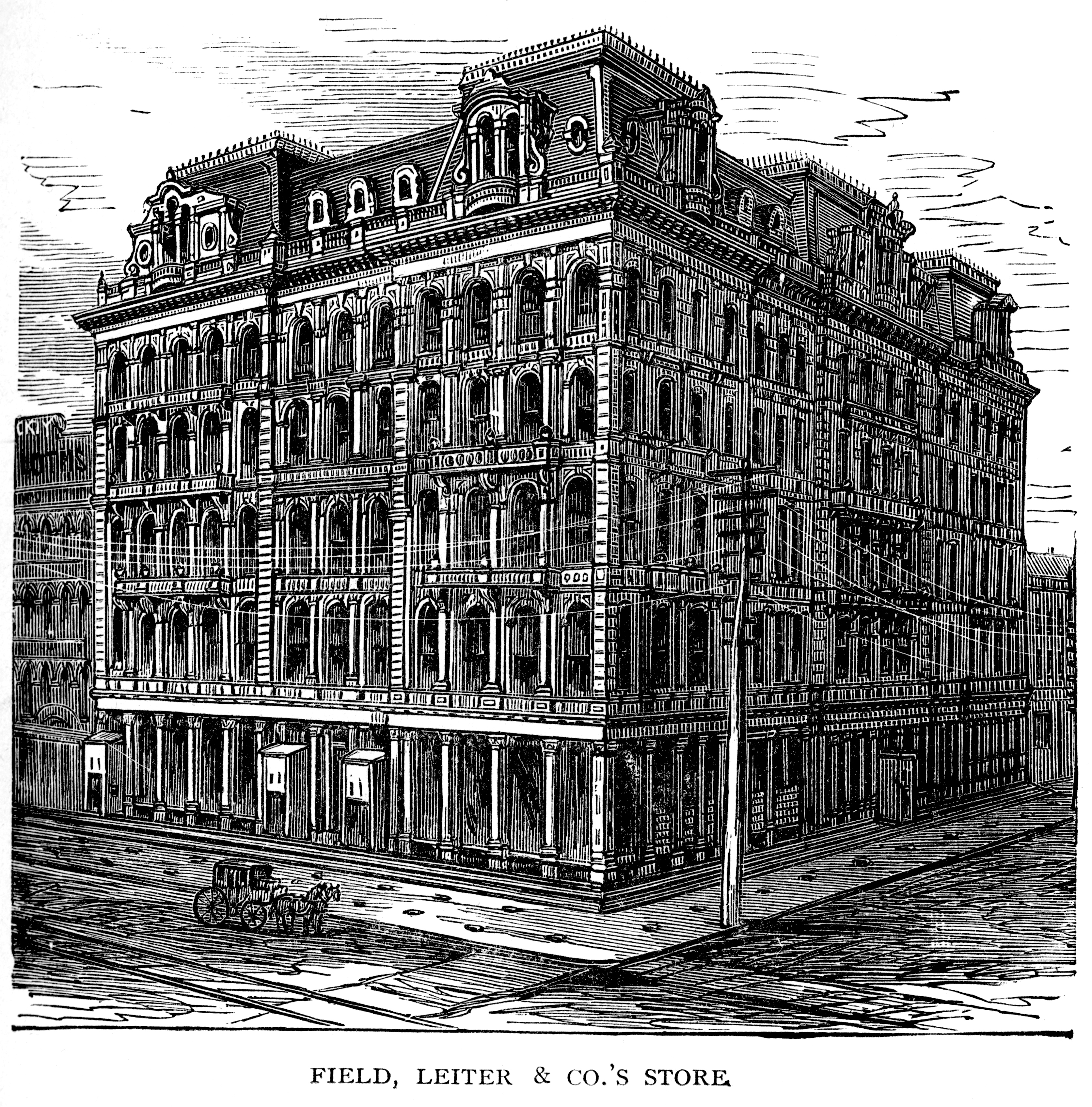
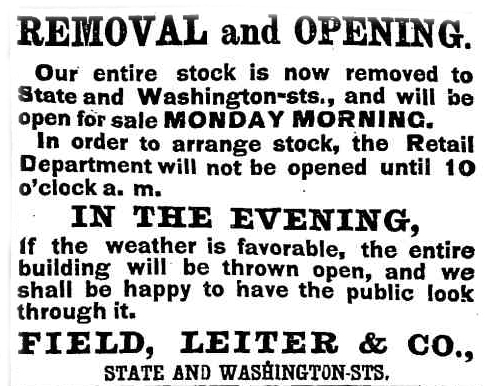
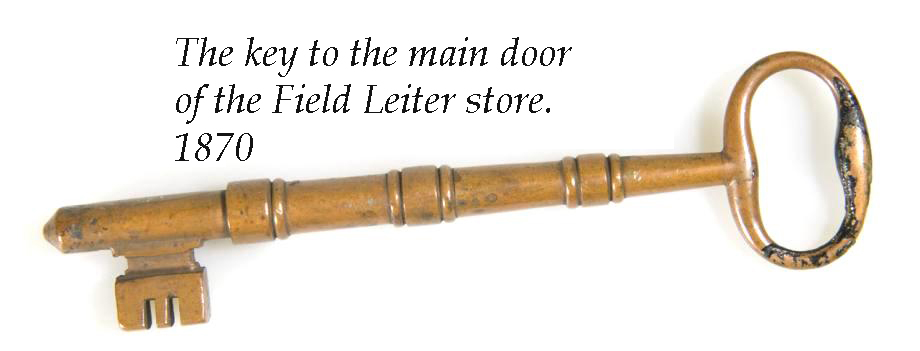
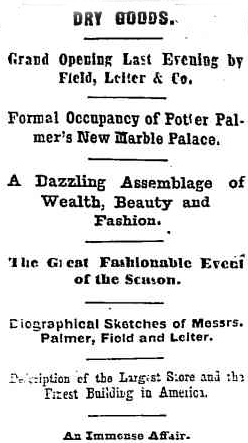 The formal opening by Field, Leiter & Co., of Potter Palmer’s new marble palace on the corner of Washington and State streets, last evening, was the grandest affair of the kind whichever transpired, even in Chicago, the city of grand affairs. The public was informed some time since through the columns of The Tribune of the fact that the premier is so long the exposure of admiring eyes, native and foreign, had been rented to the popular proprietors of the largest and most fashionable dry goods house in the city; and the elite have been all agog with anticipation of the time when the white portals of the retail department should be thrown open, an dan opportunity afforded for a gorgeous revel in the mazes of inextricable finery. The attendance of wealth, beauty and fashion assembled last evening to take the benefit of the grand opening was something, unparalleled in Chicago’s history,and the even was one long to be remembered. One would have thought that the opening last night was an adjourned meeting of the “Charity Ball,” judging from the long line of carriages, filled with the cream of the avenues. The attractions were unusual!—a dry goods store in a marble palace, and in a new dress at that. Enough to turn almost any female head. It was the first of a series of grand affairs destined to transpire in the course of Chicago’s progress, and, as the inauguration of an era, deserves especial notice.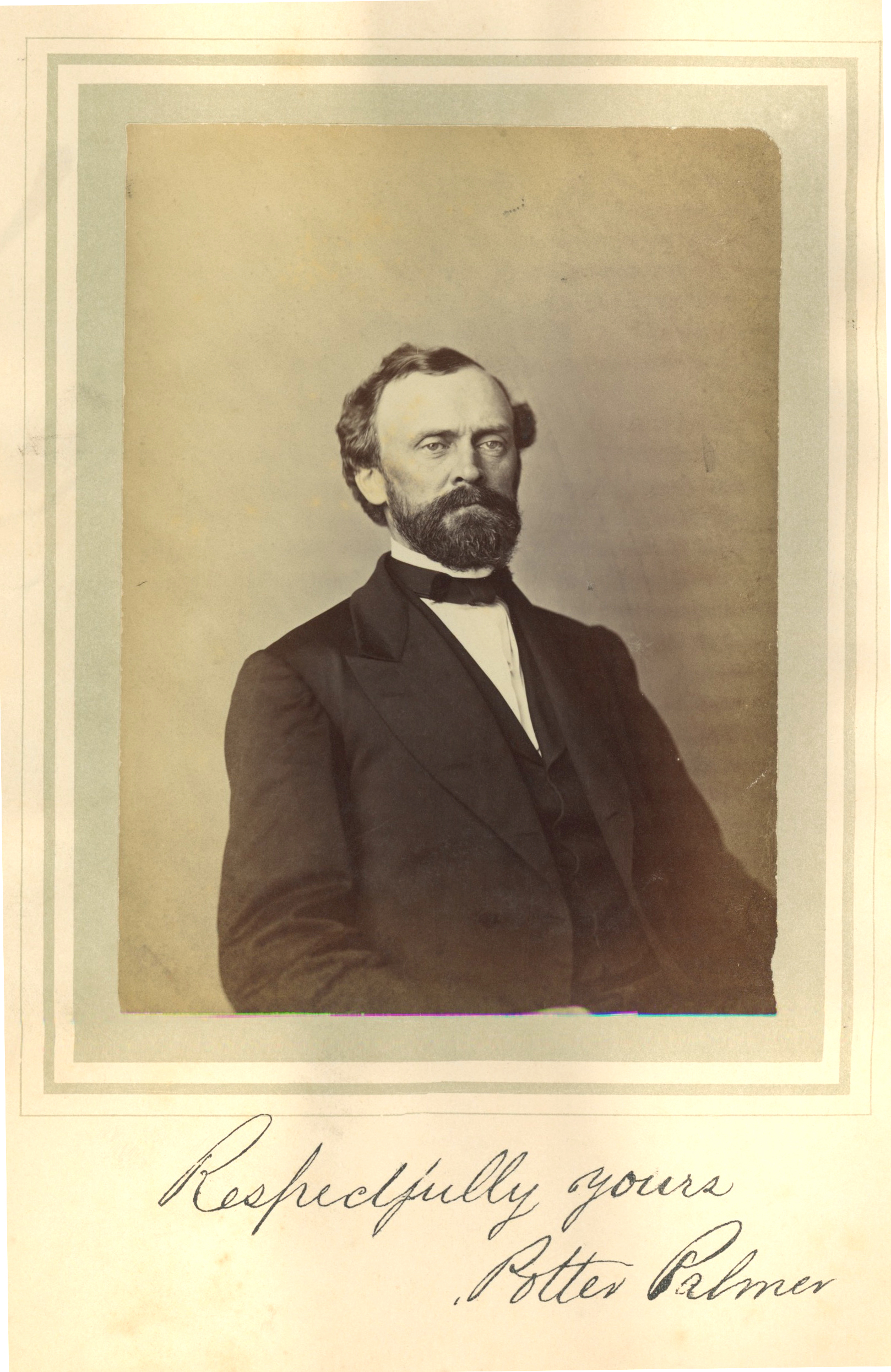


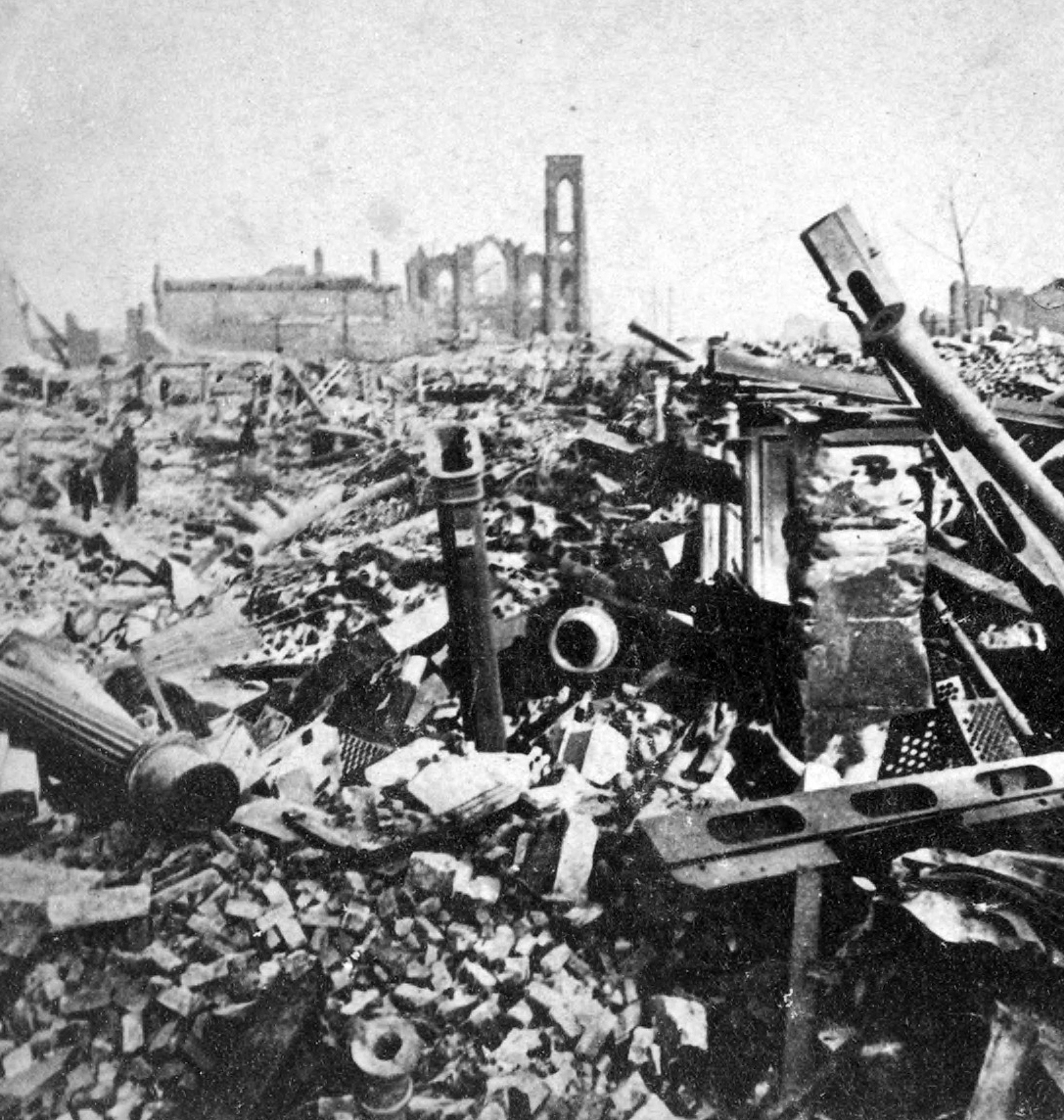
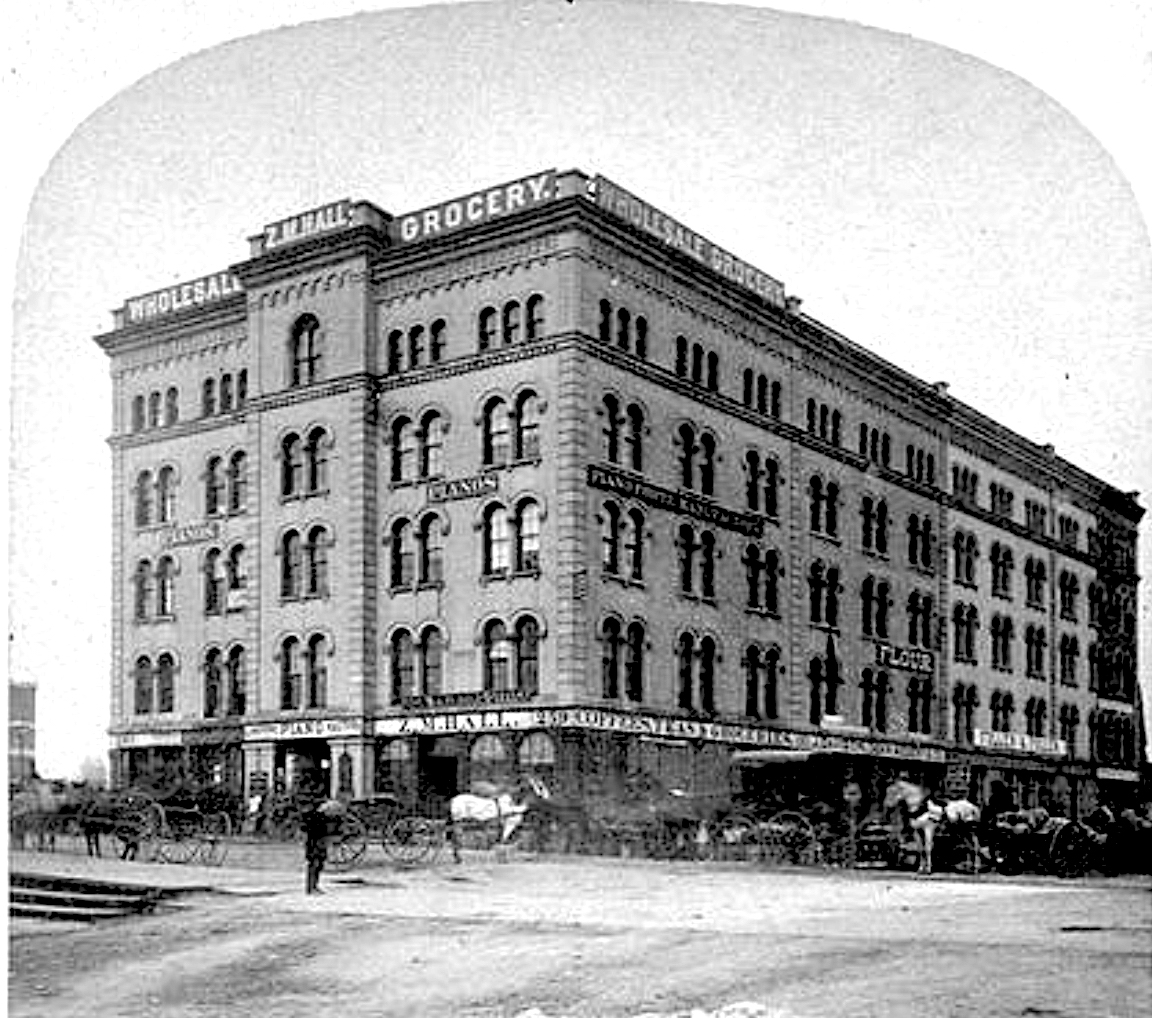
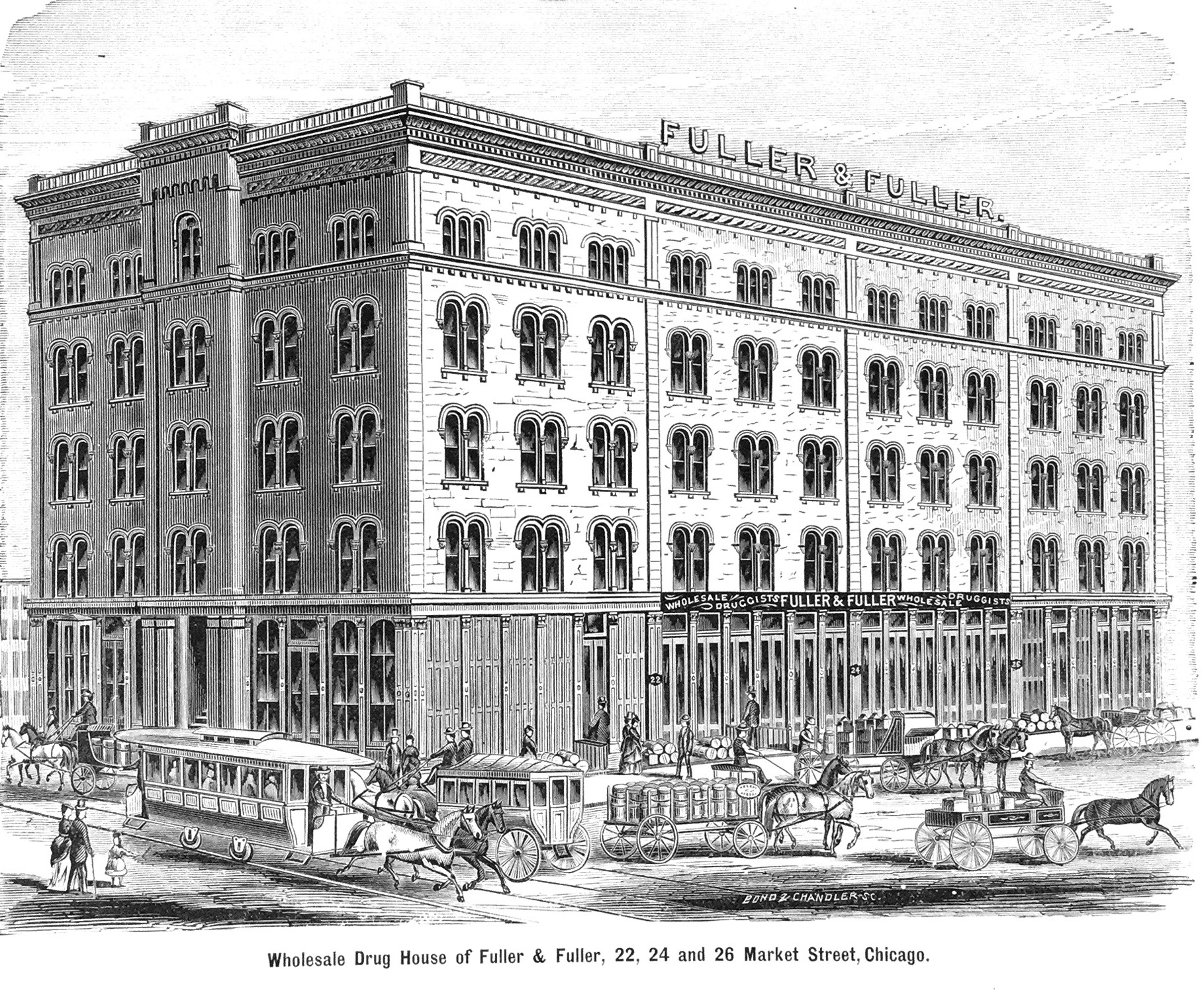
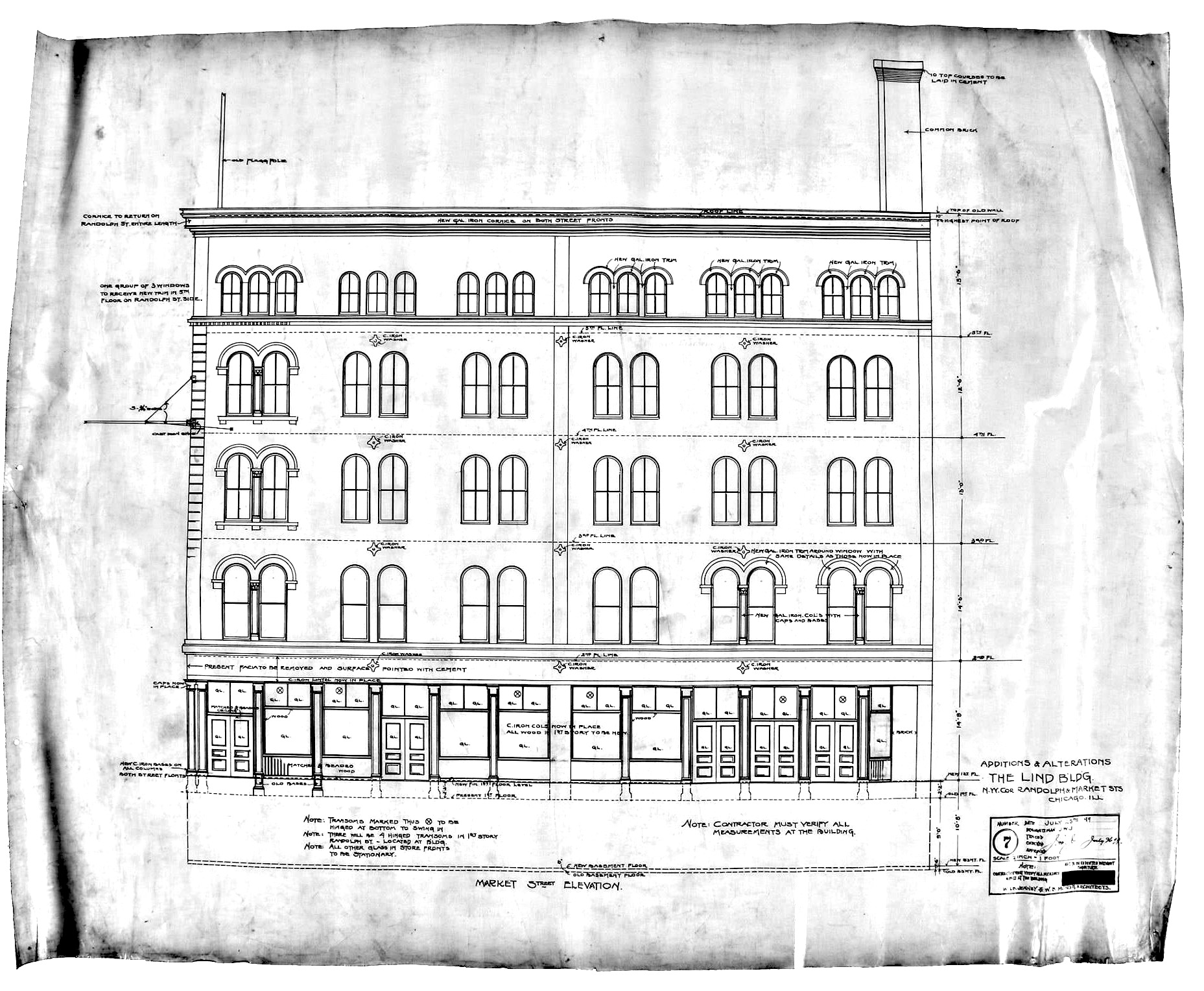


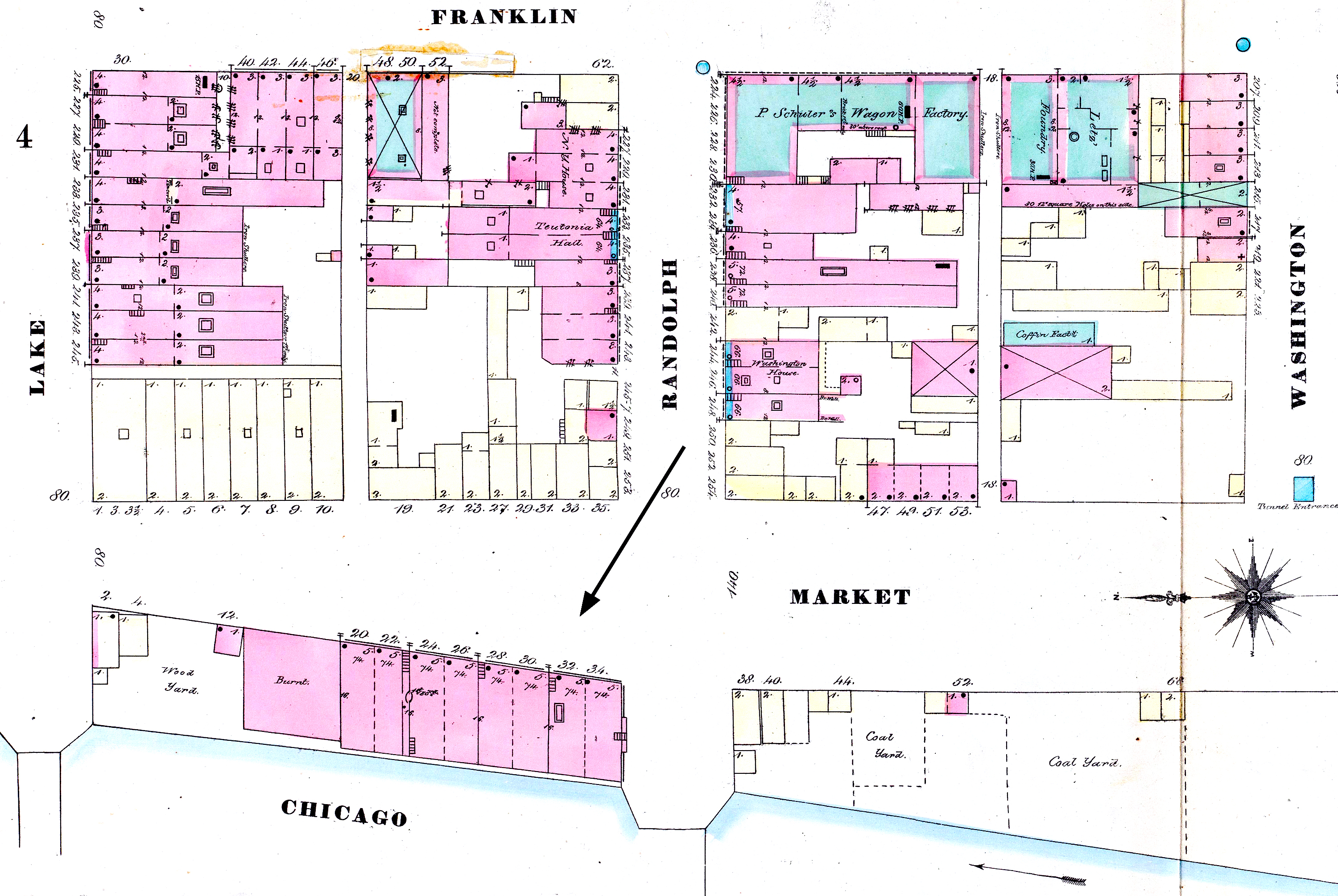
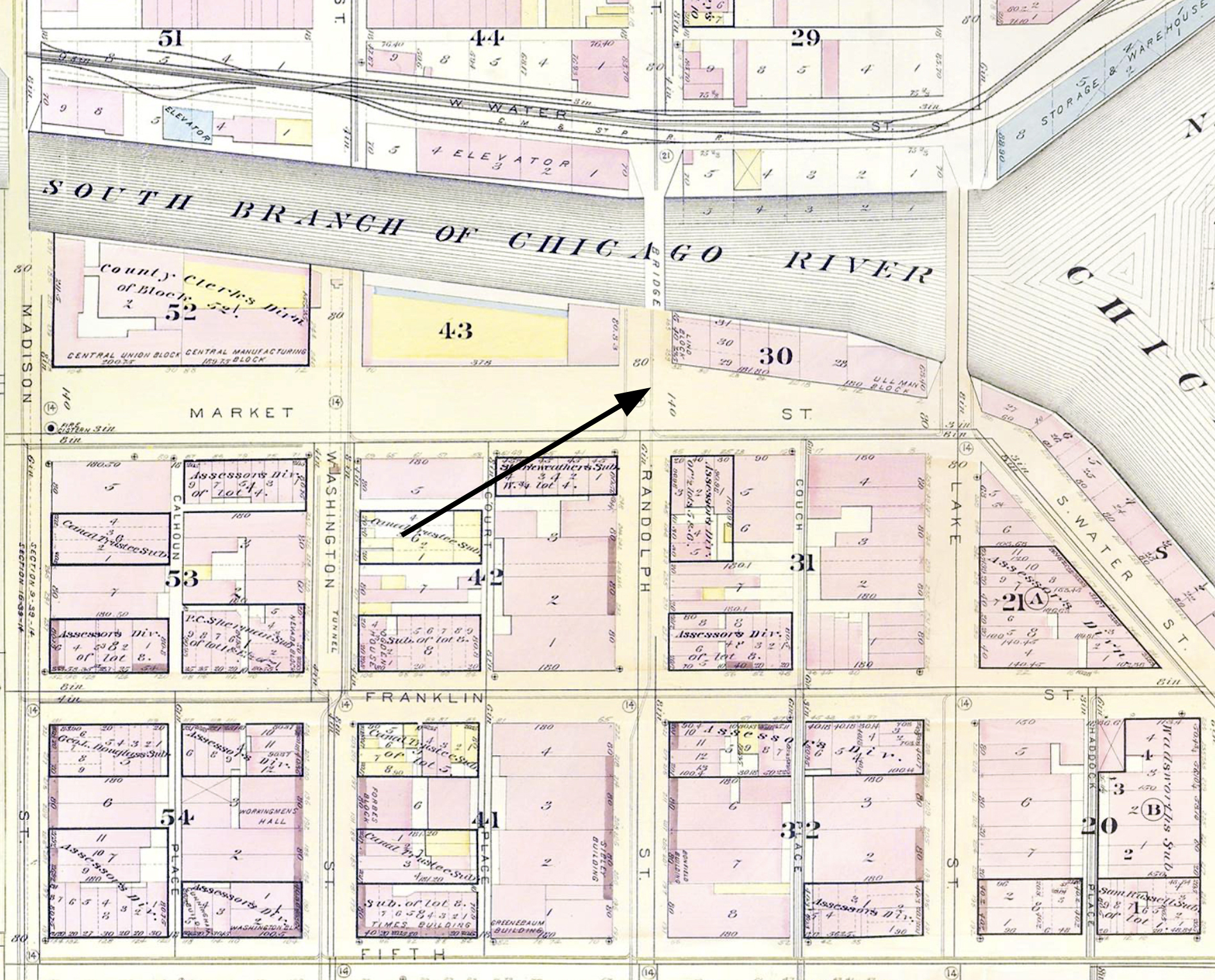
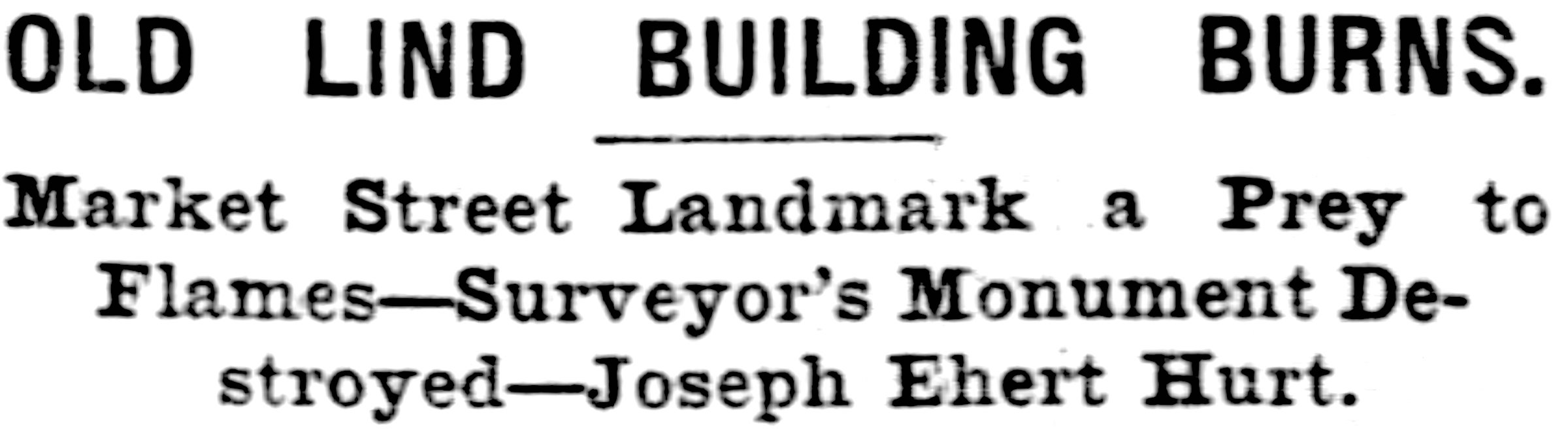 The Lind Building, 28 to 32 Market street, one of the landmarks that withstood the fire of 1871, succumbed, to the flames early yesterday morning. With it was destroyed a monument which for half a century had been the authentic basis of calculations from city data. The monument was imbedded in the wall of the building in 1847 at a level established by the Illinois and Michigan Canal Commission and was used as the official level for the old canal and later for the drainage channel. The federal government adopted it as the basis of its harbor and river survey, in 1867 It was adopted by the city as the basis of its surveys of the sewer and water systems.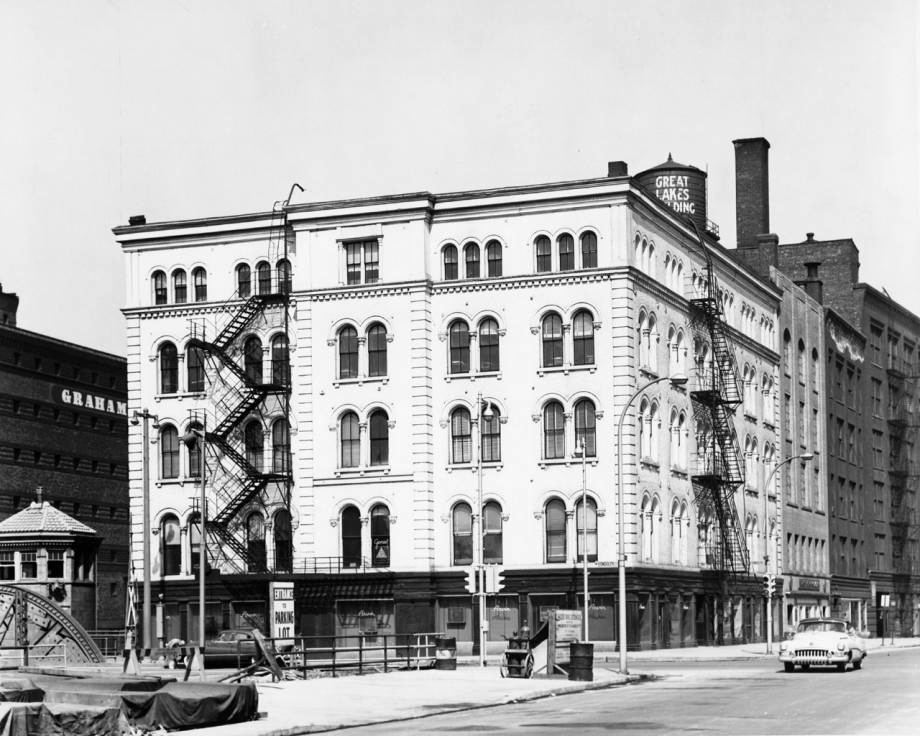
 Our mention of the old Lind block at Randolph st. and Wacker dr. has brought a number of reminiscences from historical minded readers. This is the only remaining downtown building, you a may recall, which escaped the Chicago fire. It also escaped another fire last it week.
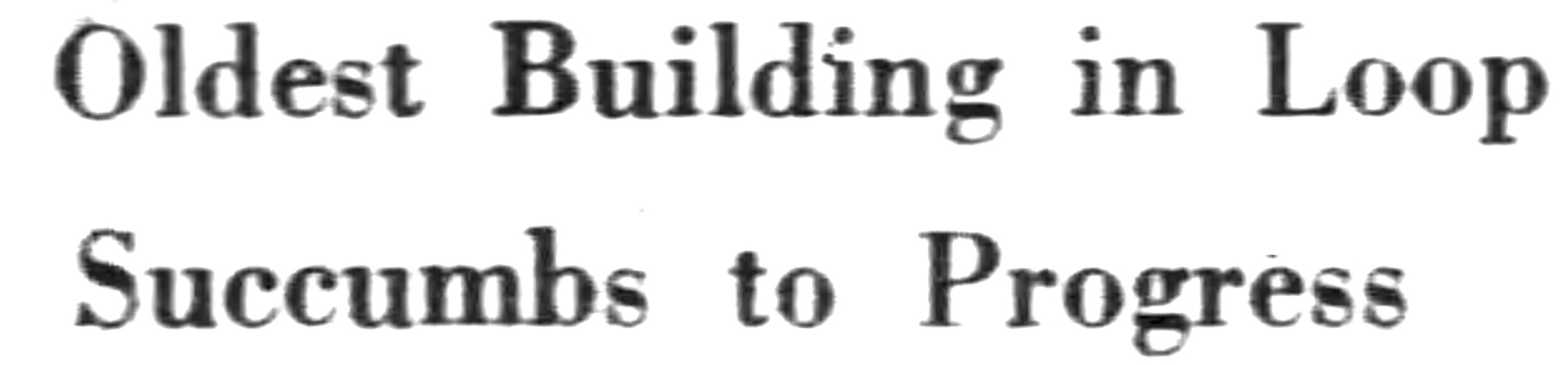 Sylvester Lind, who owned a lumber yard at the northwest corner of Randolph and Market streets, built an office building on the property. The year was 1852, Chicago was as big (38,734 inhabitants) as Elmhurst is today, downtown streets were mudholes, the river alongside the Lind Block was a forest of masts towering above sailing vessels. Runaway slaves were sneaked into Lind’s lumber boats at night and delivered to safe locations in timber country near the Canadian border, for Sylvester Lind was a secret agent for the “


 Ground was first broken for the great Chicago Lake Tunnel, on St. Patrick’s Day, March 17th , 1864. The various causes which led to the undertaking of this gigantic work , and compelled such an enormous expenditure on the part of the city, now being supplemented by a still greater outlay, may be briefly stated. The old inhabitants of Chicago are painfully aware of them.



 On Saturday fternoon the three members of the Bard of Public Works, and Mr, Chesebrough, their Chief Engineer, took the tug
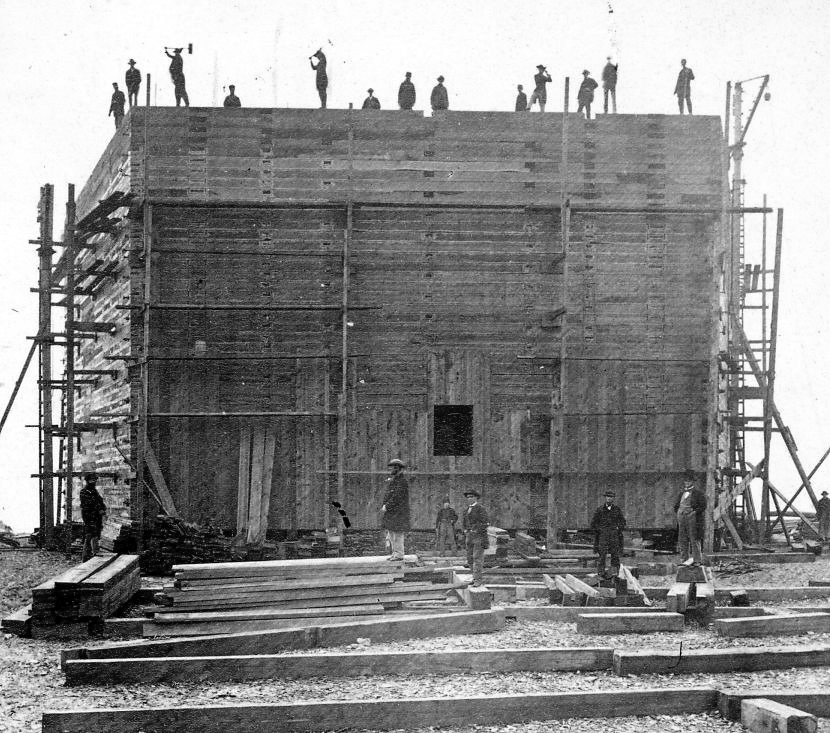
  The launch of the giant crib for the East end of the great lake tunnel was safely accomplished yesterday morning, after innumerable delays, extending through a period of several weeks. It was done so neatly and so easily as to astonish every one among the thousands who watched the passage from its native element into the water. It will be observed that we invert the usual phrase, according to which a vessel is native in the element to which it emegrates—a phrase, by the way, quite foreign to the subject.
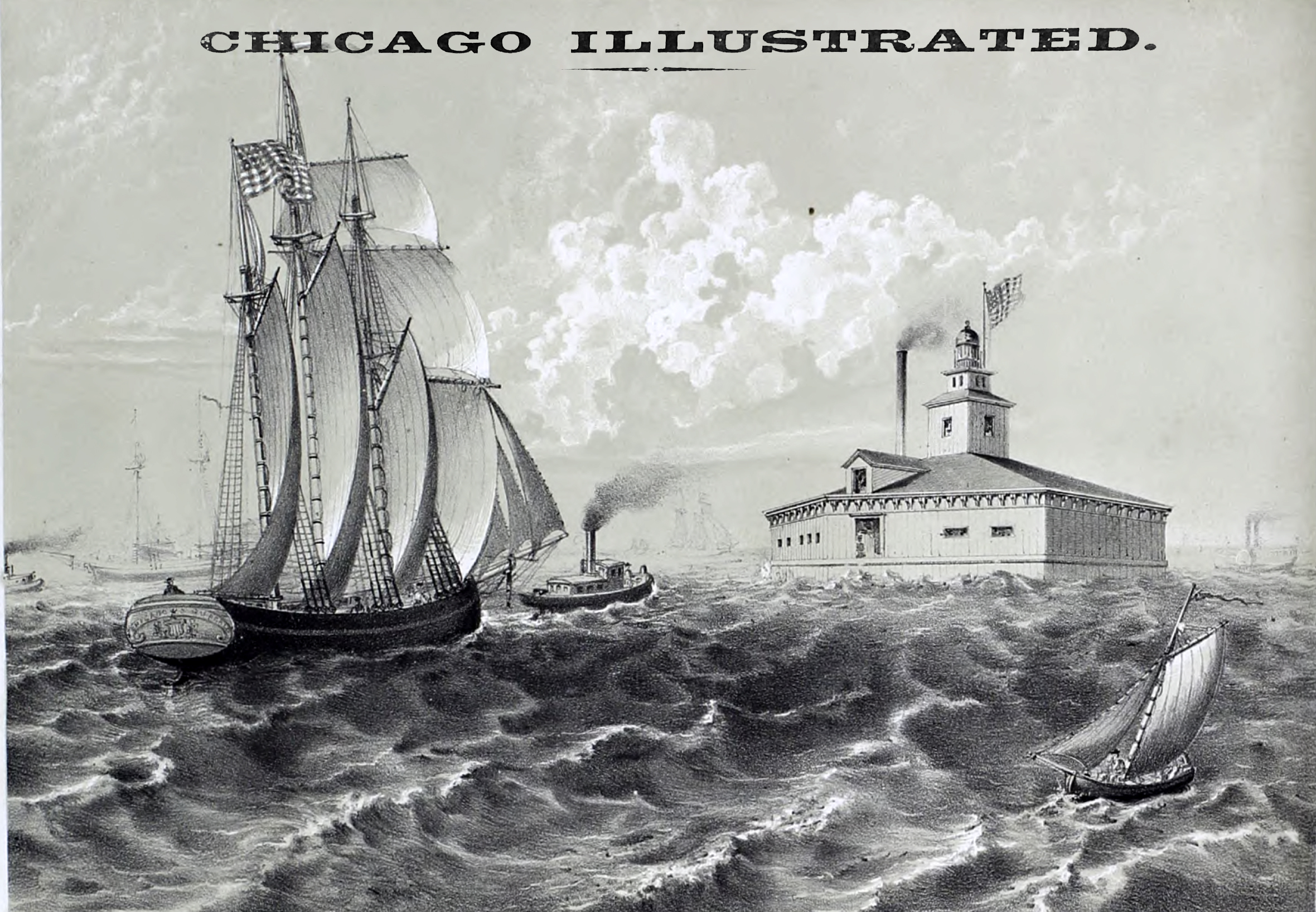
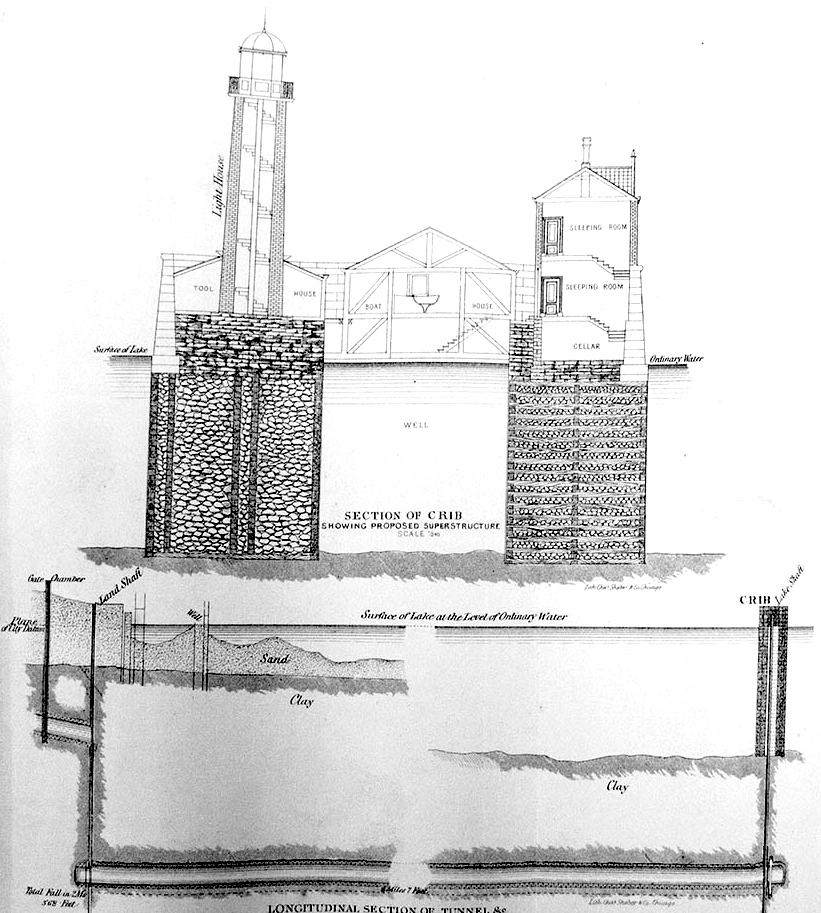
 The dusty mortals who look to Father Michigan this weather for relief from the parching atmosphere of summer seldom pause to consider the thousand necessary expedients by which the refreshing fluid is conveyed from its limpid reservoir to their dry and feverish lips. They look out from the lake-shore occasionally, and, pointing to the unsightly wooden structure nearly two miles off, say to the unsophisticated stranger ton the rural districts, “Yonder is our reservoir; there’s where we get our water from. It’s quite clean out there, too, because it comes from below the surface.” Quite clean. Well, it ought to be, after the wonderful efforts we have made to obtain it. We have tunneled the lake, and rung the changes on that feat until the world is tired of bearing of our performance. Now we are reporting the operation for the sake of posterity. Wonderful city, that tunnels the lake for the sake of posterity! But posterity here means only those who come to Chicago for the next five years. She has nearly doubled her population in the past half decade, and seriously anticipates a similar showing for the balance of that term.