Young Men’s Christian Association Building, Association Building, Central Y.M.C.A. Building, 19 S. La Salle Building
Life Span: 1893-Present
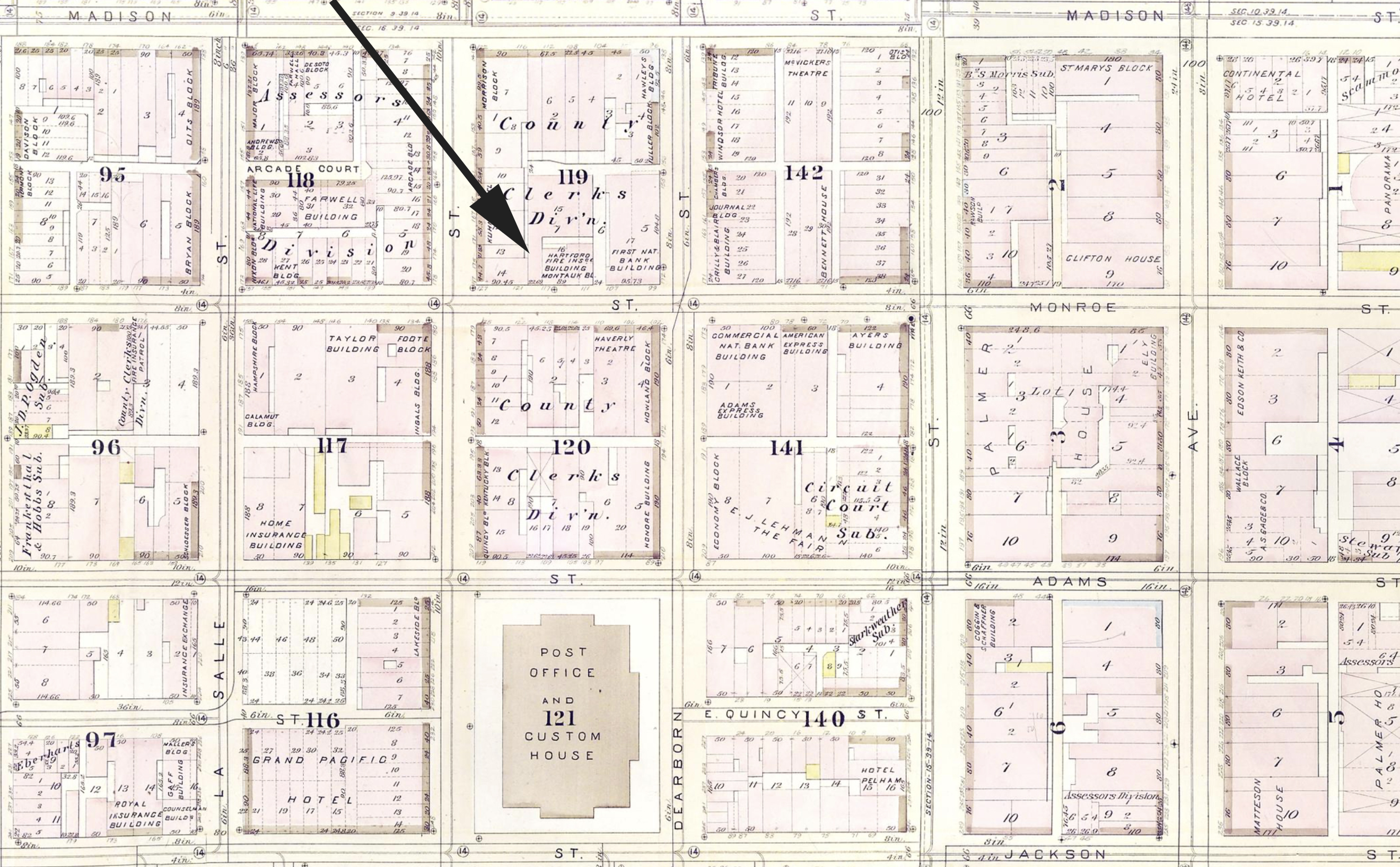
Location: La Salle street and Arcade court
Architect: Jenny & Mundie
- Lakeside Business Directory of the City of Chicago, 1899
Young Men’s Christian Assn. Bldg.—153 and 155 Lasalle.
Lakeside Annual Directory of the City of Chicago, 1904
Young Men’s Christian Assn. Bldg.—153 and 155 Lasalle.
Lakeside Annual Directory of the City of Chicago, 1911
Young Men’s Christian Assn. Bldg.—19 S. Lasalle.
Chicago Tribune, September 4, 1892
Description of the La Salle Street Skyscraper Now in Construction.
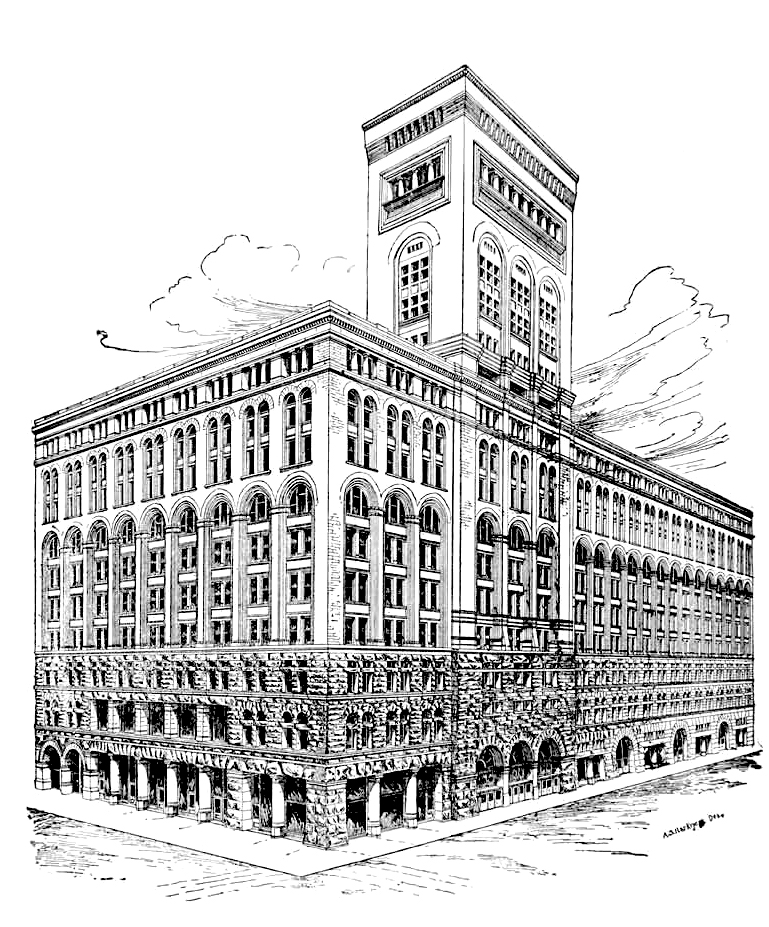
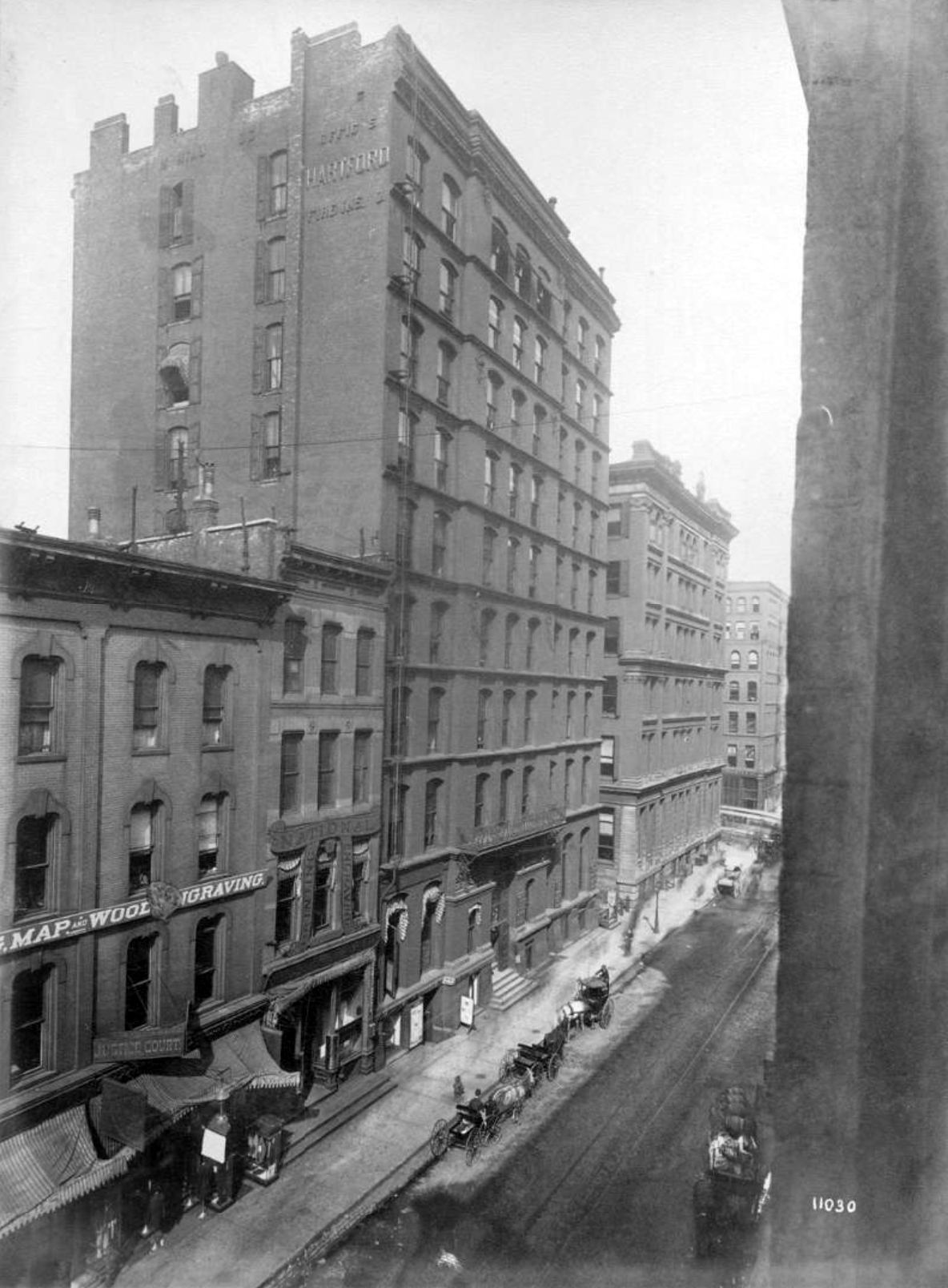
Complete details of plans for the Young Men’s Christian Association building on La Salle street at the corner of Arcade court have been worked out by Jenney and Mundie. The street front is a square tower 173 feet high to top of cornice, and 228 feet to the peak of roof. The main portion, containing the auditorium, gymnasium, and association offices, is in the rear of the tower on Arcade court and is 81×121 feet. The three lower stories of the La Salle street tower are of gray granite. Above the granite the material is terra cotta, as near the color of granite as practicable.
The tower roof is covered with red tile. The basement is used for the working department of the building, containing six boilers, the machinery for eight elevators, the electric light light plant, house pumps, and ventilating apparatus. In the basement will also be three bowling alleys on Arcade court, and the body of the great swimming tank, 22×71 feet, that is entered from the first story at the level of the floor.
The corner room on the ground floor, containing 2,800 square feet of floor space, will be fitted up for an elegant banking office. The entrance hall to the offices and to the auditorium is about twenty feet wide and leads to four elevators for the offices and to a grand staircase, ten feet wide, for the assembly-rooms and for the auditorium. The rest of the first story is devoted to the great bathing establishment, including a swimming tank, eight feet deep at one end and four feet at the other. This tank is built of steel plates, riveted together, and lined with white china tile.
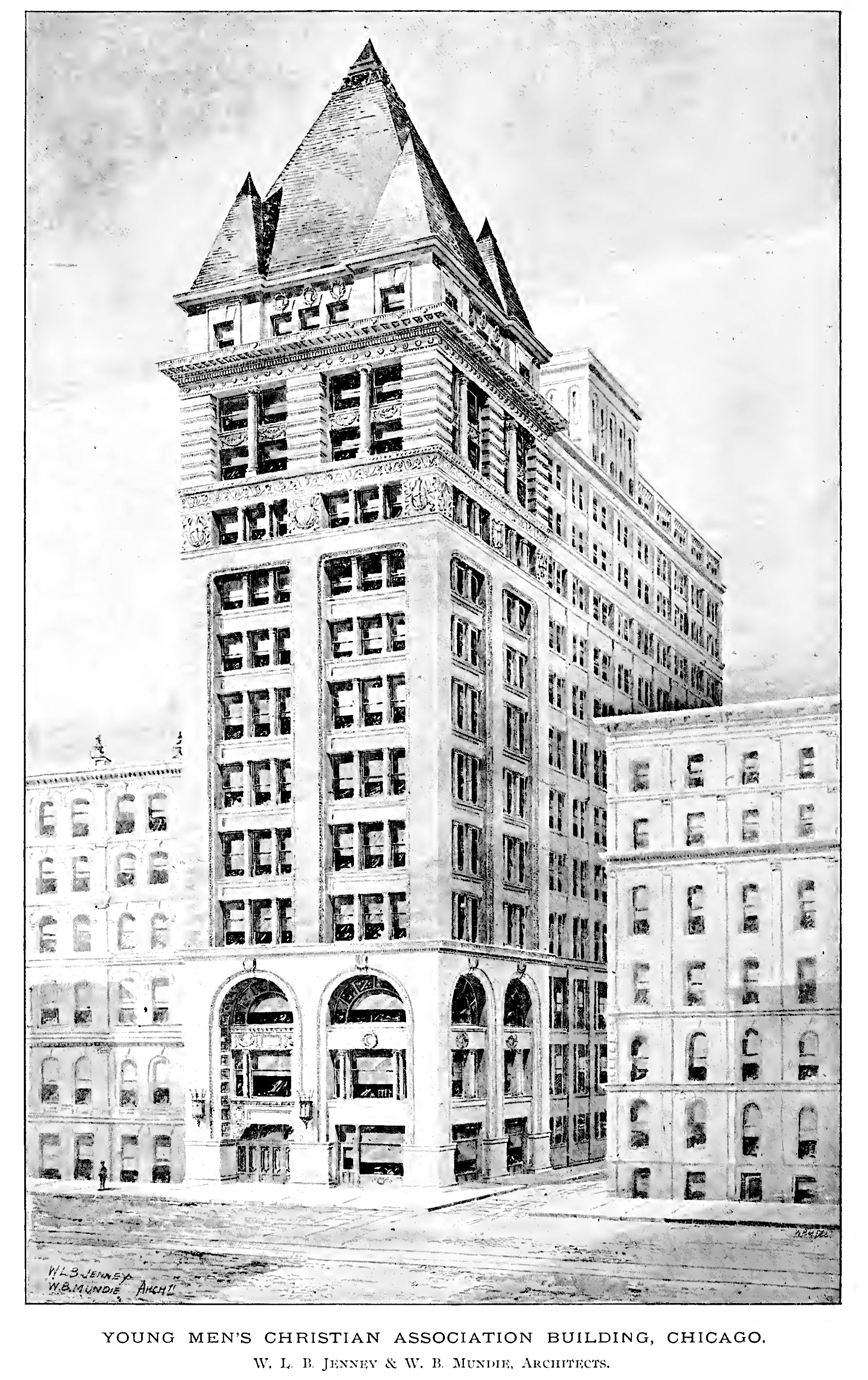
- Left: Architectural Digest, August, 1892
Right: 1912
The second and third stories contain the parlors and principal rooms of the association, the general and private offices, the library, reading-room, recreation-room, lecture hall, and the great auditorium, which will be a beautiful, well-proportioned, and convenient room, with a seating capacity of 205 in the parquet, 420 in the parquet circle, and 344 in the balcony. The fourth and mezzanine floor of that part of the building in rear of the tower is occupied for baths and lockers for the use of those patronizing the gymnasium. The fifth and sixth flors are the gymnasium.
The appointments and fittings of the athletic portion of the association rooms are the best that are known and have been selected by experts. The architects and the general secretary visited all the best association rooms and the finest athletic clubs in the country and consulted with those best informed before planning the building. It is intended that this portion of the building shall excel anything of the kind in the country.
The seventh floor is occupied by class-rooms. The tower, or front part of the building, on the fourth to the seventh floors, and all of the floor space on the eighth to the thirteenth floors, will be divided into offices of good proportions.
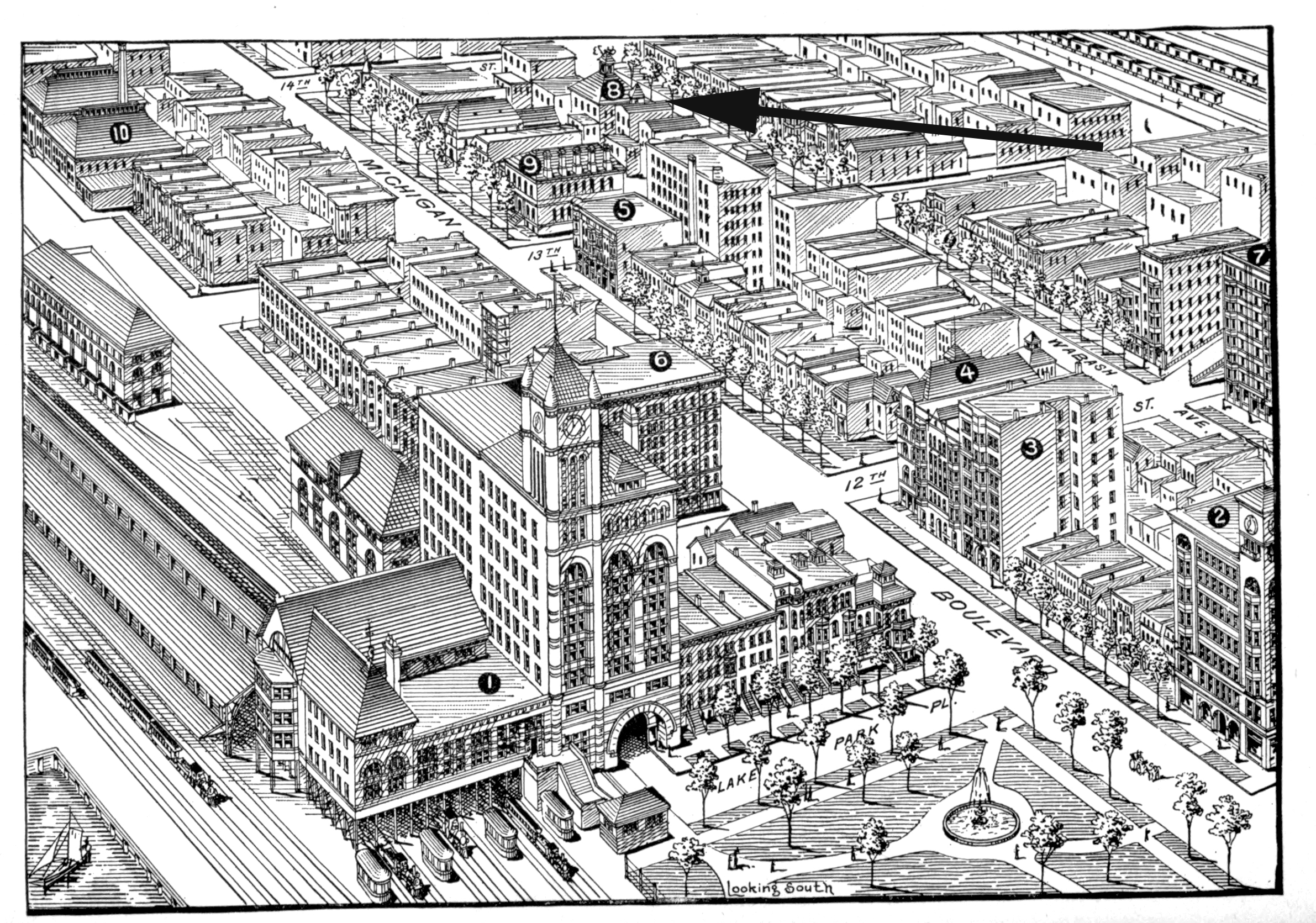
Rand McNally & Co.’s Bird’s-Eye Views and Guide to Chicago, 1893
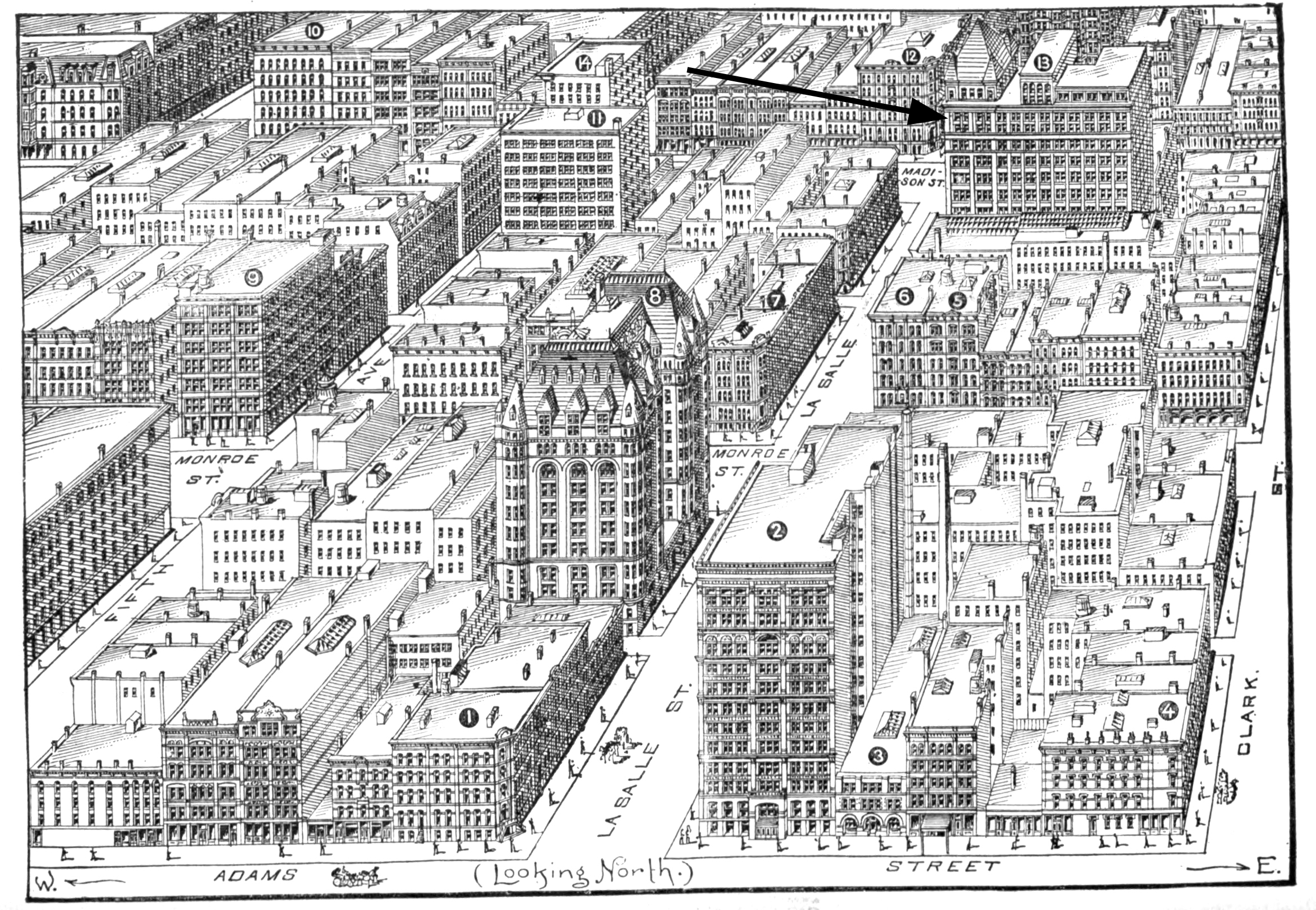
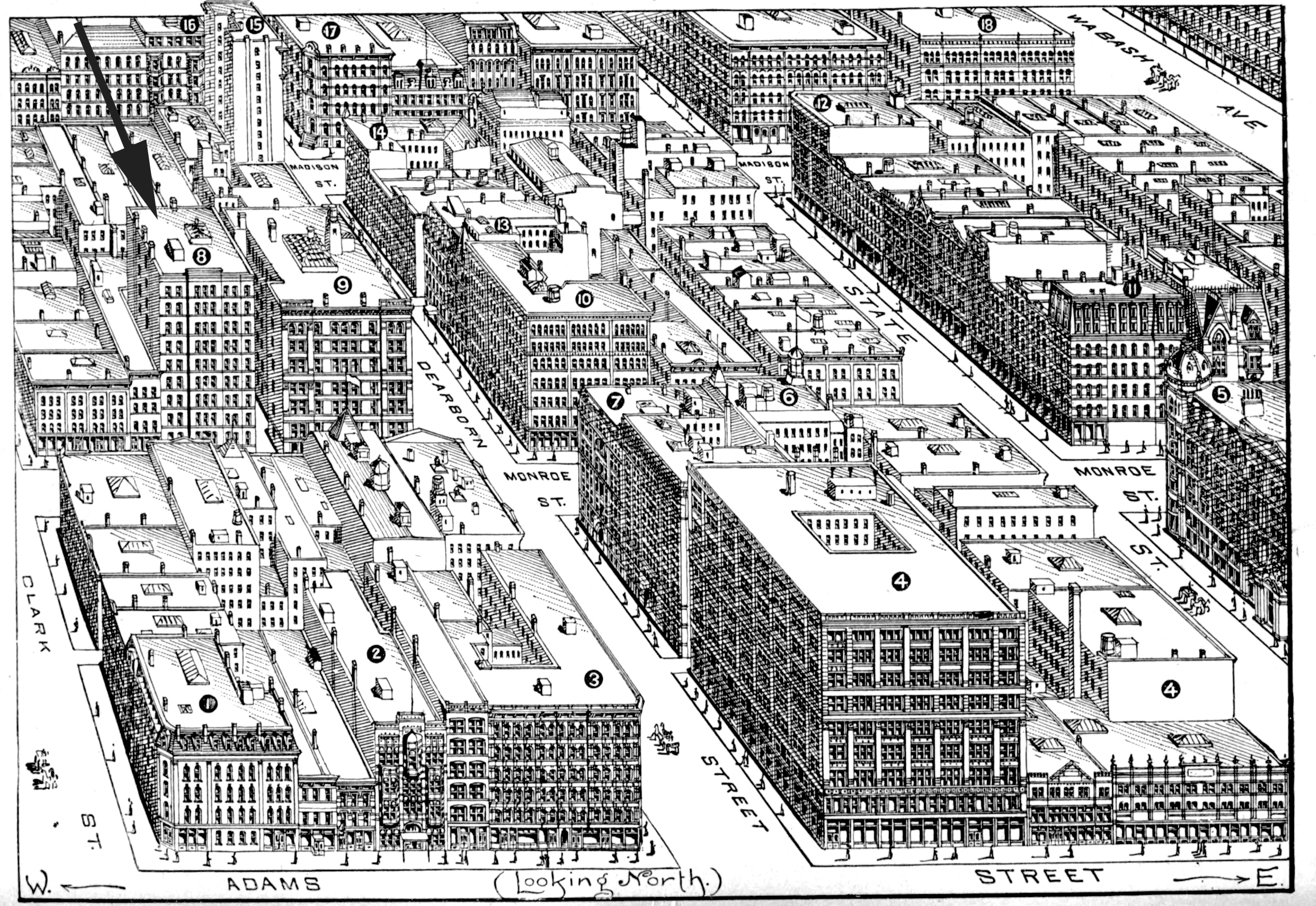
⑬. The Y. M. C. A. Building Covers the site of Farwell Hall, in the rear of 150 Madison Street, fronting La Salle Street on the east side at Arcade Court (an alley) . This splendid building is like the Athletic Club’s steel building on Michigan Boulevard. The lot is irregular, but has 54 feet front on La Salle, and is 187 feet deep on Arcade Court, with greater width in the rear. The structure is 190 feet high, with 12 stories and basement. Its interior is described in our chapter on “Notable High Buildings.” It was erected in 1893, at a cost of $850,000. The skeleton steel method of architecture is here followed, nothing depending on outer walls. Farwell Hall had a notable history. It burned before the Great Fire; it burned in the Great Fire; it was demolished to make way for this steel skyscraper.
Chicago Tribune, September 19, 1918
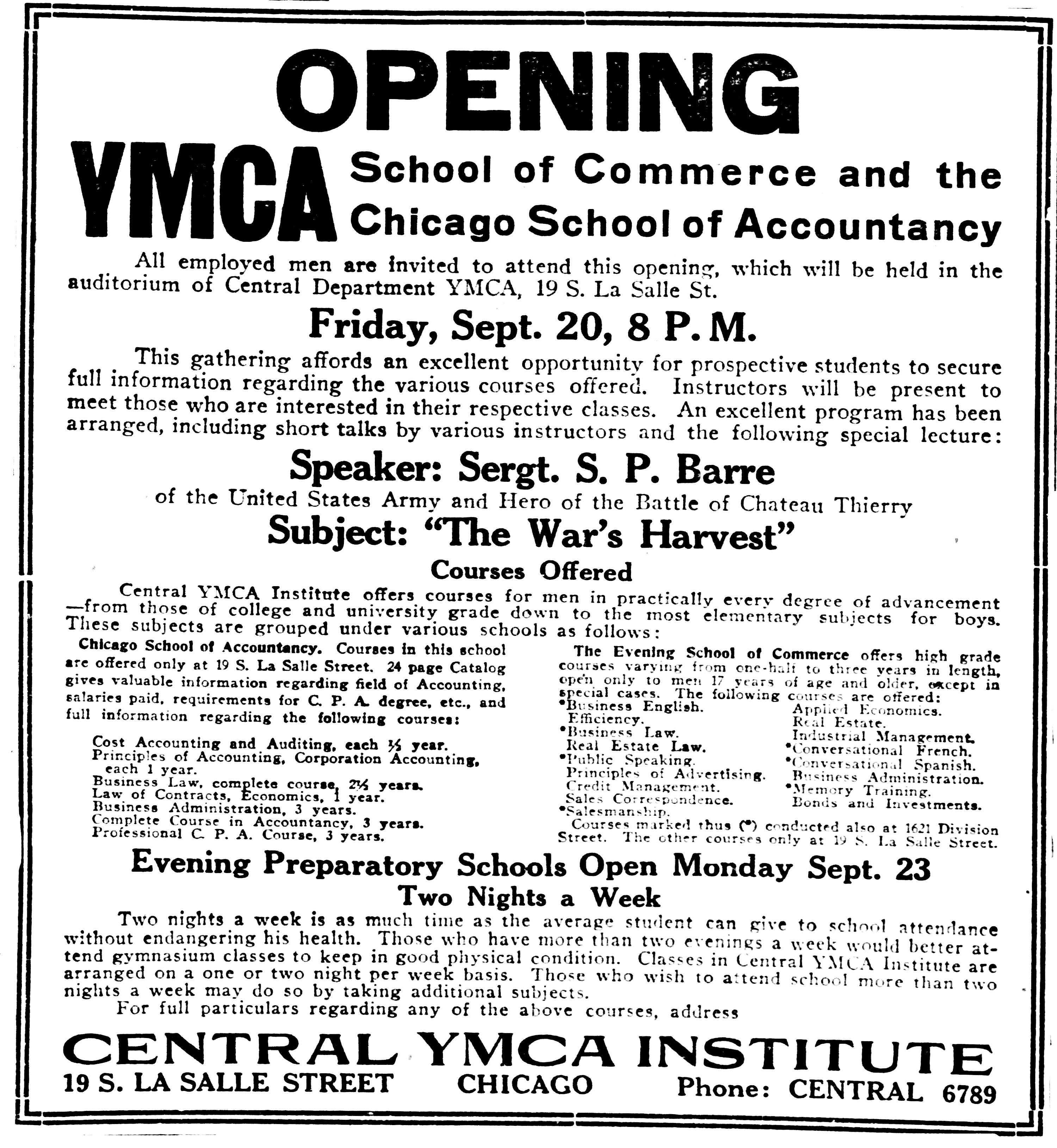
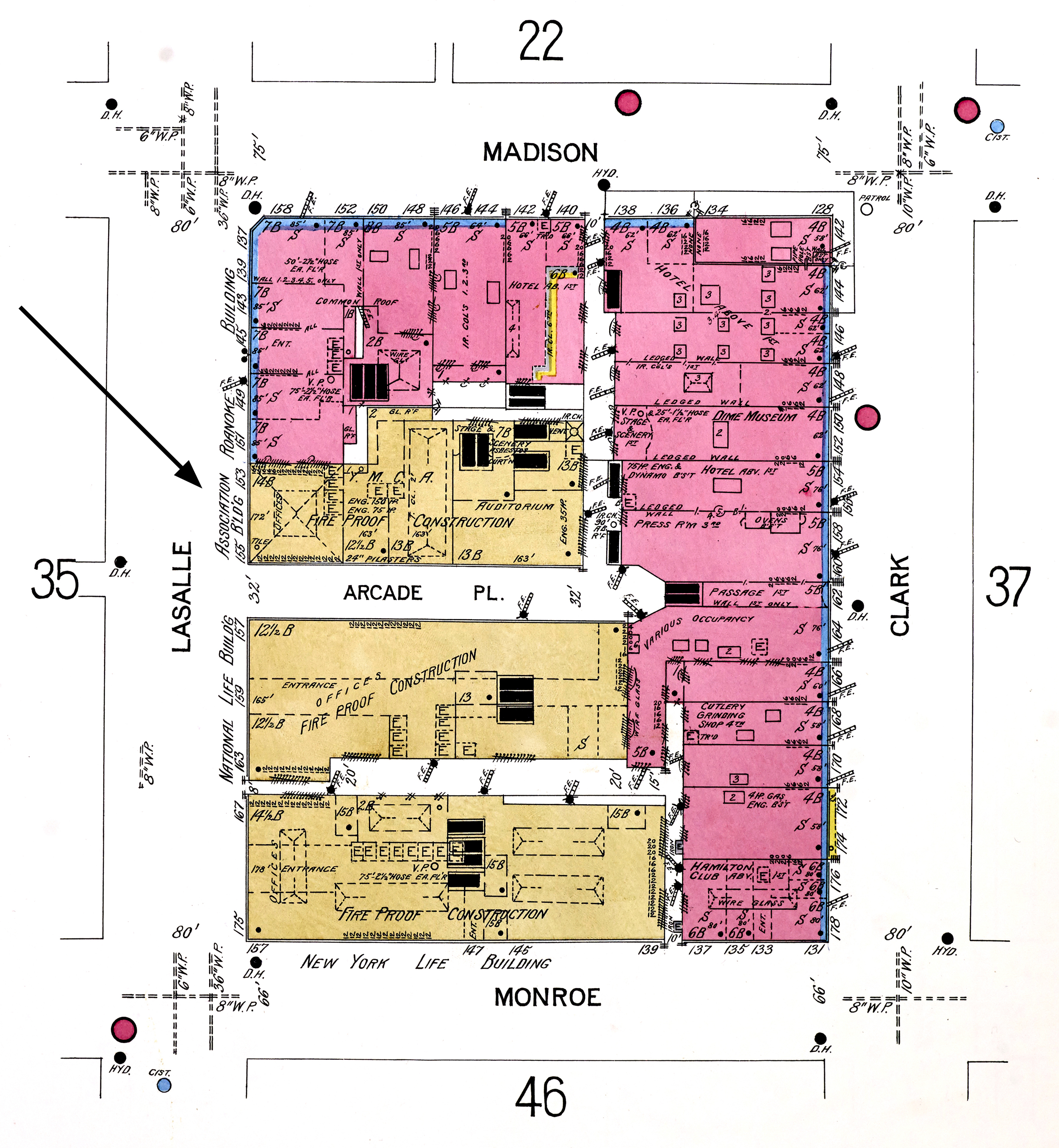
- Young Men’s Christian Association Building
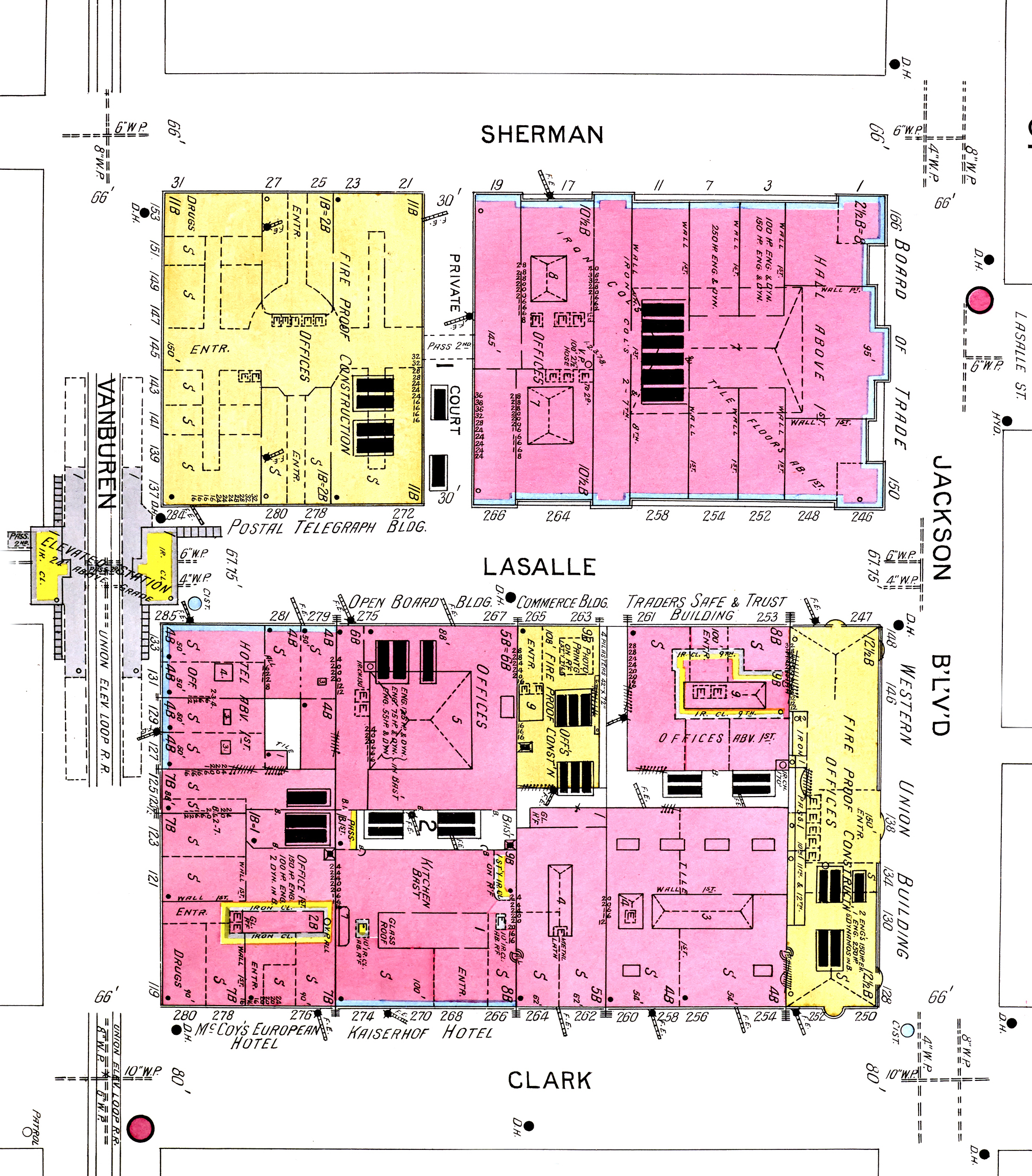
La Salle Street and Arcade Court
Sanborn Fire Map
1906
 Program of Today’s Exercises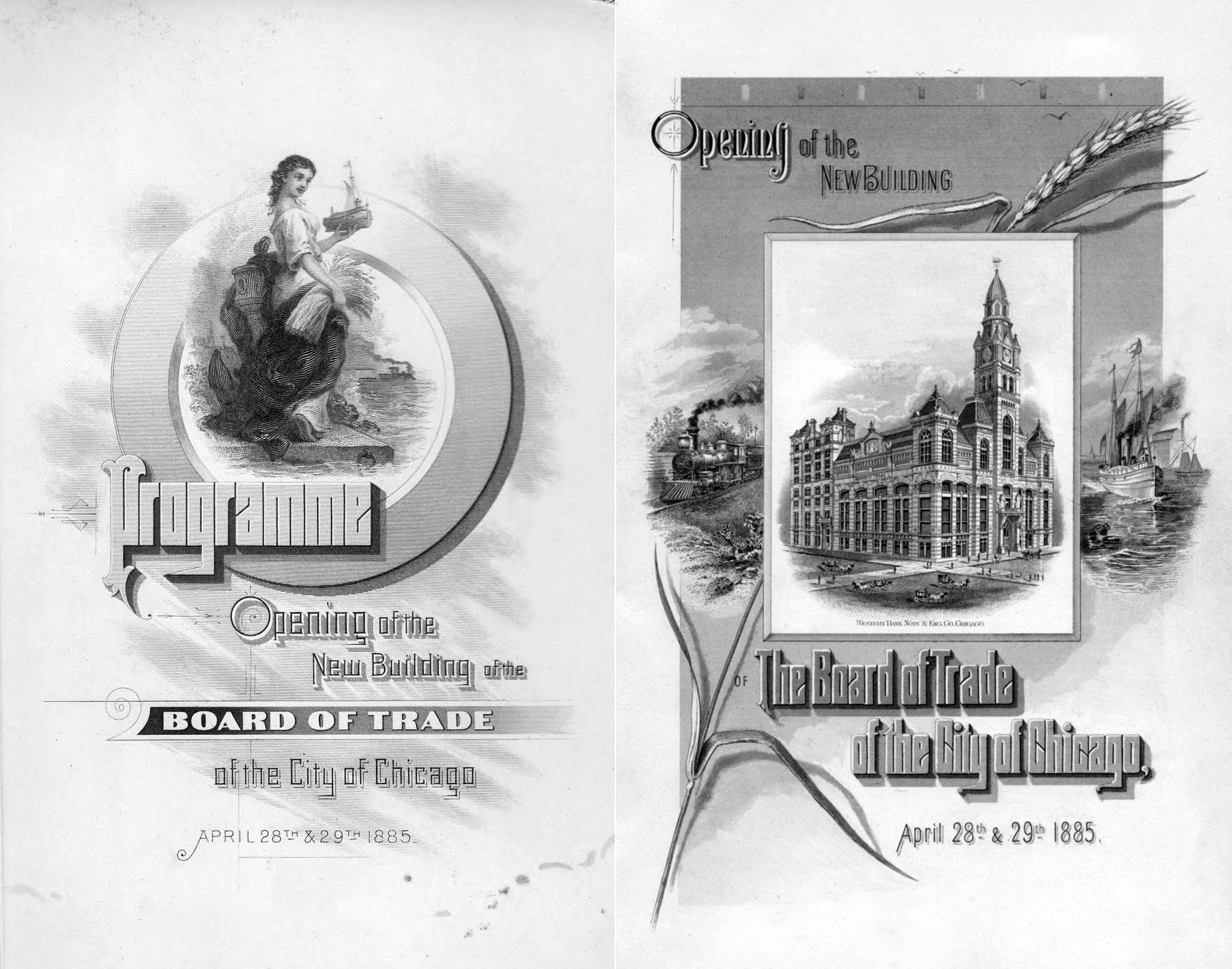
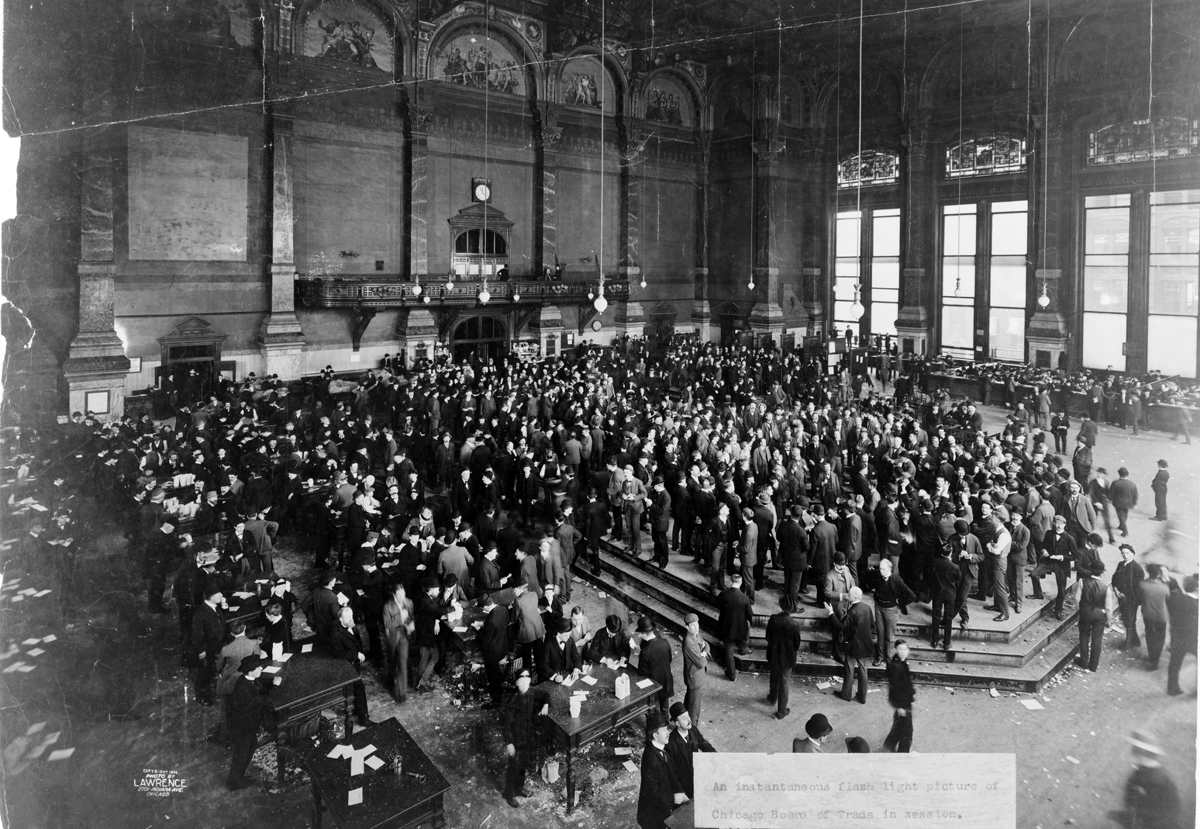
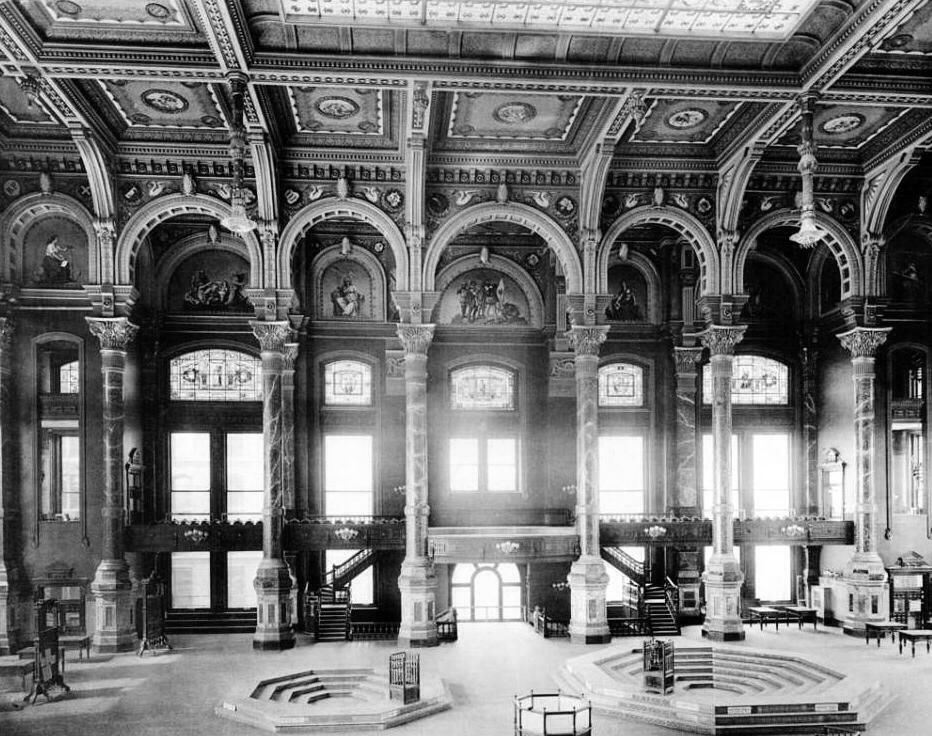
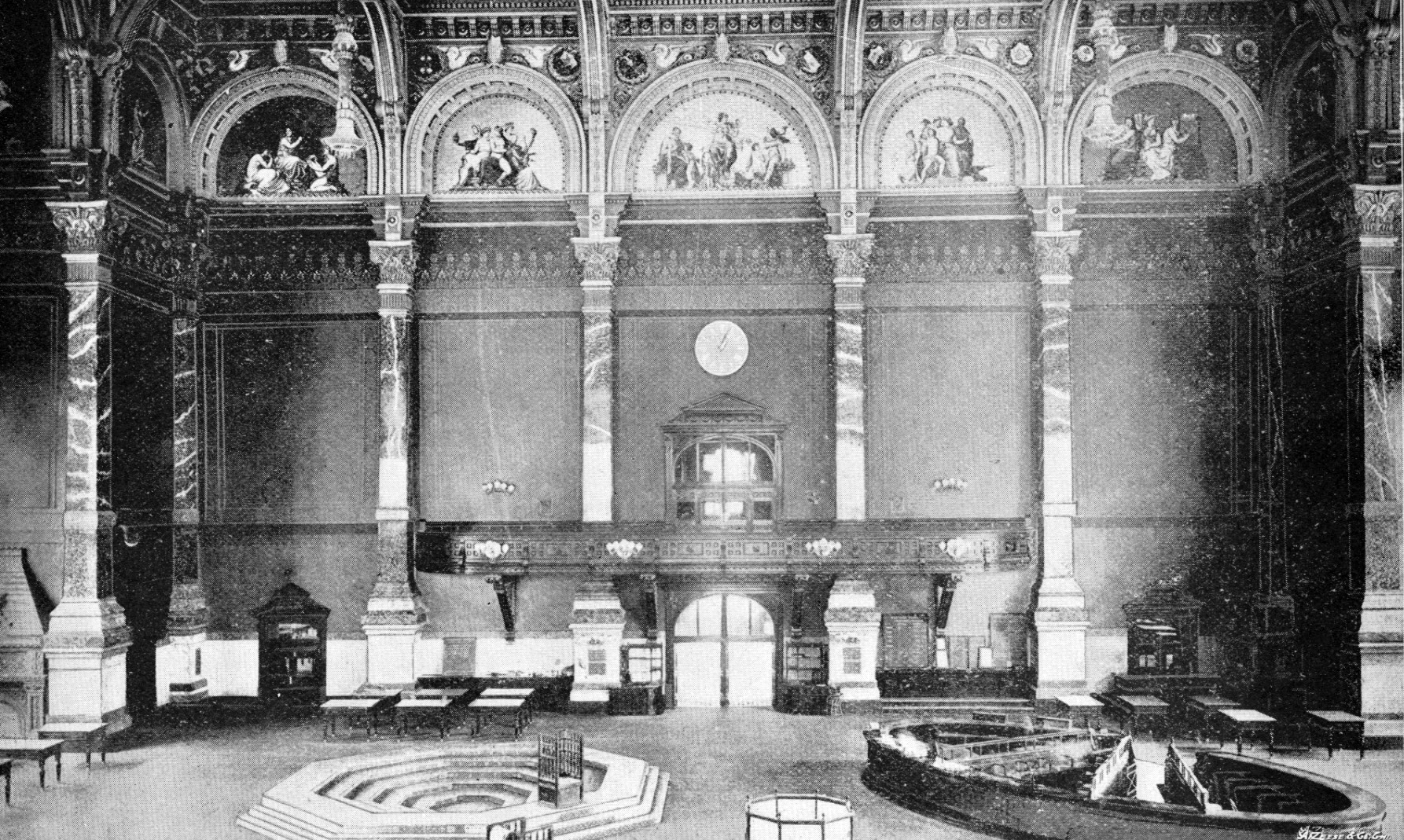
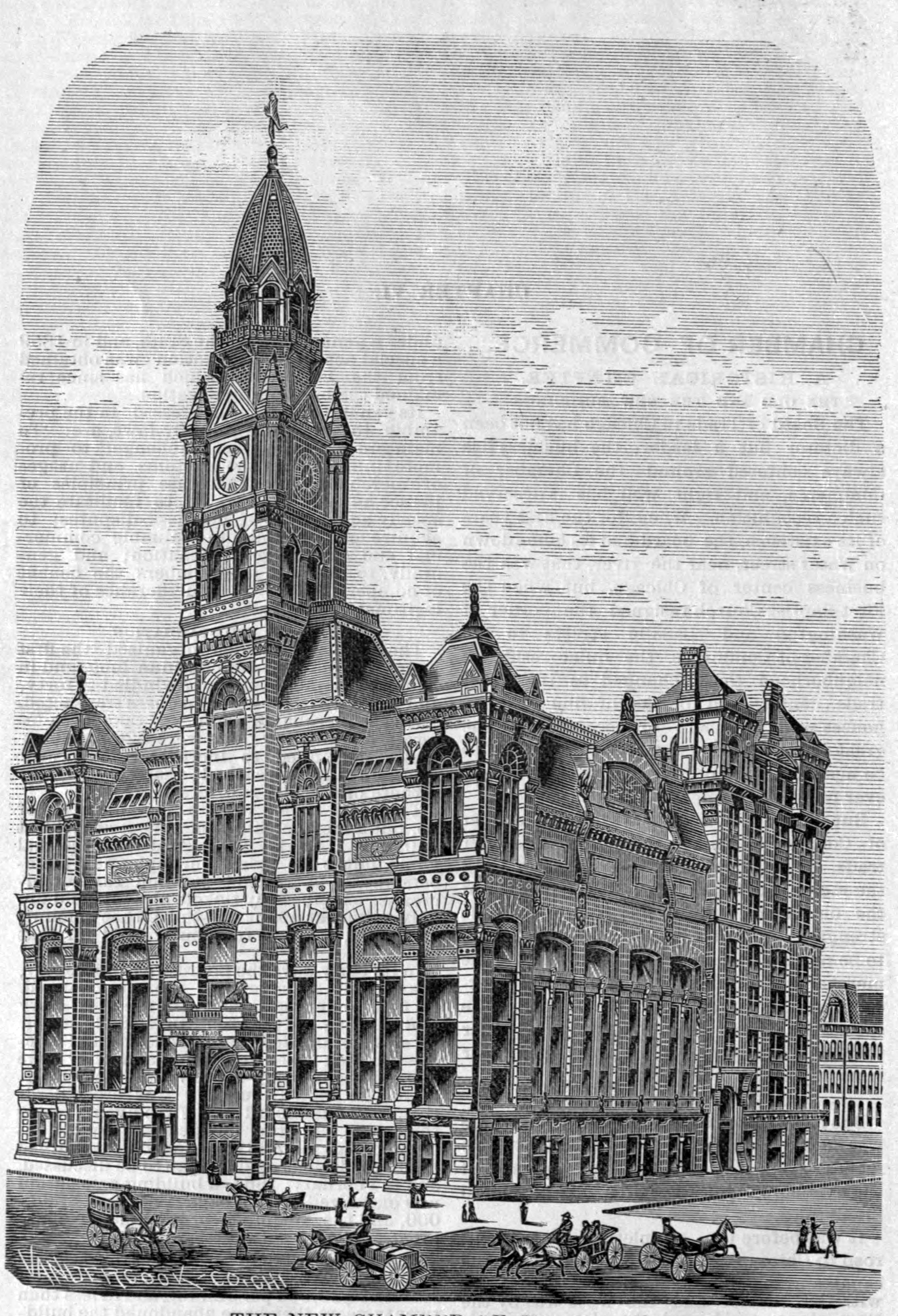
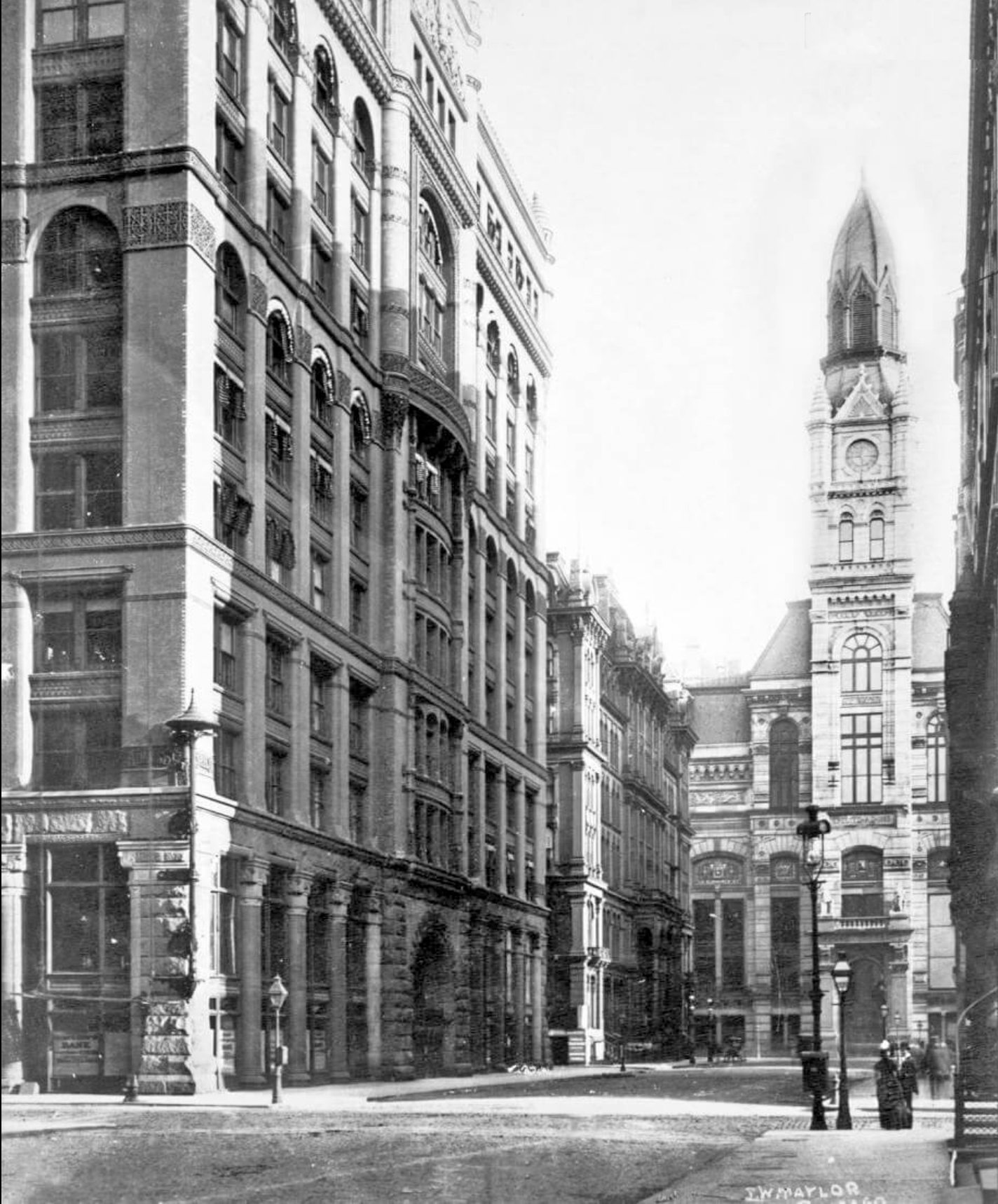
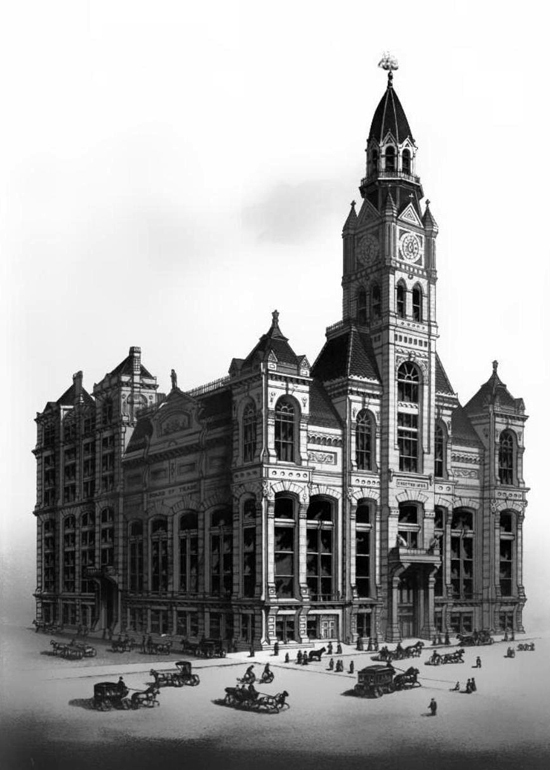
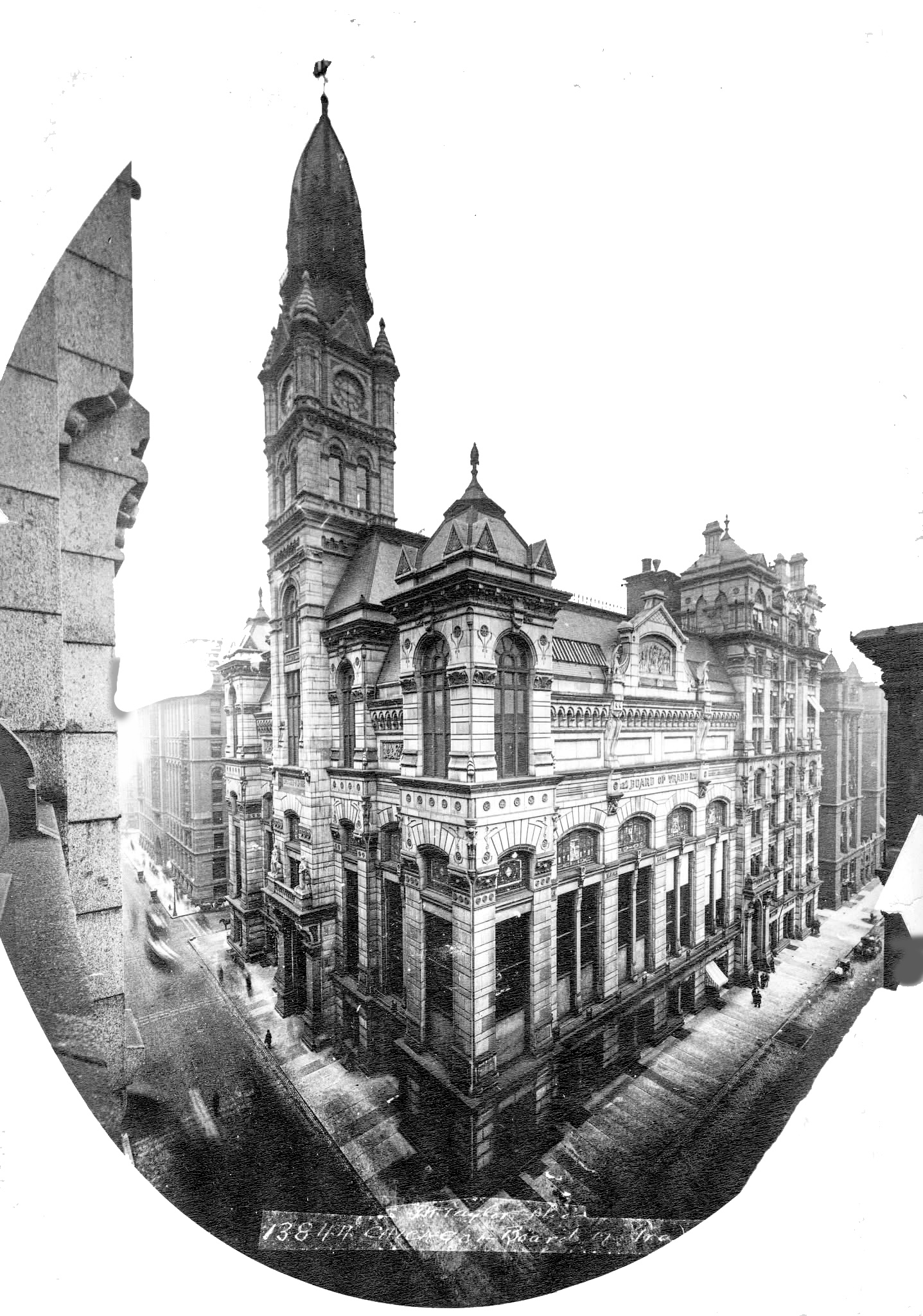
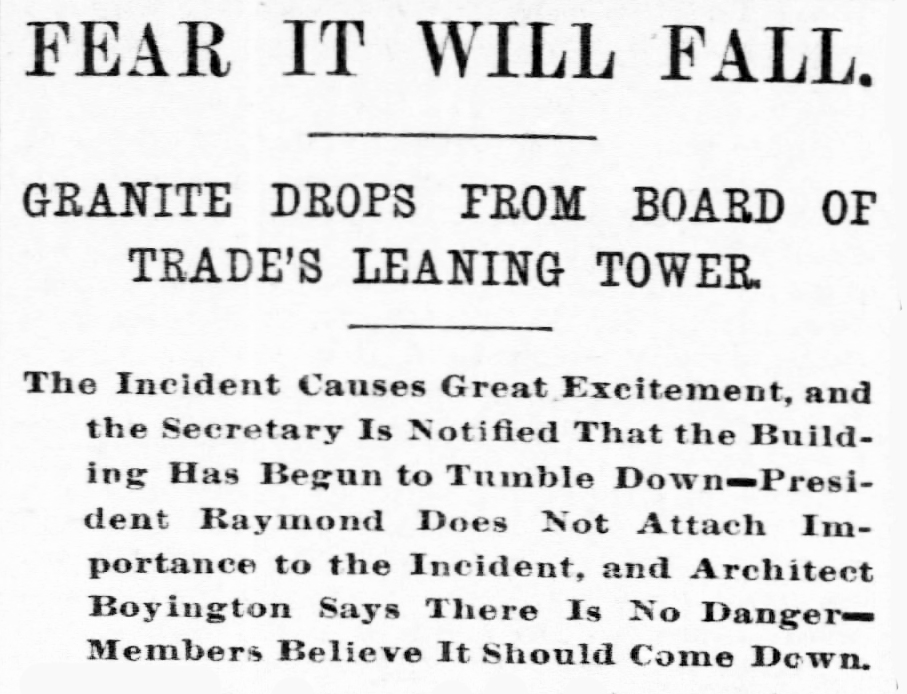
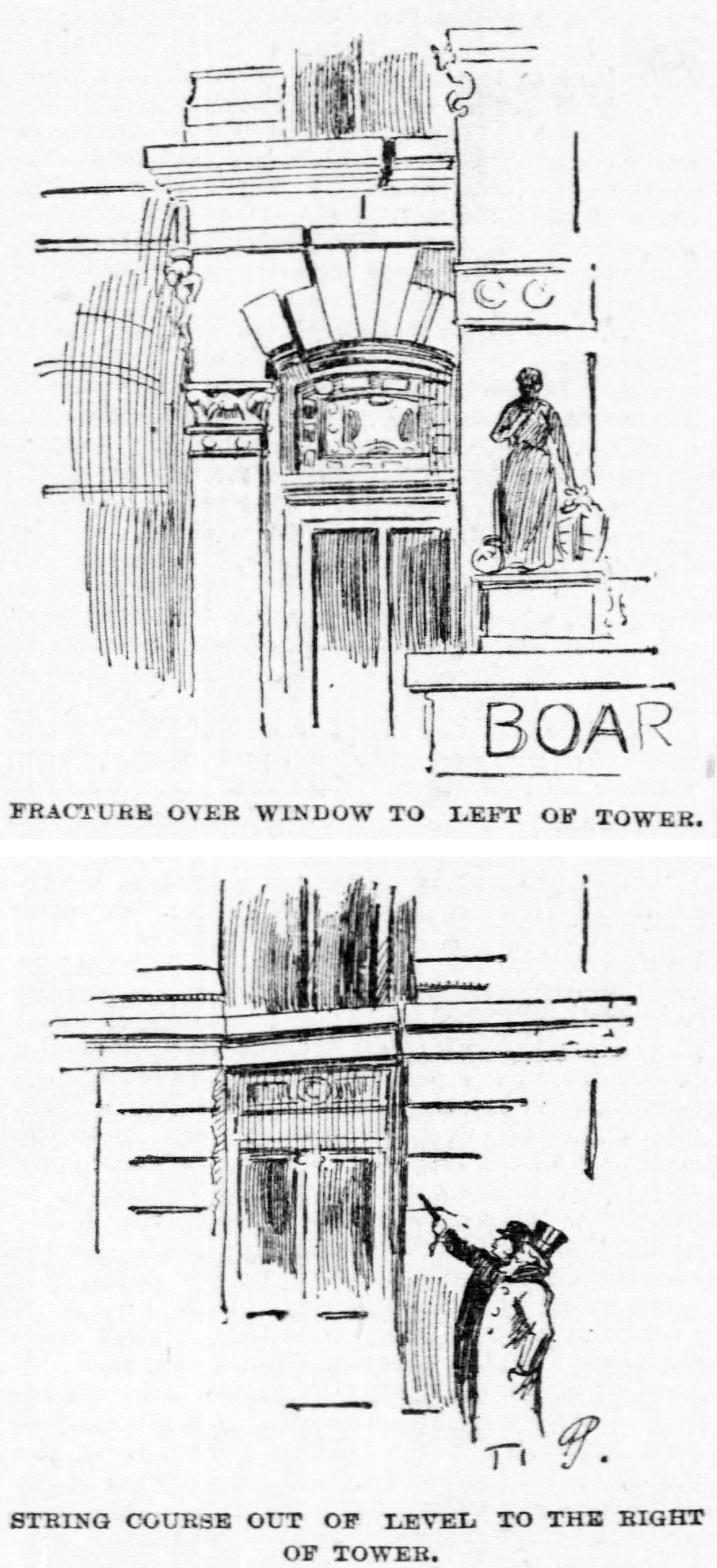
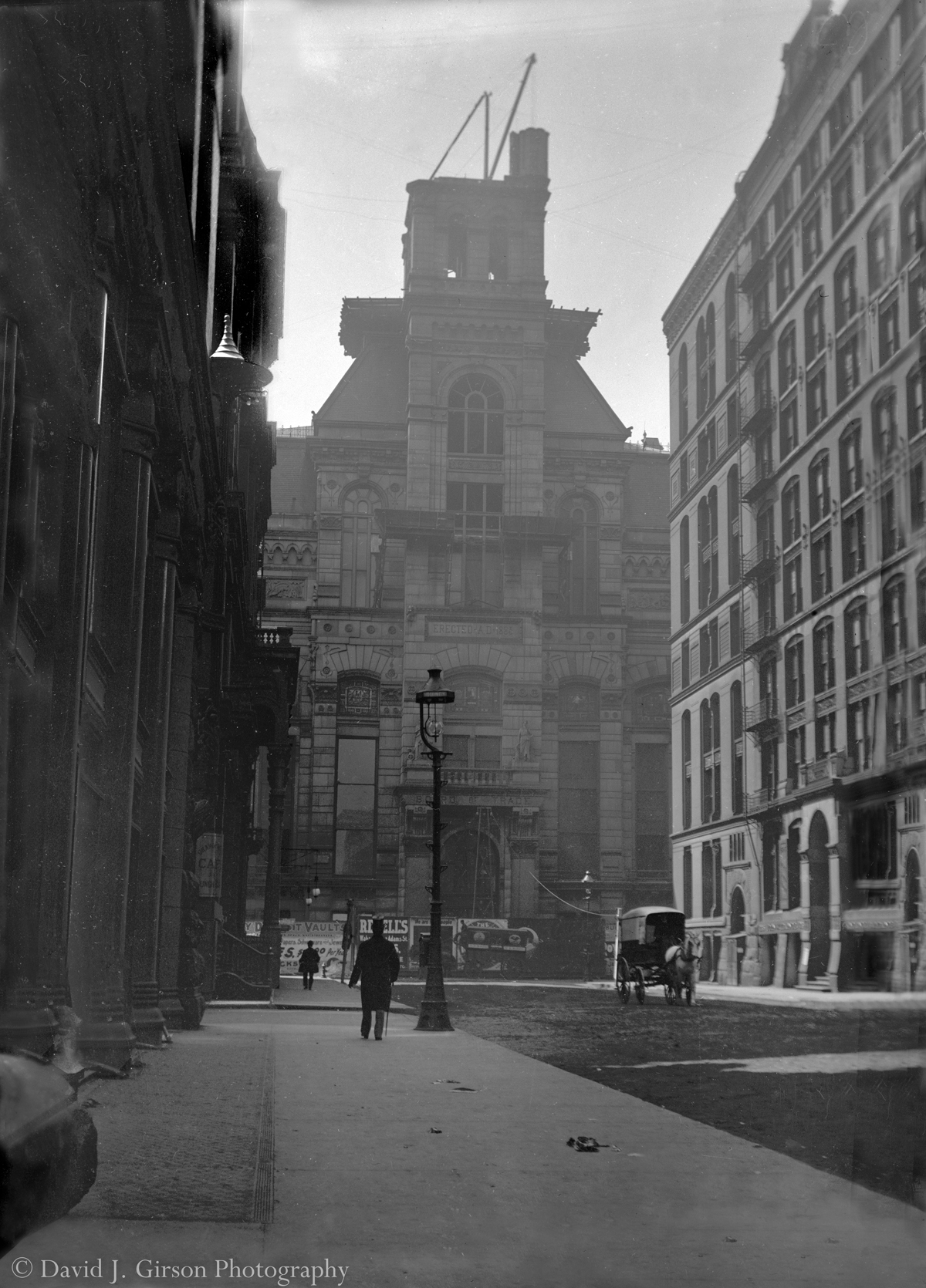
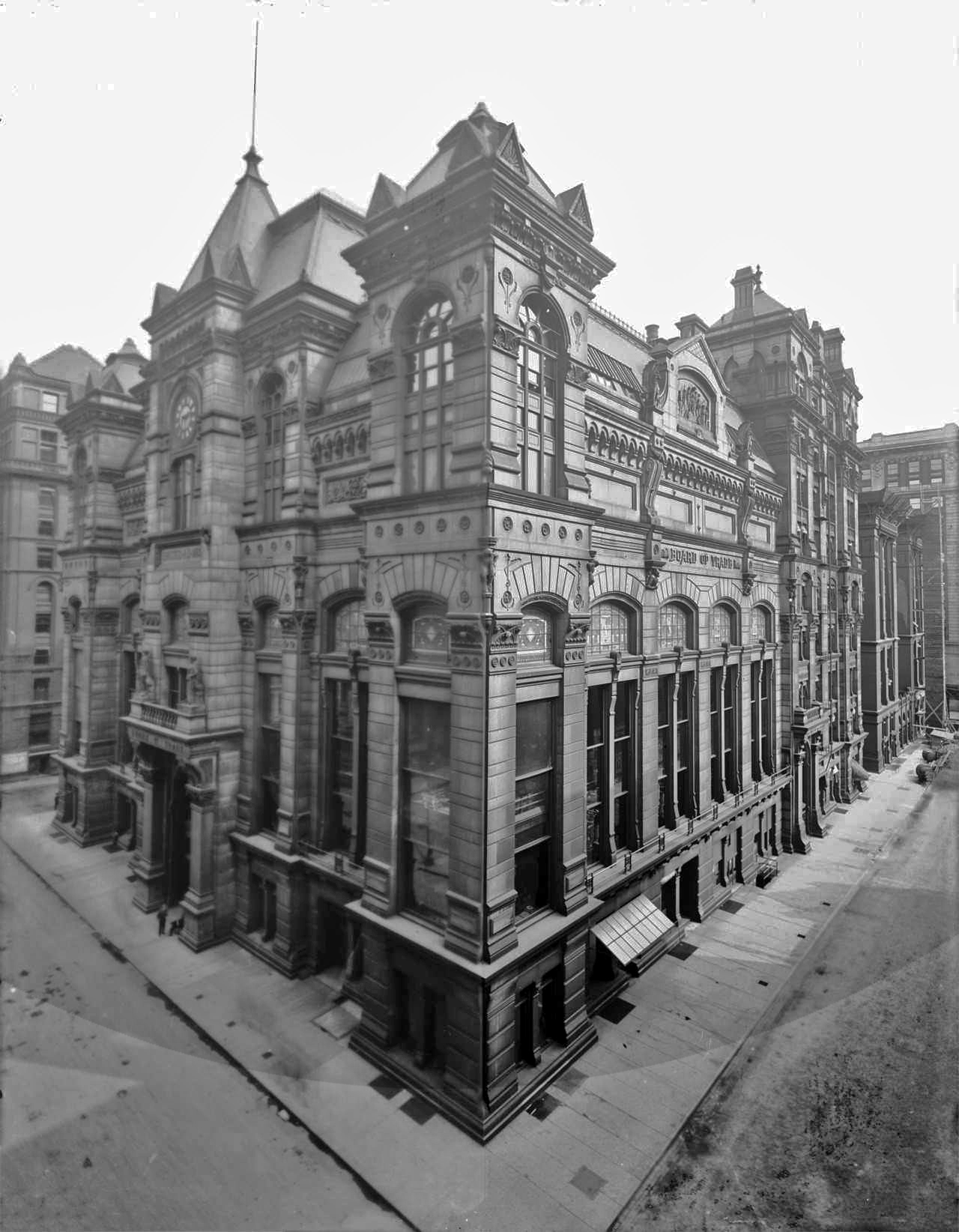
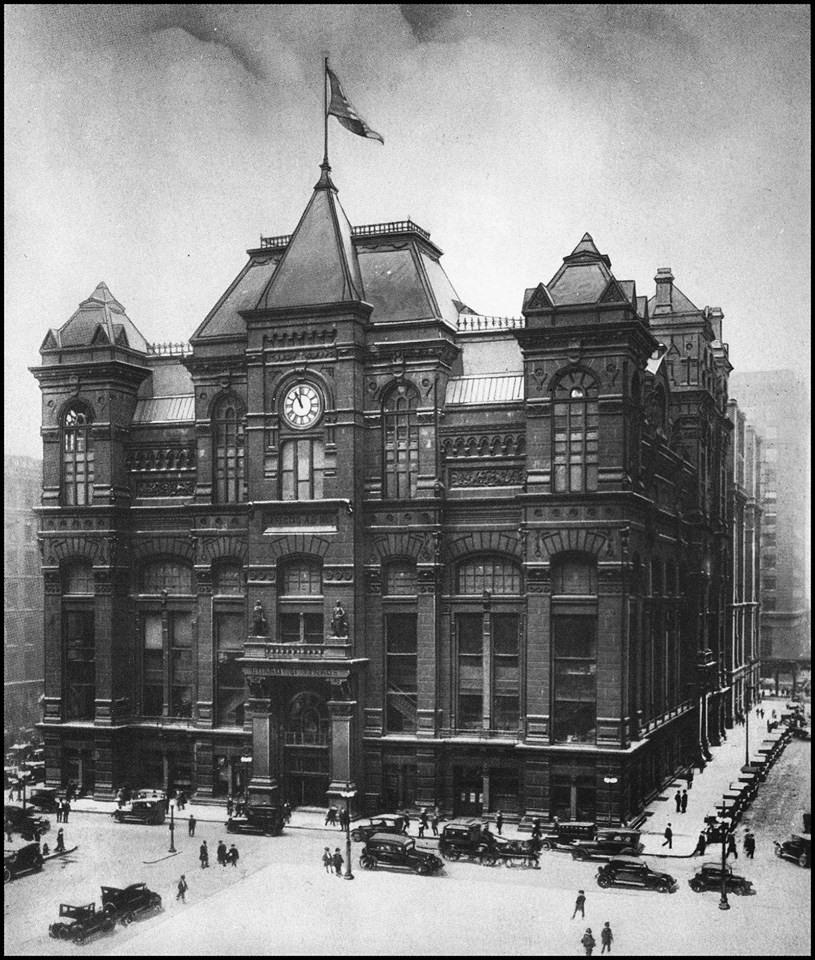
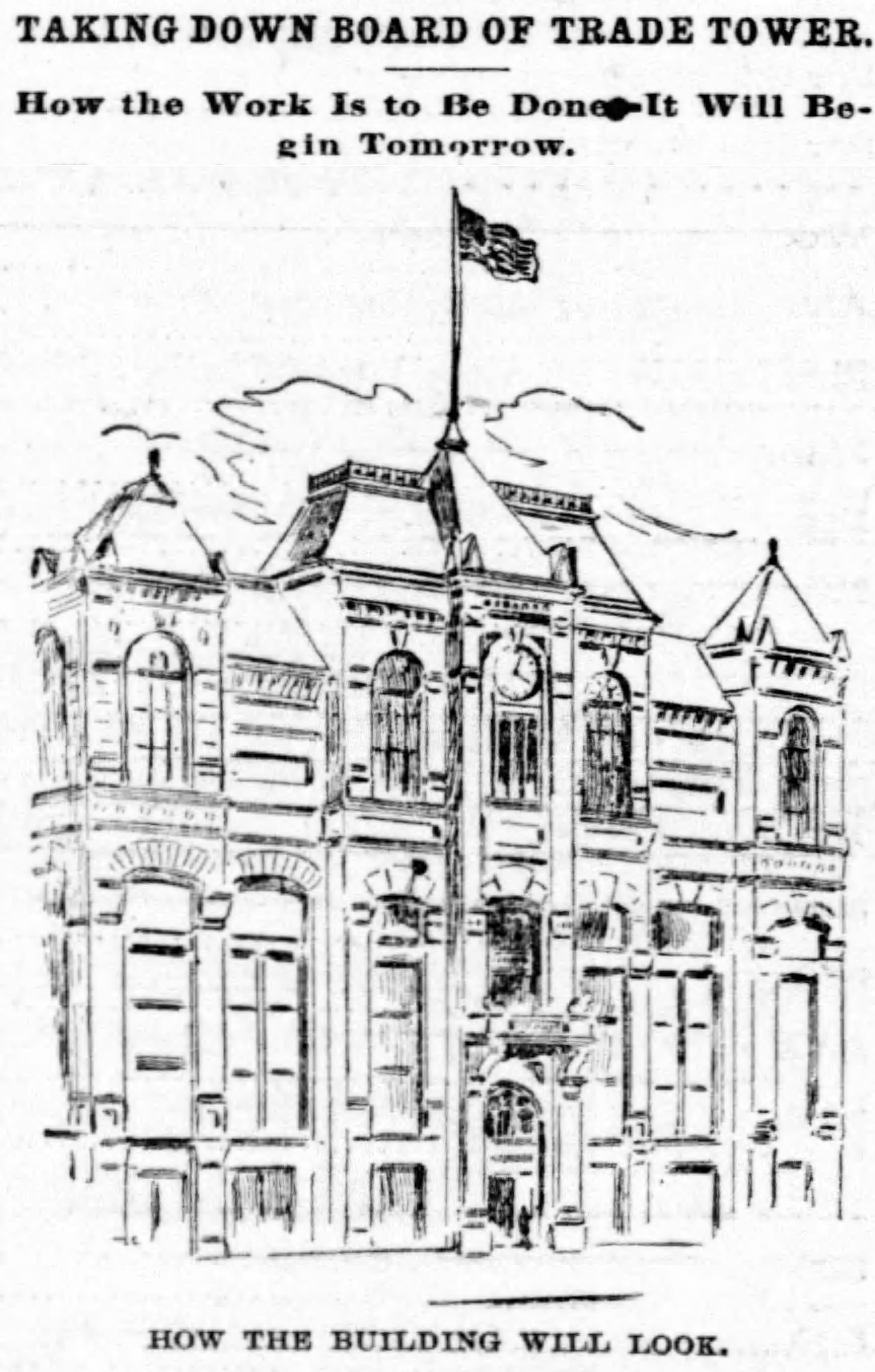 The work of taking down the Board of Trade tower will begin tomorrow morning. The officials hope to have the changes completed by May 1, but it is said if the last scaffolding is removed by June 1 the board will be fortunate. C. H. Rutan, the architect who planned the changes, returned to Boston last night. The first thing to be done will be the erection of a big protection over the skylight above the main floor of the board, and a protection will also be built over the sidewalk. In addition to this there will be a large platform fifteen feet wide constructed entirely around the tower. This is to guard against the possibility of any of the material getting away from the workmen and crashing down through the skylight. The most danger is from the slate on the roof of the tower. As soon as the top one is taken off the rest become loosened, and a slight gust of wind night send a shower of slate down in the traders. The gilded schooner at the top of the flagstaff on the tower will come down first. R. P. Lamont of the contracting firm of Shailer & Schnigiay, which will do the work, said yesterday that the removal of the ship was the most difficult feat of all. The schooner is of iron and is eleven feet long, being at the top of a hollow iron flagstaff six inches in diameter and fifty feet high. He had spent much time in studying how it was to come down. He has decided to begin in the tower about ten feet below the apex and remove the roof and frame work. Upon this space a derrick will be erected, one arm of which will reach to the ship and flagstaff. No attempts will be made to loosen the ship from its flagstaff, but they will be lowered in one piece. After it is down the schooner will be newly glided and be placed in the exchange room as a souvenir of the lost tower. The heavy bell which has been striking out the hours these many years will be lowered from its place in the tower to the seventh story. The next thing to come down will be the clock, which will be placed about the level of the present roof. The diameter of the present dial is twelve feet. It is all right where it is, but when it gets 100 feet nearer the sidewalk it will look like a small farm, and a dial of about half the diameter must be used. Practically no new material will be required in the changes. Everything will be cleaned off down to line some thirty feet below the present dial. Then the old material which formed the construction of the tower above the roof will be replaced at the roof level. The Board of Trade appropriated $30,000 for the change, and this is about the amount of the contract. “From rough estimates I have made,” Mr. Lamont said, “I should say that the weight of the tower will be reduced between 6,000,000 and 7,000,000 pounds by these changes. That is as near as we can get at it. The architect thinks with this great weight gone the danger from the tower settling will be removed. I think the building will look nearly as well without the tower as with it.”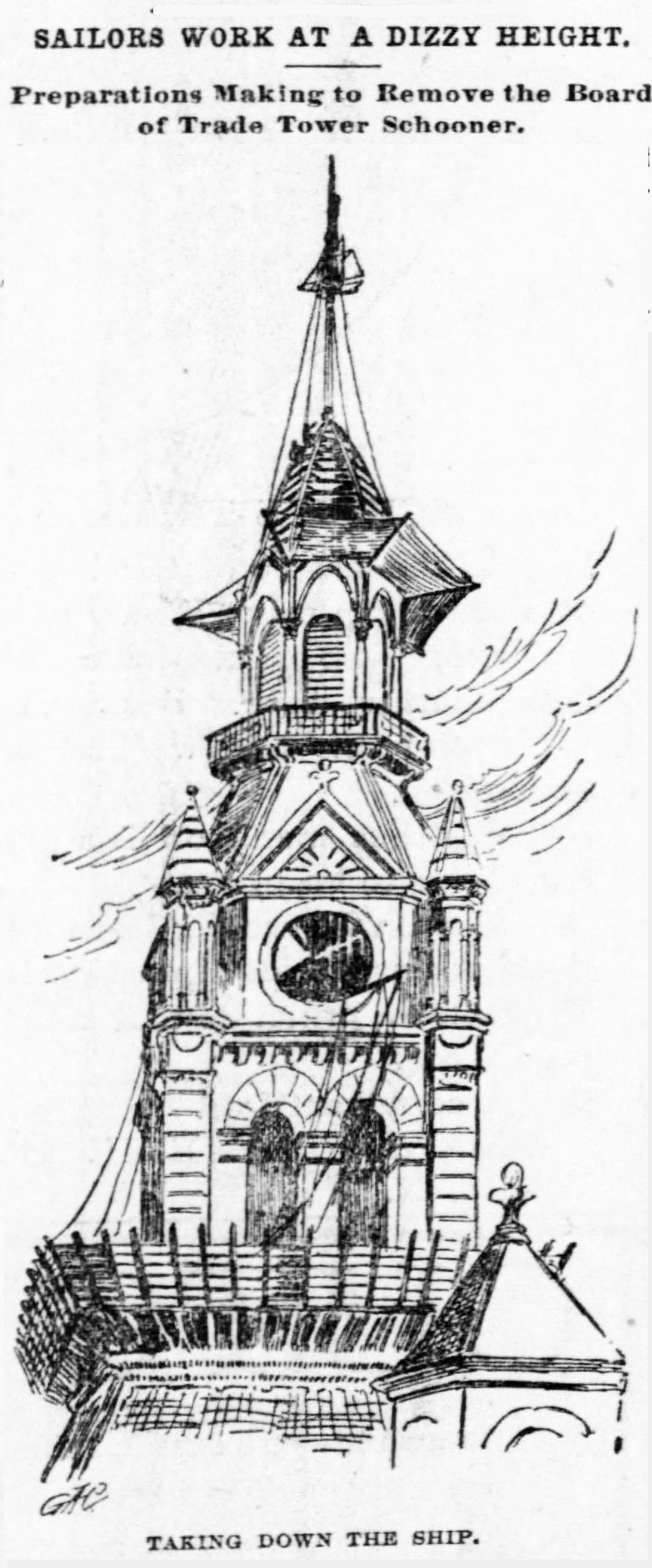

 Montauk Block on Monroe street, between Clark and Dearborn streets, is now completed, and about three-fourths occupied.The building was designed by Messrs. Burnham & Root, and measures 146 feet from the highest point of the roof to sidewalk. In massive and fire-proof construction it is without an equal in the West. This building demonstrates that the day of dark offices near the street is past in Chicago. Contrary to the general rule in the past if there be a choice in offices it is in favor of the upper stories, where a fine view, sunshine, light, air, and quiet are only possible, while swift elevators furnished with every safety appliance make such offices just as accessible as those upon the lower floors. We venture to predict that in the future no first-class office building less than eight stories in height be built in Chicago.


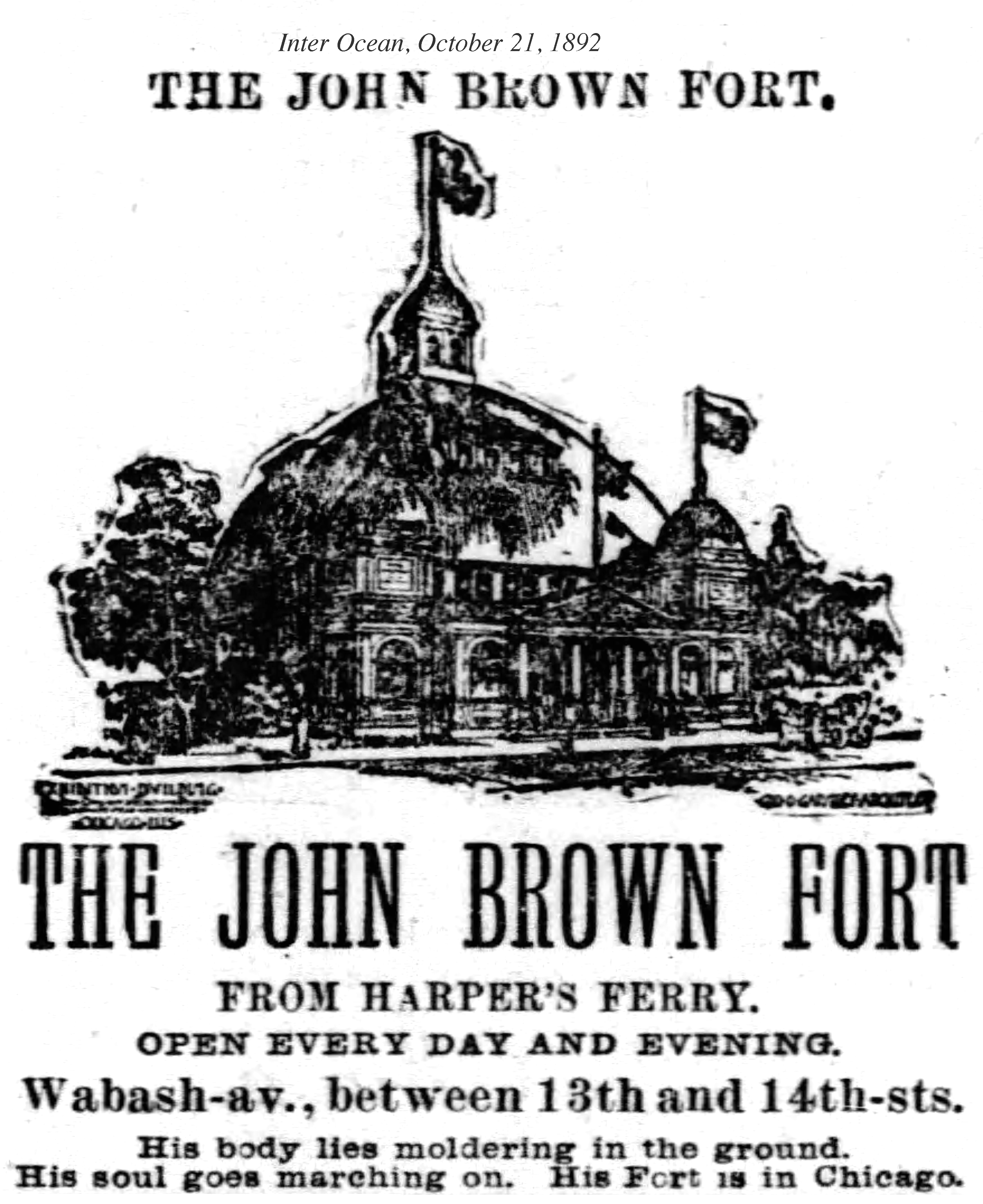
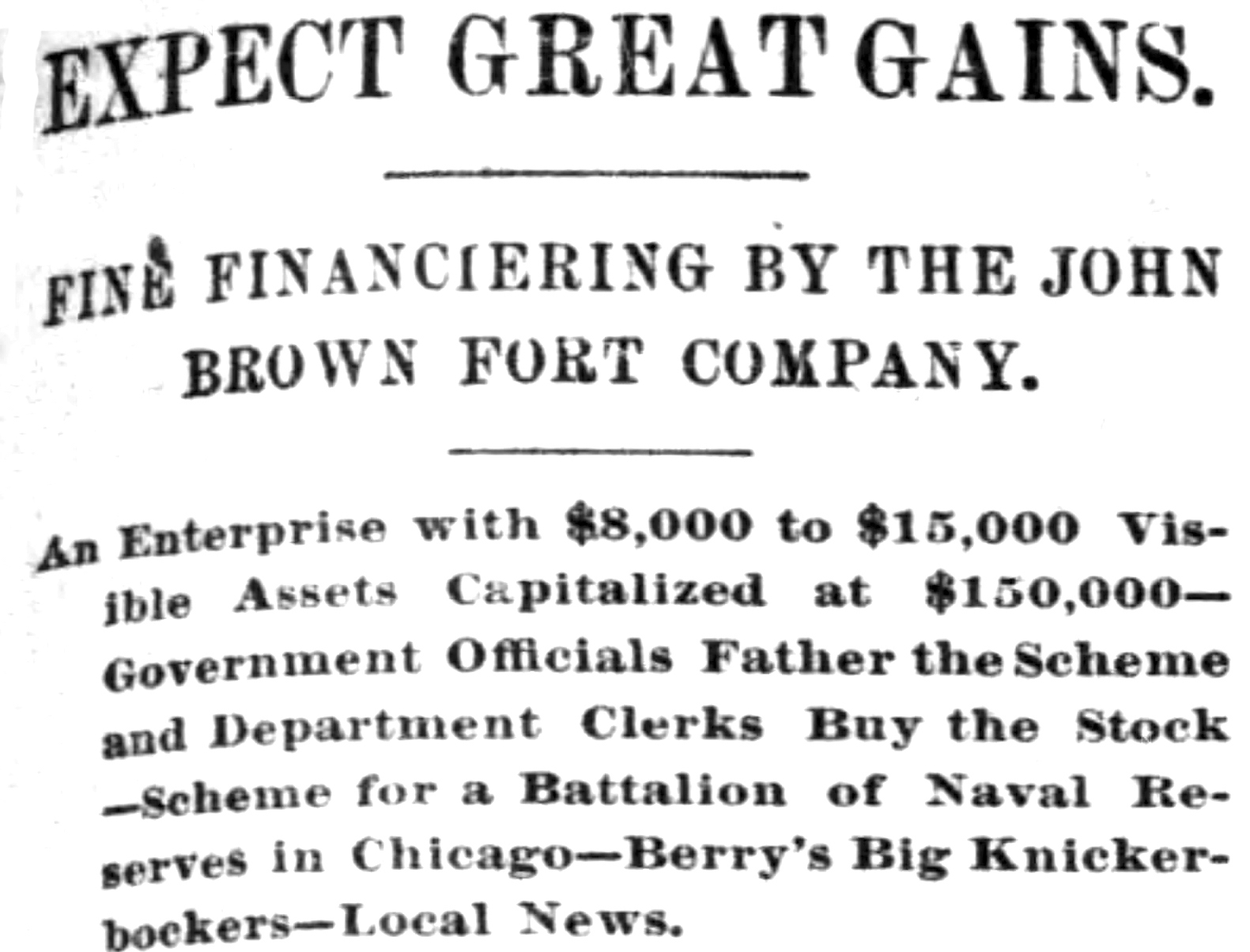 If what is claimed regarding the John Brown Fort Museum company is true, all promoters might well sit humbly at the feet of a group of Washington officials who have engineered the formation of the museum company, which will have its headquarters in the little building on the east side of Wabash avenue, between Thirteenth and Fourteenth streets. The methods employed by these people, or at least the success which has been attained, would make even the mouths of the promoters, who carried through the English brewery deal, water. They have formed a company with a capital stock of $150,000, and this stock has been issued on a basis of assets which, at the most liberal estimate, do not appear to represent more than $10,000 or $12,000.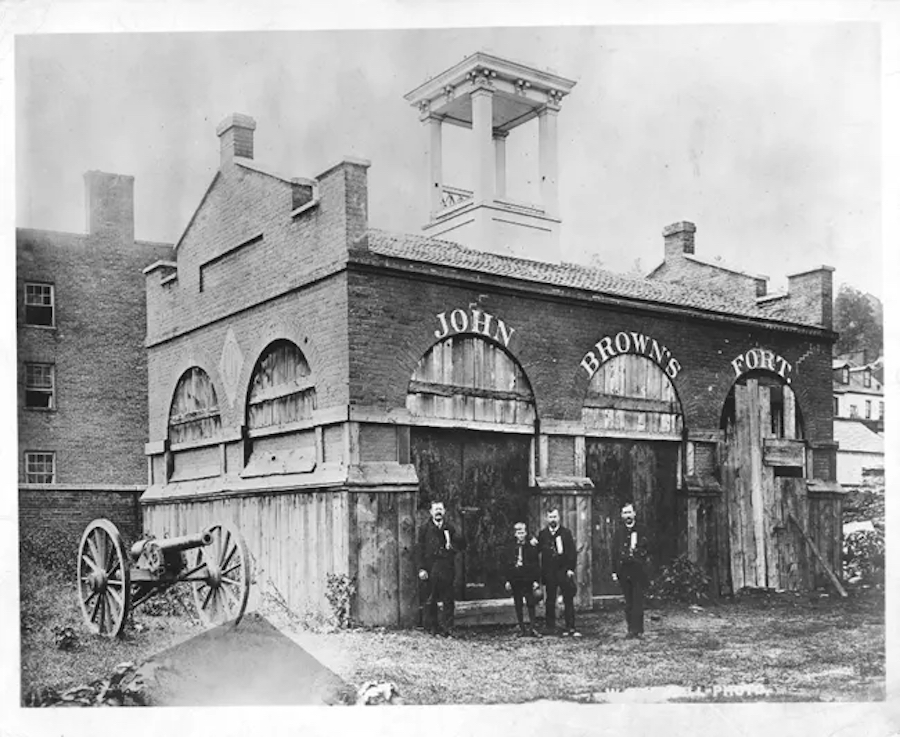
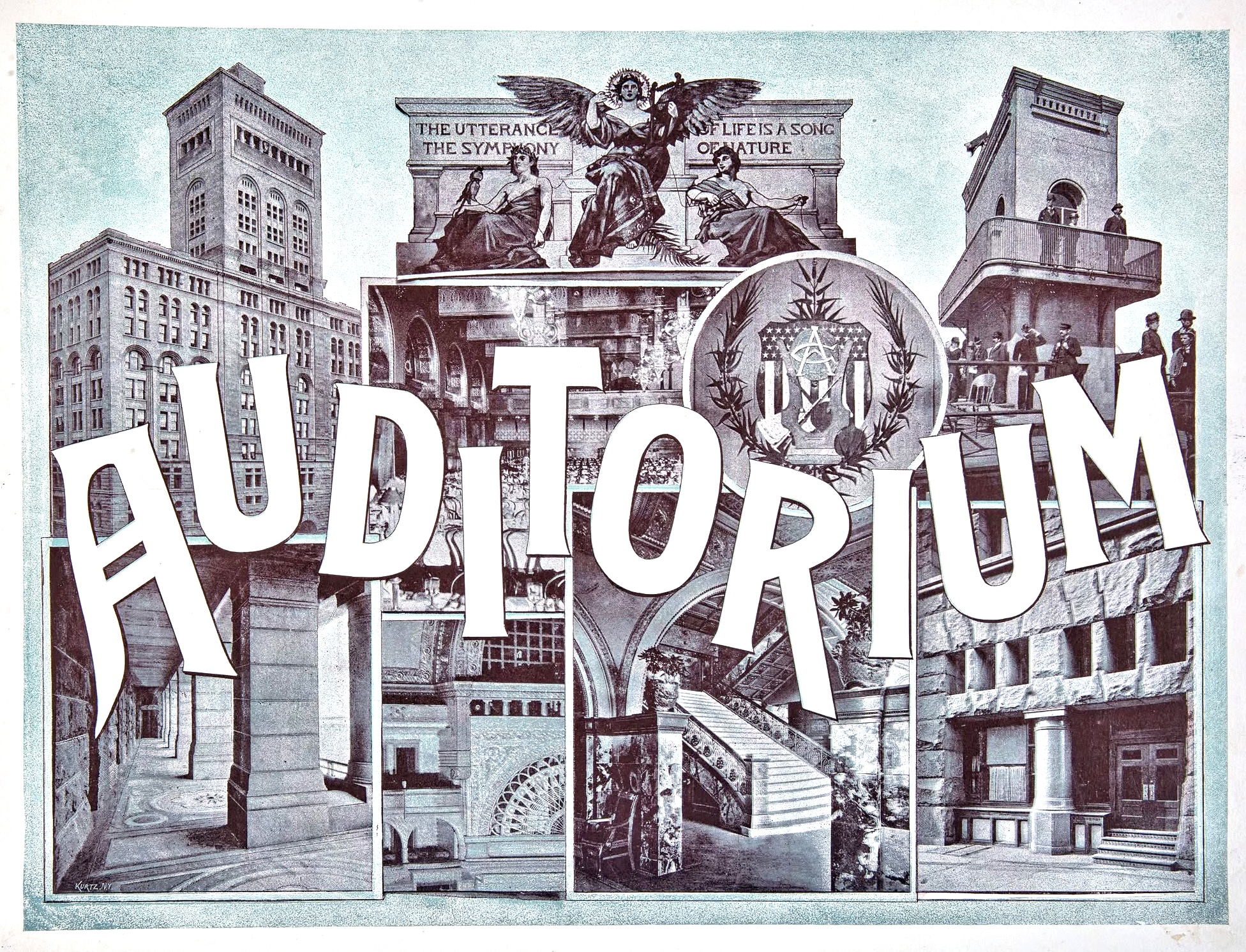
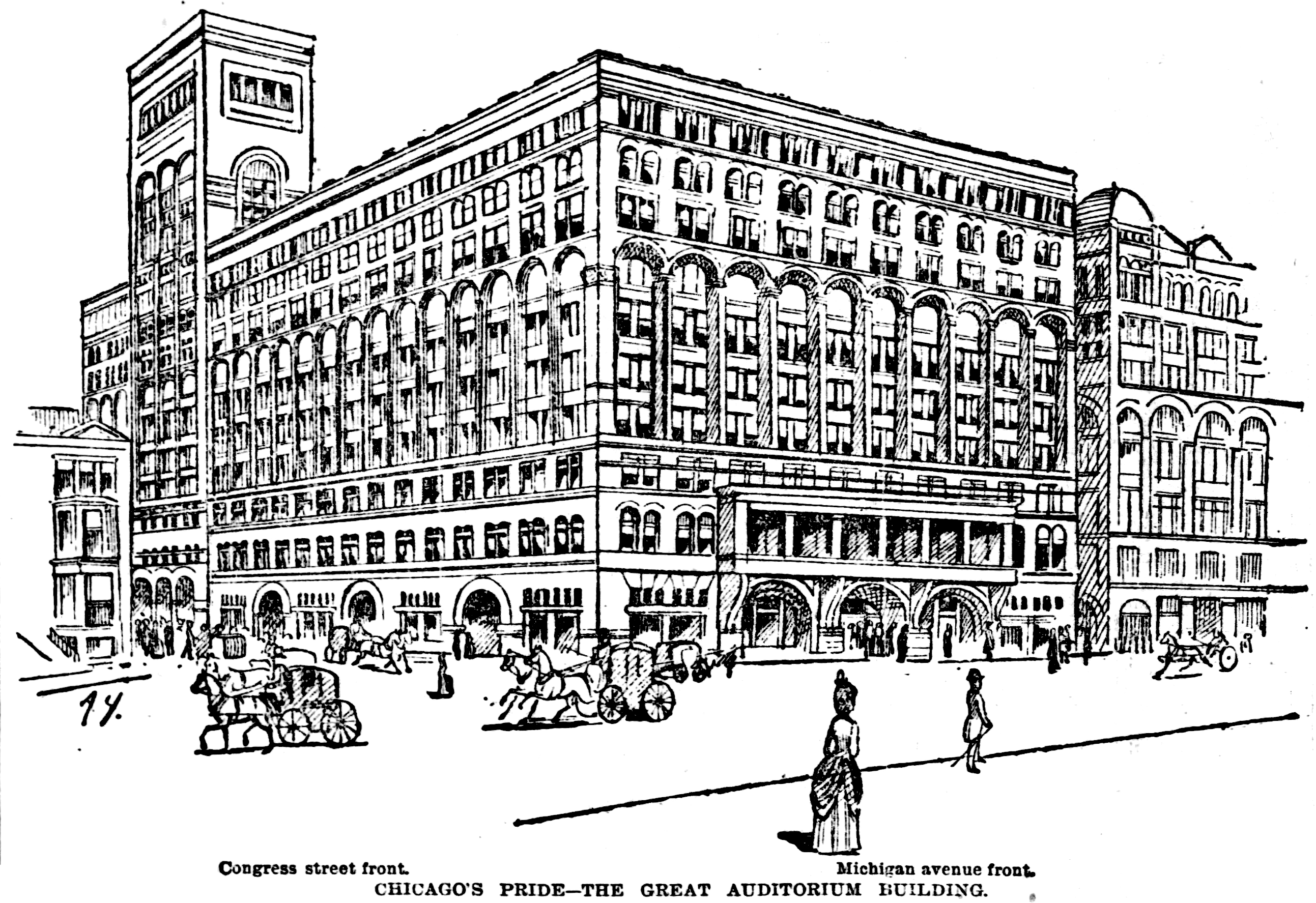
 On Wednesday, the 2d day of October, the copestone of the great Auditorium building is to be laid with Masonic ceremonies, under the auspices of the Grad Lodge of the State of Illinois. This event will mark another important step in the life of a building which has already become historic and which, in its manifold character as containing a hall, theater, hotel, and hundreds of offices, is destined to play an important part in the daily life of Chicago during the next generation. Vastness and solidity are the characteristics of this new landmark of Chicago, which cannot fail to impress every beholder. It is a stupendous monument of western enterprise, creditable alike to its public spirited projectors and to the city of which it forms a prominent feature.