Chicago Tribune, June 9, 1895

“Birds of a feather clock together.” Anyway this is what the schoolmaster often wrote when called upon for “copy” in the days when log schoolhouses were in vogue and readymade copybooks were unknown. And if the schoolmaster was alive today and should visit Chicago he would find abundant proof pf his pet assertion ready to his hand.
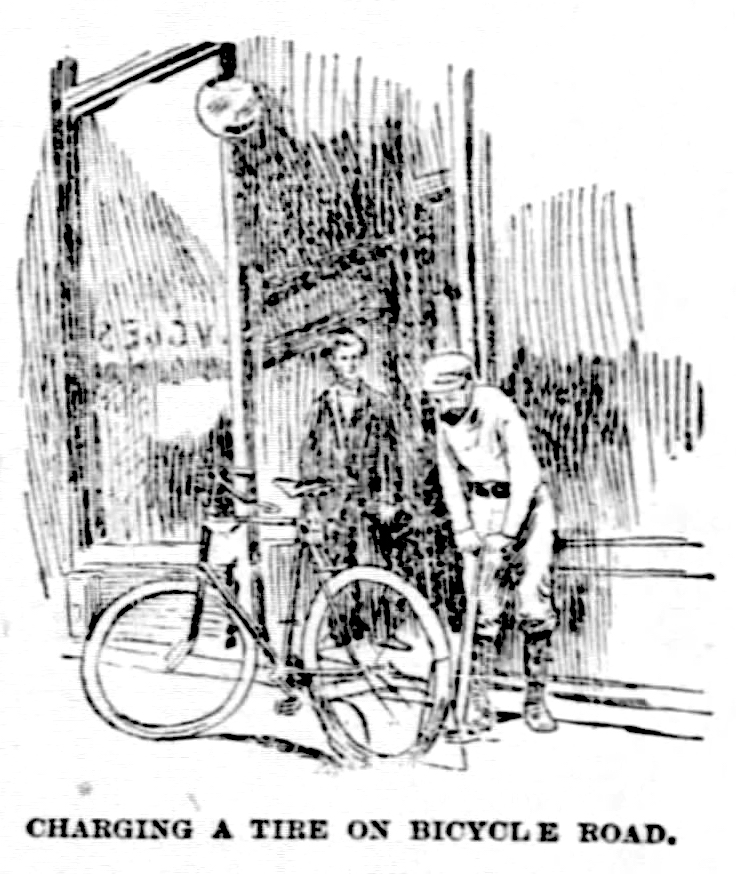
Business of various sorts certainly does “flock together” in the city. The most noticeable example is to be found in “Bicycle Row.” Everybody who rides a wheel knows where “Bicycle Row” is, but for the benefit of those who have been unable to buy a wheel it may be explained that Bicycle Row is the north side of West Madison street from Ashland boulevard west one block. Here are nine retail bicycle houses in a consecutive row with another across the street and still another around the corner. It is the greatest bicycle center in the city, which is equivalent to saying it is the greatest in the world. Here can be found every kind of wheel built and everything that the bicycle rider can wear or use. Nothing is sold that does not pertain to bicycling. Each store does a renting and also a repair business. Since each and every one of the dealers sells every wheel he can get hold of, sometimes before it is built, the denizens of the row dwell together in a state of neighborly love most delightful to behold. There can be no bitter rivalry where, owing to the great demand, competition is obliterated, so these dealers are at peace with the world. When one gets out of any article like ankle guards or lamps he just runs over to his neighbor and borrows whatever he needs to supply his customer, just as our grandmothers in pioneer days, when they had visitors to dine, sent out to borrow a cup of sugar or a drawing of tea that the guests might be suitably entertained.
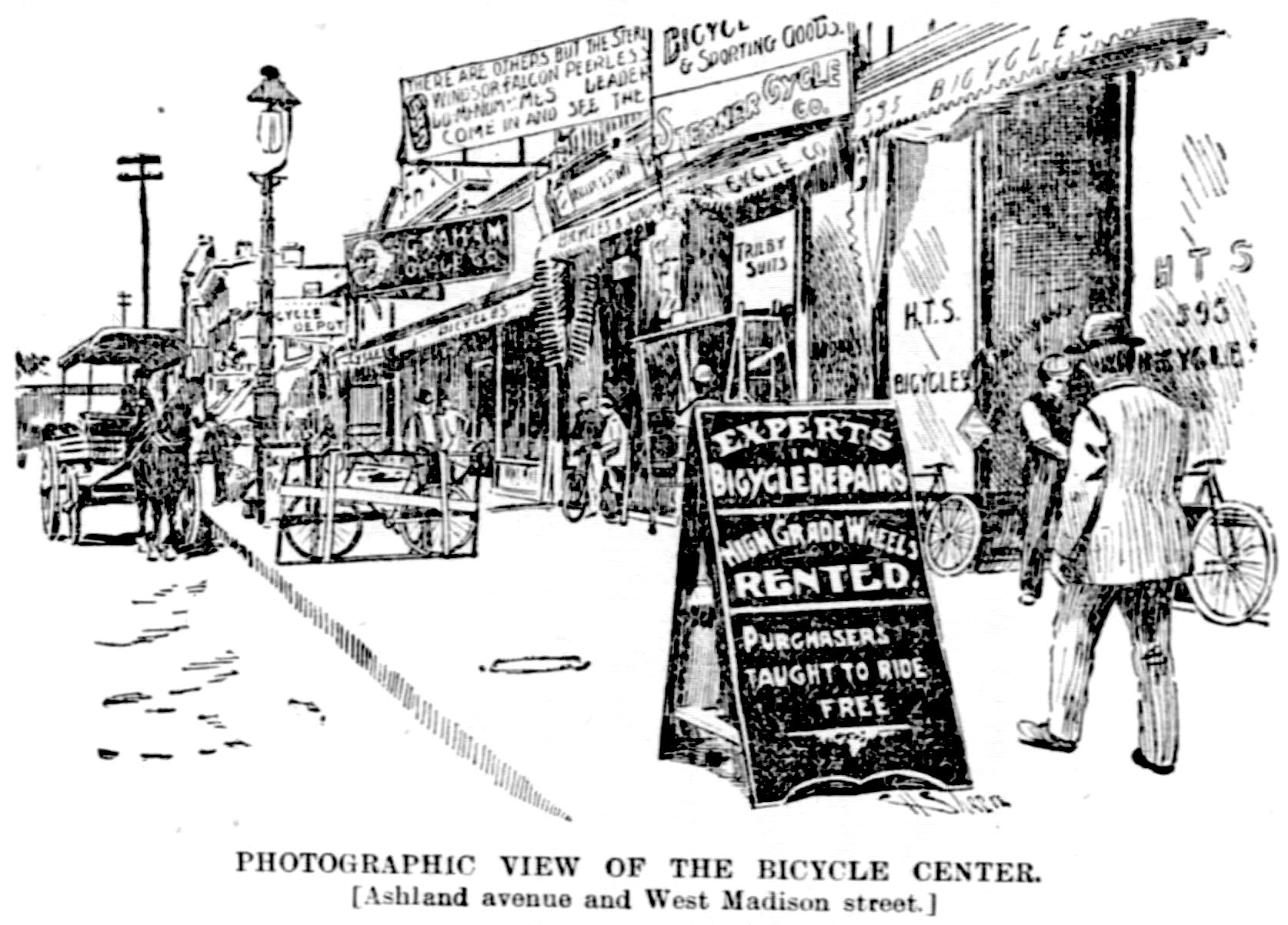
Bicycle Row is at the height of its glory at night. Apparently every man, woman, and child on the West Side fortunate enough to own a wheel and rides straight to Bicycle row as soon as supper is swallowed. It is the general rendezvous for all. The rider not only goes there to meet his friend or his best girl, but he goes there for any minor repairs he may need and to pump up his tires. The curb is lined with an impassable chevaux de frise of wheels; the pavement and the shops are packed with an impatient mob all wanting to be waited on at once. About all the business of Bicycle Row is transacted between 7 and 9 p.m. The proprietors put on all the salesmen they can find room for and let them take care of what trade they can. If a customer can’t get waited on he helps himself and comes around some other time to settle. Bicycle Row cannot take care of its business and longs for additions to its numbers.
Chicago Chronicle, April 26, 1896
Bicycle Row Prospers.
Bicycle row on Wabash avenue is enjoying the most prosperous year since its institution. The makers are finding business so lively that many of them have to enlarge their quarters. Mr. Gleason of Gleason & Schaff said yesterday:
- Trade was never in such a healthy condition. Everybody wants to ride a new wheel. We try to take their orders , but frequently have to disappoint them for days, as the factory is pushed to the limit by the demand. The wheel industry is growing to immense proportions.
Chicago Tribune, March 19, 1898
 “Opening day” among the bicycle houses was fairly successful yesterday, and today it is expected the different wheel repositories will be crowded with patrons anxious to inspect 1898 models and novelties. If the weather is more propitious the dealers agree they ought to have the biggest crowds their stores have seen in many a day.
Decorations of various kinds made the different stores attractive yesterday. One store was festooned with American flags and looked like a Fourth of July celebration. The wealth of patriotic bunting almost eclipsed the glistening rows of wheels below it. But the crowds only looked at the decorations for moment before turning their attention to the wheels and sundries. The courteous attendants had to talk as they haven’t talked for a long time explaining new gears. There was considerable discussion regarding the chainless wheels, and the different models were closely inspected and the dealers were asked for their candid opinion by many anxious visitors. They nearly all seemed to be a little qualified in their statements. They said they thought the stability of the wheel greater, but as it was heavier thought it would not be as speedy as the chain gearing. The new chainless gears look as if they would make admirable road wheels.
Palms and electric lights played an important part in nearly all the exhibits. Several of the stores looked like greenhouses, and in one instance this effect was enhanced by the beautiful green models displayed among the palms.
There doesn’t seem to be any material change this year. The parts have been strengthened and made more graceful in many instances, but all the bicycles retain their characteristic features.
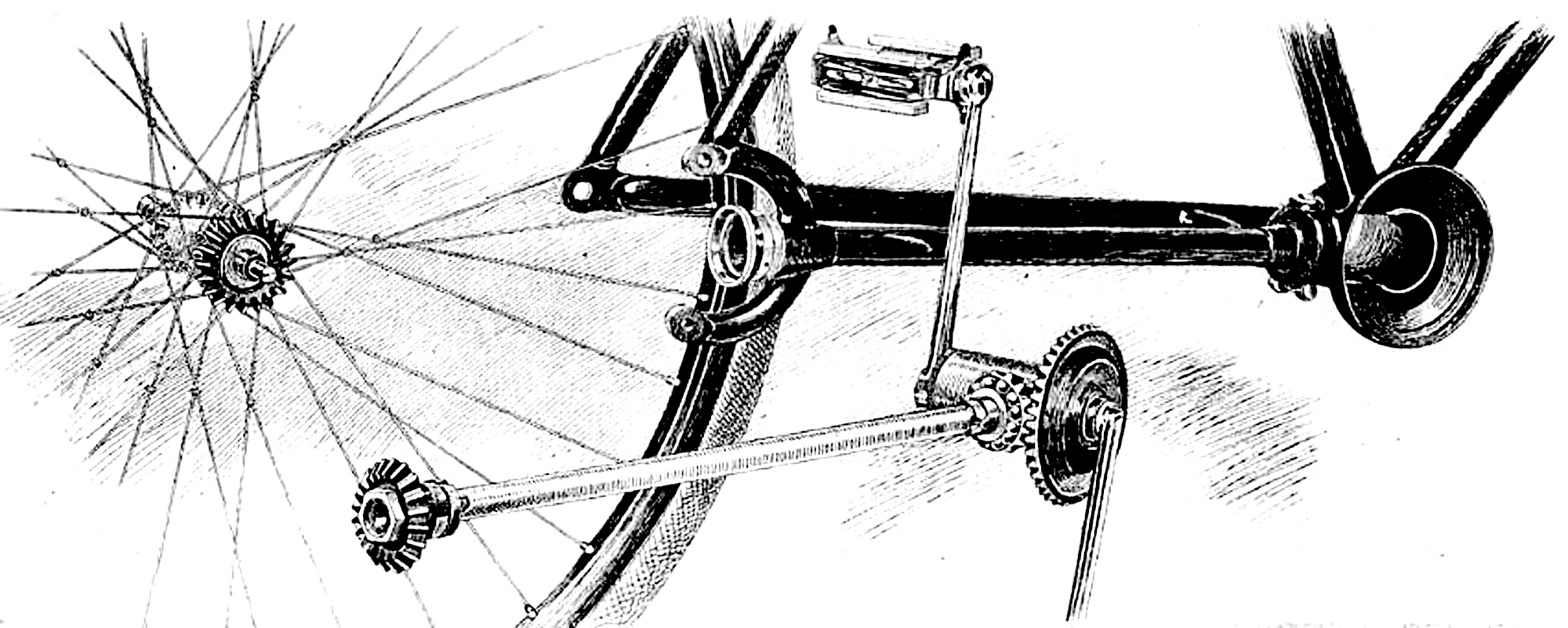
An exploded view by Columbia showing the inner workings of their bevel-gear shaft drive. The large toothed bevel gear at the crank engages with the smaller such gear at the front end of the shaft, turning the long tubular shaft. The shaft’s end gear engages with the gear at the rear hub, driving the wheel. So, turning the cranks rotates the shaft, which turns the rear wheel.
Columbia Catalogue, 1899
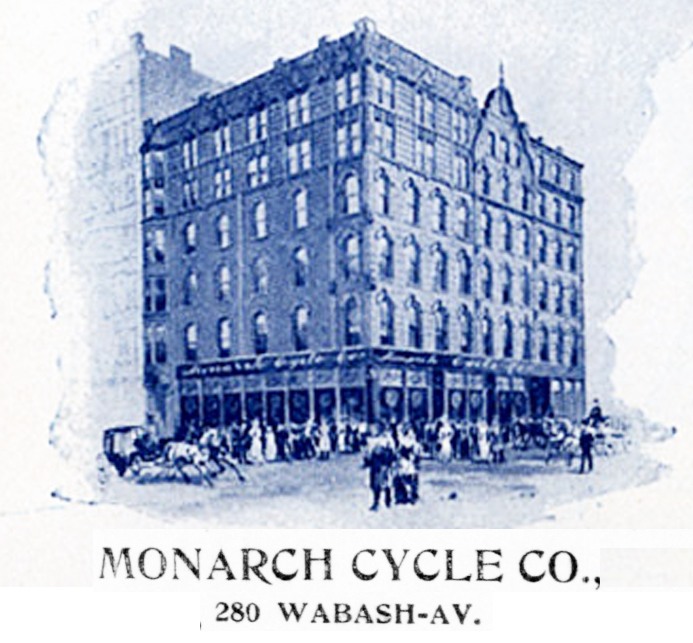
Busy in Bicycle Row.
Bicycle row along Wabash avenue presented a busy sight all afternoon, and the colonies on other streets were equally as busy.
“Opening day” this year is more or less of an experiment, and it is designed to set a precedent for future seasons. The local Cycle Board of Trade is anxious to make the event an annual fixture, and to this end the decorations have been placed in the stores and other attractions have been presented. It is argued that it is as feasible a way to present the bicycling novelties and improvements as the big cycle show.
A canvas of opinions among the dealers as to the success from a business standpoint elicited the opinion that then opening days would be successful. They all said they had made a number of sales and were relieved of the worry in many cases of figuring on the wholesale trade, and did not have the task of looking after tyhe agencies which the big cycle show entailed.
There was a little discussion regarding the report of the action of the German government asked by German bicycle manufacturers to include bicycles under the head of upholstered vehicles and tax them accordingly, the duty being nearly 33-1/3 per cent on the price of American wheels as quoted here. This tariff would be prohibitory, and the dealers said it was manifestly unjust, but they had no definite information regarding the attitude of their firms in filling their depots in Germany with a full stock before such a tariff could be put into effect. No information, so far as could be learned, has been received as to takin action on the subject.
Will Keep Open Tonight.
Today the exhibits will be continued and many of the dealers expect to keep open tonight in order to give the Saturday night crowds a chance to inspect their goods. Some of the stores will keep open until midnight.
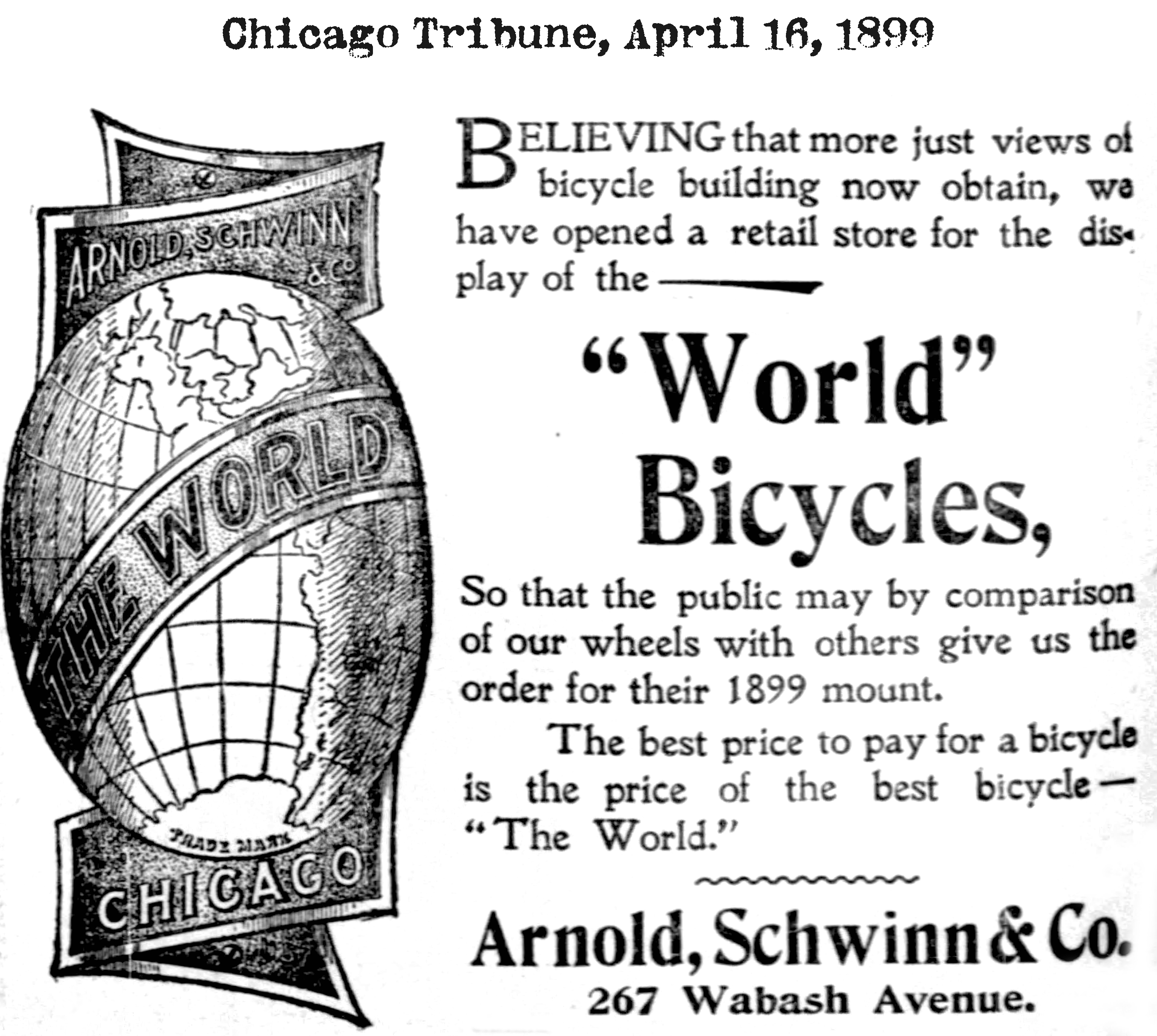
The list of dealers holding “opening days” comprise the following:
- Manson-Cycle company, Masonic Temple.
Brown-Lewis Cycle company, 293 Wabash
Crawford Cycle company, 86 Wabash avenue.
Meade Cycle company, 287 Wabash avenue.
Mead & Prentiss, 211-213 Monroe street.
Miami Cycle and Manufacturing company, 323 Wabash avenue.
C. P. Warner Manufacturing company, 259 Wabash avenue.
Siegel, Cooper & Co.
Adams & Westlake company, 90 Wabash avenue.
Fowler Cycle company, 93 Madison street.
Iroquois cycle works, 331 Wabash avenue.
Rex Cycle company, 84 Adams street.
J. W. Williams, 154 La Salle street.
James Wilde Jr. & Co., 131-137 Wabash avenue.
Gleason & Schaff, 275 Wabash avenue.
Tonk Manufacturing company, Clybourn avenue and Lewis street.
Von Leingerke & Antoine, 277 Wabash avenue.
Gormully & Jeffery, 128 Dearborn street.
D. O. Rohne, 355 Wabash avenue.
Pope Manufacturing company, 105 Wabash avenue.
Monarch Cycle Manufacturing company, 152 Dearborn street and 87 and 89 Ashland avenue.
Sterling Cycle company, 276 Wabash avenue.
United States Cycle company, 155 Wabash avenue.
Excelsior Supply company, 276 avenue.
Liberty Cycle company, 82 Wabash avenue.
A. G. Spalding & Bros., 147 Wabash avenue.
Ralph Temple Cycle company, 204 Thirty-fifth street.
The American Dunlop Tire company, 132 Lake street.
Hartford Rubber Works company, 134 Lake street.
Western wheel works, 495 Wells street.
New York Tire company, 38 Canal street.
Davis Sewing Machine company, 66 Wabash avenue.
Jenkins Cycle company, 20 Custom-House place.
F. G. Smith, 257 Wabash avenue.
The Inter Ocean, May 10, 1896
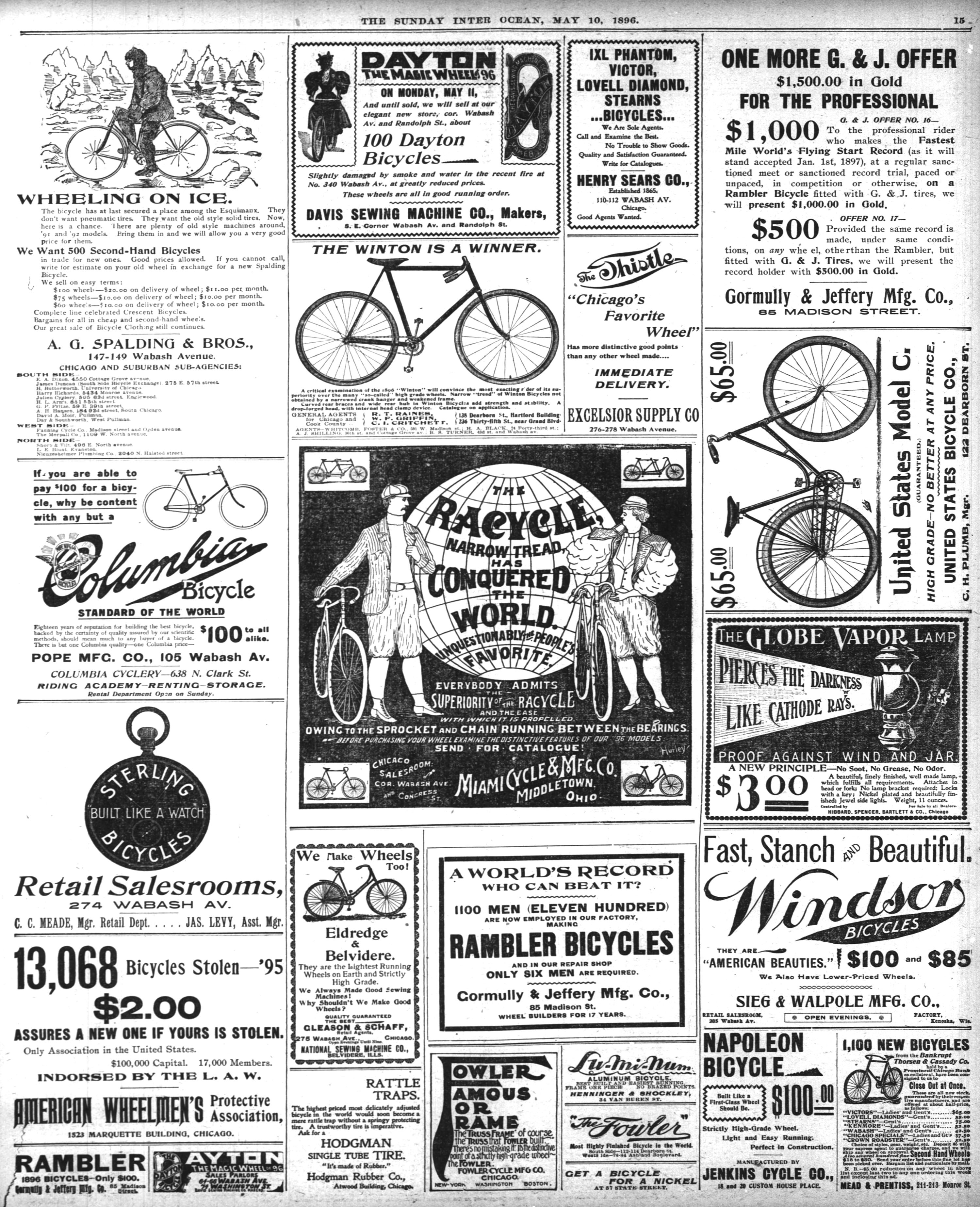
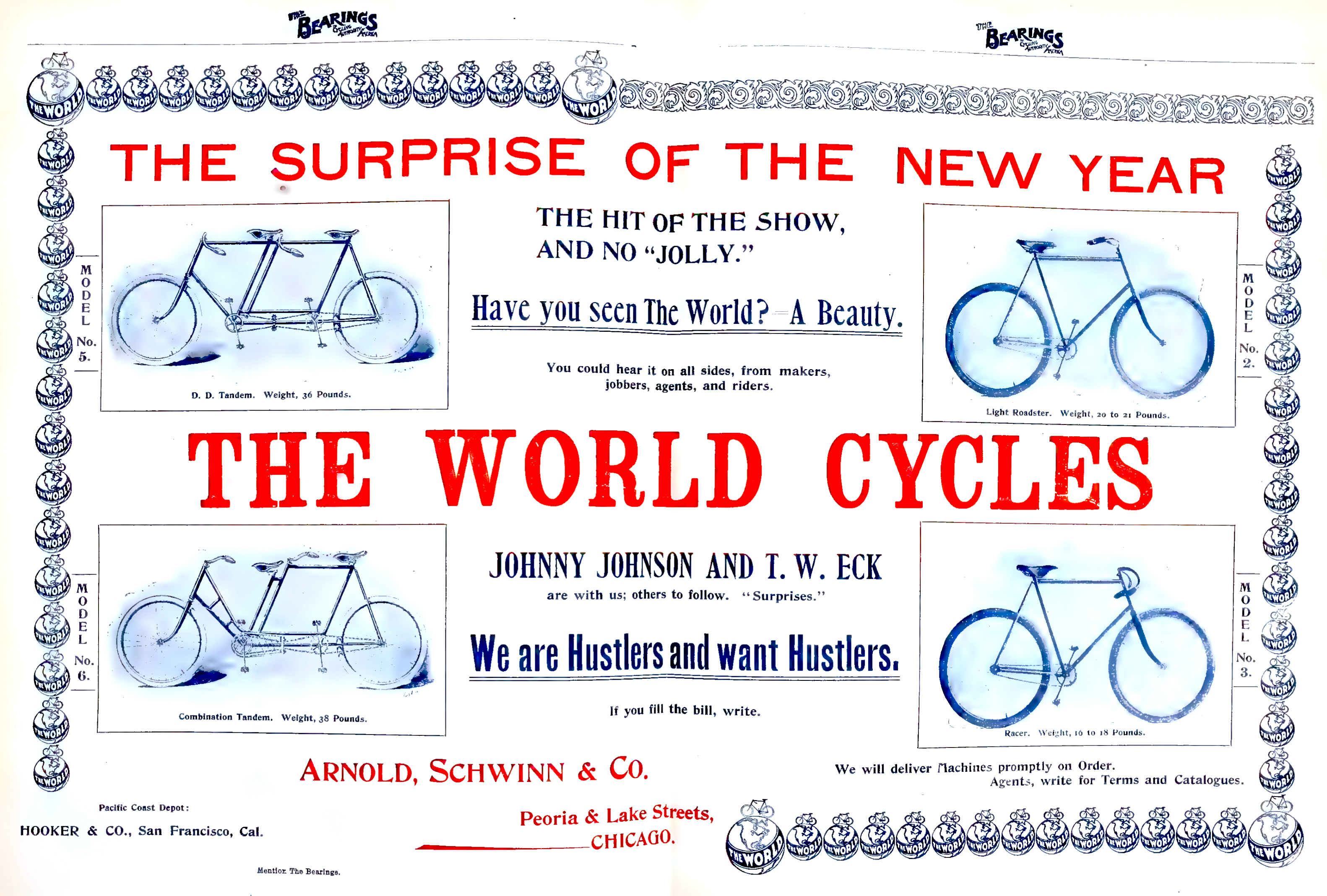
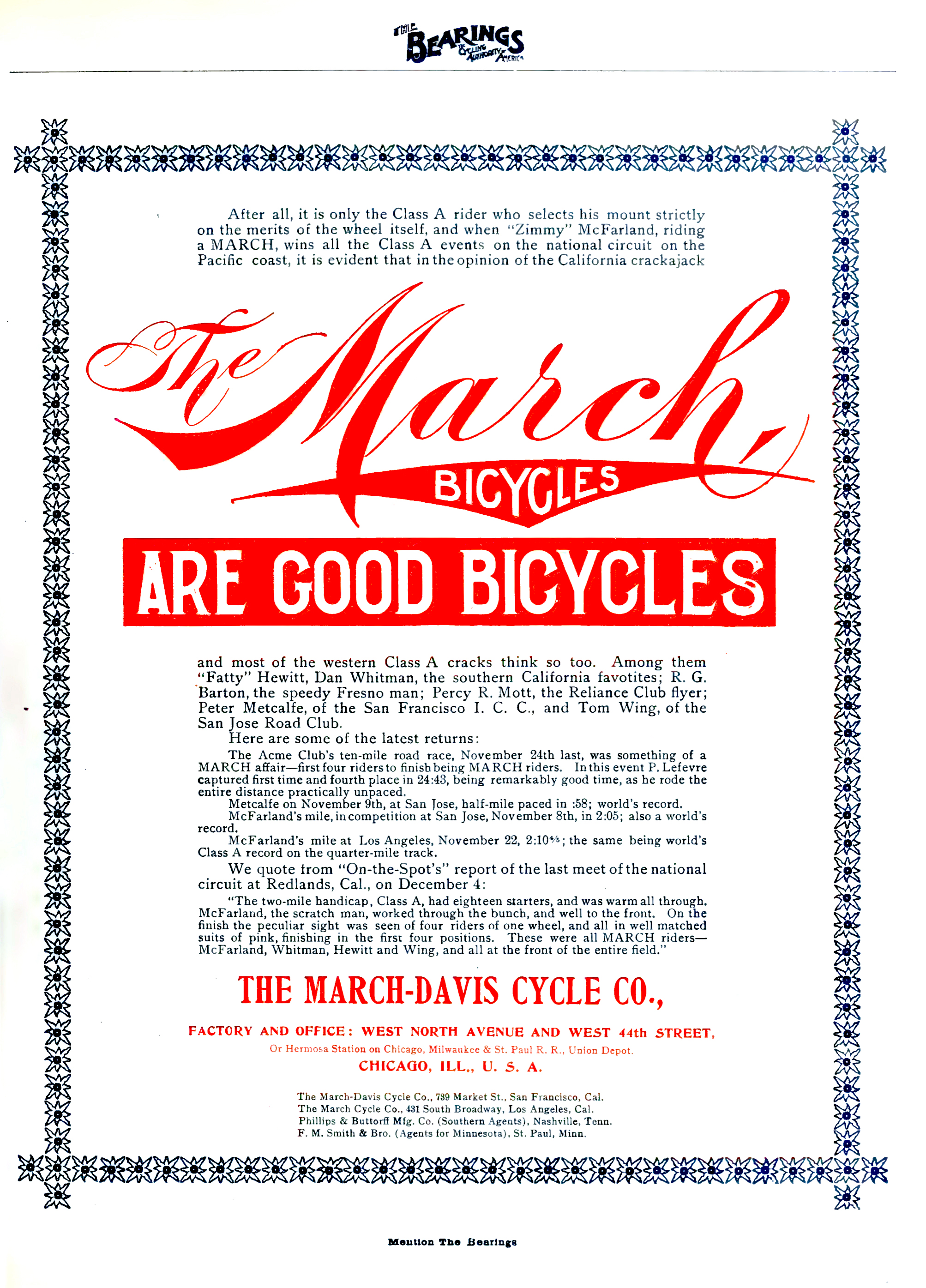
Typical Sunday newspaper bicycle advertisement.
For context, the 1899 Edition of the Lakeside Business Directory of Chicago, there were about three and a half pages (seven columns) of bicycle dealers/manufacturers. By 1907 that number has dwindled down to less than one half of a column.
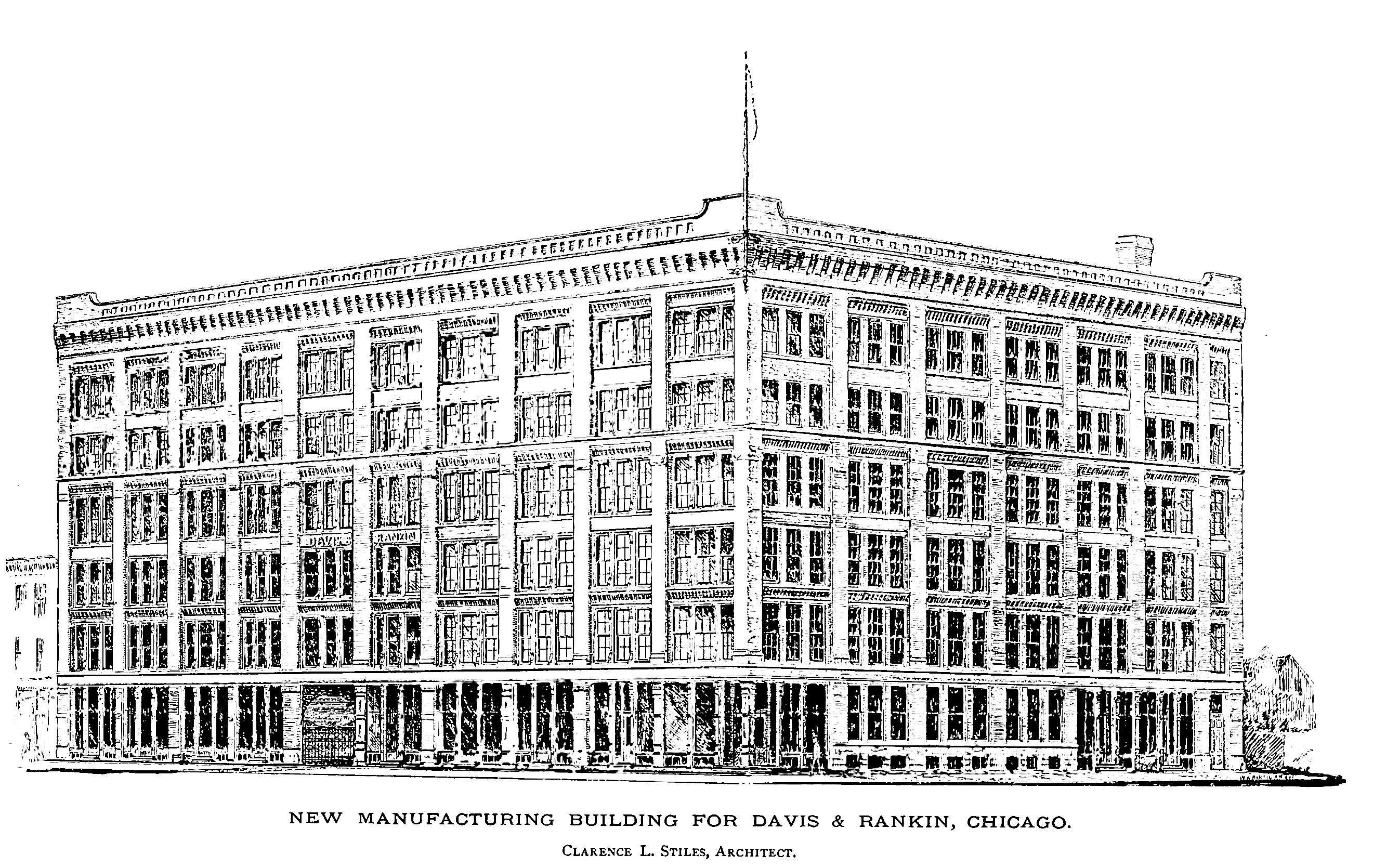
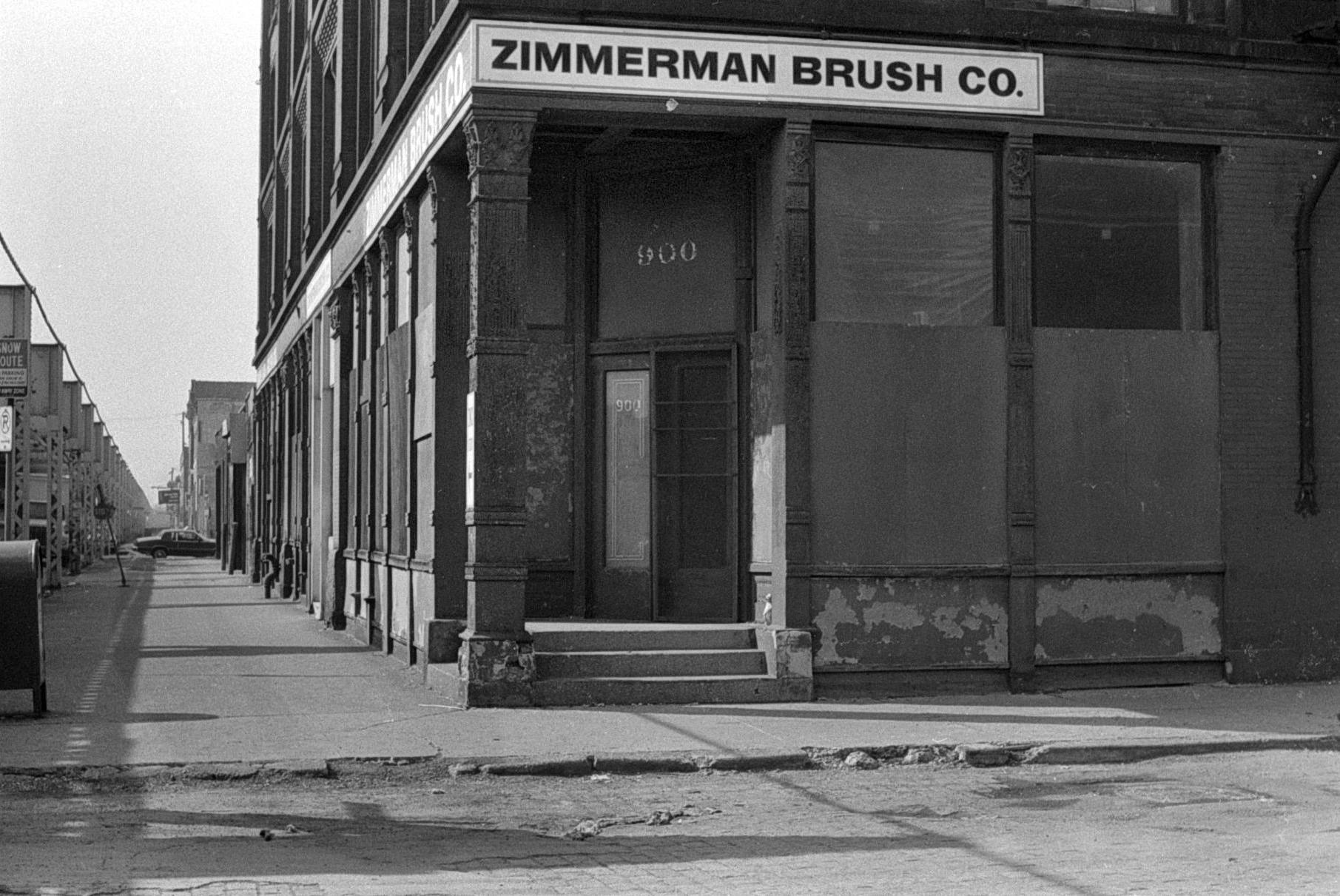
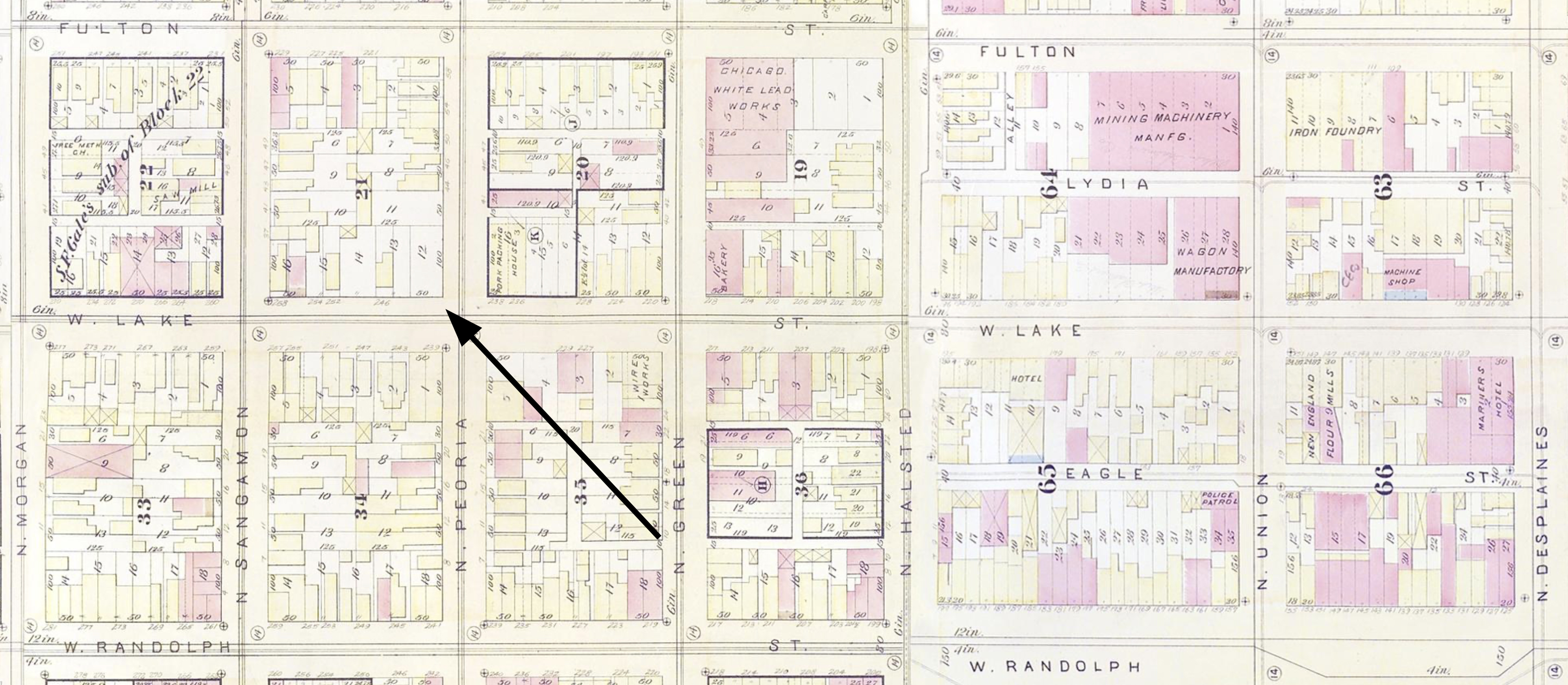
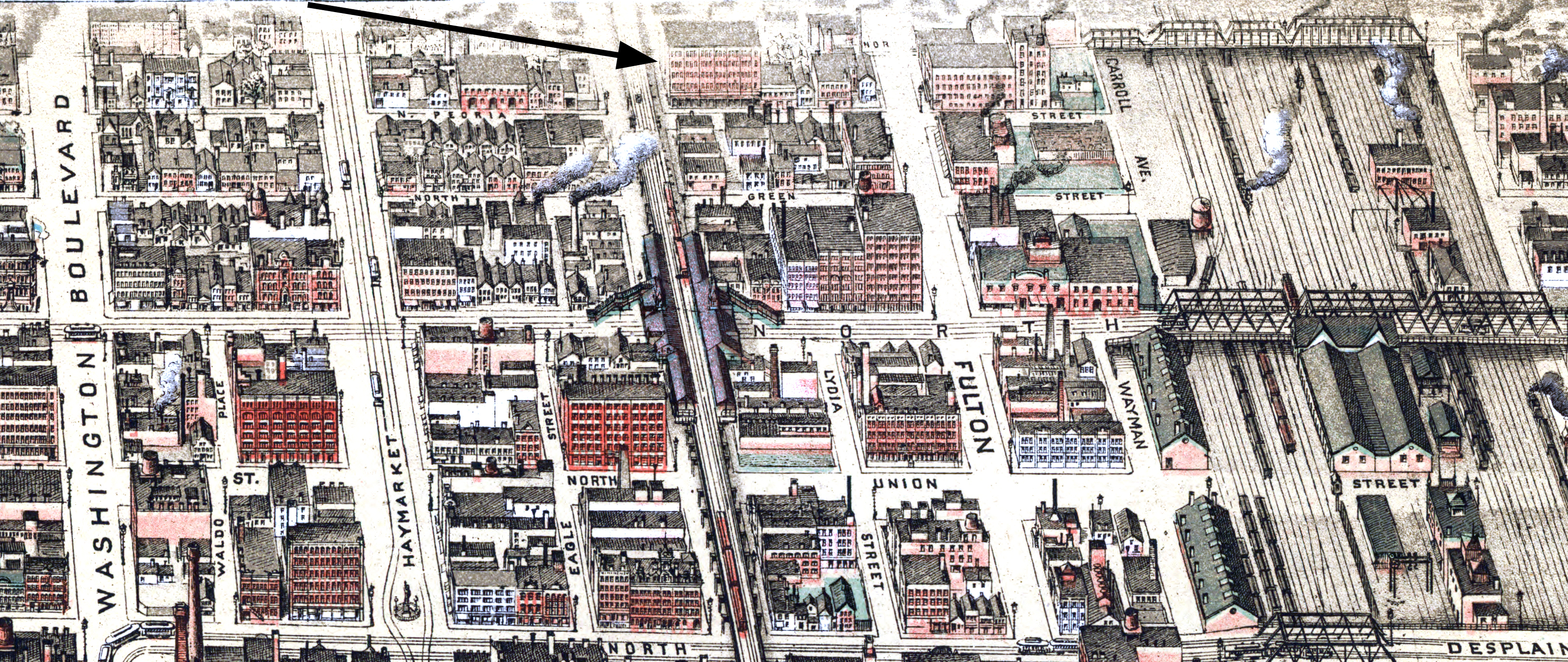
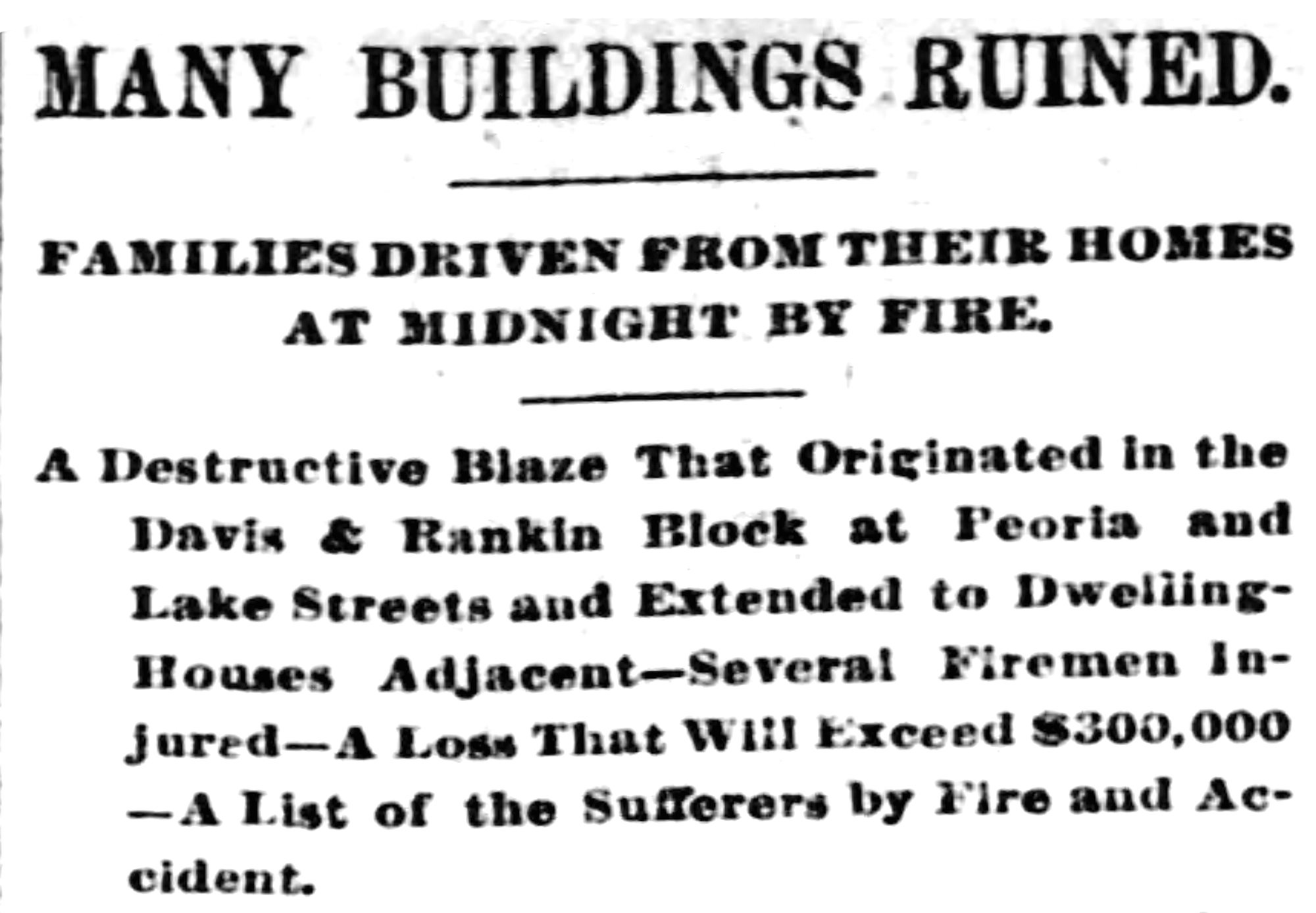 The hottest blaze the Fire Department has had to battle with for some time broke out at midnight in the Davis & Rankin Block, a five-story brick, 125×150 feet, located at the northwest corner of Lake and Peoria streets, and occupied half a dozen firms, the largest being Davis & Rankin, who deal in creamery supplies. In the building were also Zimmerman & Co., refrigerator manufacturers, Lane, Weaver & Co., oyster and fruit cans, the Gross Printing-Press Company, Lintholm, Picture-Frame Company, Chicago Egg-Condesing Company, and the Steele Key-Drive Chain Company.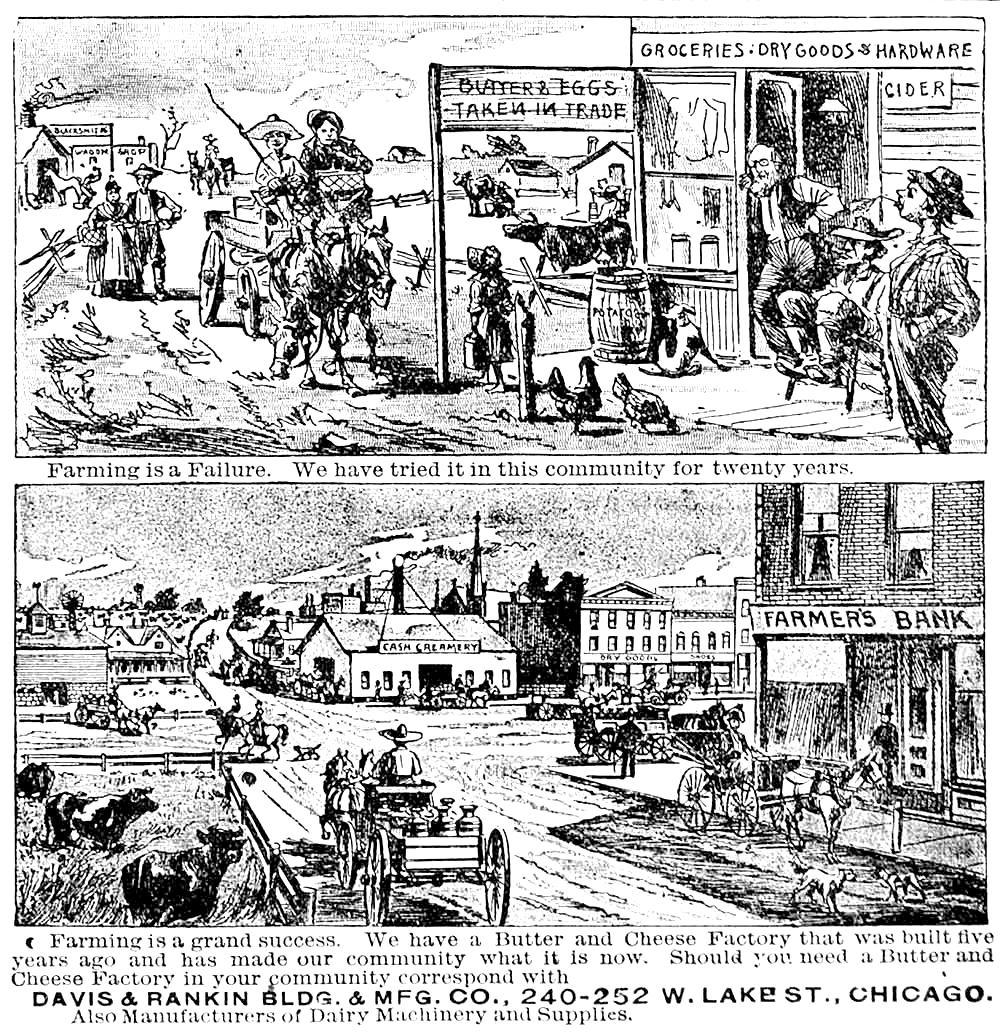


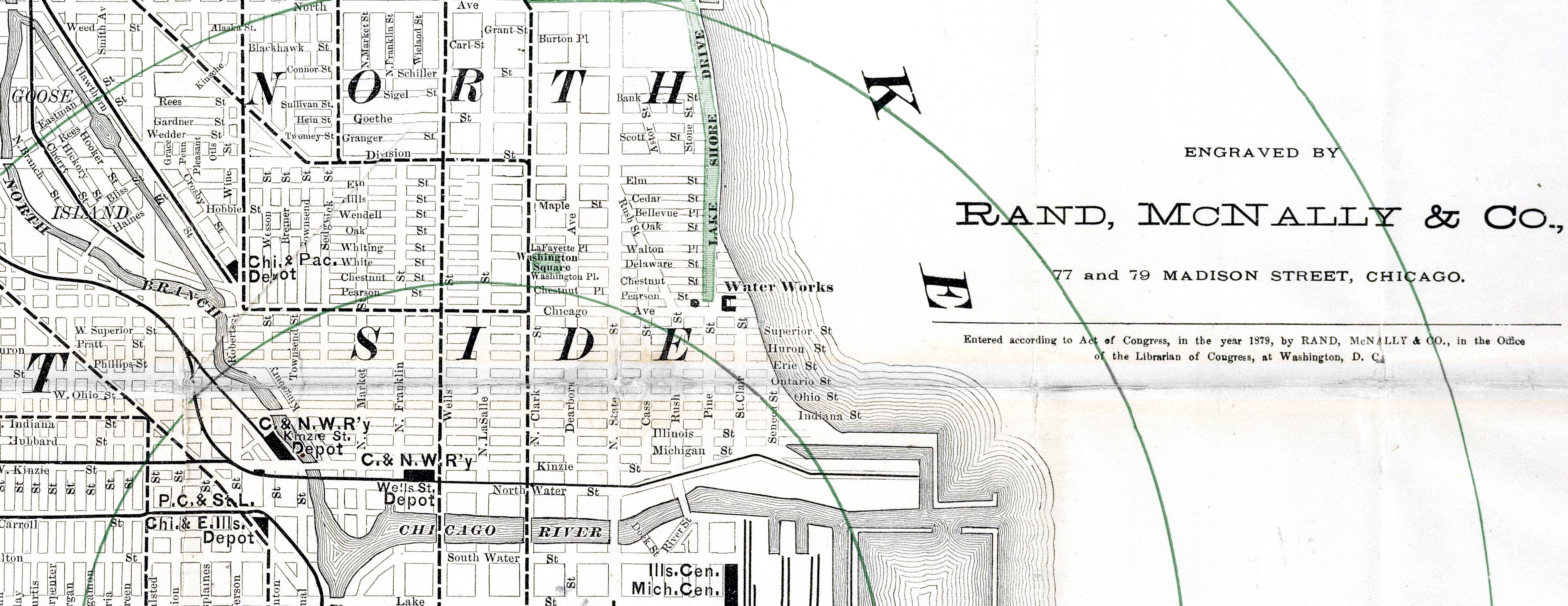
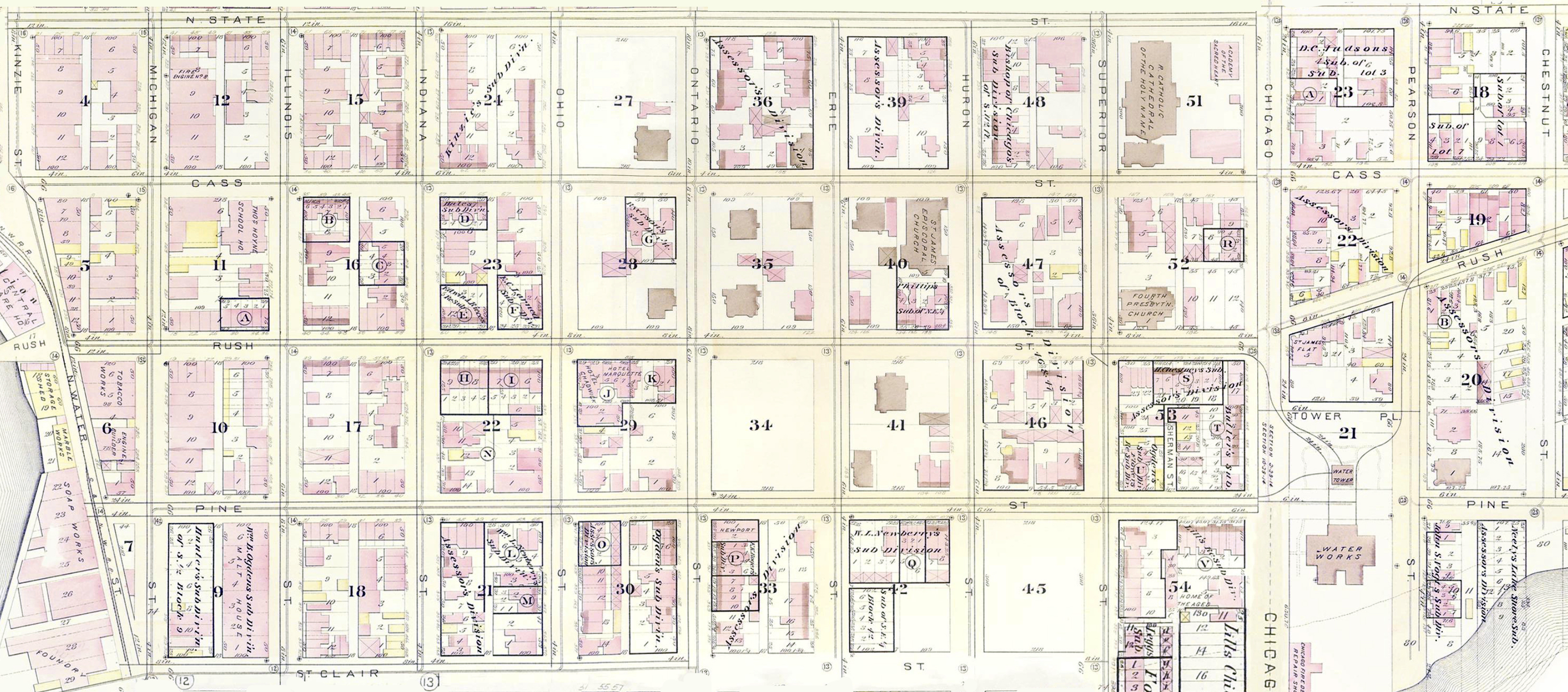
 Forty acres of the choicest residence property in Chicago, embracing 10,400 feet of frontage on parks, boulevards and connecting streets, of a total value of more than $8,000,000, have been purchased and otherwise acquired by Chicago and outside capitalists by concerted action.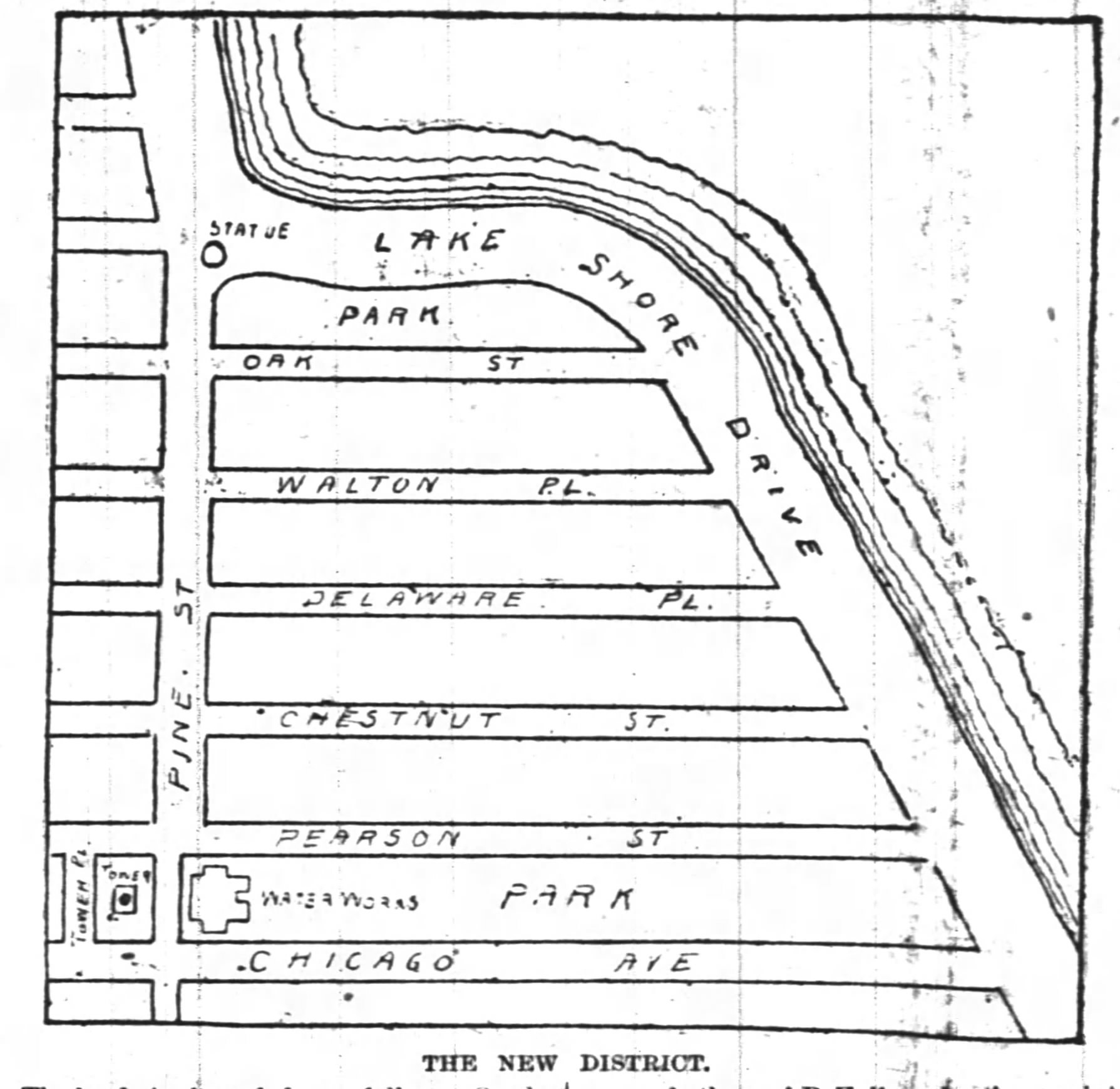
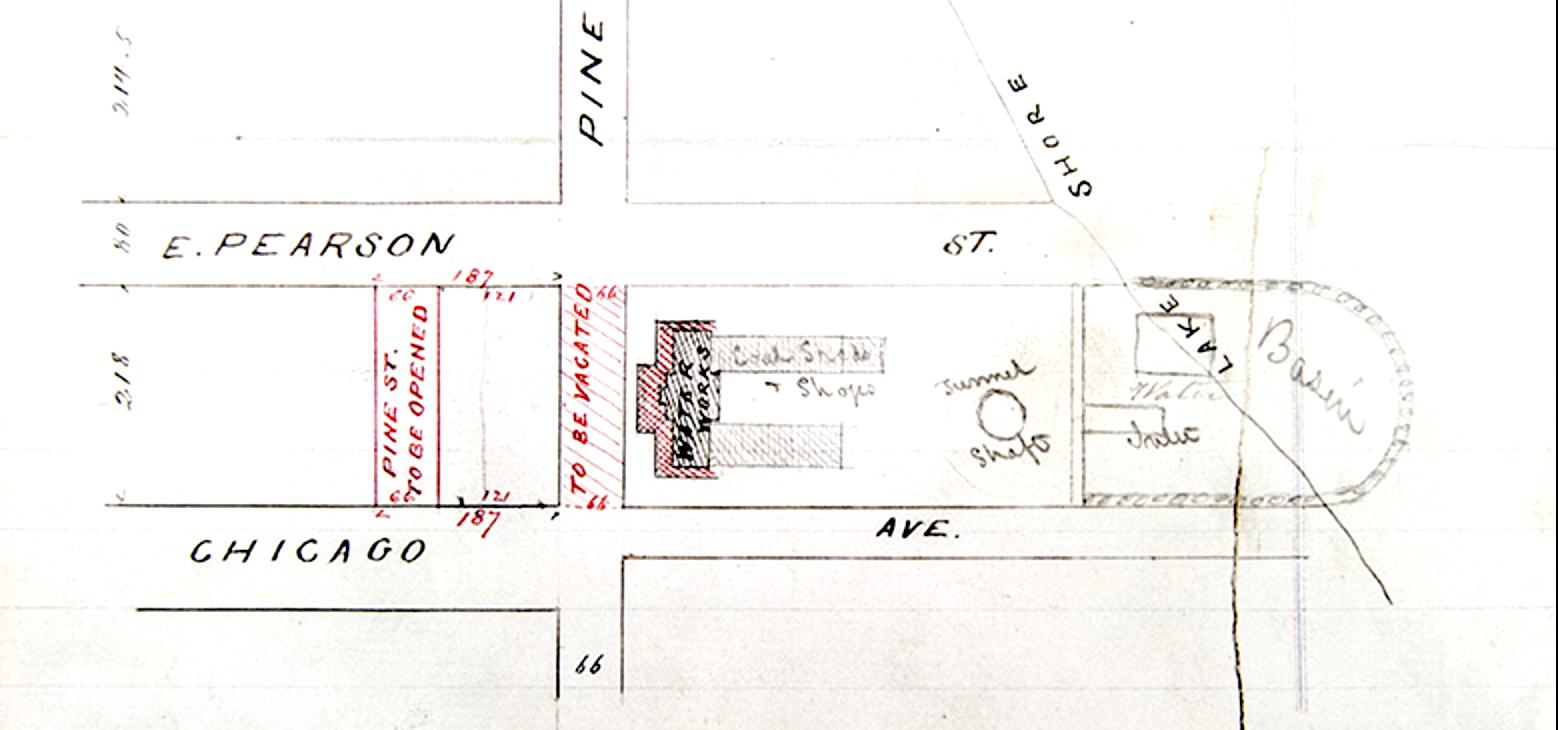
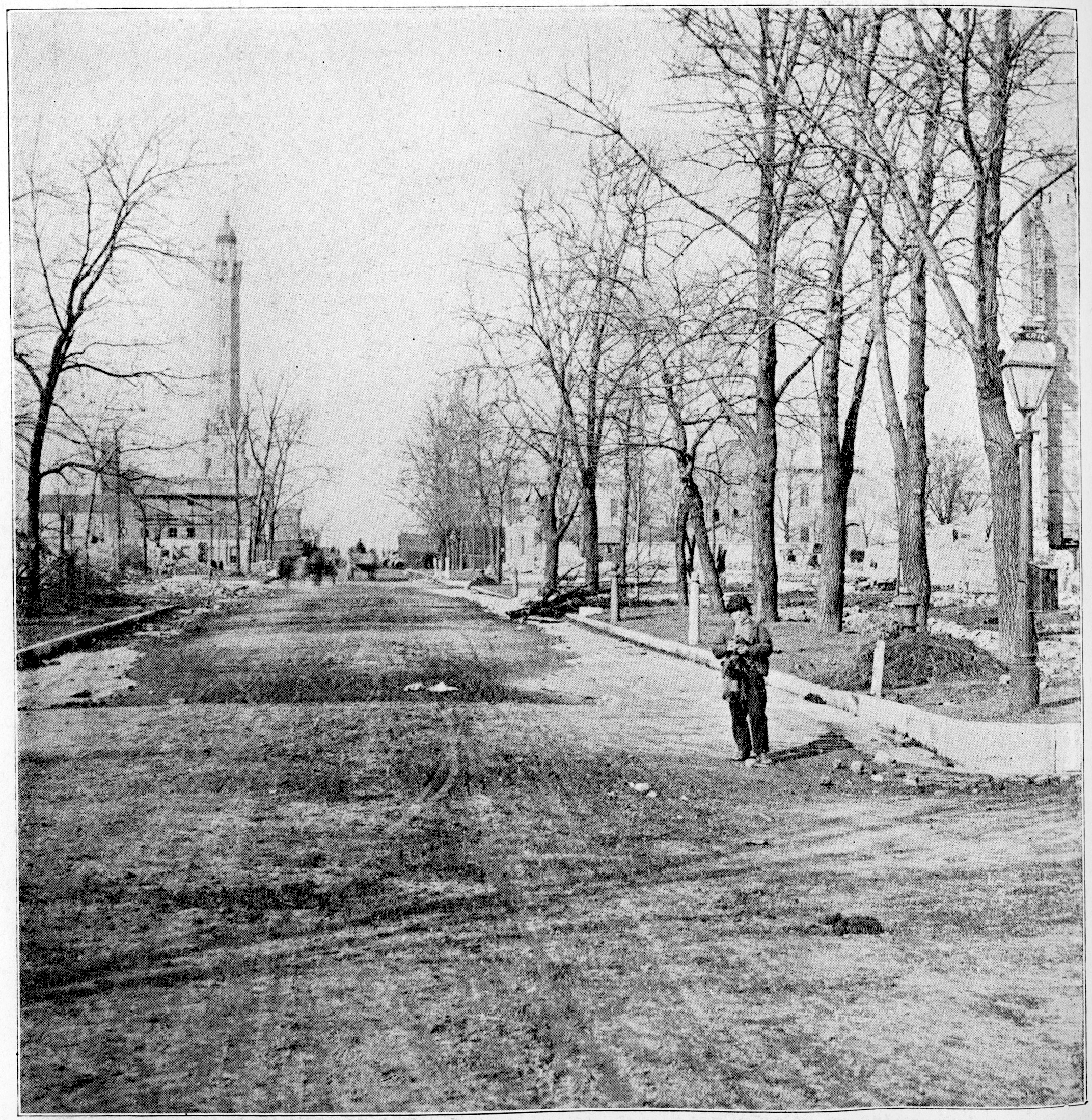
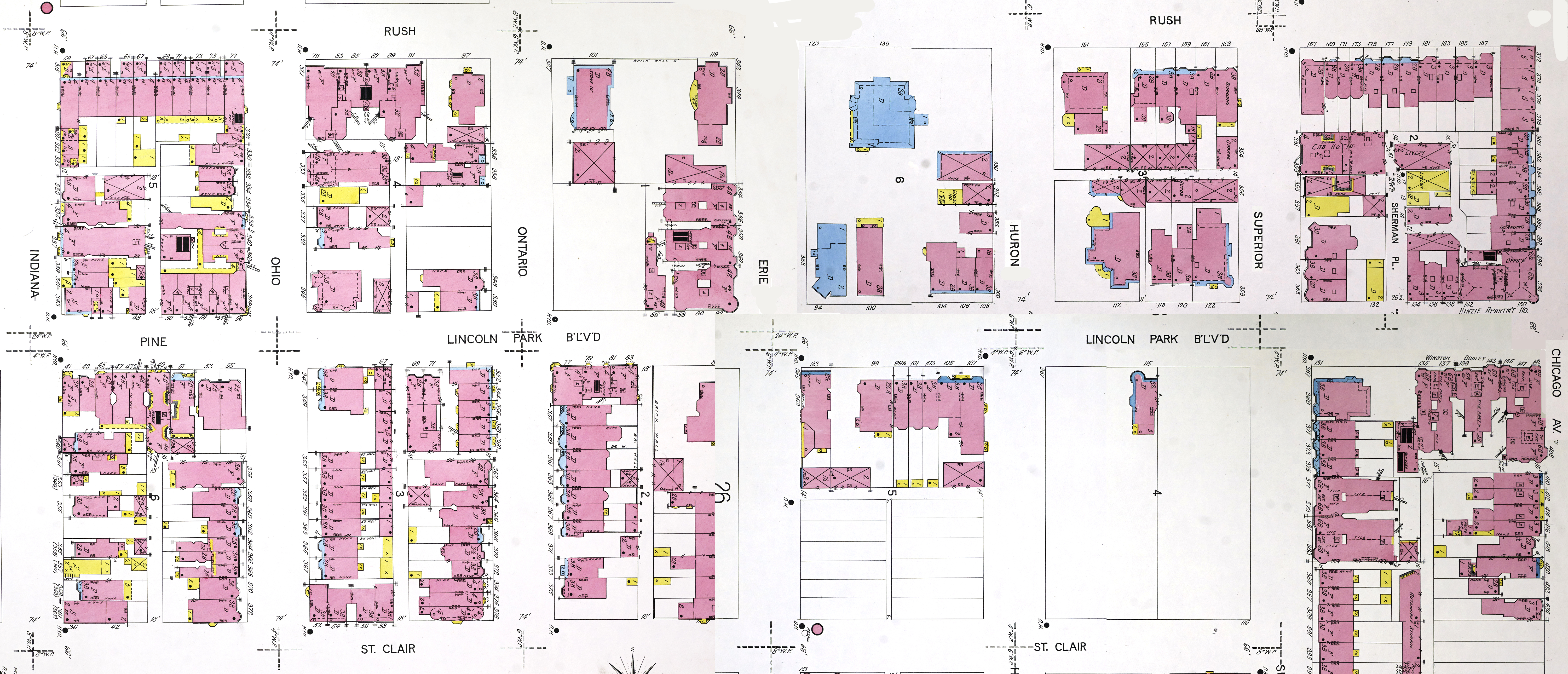
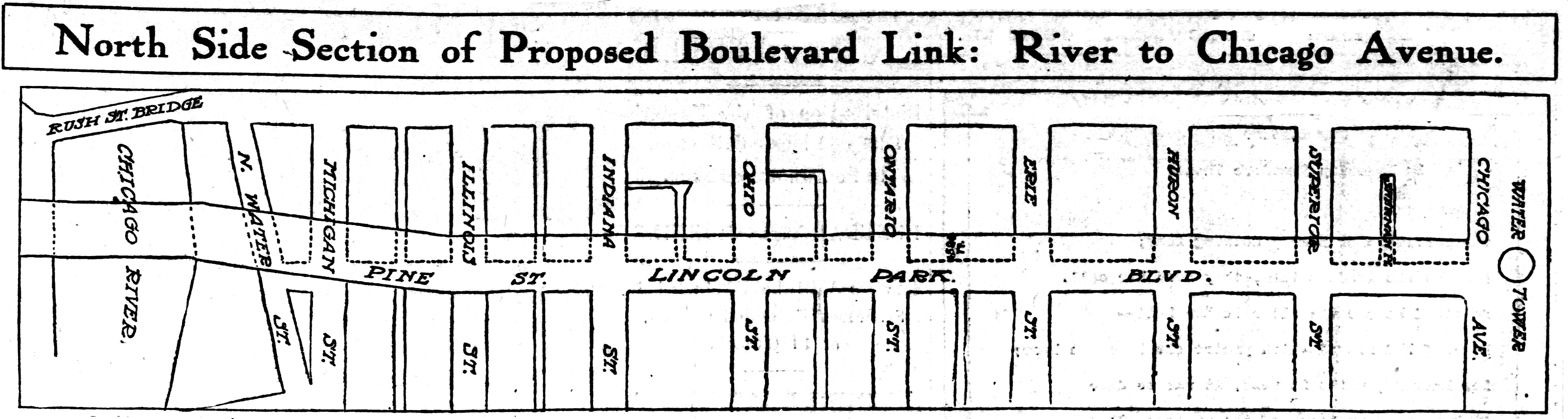
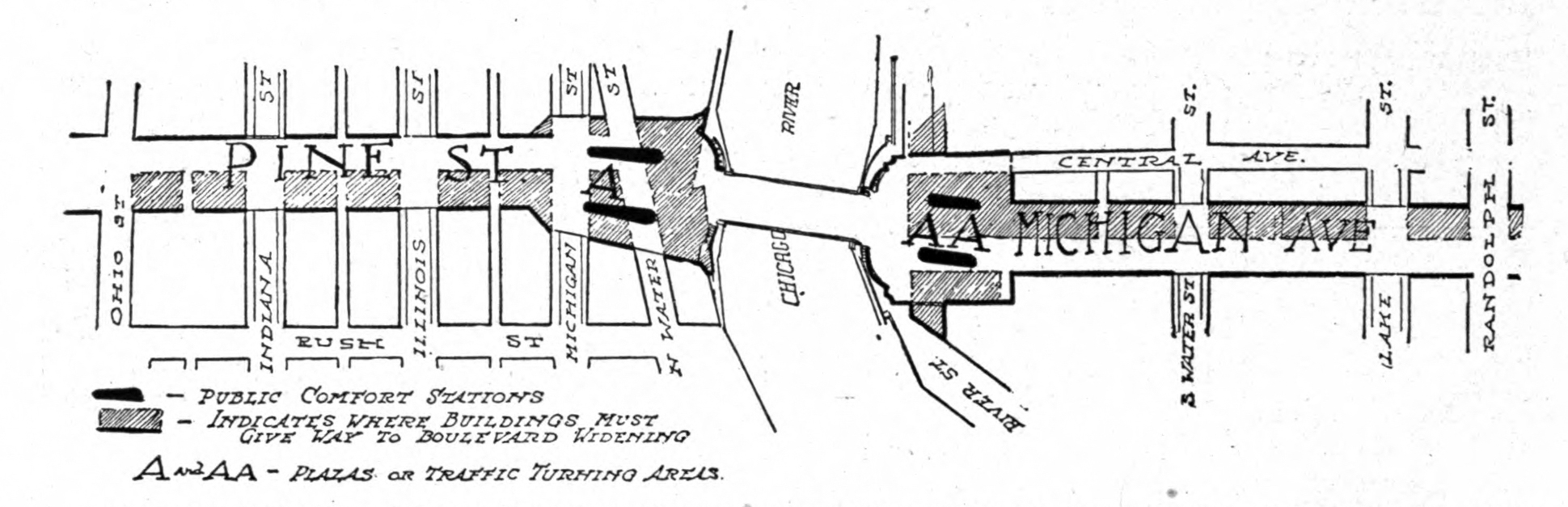
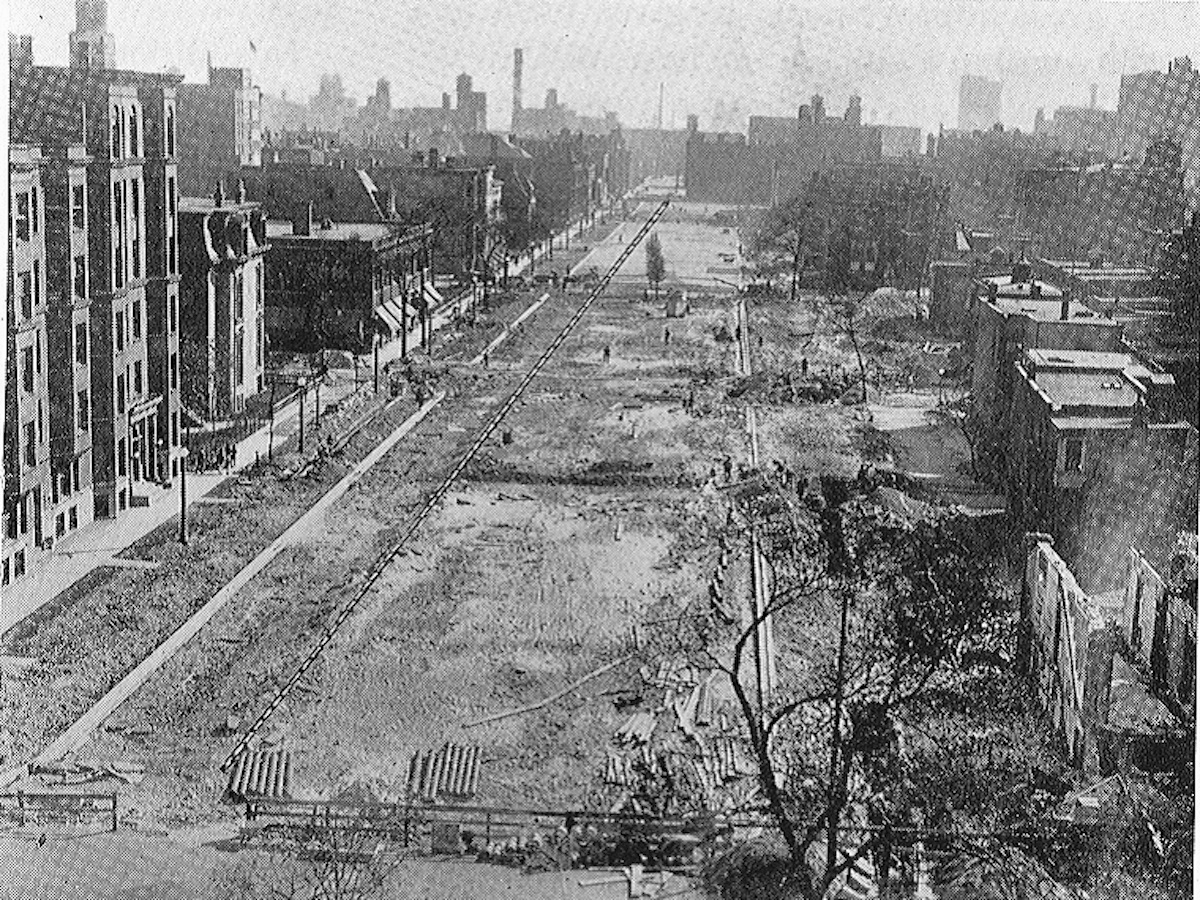
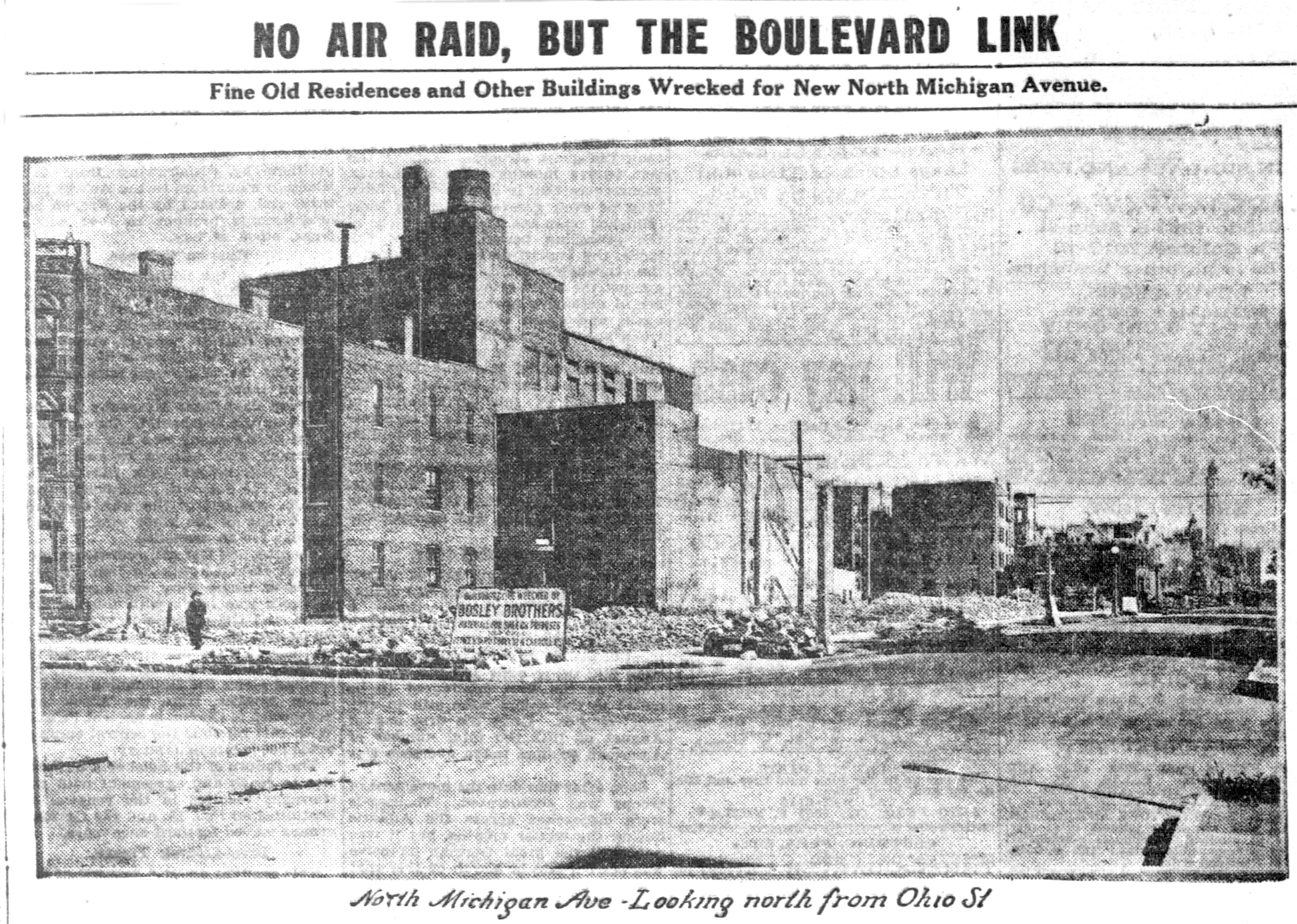
 The widening of Lincoln Park boulevard or what has been known as Pine street, from Pearson to Oak streets, is now well under way. The street was formerly sixty-six feet wide, and the owners of the vacant property lying east donated a strip fifty feet wide to be used in extending the width of the roadway. It was necessary to purchase two houses, 50×70 feet, facing on Pearson street; also a small corner at Chestnut and Pine streets, for which $58,000 was paid. The assessment for the payment of these purchases was spread over a large territory extending north to North avenue. The plan of the boulevard contemplates a driveway fifty-six feet wide, a parkway and sidewalk on both sides of the driveway, each ten feet wide.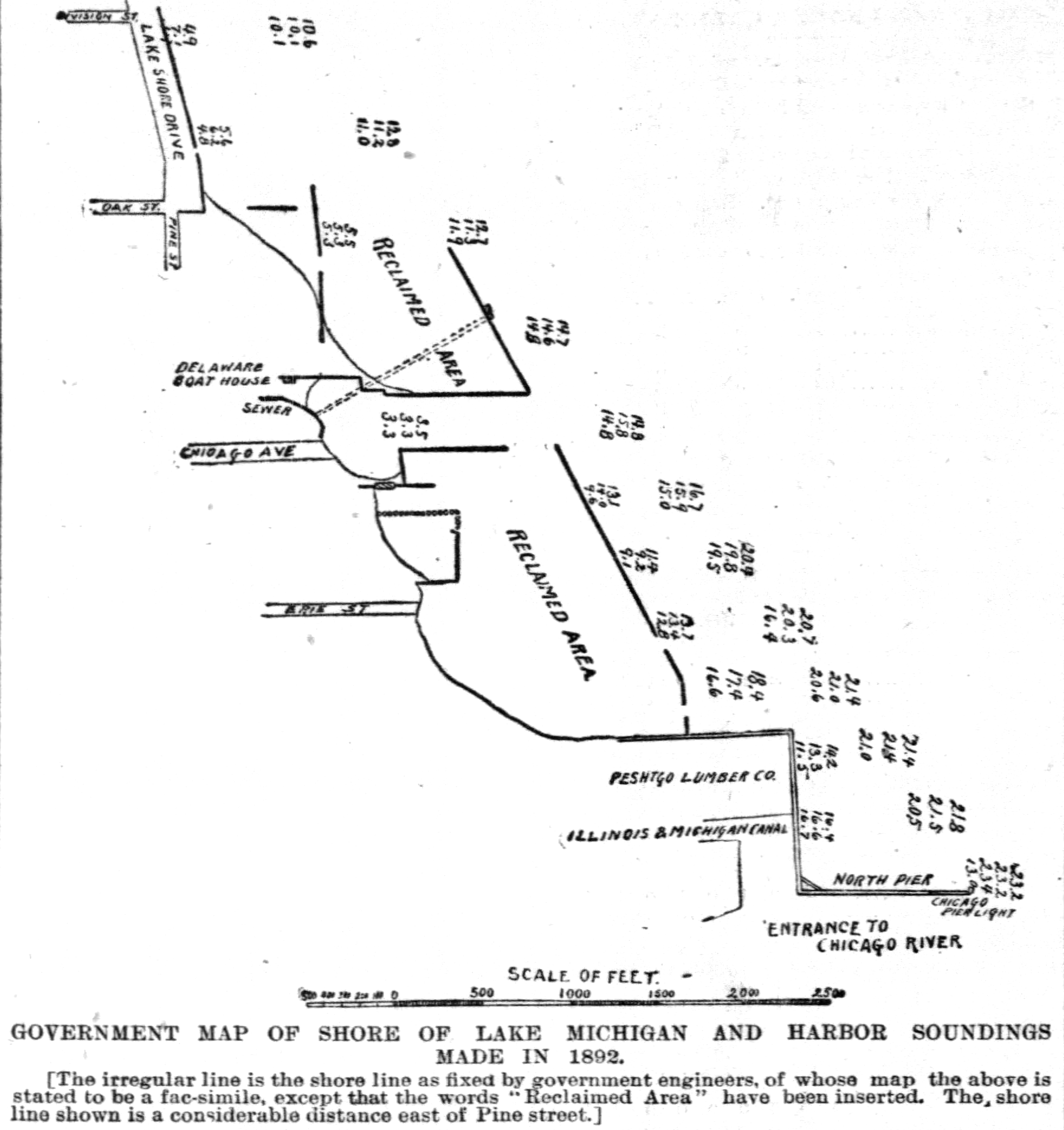
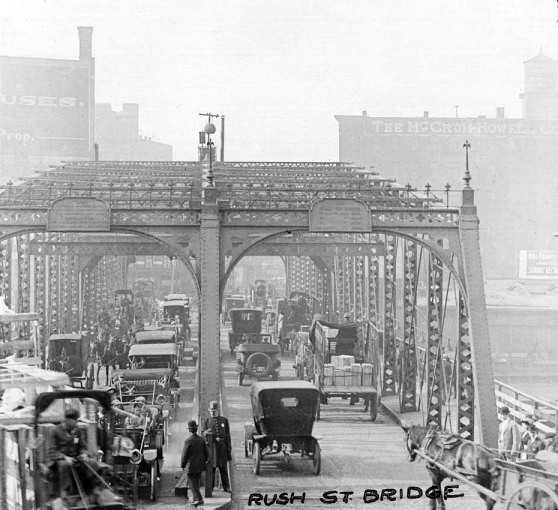
 Rush street is not yet lost to Yerkes. Pine street has been favorably recommended for a boulevard by a committee of the council, and the ordinance will in all probability be passed. But the fight to include Rush street in the same ordnance and thus keep the Yerkes line off both streets was made in vain. This action was taken because the ordinance as referred did not include Rush street and the committee would not institute legislation.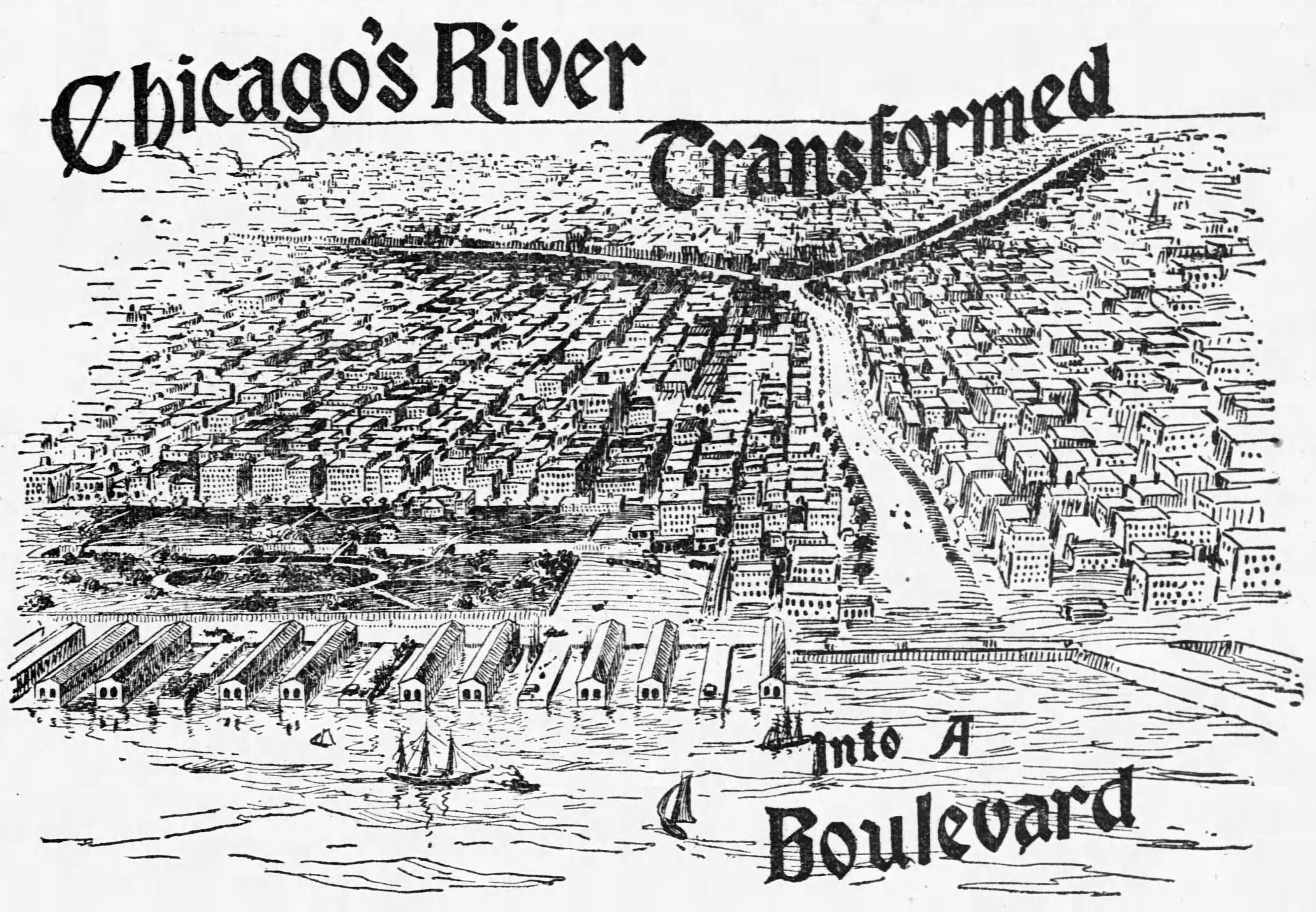
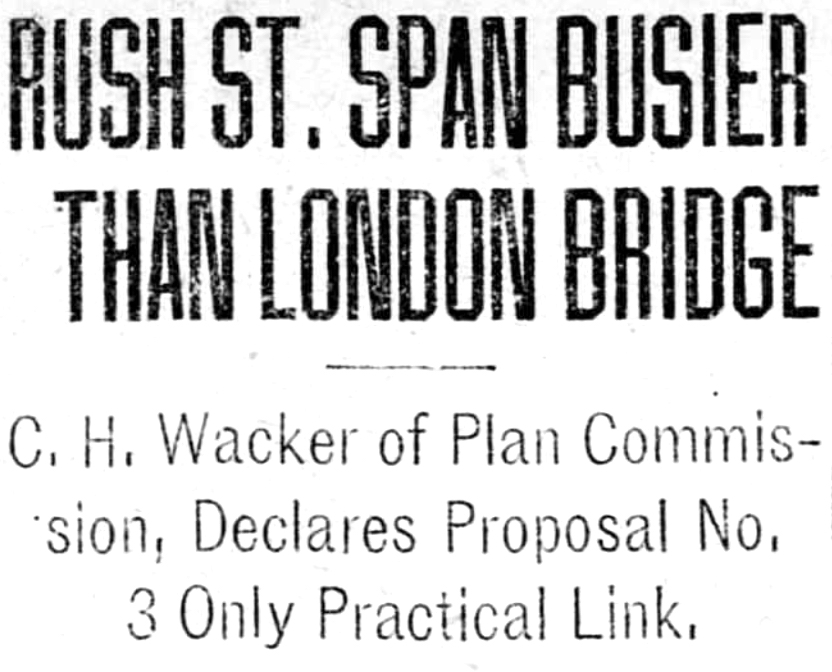
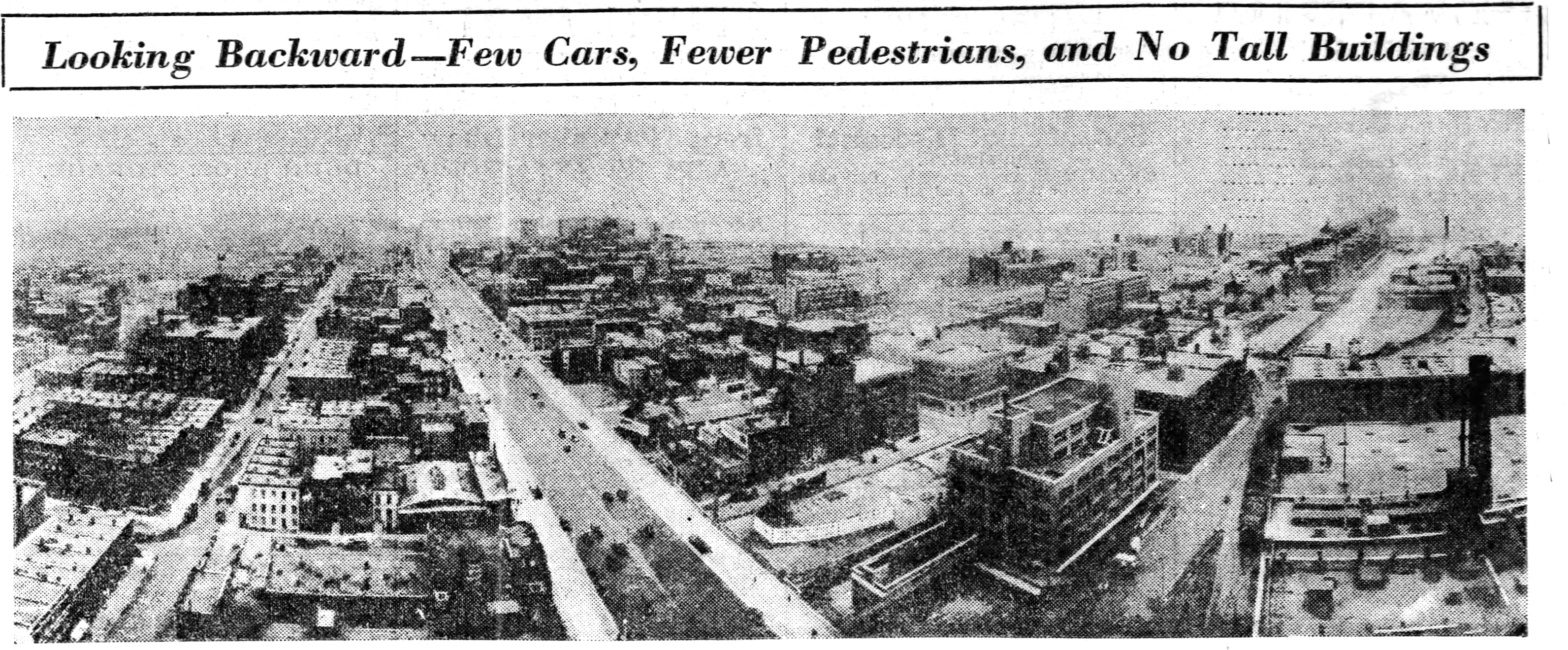
 Long existing only in the minds of public spirited citizens, one of the ambitious hopes for “greater Chicago” assumed definite form yesterday when the joint committee from the south park and Lincoln park boards and the city council approved plans for a connecting link between the north and south side boulevard systems at an estimated cost of $4,500,000.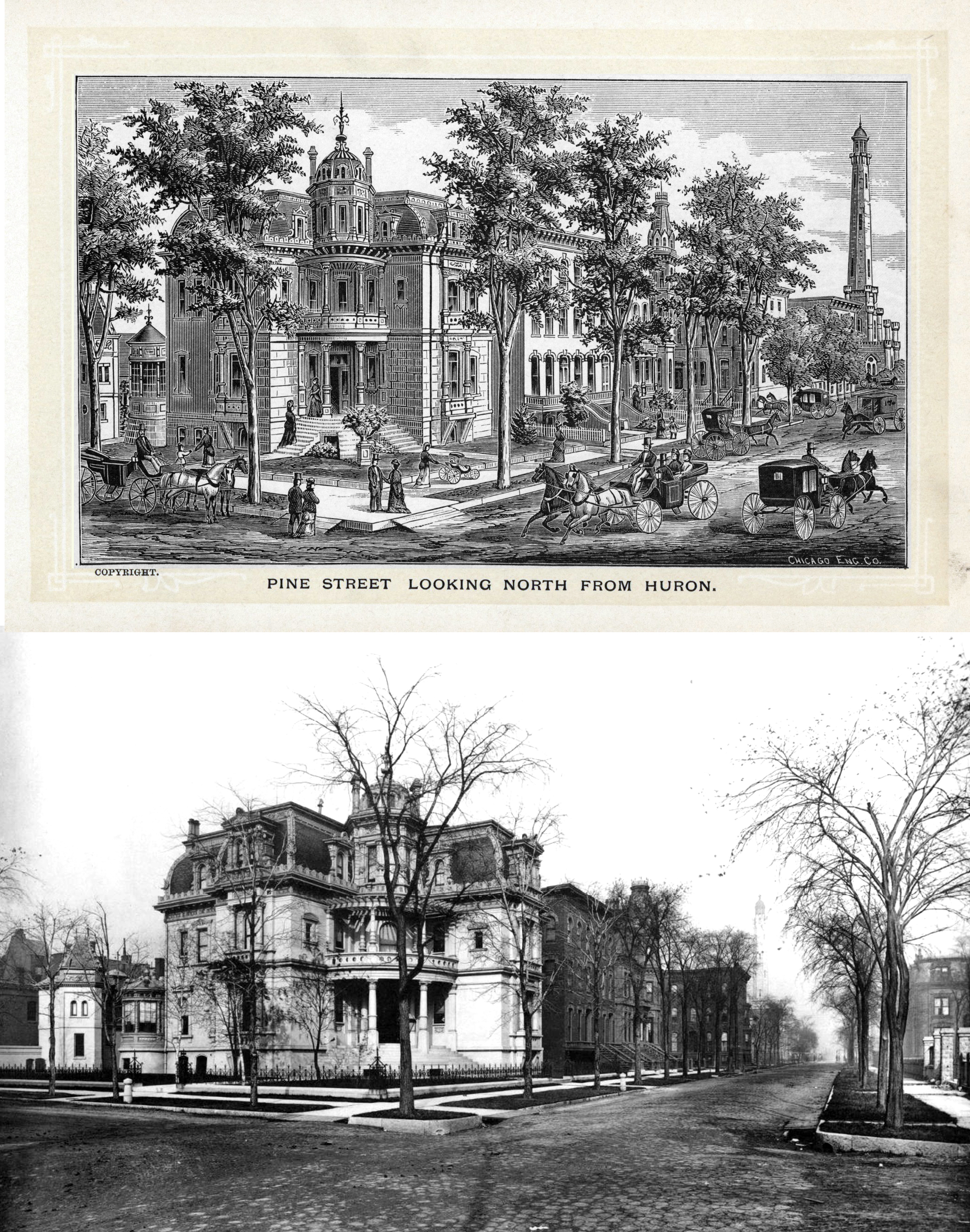


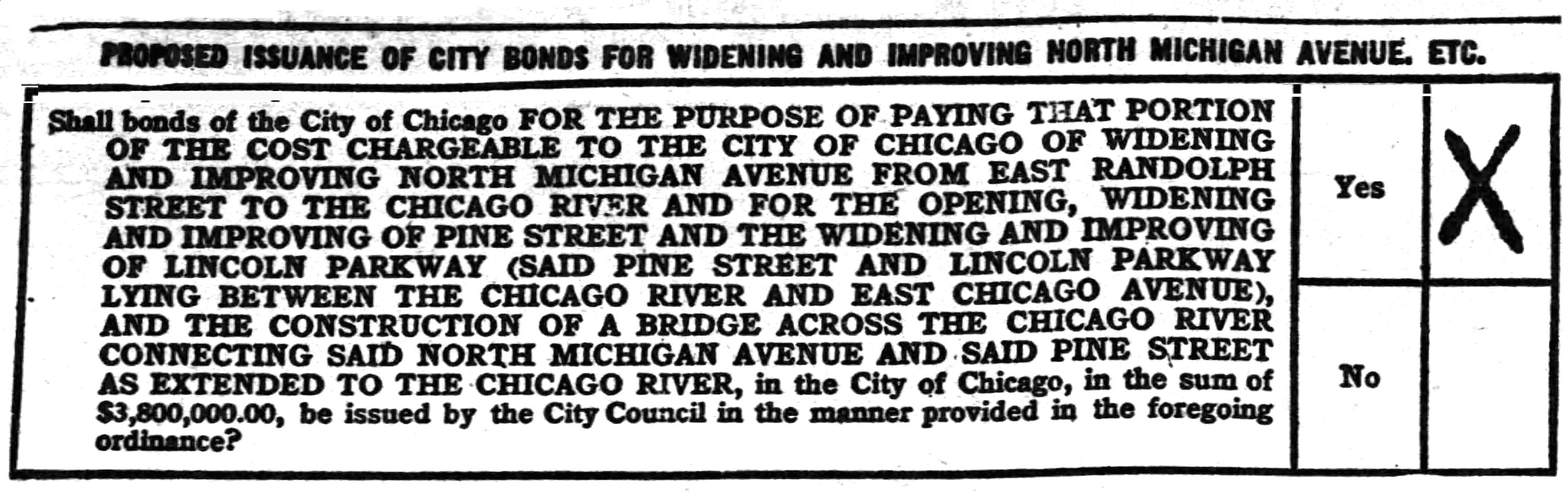
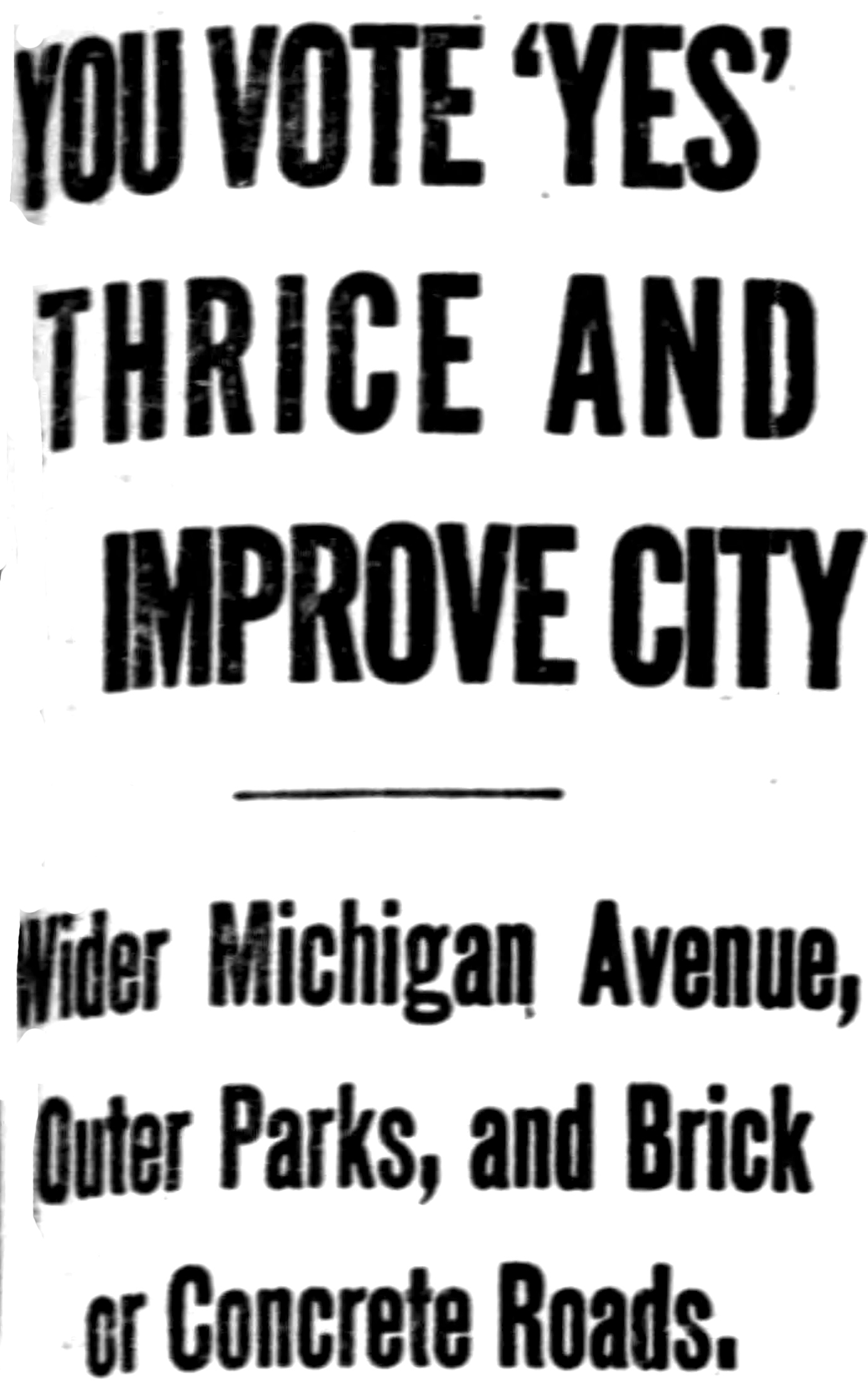 The first “Yes” to be marked with a cross on the little ballot will authorize a $2,800,000 issue of city bonds.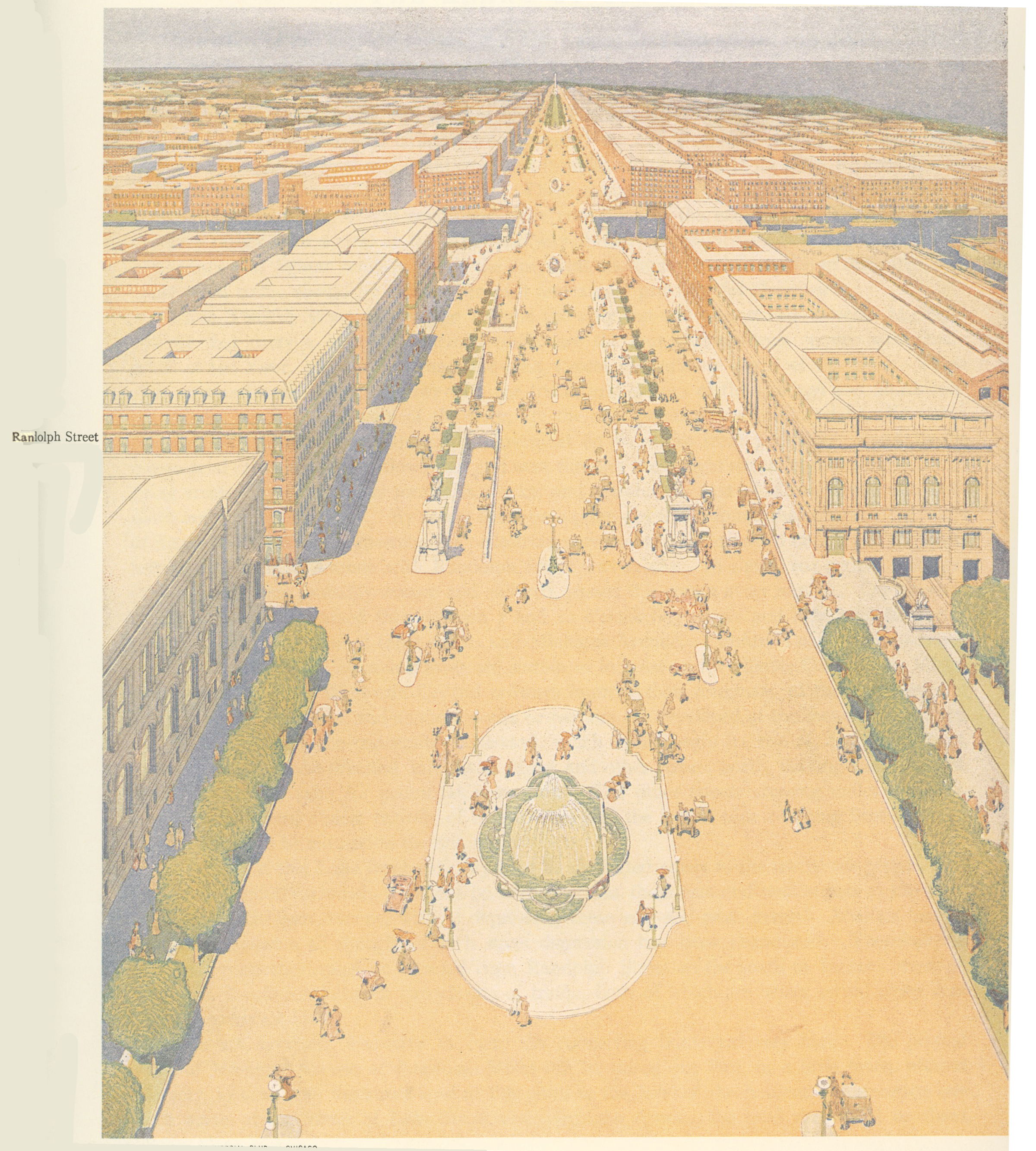
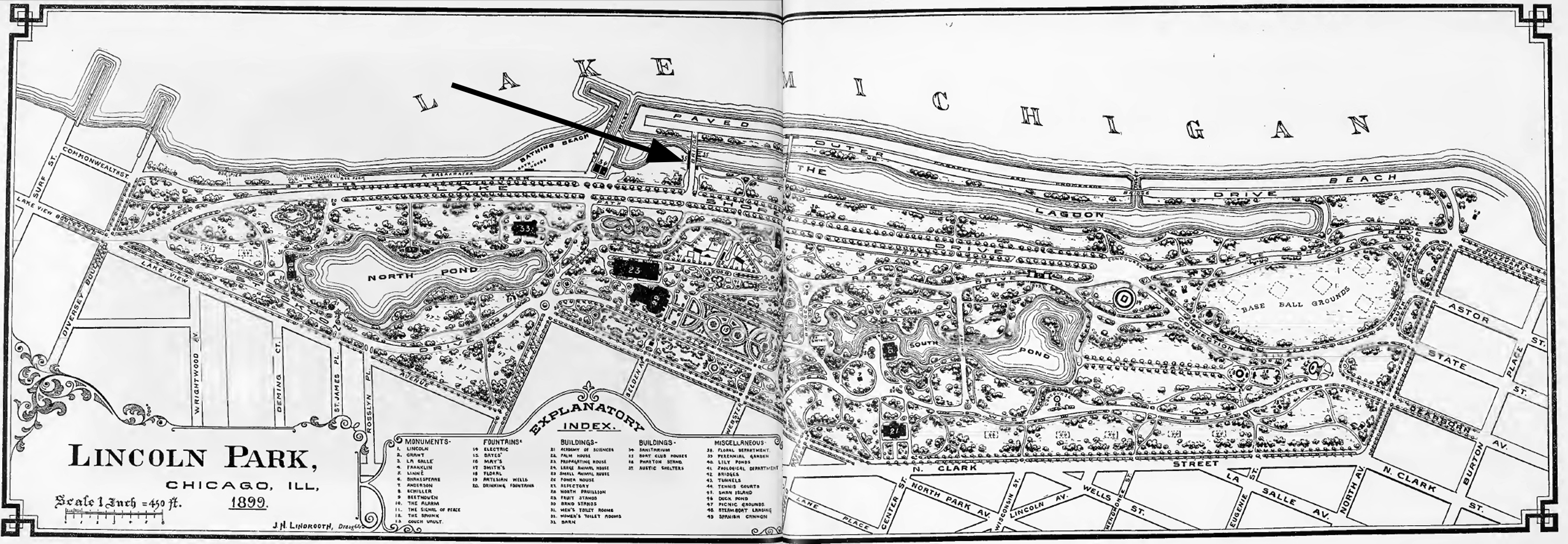
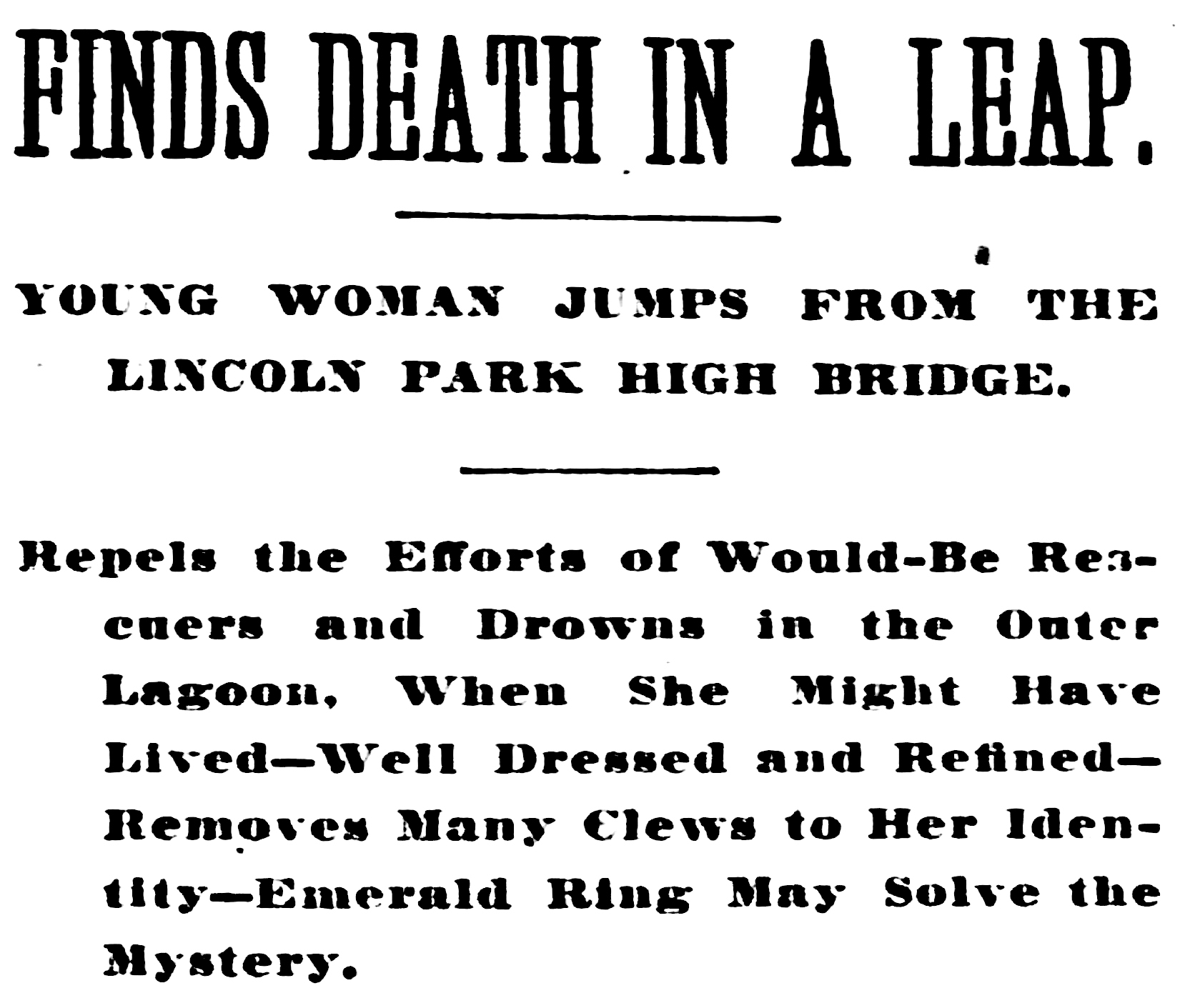 A young woman, pretty and stylishly dressed, whose hands were soft and white, climbed on the rail of the high bridge in Lincoln Prk at 2 p.m. yesterday and leaped to her death inn the cold waters below. Rising from the first immersion and seeing a group of persons rush to proffer her aid, she struggled to get further from them, and sank to the bottom.
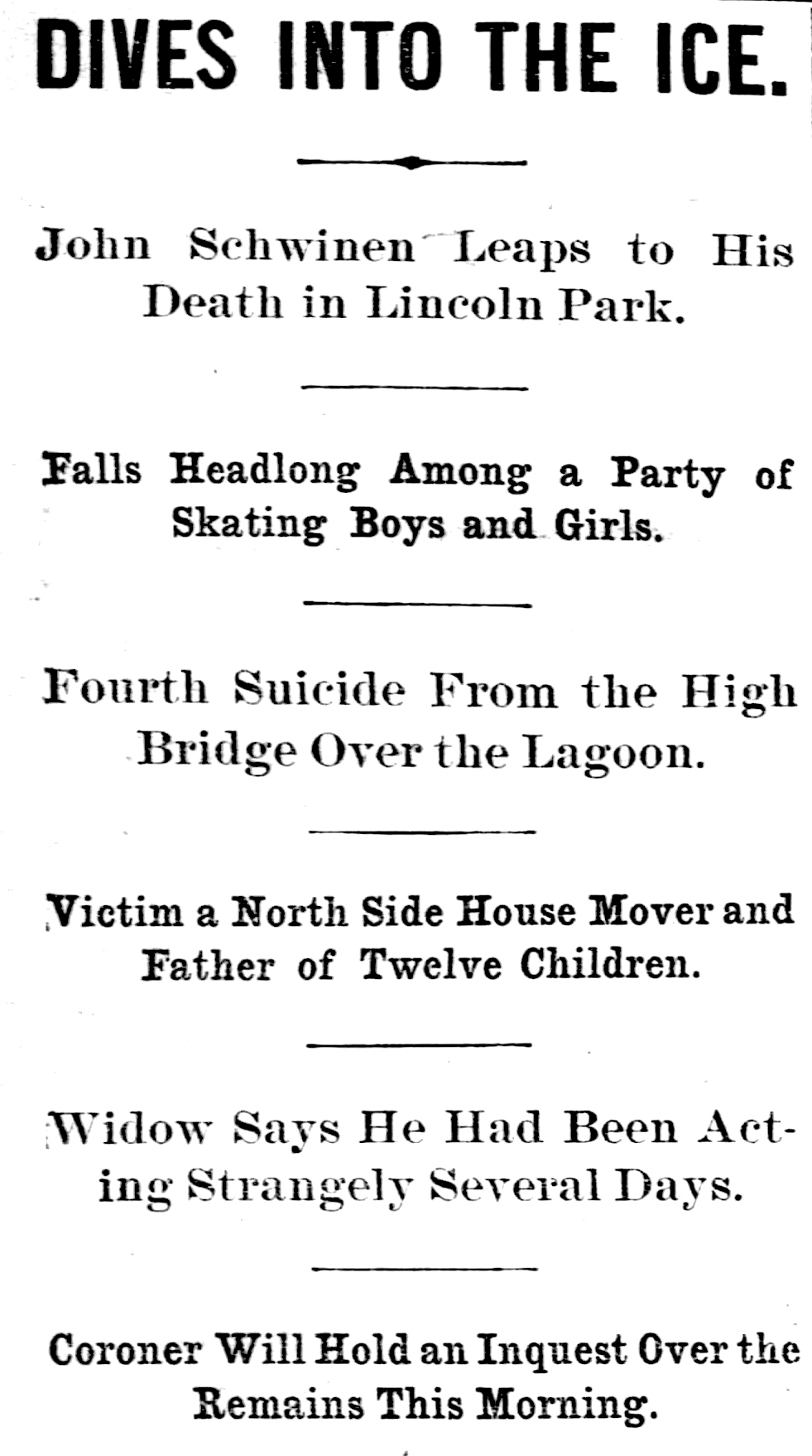 Poised on the edge of the south lagoon in Lincoln park, John Schwinen gazed downward at 100 children skating in the ice yesterday afternoon at 3 o’clock. With a wild upward wave of his hands he leaped far out and fell head foremost on the mirror-like ice, which broke with a crash, marking the fourth suicide from the same bridge in the last three months.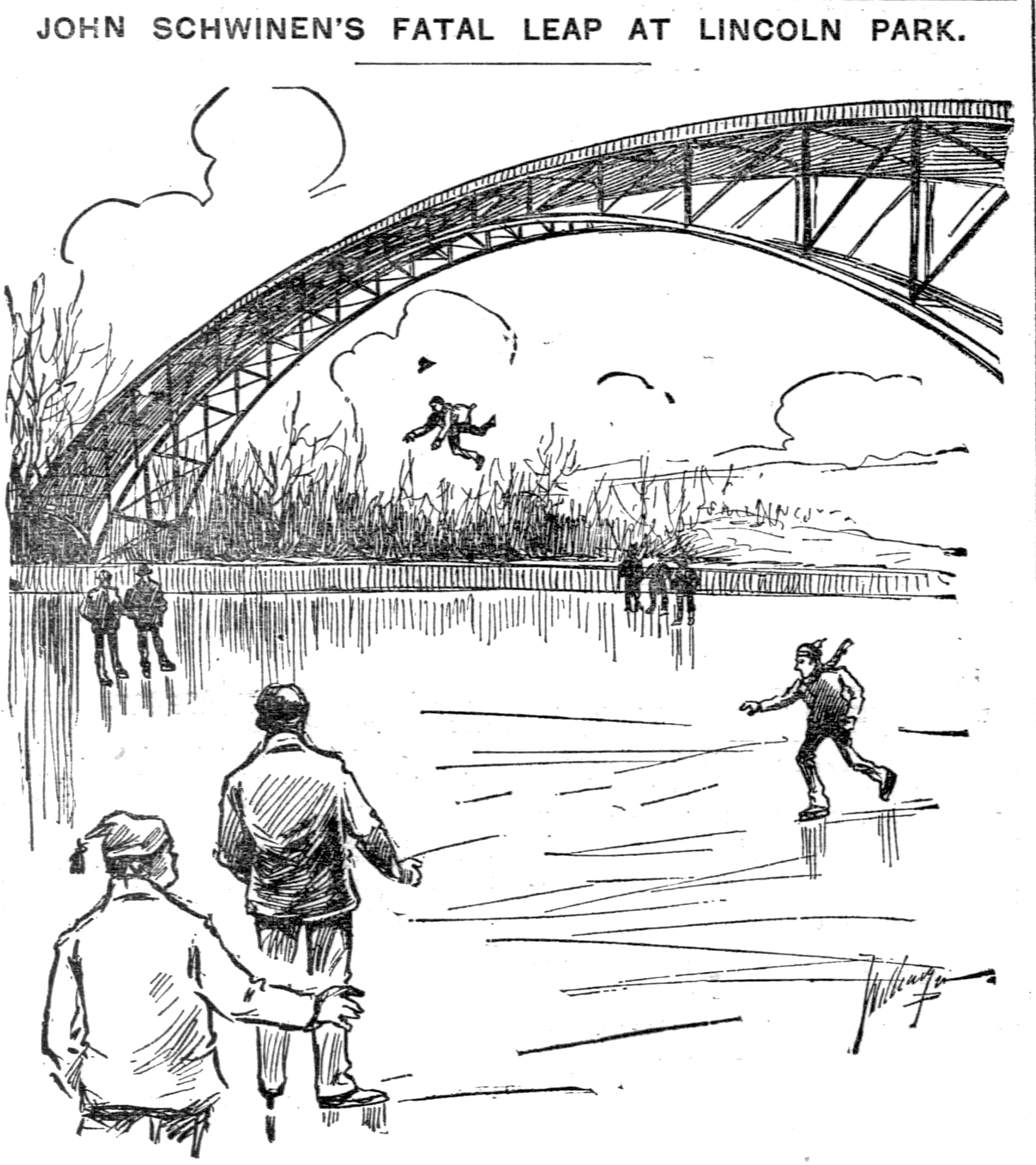
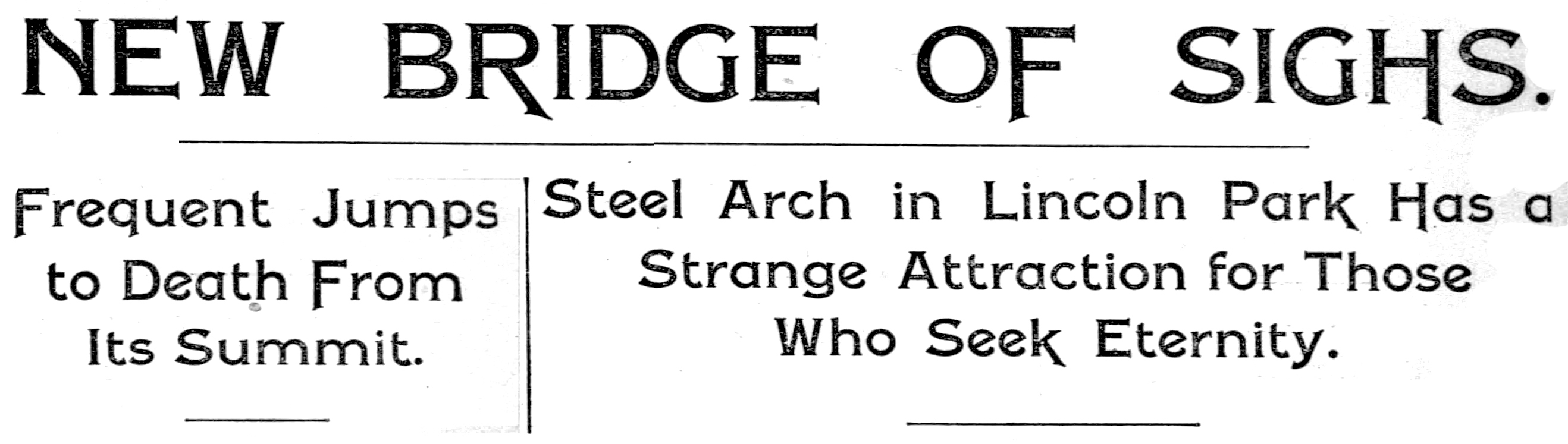
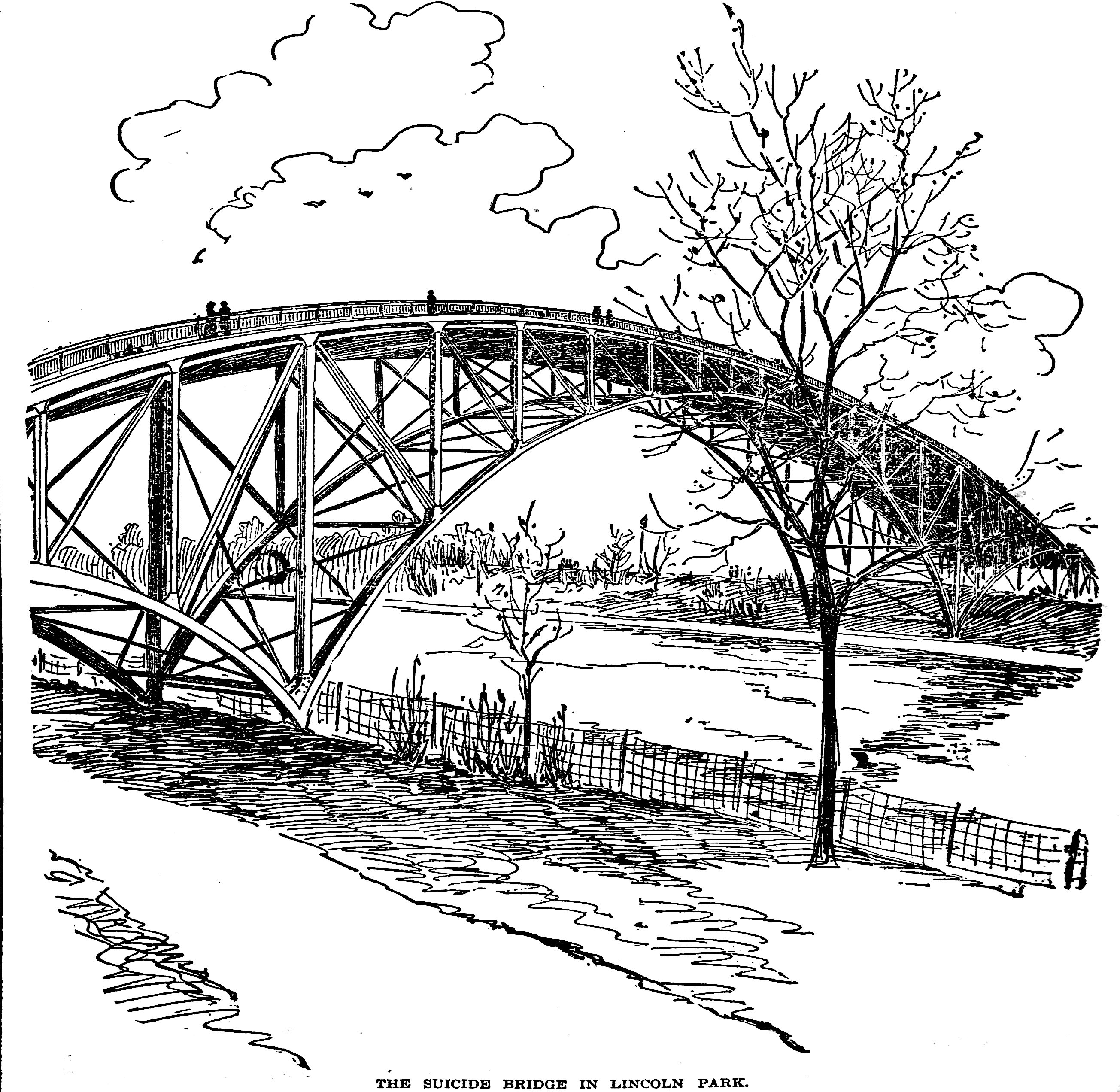
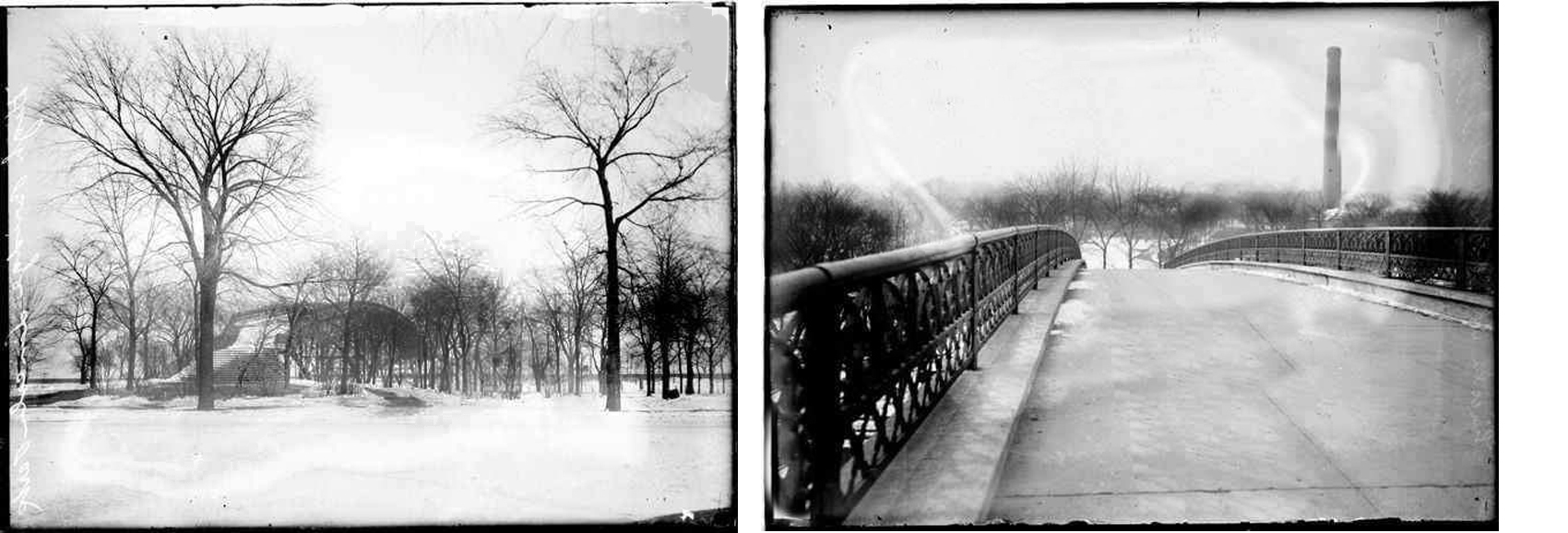
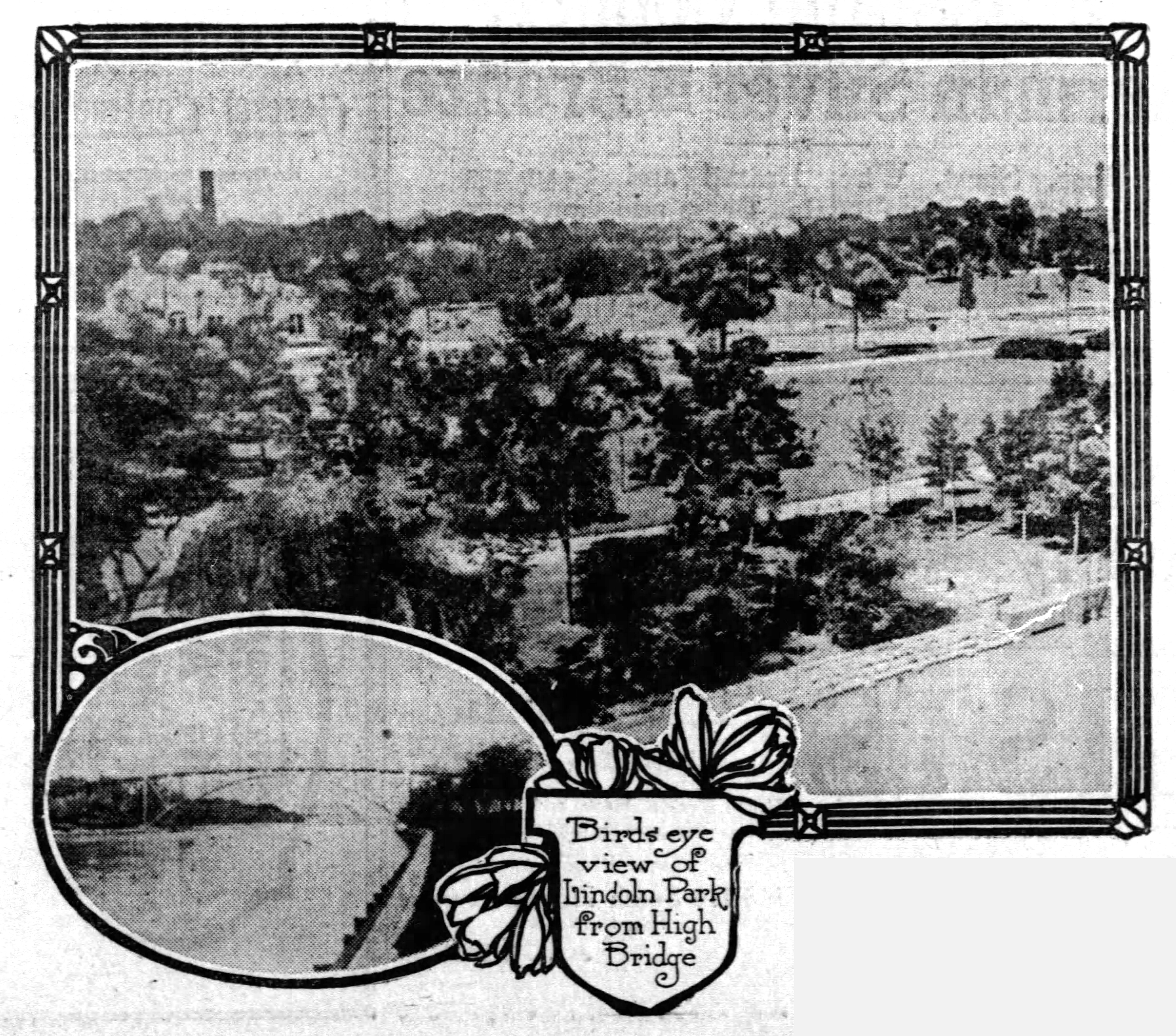
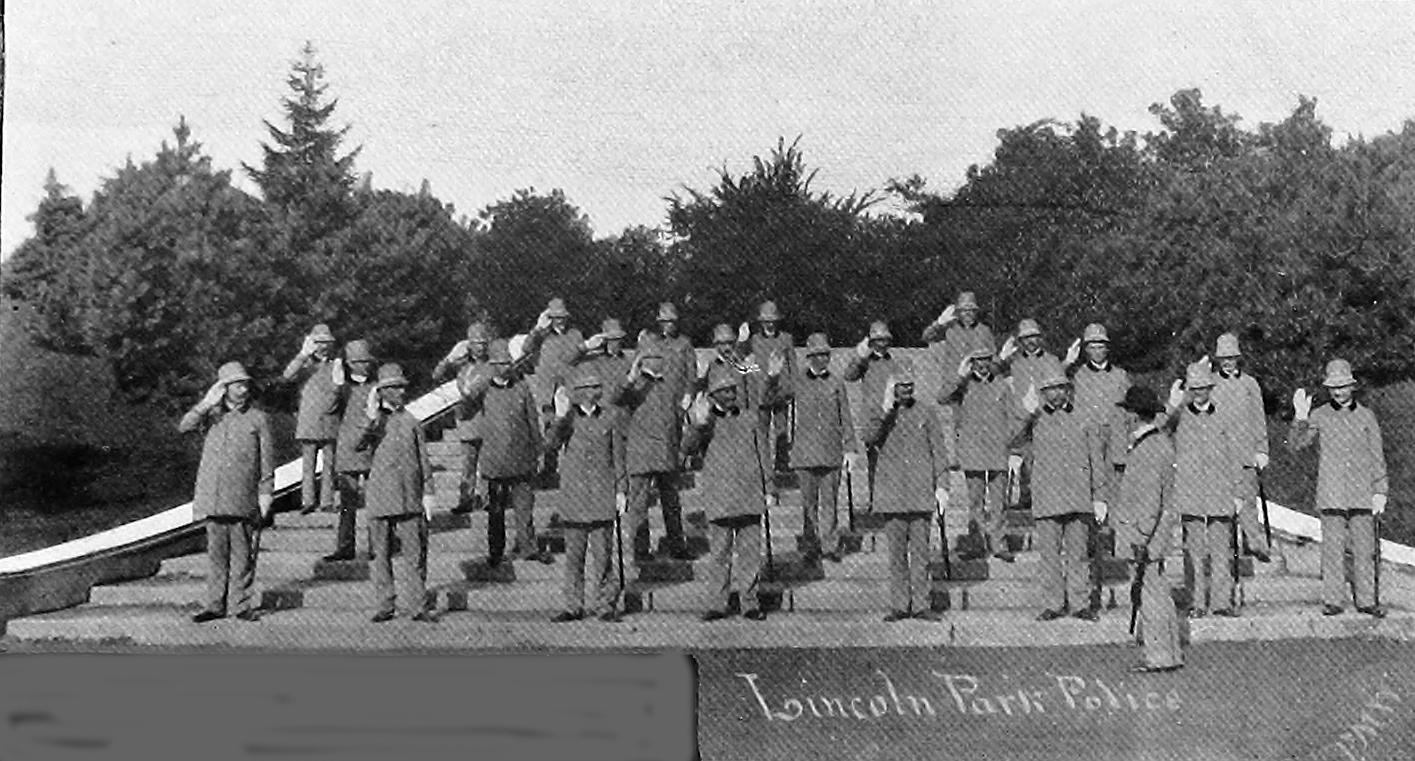
 In the presence of scores of spectators an unidentified man, apparently about 35 years old, ended his life yesterday afternoon by jumping off the “suicide bridge” in Lincoln Park into the lagoon below.
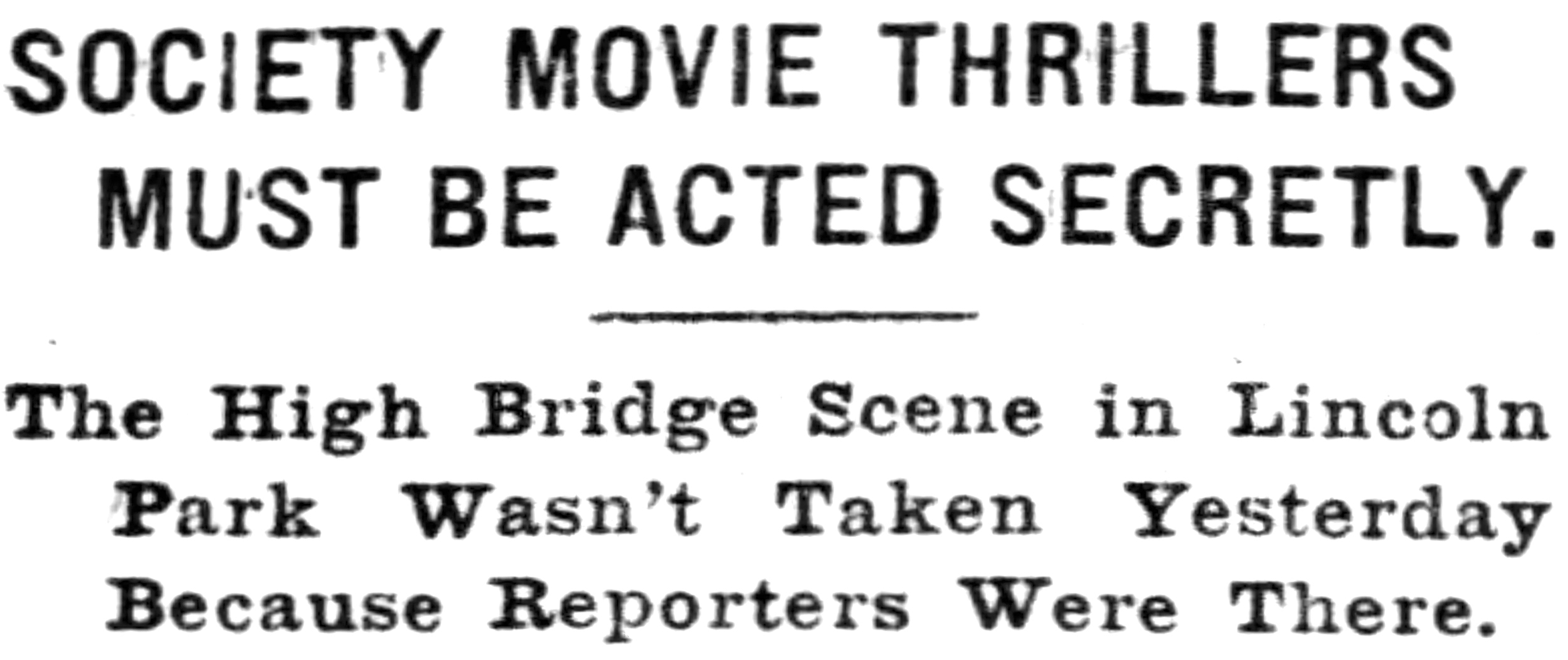 A half dozen “connect up scenes” for the Casino club’s all-society photoplay were filmed yesterday in and about the Spaulding residence before J. Allen Haines, the super-director, took alarm at the appearance of newspaper men and began a wild auto race to get rid of them.
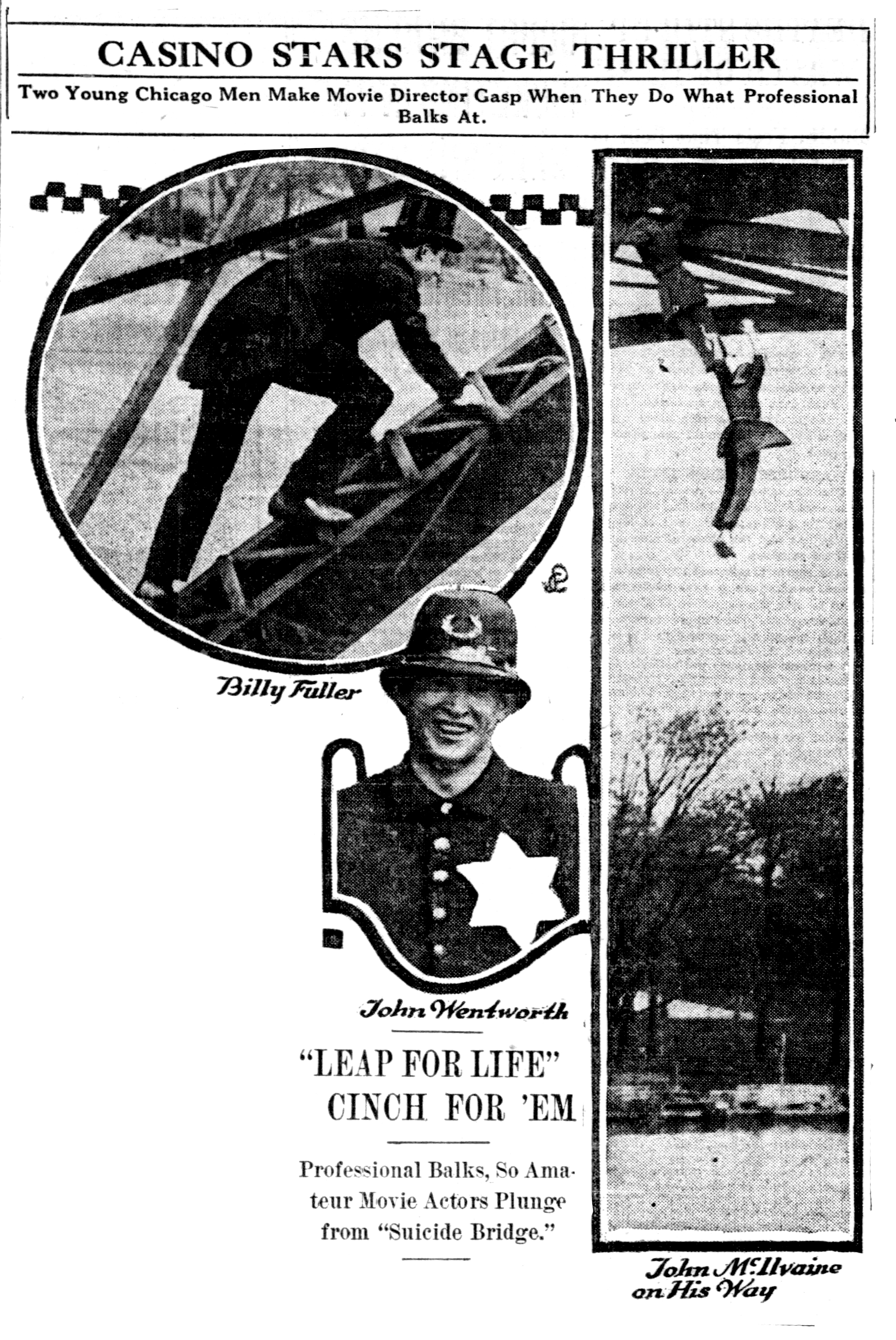 The amateur movies is not all kisses and straw bricks. Two young members of a set that is sometimes called lackadaisical did a thriller yesterday.
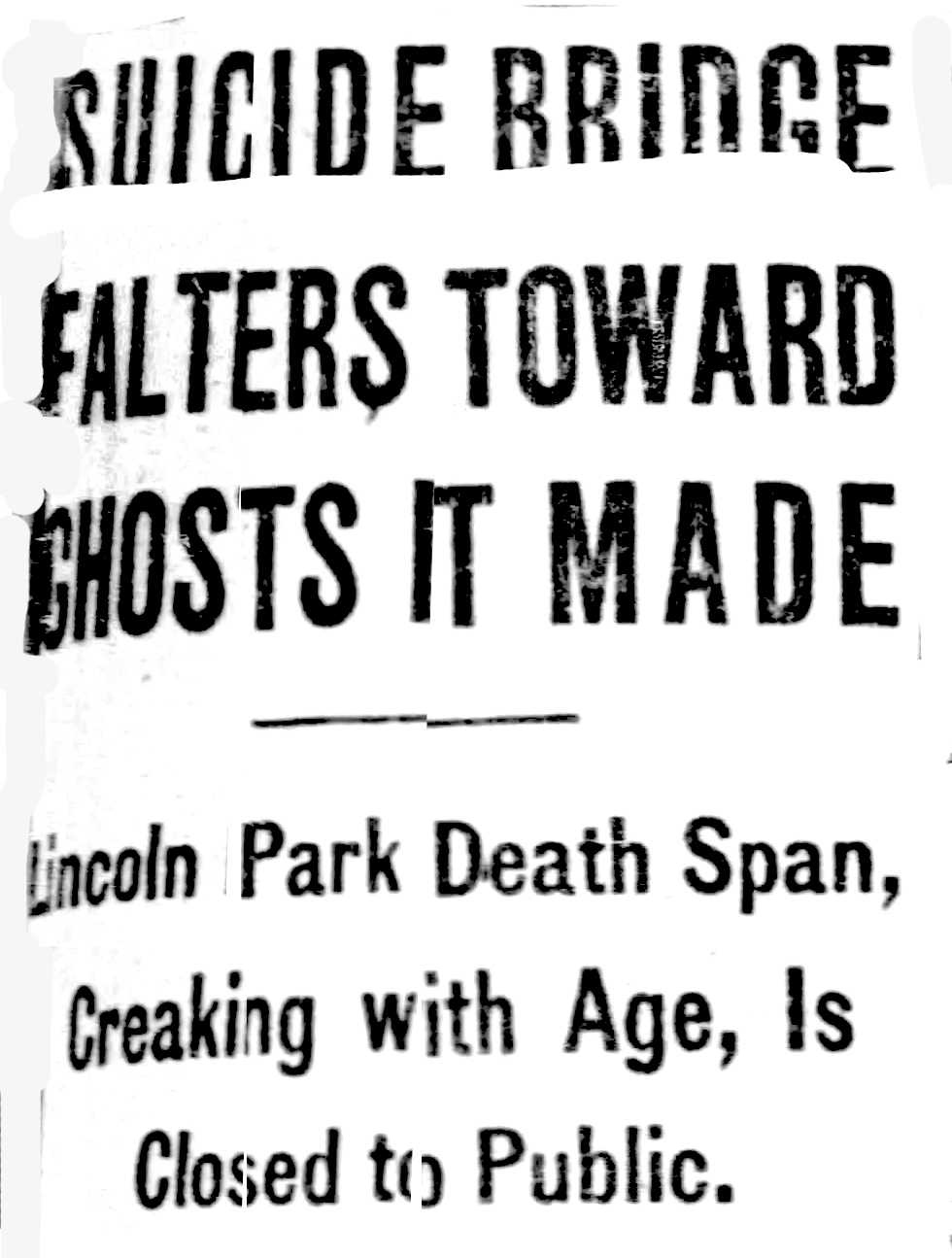 Drop a tear for Chicago’s bridge of sighs. The famous old Lincoln park arch, over which thousands of holiday merrymakers have passed on a single Sunday and where hundreds of weary mortals paused to think of death, is showing the rust of age. Suicide bridge seems doomed to go.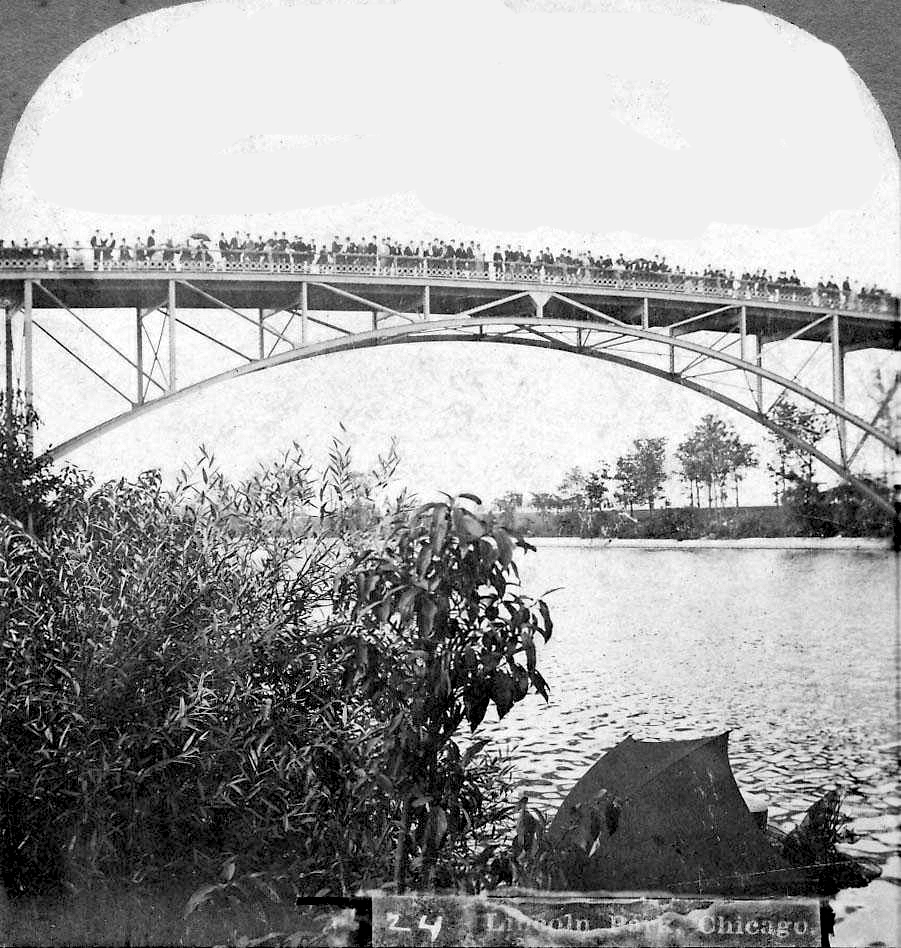
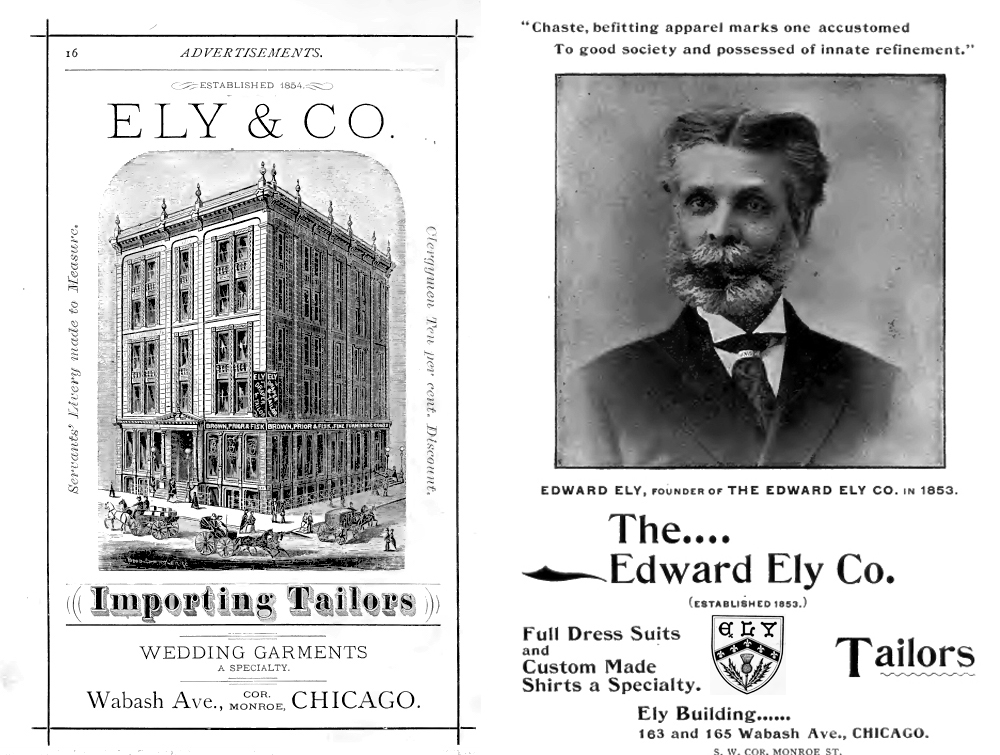
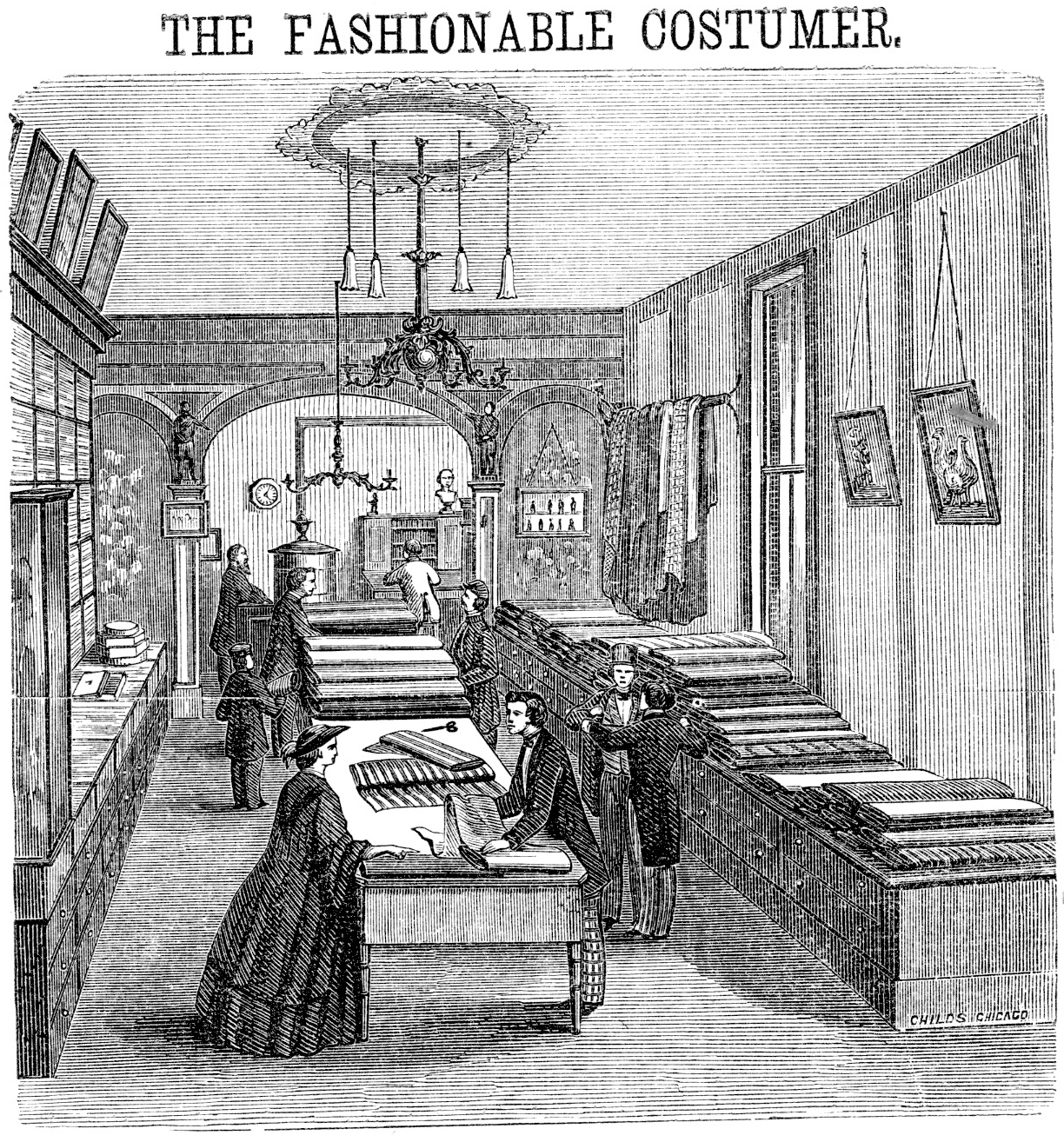 Before the Atlantic was bridged by steam, and the telegraphs had annihilated distance, the devotees of fashion on this continent were obliged to wait with patience for the fickle winds to waft the old packets to our shores. From the time of Louis XIV., nobody had the audacity to question the right of Frenchmen to rule the fashions of the earth, until within the last few years. Formerly, American gentlemen who were particular in their dress, sent to Paris for coats, vests, pantaloons and cloaks; but we have now the best tailors in the world ; and in Chicago, one of the best on this continent.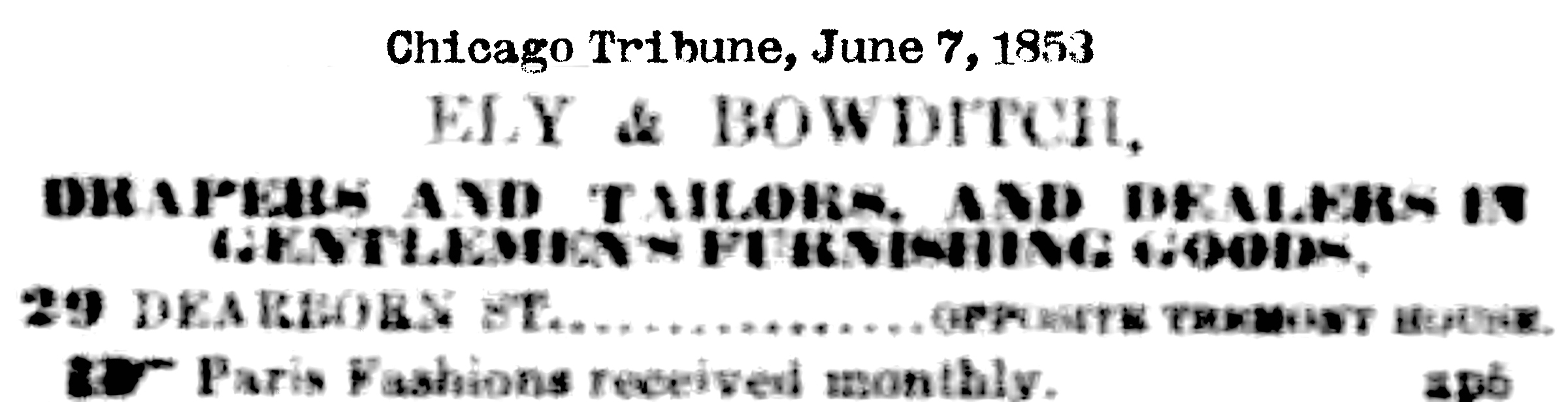
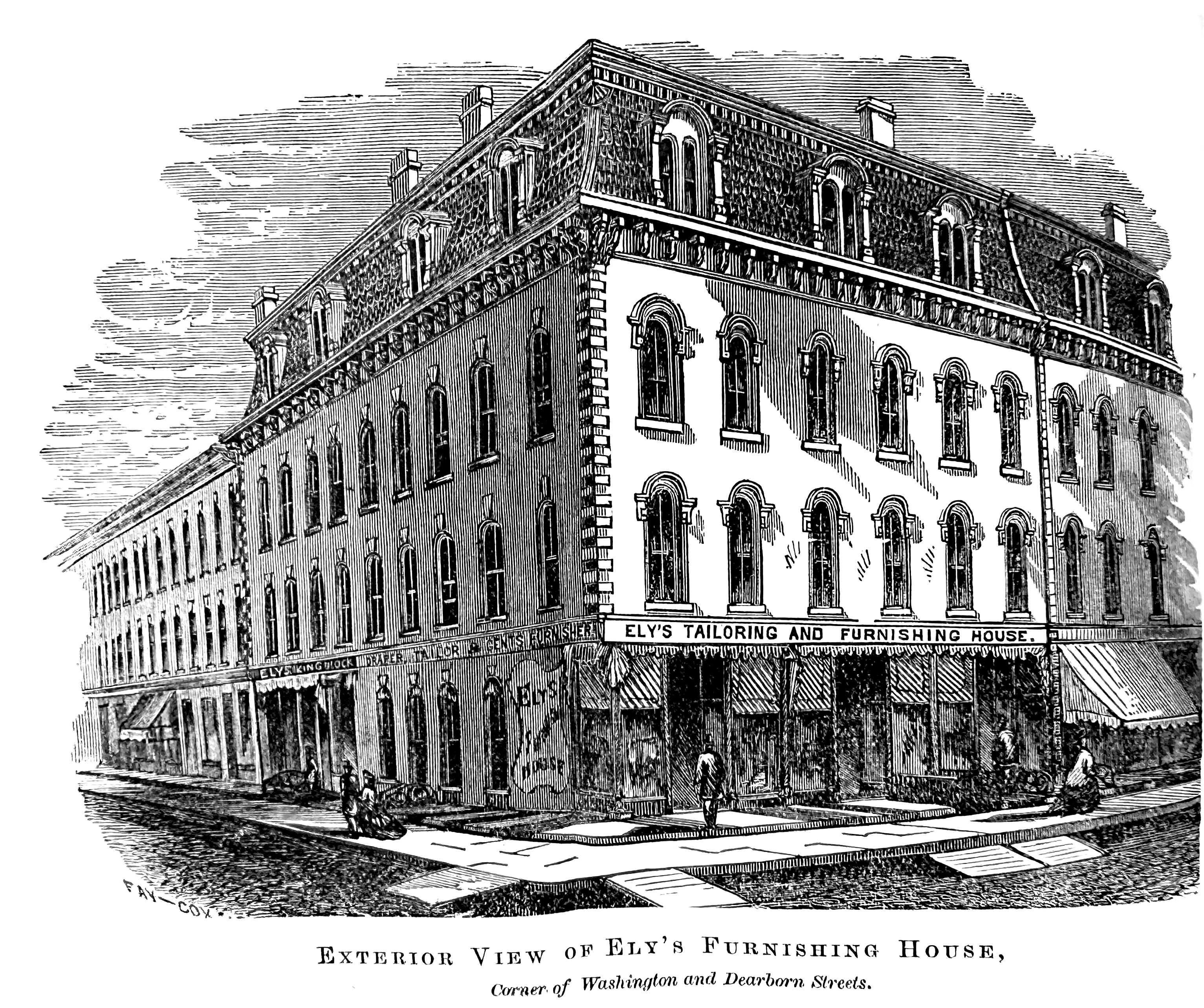
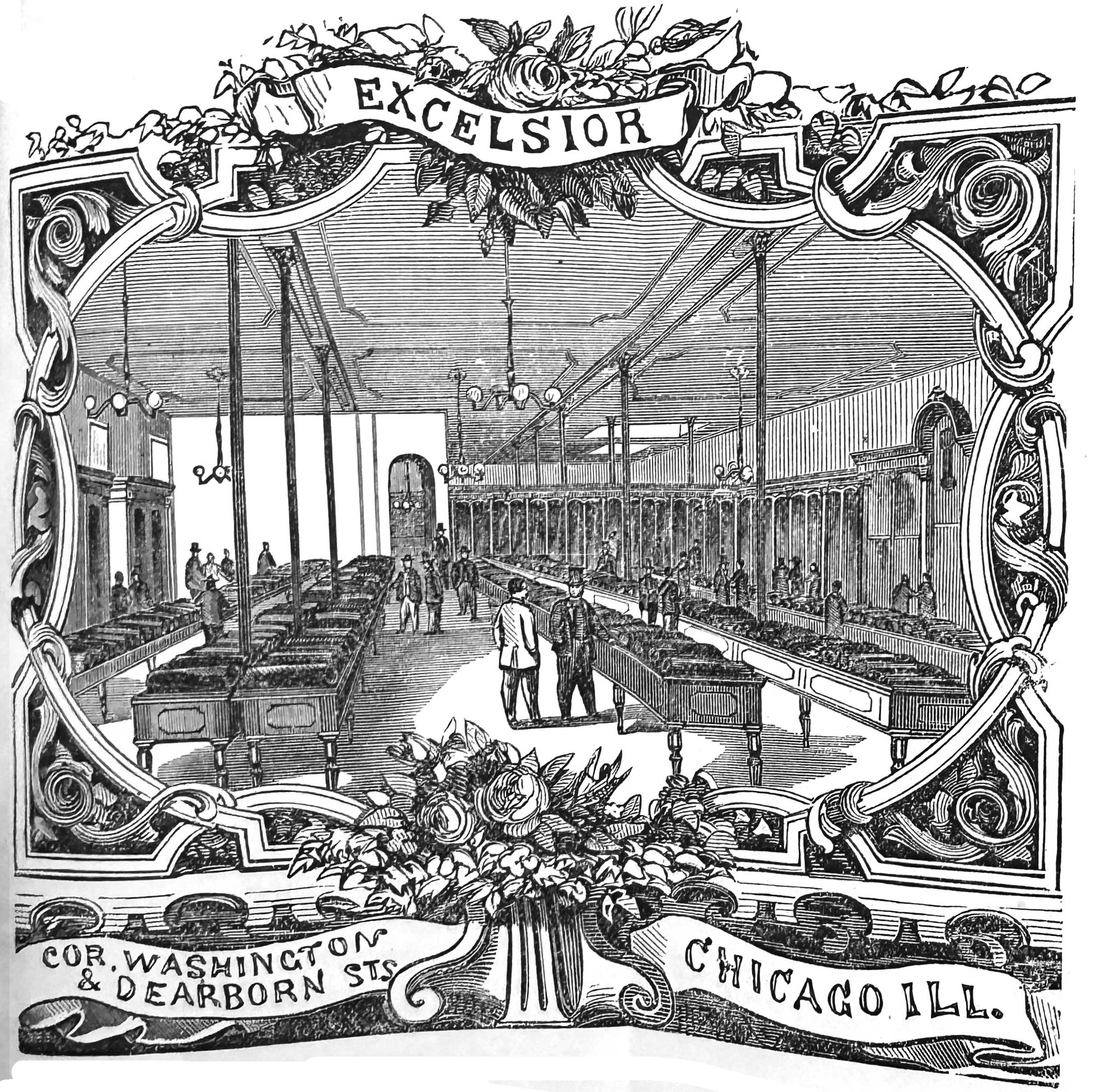

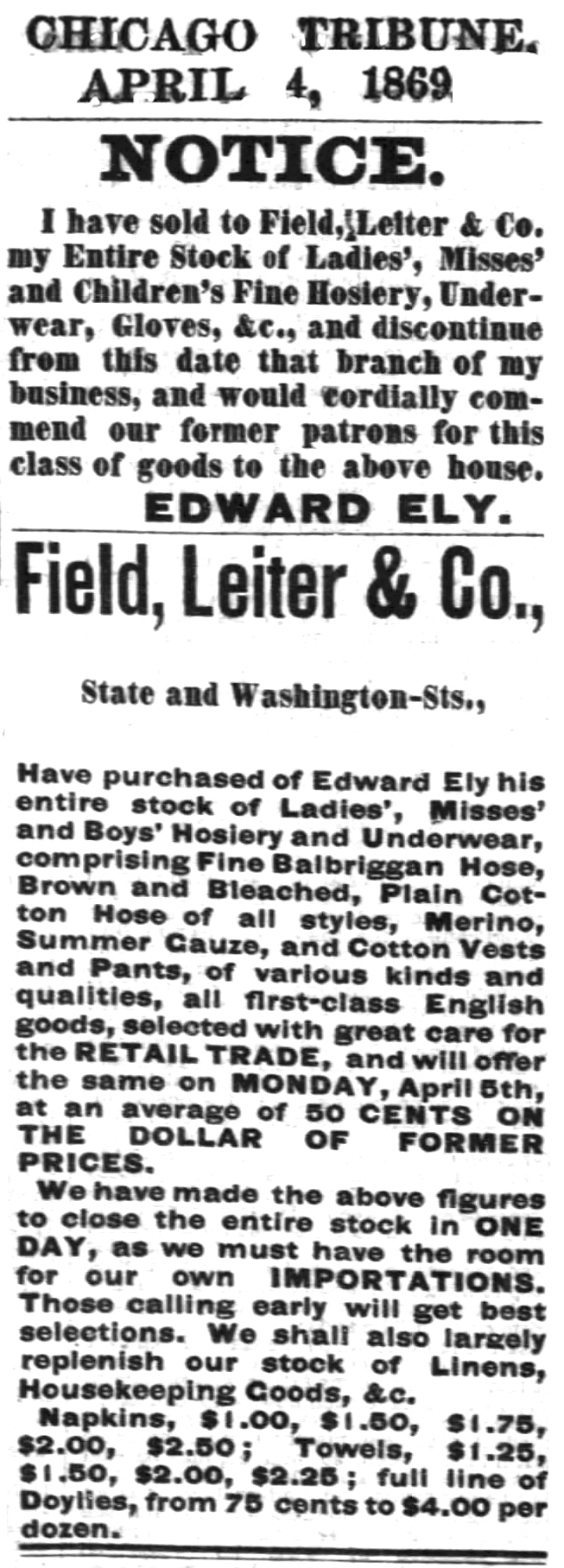
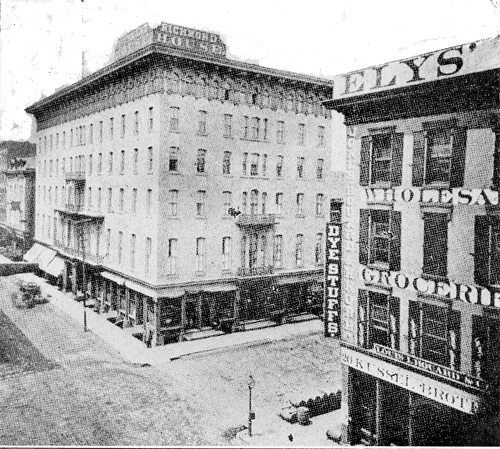
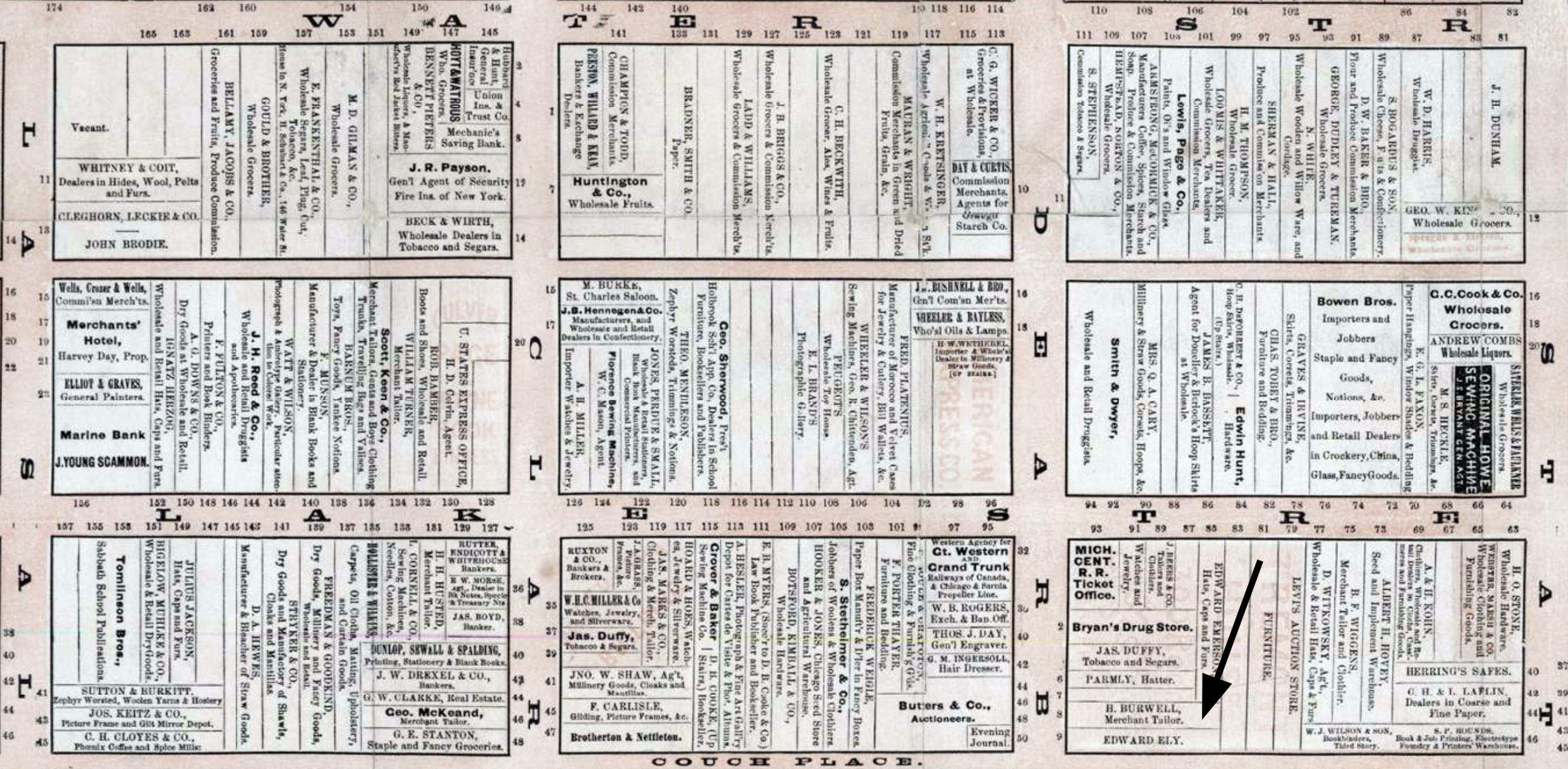
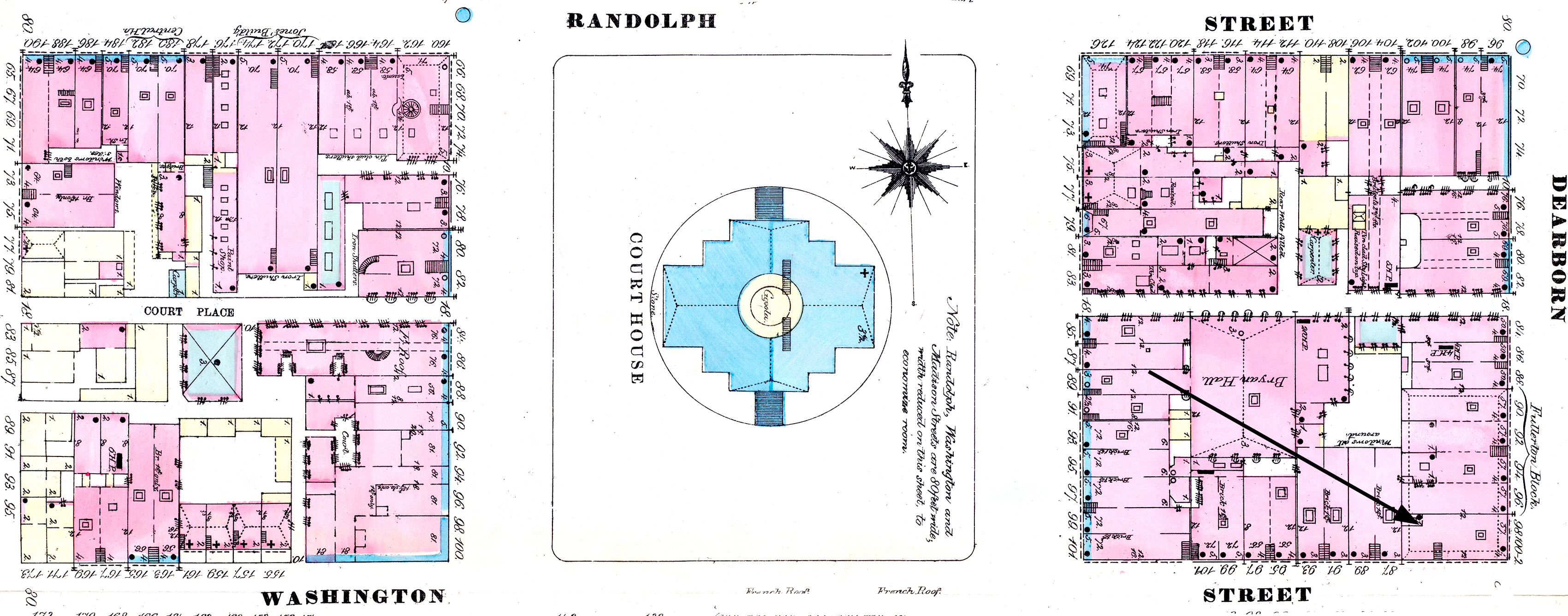
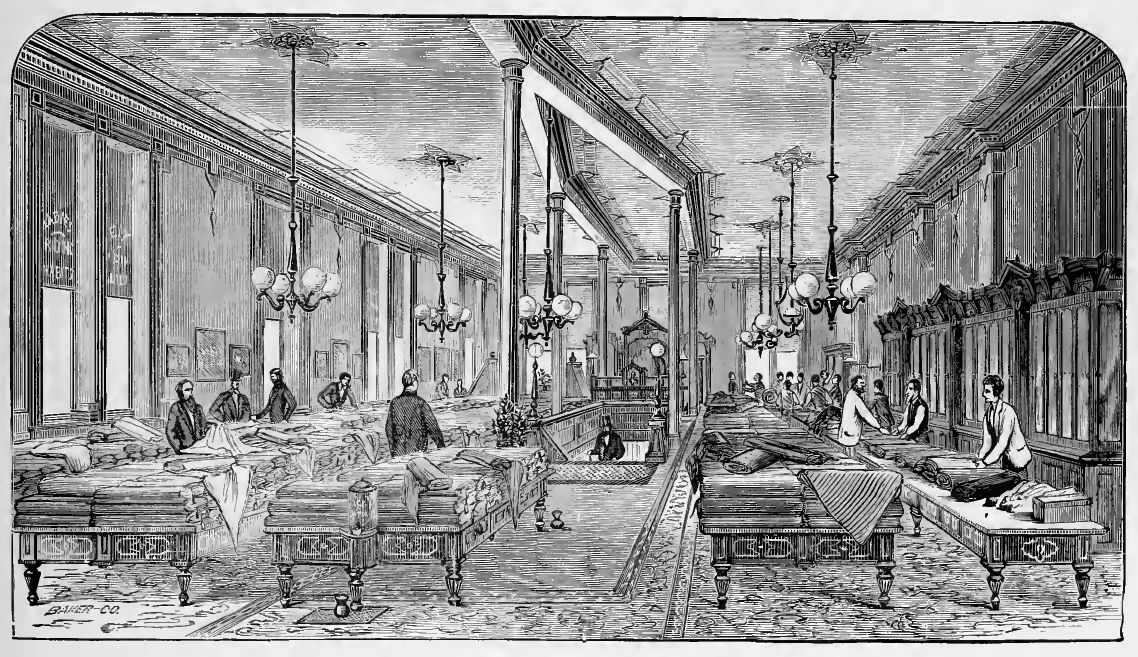
 A very pleasant affair took place on Saturday afternoon and evening, memorable after it class in business circles, the opening of Edward Ely’s new and elegant clothing establishment in