Marshall Field Wholesale Warehouse
Life Span: 1885-1930
Location: Quincy, Franklin, Adams and Wells Streets
Architect: Henry Hobson Richardson
- Lakeside Annual Directory of the City of Chicago, 1904
Field Marshall (Marshall Field, Lorenzo G. Woodhouse, Harlow N. Higinbotham, Joseph N. Field and John G. McWilliams) dry goods, wholesale Adams, Quincy, Franklin and 5th av. retail State ne. cor. Washington
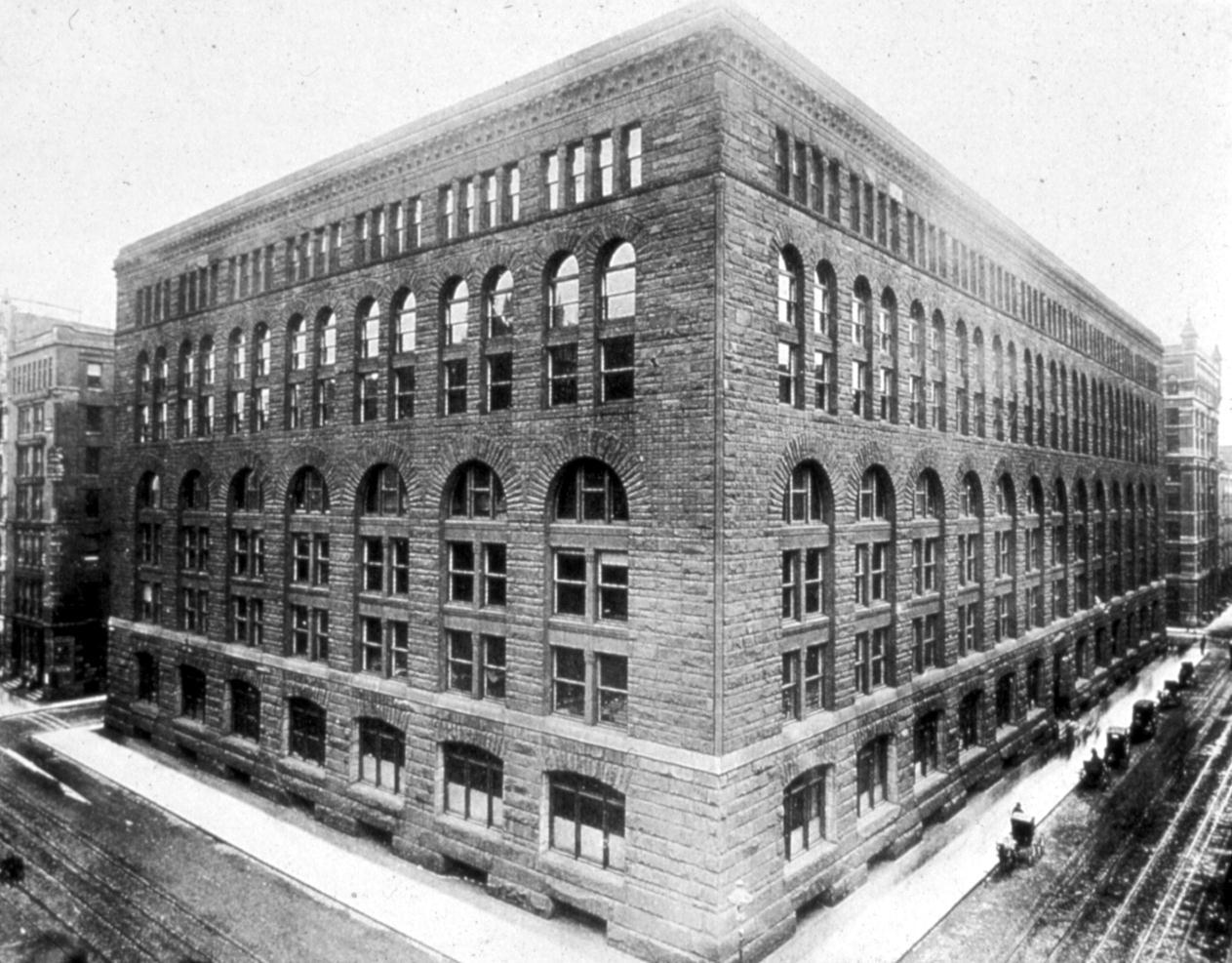
- Marshall Field Warehouse
Quincy, Franklin, Adams and Wells Streets
Inter Ocean, December 31, 1881
MARSHALL FIELD & CO.
This great house has had a very large increase in trade the past year and still retains the commanding position which it has occupied in the dry goods business of the country for several years. Each year brings a necessity for more space to accommodate new business, until the great building on the corner of Madison and Market streets has become little more than a salesroom and office. In addition to the building named, which is 240 feet on Madison, running back 200 feet on Market—one of the largest edifices in the world used for mercantile purposes, the firm occupies Nos. 224, 226, 238, and 230 Randolph street, corner of Franklin, a five-story and basement structure, solidly built of stone and brick, known as Warehouse C, and the adjoining building numbered 232, 234, and 236 Randolph street, also five stories and basement, known as Warehouse D. This makes a total of 170 feet on Randolph street 120 feet deep. Nos. 71 and 73 Market street, also a five-story and basement build-ing, is used as a storehouse, and known as Warehouse E. The three upper stories of the gigantic building used as a barn are also used for storage. This building has a frontage of 200 feet on Pacific avenue, numbered from 42 to 60 inclusive, and a depth of 120 feet. In addition to all these there is the magnificent fire-proof building on the corner of State and Washington streets. This building is 150×160 feet on the ground, six stories high, and unquestionably the finest retail store in the world.The buildings occupied by this firm have a street frontage of 825 feet, nearly three blocks in length, and equal to thirty-three ordinary stores Every foot of all these buildings is utilized, and, in addition, the firm always has a large quantity of goods in the government bonded warehouse.
No intelligent man can question the ability of this market to supply the jobbing trade of the West who know anything about the resources of Marshall Field & Co. Under their roof alone the Western merchant can all his stock in every line to as good advantage as it he personally visited the principal markets of the world. An an illustration, the carpet department carries as large a stock and as great a variety as any exclusively carpet house it. the country.
In addition to the brauches at New York, Manchester, and Paris, which bais honse maintains, they have twelve buyerr in the various Europeaa markets. This close connection with the leading markete of the world is of the greatest importance to Western merchants, as it puts within their reach the newest goods and the latest styles at lowest prices, independently of the New York market.
This house has been for a year or more the sole agents in the United States of the renowned Alexander kid gloves, and is the owner of several leading brands of different fabrics. The upholstery department carries a stock that for quality and variety is unsurpassed The furnishing of theaters, public buildings, steamboats, etc., receives especial attention from the firm.
The gross sales of Marshall Field & Co, in 1865 were eight and a half millions; in 1881 they reached nearly twenty-six millions. This remarkable growth has not been fitful or spasmodic, but constant and progressive, the result of wise foretbought and thoughtful and systematic conformity with the established laws of trade.
Chicago Tribune, September 30, 1885
 It was learned yesterday from a contractor who is in a position to know that in about two weeks from date work will begin on one of the largest and finest buildings of the kind that have ever been planned in this city or in any other in the country. It is the intention of Marshall Field to put up a ten-story fire-proof warehouse which shall cover the whole of the block owned by him bounded by Adams, Quincy, Fifth avenue, and Franklin. This is a small block as compared with most of those of the South Side, but it is so large that the building which shall cover the whole of it will be an enormous one. None other, indeed, would do for a wholesale trade of such dimensions as that of Field’s. It is understood that the reason why the present one is to be abandoned is not only because there is not room enough there, but also because the ground does not belong to Mr. Field. It is made up of many lots which were leased by Field & Leiter when they built there after the fire, and the lease will expire in about three and a half years. Part of the ground—the larger part—is owned by L. C. P. Freer, some belongs to the estate of Dr. Foster, and part of it to the Peacock estate. It may not be easy to get a new lease on satisfactory terms, and then, too, there is not ground enough. Besides which; the corner of Madison and Market might pay better were it used for something beside a wholesale store. The plans for the immense warehouse have, it is understood, been prepared by S. S. Beaman, and it is the certainty that the work of excavating will begin so soon which has put the contractors on the alert.
Chicago Tribune, October 11, 1885
Marshall Field’s New Warehouse-His Purchases of Boulevard Property.
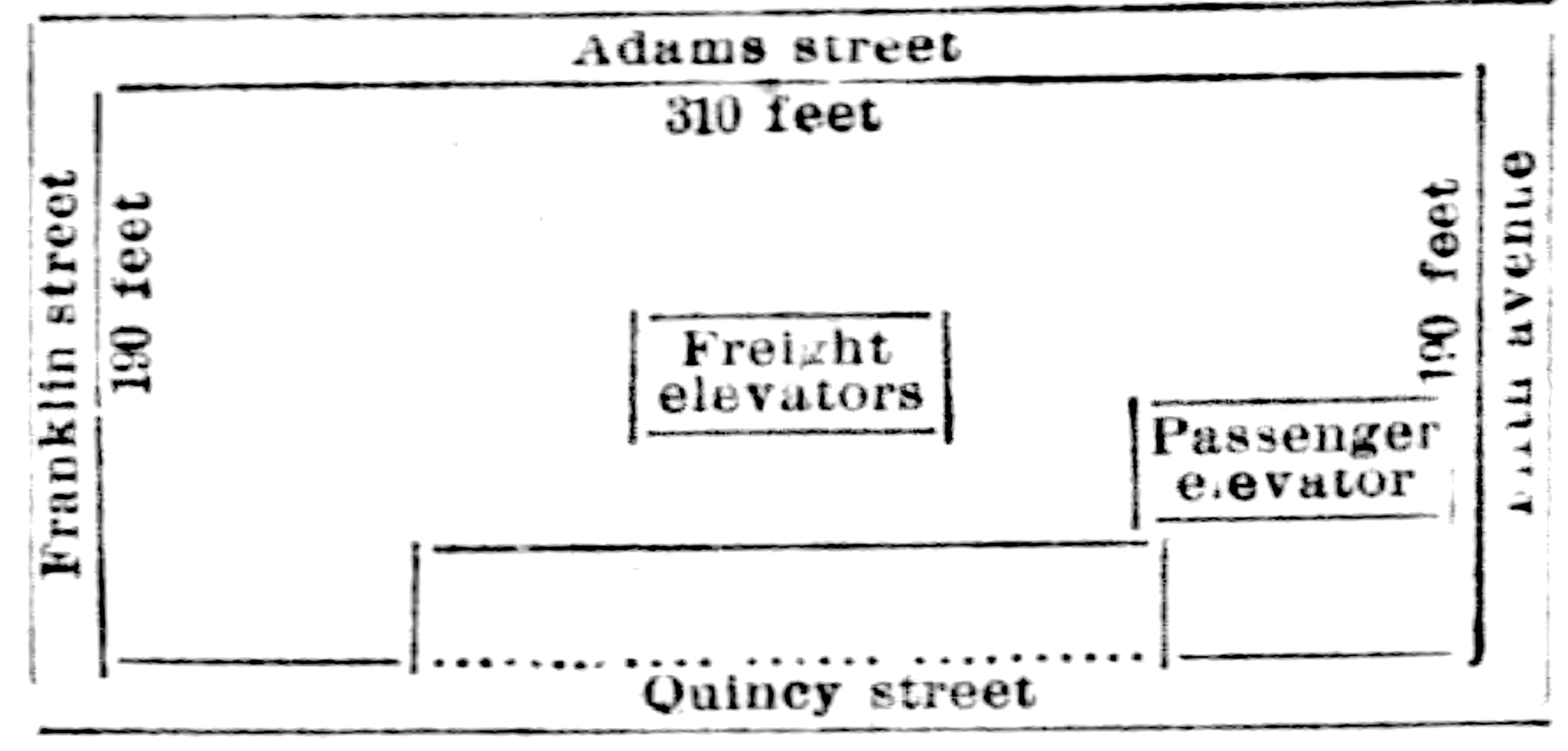
It is understood that some of the material for the building to be erected by Marshall Field on Fifth avenue, Adams, Franklin, and Quincy streets has already been contracted for, tough it is not known whether the work will actually begin on it this fall. Mr. Richardson, the famous Boston architect, will draw the plans. The exterior will have more elegance of design than is usually seen in business structures. Of the seven stories the walls of the two lower ones will be or stone and will necessarily be massive to support the immense weight of the upper stories and goods stored within. The upper stories will be of brick. There will be a large quantity of plate-glass in the construction. It is intended that the shipping facilities shall be on the Quincy street front, which will be deeply recessed for that purpose. Freight elevators will be built close to that front, and there will be two passenger elevators in the building. Thefollowing sketch will give an idea of the shape of the structure:
Inter Ocean, June 18, 1887
A PALACE OF TRADE
Glimpses of Marshall Fields’ New Wholesale Store and Some Facts About the Merchant Prince.
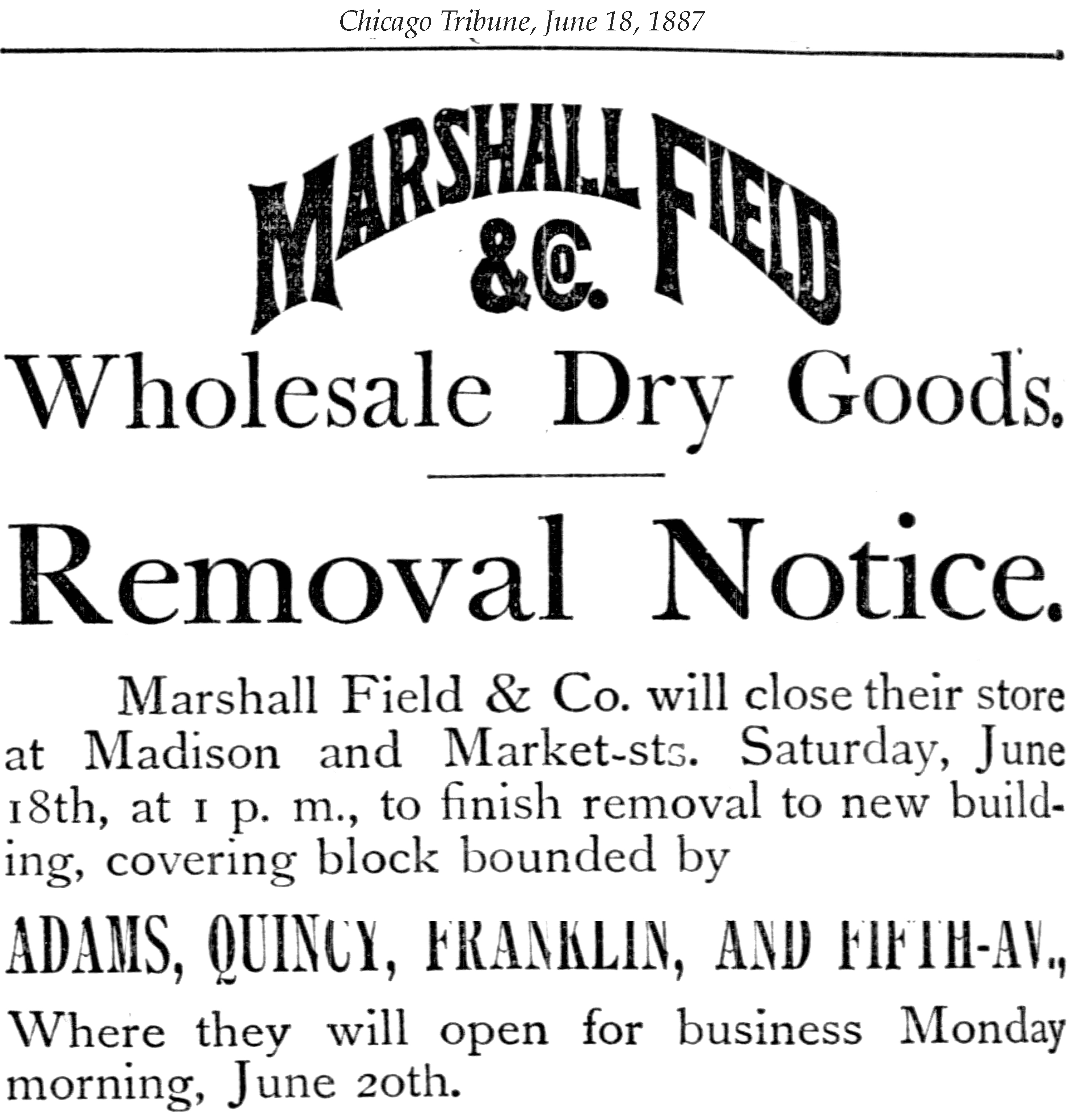
Marshall Field & Co, haring completed the fitting up of their handsome new wholesale warehouse, will open it up to the public on Monday, The building covers the entire block of ground bounded by Adams, Franklin, and Quincy streets, and Fifth avenue, and is undoubtedly the finest structure this country designed for commercial use. Its dimensions are 325 feet front by 190 feet deep, or about one and a half acres; it is seven stories and basement in height, and the total floor space which will be occupied for selling goods on all floors combined in about twelve acres The stone used on the exterior walls is Missouri granite and Massachusetts brown stone, and in the construction of the building great care has been taken to combine strength and simplicity, and to secure a superabundance of light for the interior.
On the Adams front, there are thirteen broad windows on each floor, except the main fear, where an entrance way sixteen feet wide, furnished with three double doors, is placed in the center of the building. On the Fifth avenue and Franklin street trout there are seven broad windows on each toor, and at the rear on Quincy street a recess one hundred and fifty feet long and about twenty feet deep is constructed in the center of the building for the accommodation of the shipping department, thereby enabling the teams to load and unload under a glass and iron roof without in any way interfering with the traffic on the streets. This recess, extending the full height of the building, enables additional windows to be placed in the two wings, thereby securing more light for the various departments. On entering the building the visitor is at once impressed with its solidity and enormous size. It is practically divided into three section by two massive fire walls, running through above the roof, the two openings in each wall being protected by four fire-proof doors. In order to render the building as far as possible fire proof, what is known as the mill construction has been adopted in the construction of the floors, or in other words there is an air space between the ceiling of one room and the floor of the one above it. All the boilers used for driving the steam elevators and also for warming the building are placed in the old Newsboys’ Home Building, on Quincy street, and the steam-pipes are conveyed to the new structure through a tunnel under Quincy street, so that there will be no fire of any description in the building, except in case of an accident to the electrical lighting apparatus, when gas will be used, The sales-rooms will be lighted by arc lights and the offices by incandescent lamps, and in order to guard in every possible way against fire mercurial fire alarms and Grinnell annunciators are provided, in addition to which six watchmen will be on duty all night in the interior, and two on the exterior. There are on the outside of the building three fire escapes and five stand-pipes, to which the city fire department can attach hose in case of an outbreak of fire.
Two passenger elevators and three broad stairways furnish access to the various floors, and there are also freight elevators, all of which can be utilized to clear the building of clerks in case of an emergency, from which it will be seen that every means have been adopted to render the building fire proof and to protect those whose business requires their attendance there. There will be thirty-three departments in the building arranged as follows:
In the basement, domestics and upholstery hardware; the first story will contain the offices, upholstery goods, prints, silks shawls; the second will be devoted to cloths, flannels and dress goods; the third to underwear, blankets and cloaks; the fourth to linens, to white goods, handkerchiefs, laces, etc.; the fifth to notions entirely; the sixth to notions, carpets, mattings and oil cloths; and the seventh floor to rugs and the packing department. The firm, which in its wholesale department employs twelve hundred clerks and assistants, and in the retail department between thirteen and fourteen hundred clerks, started in 1865 in Lake street, as successors to the business of Potter Palmer, and in 1868 removed to the building on the corner of State and Washington. streets now occupied by the retail department. After the big fire the retail and wholesale departments were separated, and the building at the corner of Madison and Market streets
was erected for the wholesale trade, the retail departments being placed in the new building erected on State and Washington streets. The steady increase of business and the demand constantly made upon the firm for additional space in which to exhibit and store their goods, rendered the construction of the new building just finished an absolute necessity, and in round numbers about two millions of dollars bare been expended in the purchase of the site and completion of the structure. The firm is the largest legitimate jobbing house in the country, has branches in New York, Manchester, England; Paris, and Chenmitz, and does a business amounting to about thirty million dollars yearly.
Rand, McNally’s Bird’s-Eye Views of Chicago, 1893
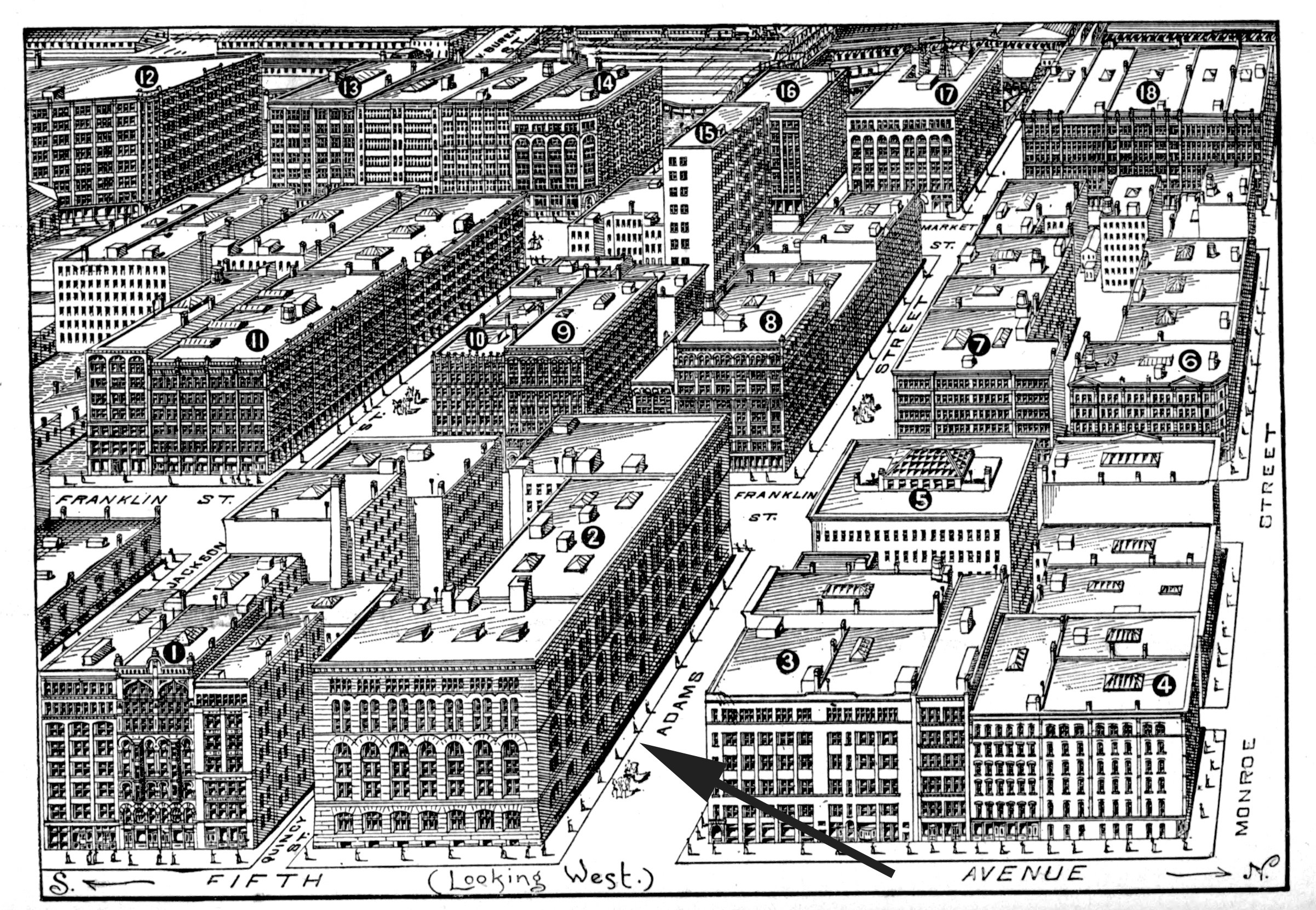
② The Marshall Field & Co. Building (“Wholesale).
This structure one of the most impressive in the whole world is described in our chapter on “Notable High Buildings,” although the building is an exception in that category of edifices. While only partial attempts were made to fire-proof its interior, the outer walls have 110 equal for solidity in the city. Great monoliths of red granite compose the exterior to the cornice of the upper or seventh story. Inner partitions of iron, shutters of iron, and a well-disciplined watch, add to the security of the colossal house. It fronts on the south side of Adams 325 feet, on Franklin Street and Fifth Avenue 190 feet, and is 130 feet high, with 7 stories and basement. There are 13 elevators, 12 acres of floor space, and 1,800 employes. The visitor may enter and look about for a moment, beholding a wonderful hive of actual, time-saving trade. Erected in 1886.
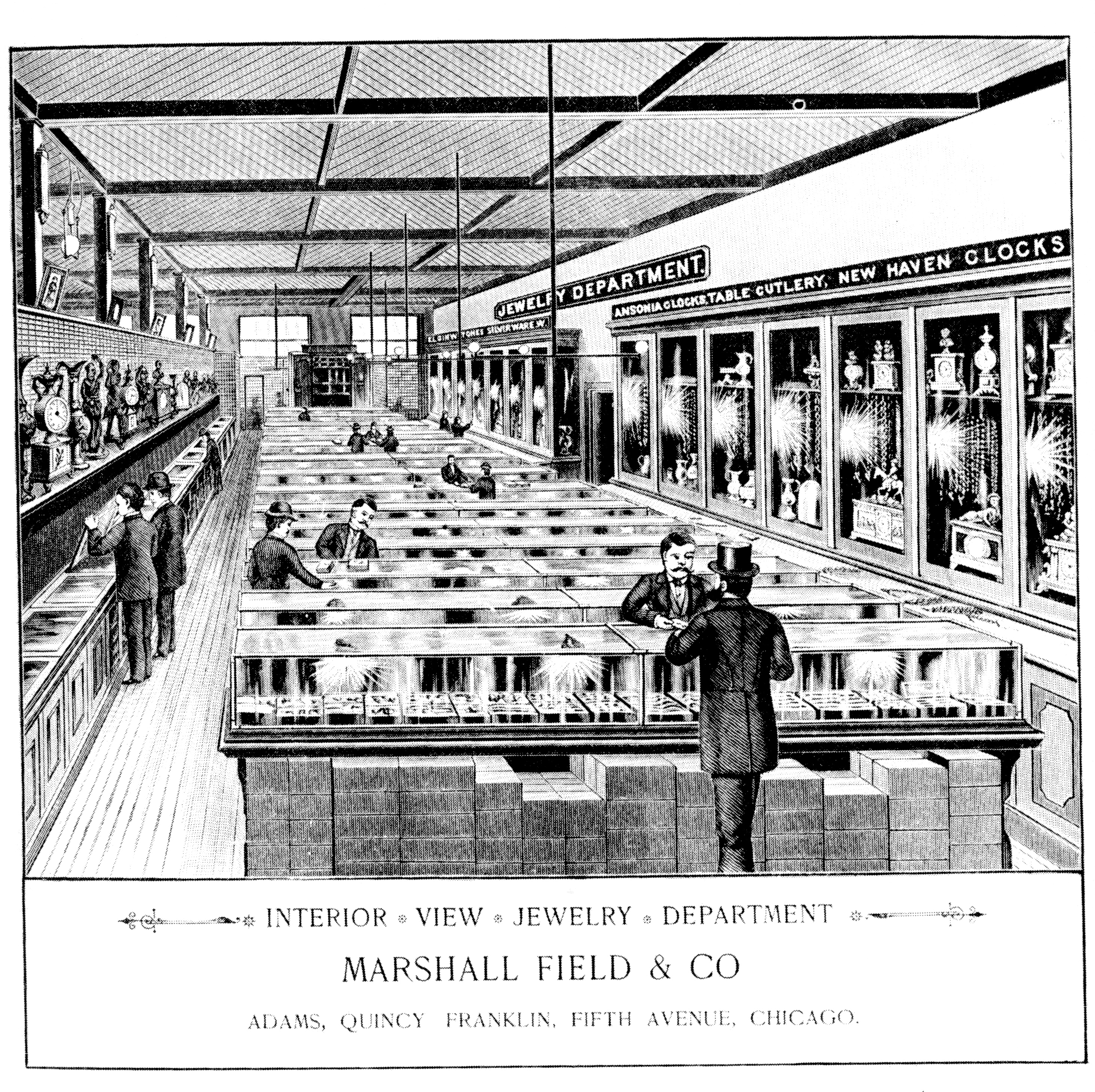
Marshall Field and Company Wholesale Jewelry Department Catalogue 1894.

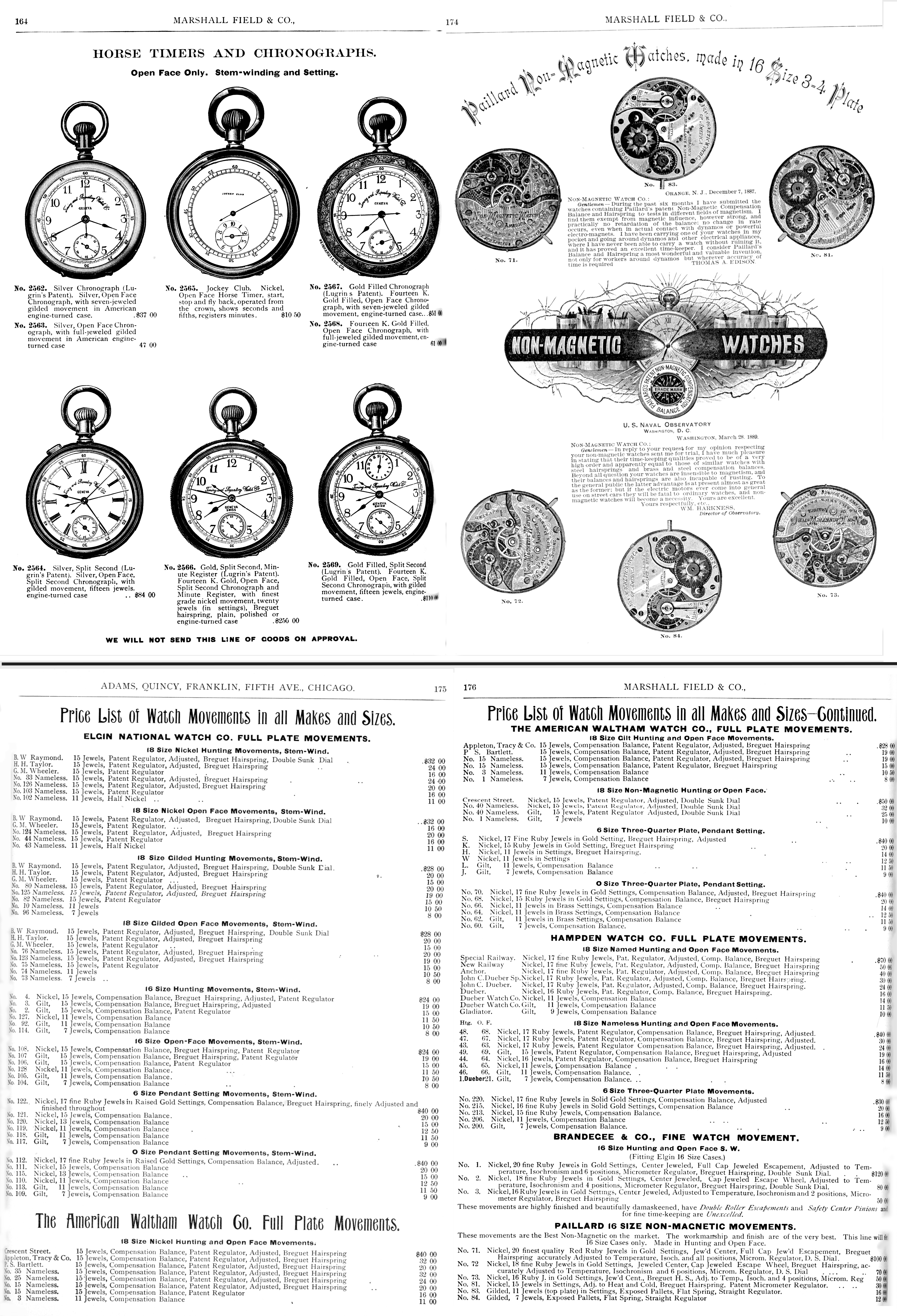
- Before 1908 Marshall Field & Co. sold a high quality range of pocket watches. These watches/movements were manufactured by companies such as Paillard’s Non Magnetic Watch Co., Waltham Companies, Hampden and Brandegee & Co. as reflected above in the 1894 Marshall Field Wholesale Jewelry Catalog. Customers often bought movements and cases separately.
Beginning in December, 1908, Marshall Field & Co. created their own private label pocket watch line and named it “Ariston.” The trademark was patented on May 18, 1909. The watches were manufactured by the Illinois Watch Co. in Springfield, Illinois. The line ended in 1916.
These watches are much sought after by collectors for their quality. The unique enamel dials were marked Ariston USA, Ariston Jr and Ariston Rated. The movements were marked “Ariston” on the movement along with MF&Co logo and on the back of the case as well.
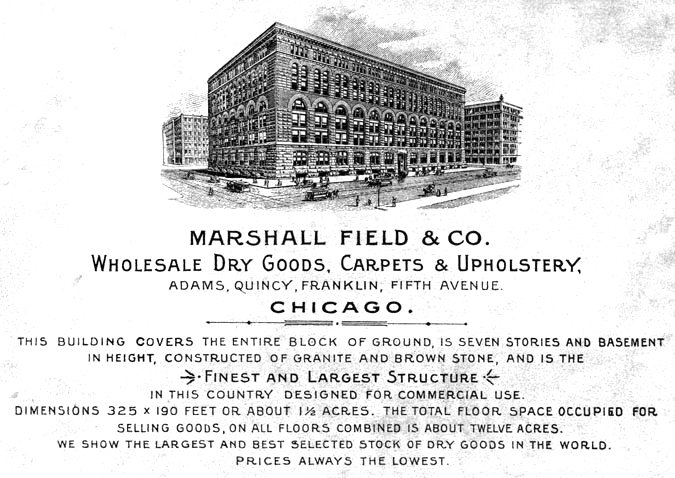
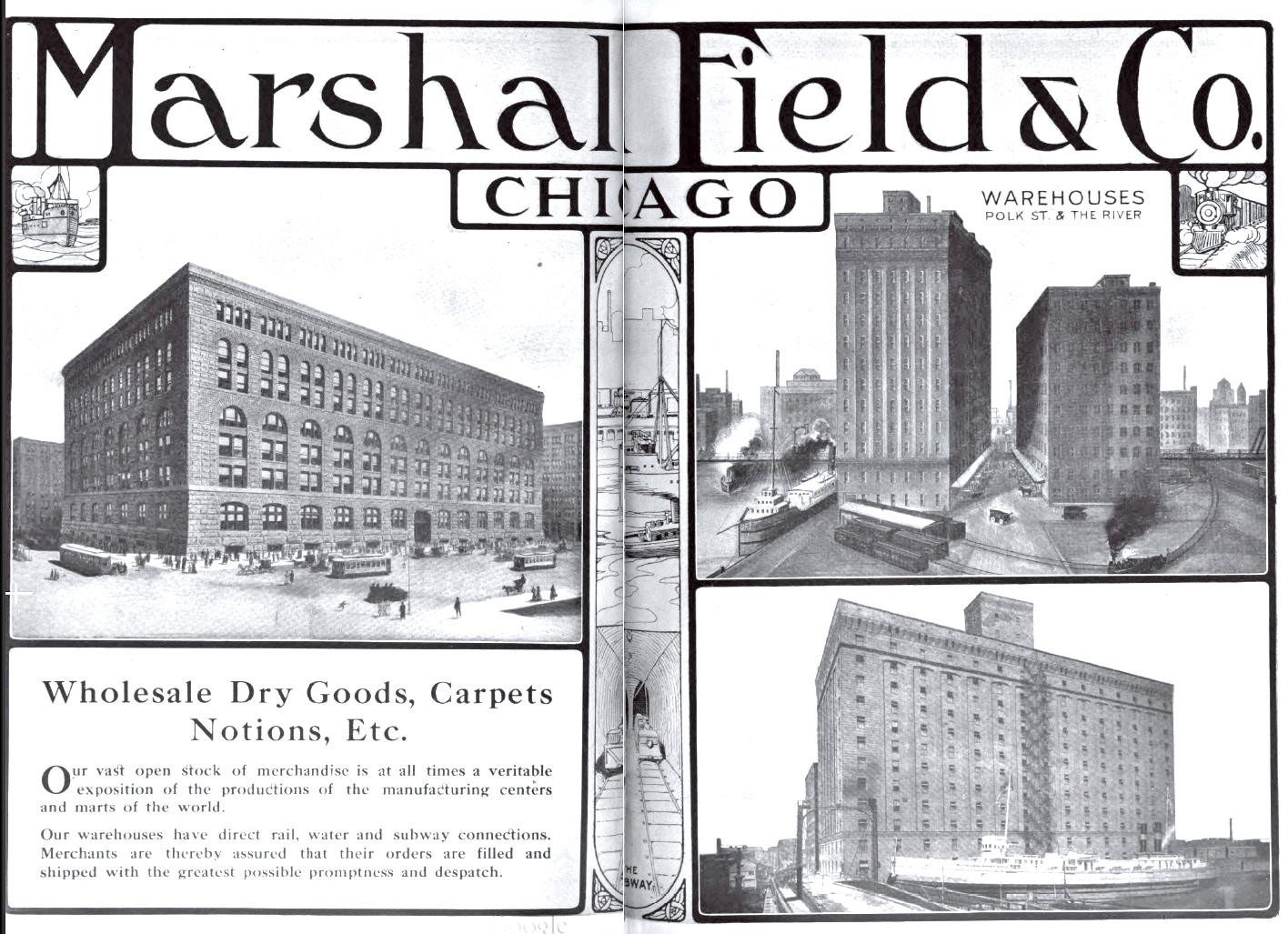
- Marshall Field Wholesale Advertisement
1907
Inter Ocean, August 3, 1912
 A notable deal on the West Side was disclosed yesterday by its being recorded in the sale of the warehouse property at the northeast corner of Fulton and Desplaines streets by George E. Spry to Frederick W. Matthiessen of La Salle, 111., for a nominal consideration, subject to an incumbrance of $165,000. The transaction was negotiated by White & Tabor for the seller and W. A. Merigold & Co. for the purchaser. The property is 170 feet square and is occupied by a seven story ware. house structure under lease for six years to Marshall Field & Co. The buildings at Fulton and Desplaines were occupied at one time by Sears, Roebuck & Co. Mr. Spry obtained in exchange for his equity in the property the vacant property at 733-35 South Dearborn street, near Polk street, fronting fifty feet. upon which a valuation of $85,360 is placed by the board of review; thirty acres of land in Washington Heights and a tract of 160 acres at Forty-Eighth avenue and Ninety-First street.
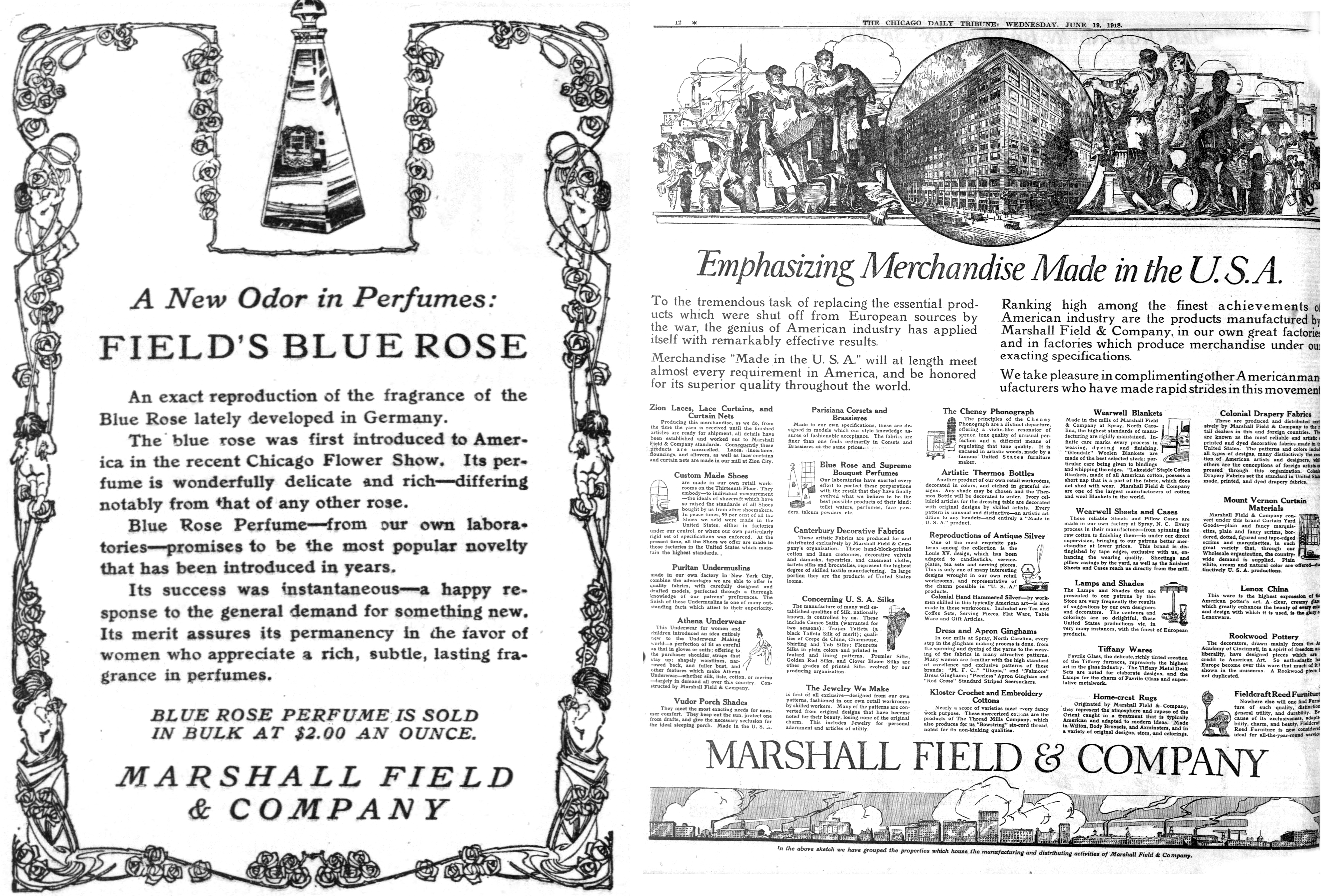
Chicago Tribune, June 20, 1912
Chicago Tribune, March 12, 1927 (Excerpt)
Replaces 12 Present Warehouses.
Some idea of the magnitude of the proposed concentration of the Field manufacturing, storage, and wholesale departments can be gained when it is known that twelve warehouses and factories throughout Chicago are to be moved to the new building.
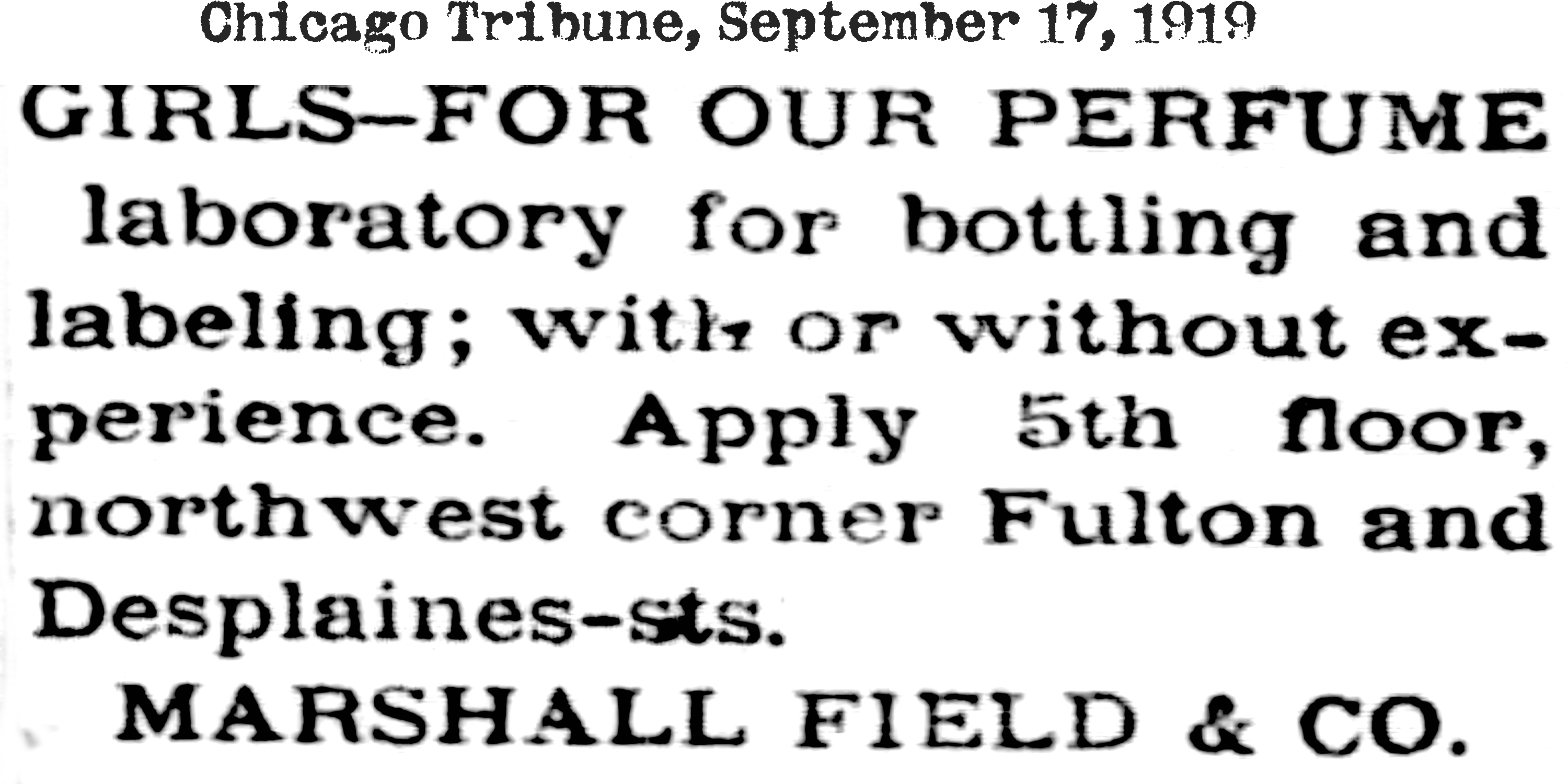
These properties are at Polk and the river, Polk and Ellsworth, the Pennsylvania terminal, North Pier terminal, Fulton and Desplaines, Fulton and Jefferson, 14th and Indiana, 17th and Wabash, 14 North Sangamon, 618 South Canal, 705 West Harrison, and 308 West Madison.
In addition to these is the dignified old red granite wholesale house on Adams, between Wells and Franklin, designed by H. H. Richardson, famous architect of Boston. This is owned by the Field estate and leased to the Field store.
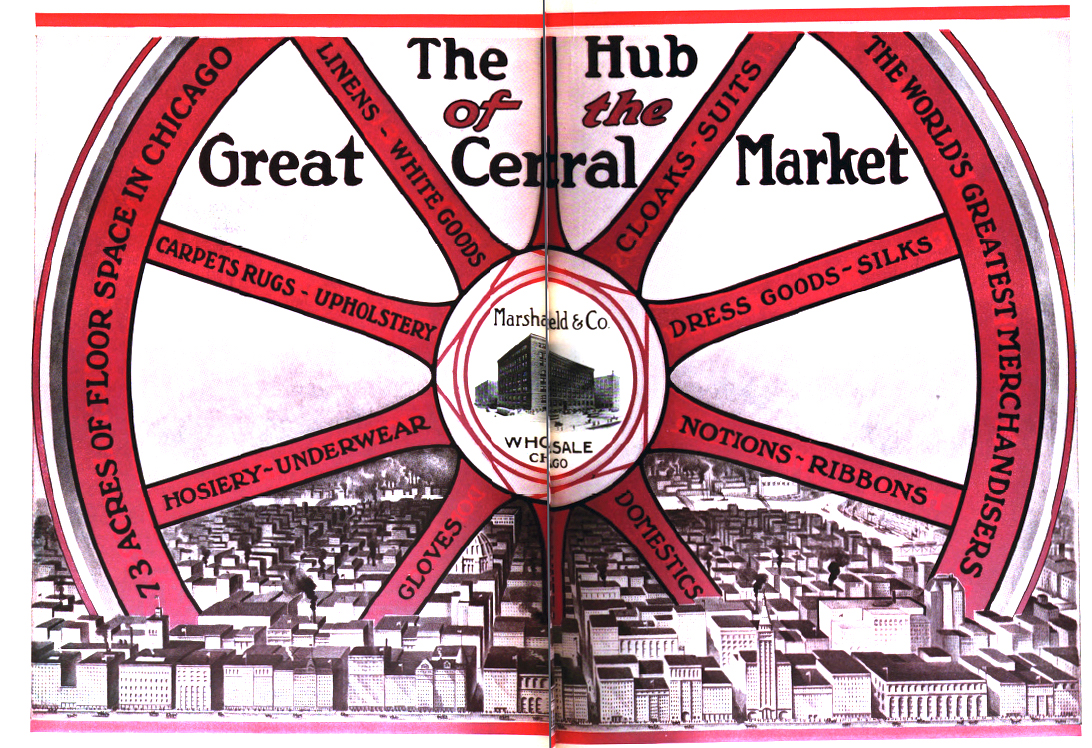
- Marshall Field Wholesale Advertisement
1907
Chicago Tribune, May 4, 1930
 We are satisfying herewith the curiosity of the many Chicagoans who have been wondering what is to become of the huge blocks of granite forming the walls of the old Marshall Field & Co. wholesale store when that landmark is torn down. The blocks of granite will not move from their location—at least for the time being—as they will be used to fill the hole left when the old structure is torn down.
The old Marshall Field wholesale house occupies the block bounded by Wells, Franklin, Adams, and Quincy streets. The ground has been leased for a term of years to R. G. Lydy for use as an open air garage. The use of the land necessitated a level surface and it was decided to employ the old granite blocks to obtain this. It is planned to start tearing down the structure on May 15.
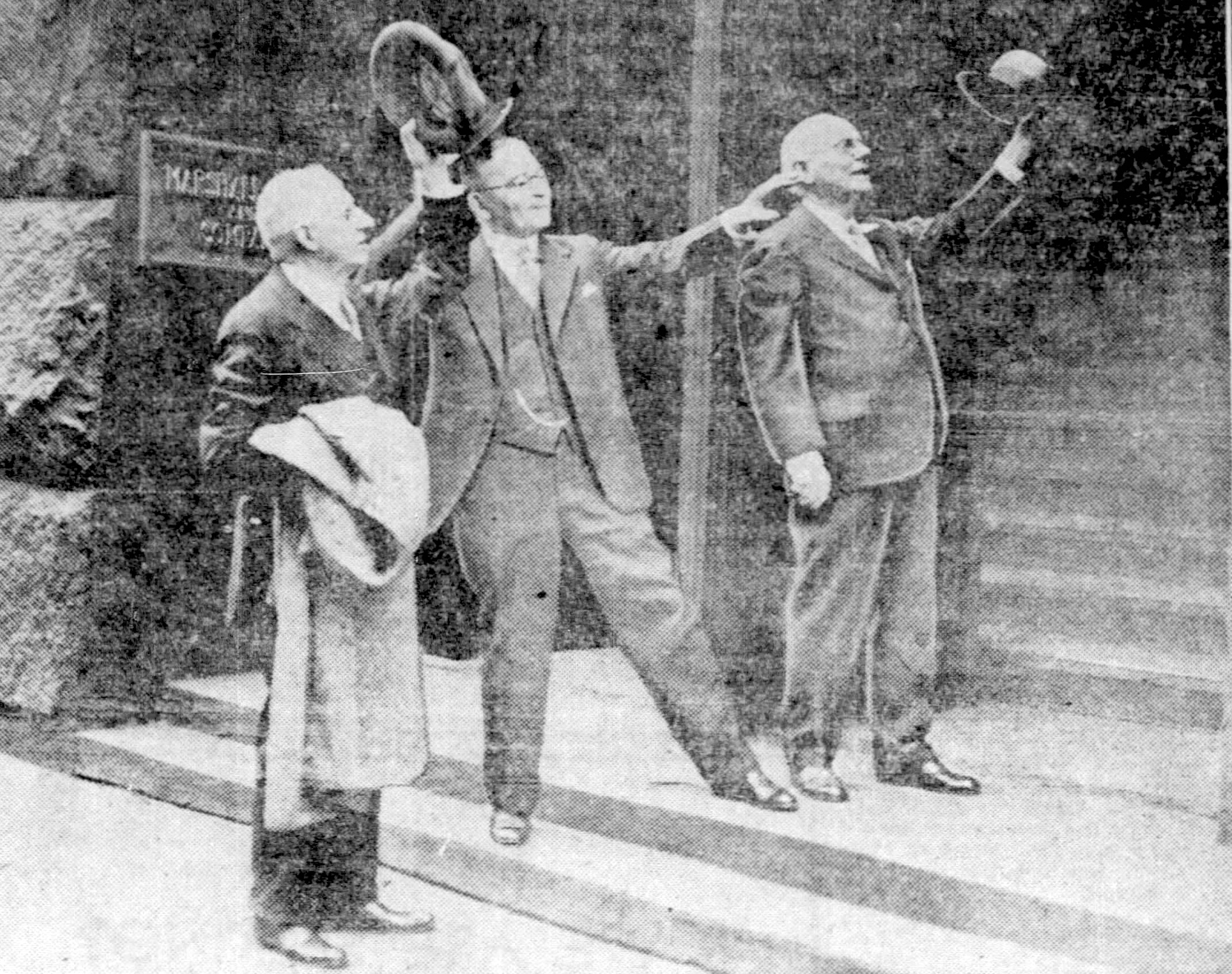
- Left to Right: F. W. Kirchner, Julius Cone, and Edwin H. Marshall, each of whom has served Marshall Field & Co., wholesale, for 59 years, bidding good-by to old building yesterday when the wholesale department moved to new Merchandise Mart. The Mart’s largest tenant, Marshall Field and Company (Wholesale) will occupy the entire third to sixth floors, inclusive.
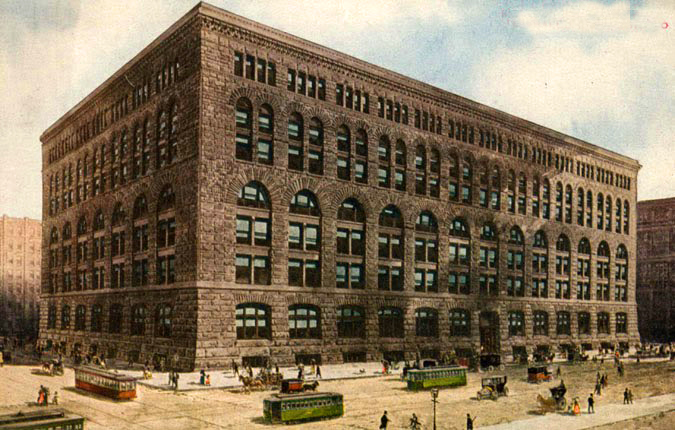
- Marshall Field Warehouse
Quincy, Franklin, Adams and Wells Streets
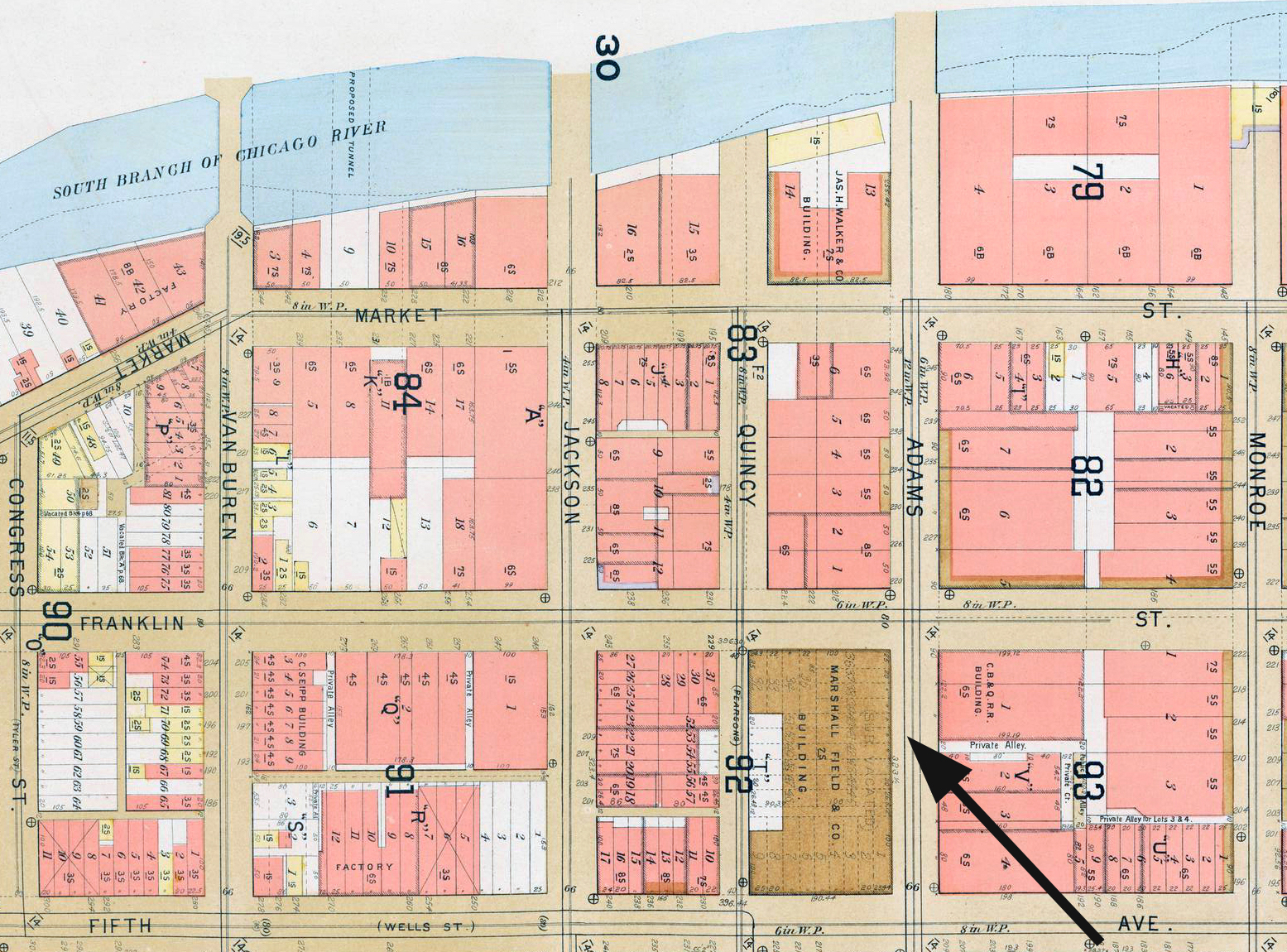
- Marshall Field Wholesale
Greeley-Carlson Atlas of Chicago
1891
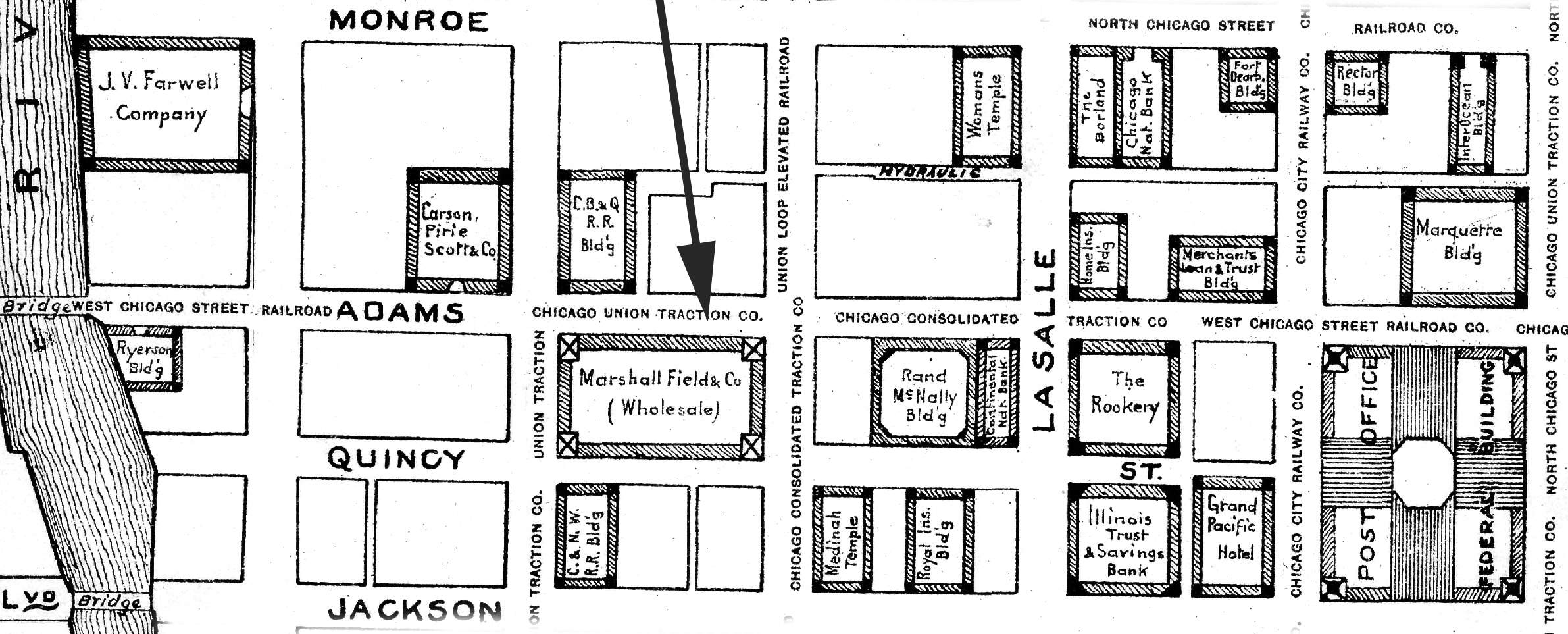
- Marshall Field Wholesale
Map of the Business Center of Chicag
Chicago Directory Compmay
1905
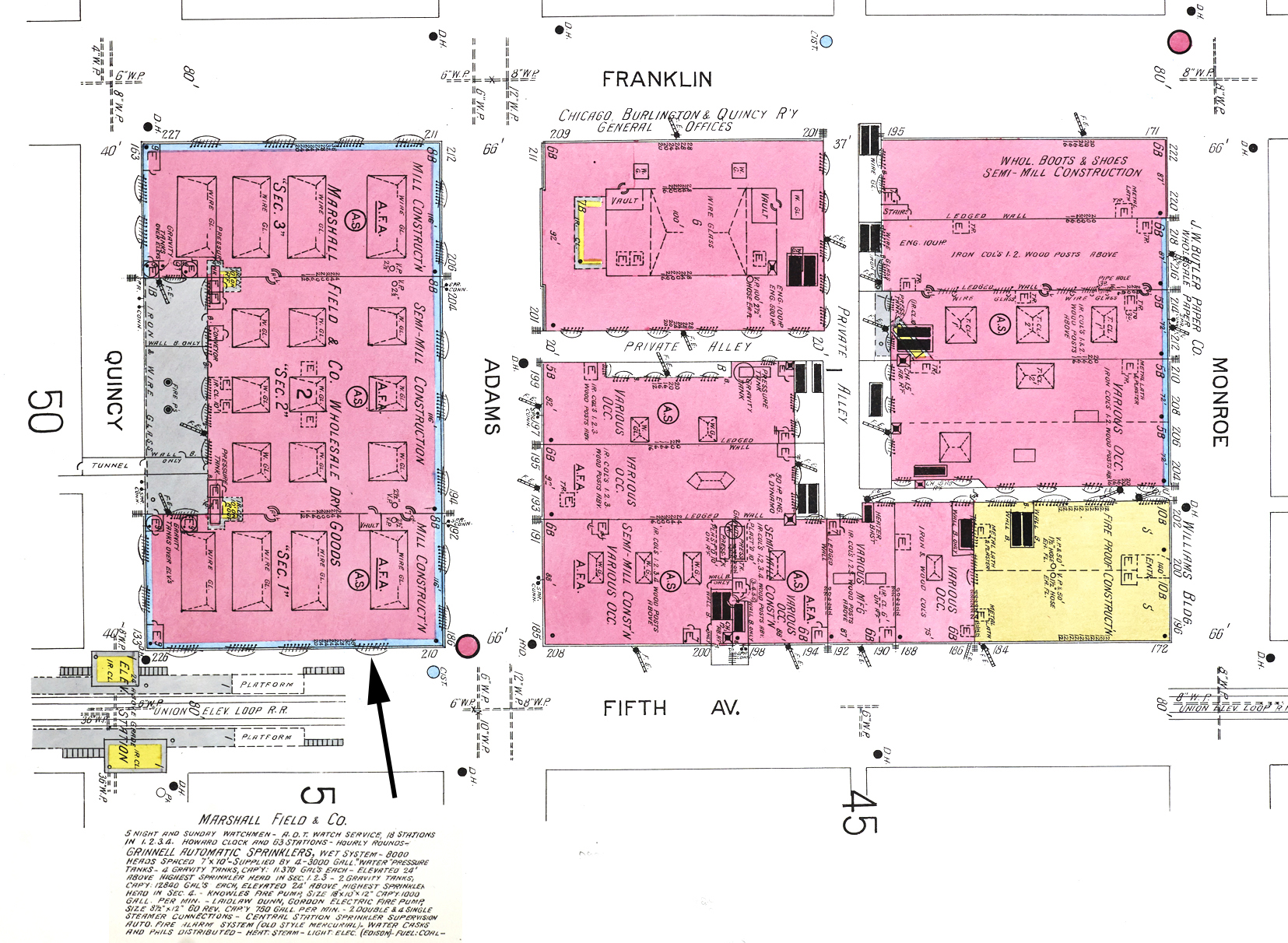
- Marshall Field Wholesale
Sanborn Fire Insurance Map
1906

Leave a Reply