Chicago Chronicle, December 13, 1897
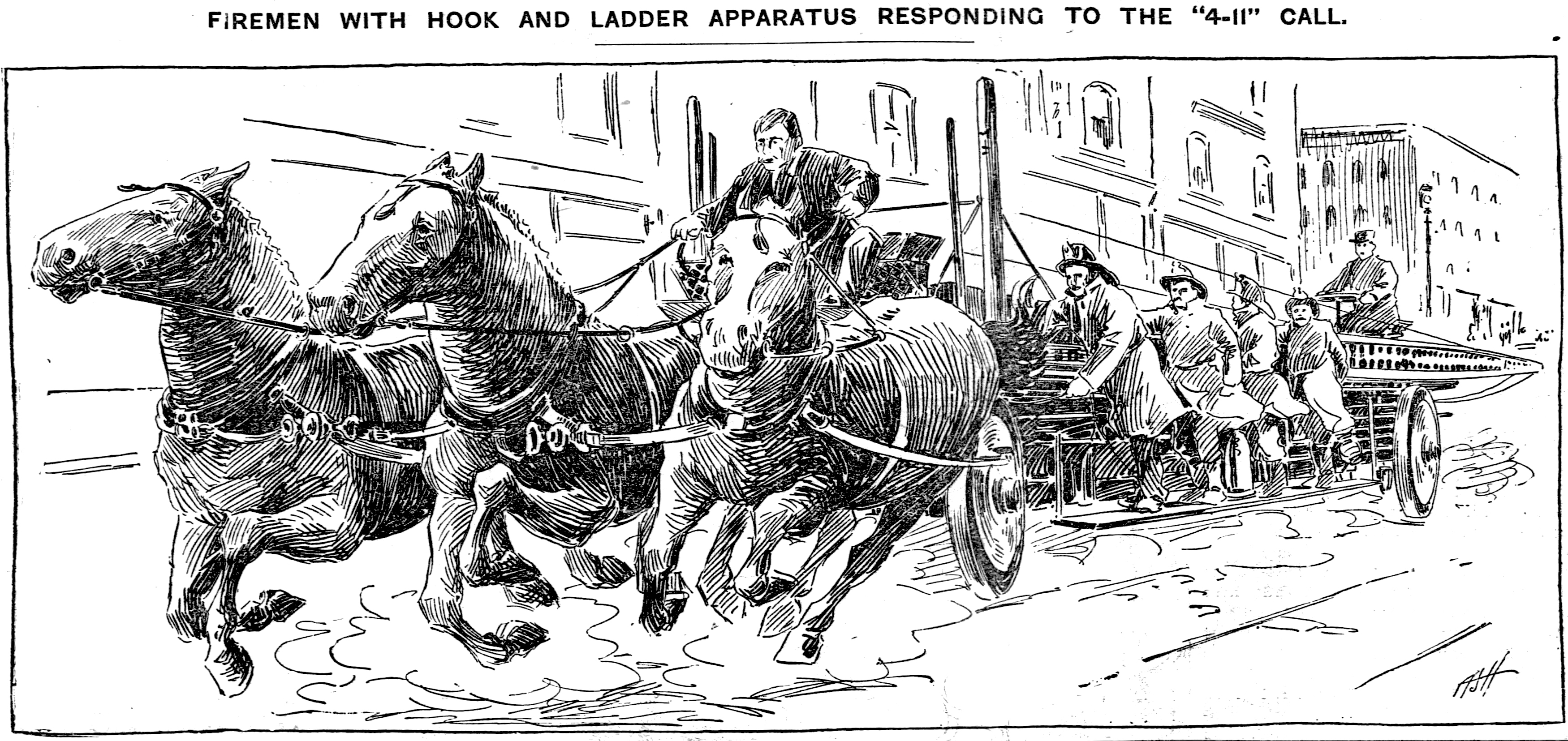
Chicago Tribune, February 7, 1904
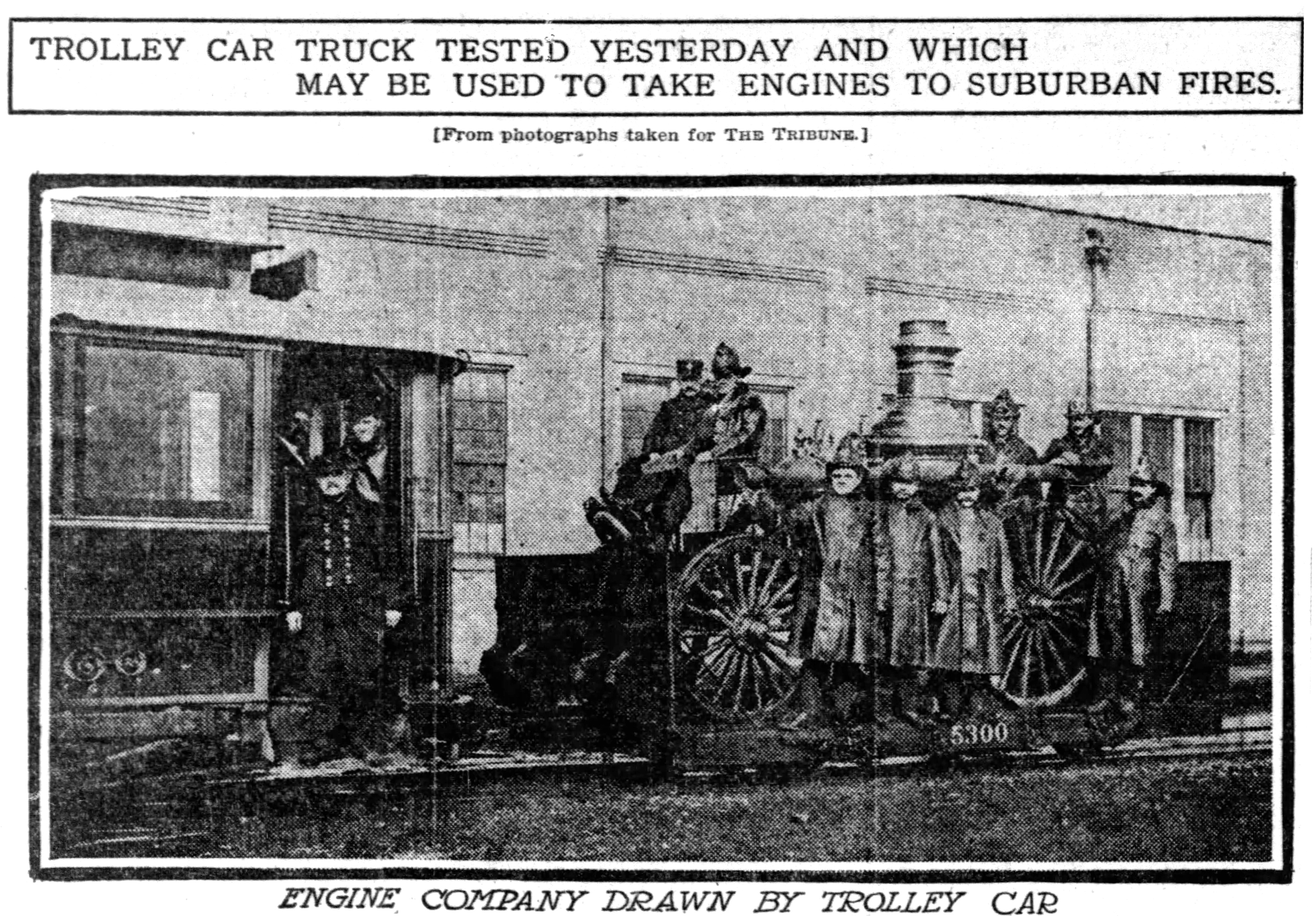
A street car truck, by means of which it is proposed to transport fire engines to distant points at a high rate of speed was tested yesterday afternoon in the presence of Assistant Fire Marshall Horan and Battalion Chief Kenyon. It was suggested that such trucks be used in answering alarms in Kensington, West Pullman, South Chicago, and Irondale. The test was made at Seventy-seventh street and Wentworth avenue.
The platform of the truck is eighteen inches from the ground. Then the gates are lifted and assist in holding the engine in place. The truck is then attached to a trolley car and ready for the first run to the fire.
The firemen expressed themselves as being pleased with the working of the truck. The City railway company, which built the truck, is now building another for a hose cart.


- 1916 Chicago Fire Department
Ahrens Fox Fire Truck

- 1917 Chicago Fire Department
Knox Fire Truck
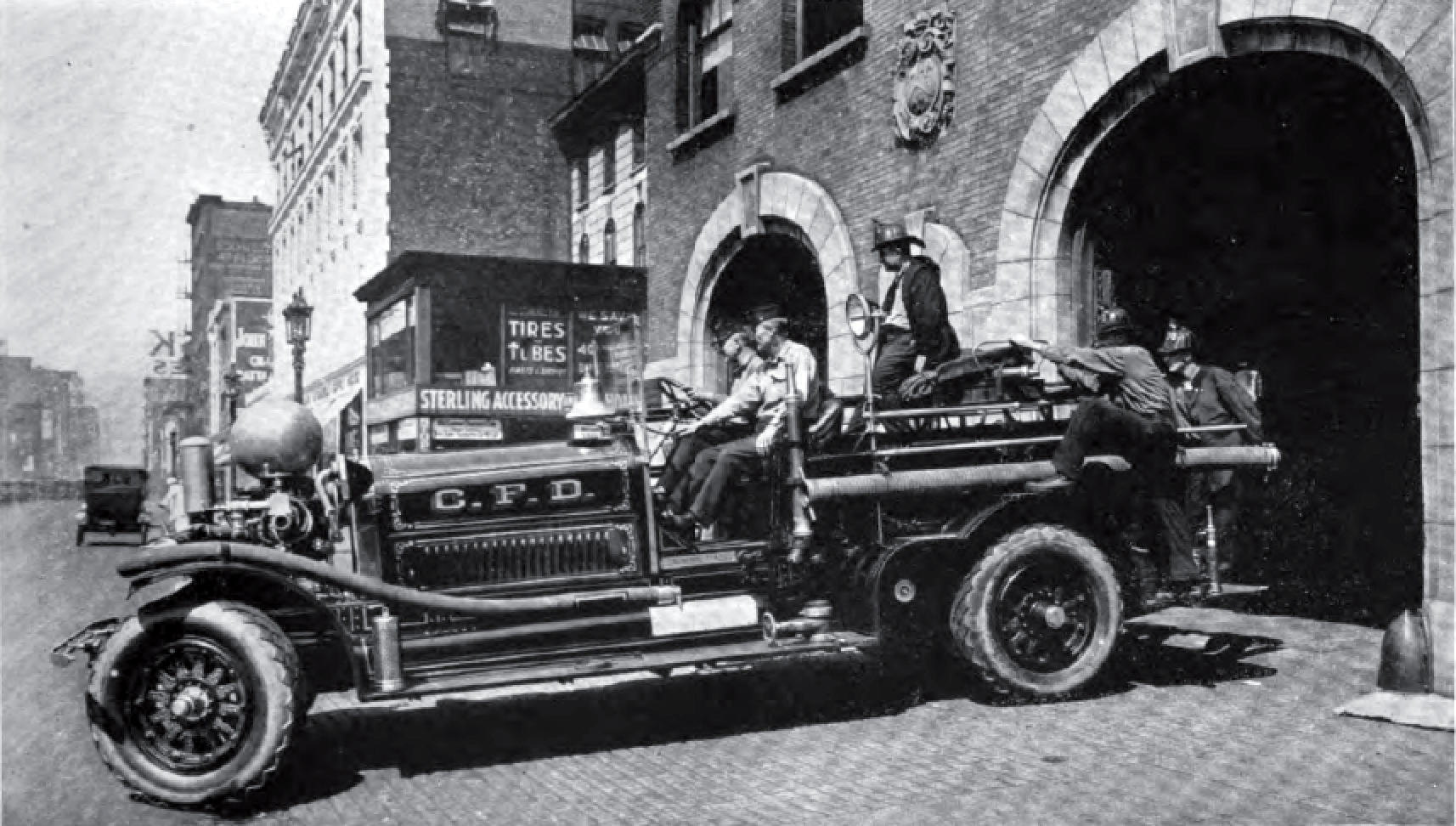
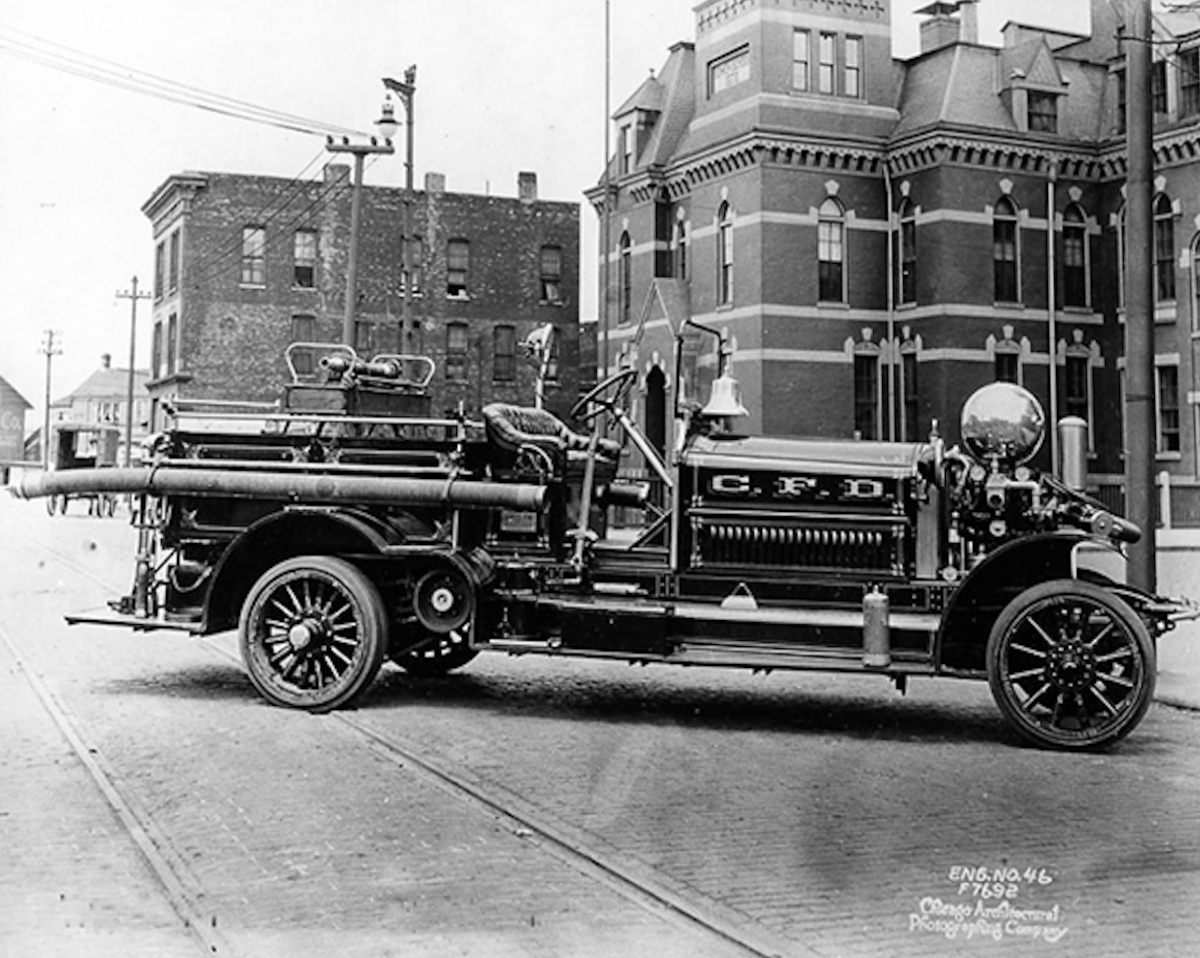
- 1919 Chicago Fire Department
Ahrens Knox Fire Truck
Chicago Tribune, February 5, 1923
CEREMONY FOR LAST RUN TODAY OF FIRE HORSES
Motor to Slip In After They Rush Forth.
Today will be a memorable one in the history of Chicago’s fire department. It will mark the passing of the last fire engine horses and the last horse drawn equipment. The department will become 100 per cent motorized.
At 1:30 o’clock, amis appropriate ceremonies, Buck, Teddy, Beauty, and Dan, drawing a fire engine a hose cart, will dash from the house of engine company No. 11 at 10 E. Grand avenue in answer to their last alarm, and when they return they will be without a home. During their absence a new, shiny motor truck will have usurped their place.
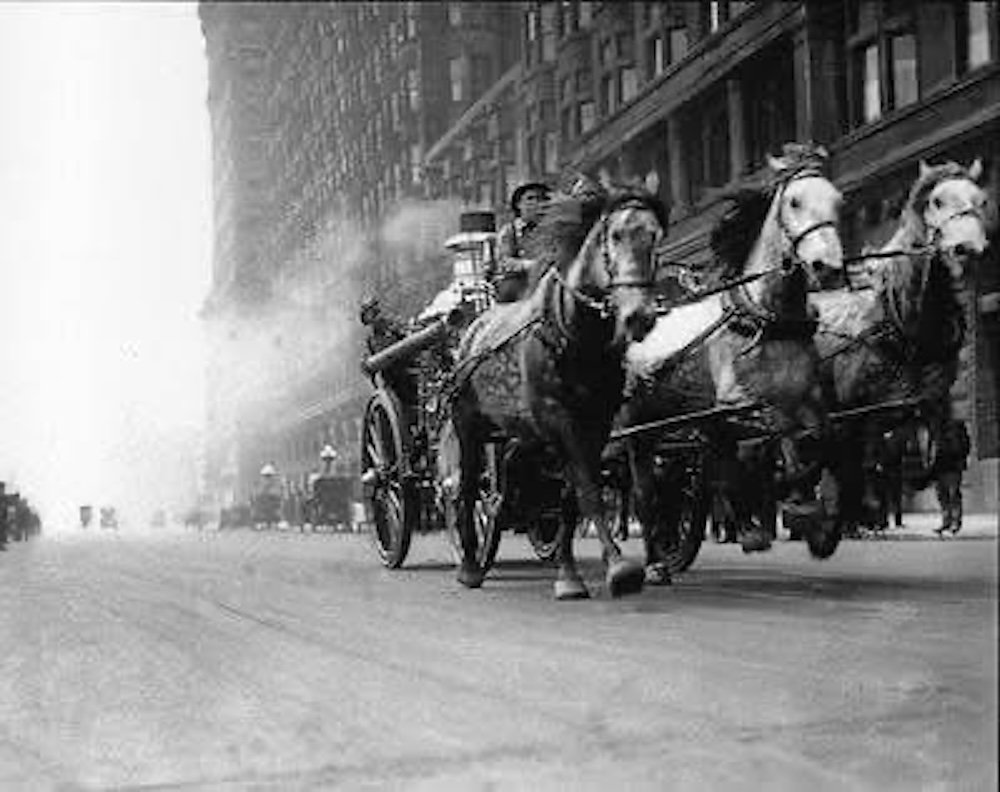
The ceremonies will begin shortly before noon, when the mayor, the aldermen, city officials, several hundred firemen with the department band and the fire fans of three generations will assemble at city hall and parade to the fire engine house.
At 12:30 firebox No. 848 at Chicago avenue and State street will be pulled and the old equipment will answer the alarm. The alarm will prove to be a false one and Buck, Teddy, Beauty and Dan will go out to the stables at the house of correction to be sold at auction.
Motorization of the fire department began in 1917 under the direction of John F. Cullerton, then business manager, and has resulted in the savings of millions of dollars to property owners and taxpayers of the city. The department now has nearly 250 pieces of motor equipment.
Mr. Cullerton, who is now fire commissioner, said:
- The motorizing of the Chicago fire department cost something more than $1,000,000, but it is saving the taxpayers nearly half a million a year, to say nothing of the saving in fire losses.
Mr. Cullerton pointed out that operation of the motor equipment had made it possible for the department to be operated under the double platoon system, where firemen work twenty-four hours and are off twenty-four hours, without an increase in personnel. With horse drawn equipment each engine house had three men, an engineer to operate the engine, and two drivers, one for the engine and one for the hose cart, who were now available for actual fire fighting duty,
With motor engines this work is all done by one man. He operated the truck and then tends to the motor while it is pumping water. The department now has 126 pumping engines, 37 hook and ladder trucks, 10 squad wagons, 2 high powered pressure pumping wagons, 60 automobiles for fire marshals and battalion chiefs, and 2 wreck, service and gas tank wagons.
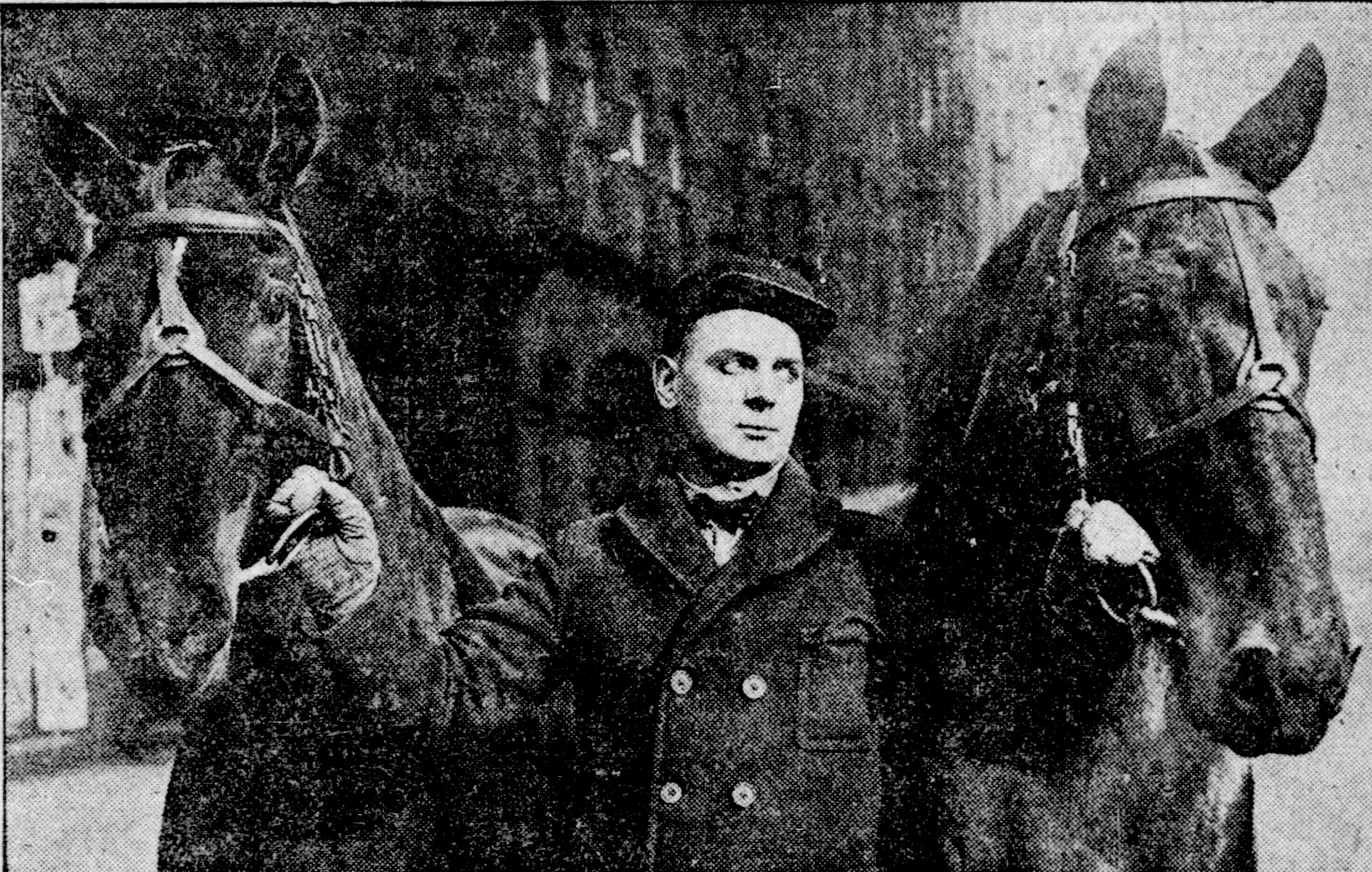
- PASS INTO HISTORY. Buck and Beauty, with their driver, Fireman Luedtke, of Engine Company No. 10 of Austin avenue, who make their last run today. They are the last of the city’s fire horses to be superceded by motor apparatus.

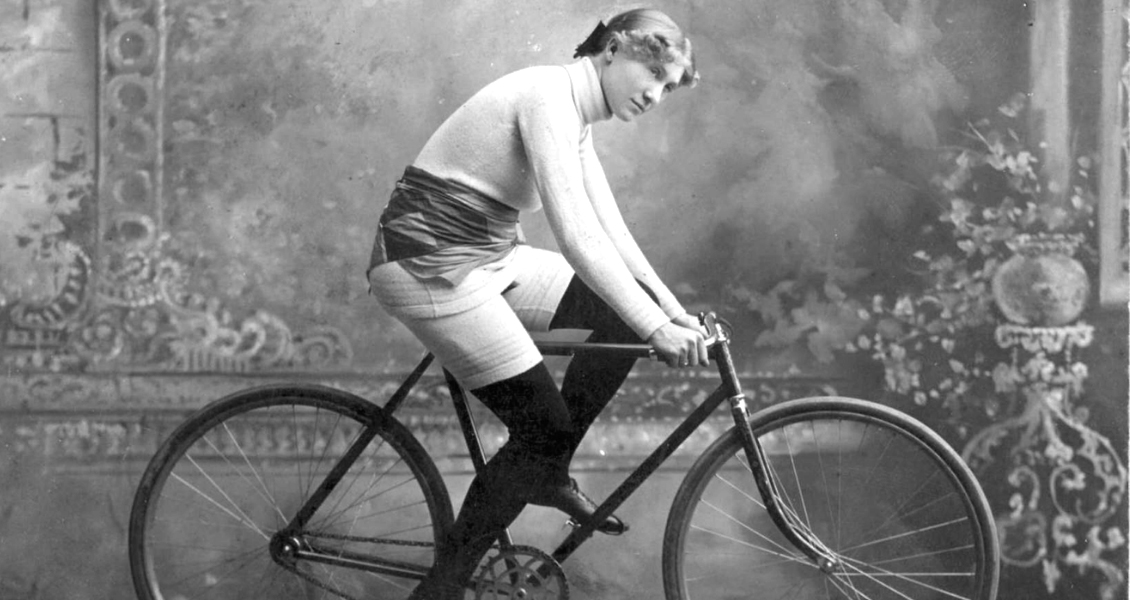

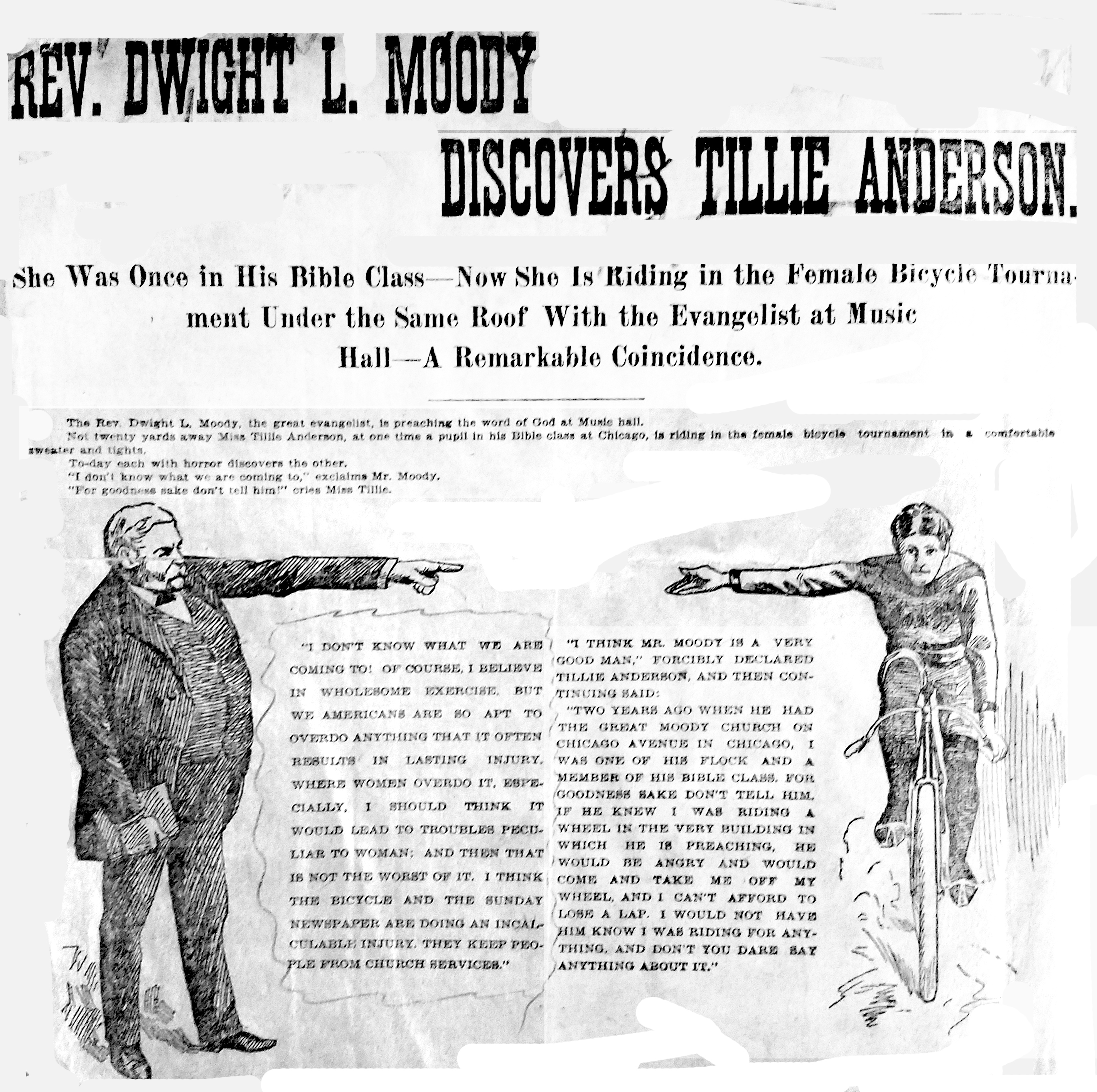
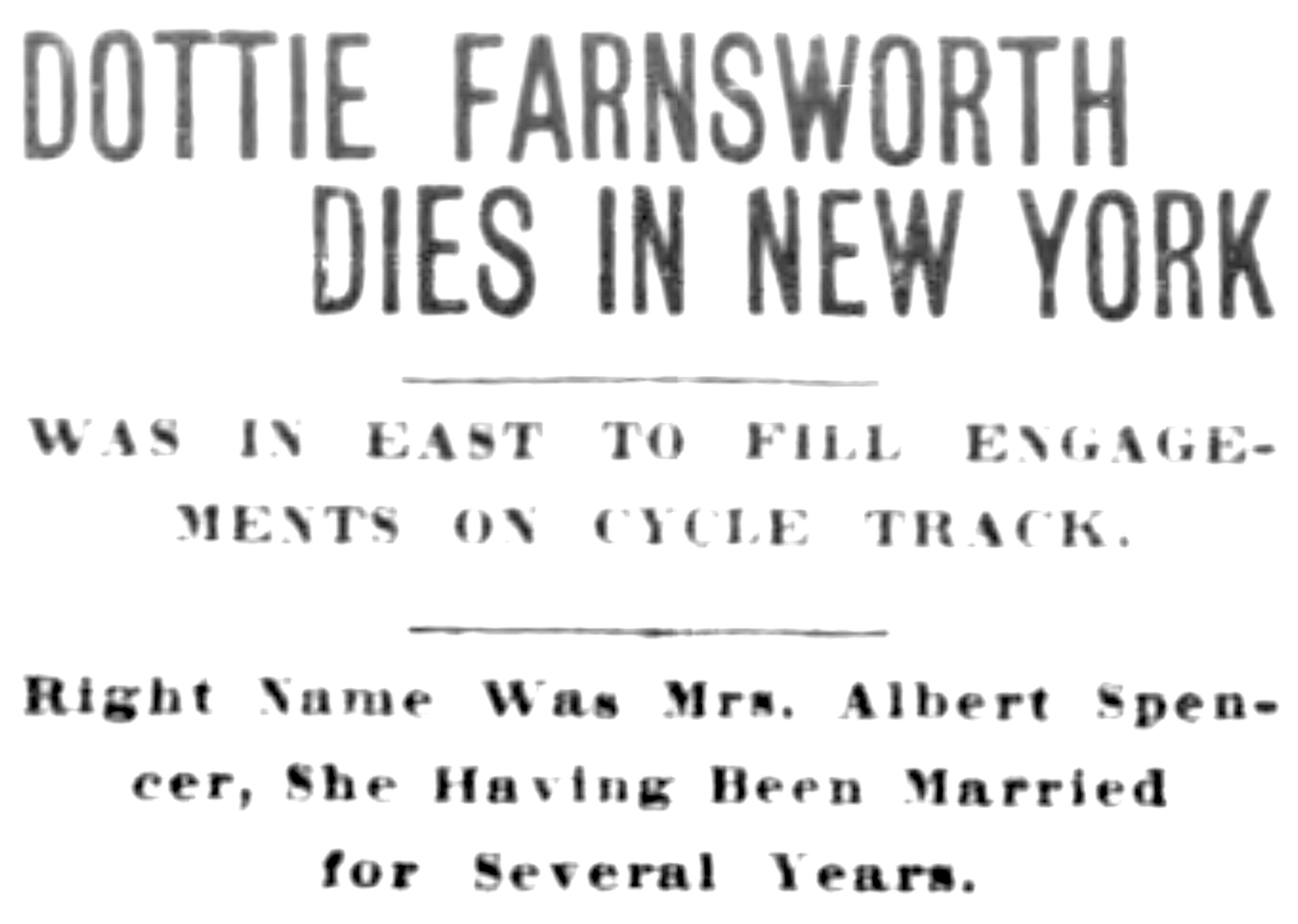 Mrs. Albert Spencer, better known in Minneapolis as Dottie Farnsworth, died yesterday at Salamanca, N. Y., of blood poisoning. Her first name was Leona.
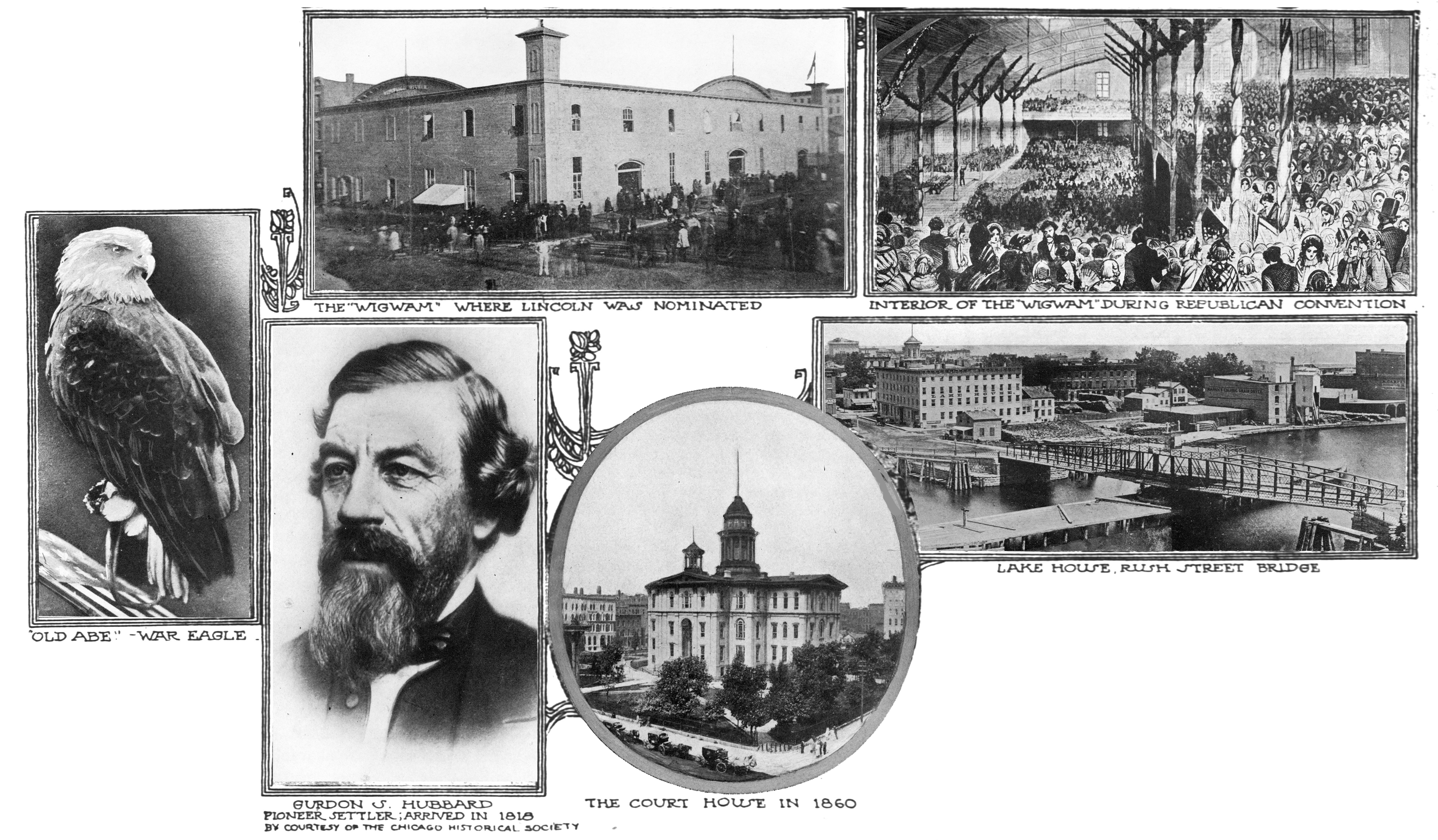
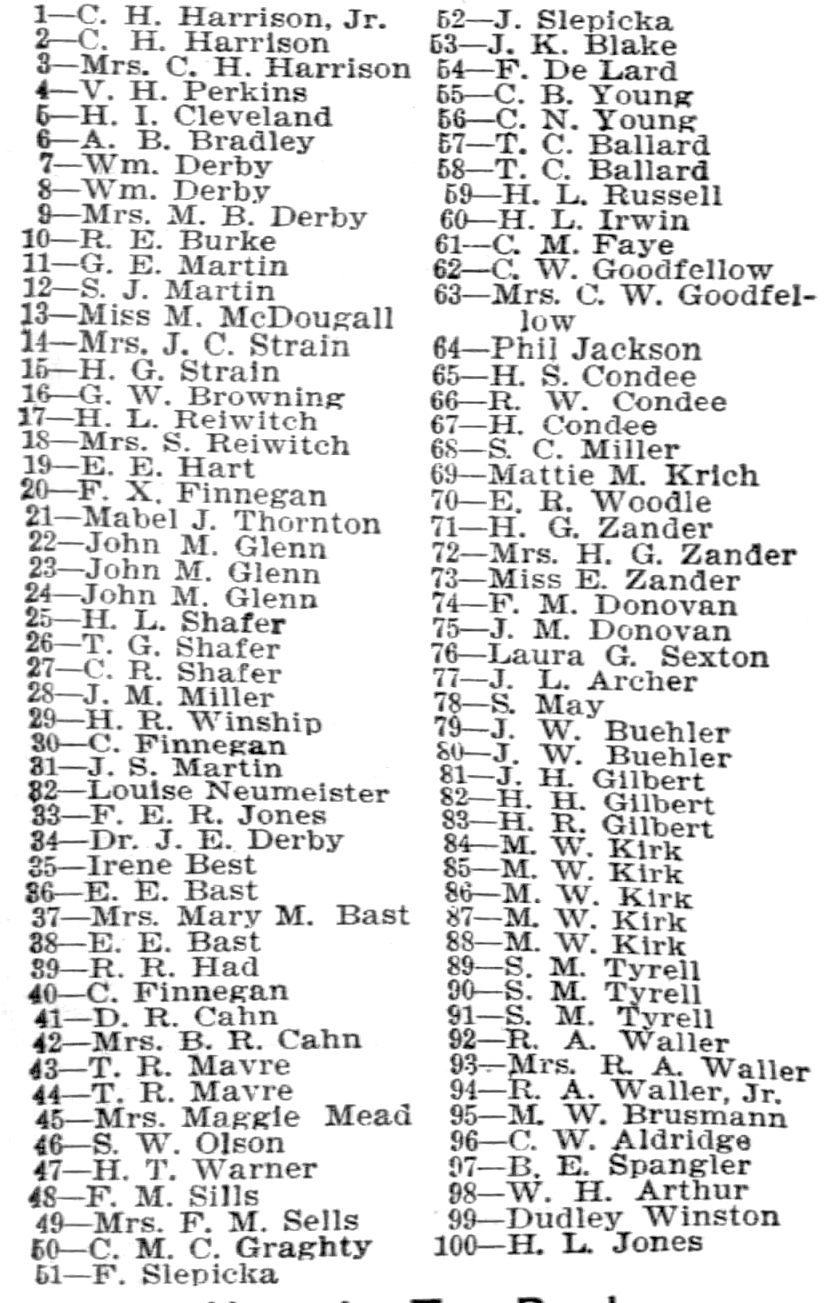
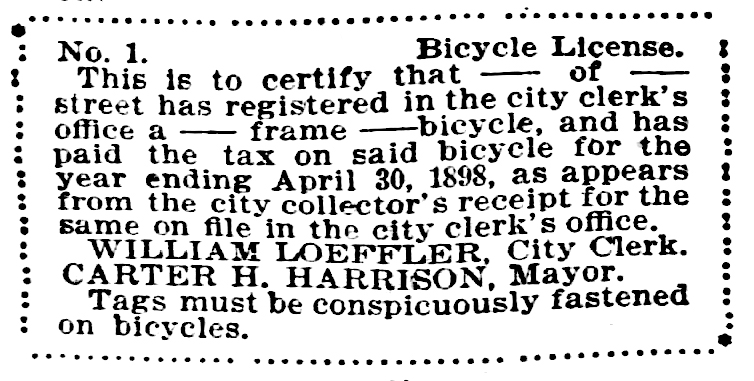
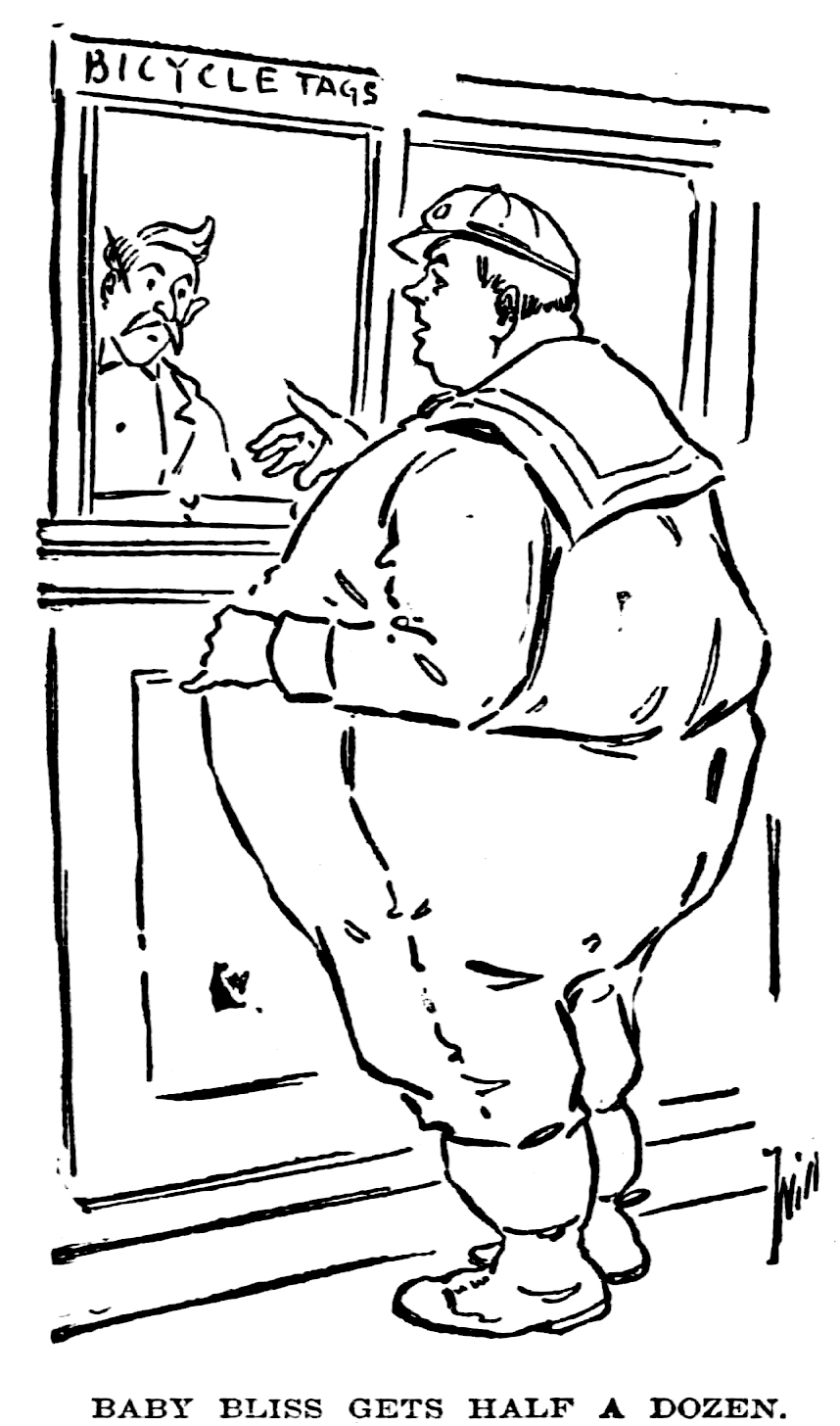
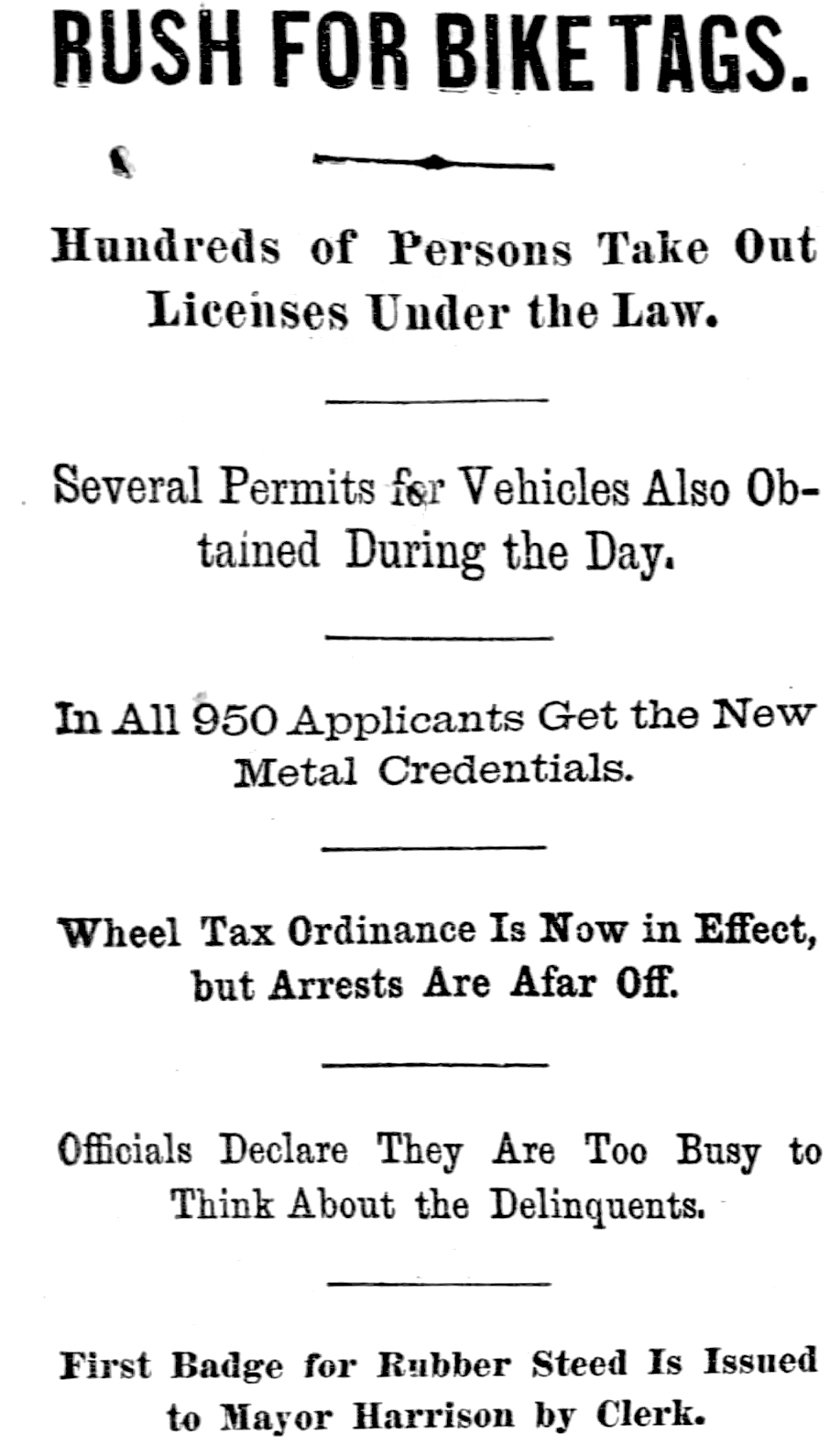 Yesterday the day the recently ordained wheel tax went into effect, 950 licenses, eighty-six were for one-horse vehicles, twenty-eight for two-horse vehicles and one for a four-horse vehicle. The rush was the greatest that has ever been encountered in a single day in the city collector’s office, and an extra staff of clerks had to be employed to issue the licenses and tags in the offices of both collector and city clerk.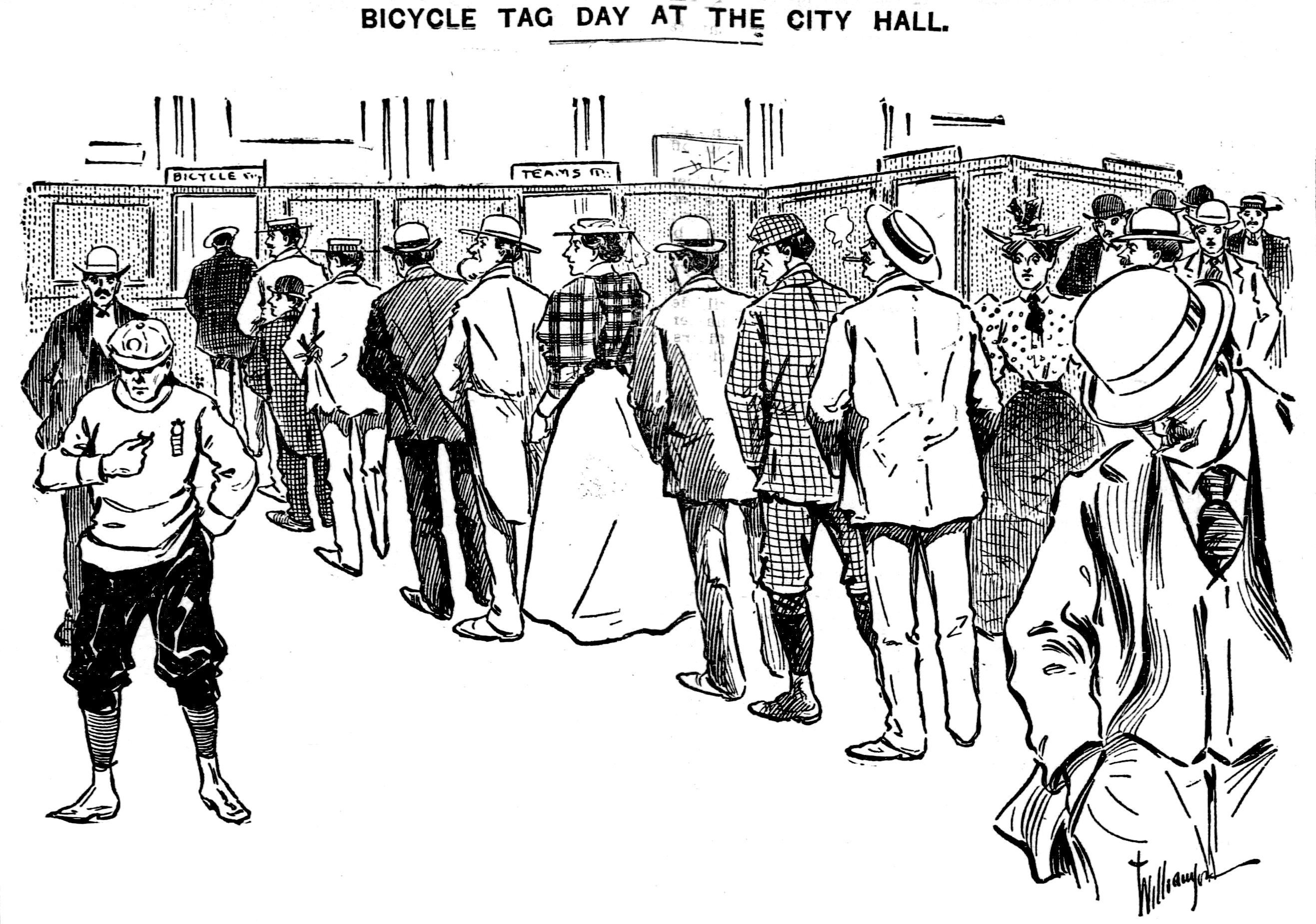

 The aristocratic denizens of Michigan and Wabash avenues are just now experiencing quite a sensation, produced by the advent of one of the famous Paris velocipedes. This fashionable means of locomotion, upon which the Parisians, over enthusiastic over novelties, have liberally expended money and muscle, promises to receive much attention in this country. Already universal curiosity to see and use the vehicle is expressed by the Chicagoan, and it may be prophesied that shortly “Shank’s mare” will become totally extinct as a locomotive power. This sample of the favorite French vehicle was recently imported by Mr. Augustus Wheeler, who resides at No. 932 Indiana avenue, and has been on exhibition at the Health Lift rooms, on Dearborn street, near Madison, for a few days past. It must be acknowledged as a valuable and wonderful invention, indicative of the rapid advance of science.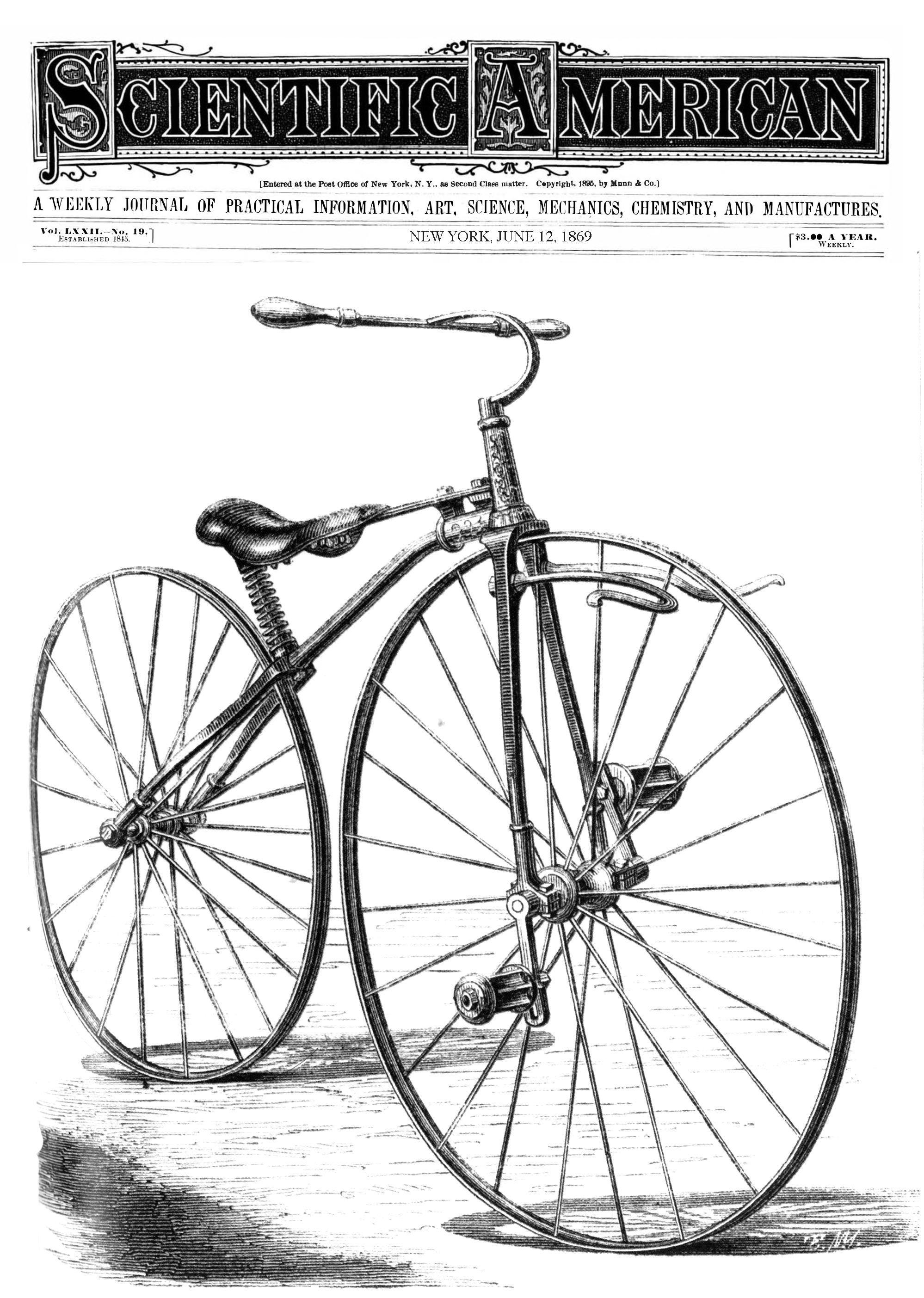
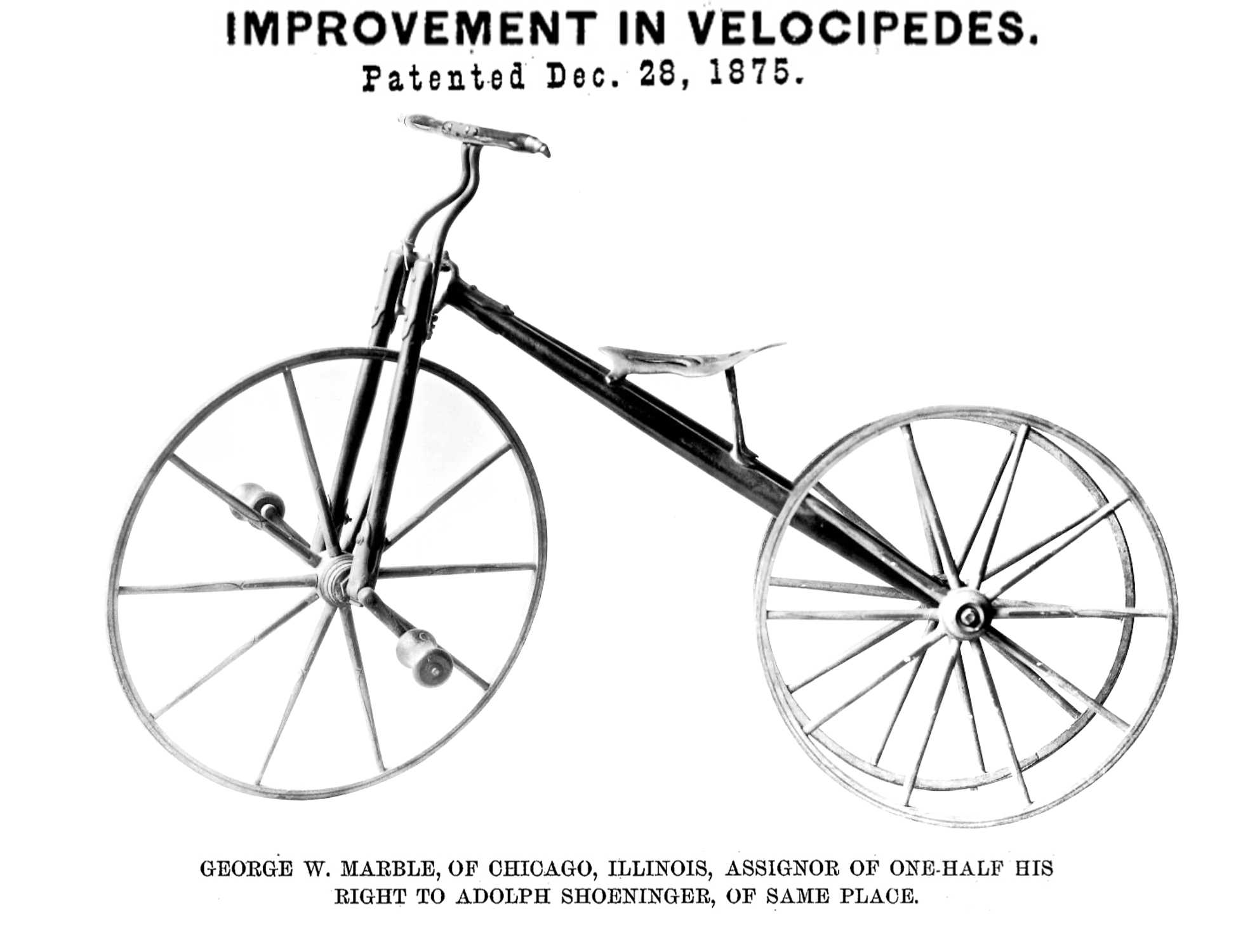
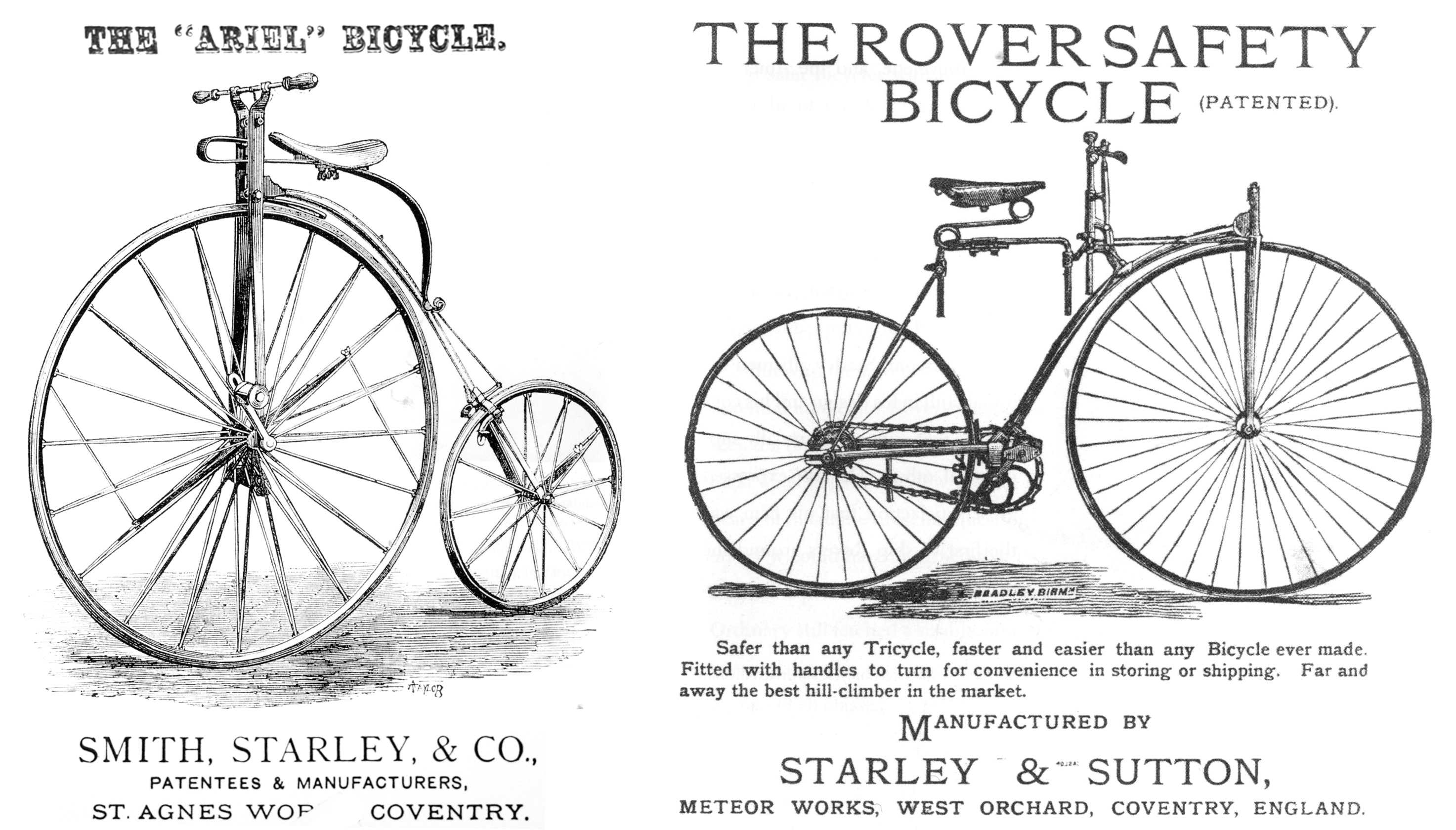
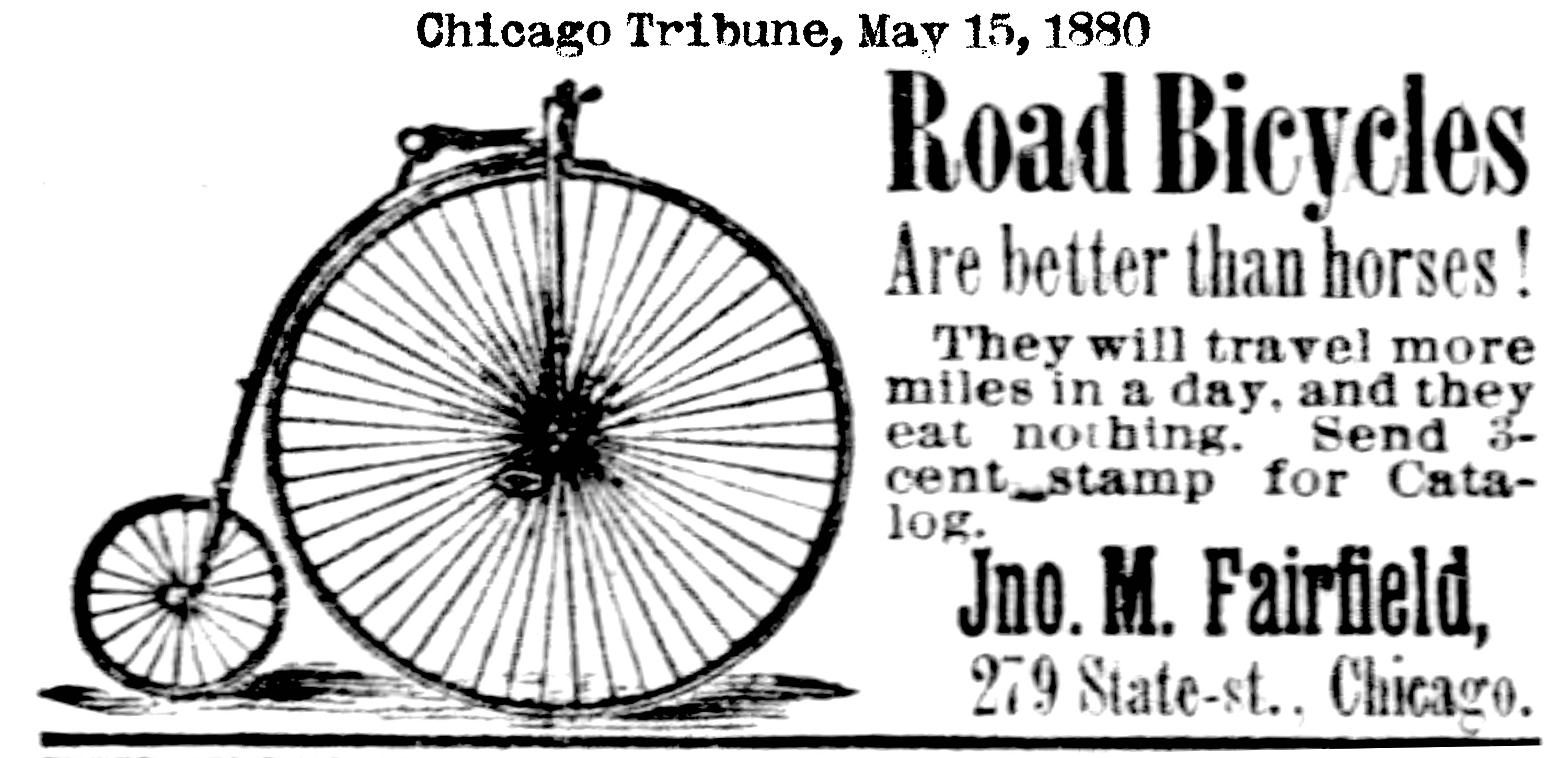
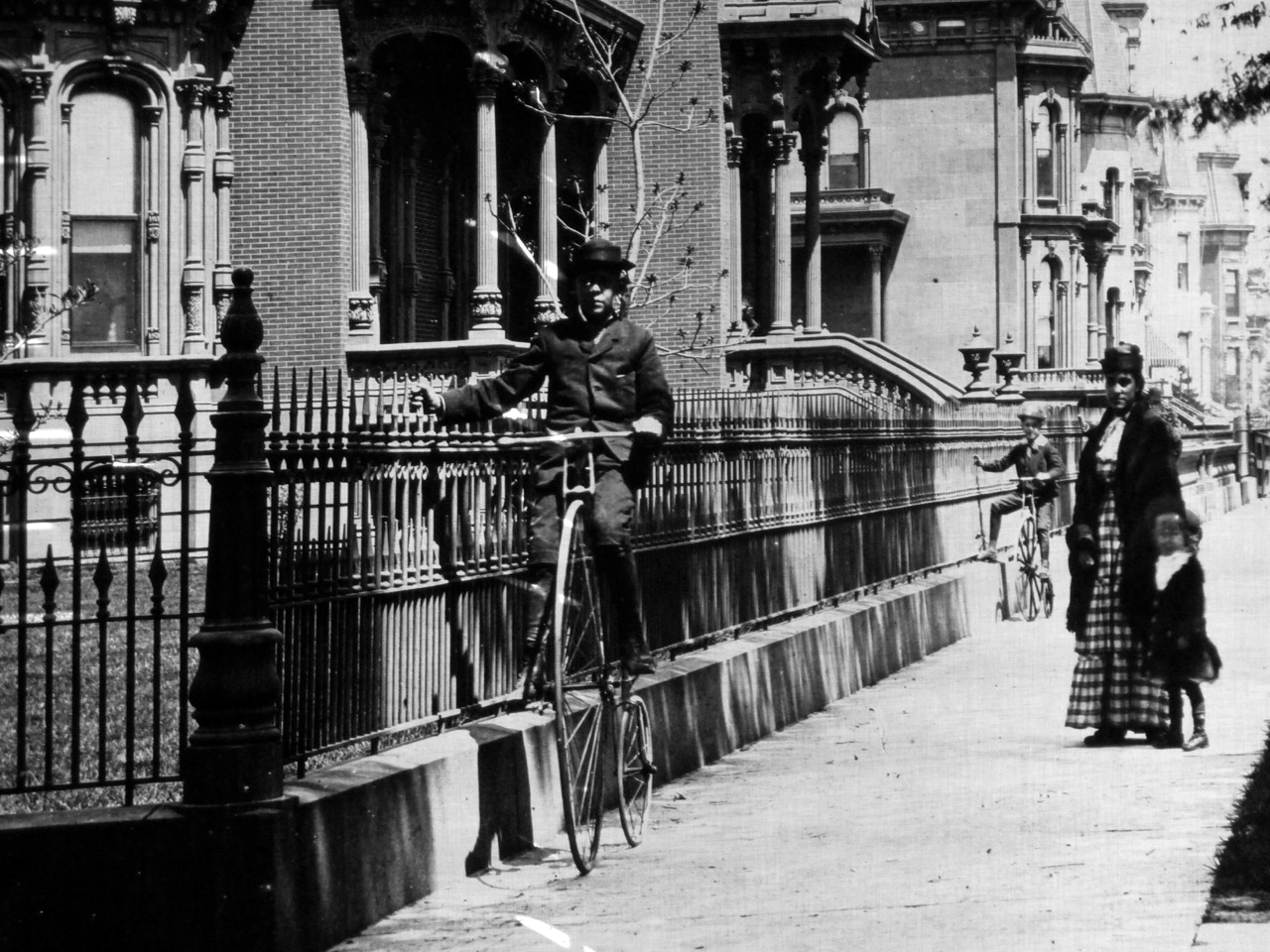
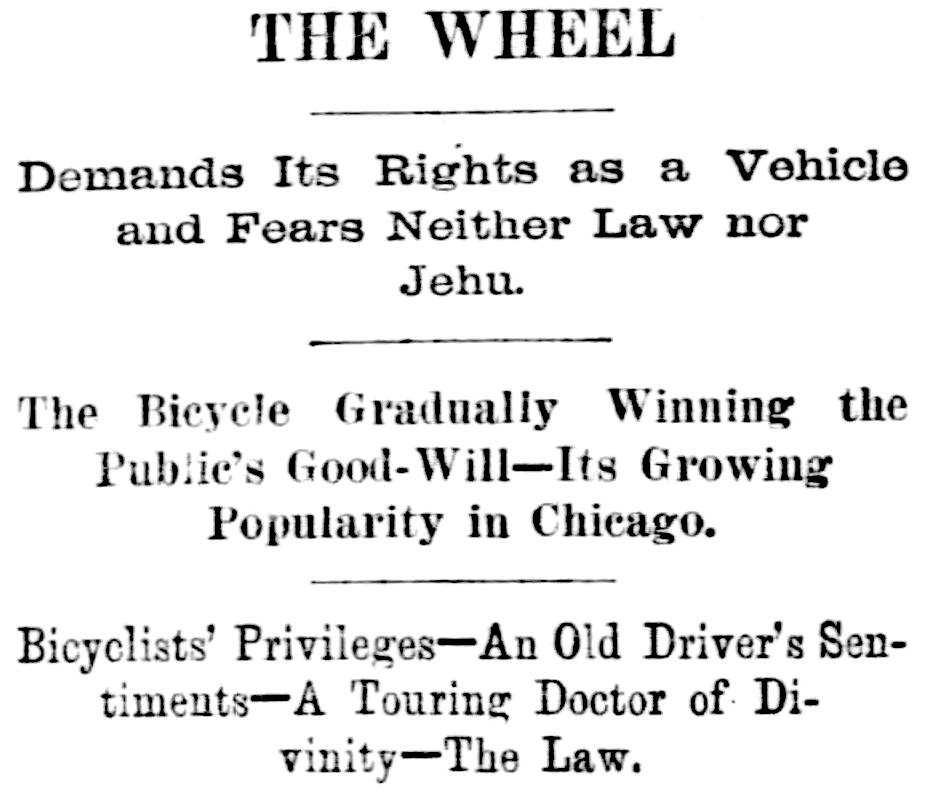
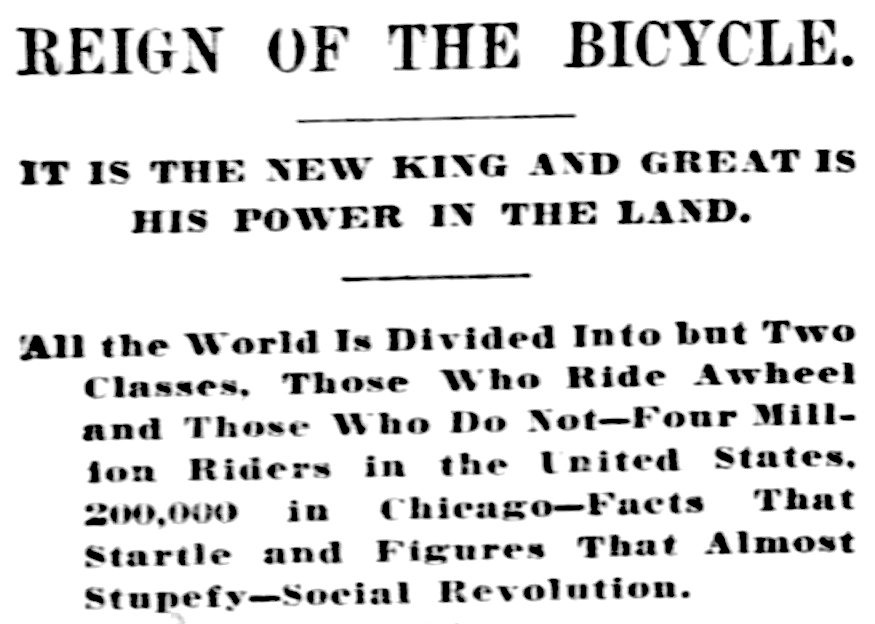 There is a new division of mankind. It is no longer the man who buys his winter coal at wholesale in the summer and the man who buys is by the load when the bin is empty. The boundary line between the tailor-made man and the ready-made man is obsolete. There are no longer carriage folk and street car people. The girl with and without the chaperon speak as they pass by.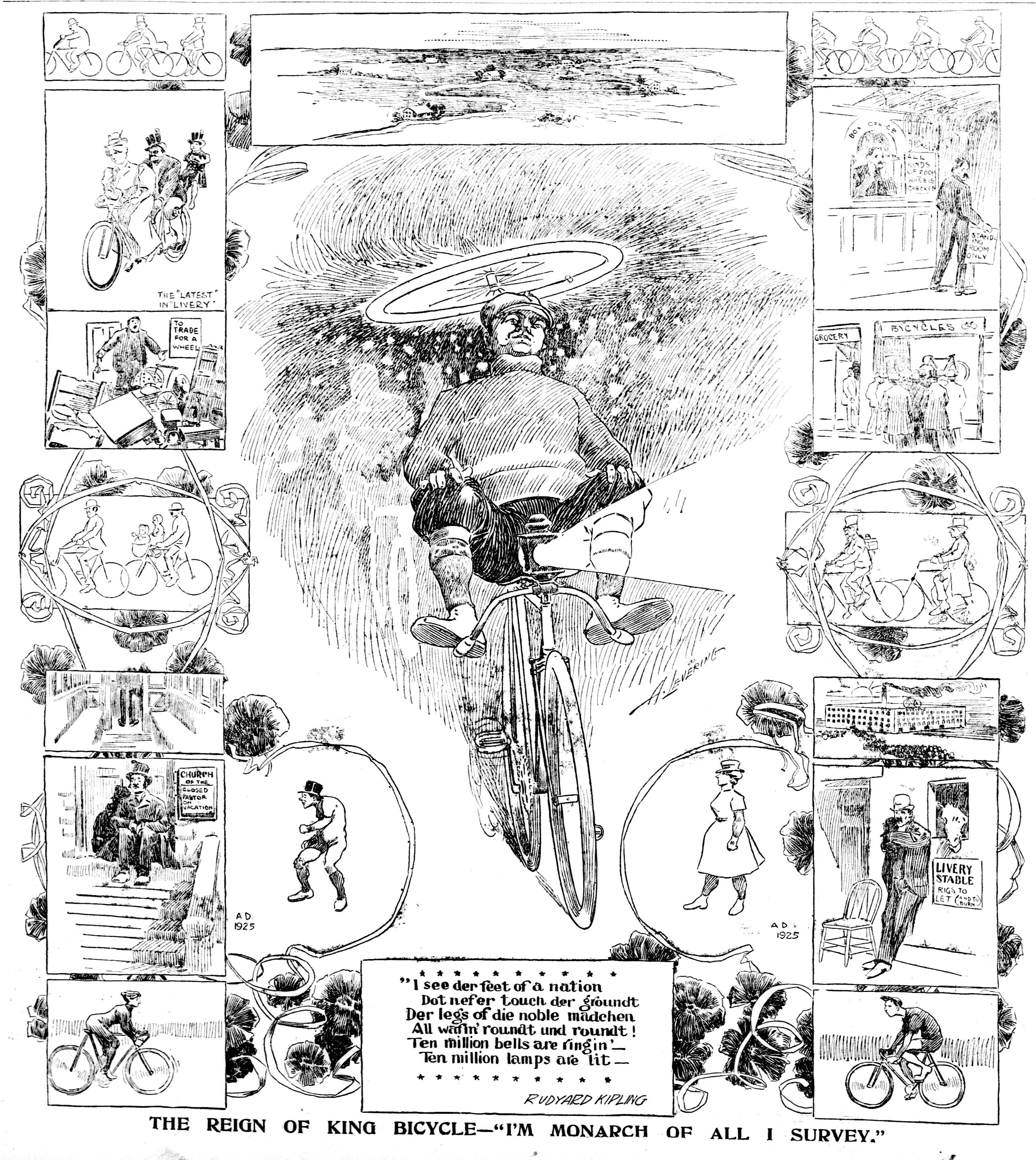
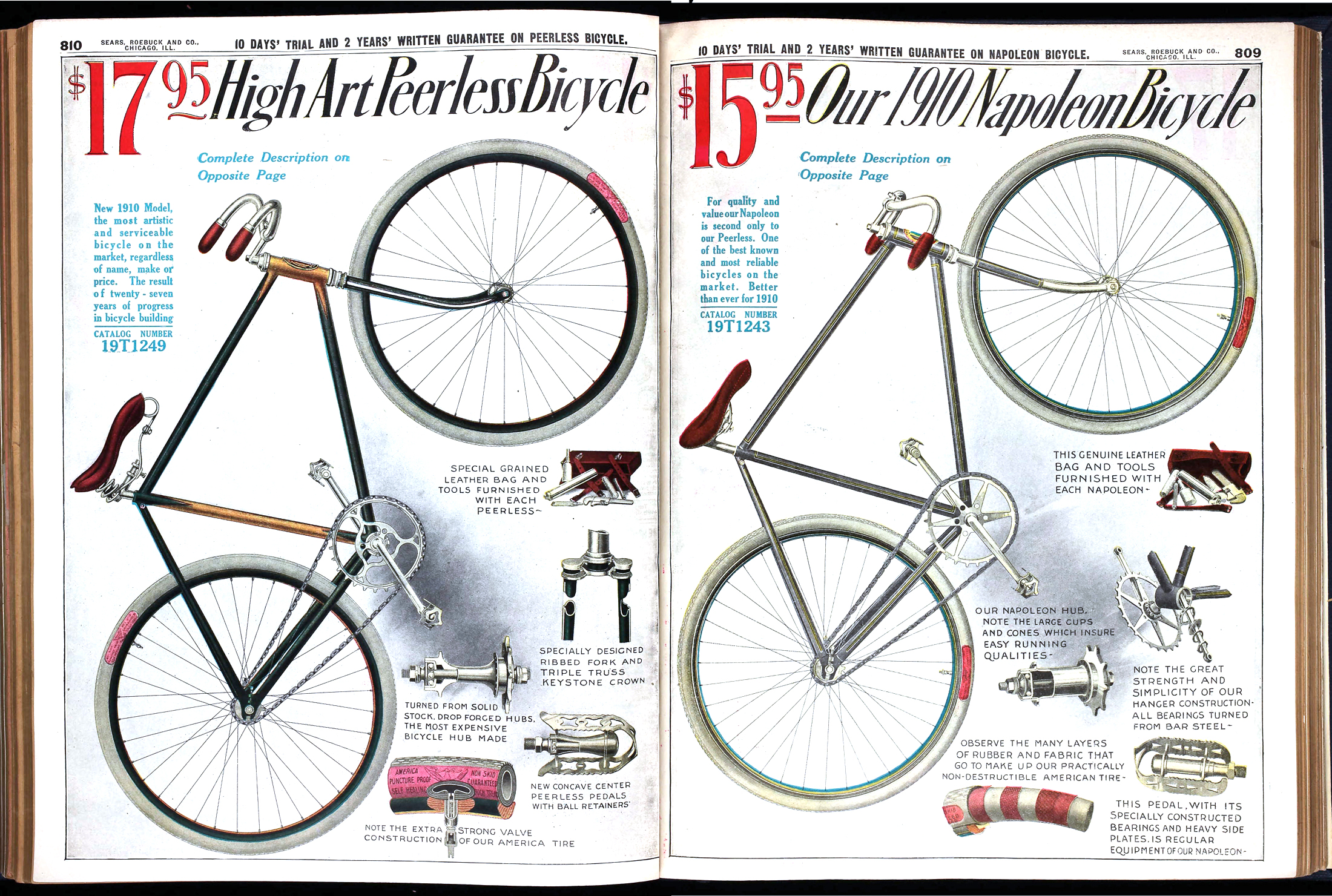
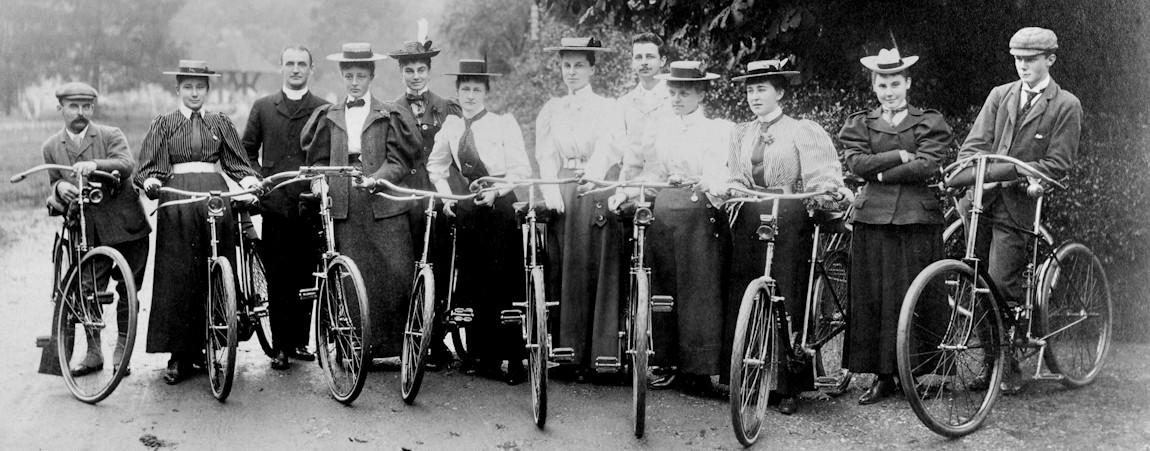
 Two hundred thousand wheels in use in Chicago!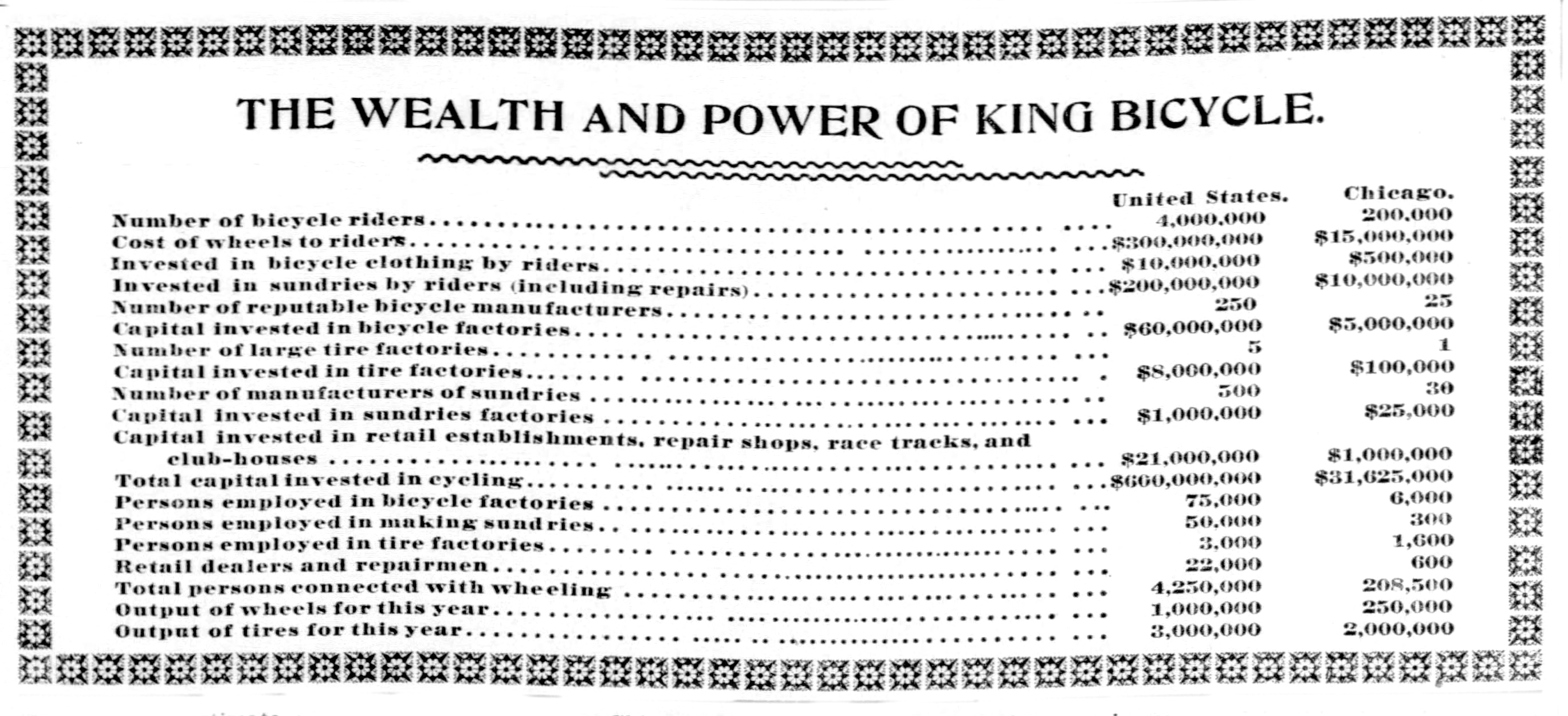
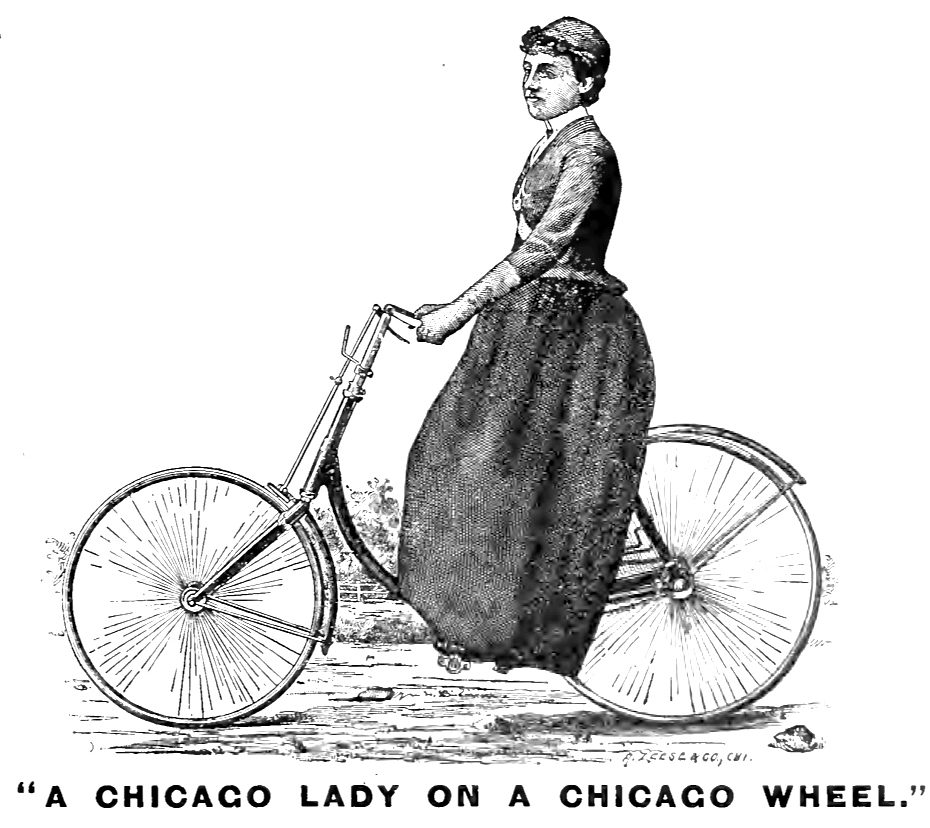
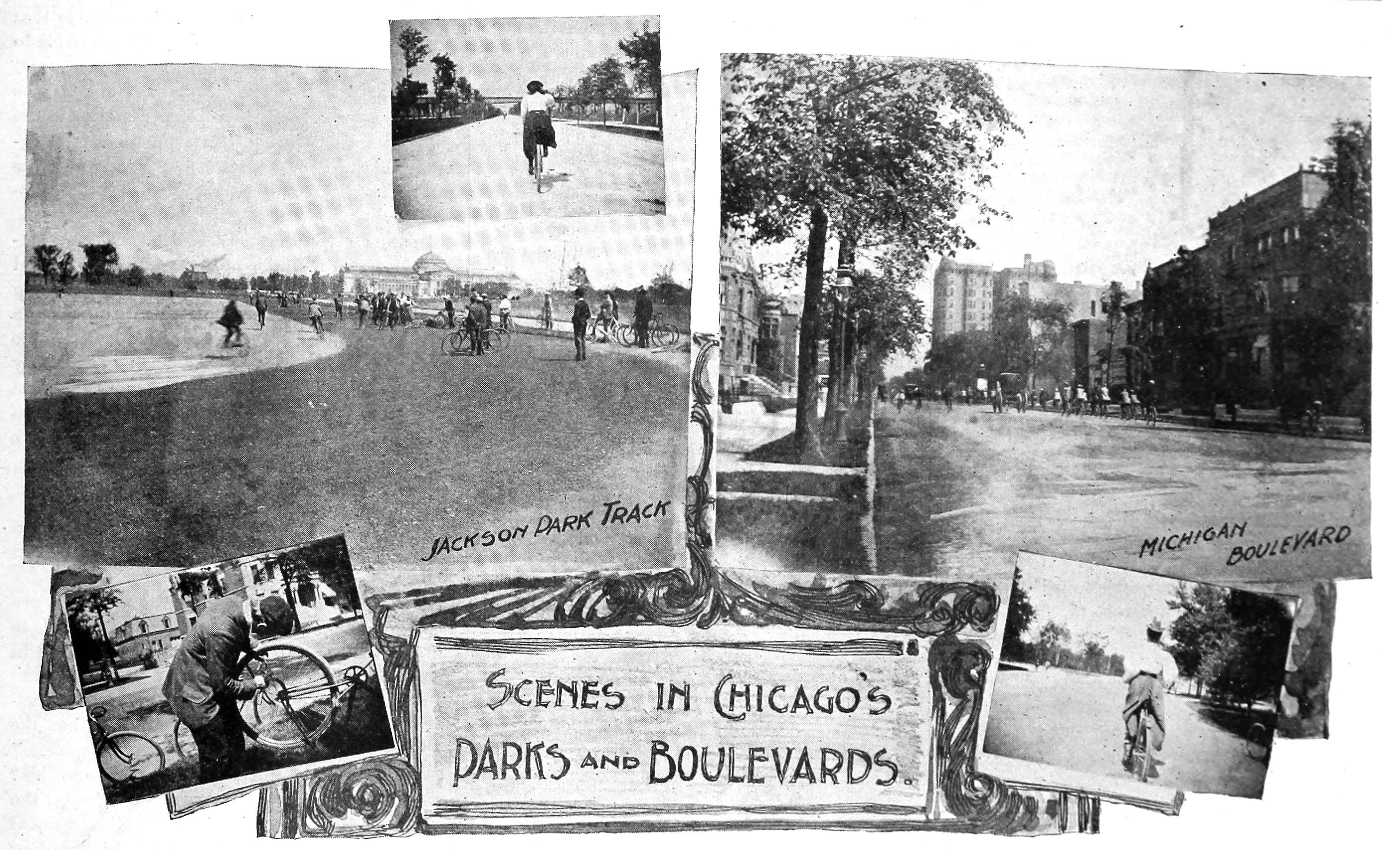
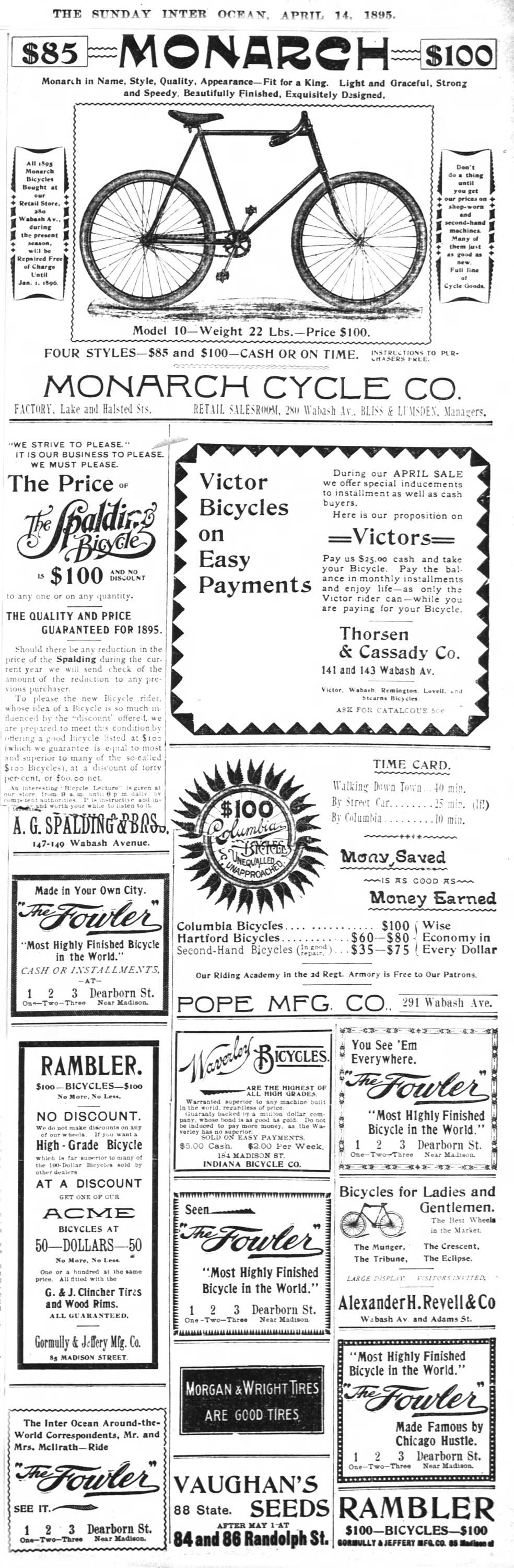
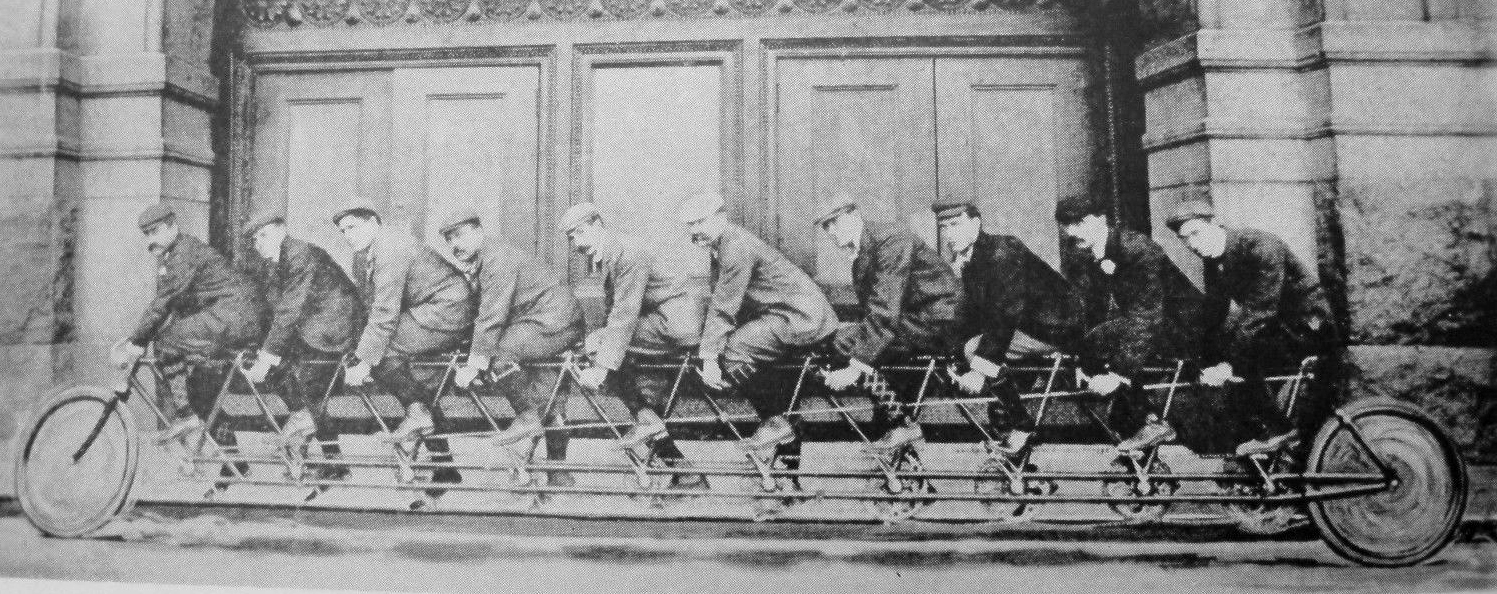
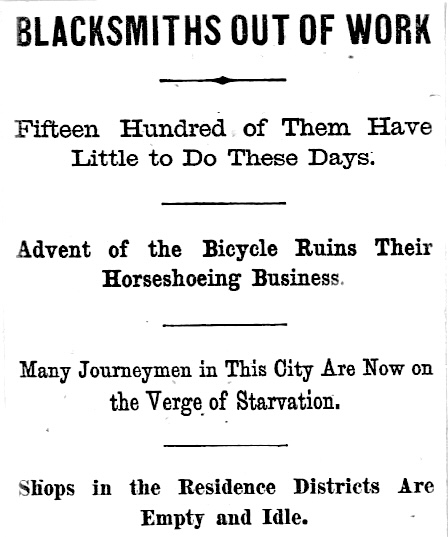 There are more than 1,500 idle blacksmiths and horseshoers in Chicago who attribute their lack of profitable work to the advent of the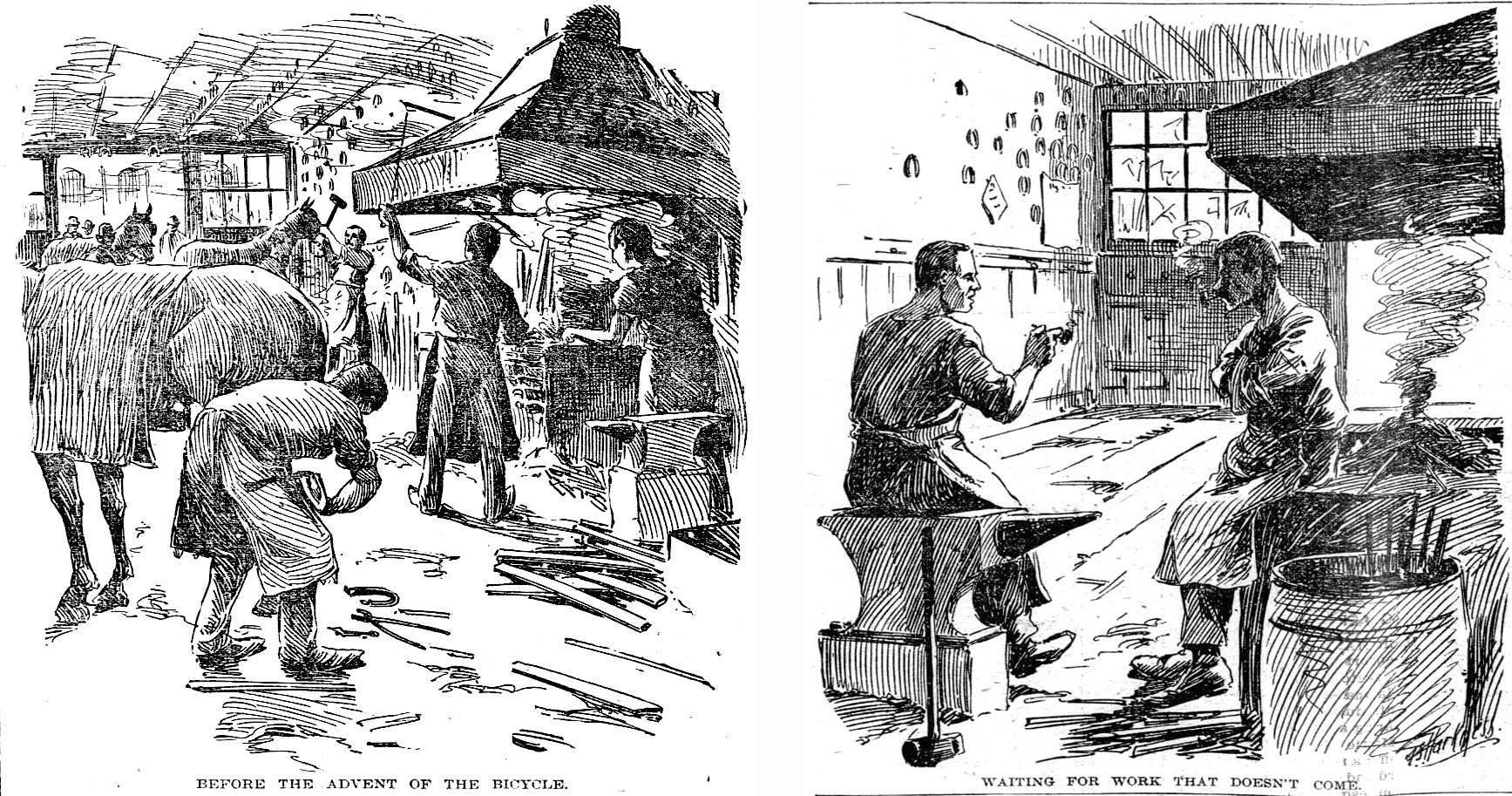
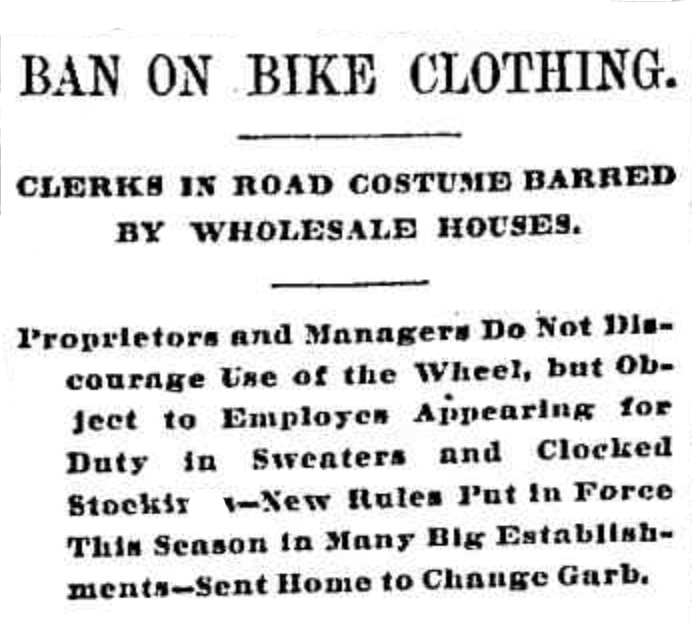
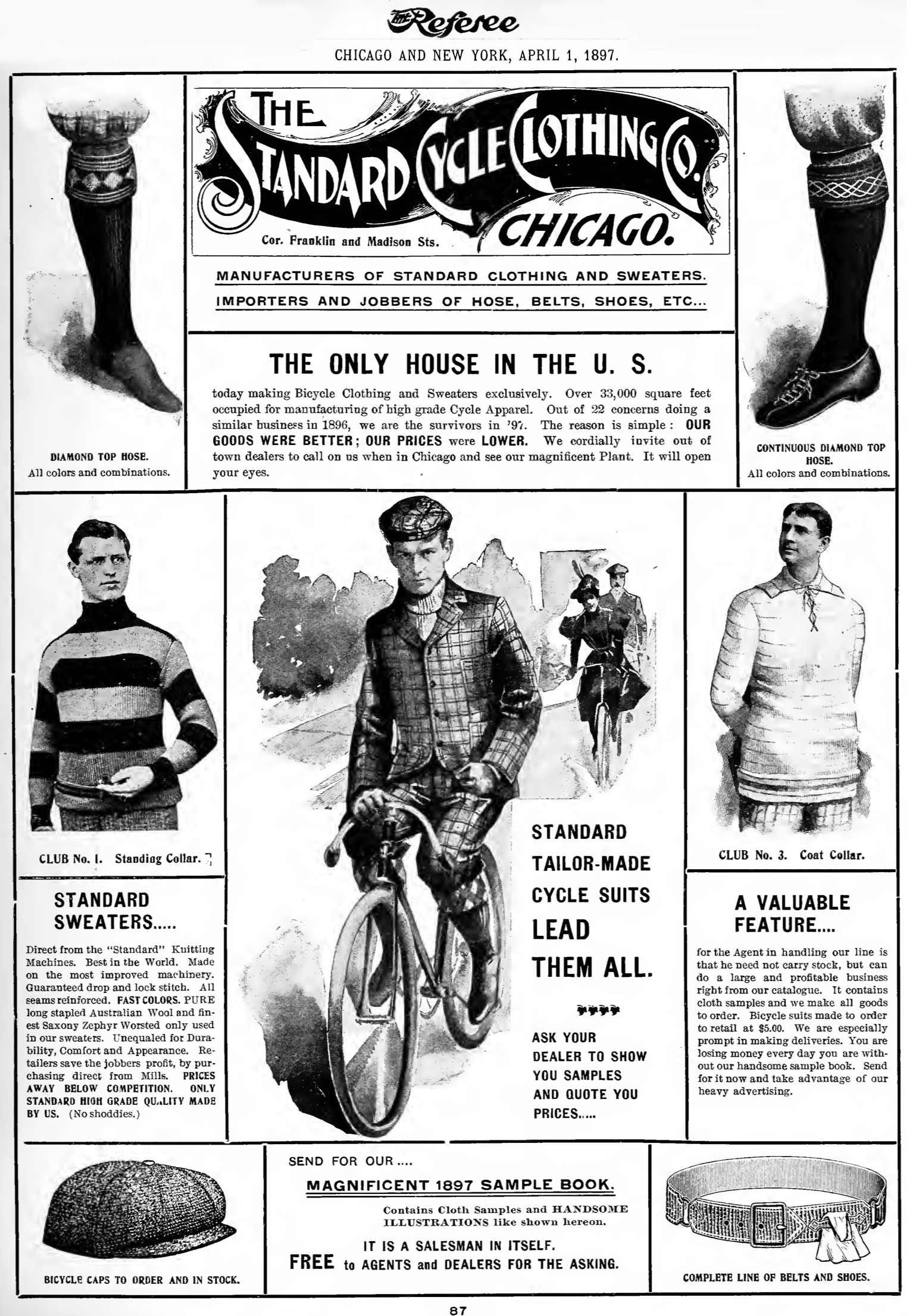
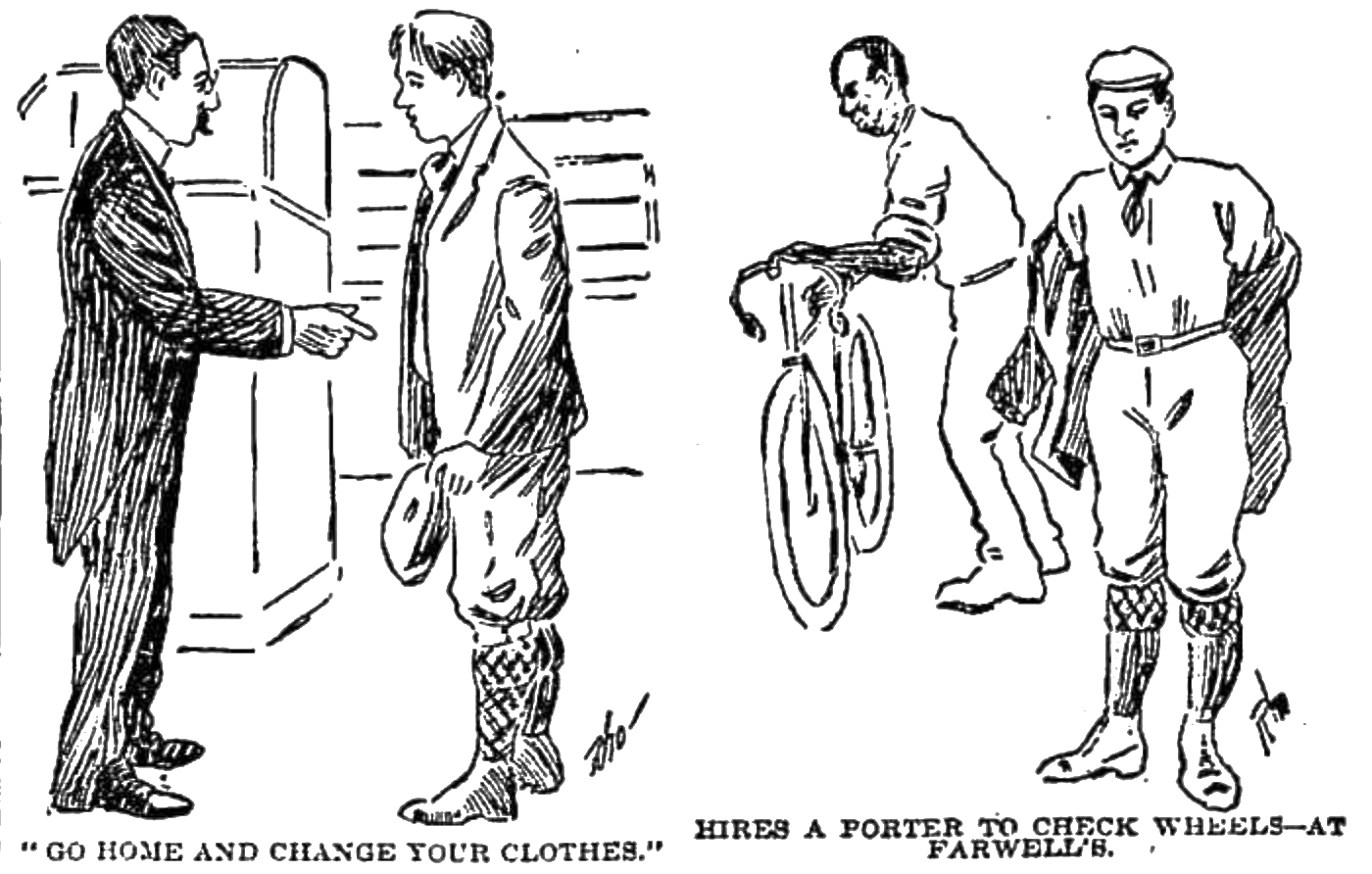
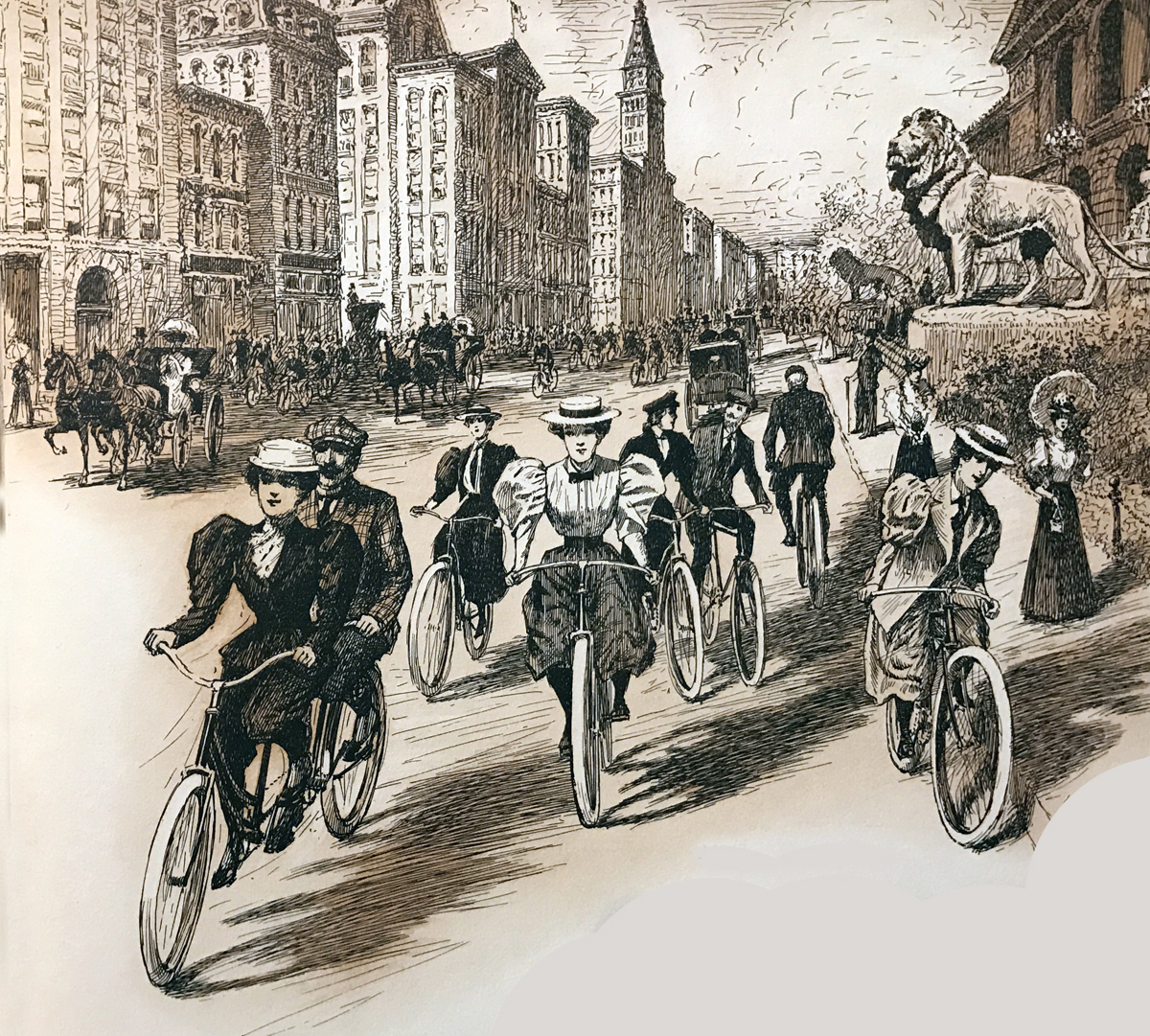
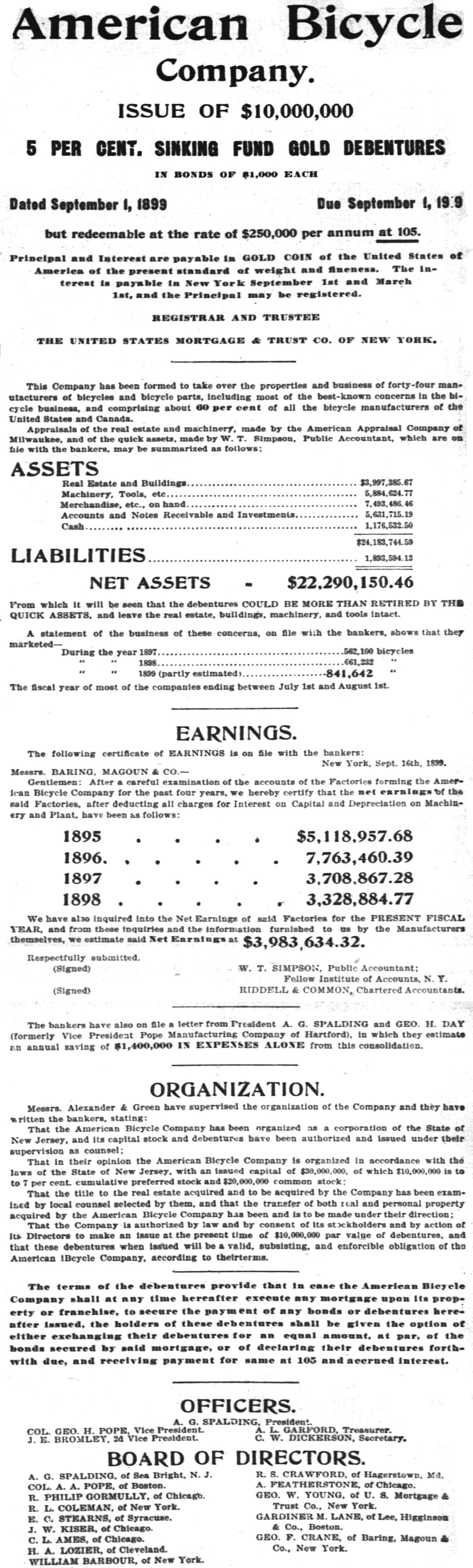
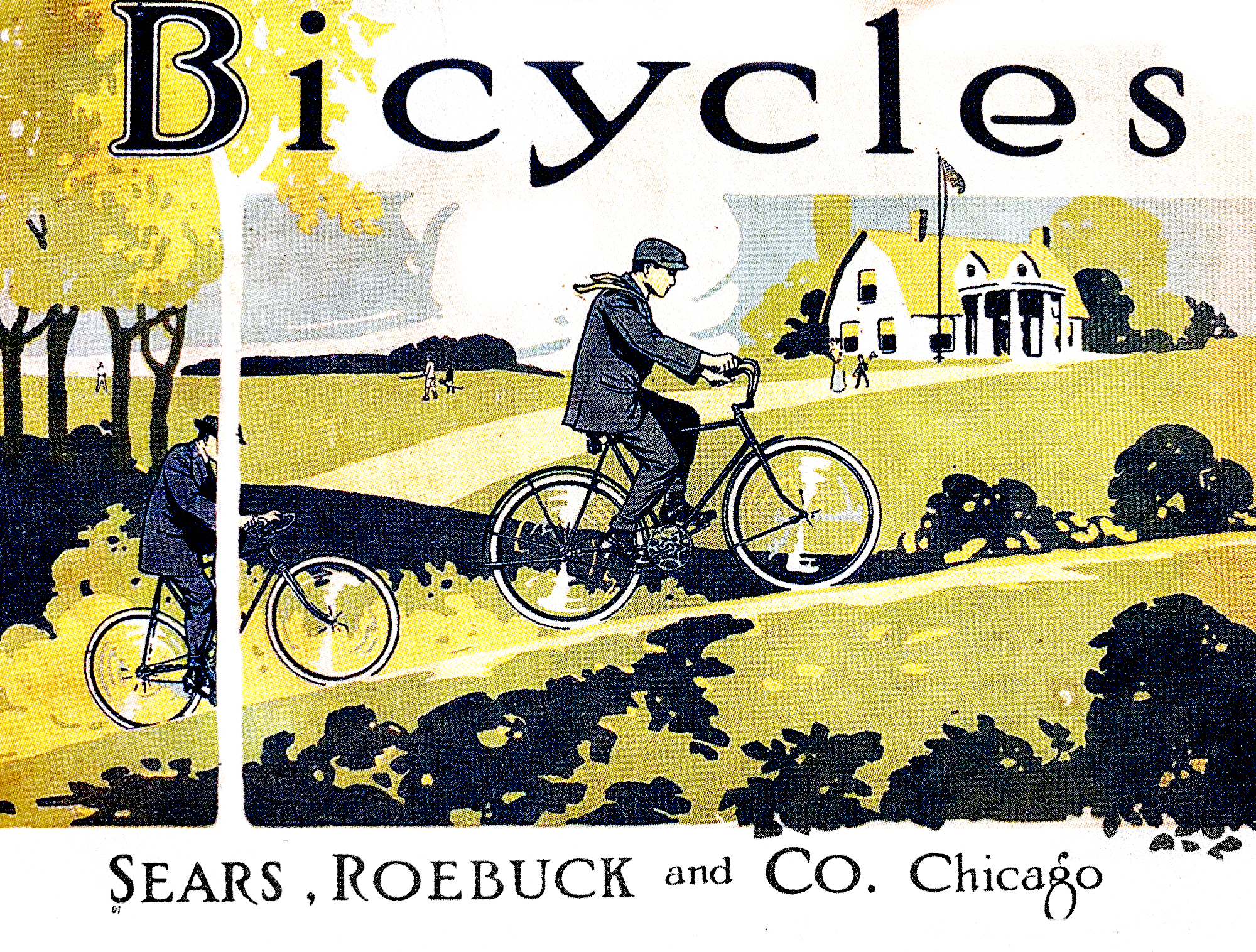
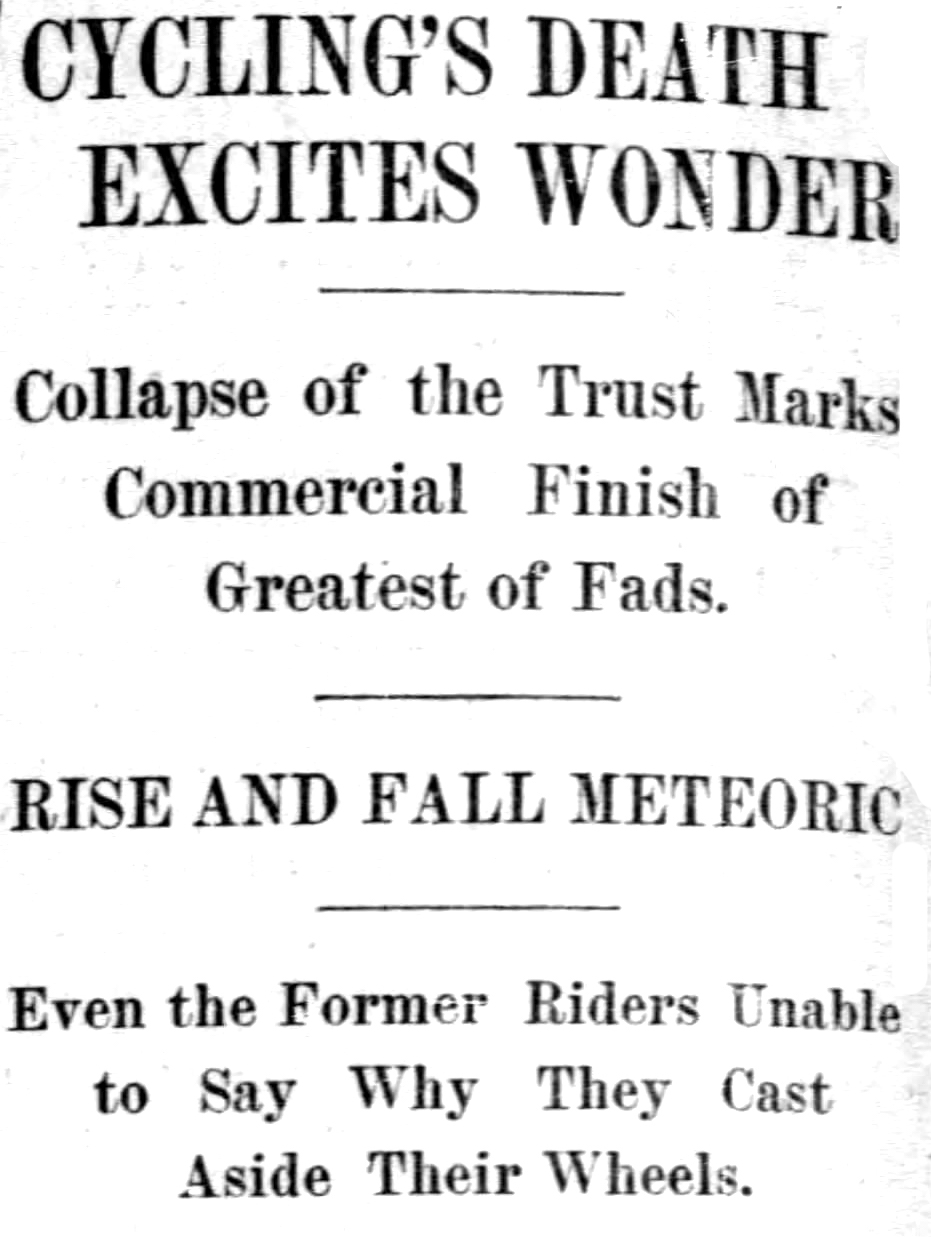 With the collapse of the American Bicycle company, which has asked for the appointment of a receiver in New York, the finale can be written of the most remarkable fad the country has ever known.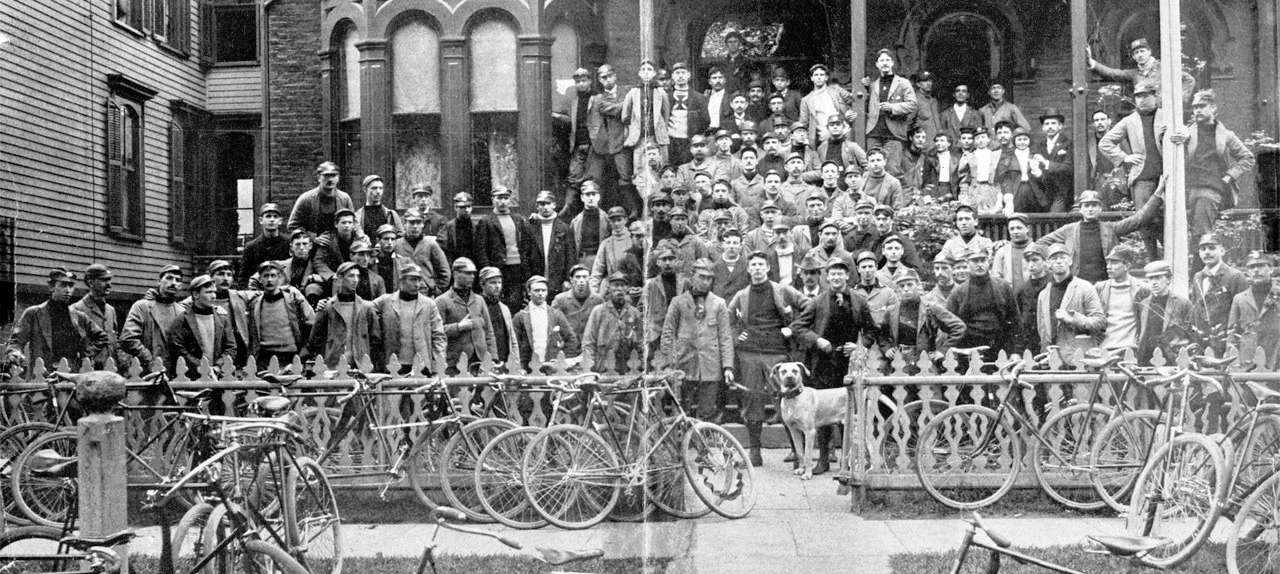
 The invulnerable law of cause and effect offers a logical though Indefinite explanation of the success of scores of business enterprises which, though money making ventures today, looked like hopeless wrecks a few years ago. This statement applies particularly to the automobile industry with its countless tributaries, There are perhaps more vi,ctims of circumstances in the automobile business today than in any other one line conspicuous by reason of its popularity with the general public, Whatever else may be said about the automobile, however much it may grate upon the sensibilities of the plodding pedestrian or offend the dignity of the adamant park policeman it must be given the credit for having come to the relief of a great number of stagnant and dying industries, infusing them with new life.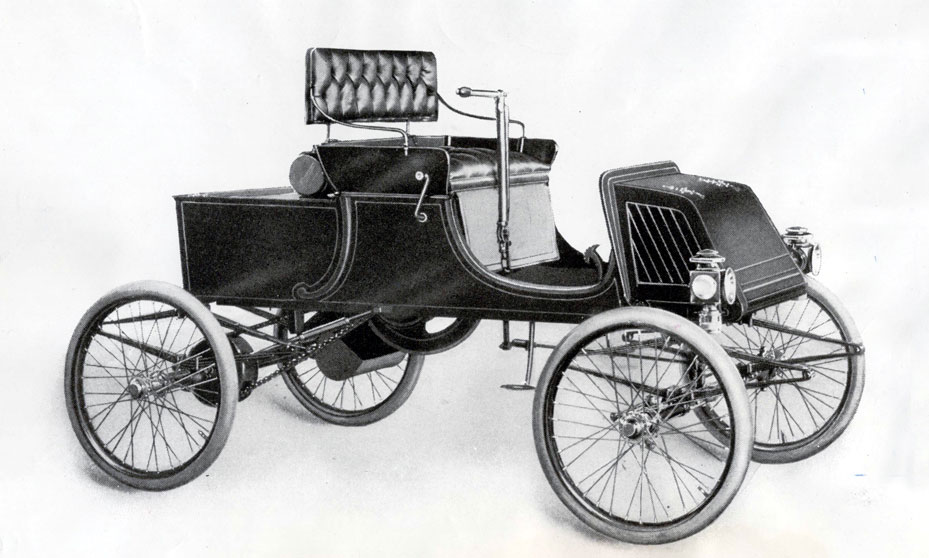
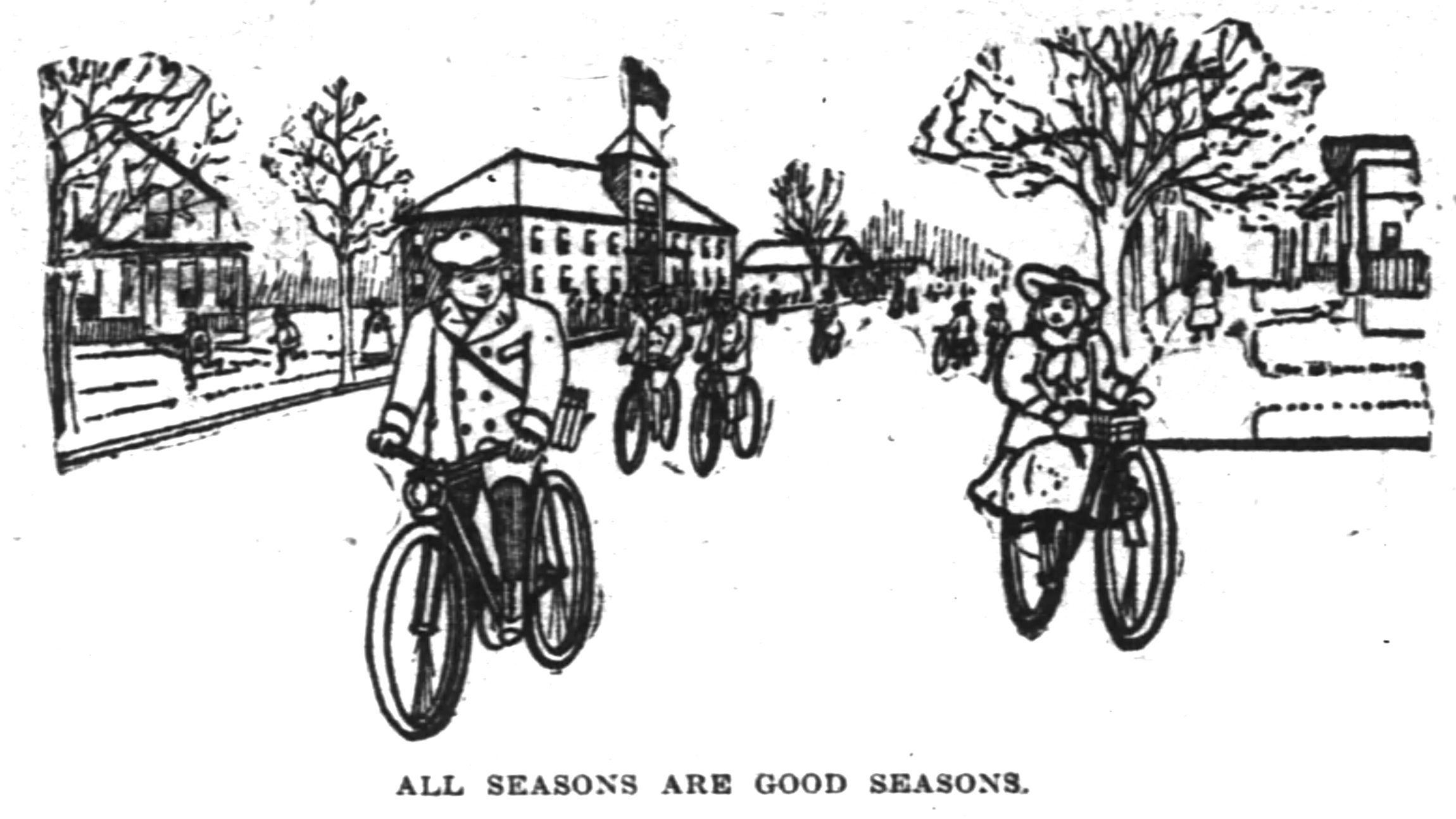
 Judging from the number of Christmas bicycles that have been sold for the past few years, one might imagine that our climate is changing, and what once was regarded solely as a summer sport, has, unaccountably, wandered into other portions of the calendar.