Chicago Artists in the 20th Century
Lester G. Hornby (1882-1956)
Chicago Tribune, December 15, 1917
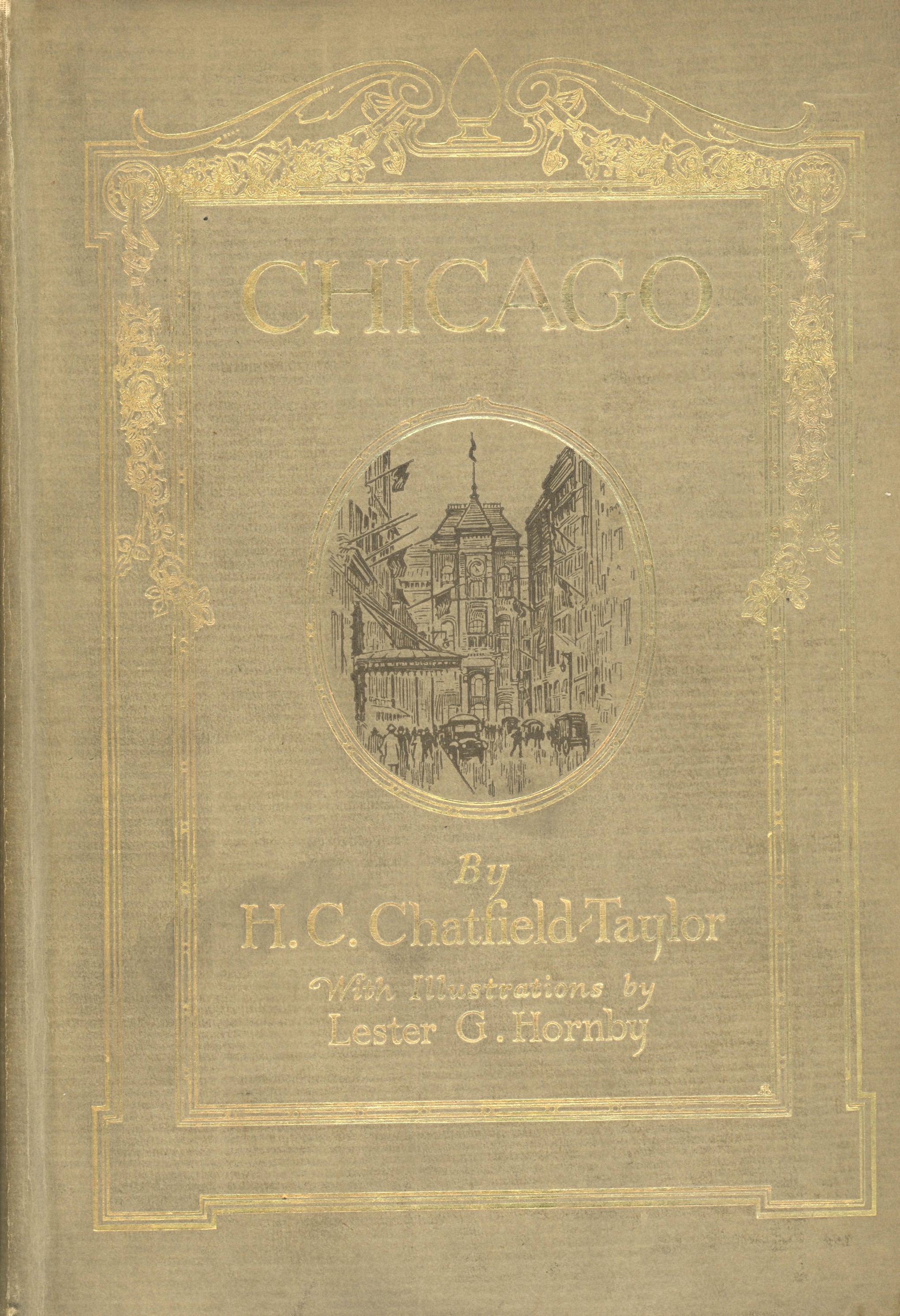
 HOUGHTON MIFFLIN COMPANY have been issuing histories of the greater cities of the United States—histories of an intensive character, brief, accurate, picturesque, and psychological. They have required the writers to give them the essence of the city, or rather, to throw upon the screen a few pictures that would convey the meanings, the ambitions and the past of these cities.
“CHICAGO” has for its author Hobart C. Chatfield-Taylor, than whom no better man could have been found. The chronicle, without pretense, false assumption, or verbal excesses, appears as an intimate and sympathetic record. Mr. Taylor was reared on the west side near Union park in the days when it was a bower of flowers and the resting place of the “nicest” people in town. He knew the old families, imbibed the ideals, felt the restrictions of a community which, coming out of New England, was loyal to its traditions and codes.
That group, the essential and authoritative part of Chicago, while it has not helped the balance of political power, and while it has been driven from one locality to another by the encroachments of hundreds of thousands of foreigners, remains, after all, the dominating social, moral, and intellect force. This is a fact which those who really are aware of the ideals of the city know well, but to Mr. Chatfield-Taylor remains the distinction of being the first to point this out in print.
It is fortunate that this history has been written by one who does not have in all cases to refer to records of the past. The author has his own memory to consult, and he is able therefore, to make his own interpretations of tendencies and events. An air of simplicity and distinction characterizes these frank and informing pages, and he who reads the book will, if he had been consulting old family letters, while the reader who must for the first time acquaint himself with the past of our city will be both entertained and instructed.
The illustrations truly supplement the text. They are by Lester G. Hornby, who remained in Chicago for a length of time studying not only its “imposing edifices” but its nooks and corners. This edition is limited to one thousand.
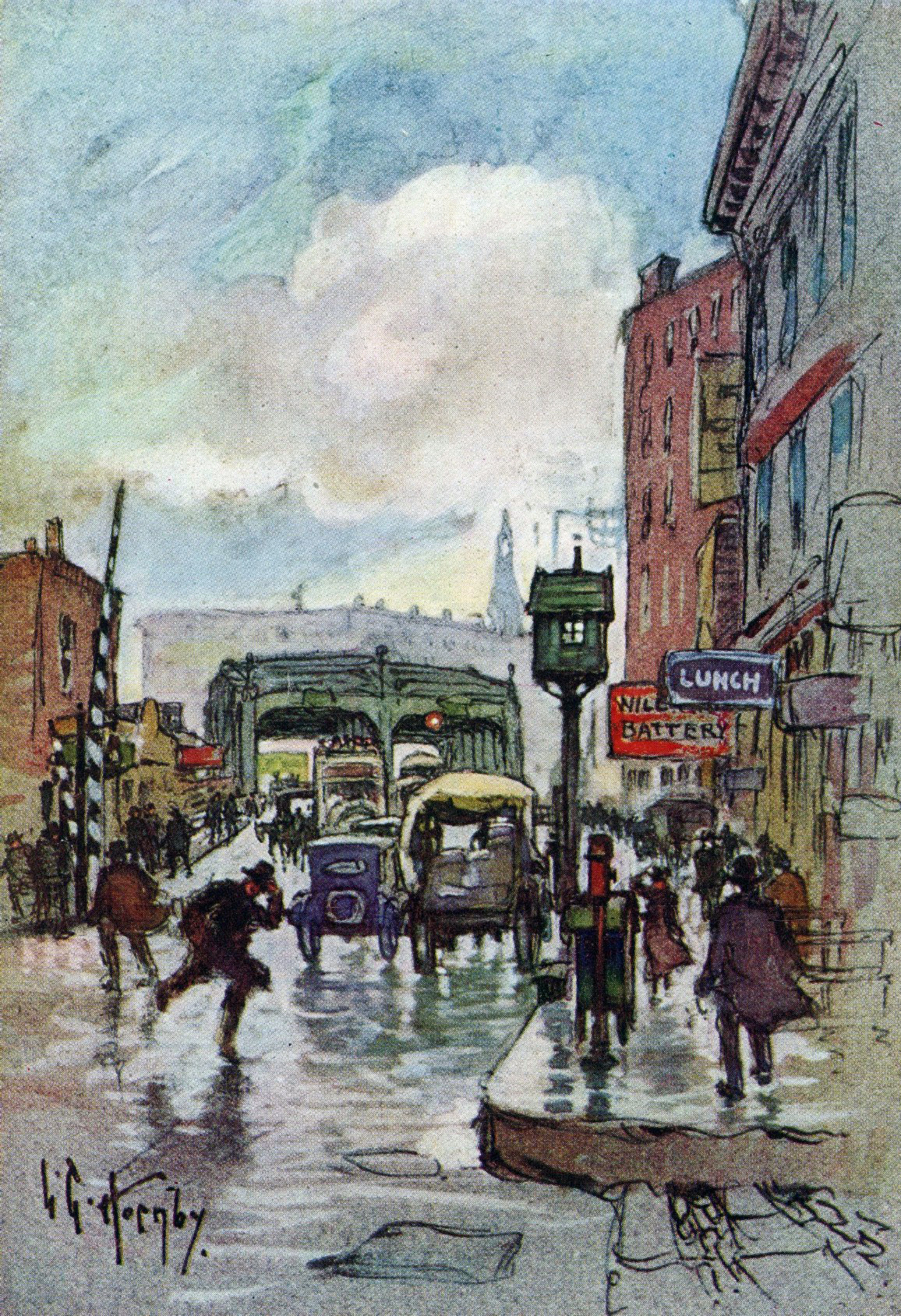
Rush Street at the Bridge
Watercolor
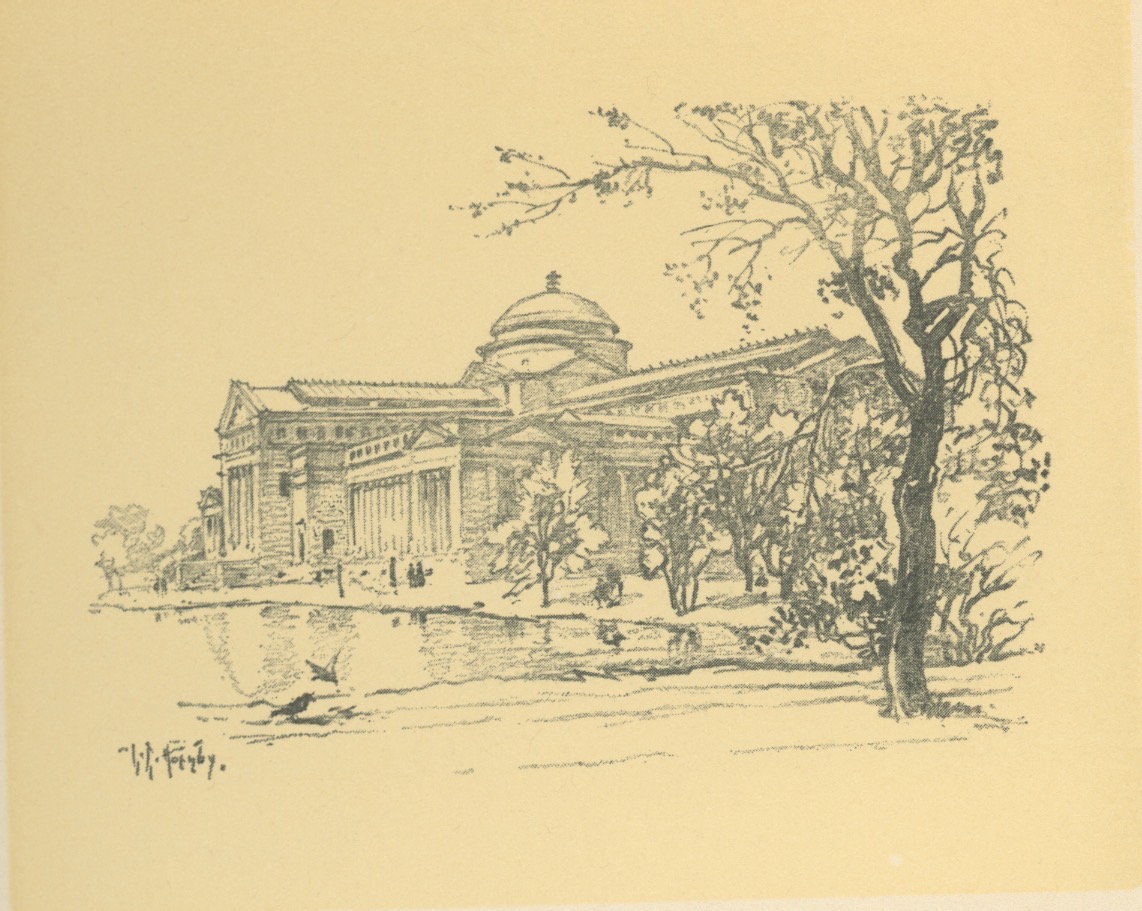
Field Museum, at Jackson Park
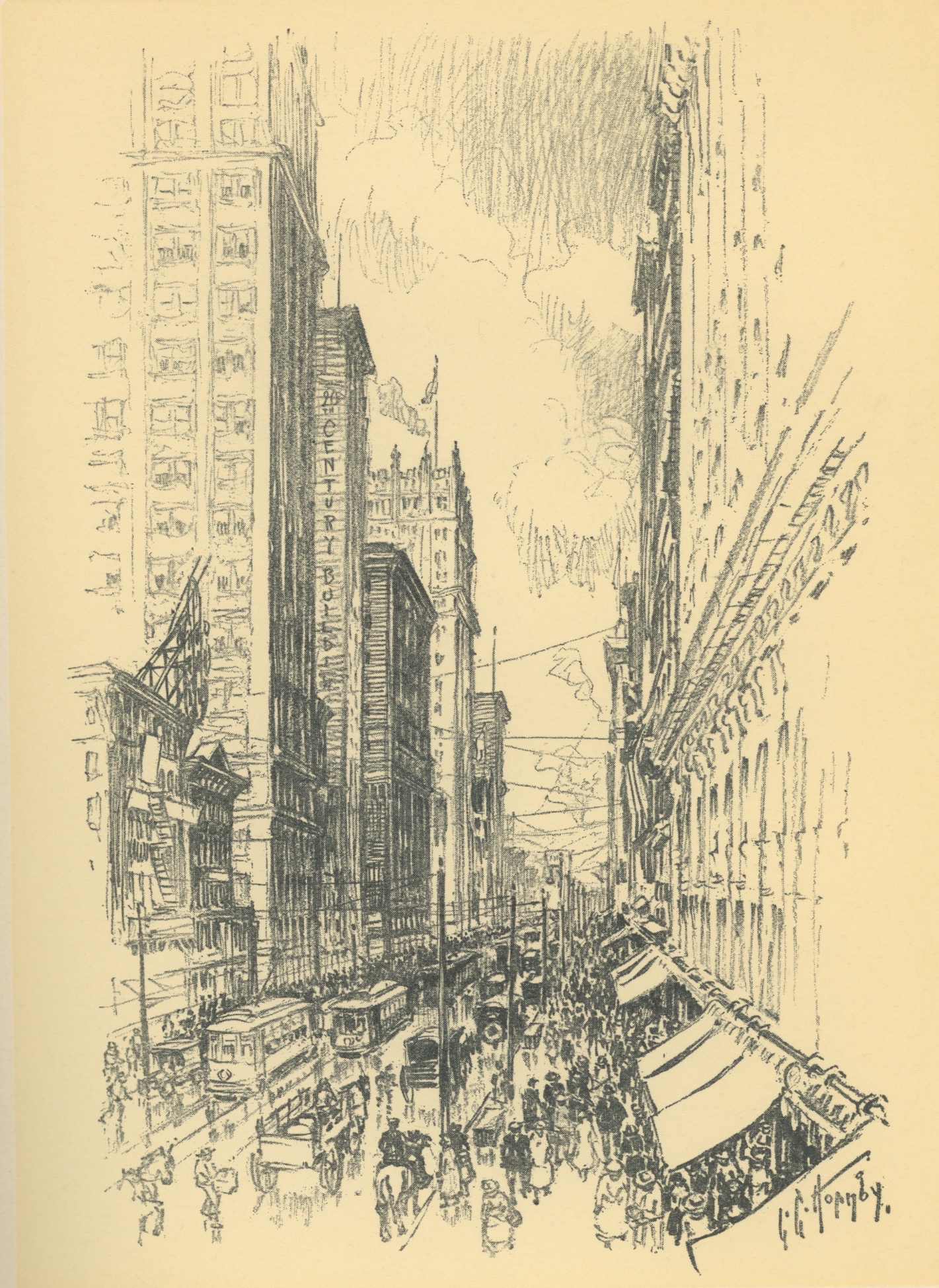
State Street from the Van Buren Loop Station
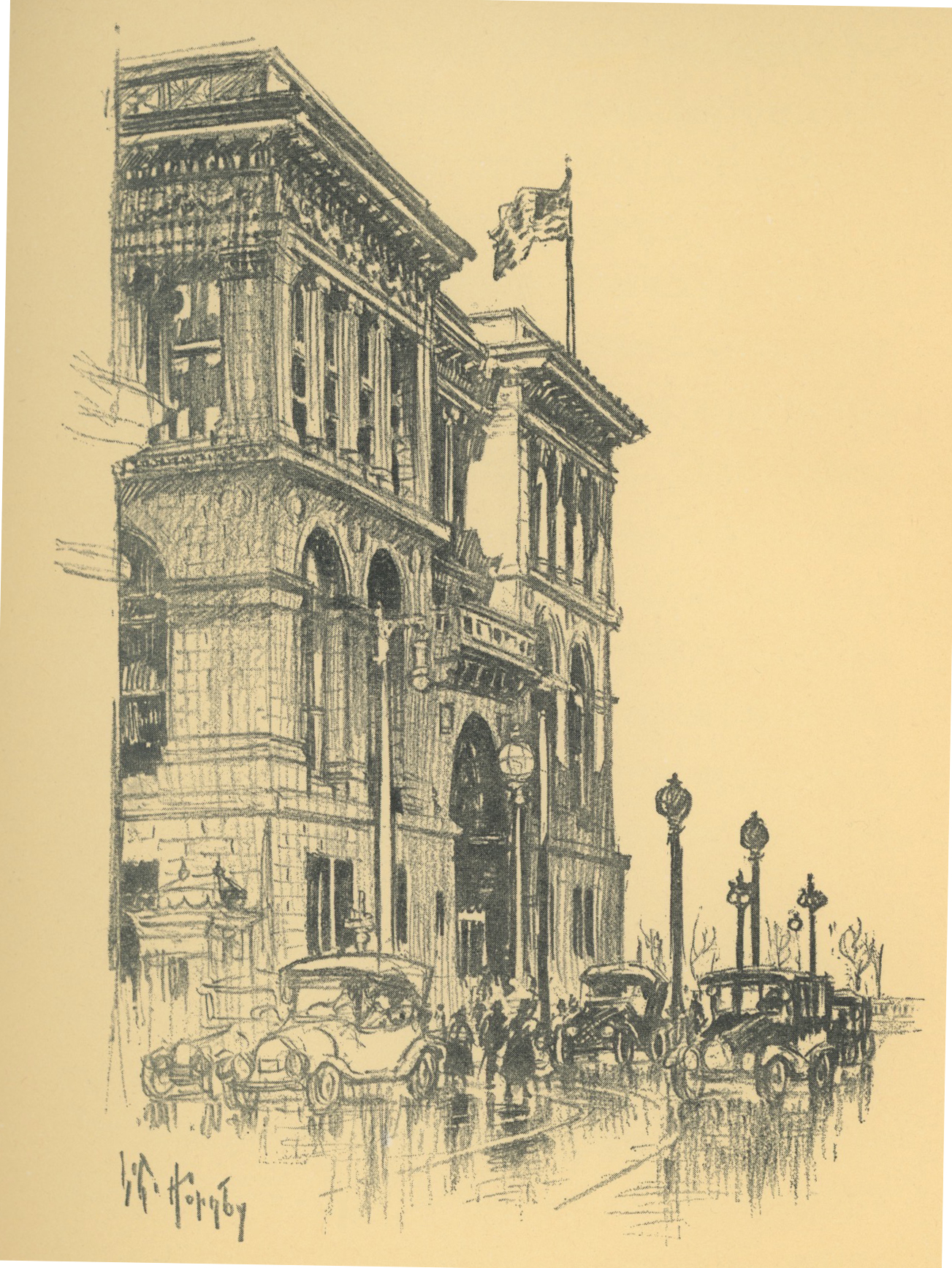
The Library
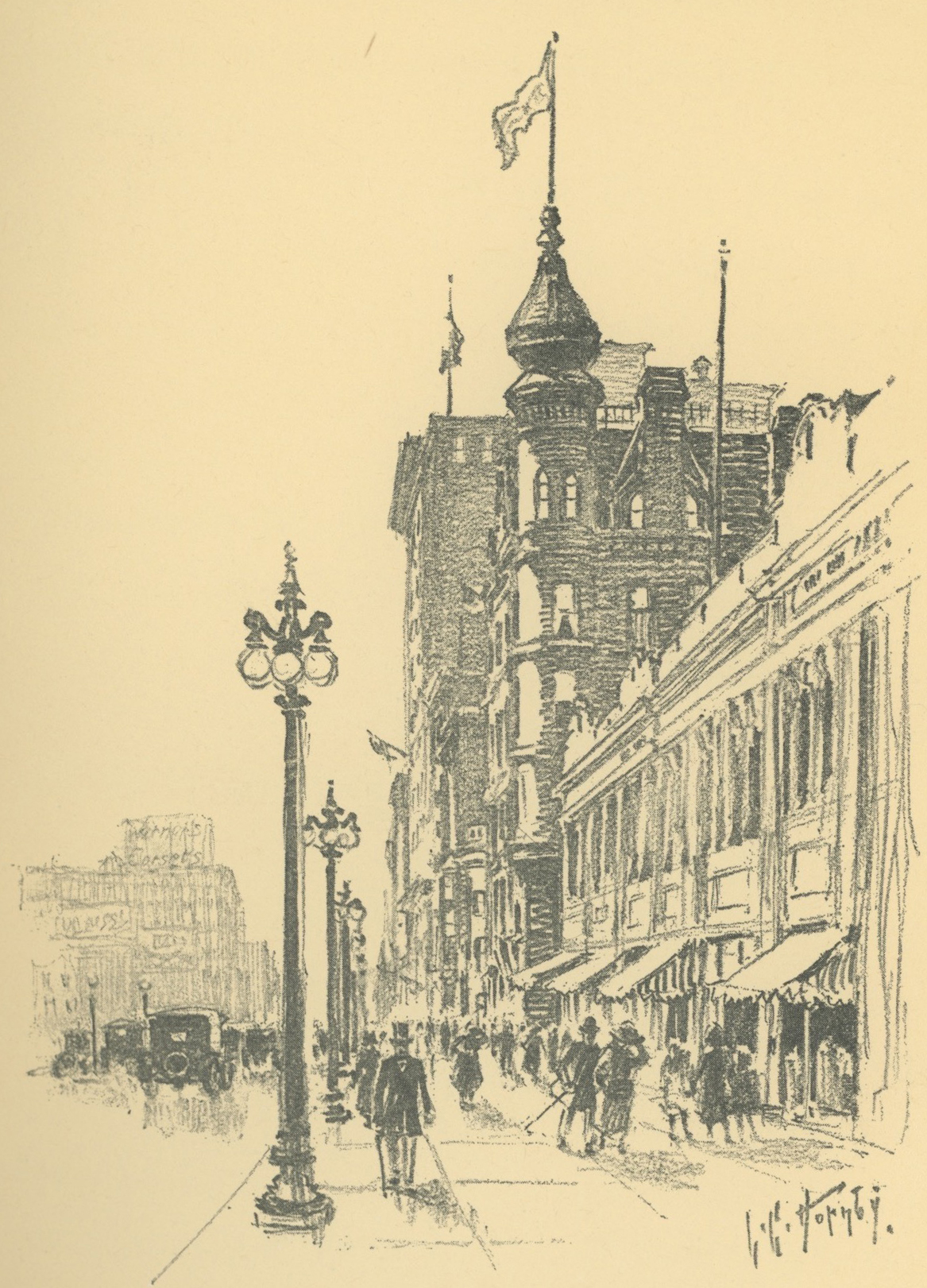
Michigan Boulevard South from 9th Street
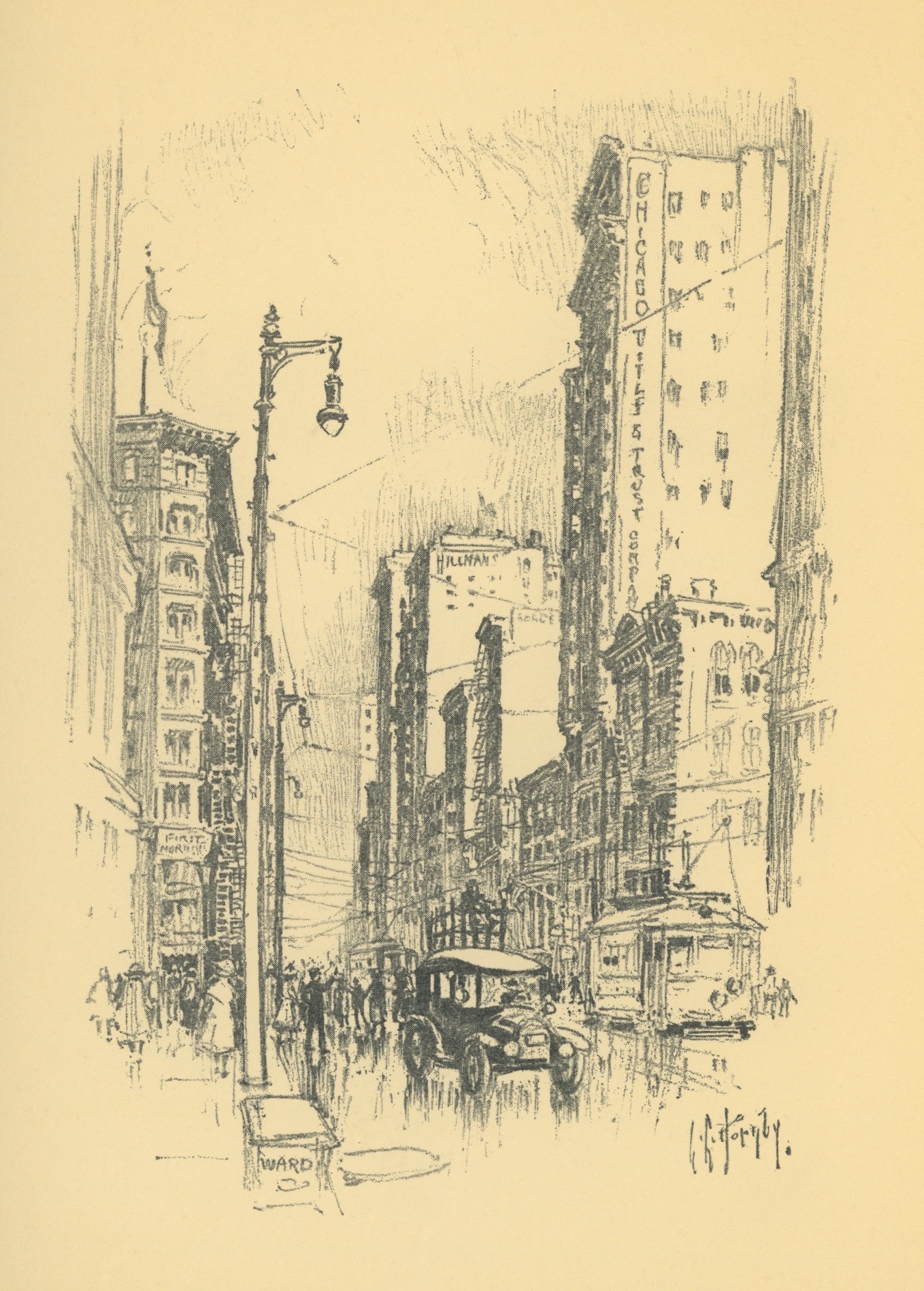
Washington Street Looking East from Clark Street

Park Row at the Railway Station
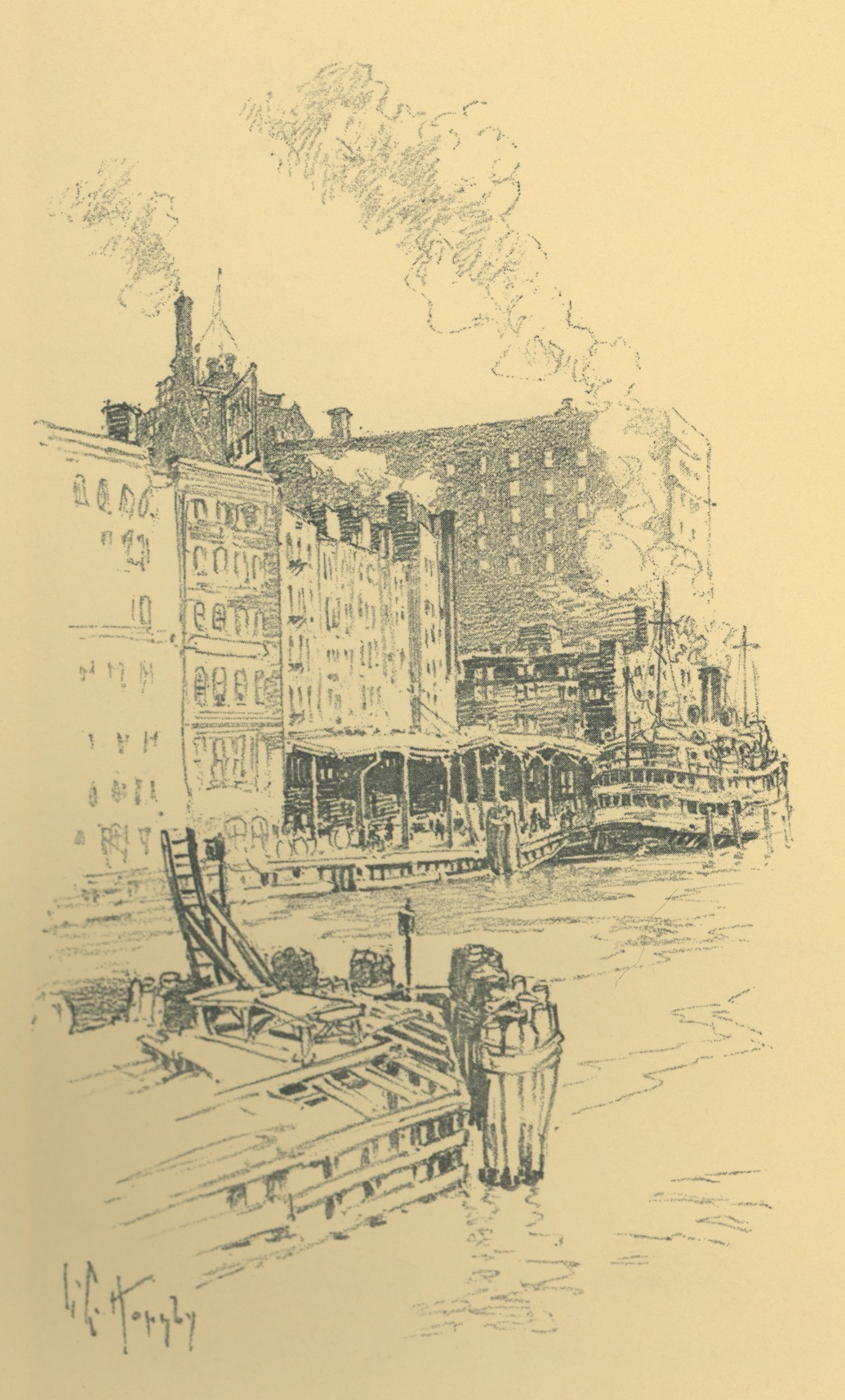
Chicago River from Rush Street Bridge
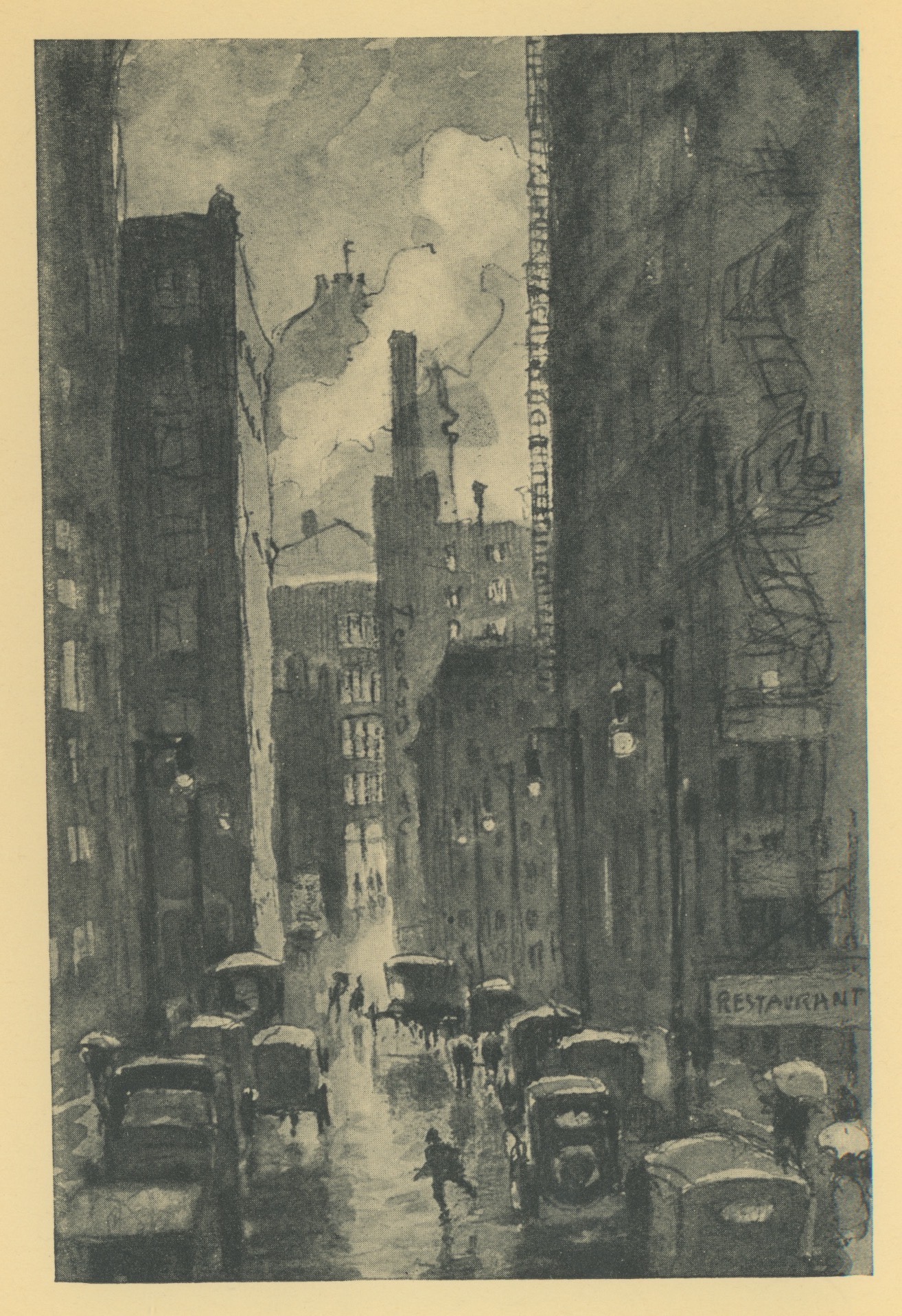
The Cañon Quincy Street from Fifth Avenue
Watercolor
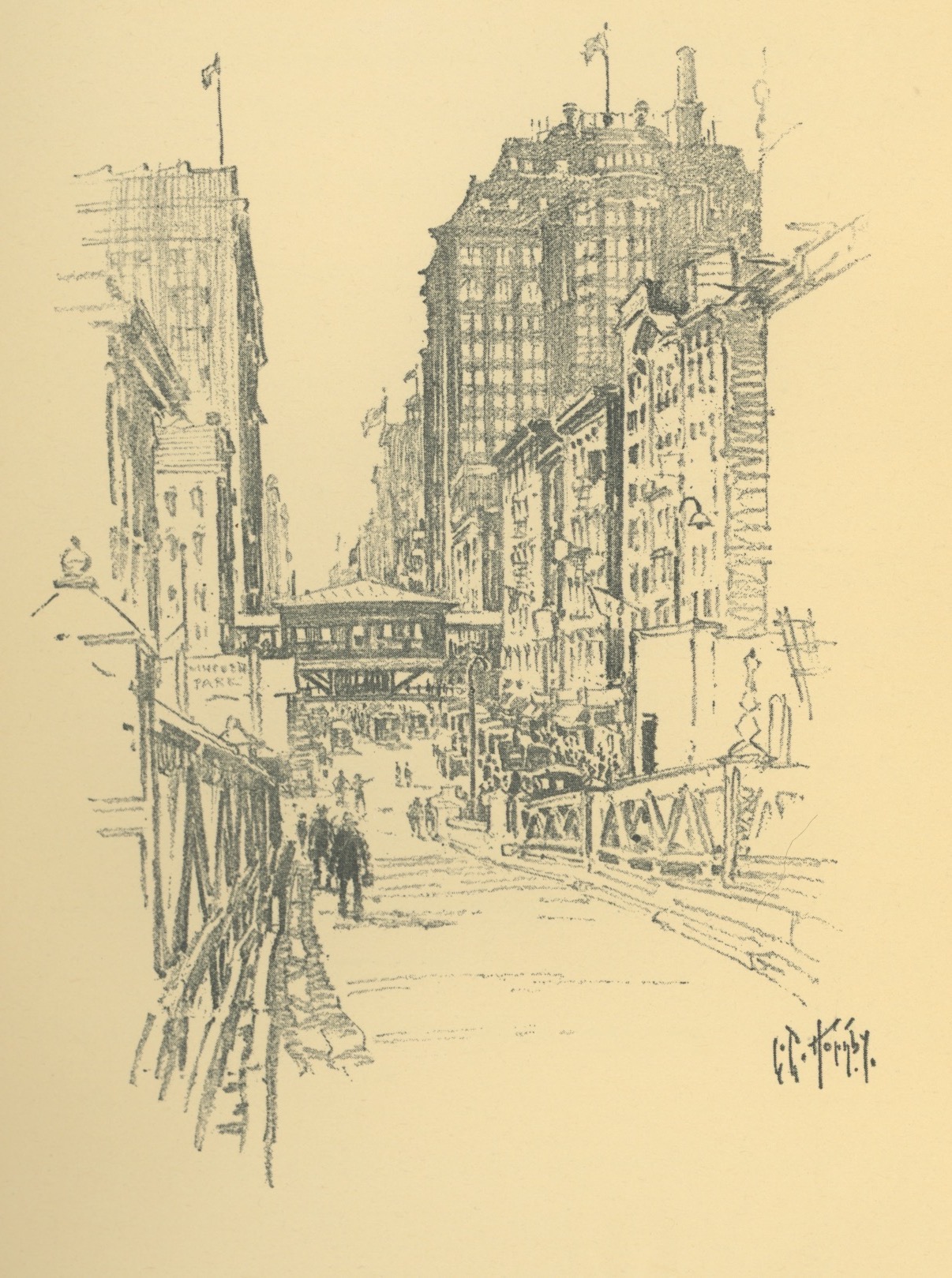
From the Viaduct—The Loop Station at West Randolph Street
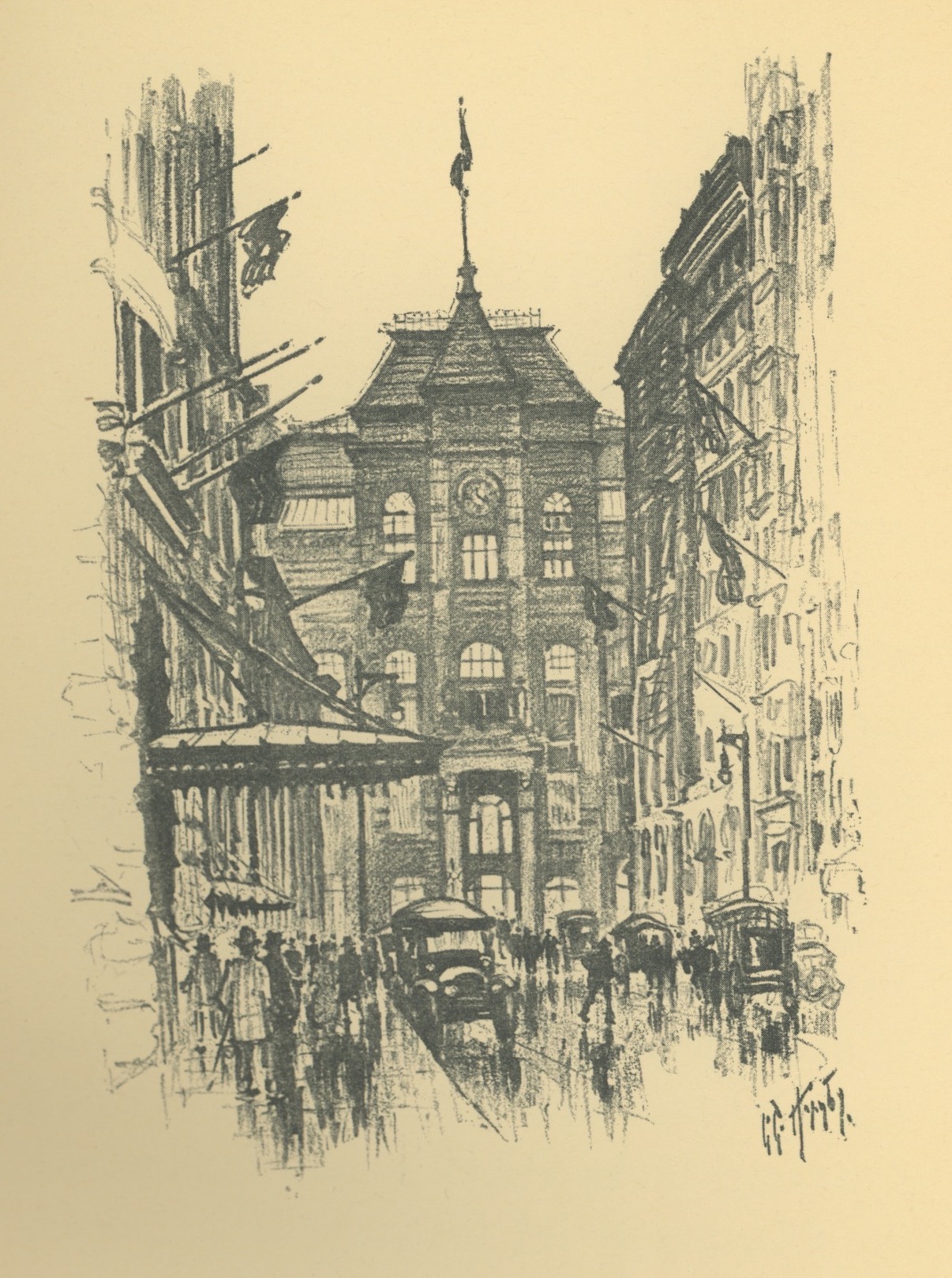
The Board of TradeBuilding from La Salle Street
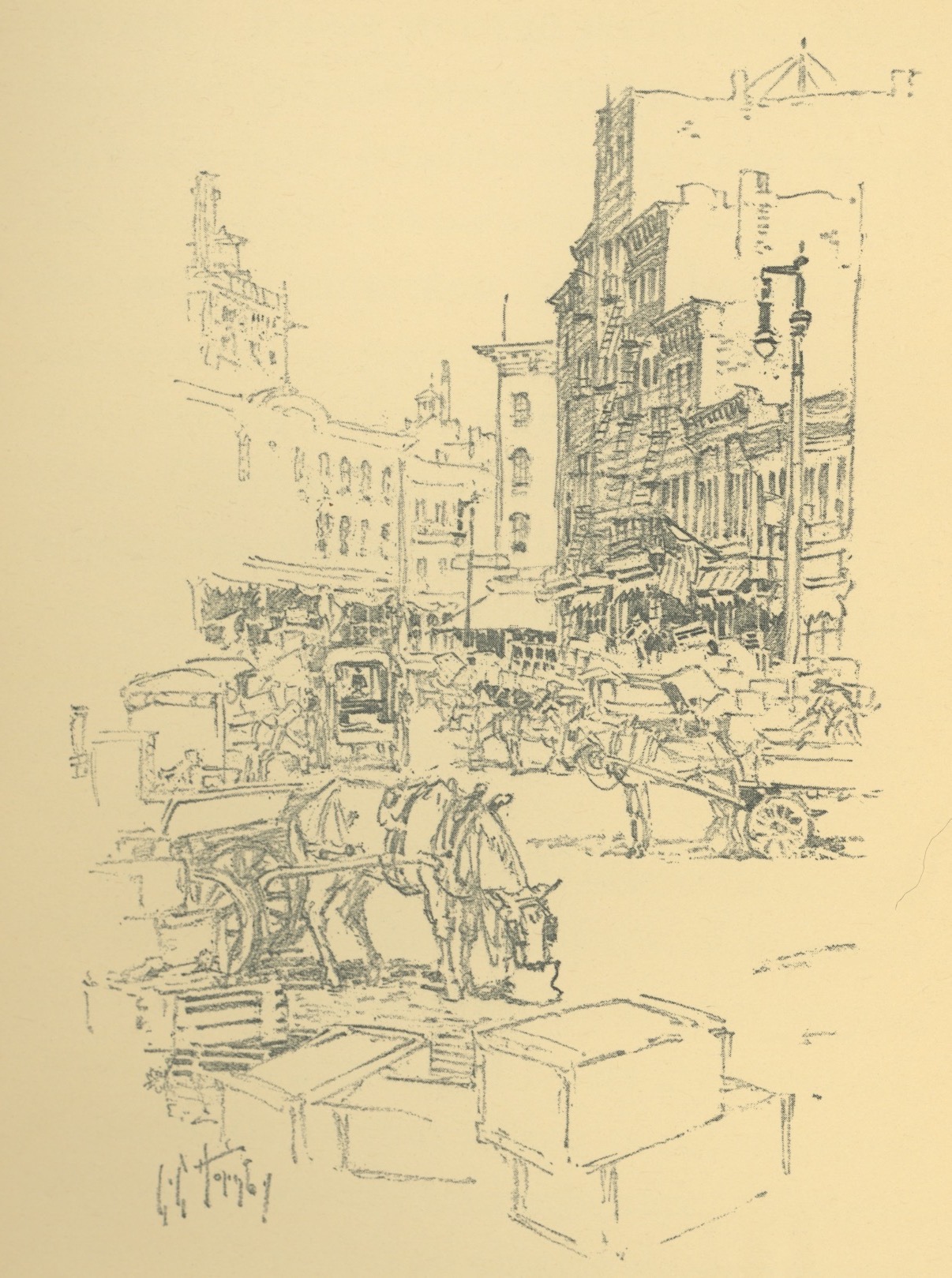
The Market in South Water Street
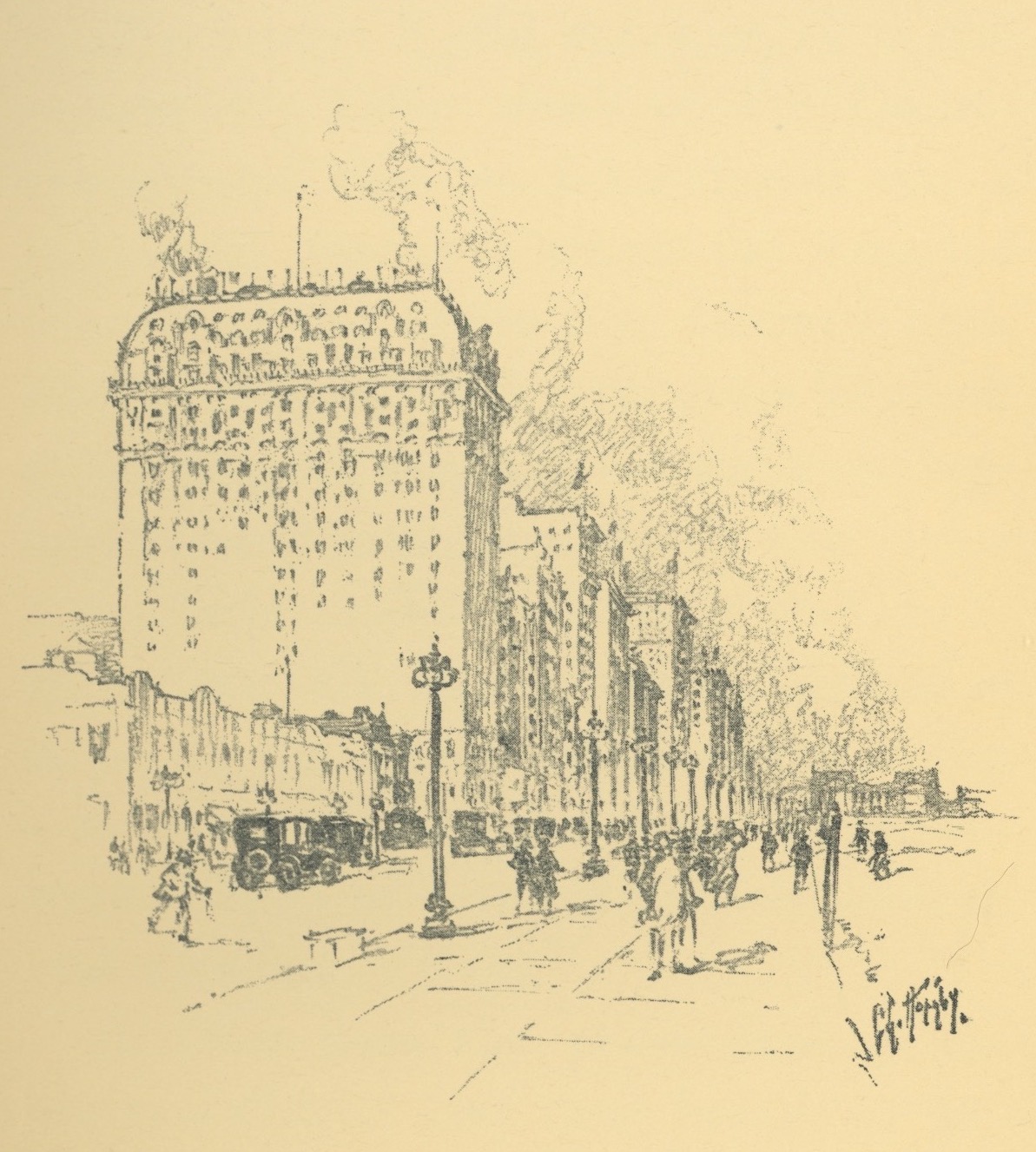
Michigan Avenue from Grant Park
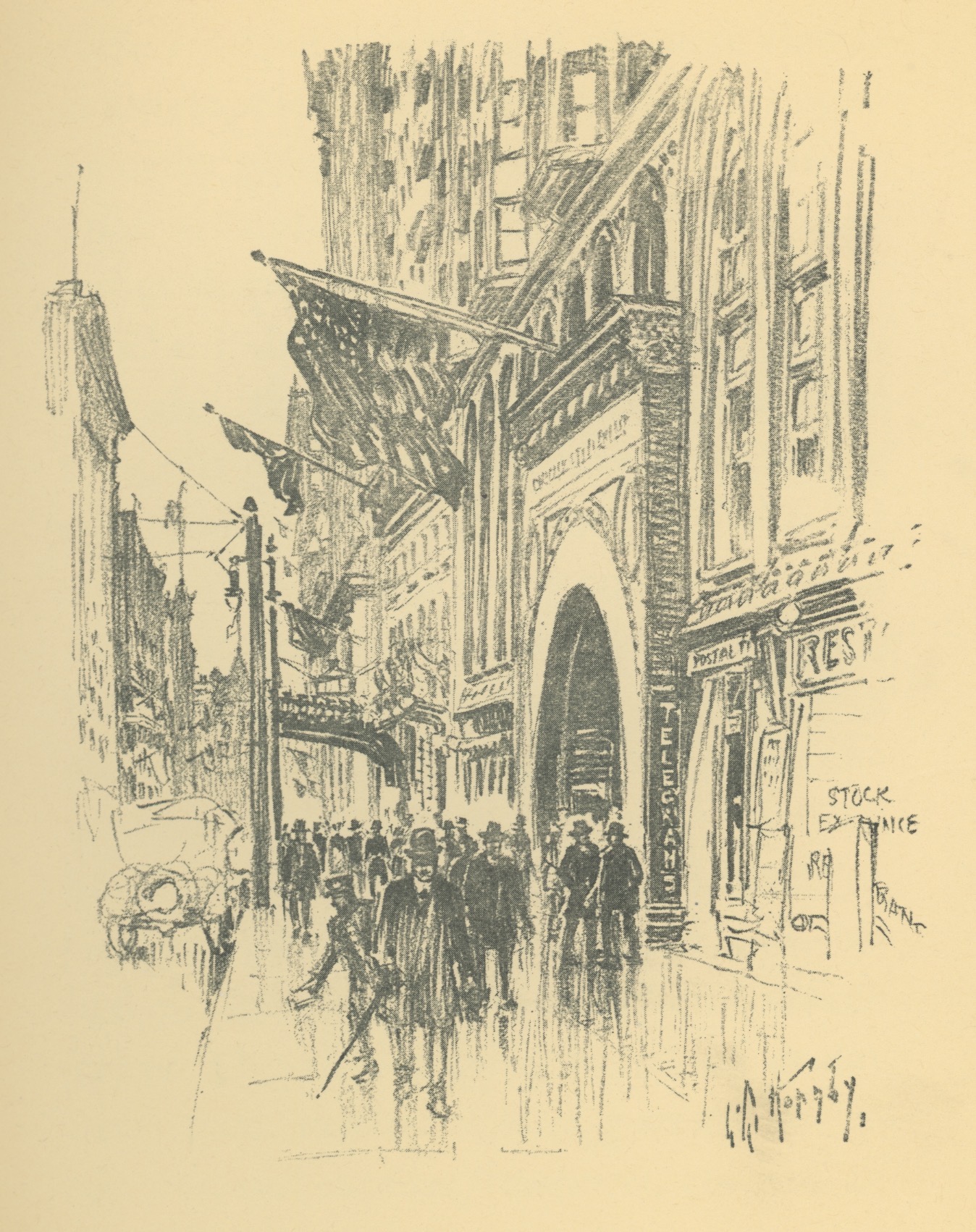
La Salle Street at the Stock Exchange
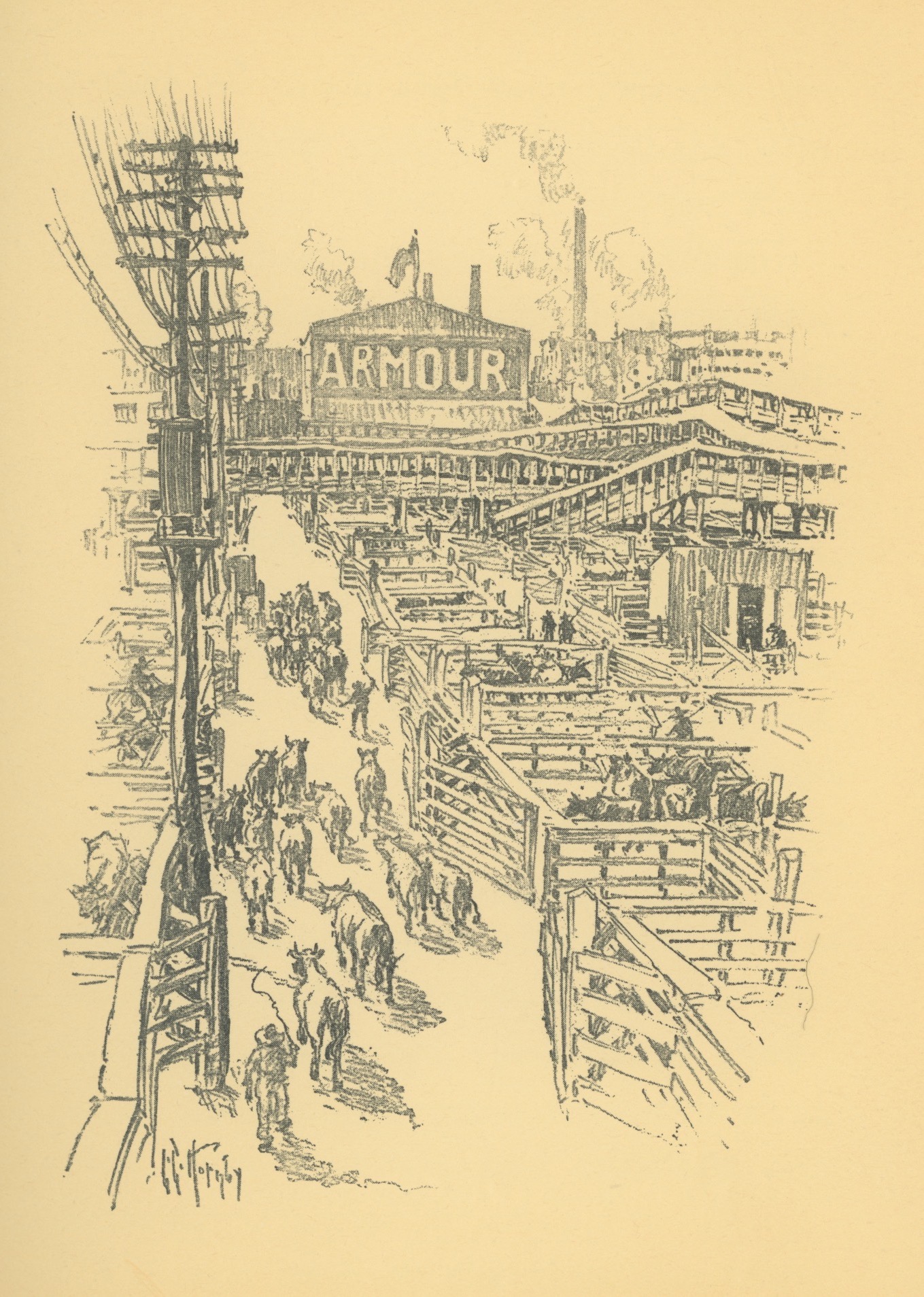
In the Stockyards
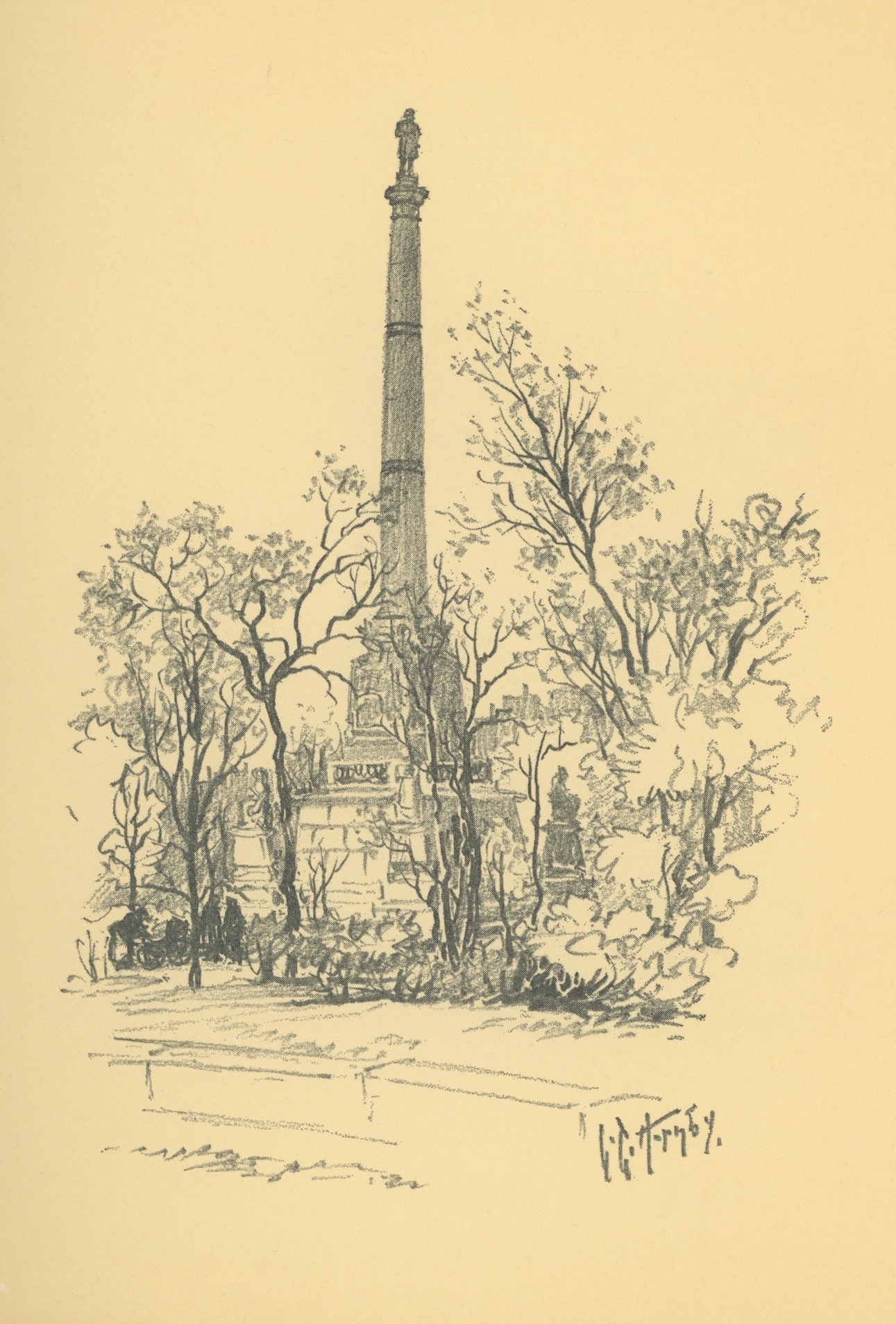
The Douglas Monument
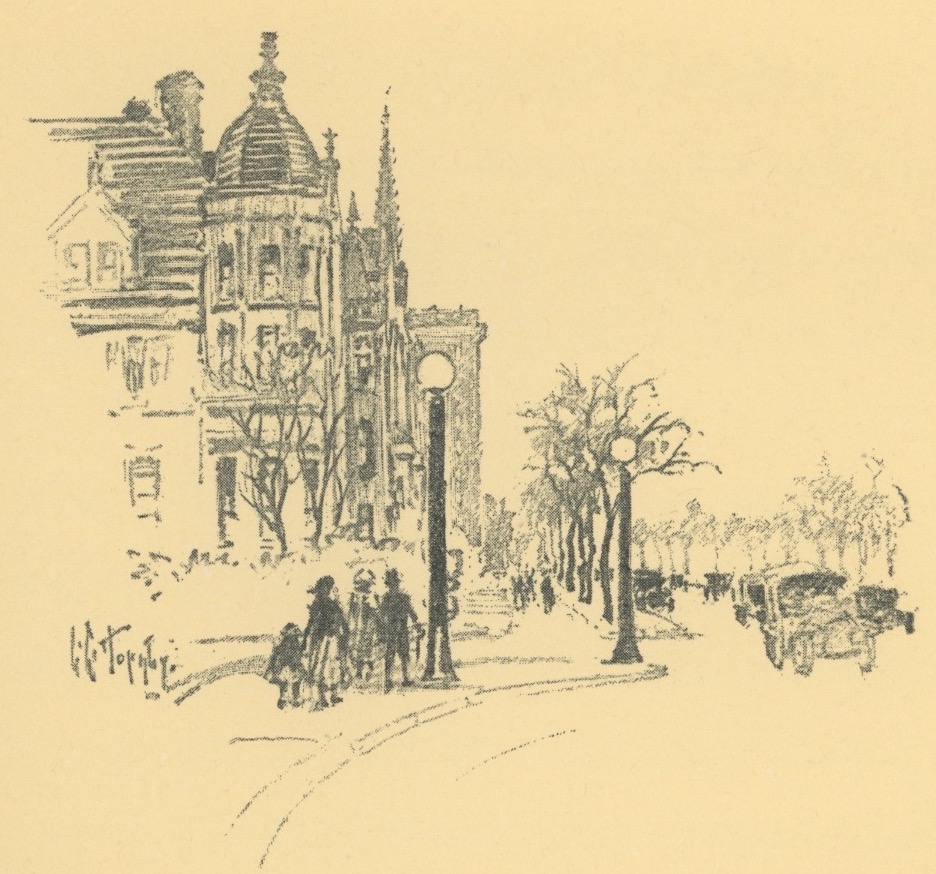
Where the Lake Shore Begins
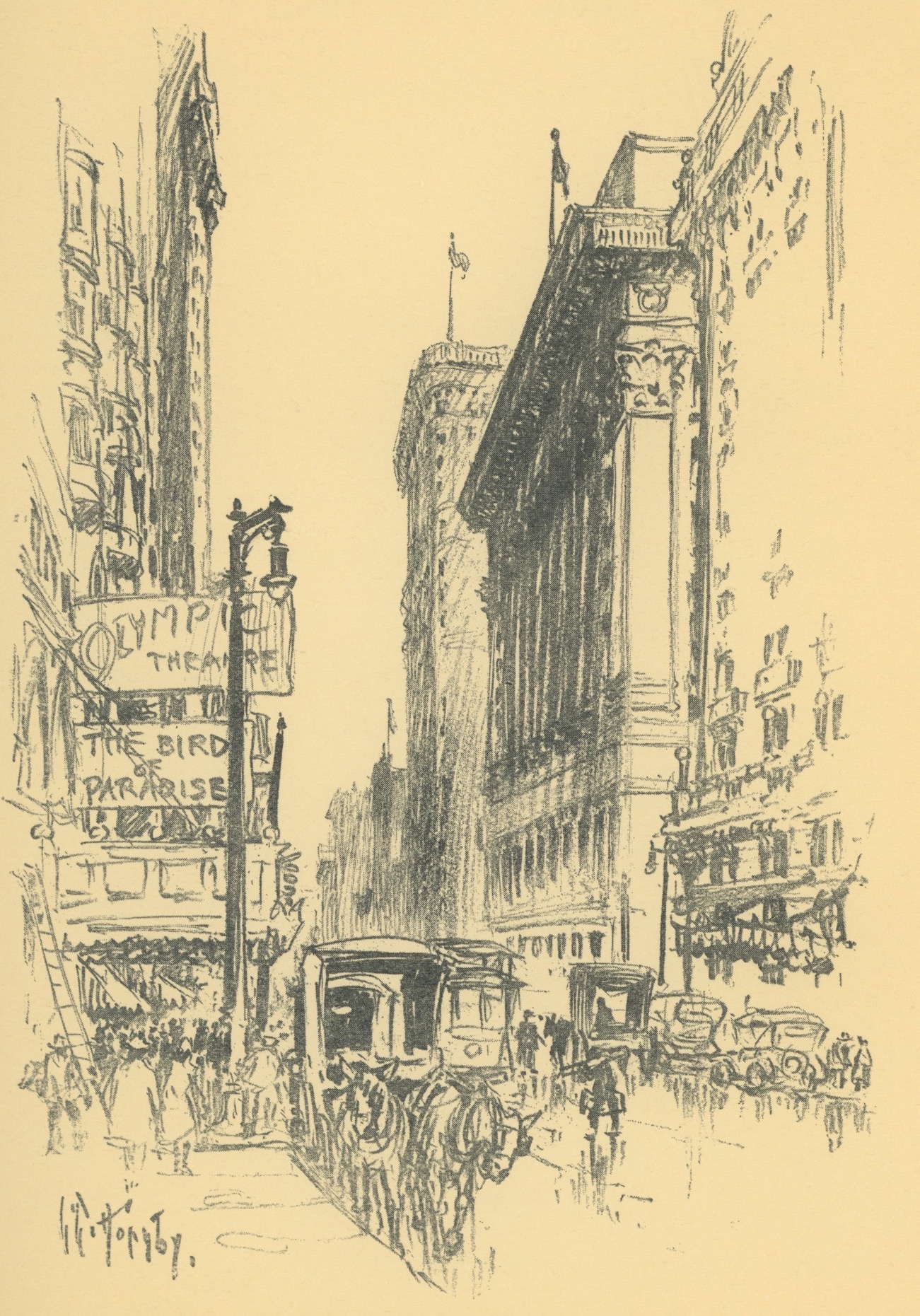
In Clark Street at Courthouse
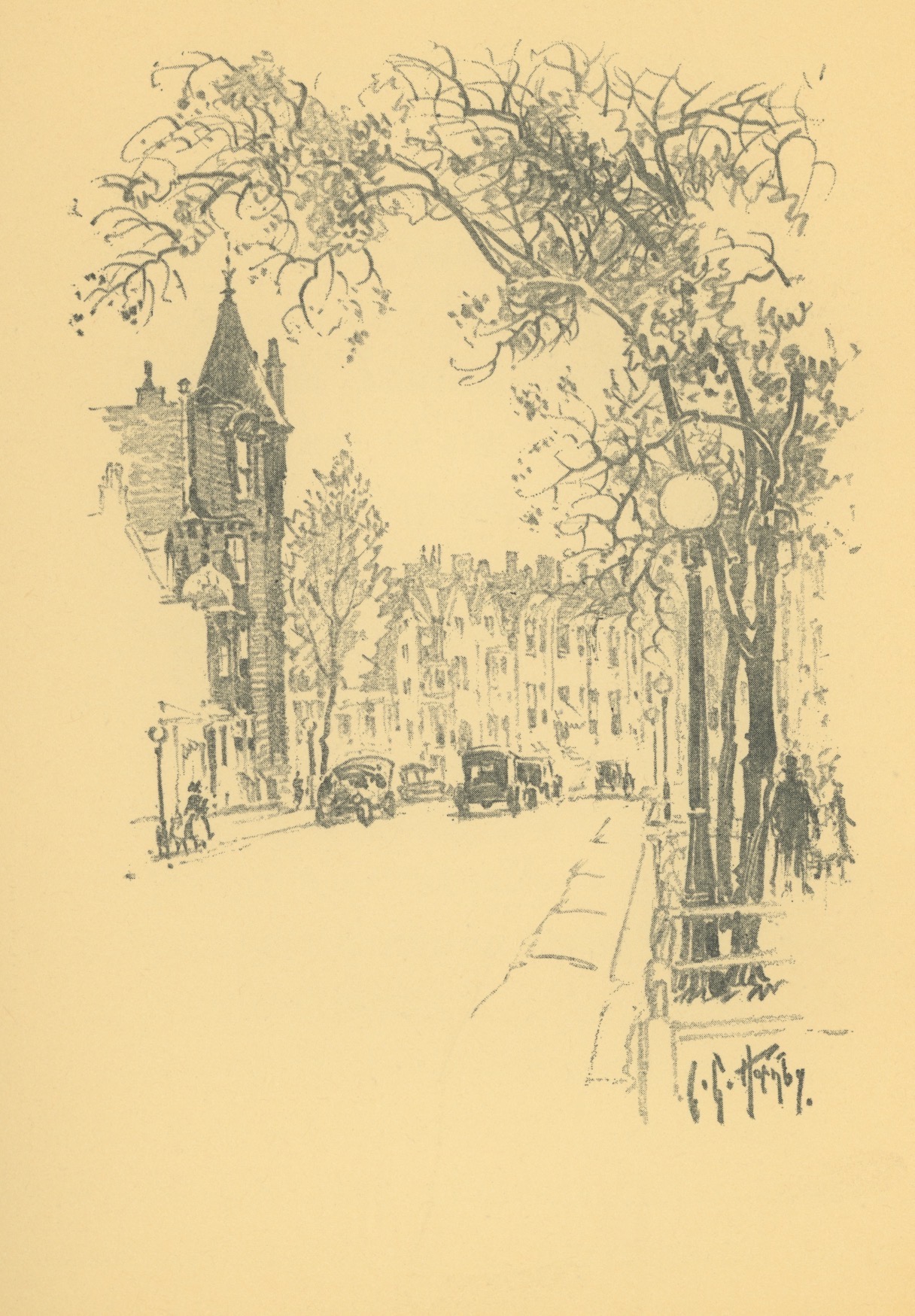
Rush Street in the Old Residential Section
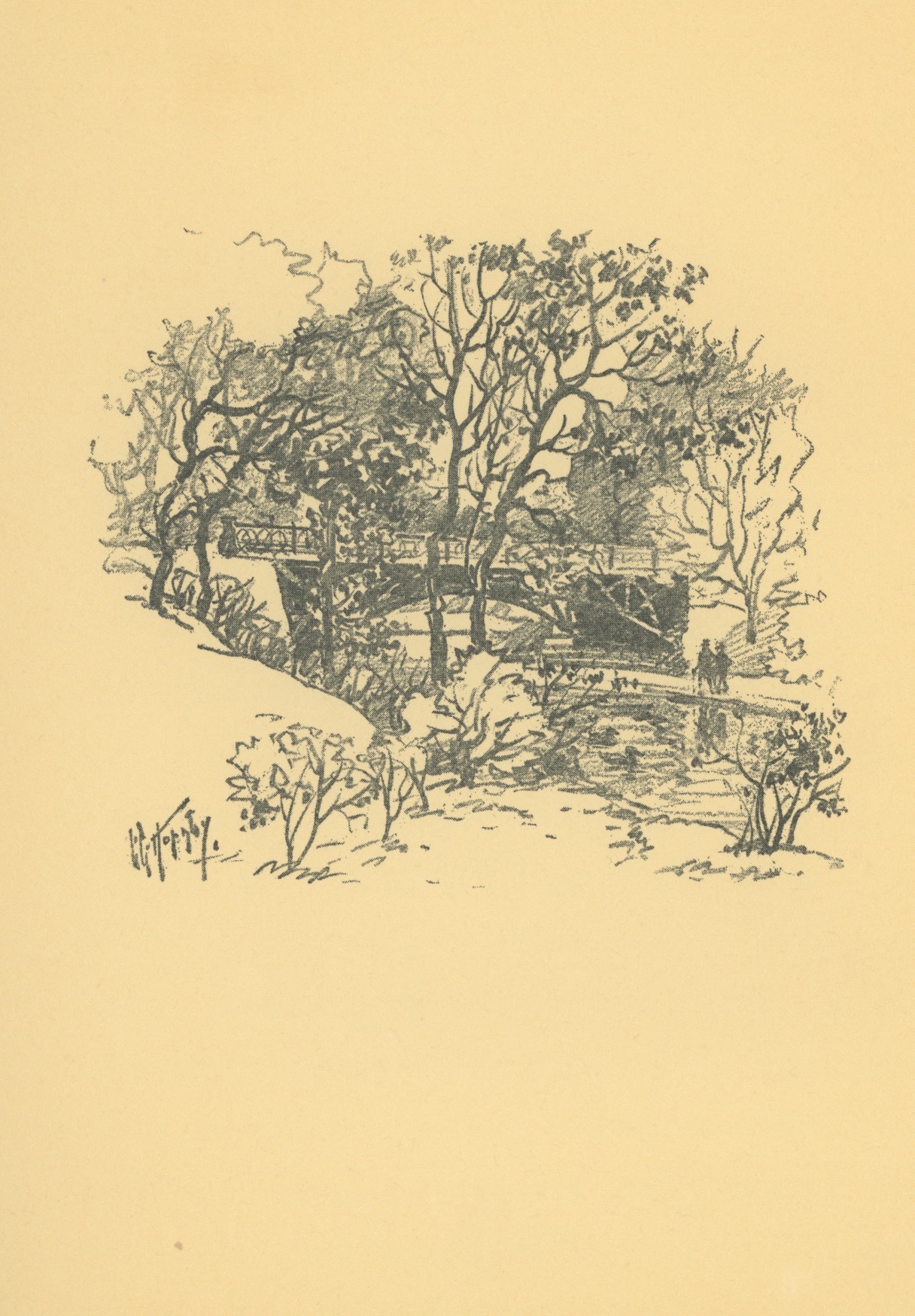
In Lincoln Park
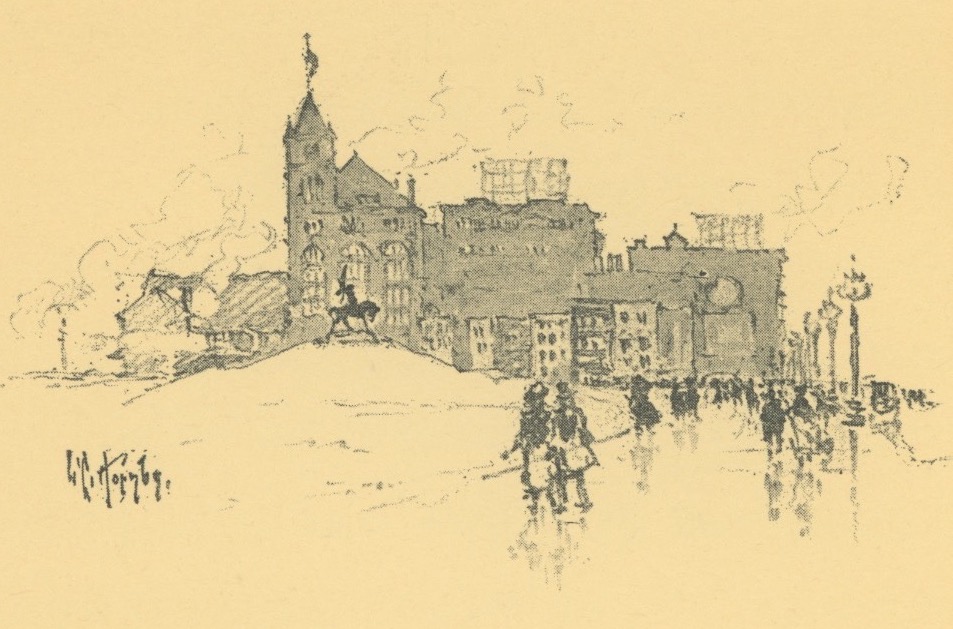
The Skyline of Park Row
Lester G. Hornby (1882-1956) is one of the surprising number of early 20th century American artists who achieved great acclaim during their vital years and yet lived to see their works, during the ensuing decades, largely neglected. That condition is now being reversed for many of them.
Hornby received his early training at the Rhode Island School of Design and the Art Students League in New York. He then journeyed to Paris where he developed his technique further at the major art academies there. Hornby’s progress was rapid; he received his first international recognition in Paris in the prestigious Salon d’Automne of 1907.
Completely captivated by Paris and the French countryside, Hornby spent most of his productive years in France, returning intermittently to America. In his latter years, he played an active role as teacher and artist in the Rockport art colony, dying there at his cottage in 1956.
 The quiet perseverance of honest industry has more exponents than chroniclers. Where the short sharp struggle, or the masterly movement challenge admiration and demand a record, the not less heroic and more truly noble conflict with the world, in which one man, at a great personal disadvantage, finds the hand of every one raised against him, and by dint of unwearied attention to the one great object gradually threads his way through and between opposing obstacles, rather than beats them down, too seldom finds a place in our permanent annals. Yet these are the men who have done most for the real benefit of themselves and their race. They have not with leaping pole bridged the chasm which isolates the mountain crag, but with slow and toilsome steps they have ascended the steep, and gained the fertile plateau whose plenty makes glad the hearts of a community. Their success is not based on the injury of others, nor achieved by subterfuge or knavery, but, as the legitimate fruit of unwearying application, is so much added to the world’s wealth, and so much of an augmentation to its concrete happiness. It is the presence of these men, so largely numerous among us, that has given to Chicago its proud prominence among the cities of the West, stamping her as the mistress of the Mississippi Valley in all that pertains to commercial enterprise and legitimate business growth. It is the presence of this clement which enables her to reach out and beyond her former rivals into that which once was regarded as their exclusive domain, and, like the sun among the planets, forcing not only them, but their satellites, to revolve in obedience to the influence of its own superior attraction.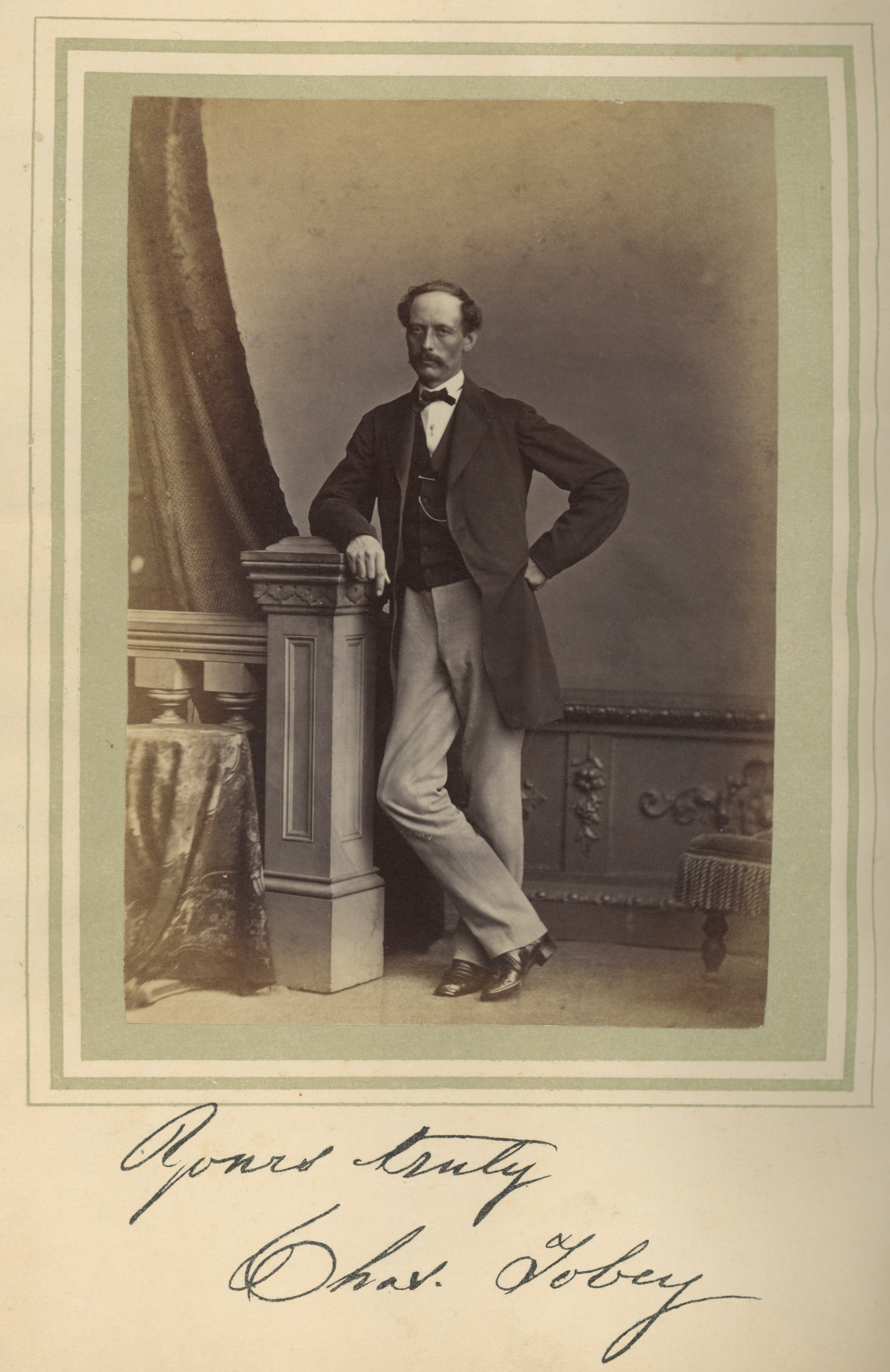
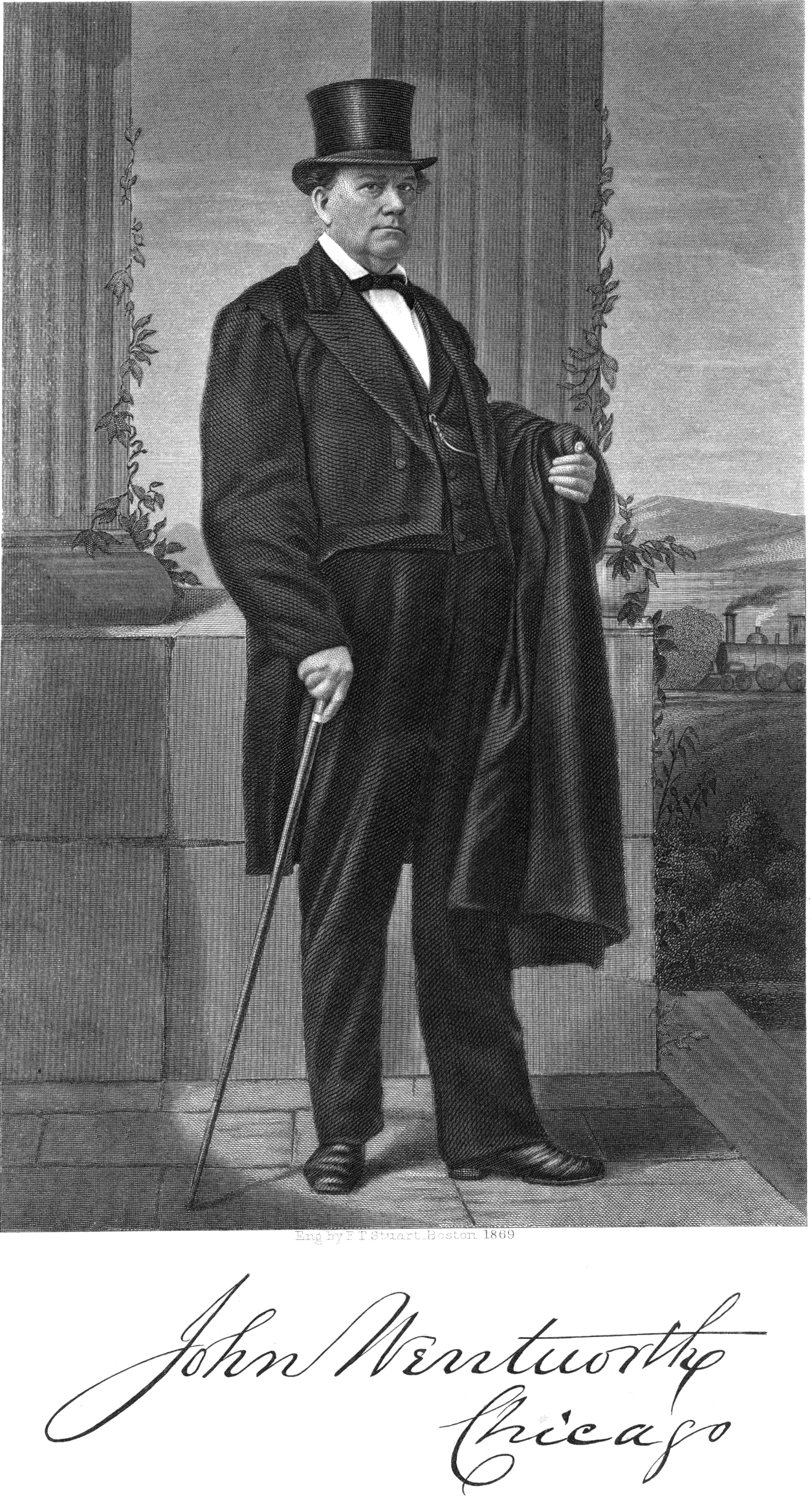
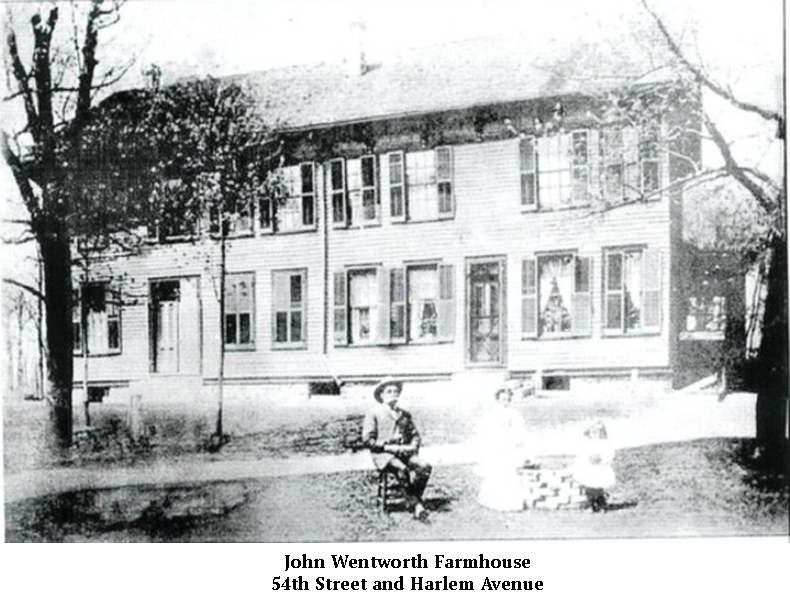
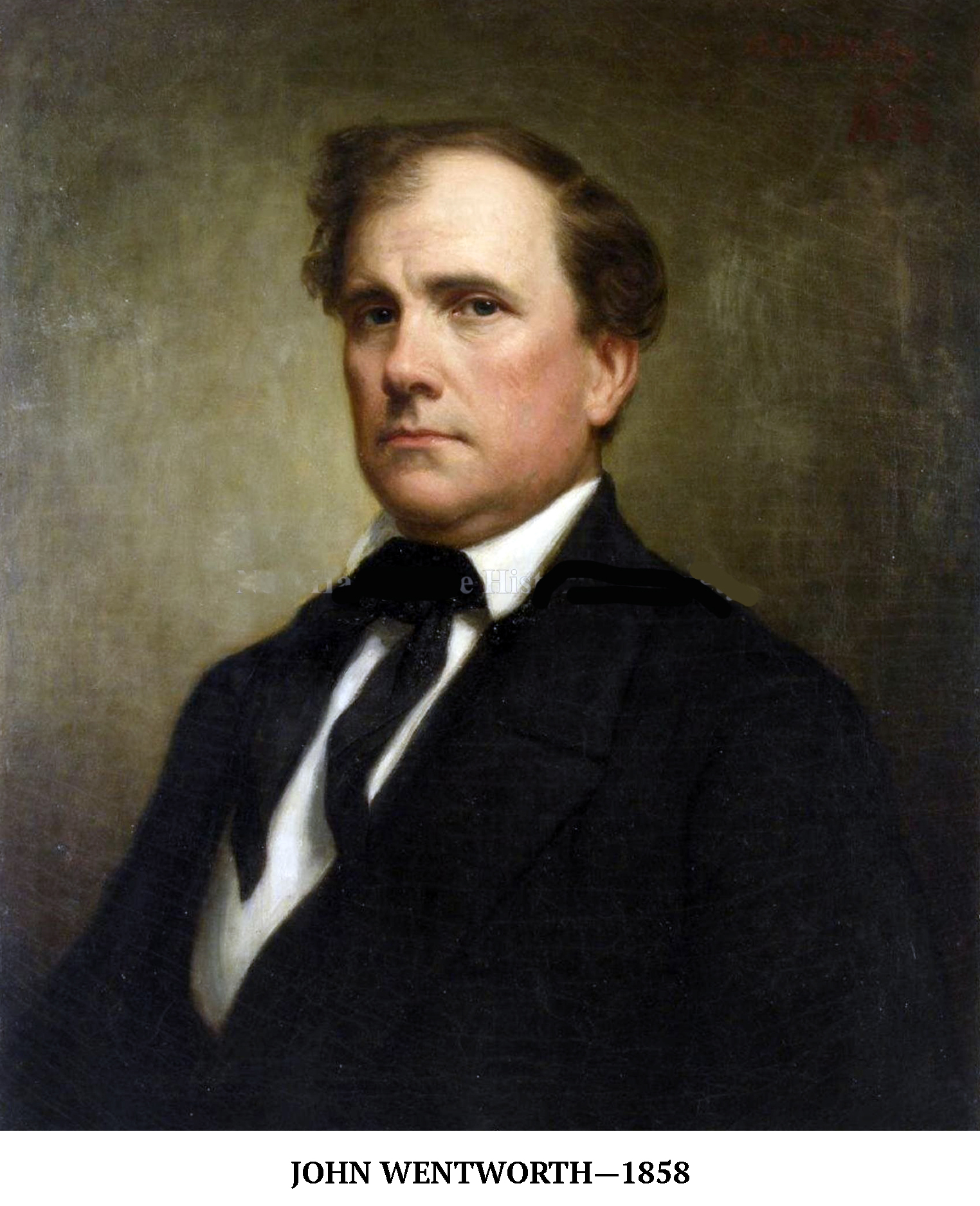
 John Wentworth is one of the very few men now living who attended the meetings called in the winter of 1836-7, to consider the expediency of applying to the Legislature, in session at Vandalia, for a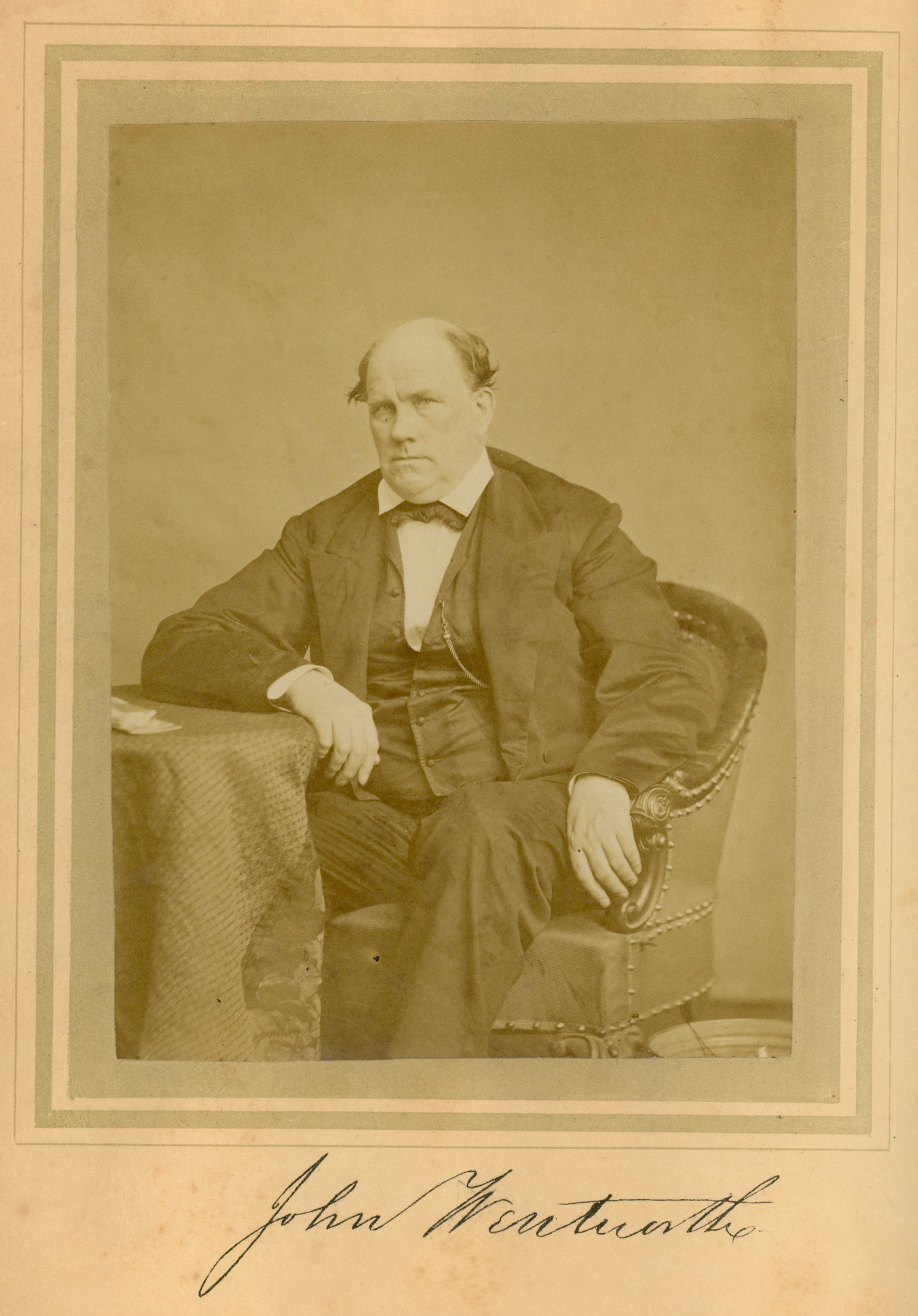
 Although our city has been more or less absorbed, during the years that are past, in the great work of building up a lasting foundation for her present and future greatness, thus compelling her to give almost exclusive attention to commercial enterprises, yet we are glad to chronicle the fact that, of late years, her attention has been turned, in a great degree, to the culture of the fine arts. To-day she boasts of a corps of artists whose busy fingers are constantly engaged in satisfying the increasing demands of her citizens for works of this description. Foremost in this list is he whose sketch we are about to write.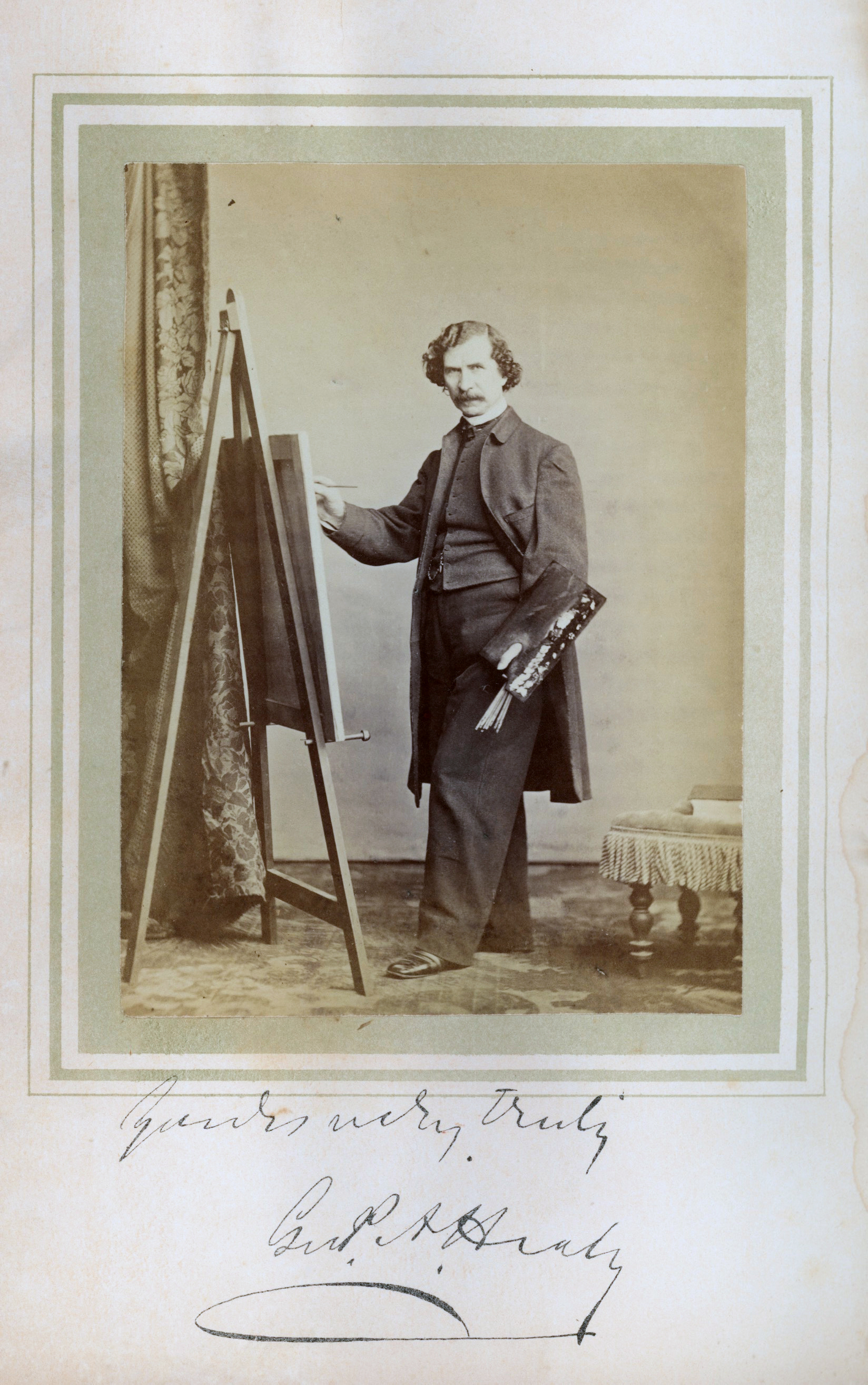
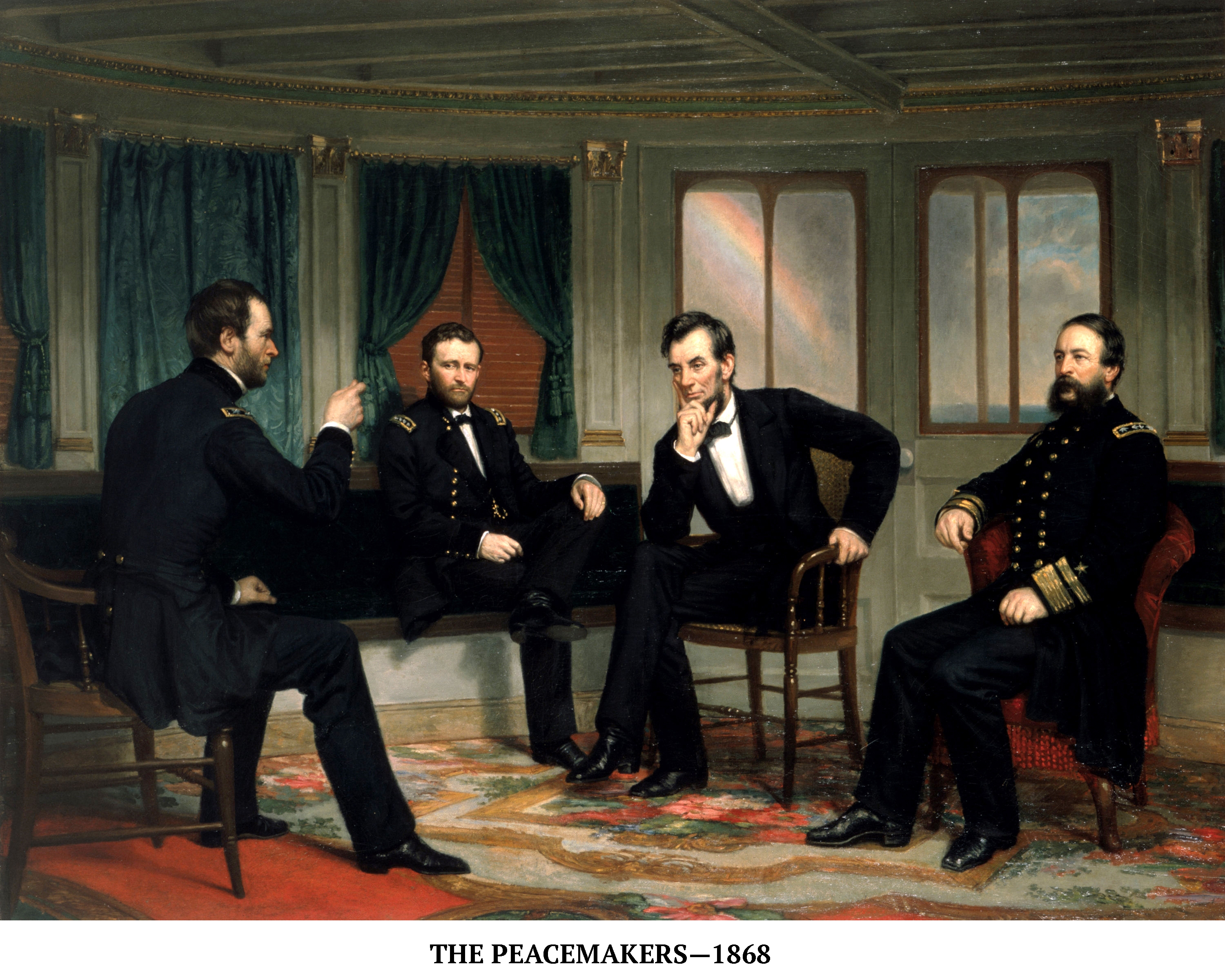
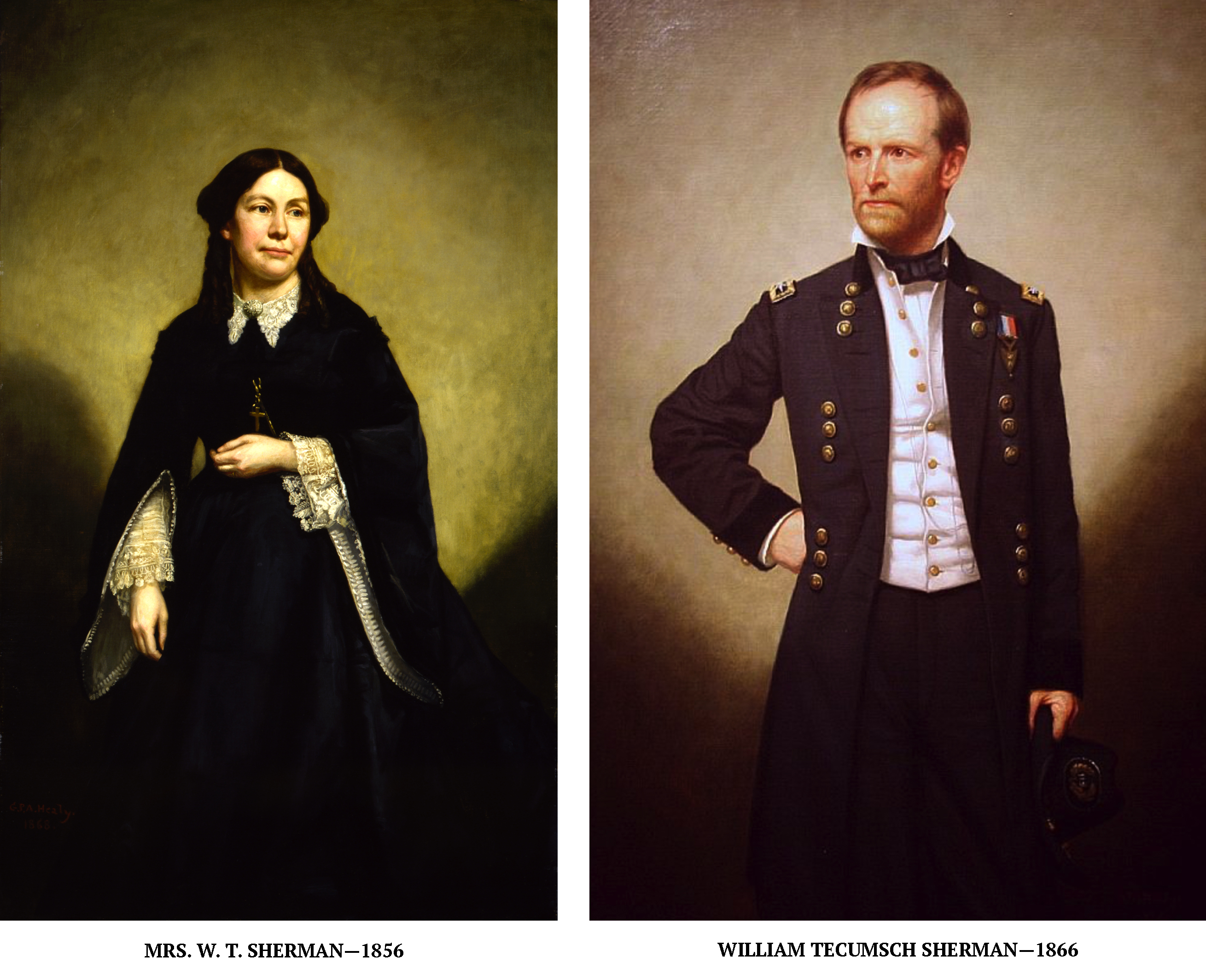
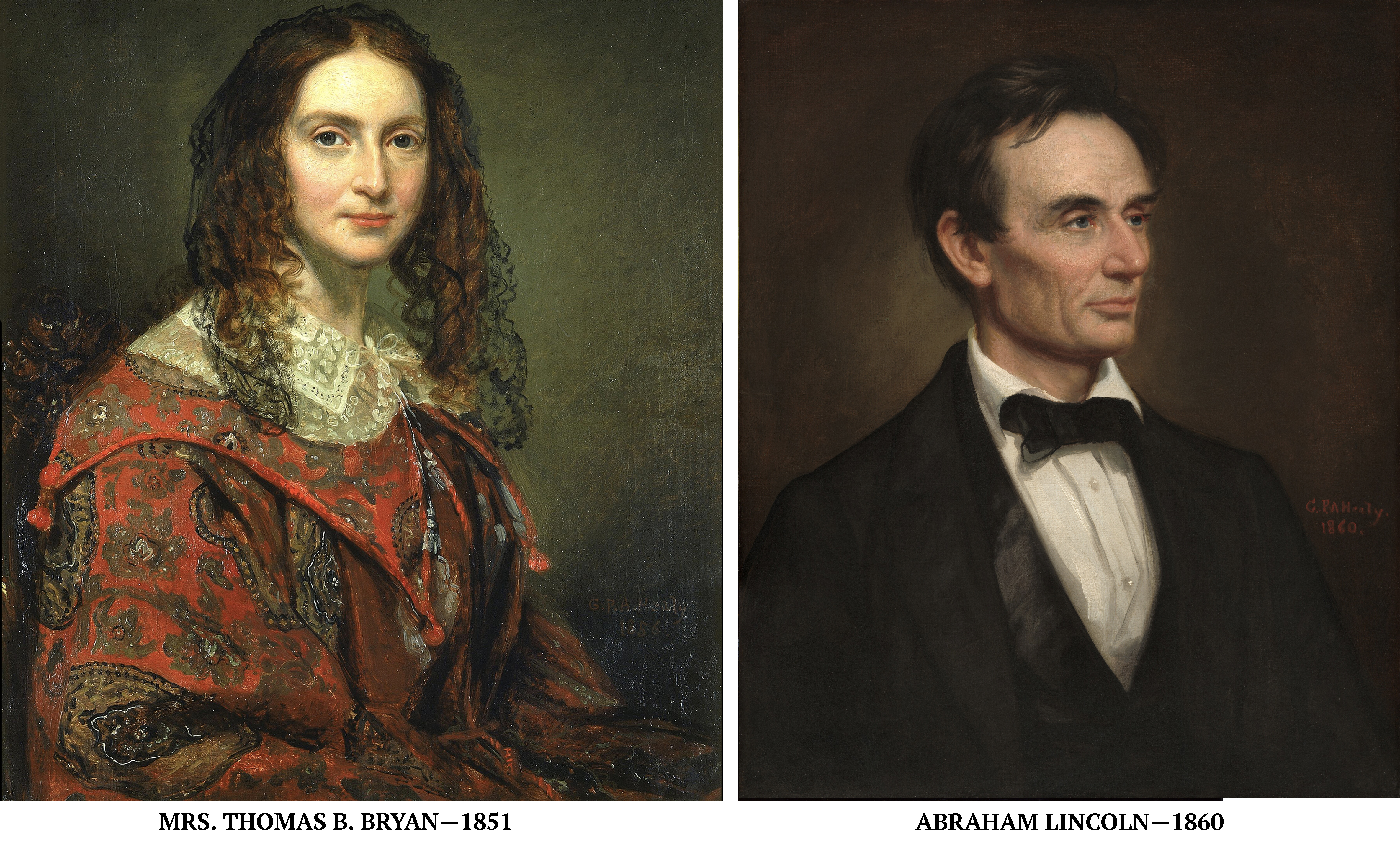
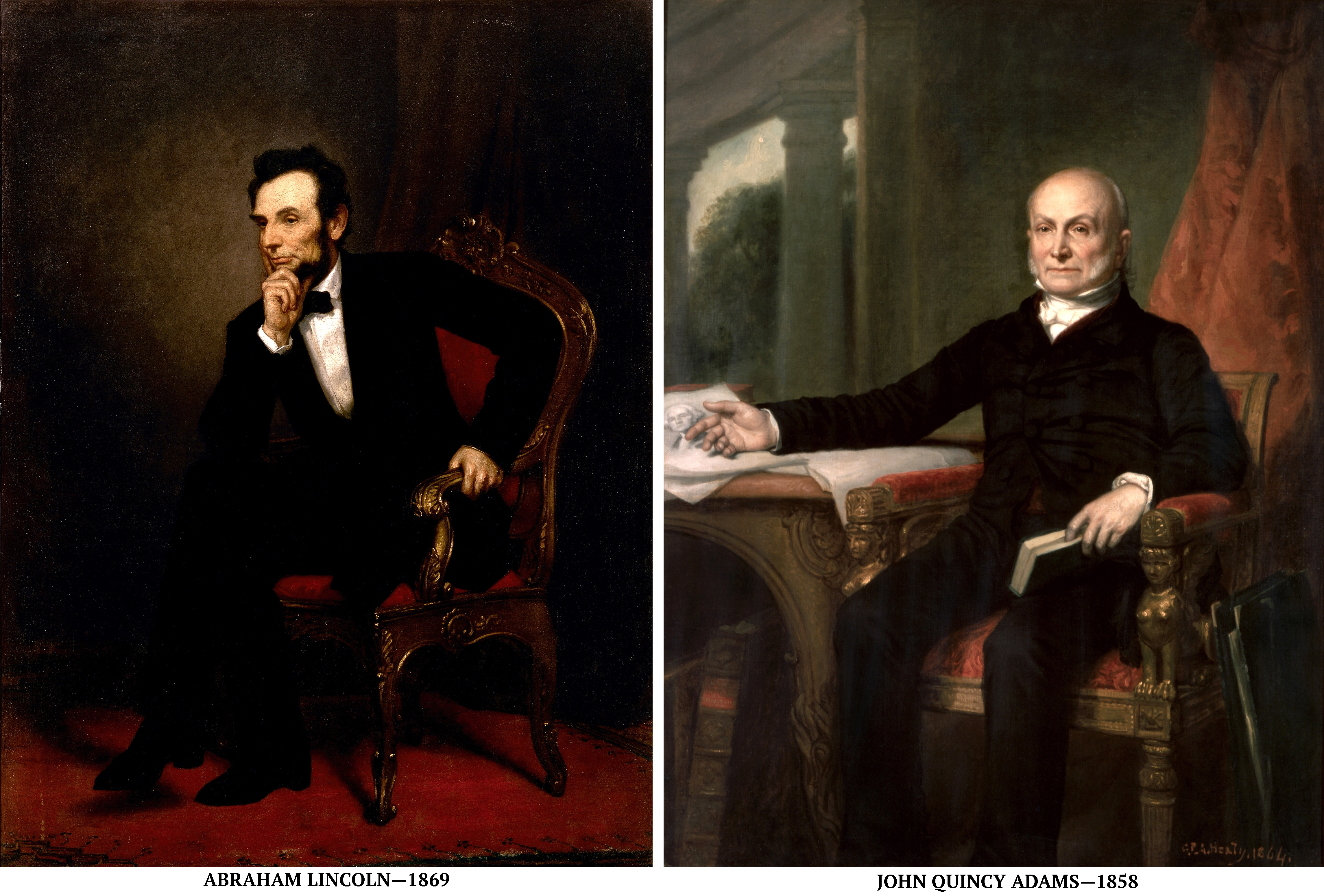
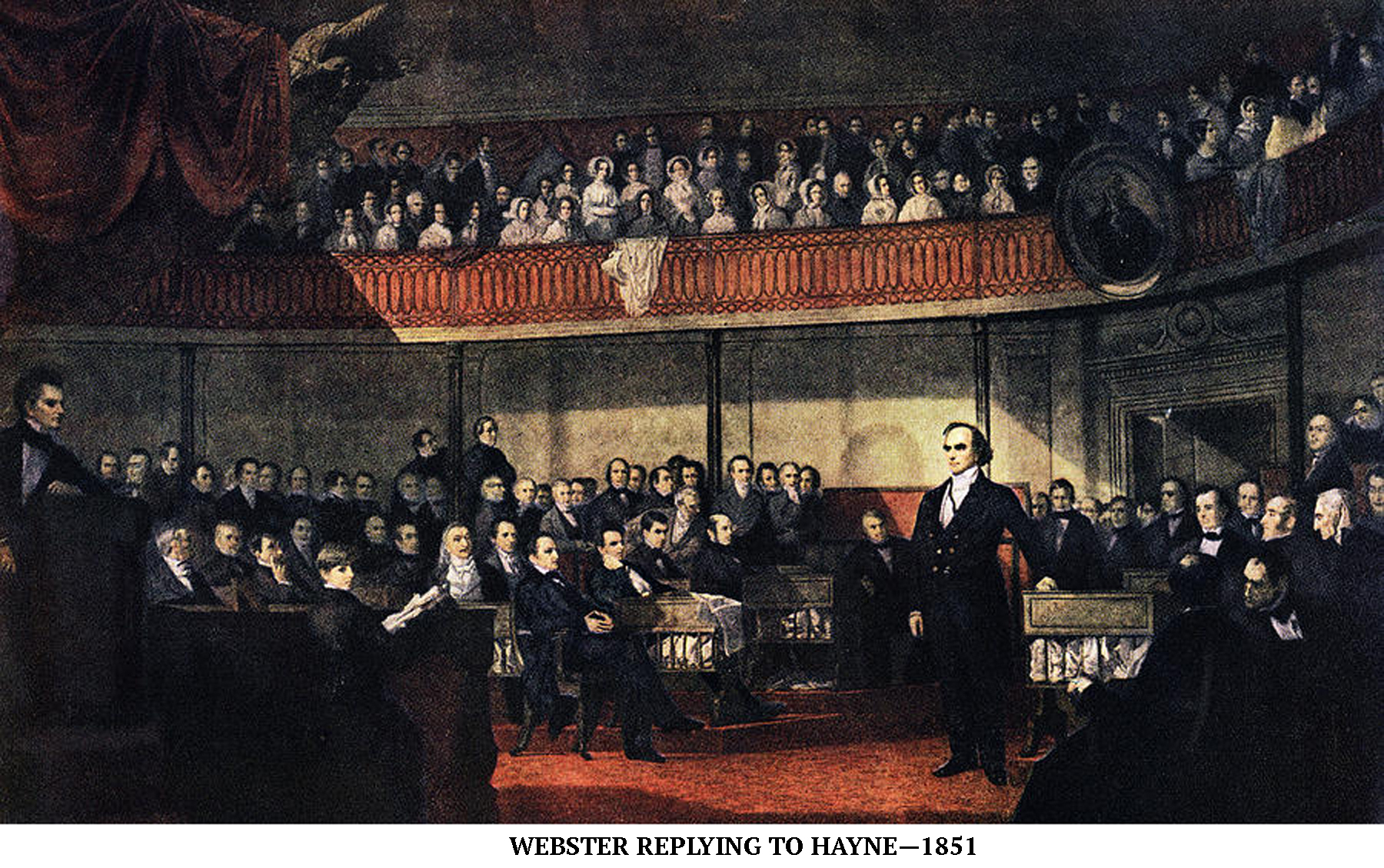
 G. P. A. Healy, the celebrated portrait painter, died at 2:30 o’clock yesterday morning at his residence, No. 387 Ontario street, of exhaustion brought on by the hoy weather. About a year ago he fell and sustained injuries on the head from which he never fully recovered. It was this, doubtless, that had something to do with his inability to withstand the heat. Furthermore Mr. Healy was within a few days of the 81st anniversary of his birth, consequently had lost much of his vigor. Then, too, his entire life had been singularly free from sickness; therefore, as seems to be generally true in nearly all such cases, when he began to lose vitality the end came quickly. Only last week, however, did his wasting strength begin to make itself seriously felt and he remained confined at home. Up to five days ago it had been customary with him to go to his studio on Huron, near State street, every morning.
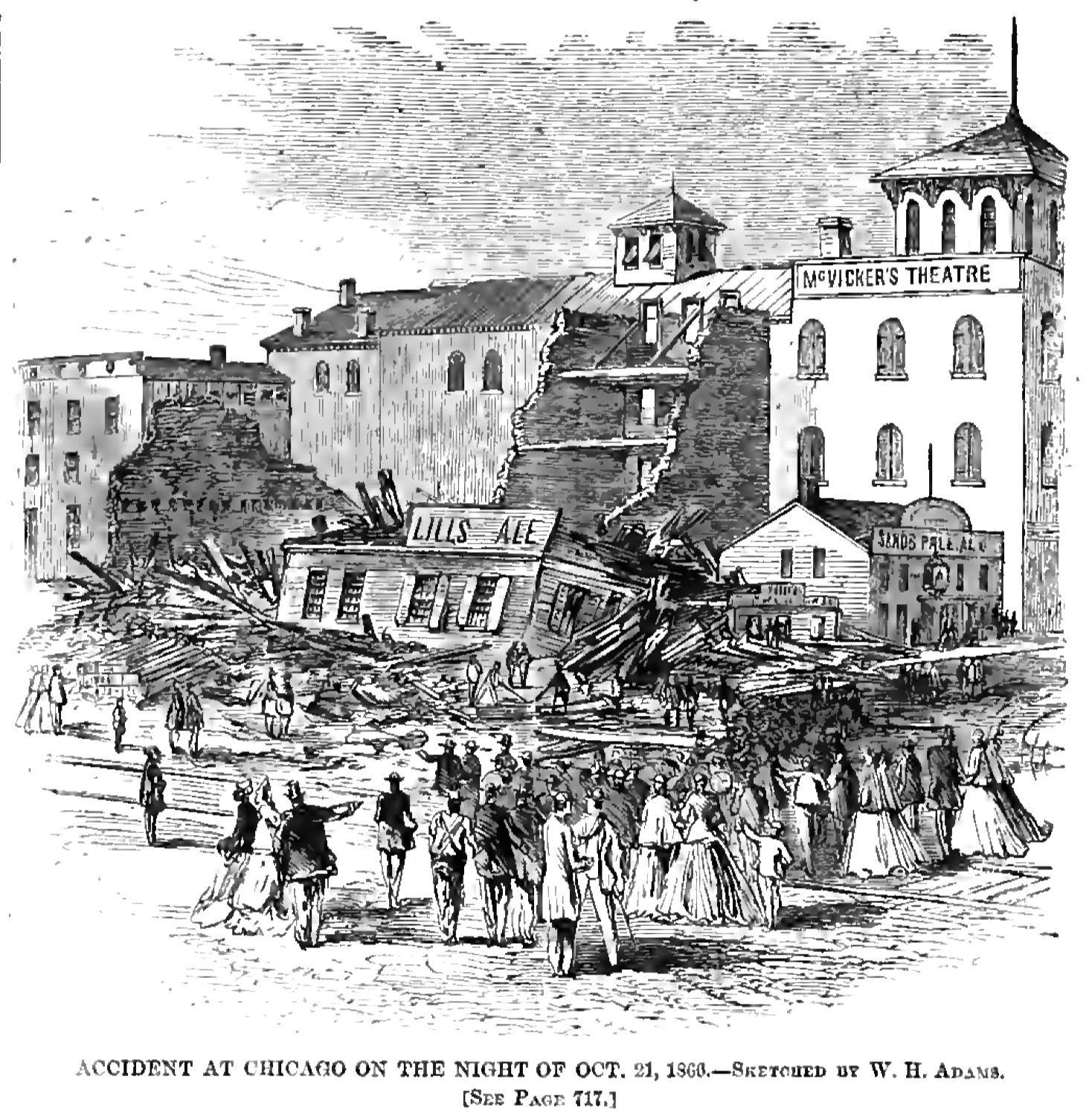
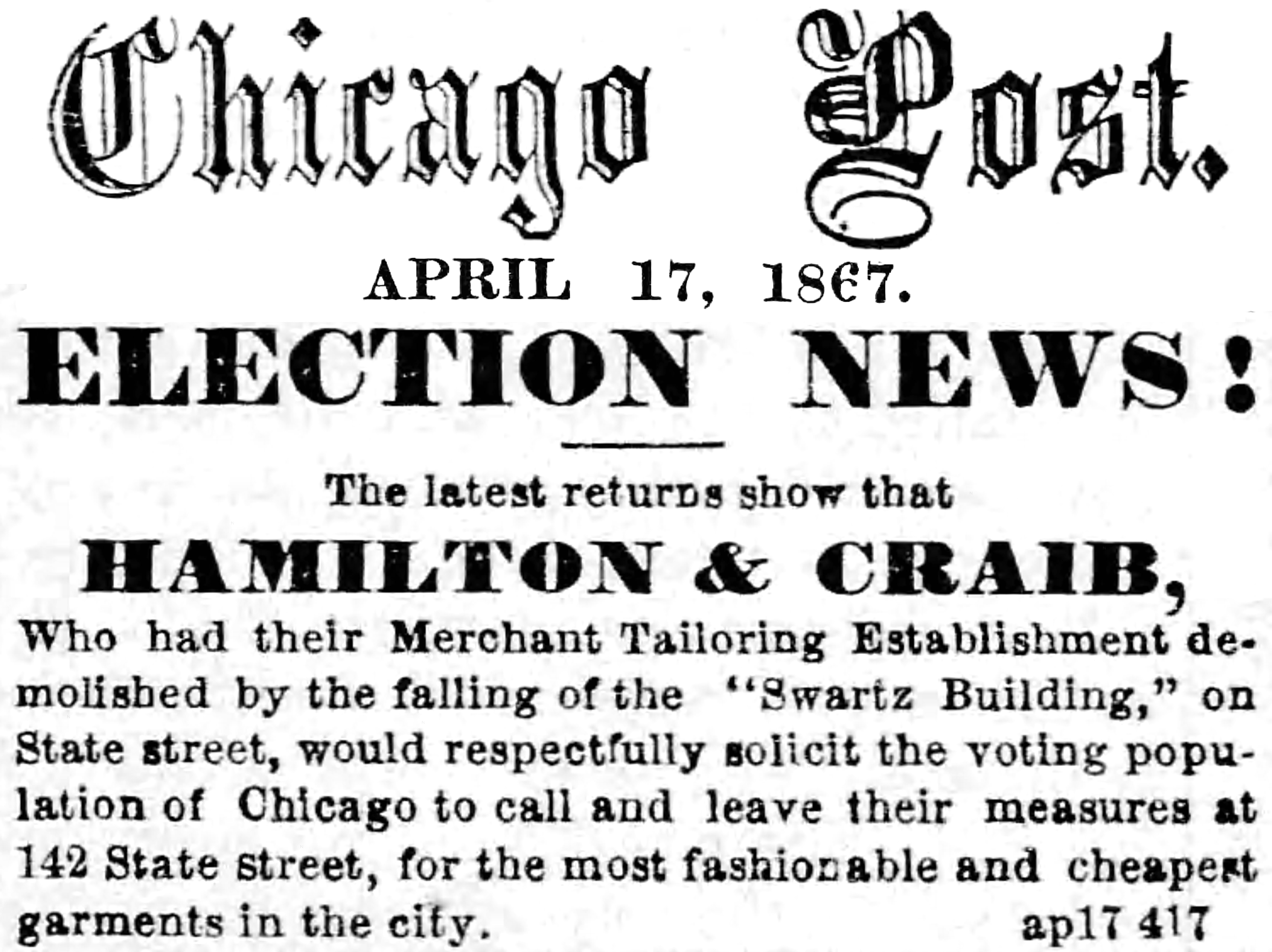
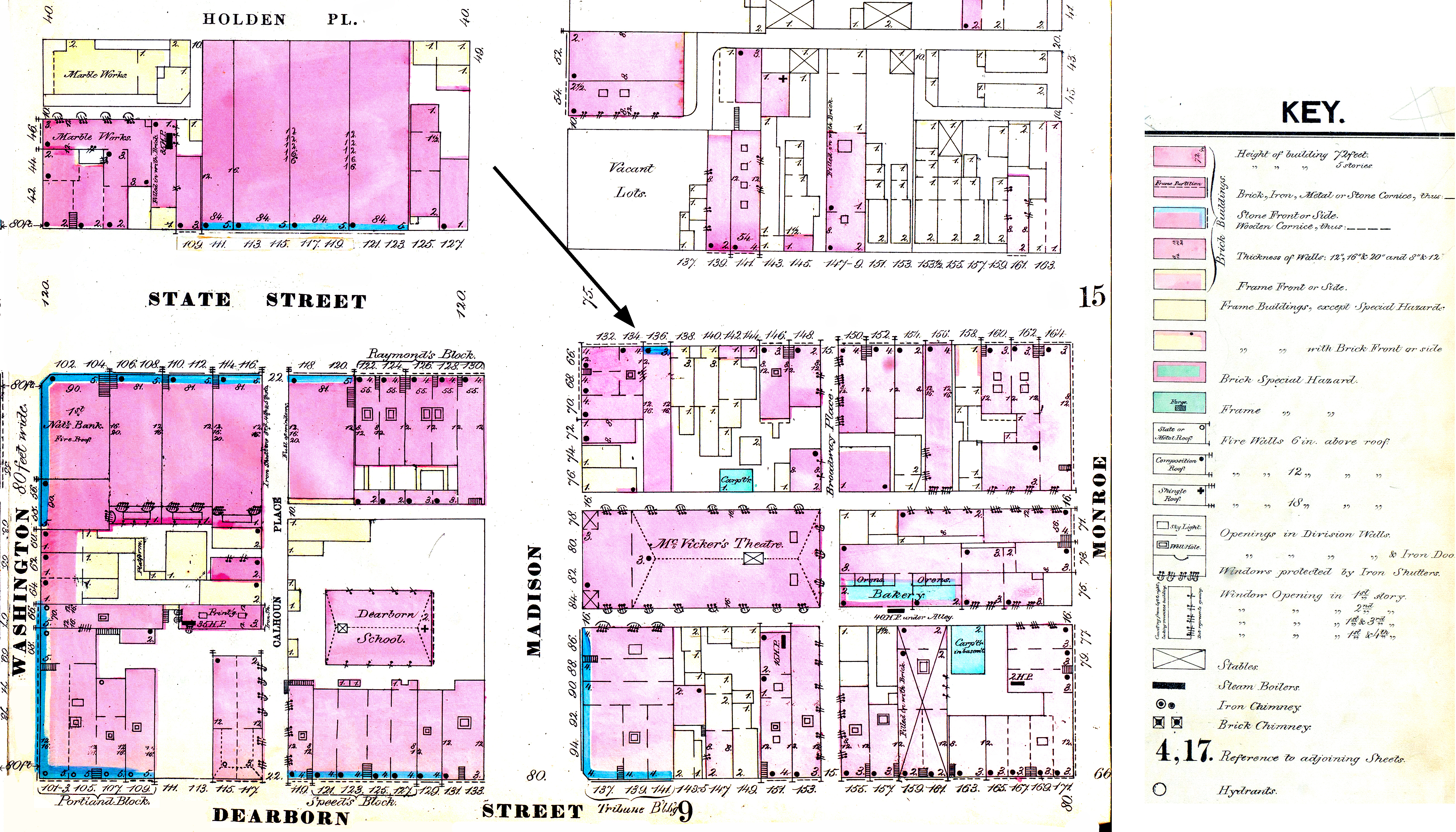
 An appalling calamity befel a portion of the city during the violent storm of last night, such a one as, happily, but rarely, becomes the duty of the chronicler of passing events to record—a disaster which has sent many human beings to their grave, and inflicted untold agonies upon as many more who have been rescued from the most dreadful event we can imagine as falling to the lot of the living. Between eleven and tweelve o’clock a terrific crash resounded ominously over, we might say, the whole of the central portion of the city. The majority of people imagined it to be a peal of thunder, yet there was something in the sound which boded a direr disaster, a more immediate peril than even the bolt of Jove himself. From Madison along State street to the bridge, and up and down all the immediate streets for a considerable distance, the shock was felt as of a terrible earthquake, and sleepers were startled from their slumbers by the noise and the concussion. There was a wide-spread feeling of terror among the citizens, even before anything could be ascertained as the the cause of the dreadful summons.