First Cavalry Armory, 122d Field Artillery Regiment National Guard Armory
Life Span: 1917-1993
Location: 234 E. Chicago Ave
Architect: Edgar D. Martin, 1938 Addition by S. Milton Eichberg
- Polk’s Chicago Numerical Street and Avenue Directory, 1928
122d Field Artillery (Ill Natl Guards) 234 E Chicago Av
Chicago Tribune, May 30, 1916
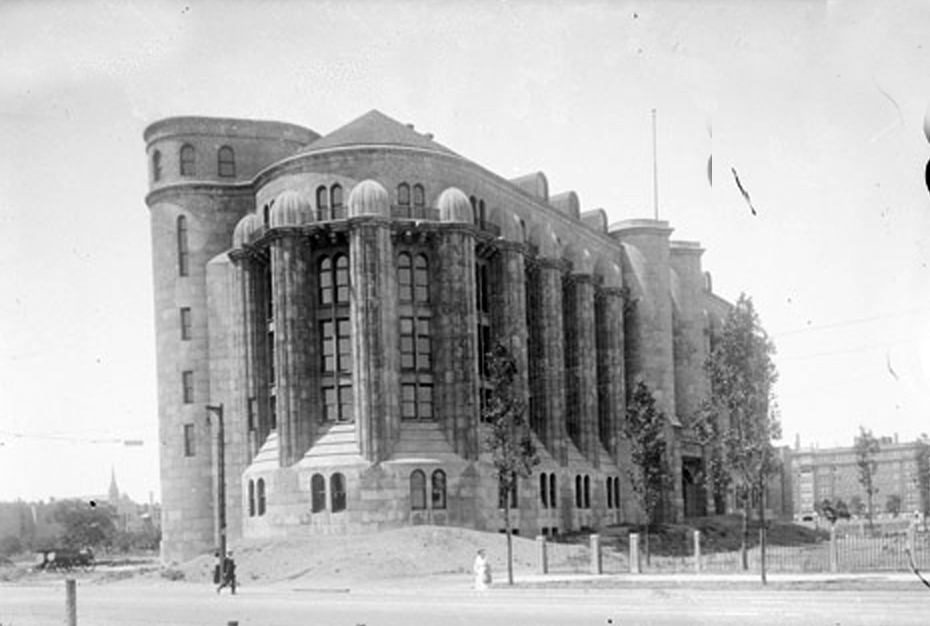
GROUND BROKEN FOR FIRST CAVALRY ARMORY.
Mrs. Mary Foreman, Mother of the Colonel, Turns First Shovelful of Sod.
Ground was broken yesterday for new armory of the First cavalry of the Illinois national guard. The first shovel of earth was turned by Mrs. Mary Foreman, mother of Col. Milton J. Foreman. Mrs. Foreman is 77 years old. A bottle of champagne was broken over newly turned earth as officers of the regiment cheered.
The site of the new armory is just east of the Chicago avenue pumping works. At present there is $160,000 available for the construction of the new building, but an additional appropriation will be sought at the session of the legislature.
After ten years of effort. work on the new armory has actually begun,” Col. Foreman said. “When it is finished it will be the finest piece of military architecture in the United States. It will also be one of the show places of the town, comparing favorably, with the University club and the Art institute. Of course, we have not yet obtained the full amount necessary to complete the building, but there can be no question the legislature eventually will appropriate sufficient to construct the kind of armory the First cavalry needs.”
Chicago Tribune, February 23, 1917
‘U.S. FIRST’ MARKS OF STONE FOR NEW ARMORY
Governor, and Former Others Join in Ceremony.
Officials of Illinois and Chicago joined yesterday with former Gov. Edward F. Dunne and Col. Milton J. Foreman in laying the cornerstone of the new First cavalry armory on East Chicago avenue.
The spirit of Washington and of Lincoln was invoked by Gov. Lowden, Mayor Thompson, Lieut. Gov. John G. Oglesby, and former Gov. Dunne in this hour to the end that the nation may see its duty clearly and then do it, regardless of consequences.
Col. Foreman, in accepting the armory on behalf of his regiment, paid a high tribute to the volunteer soldier.
Lowden Pledges Support.
Gov. Lowden pledged himself to a continued aid of the volunteer organizations, as typified by the national guard, and also declared in favor of universal service, with a combination of what Maj. Abel Davis of the First regiment of infantry has declared for the national guard and universal service.
Former Gov. Dunne, under whose administration the appropriation was secured for the building, praised the national guard of Illinois under the direction of Adjt. Gen. Dickson.
Demands Single Allegiance.
Lieut. Gov. Oglesby spoke for a single allegiance. “The message that I would bring today,” he said, “is found in the words of our distinguished chief, Gov. Lowden, recently said:
“We may many sympathies but only one allegiance.”
Mayor Thompson quoted copiously from the farewell message of Washington, and said that the words of the first great leader of the American people should be taken deeply to heart at this time.
The First cavalry band played patriotic airs and as the trowel was passed to Gov. Lowden and the stone was lowered in its place, the band played the “Star Spangled Banner.”
Judge Landis Applauded.
Judge Landis arrived late, but when was escorted to the platform the assemblage applauded with vigor.
The armory, when completed, will be 220×298. It is to be architecturally a pile of beauty, so much so that objections by the adjacent property owners has disappeared with the outlines of the structure just coming into view.
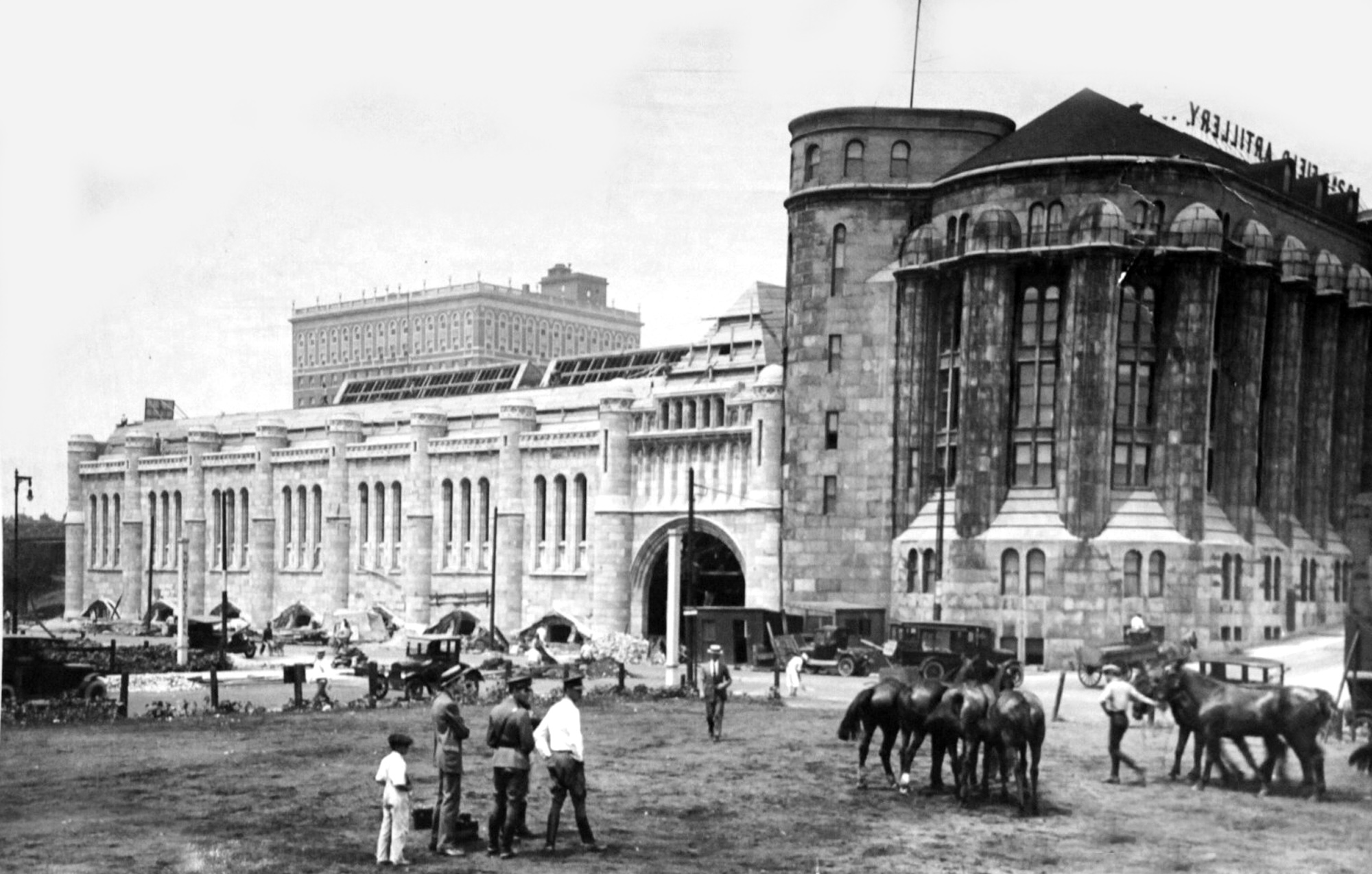
- NEW ARTILLERY QUARTERS.
The new annex to the 122d Field Artillery Building, near the lake on, the near North Side. New equipment for the Illinois regiment will be taken care of here. July, 1924.
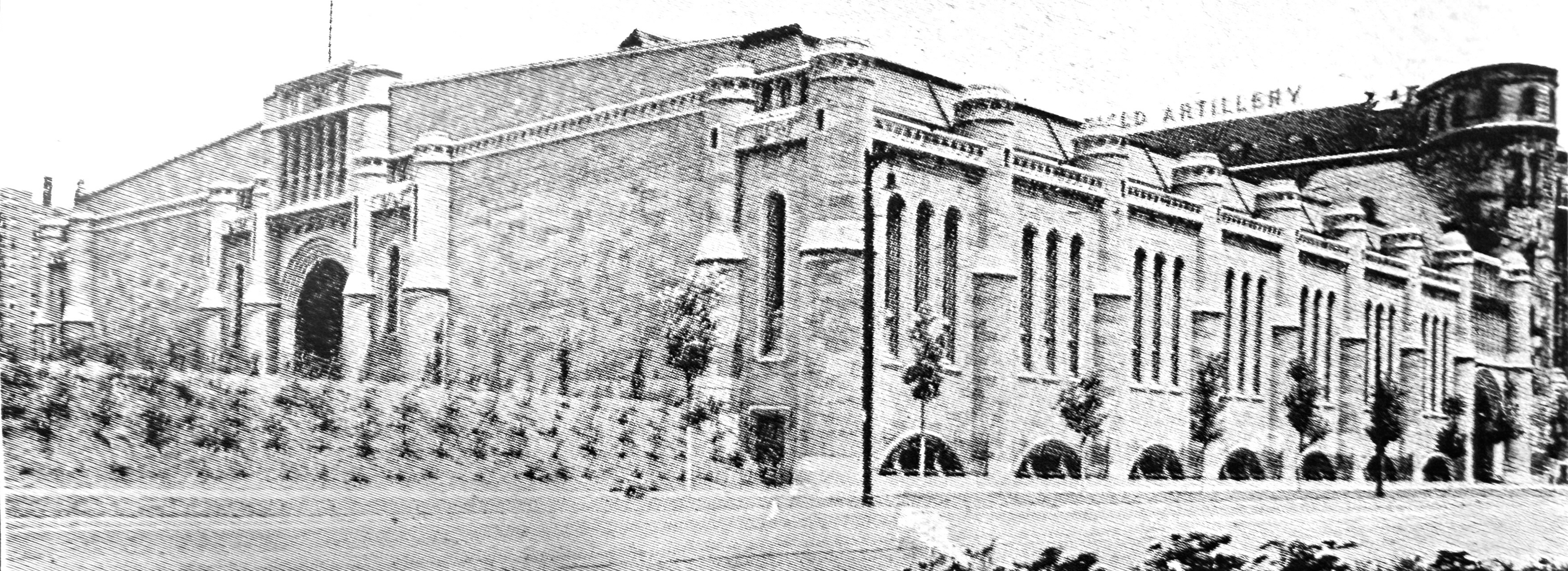
- The Armory of the One Hundred and Twenty-second Field Artillery Regiment, Illinois National Guard.
1929
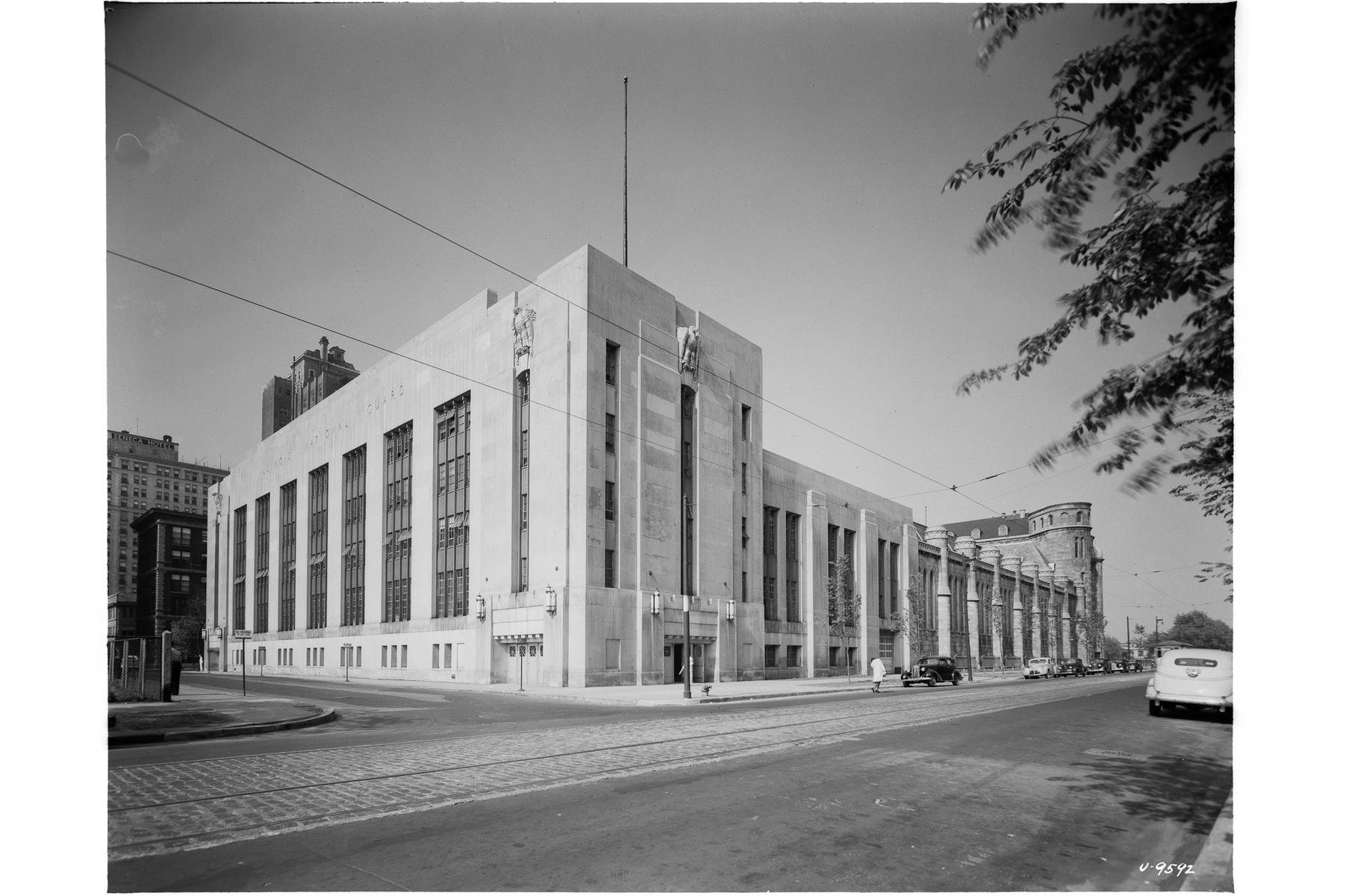
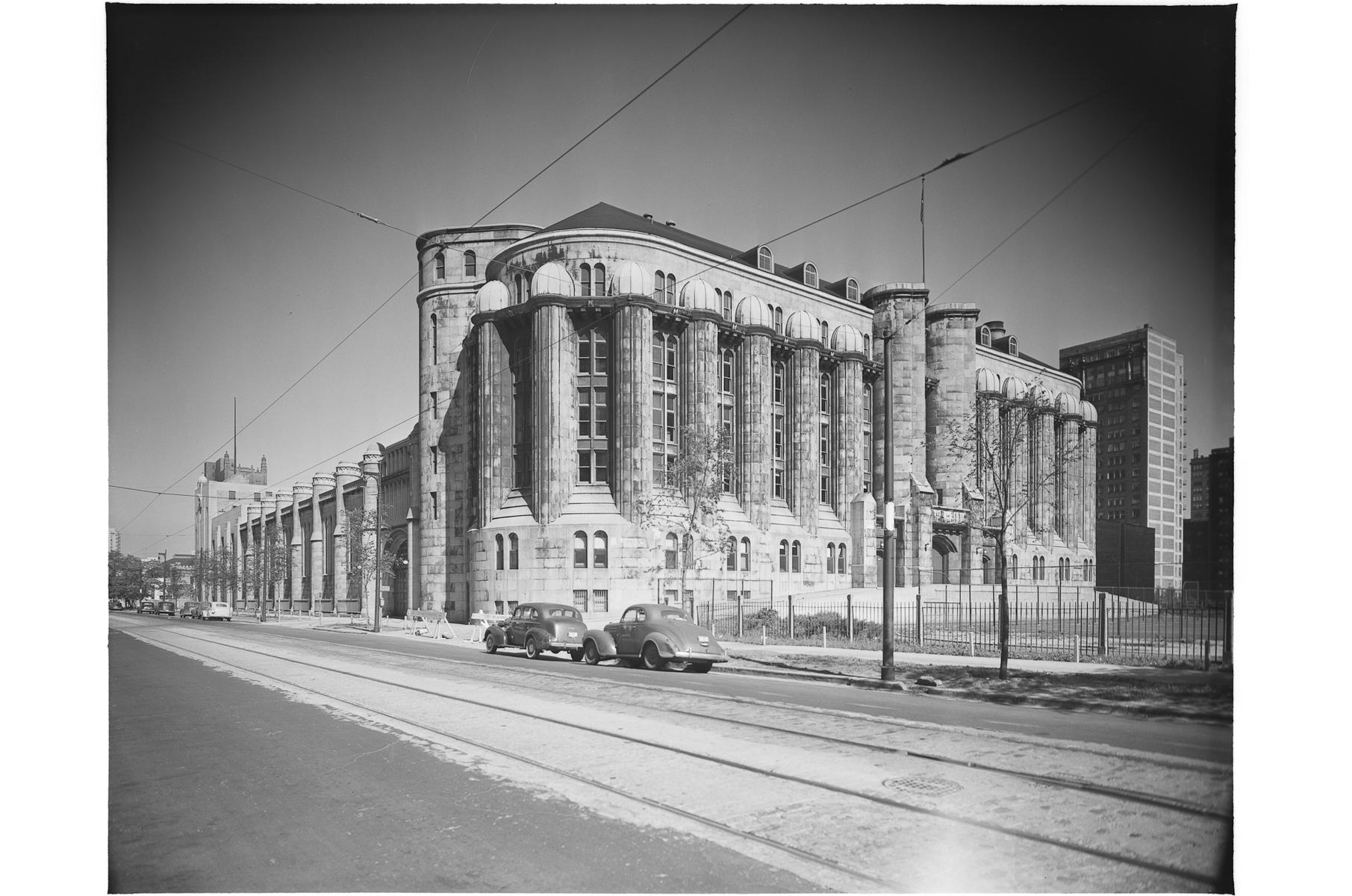
- 122d Field Artillery Regiment National Guard Armory Addition
1938
Chicago Tribune, May 21, 1992
EXHIBIT TO MAKE THE MOST OF ARMORY’S LAST DAYS
By Alan G. Artner Art critic
Officials of the Museum of Contemporary Art have announced the artists who will participate in “Art at the Armory: Occupied Territory,” the exhibition of room-sized installations scheduled for the Chicago Avenue National Guard Armory before it is demolished to make way for construction of the museum building next February.
Eighteen sculptors, painters, photographers and video artists from seven countries will create specially commissioned pieces or show existing works.
All the installations will be documented photographically in a 156-page catalog that will have essays by curator Beryl Wright, scholar Anne Rorimer and architectural historian Robert Bruegmann.
The artists are Dara Birnbaum, Arnold Crane, Diller Scofidio, Vernon Fisher, Doug Hall, Lynn Hershman, Gary Hill, Toi Hoang, Jin Soo Kim, Eve Andree Laramee, Tatsuo Miyajima, Elizabeth Newman, Toshihiko Okabe, Michael Shaughnessy, Francesc Torres and three artists collaboratives including TODT, HaHa and New York group.
Impermanent installations with an architectural base have long been a part of the museum’s history, having, presented major works by Christo, Gordon Matta-Clark, Michael Asher and Melvin Charney.
The Armory exhibition will occupy the entire building—75,000 square feet—between Sept. 12 and Jan. 10.
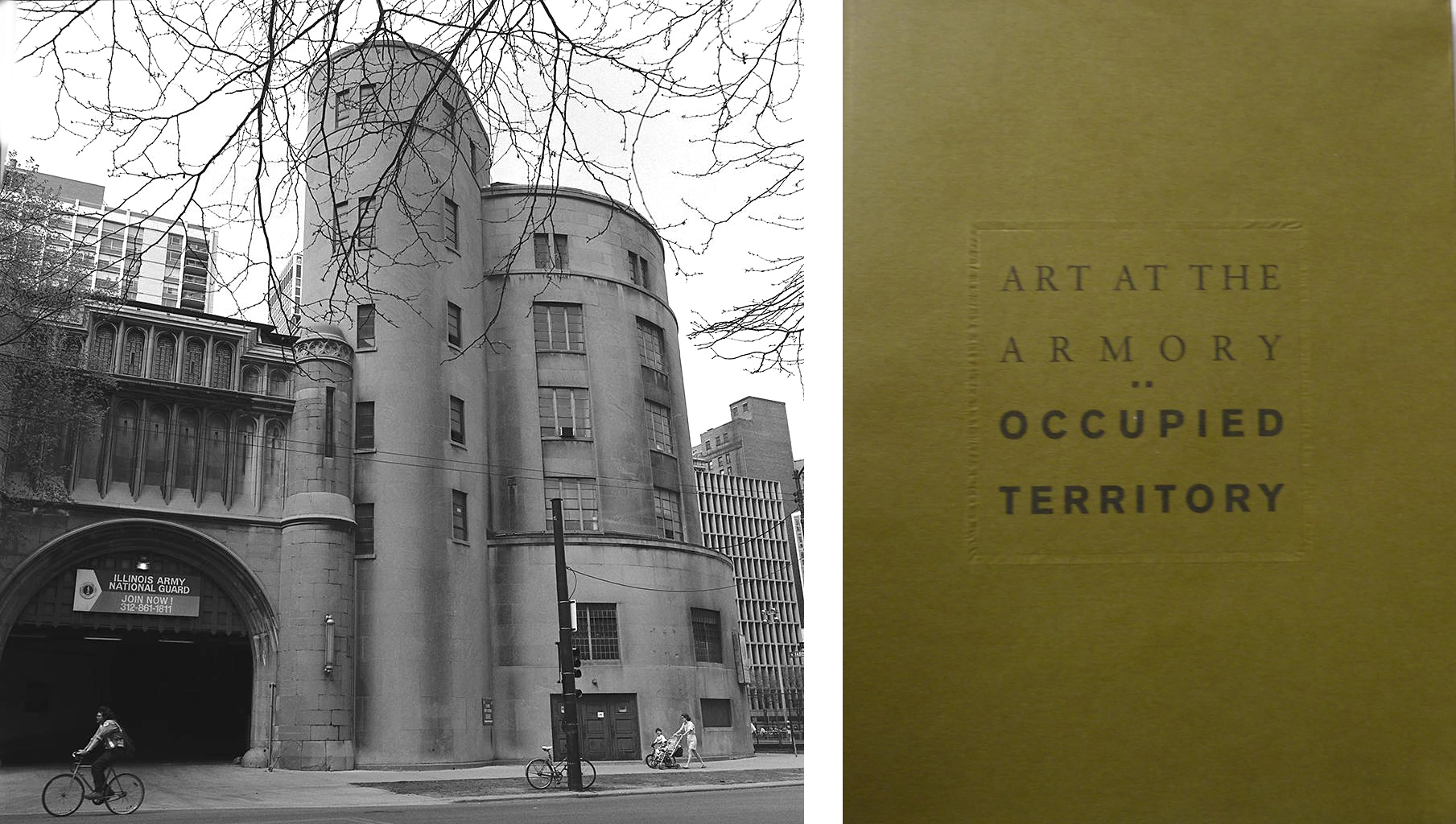
Art Forum, December, 1992
REVIEW: Chicago
“ART AT THE ARMORY: OCCUPIED TERRITORY”
Museum of Contemporary Art Chicago
By James Yood
Before the Museum of Contemporary Art can move to its new Josef Paul Kleihues building in 1995, there is the matter of tearing down the structure that now occupies its future home—the Chicago Avenue National Guard Armory. The delay in demolishing this massive, rather anachronistic building presented an opportunity to take a kind of metaphoric possession of this space before it is razed, destroyed, and recreated.
Ergo, “Art at the Armory: Occupied Territory,” a collection of 18 rather largish installations scattered over some 75,000 square feet and parts of five separate floors in which artists mainly recreated preexisting installations, though eight were commissioned specifically for this project. The riotous mixture of rather decrepit stairwells, mess halls, visitor’s quarters, gymnasium, offices, turrets, briefing rooms, arenas, basement storage areas, etc., and their subsequent alterations turned the Armory into a fun-house of art, metamorphosing unwieldy corridors and spaces into esthetic mazes.
While very inventive and often extremely lively, the exhibition did not transcend the conceptual problems that haunted it from the beginning. This was a project that did not appear to be born out of a particular curatorial vision; rather, it seemed in many important ways a gesture toward the ongoing history of the MCA. Neither Armory nor museum, the building became a pawn, a mute witness to its own invasion, creating a rather dreary subtext to the entire exhibition.
Of course, much of interest could have been developed out of this episode in architectural necrophilia, but few of the artists did work that rose to the peculiar possibilities they were offered. In the belly of the beast, given an opportunity to take arms against a sea of militarism, only a handful of the installations actually engaged in overtly occupying enemy territory. However interesting, it was not clear why a 1985 installation like Bill Viola’s Theatre of Memory belonged in this venue. Eve Andrée Laramée’s The Eroded Terrain of Memory, 1990, functioned better in its resiting, its cascade of several hundred thousand slivers of mica mimicking the situation of the building that was beginning to collapse around it. All in all, though, the exhibition too often hovered between attempting an incomplete history of recent installation art and a more focused assessment of the many possibilities the space offered.
The work specially commissioned for “Art at the Armory” was in all the strongest. Rumor, 1992, by the Chicago-based collaborative group Haha, took the Armory’s rather forlorn visitor’s apartment and prepared it for a loving implosion. Vacant and decorated in K-Mart chic, the rooms were carefully adjusted to exude the stultifying aura of the thousands of unending empty hours they had witnessed. Haha then wired this suite of rooms with dynamite, lending their determined ordinariness an undercurrent of danger and hinting at their future. Diller and Scofidio’s Loophole, 1992, brought out some of the strategies and ramifications of surveillance by occupying parts of two circular staircases with video cameras and monitors. Elizabeth Newman’s Histories of Human Flesh, 1992, was an evocative—if somewhat overworked—ode to the women who raised and nurtured the millions of young men who passed through places like the Armory on their path to harm’s way. Plastic bags of breast milk, rolled cotton bandages, bronzed soldiers boots, seeds, and much more filled over four rooms of the Armory’s south attic. The challenge to militarism and to the Armory that Newman assayed was too rarely attempted by her colleagues, or by the institution that set this project in motion. What could have been a crucial investigation into a military/ esthetic complex took a middle road instead, substituting the patterns and limited mindset of one organizational structure for another.
Chicago Tribune, June 8, 1993
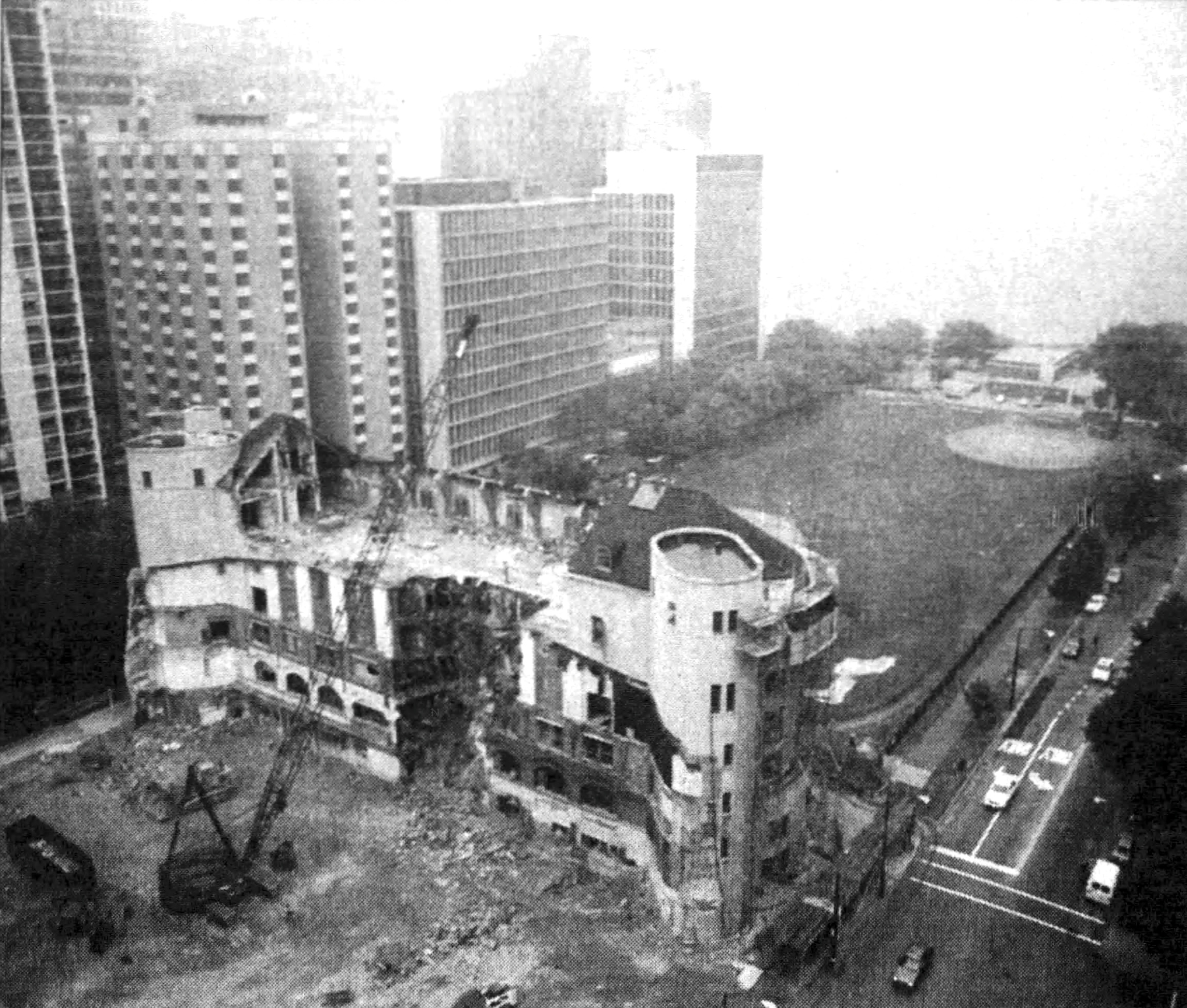
- Demolition of the Illinois National Guard Armory, 234 E. Chicago Ave., continues as another side comes down Monday, The $55 million Museum of Contemporary Art building and sculpture garden will be built on the armory site, with opening scheduled for 1995.
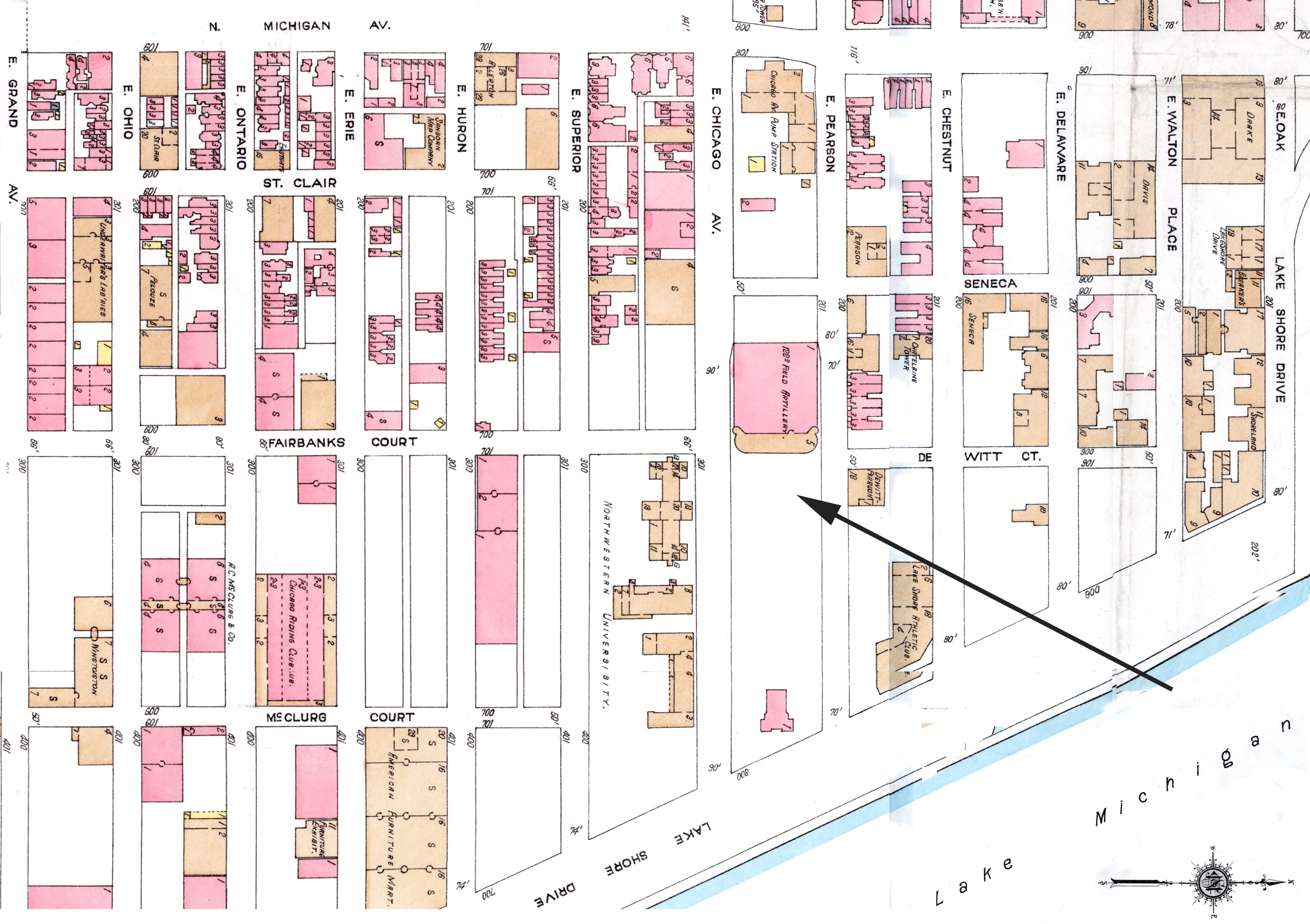
- One Hundred Twenty-Second Regiment Armory
Sanborn Fire Insurance Map
1927

Leave a Reply