Mechanics Building
Life Span: 1868-1871
Location: 164-168 Washington, bet. Wells and La Salle
Architect:
- Edwards’ Annual Directory in the City of Chicago, for 1869
Mechanics’ Building—South side Washington, between Wells and La Salle.
Edwards’ Annual Directory in the City of Chicago, for 1870
Mechanics’ Building, ss. Washington, bet. La Salle and Fifth ave.
Clifford R. A. artist, studio room 35, 164 and 166 Washington
Diehl C, artist, 164 and 166 Washington
Edwards’ Annual Directory in the City of Chicago, for 1871
Mechanics’ Building, South side. Washington, bet. 5th av, and La Salle.
Clifford R. A. artist, room 35, 166 Washington
Colby & Tillson, com. mers. 4 Mechanics’ bldg.
Chicago Evening Post, July 11, 1868
A handsome marble building is now being erected on Washington street, near LaSalle, by an association of master mechanics. The building will fill the space between Underwood’s and Reed’s buildings, and will be completed in November.
Chicago Evening Post, October 2, 1869
Washington Street.
The Mechanics Building Company have built a banking and insurance building on Washington street, between LaSalle and Wells street, which is stone and four stories high. This cost $40,000.
Chicago Evening Post, October 16, 1869
A Glance at the Galleries and Studios.
Mr. Conrad Diehl, well known as for some time in charge of the School of Design, has opened a new and elegant studio in the marbie front building No. 166 Washington street, on the same floor with Clifford, the noted portrait painter, and has taken a few pupils in art. Prominent in Mr. Diehl’s rooms is his masterpiece, the large Macbeth, which the artist values at $12,000. He has been for a year engaged in colossal figure painting in a Catholic church on Twelfth street, and his labors there will soon be exposed to public admiration.
One of the pleasantest studios which the lover of art can visit is that of Mr. Clifford, in the fine building No. 166 Washington street, just west of LaSalle. Although this artist bas been here but a short time, he brought a reputation which has kept him busy, and is giving him a prominent place among our portrait painters. His rooms contain some likenesses which are very remarkable for fidelity and for delicacy and taste in handling. The flesh tints are admirable, and those most important characteristics—the lustre and expression of the eye—are very successfully handled. Mr. Clifford attained great success in a long residence in Milwaukee—where, for example, a wealthy, citizen was so pleased with his work that he ordered and paid handsomely for no lees than seven portraits of himself, and as many of his wife. This artist, however, has sought a wider field in Chicago, and he will, no doubt, be cordially welcomed by the artist fraternity, and receive his due share of public attention. Among his canvases several very handsome female faces: two or three portraits of children are especially noticeable. The artist seems to have the rare art of catching the changing expressions of a child’s face, and hence he will be a favorite with mothers. Although making portraits his specialty, he is no mean landscape painter, as a fine view of the Mississippi at “Maiden’s Rock” indicates. We can assure those who want their likenesses transferred to canvas to delight their friende, of pleasant sittings and satisfactory pictures in Clifford’s studio.
Chicago Evening Post, November 27, 1869
In the busy studio of Clifford, the excellent portrait painter, in Mechanics’ building, on Washington street, west of LaSalle, we find some new and striking specimens of portraiture, which show the skill of his brush. In obtaining the clear flesh tint and catching the living expression of the eye, this artist is especially successful, and the most fastidious sitters are seldom disappointed with his productions. Portrait-painting requires such delicacy of touch, such discrimination of colors and such precision in outline, that many artists, excellent in other lines, give it up in despair, but Mr. Clifford’s twenty-two years at the easel have given abundant proofs of his natural gifts in this branch of work. The best likenesses now in his rooms are those of Mr. Grannis, and of Mr. Stabler, a gentleman in the insurance business. A fine portrait of the artist’s aged mother is also very noticeable. A number of fancy heads of females show bis skill in idealization. We wish him the abundant success which his talents and untiring industry deserve.
Across the hall we find Mr. Comrad Diehl engaged on several portraits, and on a fine banner for the Germania Society. He has begun a large painting of Adam and Eve.
Chicago Evening Post, December 24, 1869
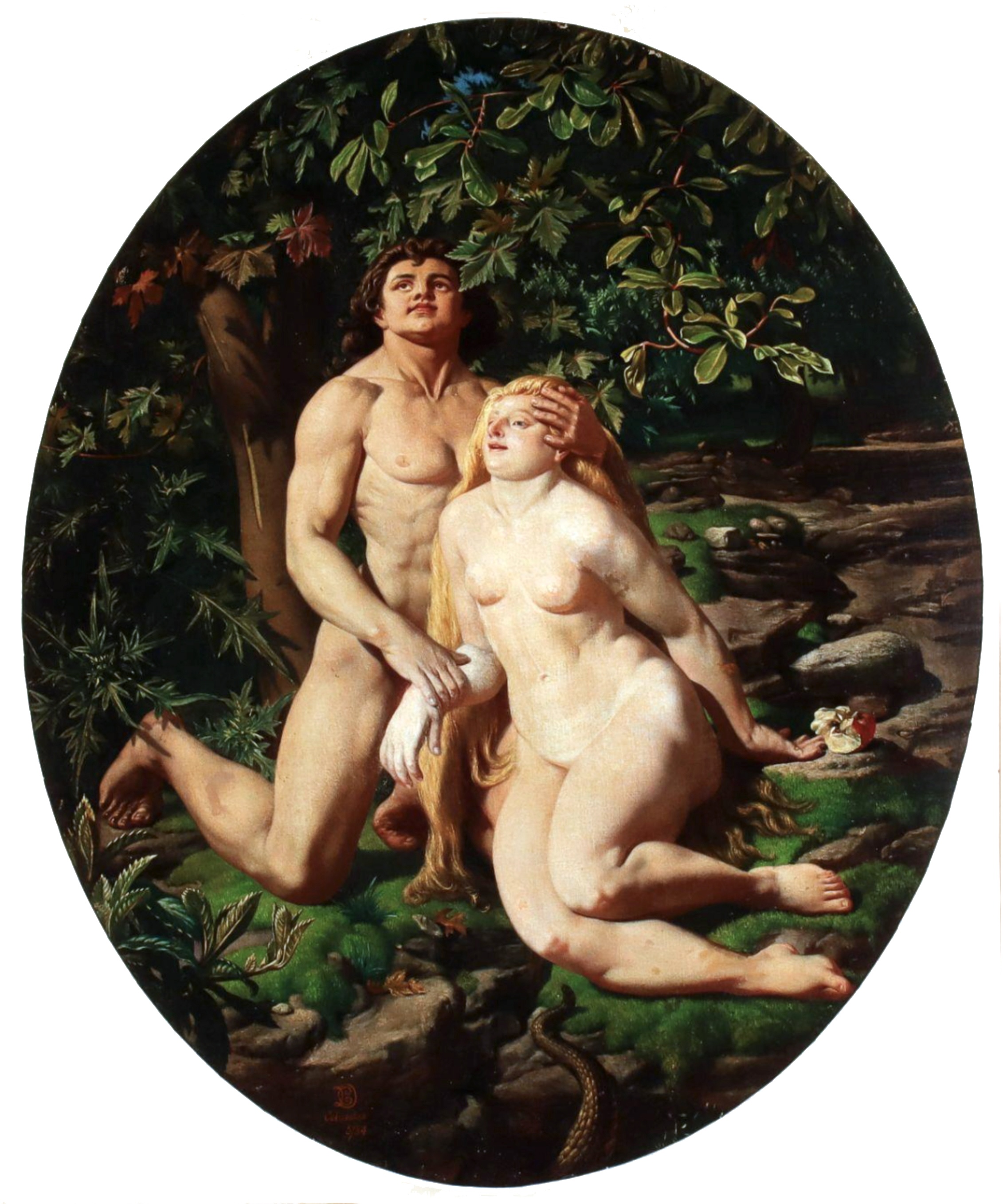
Conrad Diehl, in Mechanics’ building, on Washington street, just west of LaSalle, is engaged on a work which will be perhaps a year or more in process of execution, he Intends shall be his masterpiece. It represents Adam and Eve before the fall seated under the shadow of a great rock, while on the plain below are seen specimens of the actual gigantic and vegetable life of the ante diluvian period. The artist has had difficulty in obtaining a female model for this ambitious work, but has finally succeeded. Meantime he is deeply interested in the study portraiture, with especial reference to perfection in flesh-coloring, and intends to make some noteworthy advances in this respect.
Mr. Diehl has just finished a design tor one side of a large silken flag for the Germania Society, which is quite remarkable. It represents a female—typifying Germany—crowned with bay leaves grasping a javelin. The face is a fine blending of womanly virtue and refinement, with masculine and courage—beauty and strength combined in an ideal heroine fit to lead an army or severn an empire. This painting deserves a better fate to be tossed about by the winds in a street parade. This artist is very generously instructing a class of young men of ability, entirely without pay, and thus helping toncultivate native talent
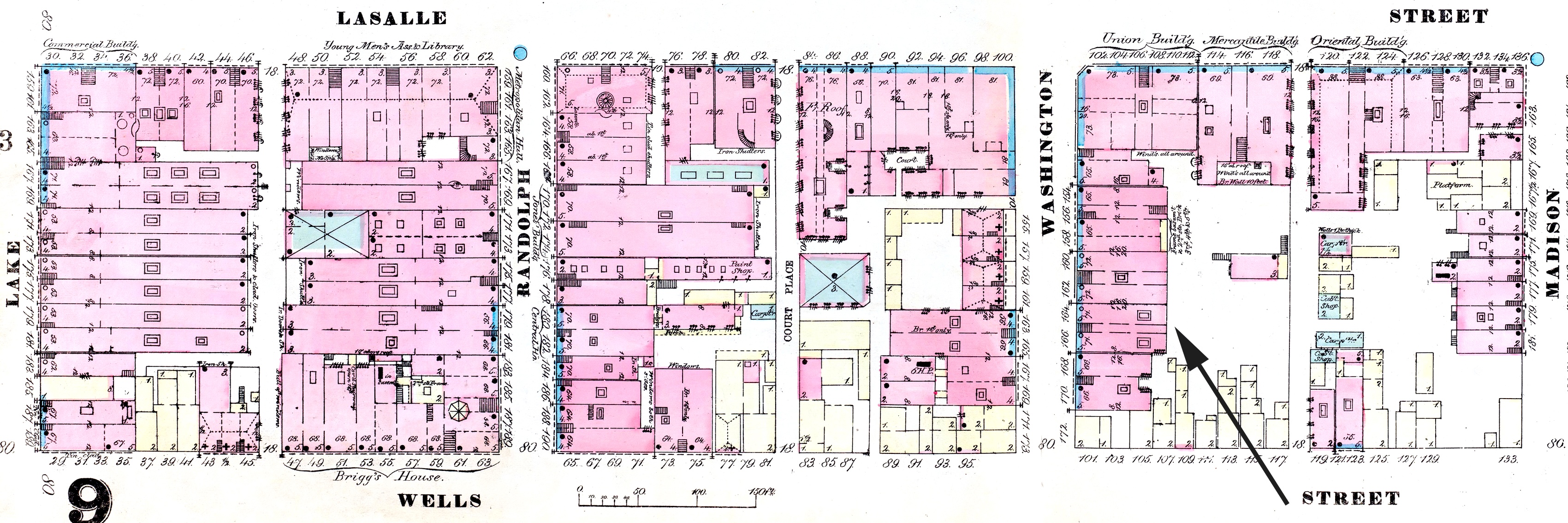
- Mechanics’ Building
Sanborn Fire Insurance Map
1869
NOTES:
Both Conrad Diehl and Rollin Alonzo Clifford left Chicago after the Great Fire of 1871.

Leave a Reply