Chicago Historical Society IV
Life Span: 1931-Present
Location: Clark Street and North Avenue
Architect: Graham, Anderson. Probst. and White
Chicago Sunday Tribune, January 5, 1930
A MILLION DOLLAR MONUMENT TO HISTORY
The Chicago Historical society hopes to start work this year on its new building, to be erected in Lincoln park, near North avenue and Clark street. The structure will be of brick, with limestone trimming, and of the Georgian colonial,style of architecture. The three floors will be devoted to portrayals of epochal periods in the life of Chicago and Illinois. This is the proposed east elevation, facing the St. Gaudens statue of Lincoln. The architects are Graham, Anderson. Probst. and White.
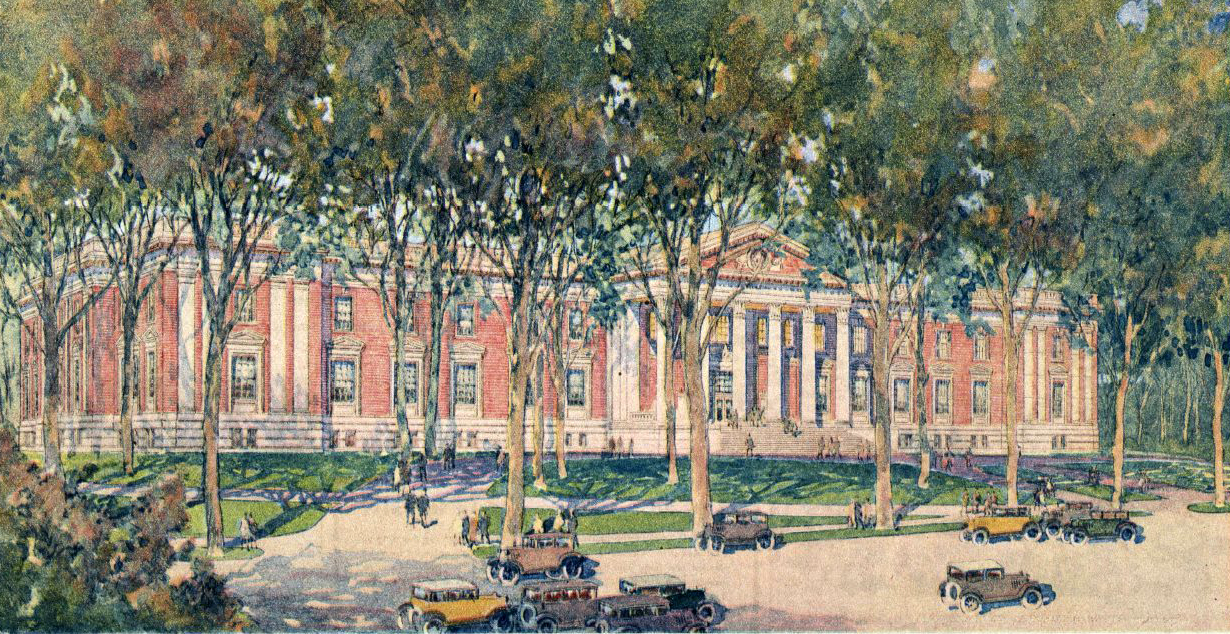
- Chicago Historical Society Building
Chicago Tribune November 13, 1932
 By Kathleen McLaughlin
Chicago’s vibrant museum of its past, the new Chicago Historical building in Lincoln Park, was opened to the public yesterday in a brief ceremony in the tempo of the present. Charles B. Pike, president, officiated at a service before the entrance that was long on dignity but short on oratory. Officials of the organization gathered at the Racquet Club preliminary to the program, and rode the short distance to the southwest corner of Lincoln Park. In the expanse before the main entrance a detachment of the Black Horse troop, in their dashing uniforms of black and gleaming white, ranged themselves on either side of the driveway to form a guard of honor through which the group proceeded to the portico.
The trustees then formed in a semi-circle behind President Pike who made the formal dedication in a few sentences, and then turned and unlocked the doors, entering with the official group.
“We stand here today at the portals of a building expressive of its purpose,” he said in part, “ready to open it to the public. We are looking through the trees of Lincoln Park to the waters of Lake Michigan and Saint-Gaudens’ statue of the Great Emancipator.
“When we enter we shall see the hat he wore, the scarf he wrapped around his shoulders, the coat he was assassinated in, and many other personal effects. Lincoln belongs to the ages. So also do Columbus and Washington. Housed in this building are relics of all of them, and many others who influenced the shaping of America’s destinies. Permit me to congratulate the trustees in finishing this great work prior to the centennial of our city. And now, asking for guidance from on high in the conduct of this educational and patriotic enterprise, we open its doors.”
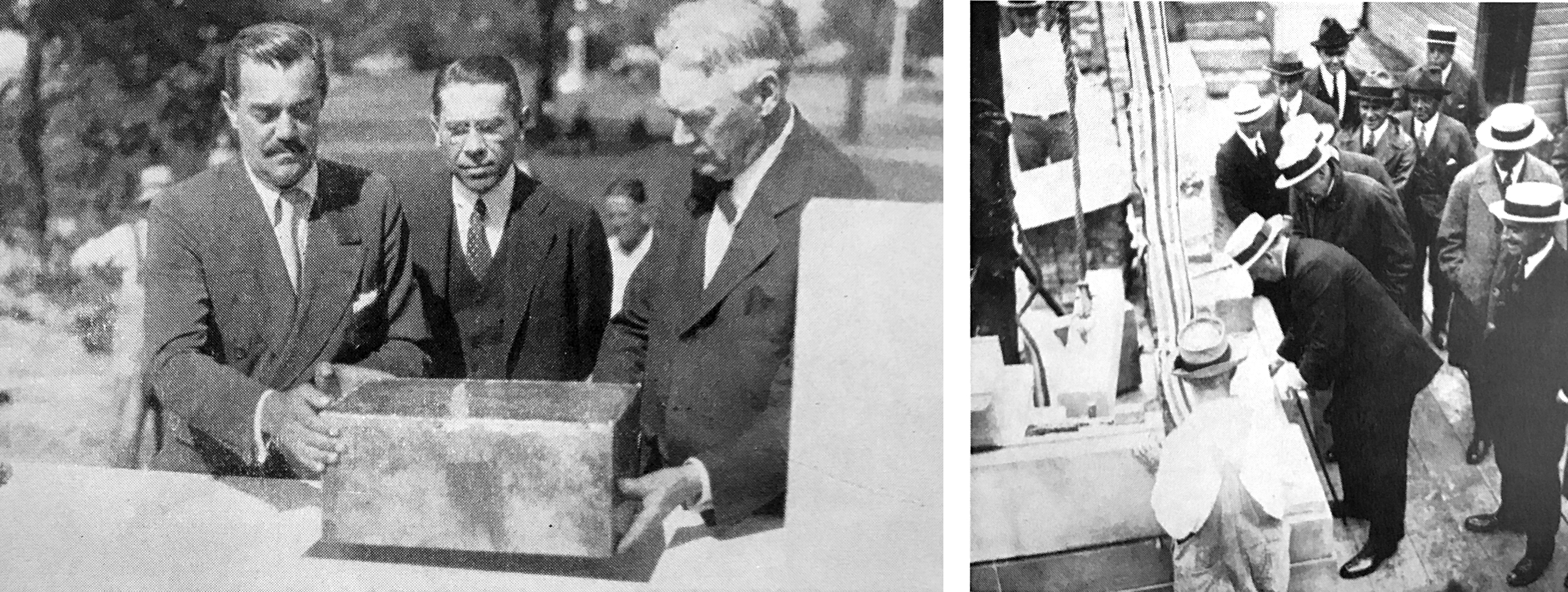
- Laying the cornerstone, July 23, 1931:
LEFT: Newton Perry, Director Hubbard Shattuck, and Dr. Otto L Schmidt.
RIGHT: President Charles E. Pike spreads the mortar.
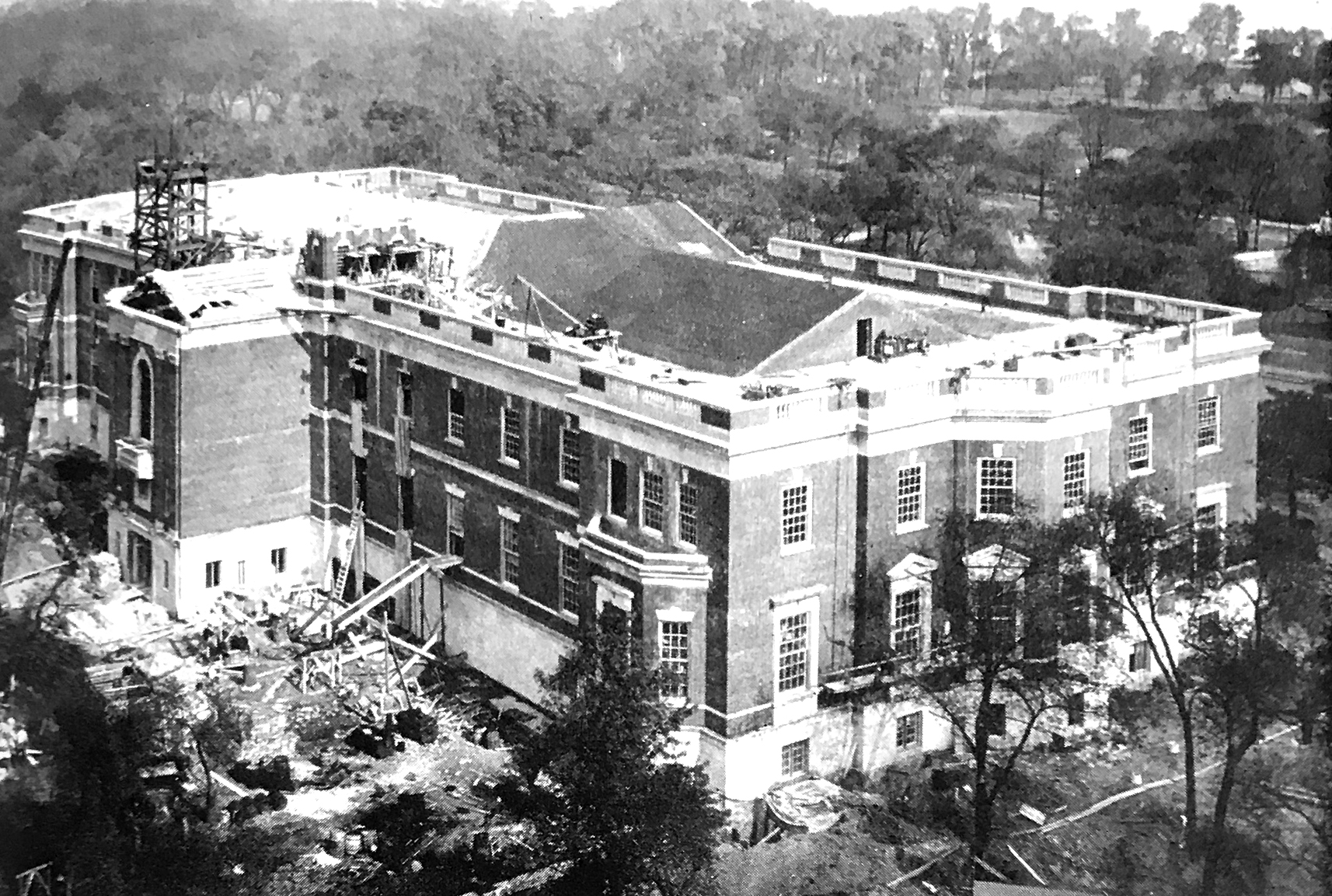
- The new Chicago Historical Society building while under construction.
October, 1931
Miss Rhea Zugenbuehler, of 1701 South 3rd Street, Maywood, was the first to pay admission to enter the galleries.Mondays, Wednesdays, and Fridays are to be free days at the museum, but 25 cents is charged on other days of the week.
Among those prominent in yesterday’s exercises were, Dr. Otto L. Schmidt, a past president; George W. Dixon, Frank Loesch, Joseph T. Ryerson, Potter Palmer, representing the Art Institute; Prof. Philip Fox, representing the Planetarium, and Stephen Simms, director of the Field Museum.
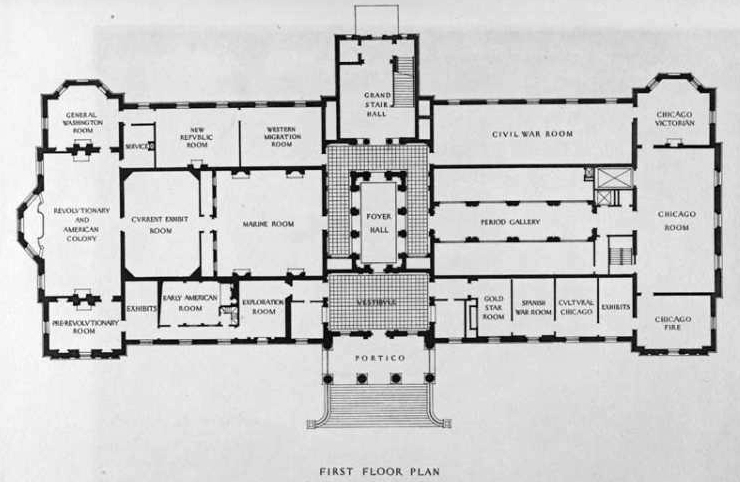
- Chicago Historical Society Building
First Floor Plan
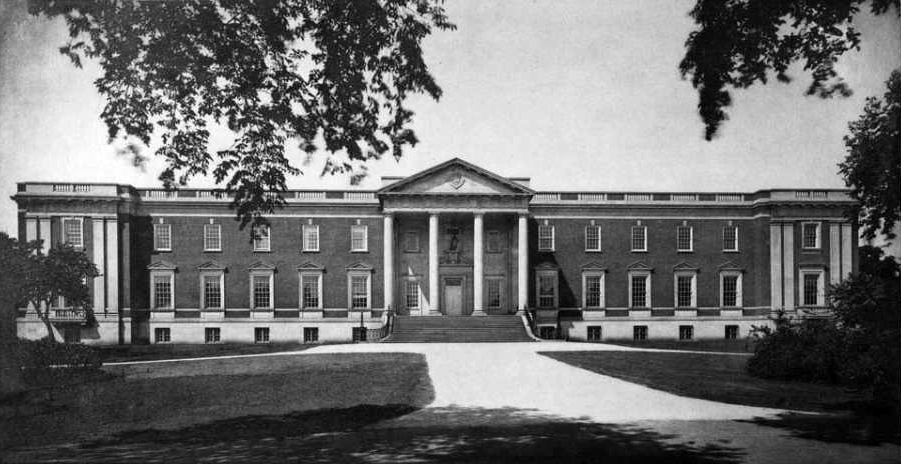
- Chicago Historical Society Building
1931
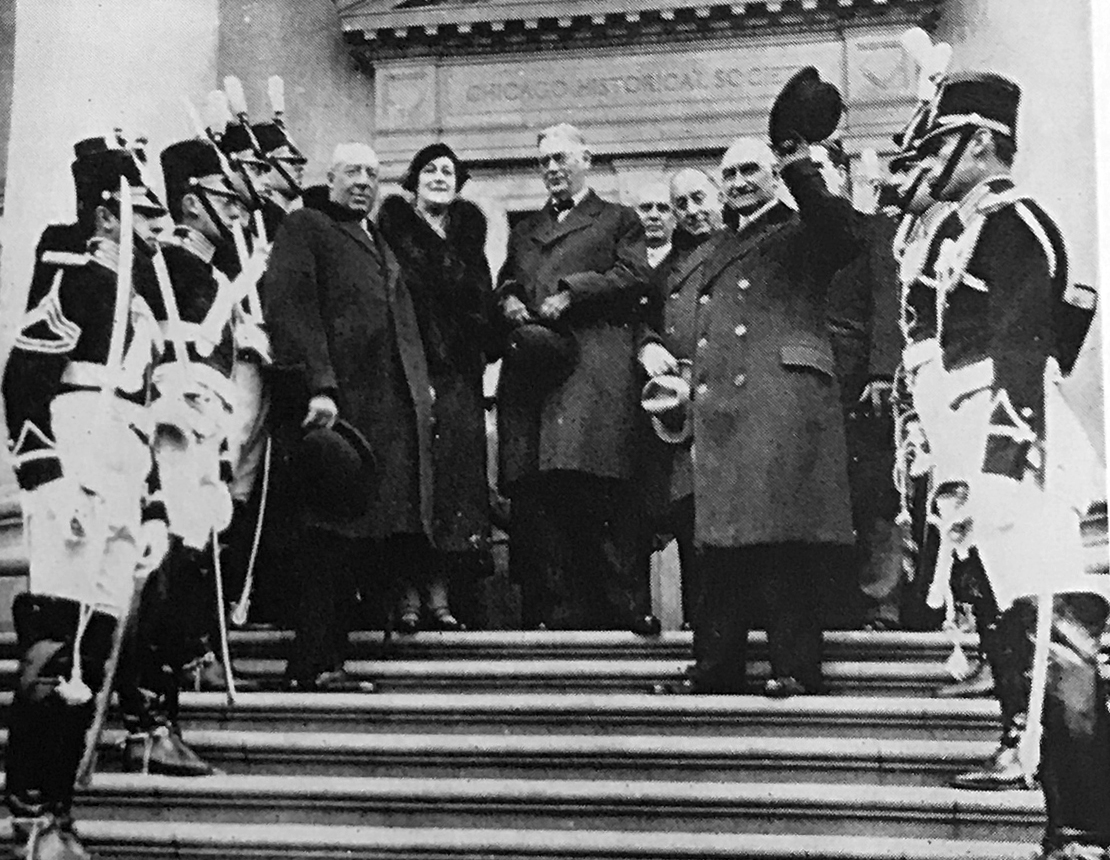
- The official opening, November 12, 1932:
Charles B. Pike, Mrs. Lessing Rosenthal, Dr. Otto L Schmidt, George W. Dixon, Edward L Gkser, Frank ]. Loesch.
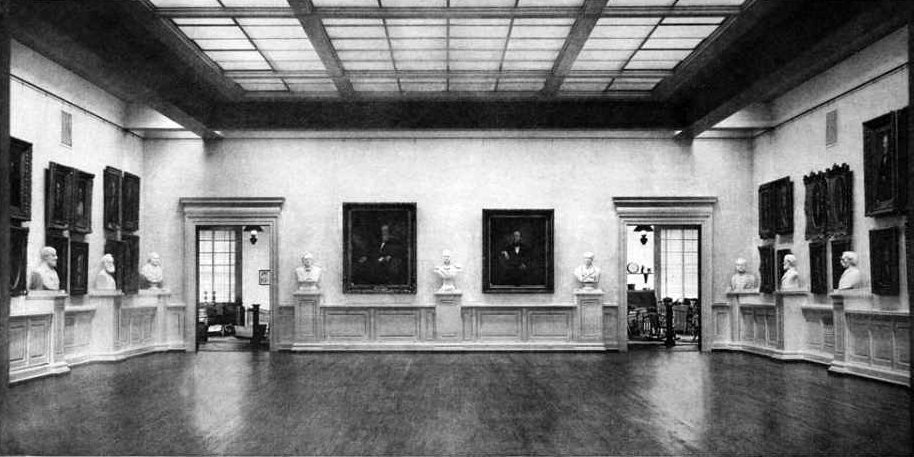
- Chicago Historical Society
Gallery
1931
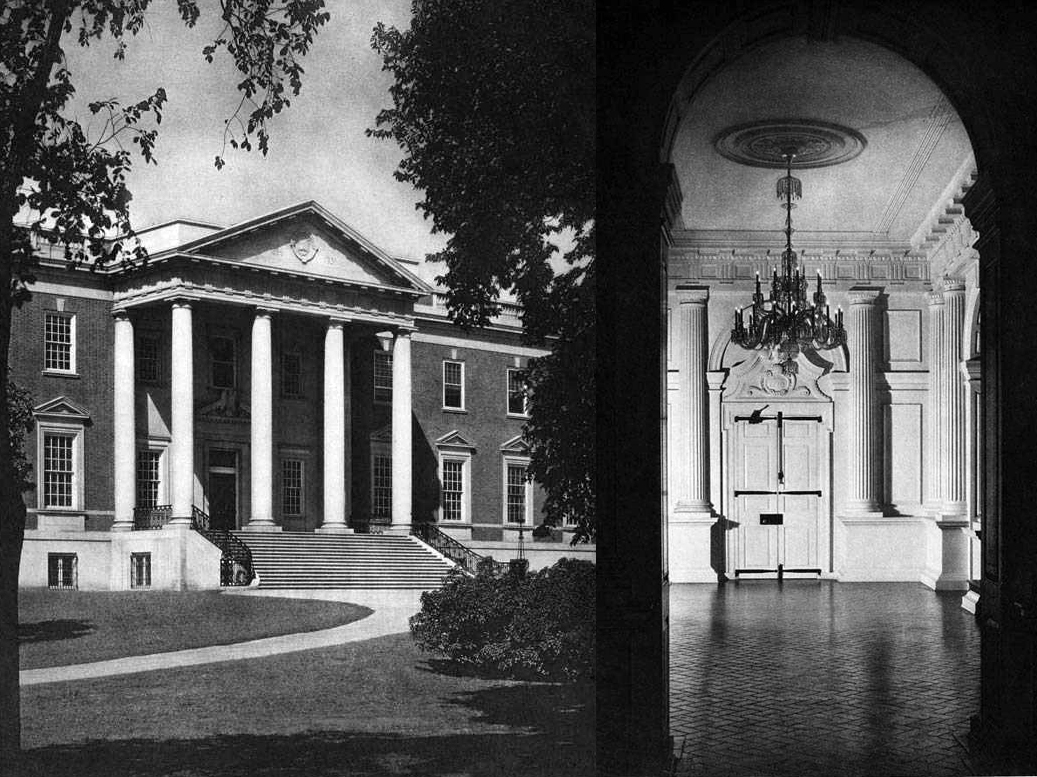
- Chicago Historical Society
Entrance and Foyer
1931
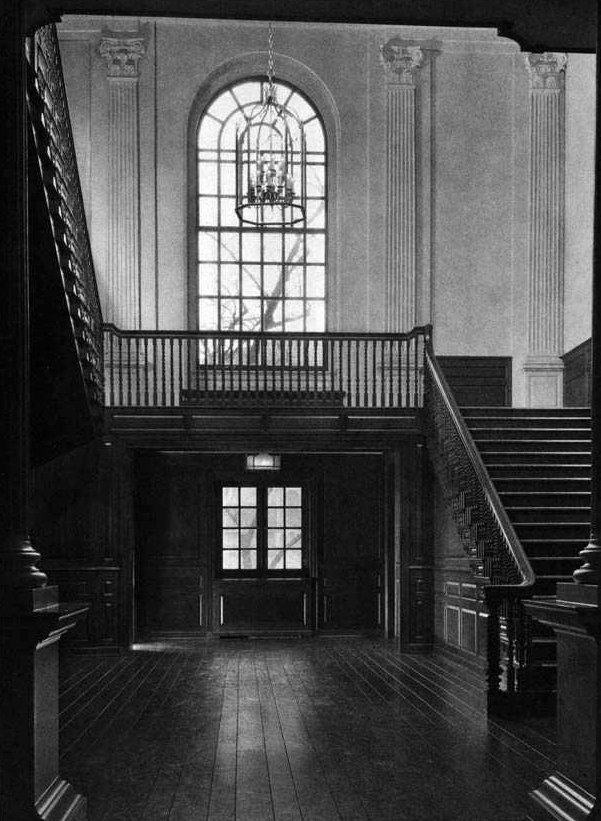
- Chicago Historical Society
Main Stair Hall
1931
Chicago Tribune, June 13, 1920
WOMEN TO RAISE FUNDS TO KEEP GUNTHER RELICS
There is a place in Chicago to which one may go and spend an hour or two which will almost seem like an hour in the presence of Lincoln or of Washington, of of many of those who have helped to make America what it is. For in the rooms of the Chicago Historical Society are personal mementoes of these great men which do for the boy or girl of man or woman who might look at them what personal associations of any absent his person may do for one interested Him.
A collection of great value, that of the late C. F. Gunther of Chicago, has recently come into possession of the society, and is soon to be in such form that it may be seen by students of history or any one who pleases to visit the building at the corner of West Ontario and North Dearborn streets.
Dr. Frank W. Gunsaulus has in commenting on a part of the part of the collection:
- The Lincoln items are of superla tive attractiveness and importance for a museum in the city of his nomination and life-long association. In connection with the documents from the hand of Grant, Lee, and, the great soldiers on both sides of the Civil war, it is certain that students of the period will and a pathway to the institution possessing them, and their home will be a Mecca for all those interested in the annals of that critical time. The objects of interest from the Civil war associated with these letters and documents rise into extraordinary value. Hardly less may be said of the Washington items, some of which are unique and beyond comparison with those which have given distinction to other museums. The whole subject of our two revolutions is so illustrated by these precious memorials that all the institutions of learning in Chicago might well unite to conserve this material in our city.”
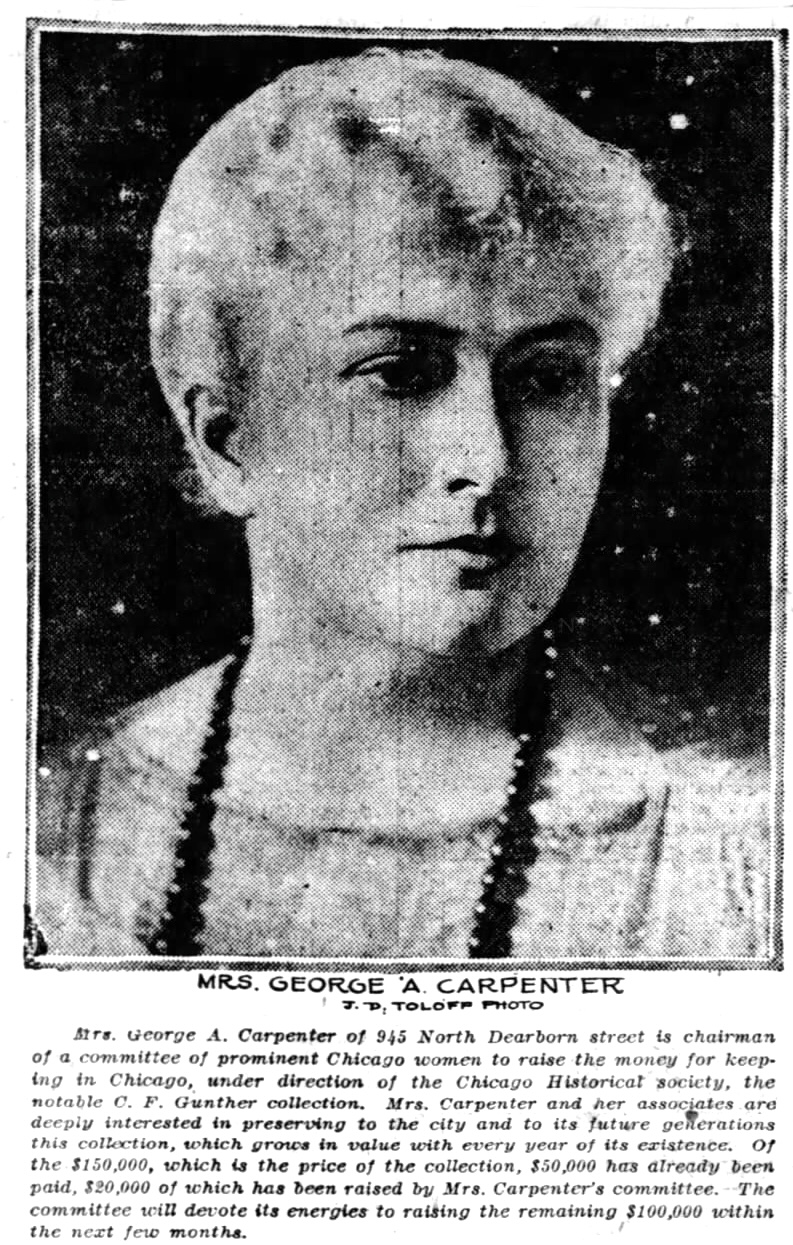
There are, among tens of thousands of interesting items in the new Gunther collection, the first patent ever issued in America; the farewell order of General Lee to his the letter of Grant to Pemberton proposing terms for the surrender of Vicksburg; the manuscript copy of the negotiations of the treaty of Greenville; the document transferring Louisiana from and the similar one transferring it from France to the United States; the pass given by Benedict Arnold to Major Andre when he was seeking to betray West Point to the British, together with its sad sequel, the report of the board of officers to Washington recommending that Major Andre be put to death. All these and hundreds of other, papers rouse the envy of the collector.
Of museum objects there are the table on which Grant drafted the terms of surrender at Appomattox; the bed on which Lincoln died, and the coach in which he was wont to take the air; the compass used by Washington, his camp dishes, and some of his Mount Vernon pewter; and the compass used in laying out the streets of downtown Chicago.
This, the directors of the society declare, is of immense value to the people of the city in making American history real and in stimulating American citizenship. The existence of historical societies was vindicated by the government during the war on the ground that they strengthened the morale of the country by keeping green the memory of heroes.
In order to make permanent in the Chicago Historical society the Gunther collection, which is one of the most valuable historical collections in the country, a committee of women, under chairmanship of Mrs. George A. Carpenter, has undertaken to raise $120,000 to complete payment for it. Of this amount, $20,000 has already been raised within a short time. In the fall the items of the collection, all of them of great interest, will be. exhibited in groups, as it will be impossible on account of its size, to show it all at once.

Leave a Reply