Exchange Bank Building, First National Bank I, Hibernian Bank
Life Span: 1854-1871
Location: Southwest corner Lake and Clark.
Architect:
- D. B. Cooke & Co.’s City Directory for the Year 1859
Alexander L. E. & Co., s.w. cor Clark and Lake (See advt front page)
Halpin & Bailey’s City Directory for the Year 1863
Ogden, Fleetwood, & Co. (William B. Ogden, Mahlon D. Ogden, Edwin H. Sheldon and Stanly H. Fleetwood,) Northwestern land agency, 32 and 34 Clark. (See advt. op. page)
Rutter, Endicott & Co., s.w. cor. Clark and Lake, (See adv. p. 392)
Halpin’s Chicago City Directory for 1864
First National Bank, Lake, sw. c. Clark.
Edwards’ Annual Directory in the City of Chicago, for 1866
Tyler, Ullman & Co., banker, 32 S. Clark, sw cor Lake and Clark
First National Bank, Edmund Aiken, pres Samuel M. Nickerson, vice pres. Lake, sw. cor. Clark1
Edwards’ Annual Directory in the City of Chicago, for 1867
First National Bank, Lake, sw. cor. Clark, C. R. Field cashier.
Edwards’ Annual Directory in the City of Chicago, for 1870
Hibernian Banking Association Savings Bank, J. V. Clarke, pres. Hamilton B. Dox, cash. Clark, sw. cor. Lake
Mendel Edward, lithographer, State sw. cor. Washington. r. 1052 Wabash
Edwards’ Annual Directory in the City of Chicago, for 1871
Hibernian Banking Association Savings Bank, J. V. Clarke, pres. Hamilton B. Dox, cash. Clark, sw. cor. Lake
Chicago Tribune, June 12, 1854
The Farmers’ Bank.
The Farmers’ Bank has removed to the New Granite Block known as the “Exchange Buildings,” corner of Clark and Lake sts., south side, main entrance.
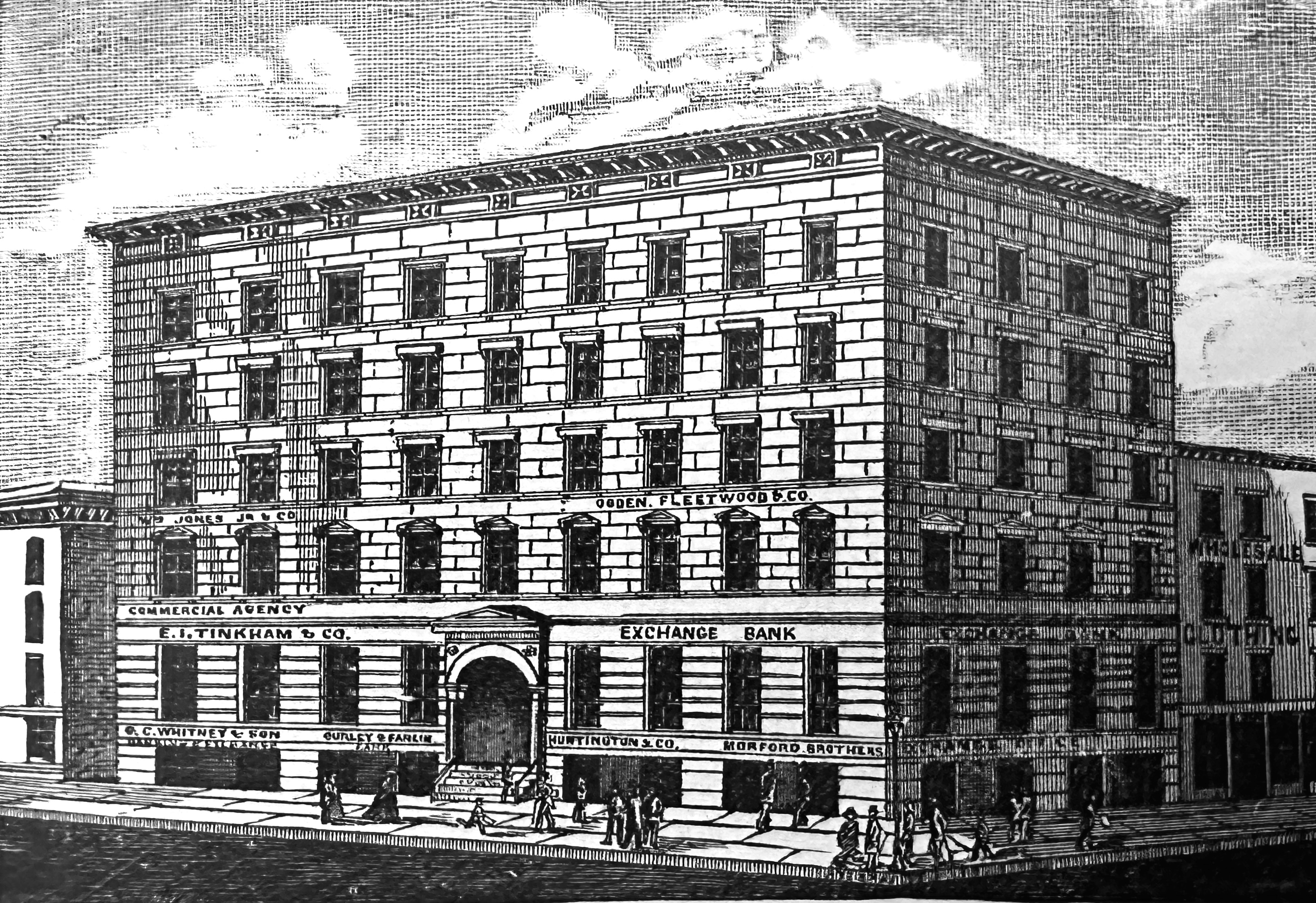
- The Exchange Bank
Chicago Tribune, March 31, 1862
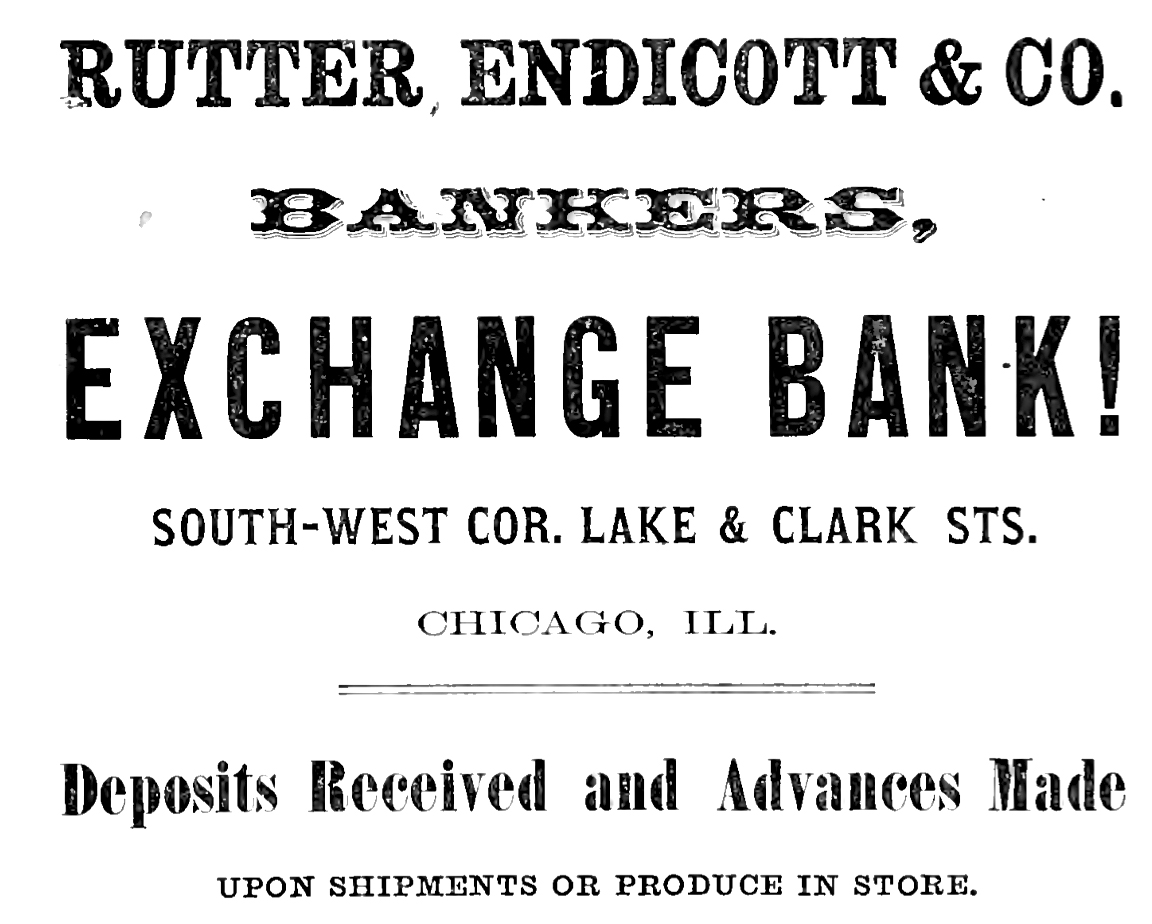
New Banking House.—The advertisement of Messrs. Rutter, Endicott & Whitehouse, Bankers and Exchange Dealers, will be found in our advertising columns. The first two of the parties occupied for a long time responsible positions in the Banking House of Geo. Smith & Co., and are well known in business circles, and the third is a son Bishop Whitehouse. They occupy the rooms formerly belonging to the Exchange Bank, on the southwest corner of Clark and Lake streets. Commencing with an ample capital and with experience, a high order of ability and integrity, the house will at once command the confidence and a large patronage from the business public.
The Chicago Daily Tribune, June 30, 1863:
The First National Bank of Chicago goes into operation tomorrow, July 1st, E. Aiken, Esq., President, and E. E. Braisted, late of the Loan & Trust Co., Cashier. The stockholders are among the most active and substantial business men, representing our merchants, lumber, produce, and stock dealers, with a number of our leading capitalists. The bank opens with a cash capital of a quarter million of dollars, and a further increase will be added as the wants of the business public shall require. The president has long been known to the business community as one of our most active and prudent bankers, and the stockholders and the public are fortunate in the selection of a gentleman for so important a position, who so thoroughly understands the business of the city. The bank will open at the former office of the president, No. 22 La Salle street, immediately north of Coolbaugh & Co.’s Bank, northwest corner of Lake.
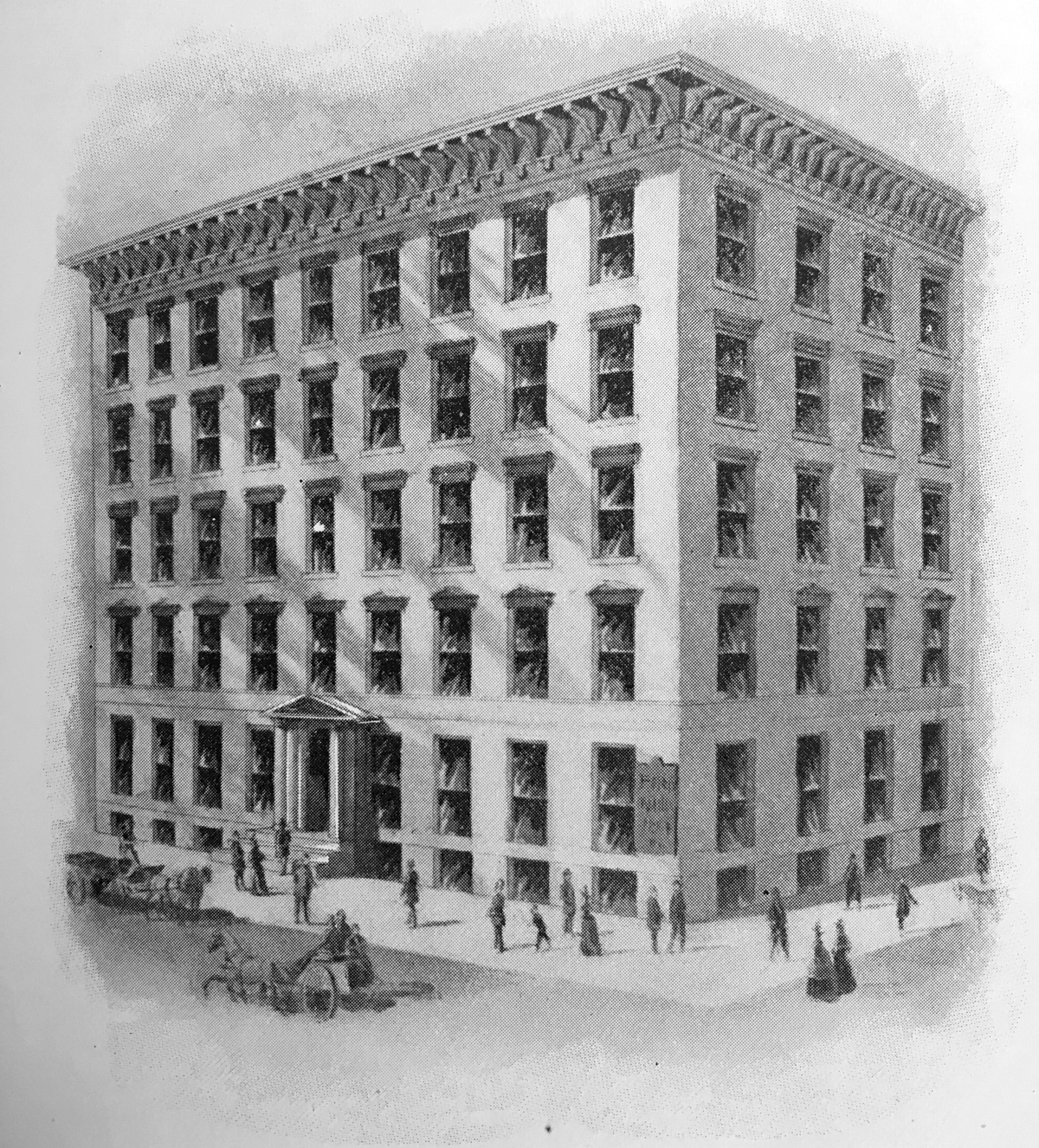
- First National Bank I
SW Corner LaSalle and Lake Streets
Chicago Handbook, A Complete Guide for Strangers and Tourists, 1869
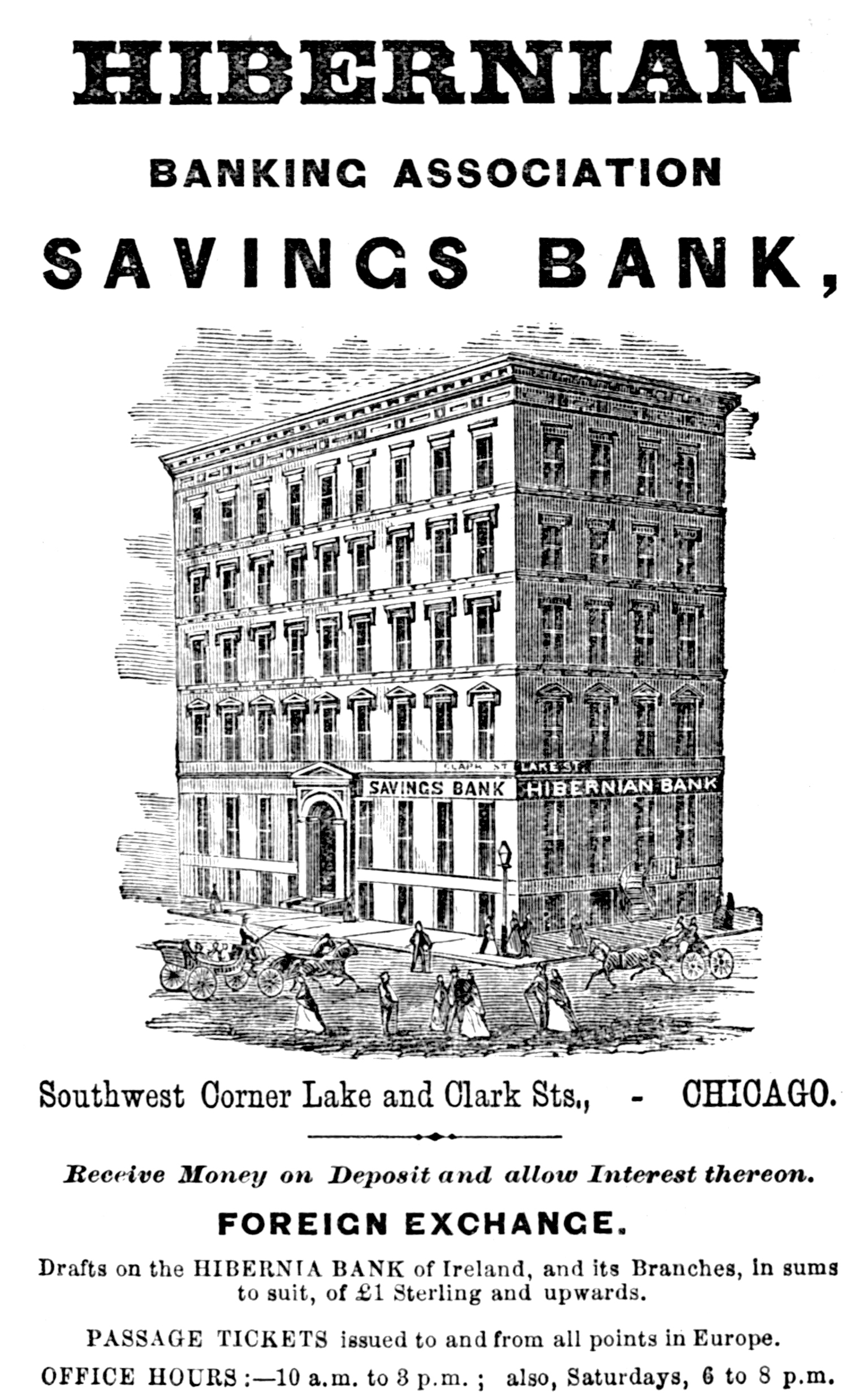
THE HIBERNIAN BANKING ASSOCIATION.
This popular institution is located on the south-west corner of Lake and Clark streets. Its officers are gentlemen of large experience in banking, and the direct- ors include some of our most successful merchants, whose financial ability is amply attested by the success which has attended them in their own business. Besides the savings department, the bank transacts a general commercial, banking and foreign exchange business.

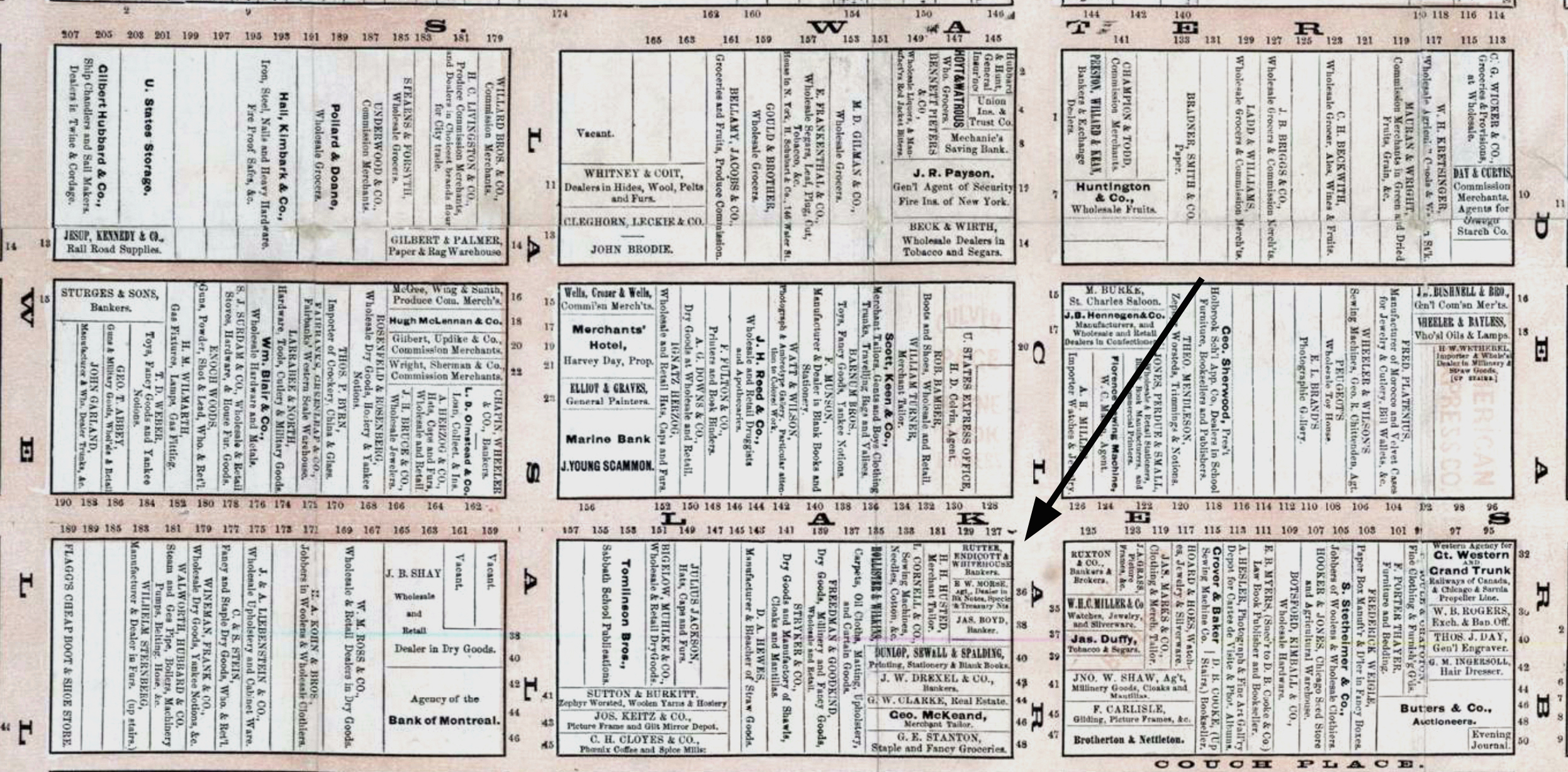
- Rutter, Endicott & Co.
Business District of Chicago
1862
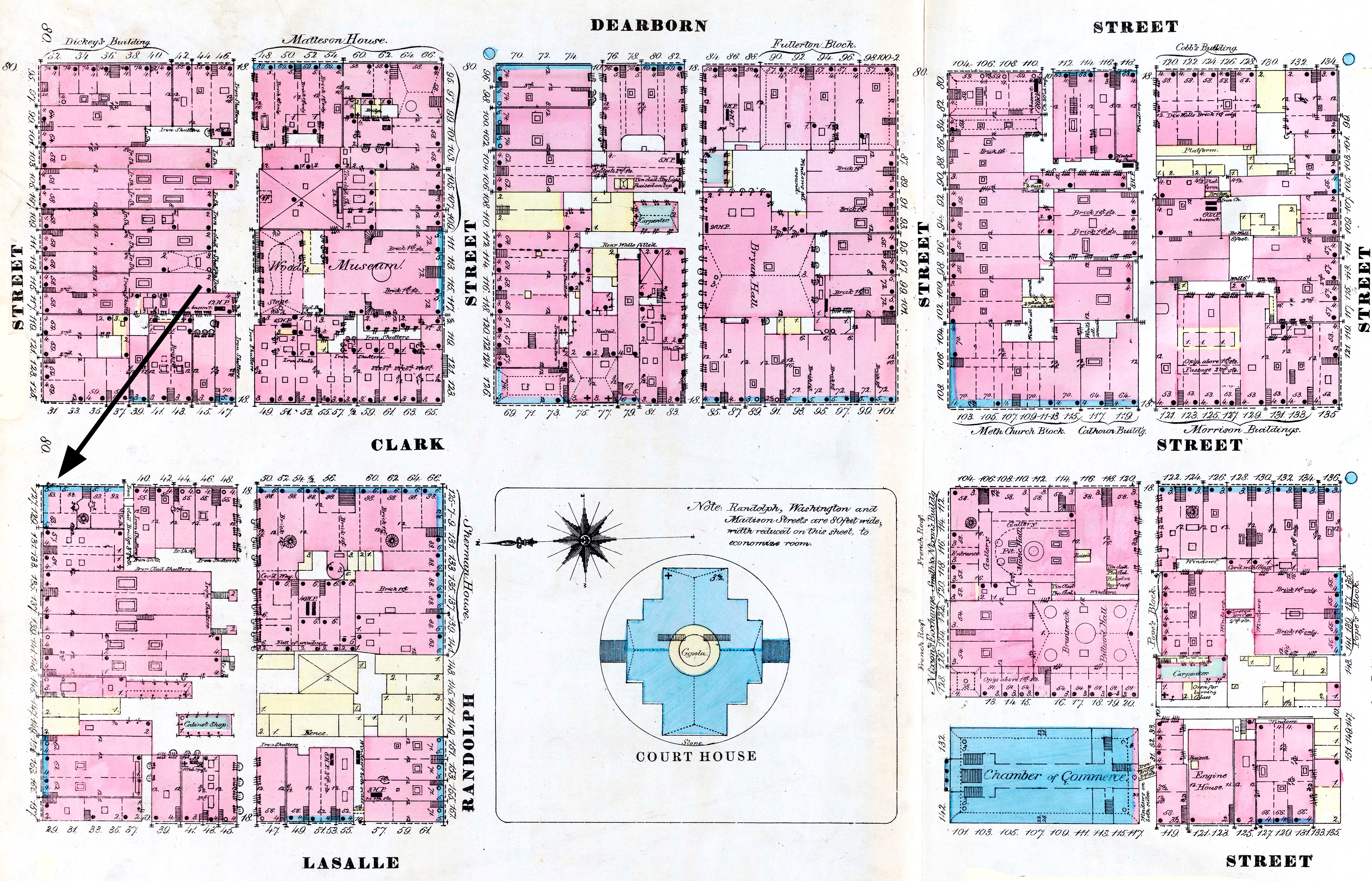
- The Exchange Bank
Sanborn Fire Insurance Map
1869

NOTES:
1The First National Bank of Chicago opened July 1, 1863, at 22 LaSalle street, near Lake street. The next incident of importance was the election of E. G. Hall, on November 11, 1863, as a director to succeed James C. Fargo, who had resigned. Already the rooms occupied by the bank were becoming too small, and unfitted for its growing business; the officers were looking for new quarters. At the meeting of the board, December 8th, the action of the president in leasing a portion of the main floor in the Exchange Block, at the southwest corner of Clark and Lake streets, for five years, at an annual rental of $4,000, was approved. This address remained unchanged until the end of 1867

Leave a Reply