Silent Movie and Radio in Chicago
Essanay Studio, Wilding Studio, St. Augustine College
Life Span: 1908-Present
Location: 1333 W Argyle
Architect:
- Lakeside Annual Directory of the City of Chicago, 1910
Essanay Film Mfg Co Geo K Spoor pres; Gilbert N Anderson sec 435 N Clark and 1333 Argyle
Essanay Film Mfg Co Geo K Spoor pres; Gilbert N Anderson sec; films 521, 38 S Dearborn
Moving Picture World, June 5, 1909
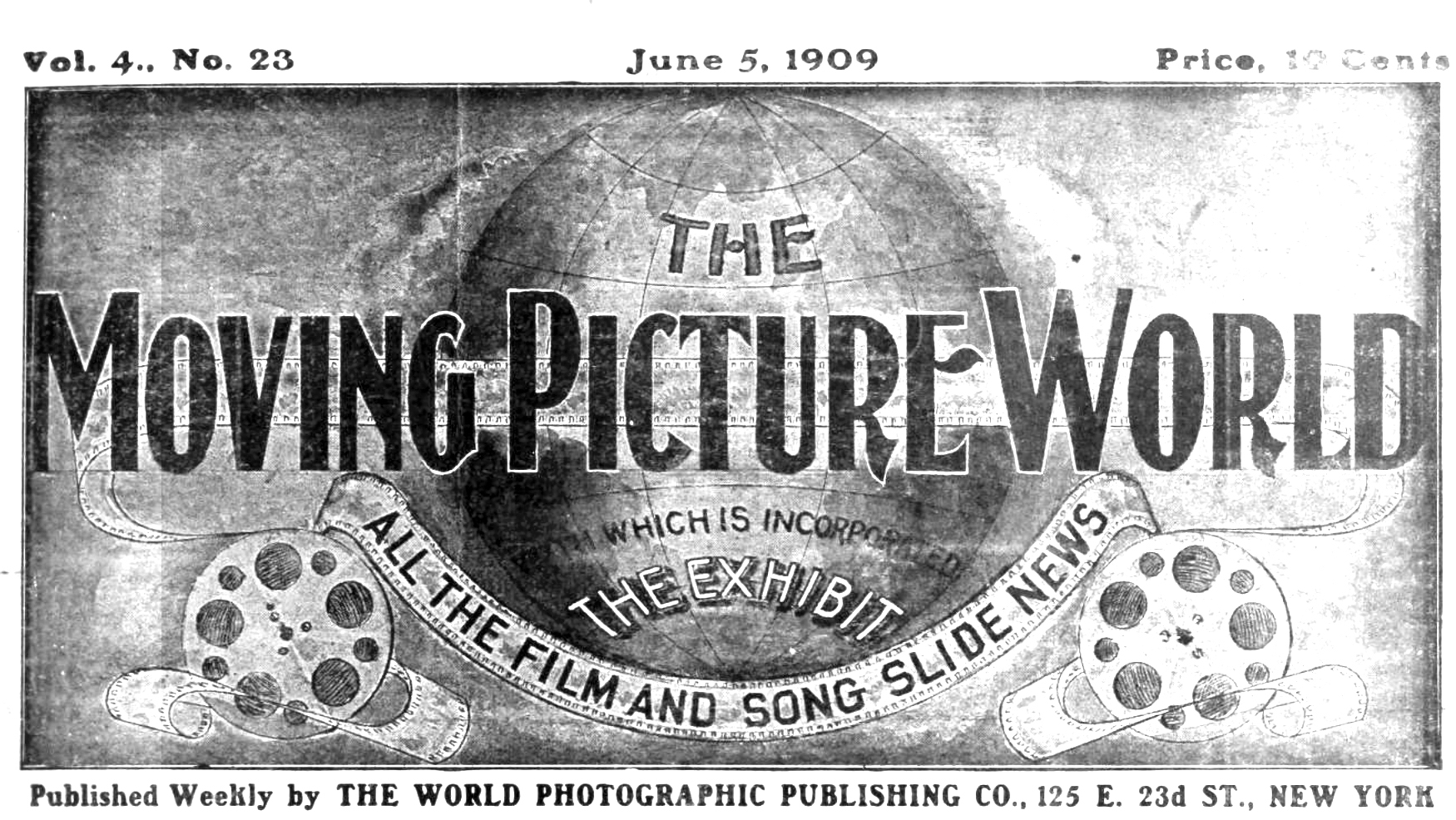
THE ESSANAY COMPANY’S NEW PLANT.
Enterprising Chicago Motion Picture Firm Moves Into Its New Quarters
The manufacturers are erecting plants of colossal proportions in order to supply the demand for more and better quality films.
The Essanay Company, of Chicago, is moving into its new quarters this week. Covering several acres of ground, the buildings within and without, models of beautiful architecture,’ the new plant is a fitting home for this enterprising motion picture firm. The writer recently enjoyed a visit to the new plant The genial president of the company, George K Spoor, first showed him through the company’s handsomely furnished offices. They are models of neatness and system. next went into the studio. Here we found G. M. Anderson, youngest and one of the most prominent men engaged in America to-day in the manufacturing of motion pictures. “Andy.” as he is familiarly known by the trade, was overseeing the work of a dozen or more carpenters who were engaged in swinging into place large framework for the overhead lights.
“We are going to have the most up-to-date stage equipment in the country,” Mr. Spoor said. “We have facilities here for staging the most stupendous productions. We have more than doubled our lighting systems, and I feel safe in making the assertion that future Essanay productions will be fully equal to the output of other manufacturers either at home or abroad.
Immediately to the south of this excellent indoor stage and studio is a daylight studio. This will be utilized at all times when the weather is suitable for outdoor work.
Taken all together, both the indoor and outdoor studios are the marvel of perfection. Every up-to-date appliance to minimize time and trouble, and to assure the best results, has been installed.
Adjoining the indoor studio is the carpenter shop and paint frame. Skilled artists were busy on the bridges above Two or three stage carpenters were building a padded cell for a scene from a story soon to be released, “The Curse of Cocaine.” It was not the usual painted upholstery, but the real thing. Indeed, the solidness of the construction of scenic effects, the care and watchfulness of detaH, would surprise one who has not been “behind the scenes.”
The property room is handily adjacent. We find here, if one is permitted to use the old phrase, everything “from a needle to a haystack.” Here is material for any sort of a scene from a drawing room in a Fifth avenue mansion to a corner in a boiler factory.

We went next to inspect the photographic department. The spotless cleanliness of these workrooms, so indispensable to the art, was prevalent. In the dimly-lighted developing rooms a dozen or more white gowned young ladies were busy putting the thousands of feet of celluloid strips through the various baths, or chemical processes, necessary in the developing of the films. The washing and drying departments, capable of handling 20,000 feet of film an hour, we found more inviting. The process here is a simple but delicate one.
The Essanay Company, indeed, is to be congratulated. Its facilities for turning out more and better films will insure the retention of the name an approving public has given it, as the one “House of Comedy Hits.”
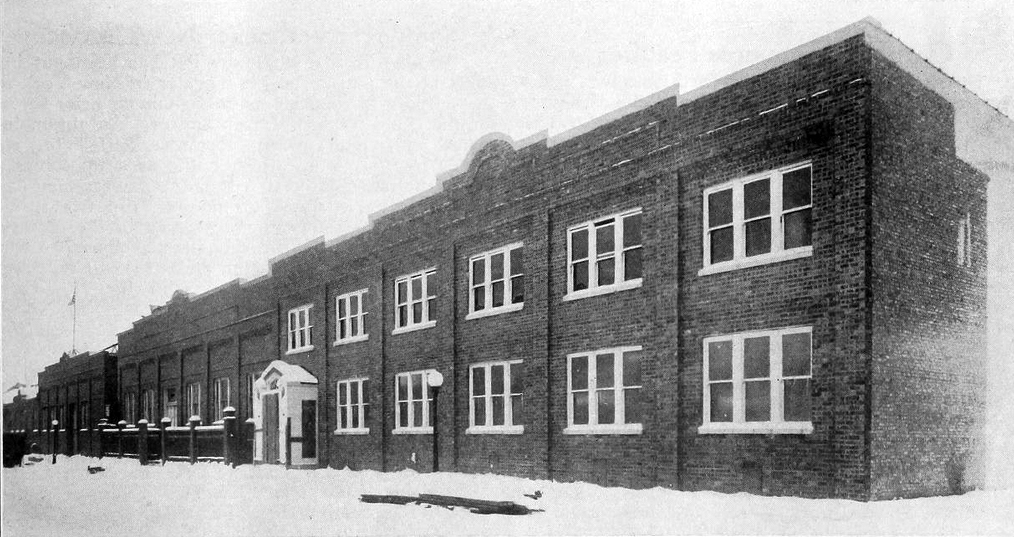
- Essanay Studio
1333-45 W. Argyle Street
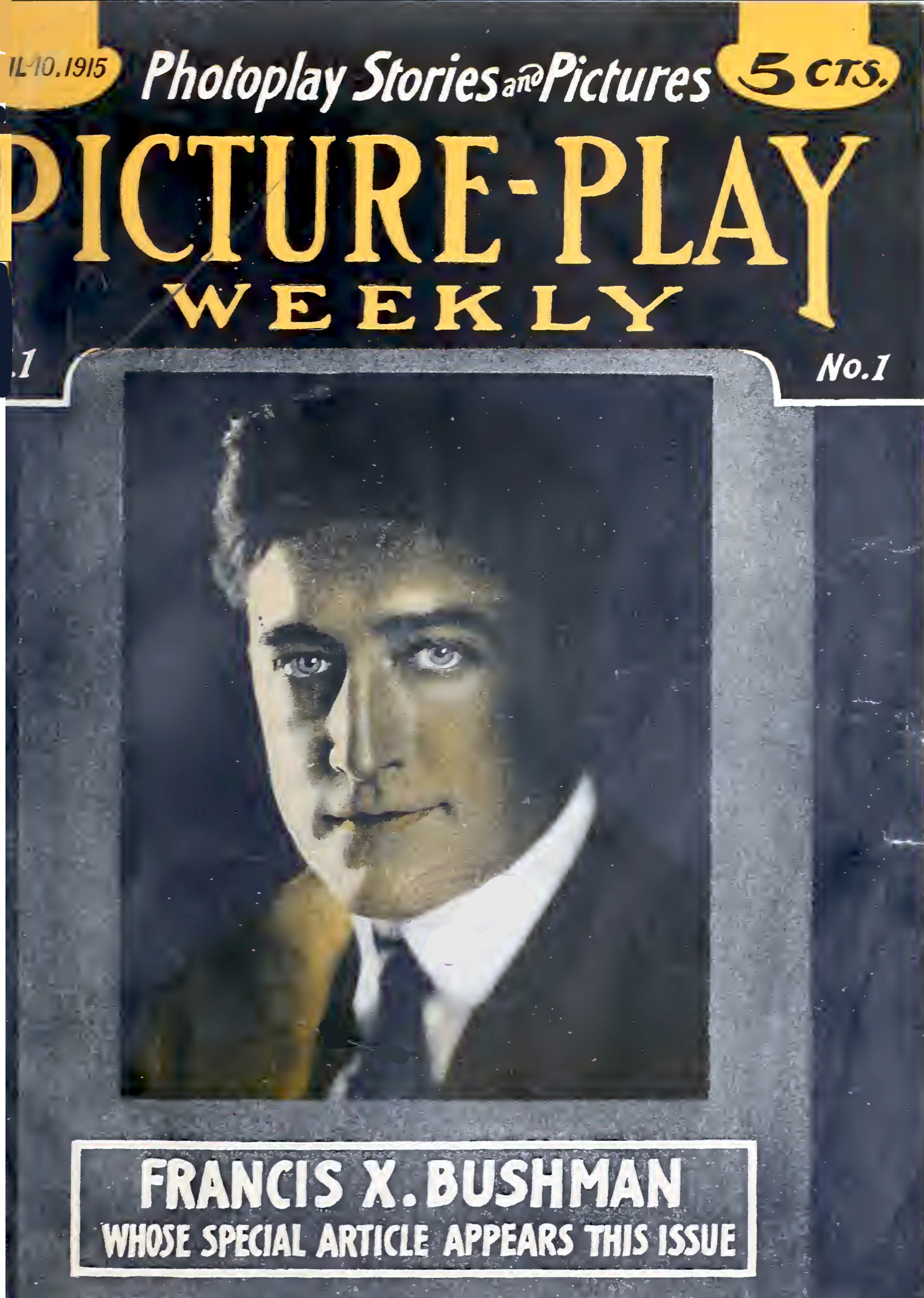
Picture-Play Weekly, April 10, 1915

Tell us something about the inside working of the studio?”
That request comes to me on an average of fifty times a day. There was a time when everything in connection with a motion-picture studio was enshrouded in the deepest mystery. But during the past year the public have become so interested and so loud in their demands for enlightenment, that this subject has furnished considerable material for both the newspaper and
magazine writer
I receive about two thousand letters a week, and I am glad to be able to add something of my personal ideas on a subject that is so far-reaching. I hope that my words will carry a message to these people who nightly compose the audience of the motion-picture rater. This article is in a way a tribute to the thousands who, by their friendship and enthusiastic approval, made it possible for this industry to grow to its present magnitude.
But to go on to the true subject of article: the inside working of a motion-picture studio. Many of the companies have daylight studios, are dependent upon sunshine for the success of their products. The Essanay Company have a peculiar, and, I think, unusual lighting method. They use the Peter Cooper Hewitt mercury-vapor lights, which are very rich in light rays. The candle power approximates nearly two hundred thousand makes it possible to work at night or on a dark, cloudy day. They are very powerful, and fill the person seeing them for the first time with wonder and awe.
A laughable incident occurred not long ago on the studio floor. A sick scene was in progress, and so death-like was the pallor of the pretended sick woman, that a guest at the studio made a wild dash for water, and exclaimed, in an excited manner:
“She has fainted!”
The lights had cast a queer purplish reflection over the surroundings, making the actress look really ill. The director had a few things to say, however, to the young woman who interrupted his big dramatic scene. Naturally, she could not see her own countenance, which had that same purplish tinge.
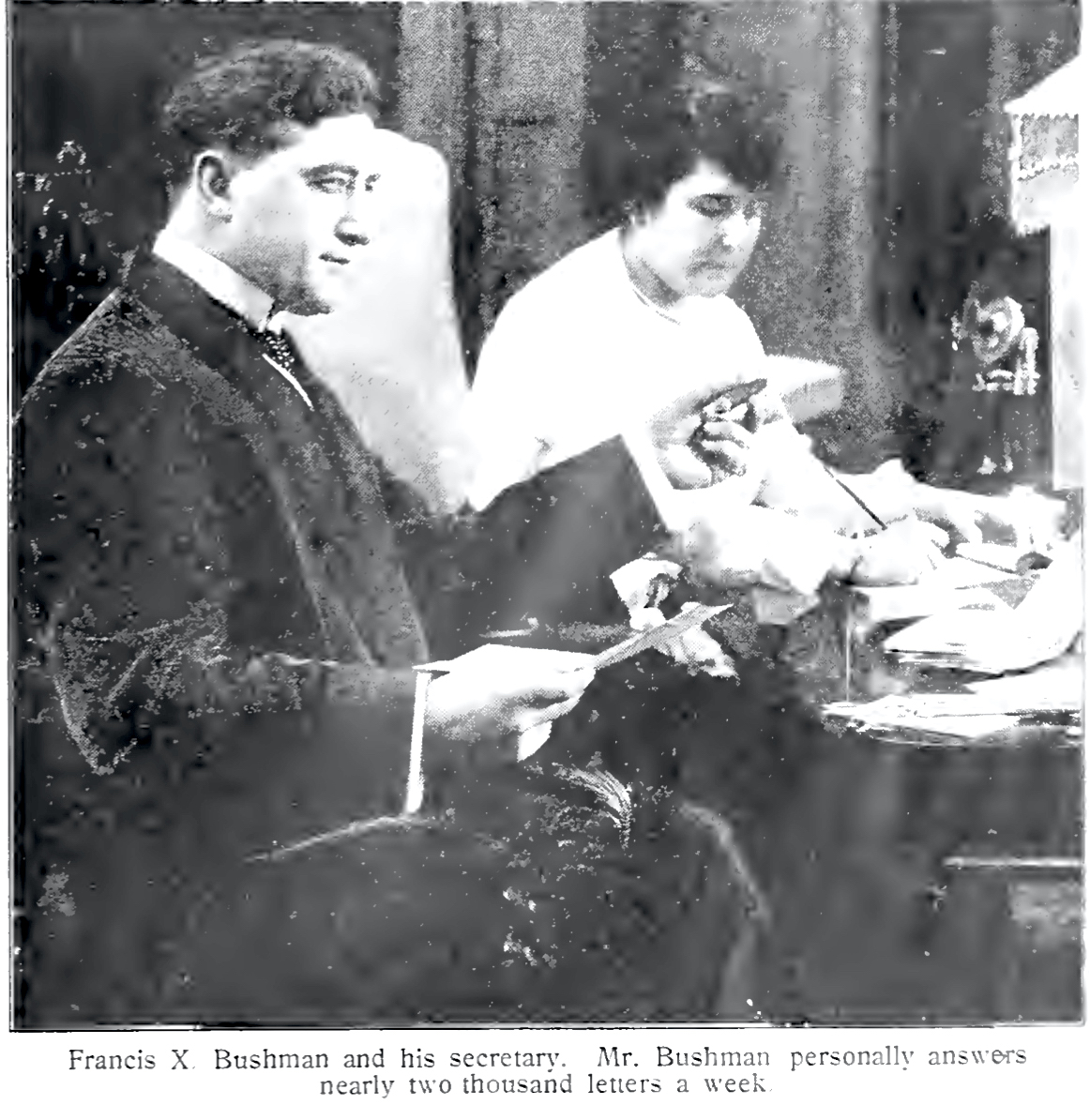
Many amusing letters come to me. asking: ”How did you get the inside of such a beautiful home for your picture?”
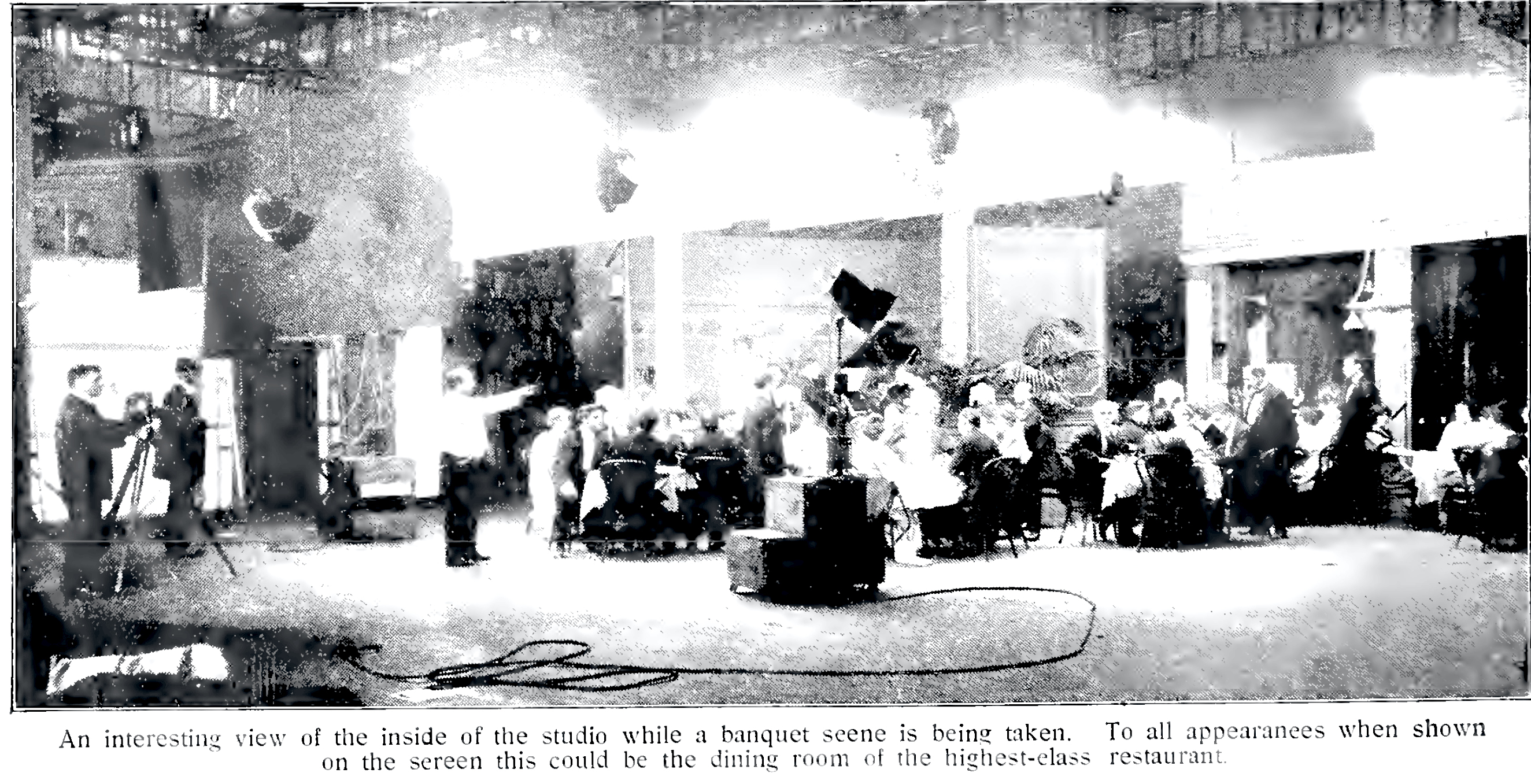
We never use the interior of any home, poor or rich, for our scenes. All inside rooms and scenes are produced on the floor of our studio. The working line averages six feet or less in width. It looks very small to the observer, especially after we see the prospective effect, showing great, spacious rooms in the completed picture.
Each room is arranged with the utmost care. The homes of the connoisseur are studied carefully with a view to making them as elegant and artistic as possible. The shabby, worn-out tenement rooms must have furniture in keeping with the circumstances of its inhabitants. The costumes and atmos- phere must be correct. Customs of different historical periods are made a subject of the greatest moment.
The man in charge of securing the proper furnishing is some one who has the decorative faculty highly trained and developed. Every studio has a property room, but this does not always contain the necessary furnishing for a special feature.
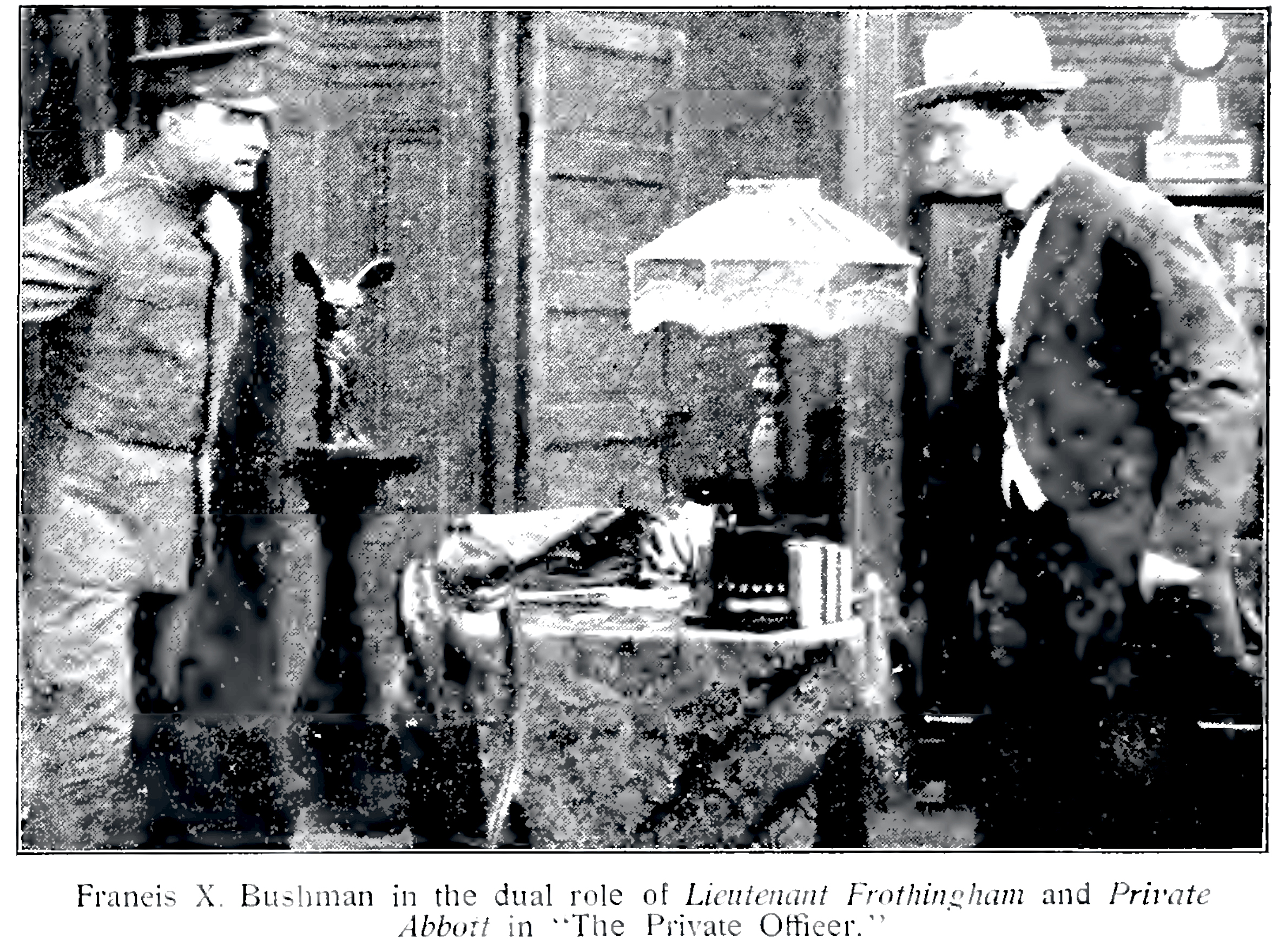
Many of my correspondents have been greatly interested in “The Private Officer.” in which I appear in the dual role in this picture, both as Lieutenant Frothingham, the villain, and Private Lambert, the hero. It is, I admit, rather startling to see the same man appear simultaneously on the screen. This was done by masking one side of the camera, taking one side of the picture; then turning back and masking the other side, and taking the opposite side. In this picture the work progressed very slowly. I had to change my clothes twice for every scene and was so worn out, and my valet was so tired, that we both vowed we were through with double exposures for life. I changed my clothes something like twenty-five times that day. I had to wear different clothes in every scene, and also effect entirely different make-up. In the villain part, I appeared with my hair brushed back from my forehead and my face smooth shaven. In the reverse character I wore my hair parted and a small mustache. This picture has been the mystery of the age, for the layman cannot understand how the same character can appear twice in one scene. The accompanying illustration will show I did try to make myself look different.
I have come to the conclusion that and women are simply grown children, and that romance and fairy tales appeal to hem more than any other class of story. I appeared in the role a crown prince in “Under Royal Patronage” some few months ago, and since that time I have received hundreds and hundreds of letters begging to act in another picture in which I could wear brass buttons and gold braid. Personally, a virile story with a stronger plot is more to my liking, but I have discovered that a deeper plot does not contain one-half the appeal that a pretty, romantic-hero tale does. My greatest success has been made in hero characters. “Graustark,” the famous McCutcheon novel, will soon be ready for public approval, and in this we have given the fans a taste of what they so insistently demand.
In “Scars of Possession” we had a real surgeon superintend the transfusion of blood operation. It was so real that wee all felt a thrill of horror when the man of science appeared with his glistening scalpeL
Among my correspondents, I have newspaper writers, judges, and doctors. One letter I have cherished came from well-known doctor in the South. Some few months ago we put out a picture called “The Elder Brother.” This was the tale of the dope fiend. A patient of the doctor’s saw the picture, it made such a vivid impression on h:s mind, that it lead to his reform.
The old-time matinèe idol seems to have given way to the newer picture hero. The warm-hearted, appreciative American public, since the days of Barett and Booth, up to the present time, have delighted to honor the man or woman of whom they approve. It is only too true that the career of every public man lies right in the hollow of the people’s hands. They can make him just as easily as they can put the stamp of their disapproval upon him and mark him a dismal failure. The star in filmdom is different from the legitimate actor. He comes closer to the people.
Perhaps you will take exception to this statement. How can a man whom we never see, save on the screen, come as close to the hearts of the public as the actor who plays before the footlights in person and speaks his way into our affections?
For the reason that the public see him oftener and learn to know him better. They see him magnified, and watch for every change in his facial expression. They see him depict so many emotions that he grows near and dear to them.
The productions have improved both in quality and quantity, until many of the scenarios put on the screen are masterpieces. Not only is this true of original scenarios given to the public, but also of the successful plays and books that are being picturized.
Brady, Klaw & Erlanger, the Shuberts, Dan Frohman, Belasco, and dozens of men who have managed successfully the great stage productions of the past few years, have all come into the past few years, have all come into the picture industry. The field has afforded such unlimited possibilities that they have united with the film manufacturer in giving to the world the best product of drama and fiction obtainable.
I have had one thing brought most forcibly to my mind, and that is. the people are responsible for the class of pictures turned out by the studio. Just so long as they cry for the lurid melodrama and find pleasure in the screaming posters, just so long will the film manufacturer continue to supply that very kind of production, I speak from knowledge, for the bulk of my mail comes from people who are watching me on the screen, and who have learned to know my every facial expression, They write and tell me the innermost secrets of their very souls.
I am in a position to judge as to what they desire. We are glad to say, however, that many of the people are being educated up to better subjects and to a higher class of literature, through the medimn of the motion picture. Some of the people to whom history, mythology, art, and literature were as foreign as the Greek language, have learned to know something about each one of these subjects. The photo plays have stimulated an interest in these subjects, as it were.
In view of this pleasant fact, I do not wish to be quoted as saying that the majority of the people are demanding cheap melodrama, but I do say that many of the people who compose the picture audience find greater pleasure in a stirring detective story or in a thrilling “mellerdramer” than in the best classic or strongest problem drama ever pre- sented on the screen.
It is but natural that people wish to see something of a life that varies from the monotony of their own.
For instance, Susie Smith, who is slaving in a department store at six dollars and fifty cents a week, finds the stories on the screen the most absorbing daydream that can enter into her otherwise colorless life. She is interested in the society pictures from every point of view. She watches, with bated breath, the big ball given by Mrs. van de Water; Mrs. de Smythe’s jewels are something to dream about. On the other hand, the people who are comfortably housed and fed and whose bank account is worth considering, find the acting, the sets, and the entire productions relating to the poorer classes of people who do not enjoy such luxuries, of the utmost interest.
I wish that I could emphasize just how important I feel the moral side of the pictures is in the ultimate betterment of social conditions. Aside from the educational point of view; aside from the amusement offered, or for any other reason that might impress on our minds the value of the motion picture the lesions to be learned; the influences brought to bear; in fact, the entire moral uplift, is of startling importance. The motion picture is even more potent than the sermons preached by the greatest reformers of the day. It has done more to bring the wayward girl and the badly brought-up boy into the right way of living than any other one thing in all the world.
I speak from all the mass of mail that I am daily receiving. I get letters from every walk of life, so that I feel I can truthfully say that from the confidences given me, pictures will soon be recognized as the greatest dramatic medium, educator, entertainer, and, above all, the most important influence for good of the present age.
Picture-Play Weekly, April 10, 1915
SOMETHING ABOUT MR. BUSHMAN.
Francis X. Bushman’s advent into motion pictures, and his rise to the most popular and favorite play of the time, are interesting to know.
For several years, when a young man, Mr. Bushman studied sculpturing under Isadore Conte, in New York, and besides working with the clay himself, w used as a model to considerable extent After some time an opportunity came to him to go on the stage, and Mr. Bushman grasped the chance, dropping his work as a sculptor.
It was not long before he was leading man in a stock company, which position he held for several years, going from that to a road company. Here he played in many big productions until three years ago. At that time the Essanay Company made him an offer which he accepted, and now, at the end of those three years, he feels that has reached the top. To verify that when the public was asked for a vote as to the most popular player, their choice was Francis X. Bushman.
Chicago Tribune, October 21, 1935
 Wilding Picture Productions, Inc., makers of commercial talking pictures, announced yesterday that Chicago has been chosen as the firm’s middle western production headquarters. The firm has acquired the old Essanay studio at 1333 Argyle street, which was the production scene in the early days of the industry of the first moving pictures starring such figures as Gloria Swanson, Wallace Beery, “Broncho Billy” Anderson, Bryant Washburn, Charlie Chaplin, and others who gained wide fame.
The building will be remodeled and equipped with modern sound picture apparatus and facilities. It will be used for the staging and production of business sound films, of which the wilding firm is the largest maker.
Large Studio Here.
At the present time the company has studios in Hollywood, Detroit, and on Long Island. The Chicago plant, which will be opened about Dec. 1, will be the largest sound film studio outside of Hollywood, with the single exception of the same company’s Long Island studio, the announcement said. The company has established temporary Chicago offices at 624 South Michigan avenue.
The company will bring technicians from Detroit and Hollywood to staff its new studio which, it was announced, will be equipped with the double system recording units of the type used by the major producers of standard films.
“Casts will be recruited in Hollywood, New York, and Chicago,” the company announced, “with preference given to Chicago professionals of proper training.”
Founded in 1915.
The company was founded in 1915 by Norman E. Wilding, who is still its head. It was one of the first concerns in the commercial picture field and has produced sound films for a number of the country’s leading corporations, including the large automobile companies.
The director of the new studio has not been named. L. Mercer Francisco, formerly advertising manager of the Curtis companies of Clinton, Ia., and a former Chicago advertising man, will head the Chicago sales and serv. ice staf. John P. Kneebone, formerly with the Curtis Publishing company, will be in direct charge of sales.
Chicago Tribune, August 10, 2012
FILM PIONEER PREPPING FOR ANOTHER STARRING ROLE
By John Owens
Tribune reporter
At first glance, the Essanay Studio buildings in Chicago’s Uptown neighborhood may seem fairly unremarkable.
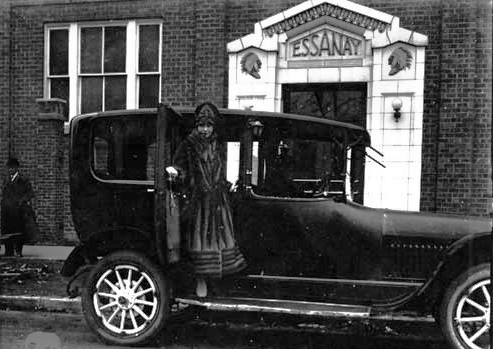
The two red brick structures, located in the 1300 block of West Argyle Street, look from the outside like your typical early 20th-century factory buildings. The only elaborate touch on them is the terra cotta main entrance at 1345 W. Argyle, with the word “Essanay” over the doorway.
But these modest buildings provide an important link to early American cinema. Here, from 1909 through 1917, Essanay became one of the most prolific and influential movie studios in the world. Charlie Chaplin shot comedies here, and the movie careers of Hollywood icons such as actress Gloria Swanson, actor Wallace Beery, director Allan Dwan and gossip columnist Louella Parsons were launched at the Argyle Street location.
Behind the scenes, Essanay provided a blueprint for the way Hollywood would produce movies for years to come, helping to introduce sophisticated indoor lighting and factory-style movie production techniques that allowed the studio to release an astonishing six movies per week during the 1910s.
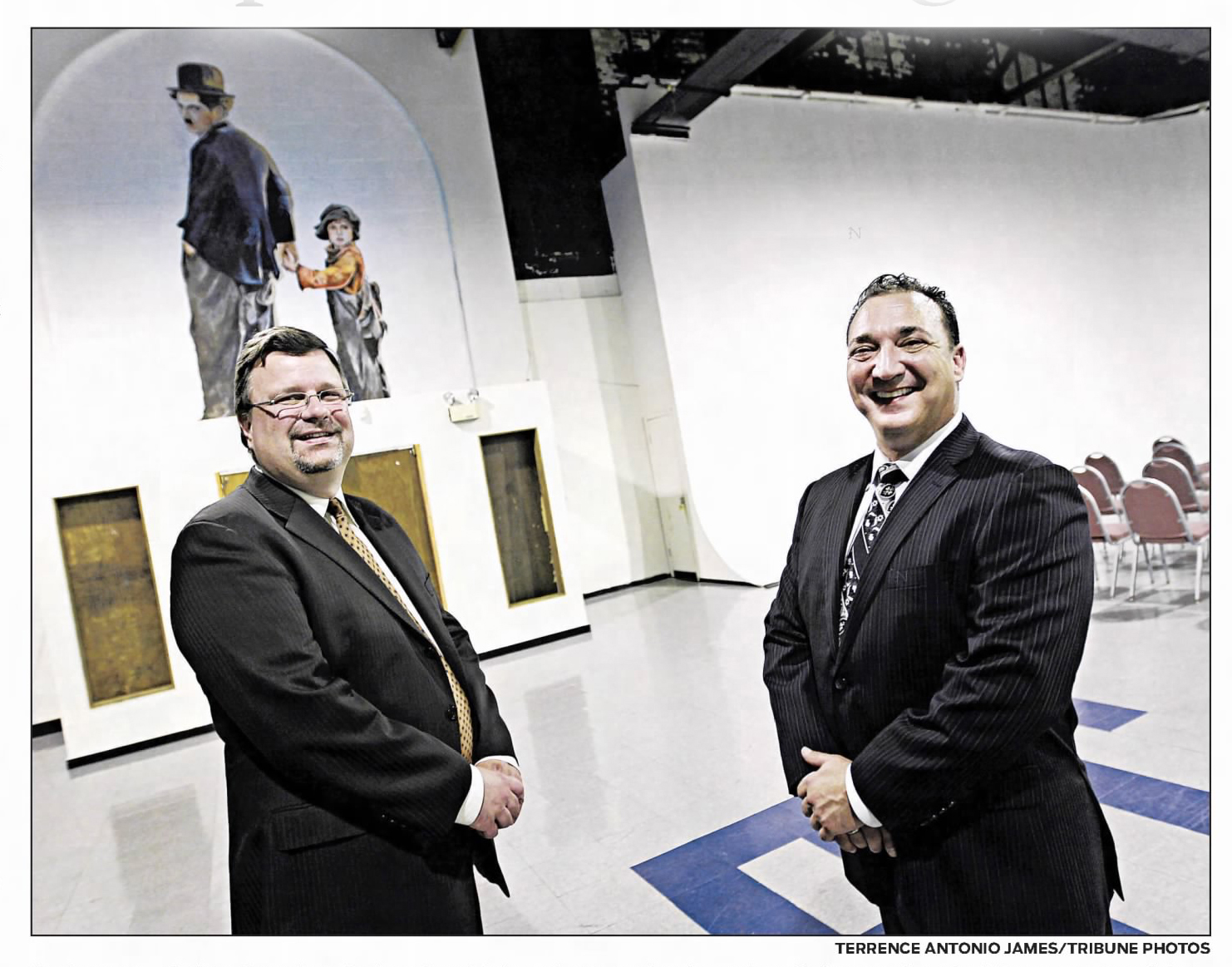
- St. Augustine College President Andrew Sund, left, and project developer Gary Keller stand in a building once part of the Essanay Studio complex that’s slated for remodeling. The mural shows Charlie Chaplin, who did some work there.
“It was one of the toj studios of its time,” said David Kiehn, a film historian based in Niles, Calif., where Essanay had its West Coast studios. “And even though Essanay also had studios on the West Coast, the majority of their films came out of Chicago. So these buildings have great historical value.”
Now, almost 100 years after Essanay completed construction on its Argyle studios, and 16 years after the buildings received landmark status from the Commission on Chicago Landmarks, plans are finally under way to recognize this illustrious past as part of a renovation and restoration project.
St. Augustine College, which purchased the two buildings when the school was founded in 1980, wants to revamp the older of the two buildings, the 1333 W. Argyle structure, built in 1909.
That building, which housed a film production space now serving as the school’s auditorium, would be reborn as a multipurpose facility with a museum for early cinema production in Chicago, along with a space for cultural performances and perhaps a community center and other attractions.
“We’re still defining what some of those attractions might be, but we’re definitely thinking about an early film museum, a community center, a theater, verhaps a cafe,” said An-rew Sund, the president of St. Augustine College, which primarily serves Hispanic students in the Chicago area.
The school also wants to restore the terra cotta entrance at the 1345 W. Argyle building, which was built in 1913. It would like to refurbish many other original features on both buildings, including the two structures’ original windows on the Argyle Street side, which were bricked in after Essanay folded decades ago.
Fundraising for the project begins in earnest Oct. 6, when the school plans a gala event at the 1333 W. Argyle building, where party-goers are encouraged to dress up as Chaplin, Swanson or other Essanay stars. At that event, the Chicago-based architectural firm Johnson & Lasky will issue a 150-page historical structures report on the Essanay renovation plan, which will help college officials determine the ultimate expense for the project.
“It will be a significant cost outlay, probably in seven figures,” said Sund, who added that it would take two to three years to finish the project after fundraising is completed.
But it’s a project that has full support from city officials because it goes hand-in-hand with the City Hall-endorsed plan to create an Uptown Entertainment District, centered around the long-awaited renovation of the long-shutter-ed Uptown Theatre. Owner Jam Productions hopes to fully renovate the Uptown by the end of 2015, provided it can raise $70 million to maintain that historic venue.
“Visitors are starting to look around the neighborhood, and they’re starting to notice the Essanay buildings,” said Ald. James Cappleman, in whose 46th Ward the buildings are located (though they will move to the 47th Ward once the latest ward remap goes into effect later this year).
“Hearing that Chaplin once shot movies here, that helps promote the entertainment district,” Cappleman said.
He said the Essanay buildings wouldn’t be eligible for any tax increment financing because they are located outside Uptown’s TIF district. But he said the project could be eligible for other tax breaks because of their landmark status.
“Other city financing is also open for exploration, although we certainly have to prioritize these projects, Cappleman said. “The city is in a budget crunch, but we also understand how important it is to draw people into this neighborhood to discover its rich history.”
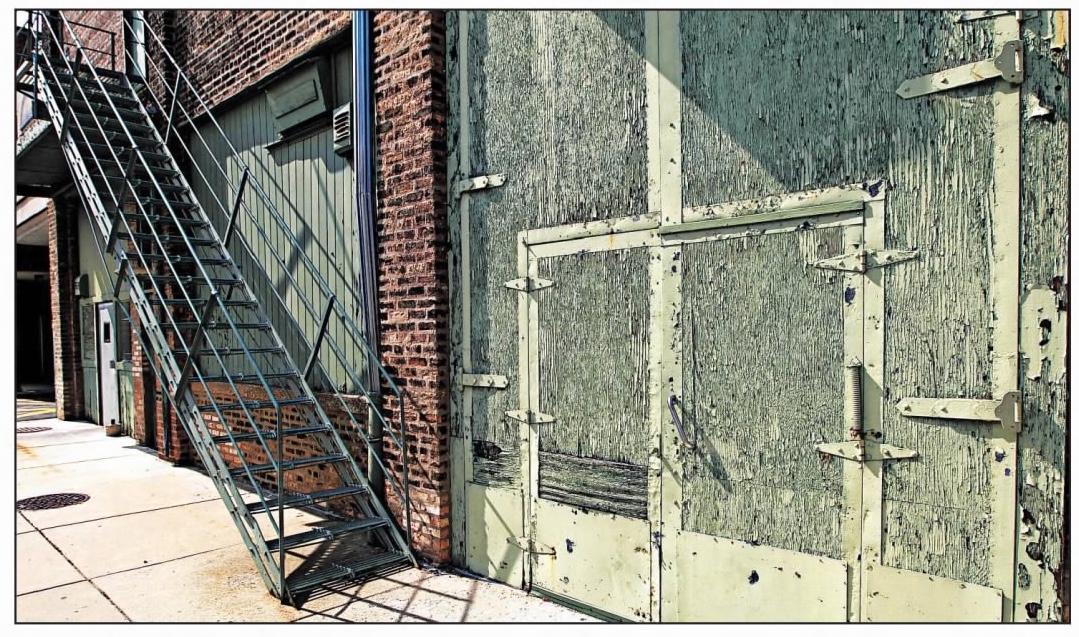
- A stage door and fire escape are artifacts from a time when actors Charlie Chaplin and Francis X. Bushman worked on Argyle Street.
School officials said they began talking about the restoration project two years ago.
“We would see tour buses stop in front of the building for a minute, then keep going,” Sund said. “So we said to ourselves that we’ve got to start bringing some of these people in to see the facility.”
Even though much of the original interior has been gutted to serve the college, visitors can still see some original features. The school’s auditorium in the
1333 W. Argyle building, now called the Charlie Chaplin auditorium, still has the feel of a movie studio, with the original catwalk and lighting grid like the perfect place to tell it.”
Luckily, there is an existing Essanay Silent Film Museum in Niles, Calif, the studio’s onetime location near the Bay Area. So Keller is working closely with that museum’s administrators, talking about sharing memorabilia with them, including films, posters and cameras from the silent era.

“We’ve been providing information to them, and we’re definitely willing to share our experiences,” said Dorothy Bradley, president of the Niles Essanay Silent Film Museum.
Of course, the museum’s main focus would involve the history of Essanay, which was founded in 1907 by early film pioneer George K. Spoor and G.M Anderson, who became film’s first major cowboy star, known as Broncho Billy. Essanay’s title was derived from the first initials of the two founders’ last names, S and A. Spoor, who in 1894 with inventor Edward Hill Amet developed the first 35mm projector, was largely responsible for Essanay’s technical prowess. Anderson, meanwhile, created a worldwide sensation with his “Broncho Billy” one-reel and two-reel westerns, which were shot on location, first on the North Side of Chi-cago, then in Colorado and California.
Together, these men cultivated actors such as Beery, who dressed in drag as a Swedish maid in a series of Essanay comedies before becoming famous during the sound era in movies like “The Champ” and “Viva Villa, and Francis X. Bushman, best known as one of the leads in the 1925 version of “Ben Hur.”
But it was Chaplin with whom Essanay is most identified. The comic was signed by the studio in late 1914 and made one film in Chicago (“His New Job”) before shooting the remainder of his Essanay films in California.
“The myth was that he left Chicago because of the cold weather, but, in reality, Chaplin left the Chicago studios because the structure was too regimented—they wanted him to shoot from a script provided by their script department,” Kiehn said. “Chaplin didn’t work from other people’s scripts, and he told them so.”
When Chaplin left Essanay for Mutual Studios in 1916, Essanay’s fortunes declined. Anderson left the company as well, and Spoor closed the studio in 1917. The Argyle studios were eventually sold to Bell & Howell, which used the buildings for its commercial film subsidiary, Wilding Productions. Bell & Howell had control of the building until 1973, when WTTW-TV moved in and used the facility until the late ’70s.
Sund said that the restoration project would bring the building back full circle to its roots.
“There may seem to be very little to connect the mission of this institution with the film industry, but we serve an immigrant and second-generation community to help them develop as professionals in Chicago, Sund said.
“And in a similar way, many of the people who came and filmed in this building, including Chap-lin, they were coming from other parts of the world, learning about Chicago and becoming professionals in a new country. So we believe there is great continuity.”
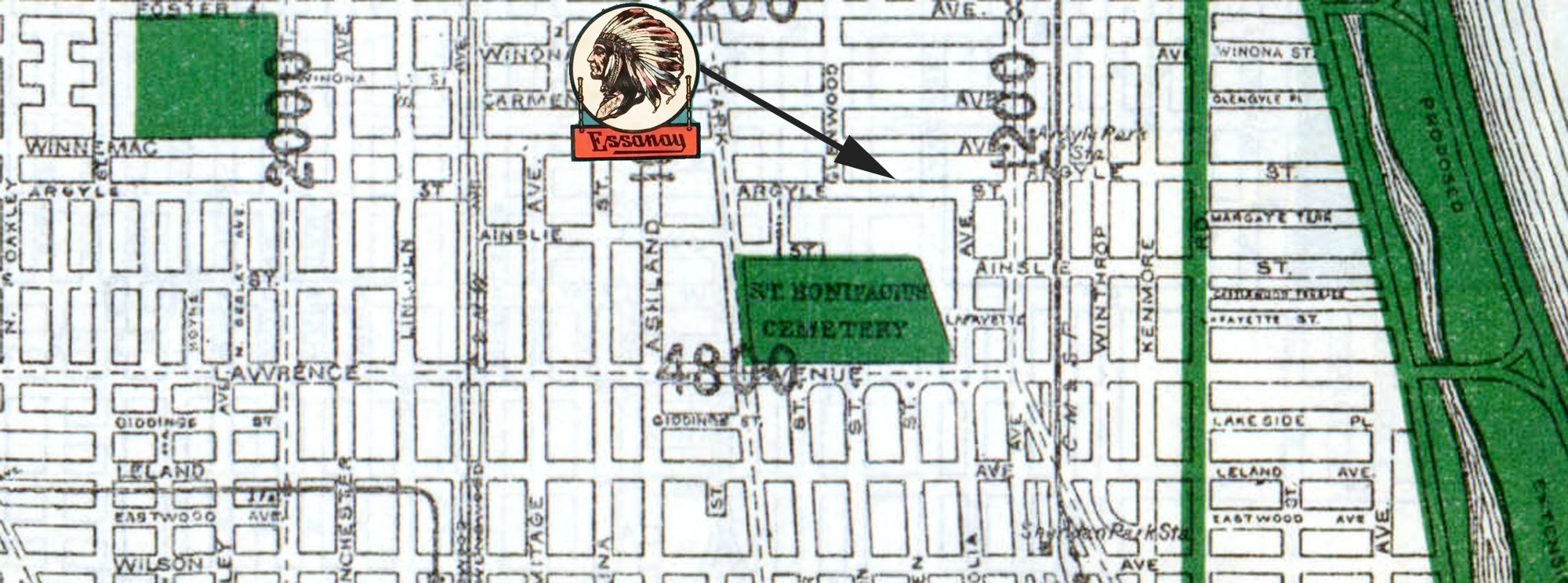
- Essanay Studio
1916
