Witkowski Hall,
Life Span: 1859-1871
Location: 176-178 Clark, Northwest corner Clark and Monroe
Architect:
- Halpin & Bailey’s City Directory for the Year 1863
Witkowski Hall, Clark, cor Monroe
Klein Simon & Co., (Simon Klein, Simon Mandel and Leon Mandel,) fancy and staple dry goods, 176 and 283 Clark1
Thompson William, physician, 178 Clark
Landreth Henry W., house furnishing, 178 Clark, bds. 155 4th av.
Halpin’s Chicago City Directory for 1864
Witkowski Hall, Clark, cor Monroe
Klein Simon & Co., (Simon Klein, Simon Mandel and Leon Mandel,) staple and fancy dry goods, 176 and 283 Clark
Thompson William, physician, 178 Clark
Edwards’ Annual Directory in the City of Chicago, for 1866
Witkowski Hall, Clark, cor. Monroe.
John C. W. Bailey’s Chicago City Directory for 1867
Witkowski Hall, Clark, cor Monroe street.
Thompson William, physician, 178 Clark
Edwards’ Annual Directory in the City of Chicago, for 1869
Witkowski Hall—Clark street, corner Monroe.
Edwards’ Annual Directory in the City of Chicago, for 1870
Witkowski Hall—Clark street, corner Monroe.
Edwards’ Annual Directory in the City of Chicago, for 1870
Kellogg & Johnson, hardware, 178 Clark
Thompson John, physician, 178 Clark
Edwards’ Annual Directory in the City of Chicago, for 1871
Thompson John, physician, 178 Clark
Chicago Tribune, July 13, 1859
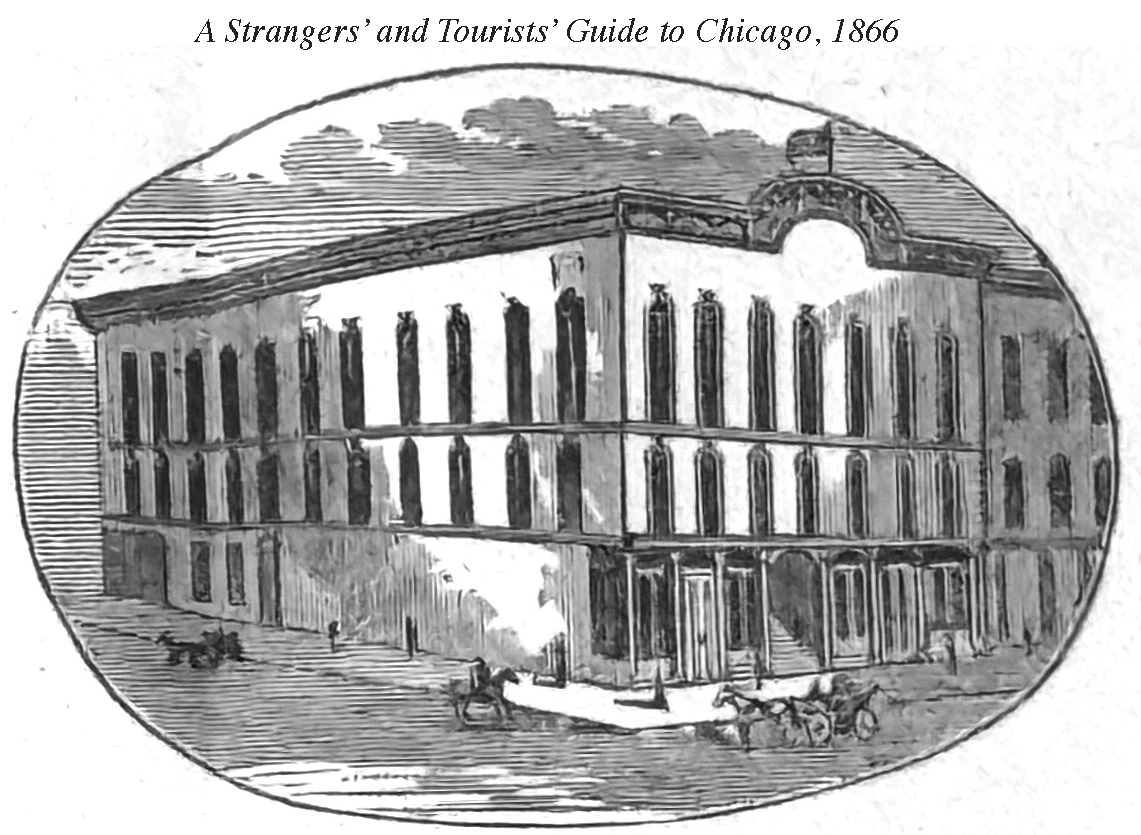
OPENING OF A NEW HALL.
Mr. David Witkowski, the proprietor of the new block at the corner of Monroe and Clark streets, opened to the public last night the new and splendid ball in that building. The location, we need scarcely say, is admirable, and when the street is finished, which it shortly will be, it cannot fail to be a centre of of attraction for public entertainments. The entrance is wide and spacious and the room is reached by two easy flights of broad stairs. The hall on entering, strikes the beholder favorably, it is so lofty, wide and splendidly lighted from three sides, thoroughly ventilated, and, glad are we to add, entirely clear of all extra and unnecessary ornamentation and cumbersome fixtures. Its dimensions are seventy-eight by forty-four, and the ceiling is twenty-one feet in the clear, It is lighted by eight widows in the south, almost reaching from the ceiling to the floor, seven windows on the east and three on the west—so that if there is a breeze it way be found at Witkowski’s hall. The proprietor intends to fit up a stage on the north side of the hall for lectures, &c., and the 500 persons which it it will seat can have a most perfect view of the one addressing them, and the latter a command of his audience; while for halls it is perhaps the prettiest and best adapted room in the city. The dressing and supper rooms are all admirably arranged and fitted, We may add that as the proprietor intends to superintend in person the affairs of the Hall on all occasions, every one may feel assured of its being condacted in the most unexceptionable manner.
Chicago Tribune, August 1, 1861
EMANCIPATION DAY.
The colored citizens of Chicago will celebrate the emancipation of the 800,000 slaves in the British West Indis Islands, to-day, by a Pic-Nic Excursion to Des Plaines Station,and to-night at Witkowski Hall by an oration by H. Ford Douglas, supper and grand promenade.
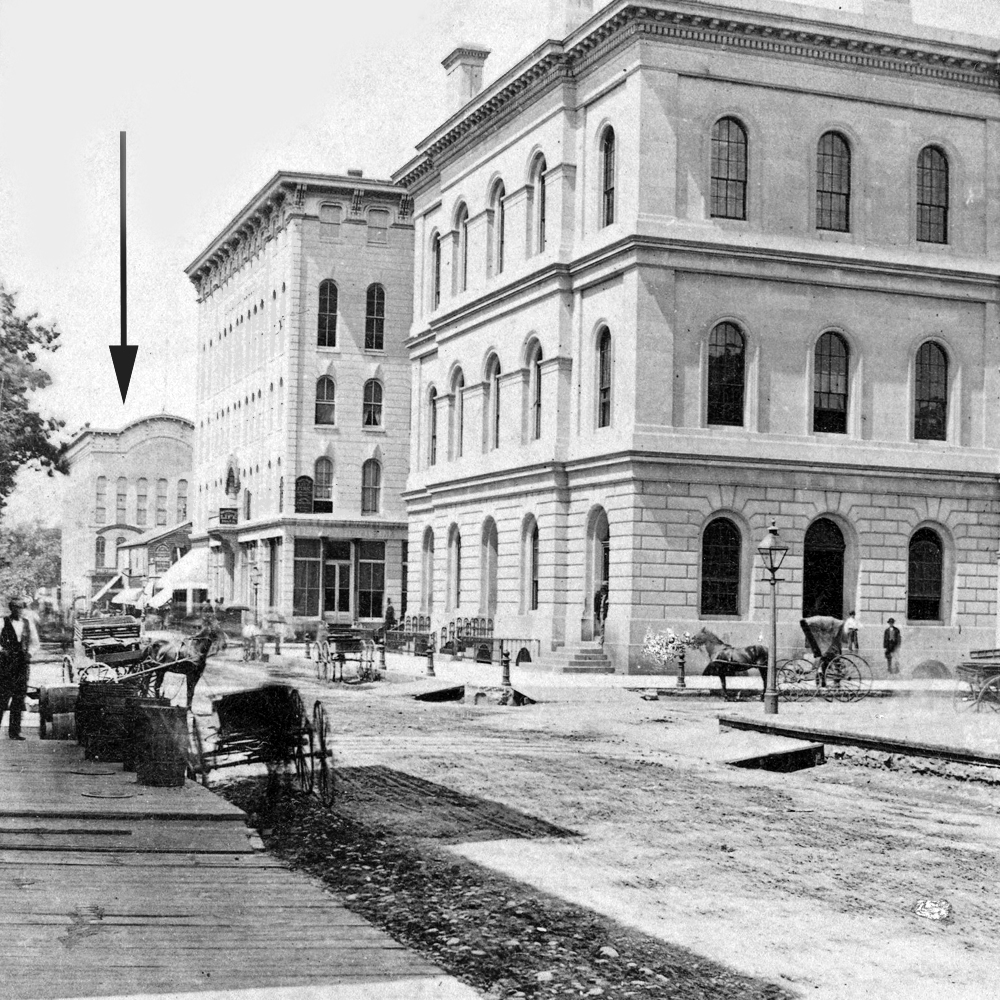
- Witkowski Hall
1865
Chicago Times, April 29, 1862
REMOVAL.
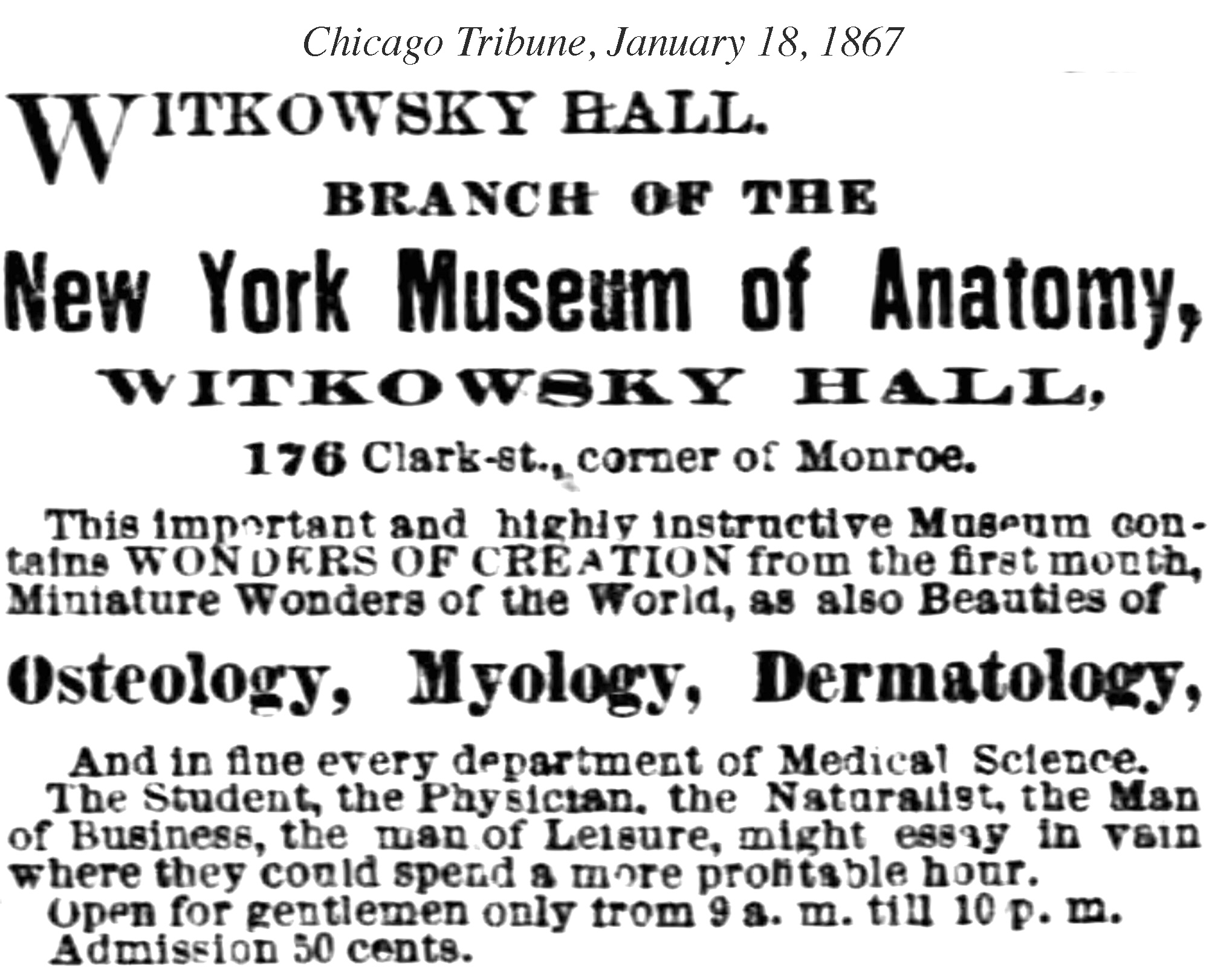
Dr. Thompson Has removed his Office and Anatomical Museum to No. 178 Clark Street, Corner of Monroe, into the building known as Witkowsky Hall. Established in Chicago in the year 1854 for the suppression of Quackery, and for the allevistion of human suffering, by offerIng to the unfortunate afflicted with any species of Private Disease sure and safe method of cure, founded on the solid basis of solence and sound philosophy. By inclosing four three-cent postage stamps, and addressing Dr. Wm. Thompson Box 72, Chicago, Ill., the “Unfortunate Man’s Guide” shall be forwarded, free from observation, to any address in the United States or Canadas.
The unfortunate should be particular in selecting his physician, as it is a lamentable yet uncontrovertible fact that many syphilitic patients are made miserable with ruined constitutions by maltreatment from inexperienced physicians in general practice, for it is a point generally conceded by the bent syphilographers that the study and management of these complaints should engross the whole time of those who would be competent and successful in their treatment and cure. The inexperienced general practitioner, having neither opportunity nor time to make himself sufficiently acquainted with their pathology, commonly pursues one system of treatment, in most eases making an indiscriminate use of the antiquated and dangerous weapon—mercury.
More caution, however, should be used by the syphilitic patient in consulting nominal physicians of the advertising class, as nine-tenths of them are impostors who assume French and other names, and are without any claims to medical knowledge. These knavish rascals infest all large cities, and by means of their lying advertisements and posters they induce the unwary to enter their Peter Funk shops, and unmercifully fleece and poison them with mercury.
Persons living at a distance in the country are more apt to be duped by the lying notices of quacks than citizens.
Notices of old established venereal infirmaries and hospitals in Chicago can be seen in many newspapers, but the Chicago City Directory gives no account of them. A small room, however, adorned with a few emblems of the medical profession, frequently receives from its adventurous proprietors the name of hospital or infirmary. Beware of fugitive empirics who advertise to cure the different forms of private disease in just so many days—such assertions are false, and palpably exhibit ignorance or design.
Dr. T. has practiced in Europe, Asia, Africa and America, and he is the only liberally educated and legitimately qualified physician in Chicago who makes the treatment of these diseases a specialty.
Dr. T. has practiced over thirty-one years, during which time he collected, at great expense, the beantiful and life-like models which compose his grand Anatomical, Pathological, Surgical, and Microscopic Museum adjoining his office, at No. 178 Clark street. corner of Monroe street, where all his patients are admitted free of charge.
WM. THOMSON, M. D.
Chicago Tribune, January 24, 1865
DISSOLUTION.—The firm known as Simon Klein & Co., has this day been dissolved by mutual consent. Simon Klein, Leon Mandel, Simon Mandel.
The store 176 Clark street will be continued by S. Klein, and stores 283 South Clark and 198 Van Buren streets, by Mandel Brothers.
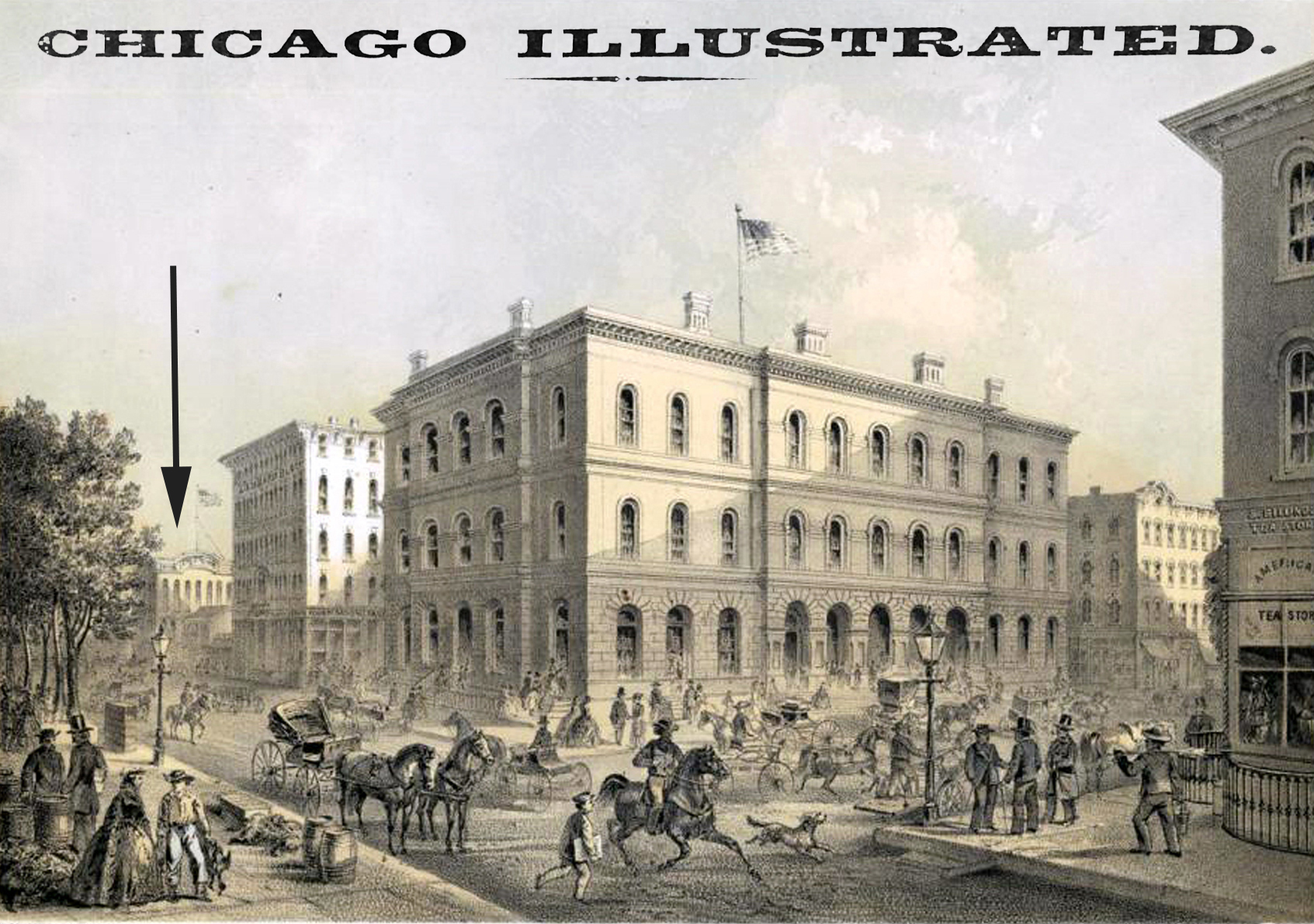
Chicago Illustrated, February, 1866
Chicago Evening Post, April 8, 1867
DR. THOMSON, Proprietor of the Medical and Surgical Institute, 178 South Clark street, has treated all forms of venereal disease with unprecedented success for nearly 40 years. Spermatorrhoea and impotence treated with the happiest results. Particulars of the Institute and Guide mailed.
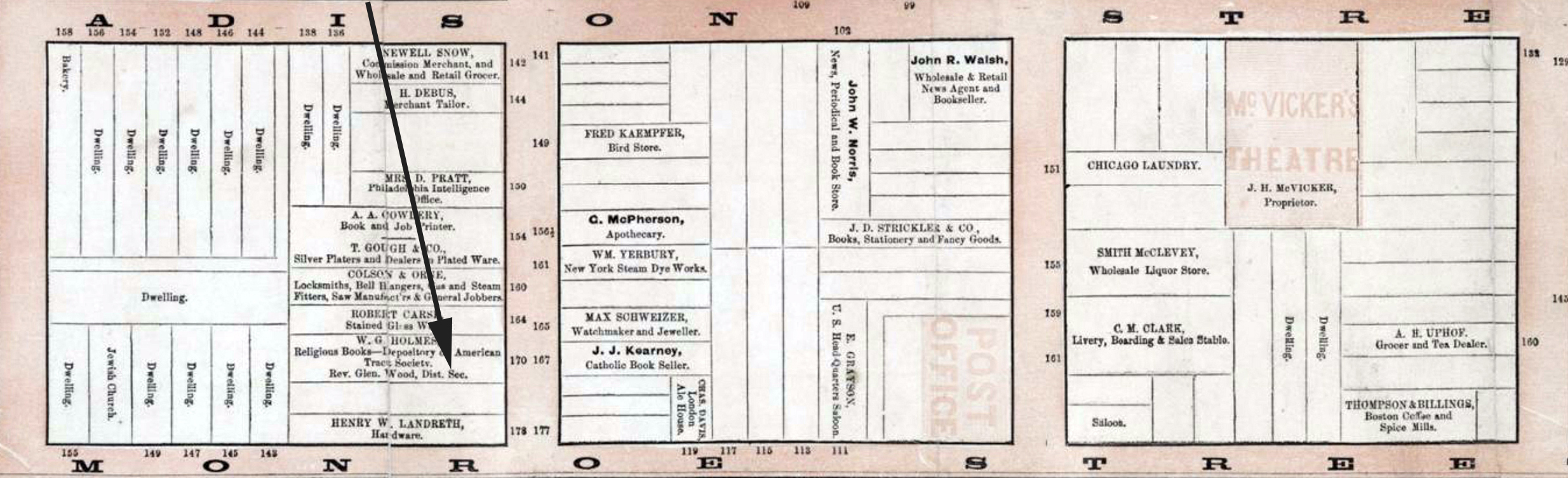
- Witkowski Hall
178 Clark
1862
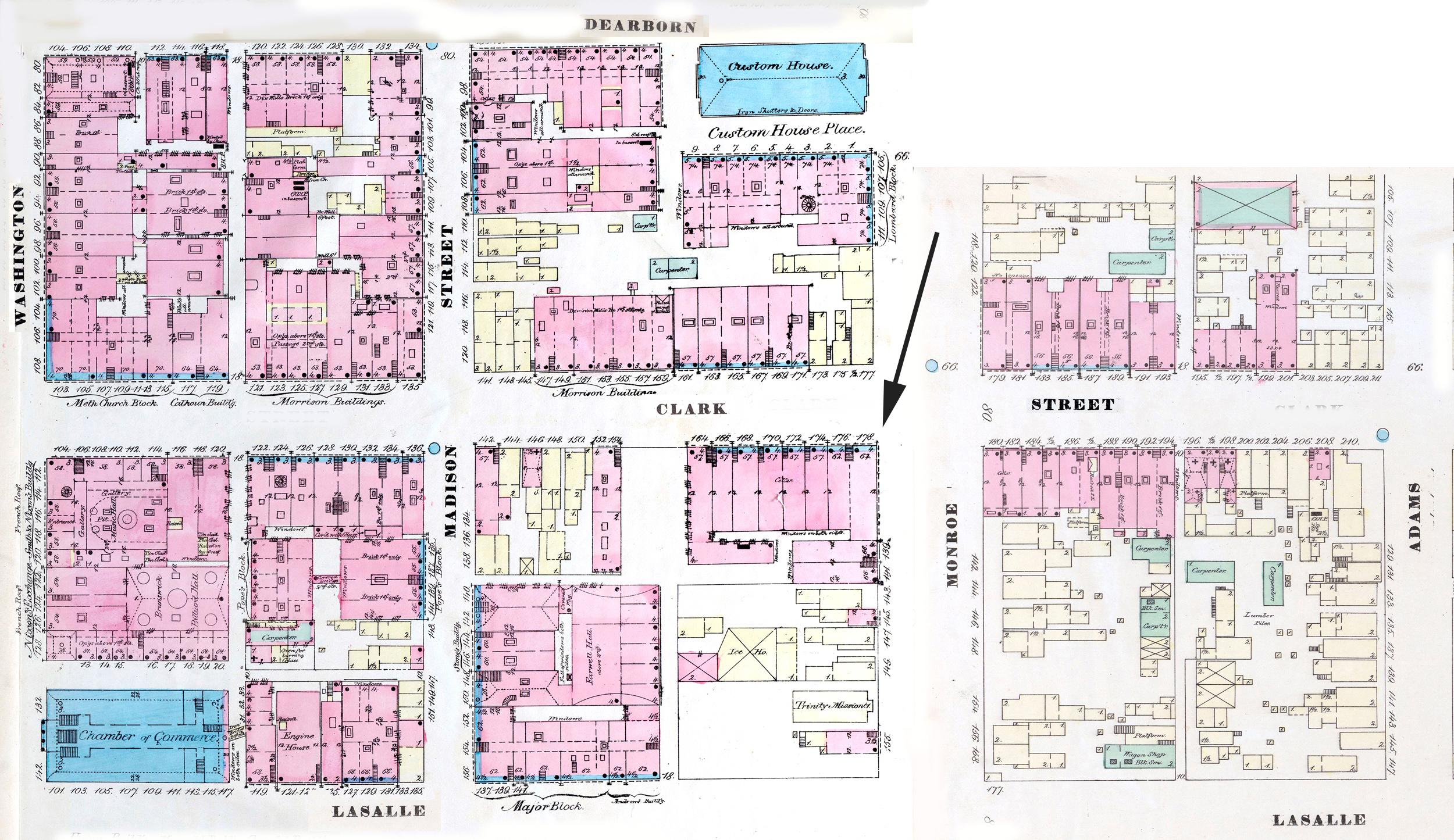
- Witkowski Hall
178 Clark
Sanborn Fire Insurance Map
1869
NOTES:
Mandel Brothers.
This retail enterprise, which would become one of Chicago’s leading department stores, was founded in 1855 by Bavarian immigrants Solomon Mandel and his uncle Simon Klein. Their first store was located on Clark Street in Witkowski Hall. In 1865, after Solomon’s brothers Leon and Emanuel joined the firm, its name became Mandel Bros. Purchasing in New York and Paris and selling in Chicago, the enterprise grew. By the 1880s, its new store on the corner of State and Madison Streets employed about 800 people. By the beginning of the twentieth century, the workforce had grown to over 3,000 people. Rebuilt in 1912 and renovated in 1948, the State Street store continued to operate into the 1970s, when the company folded amid State Street’s demise as a major retail center.

Leave a Reply