Victoria Theater, The Vic
Life Span: 1912-Present
Location: 2145-2151 Sheffield
Architect: John Eberson
- Polk’s Chicago Numerical Street and Avenue Directory, 1928
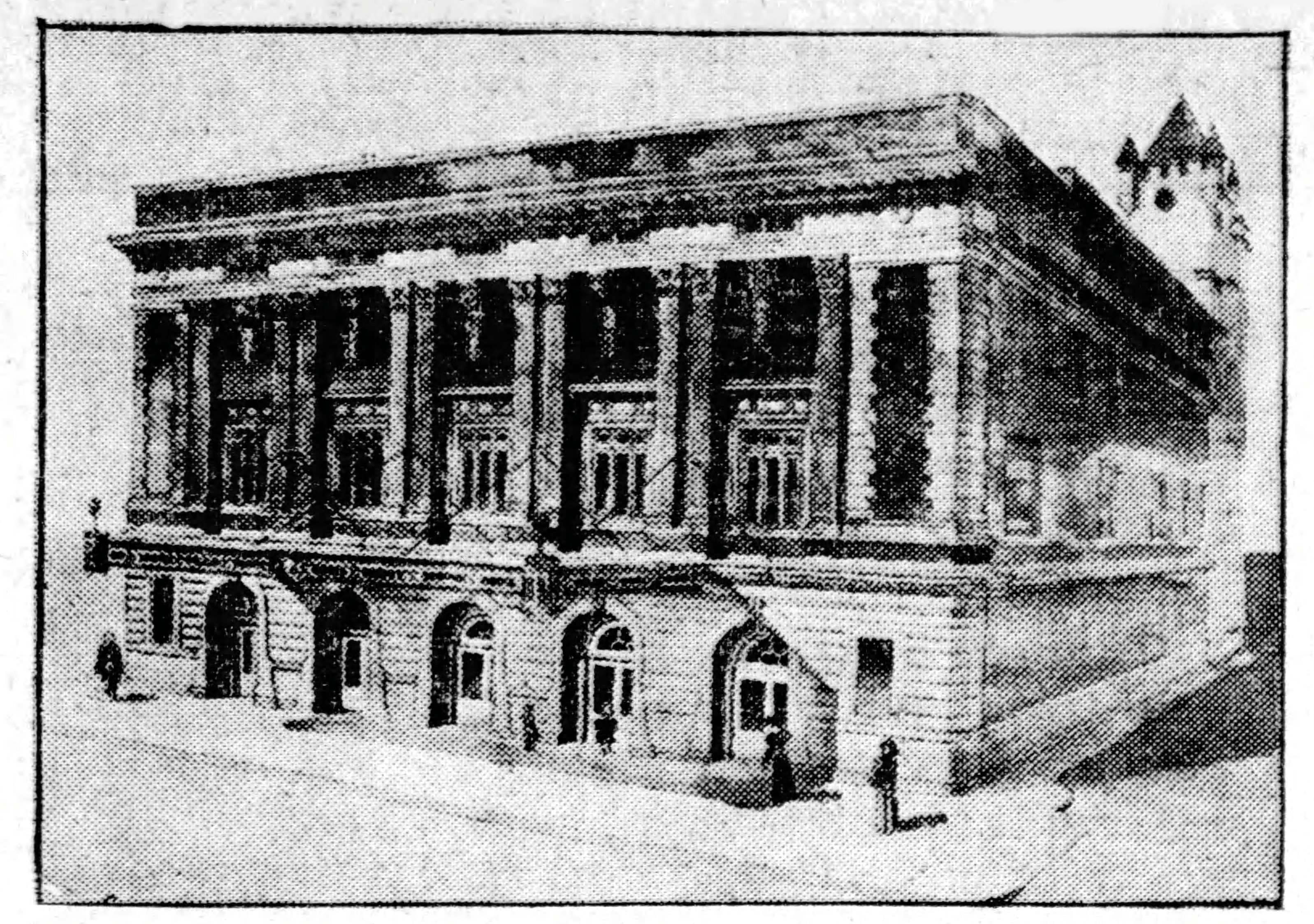
Chicago Tribune, October 24, 1911
New $140,000 Theater Planned.
A building permit was issued yesterday to the Victoria Theater corporation, 2320 West Madison street for the construction of a theater, to cost $140,000, and to be located at 2145-2151 Sheffield avenue.
Chicago Examiner, January 14, 1912
New Theater on Northwest Side
The Victoria is the name of one of the most attractive of the recent new theaters to be erected in Chicago. It is now in course of construction at Sheffield and Belmont avenues, with a direct entrance to the theater from the Belmont avenue station of the Northwestern Elevated Railroad, the only theater having this connection in the city. The exterior of the building is of an imposing and impressive type of architecture, while the interior will be richly decorated and finished and will have a seating capacity of 1,650. The theater including the land, building and equipment represents an investment of $190,000. The Victoria Theater corporation is the owner, Frank A. P. Gazzolo being the president and Robert E. Ricksen, secretary and treasurer. It is proposed to produce plays only of a high order, including “Mrs. Wiggs of the Cabbage Patch,” “The Lion and the Mouse,” “The Dawn of a To-Morrow,” “The Old Homestead,” and others of this order.
Billboard, September 14, 1912
New Victoria Theatre
Excavation has been completed and work on the foundation begun at Belmont and Sheffield Avenues for the New Victoria Theatre, Chicago’s very latest outlying theatre to play traveling, dramatic and musical shows at popular prices. The building is to cost $300,000. The structure was planned by John Eberson. a theatre architect, in strict accordance with the revised building code for the highest type of class five houses. The owners are, Frank A. P. Gaisolo and Robert E. Ricksen, now operating the Crown and Imperial Theatres. The building is to be exclusively devoted to theatre purposes. The seating rapacity will be about 1,800.
Chicago Tribune, July 24, 1924
CAROLINE KOHL BUYS VICTORIA FOR $275,000
By Al Chase.
Mrs. Caroline L. Kohl, widow of Charles E. Kohl, one of Chicago’s best known theatrical managers, yesterday bought the Victoria theater on the east side of Sheffield avenue, 60 feet south of Belmont, from Stewart M. Seymour, for a reported $275,000. Mrs. Kohl is vice president of the Orpheum circuit. The Western Vaudeville Managers’ association will book the Victoria.
The theater seats about 1,400 and covers a site 97×121. It is one of the best known of the neighborhood houses. For several years it was on a circuit including the National, and others, playing popular priced, legitimate attractions. Mrs. Kohl says she will spend $100,000 in redecorating and remodeling the Victoria.
Moving Picture World, September 27, 1924
The Victoria Theatre on Sheffield avenue has been sold by the Gazzolo management to Mrs. Charles E. Kohl, owner of several downtown theatres. She has renamed the house the Vic Theatre.
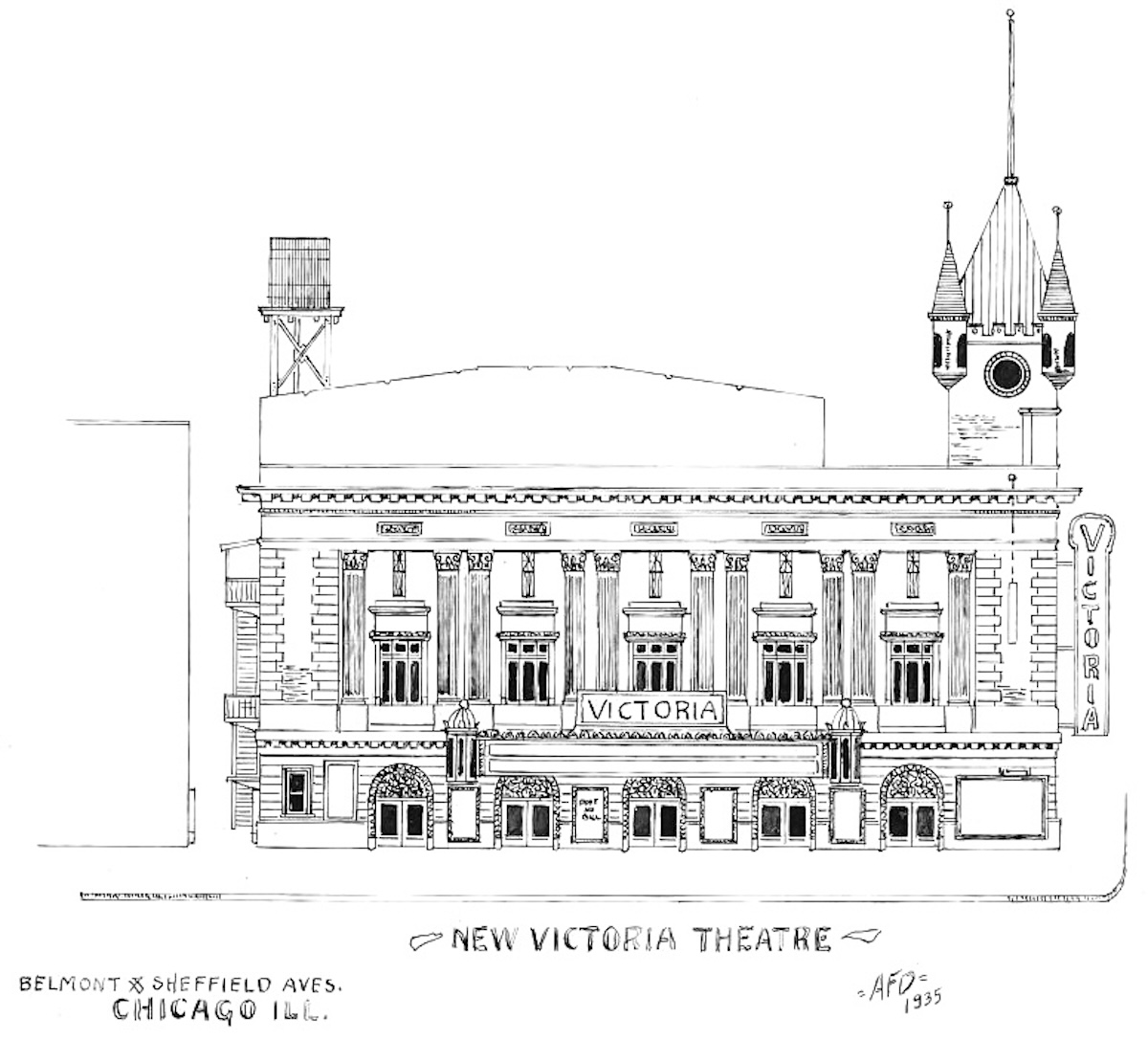
- Victoria Theater
1935
Chicago Tribune, March 17, 1985
Renovation may bring happy days for historic vaudeville venue, the Vic.
The Vic Theater–which you might not know has been away—is back.
The 73-year-old playhouse at 3145 N. Sheffield Ave. has not had a high profile for much of its checkered history; but its latest operators, the brothers Walter and Thomas Klein, are intent on changing all that.
The Kleins bought the Vic on Sept. 26, 1983, and so far have spent nearly $500,000 repairing and converting the neglected vaudeville house and movie theater into a cabaret venue for pop music acts.
One of their first major bookings, last December, was Second City`s 25th anniversary show, taped for Home Box Office showing at 9 p.m. April 13. Subsequently, they have booked a lineup designed to compete with the nightclublike atmospheres of the Bismarck Theater, 171 W. Randolph St., and the Park West, 322 W. Armitage Ave.
The scheduled acts at the Vic include Chick Corea/Gary Burton, next Sunday; the Mamas and Papas/the Association, March 29; Leon Redbone, April 14; David Brenner, April 19; and Sarah Vaughan, May 15.
Success may not come easily. It`s certainly not a tradition at the Vic.
The building, designed by architect John E.O. Pridmore, opened in 1912 as the Victoria Theater, a luxurious, five-story vaudeville house that cost $300,000 and took three years to build. Each of the nearly 2,000 seats was of polished mahogany; the lobby floor and staircases were Italian marble; handmade English quarry tile lined the walls. Even a lighted tunnel connected the theater to the Belmont elevated station nearby.
The theater opened to rave reviews, an article in The Chicago Tribune predicting that the theater would become one of Chicago`s ”most popular priced houses.” (The theater`s ads boasted ”We offer downtown shows at half the price.”)
But vaudeville was in decline, and the biggest, most popular road shows stayed downtown. After an encouraging start, the theater foundered.
In the late 1920s the Victoria became the German Theater, presenting German operettas, primarily for the surrounding German community. With the Depression, however, neighborhood residents no longer could afford even low-priced tickets.
In 1932 the theater closed, its beautiful stage destined to go unused for 50 years–except to store boxes of plaster and car parts.
For several years, from 1932 to the late 1940s, the Plasterers Institute was the tenant. Then an automobile warehouse operation moved in.
A few years later there were tentative plans to reopen the theater for operettas and road shows. Instead, the building was sold, sold again and still again, used as a movie house all through the 1960s and into the `70s. As the Old Vic, it specialized in X-rated flicks; as the Roberto Clemente Theater, it later featured Spanish movies; and the just-plain Vic presented films of India.
The building, once so handsomely furnished, fell into disrepair. Layers of dirt hid the marble floors; chunks of paint fell from the ceiling; a wall mural on the second floor was barely recognizable.
In 1979, when the audiences for Indian films dropped dramatically, owner Sargit Sikan rented the building to community theater activist Richard Bosserman, who dreamed of restoring the house as a home for the performing arts. Suffering from lack of funds, the project did not work out, however.
”I knew the building had potential,” Sikand said, ”but for me it was a white elephant.” In 1983 he sold the now-rundown property to Walter Klein and a group of investors.
Walter Klein, 34, in turn sold the corporation to his brother Thomas, 28. Walter Klein, who organized the refurbishing, now is the Vic`s general manager, while Thomas Klein oversees the day-to-day operations and is the company`s president.
Walter Klein had been a peripheral investor in the defunct rock bar Tuts, formerly at 959 W. Belmont Ave., near the Vic, and the Kleins successfully renovated the West End bar at 1170 W. Armitage Ave. two years ago.
Even with that experience, ”I was green in the business of fixing up a theater of this size,” Walter Klein said. ”But I was impressed with the building. It was a mess, but it was structurally sound.
”Our first step was to decide on a general direction. We decided to book pop acts in a cabaret atmosphere. That`s where a theater like this can fit in. We also decided to restore the Vic to its original appearance the best we could. We`re striving for a classy atmosphere.”
The Kleins enlisted the help of Bob Suszynski, a veteran of the rock music business, to direct the renovation.
According to Suszynski, ”We spent weeks researching and looking for old photos. We tried to capture as many details of the original structure as we could. We brought the shine back to the marble, restored the wall mural, applied gold leaf paint, recarpeted and added brass posts and railings.”
The seats on the lower level were replaced with cabaret-style tables on four tiers, but 11 rows in the balcony contain the original mahogany theater seats. Behind them are rows of carpeted platform steps, what Walter Klein calls ”festival seating.”
The acoustics are near perfect, Suszynski said: ”Every wall is three feet thick. The old brick and mortar absorbs sound better than today`s concrete.” There are nine 4-by-3-foot, 370-pound speakers, with three hanging above the stage.
According to legend, during Prohibition, liquor was hidden in a small room off the catwalk. Today, however, drinks are served from three bars. There is a two-drink minimum on the main floor.
The Kleins were not experienced in booking, marketing and publicizing major entertainment acts. After two false starts they settled on Bruce White, president of Whiteco Hospitality Corp. and Entertainment Division, who also operates and books the Holiday Star Theatre in Merrillville, Ind.
”I won`t hesitate to use the dance floor, either,” White said.
”Certain rock bands require it, and so do performers such as Myron Floren.”
The Park West, in the affluent Lincoln Park area, seats 750; the Bismarck, in the Loop, holds just under 2,000. The Vic, with its 1,250-seat capacity, hopes to challenge both of them.
